7 Days from Edzna to Calakmul

A journey through the Chenes hills, Rio Bec cities and the remote forests of Campeche.
Introduction
The Maya sites of Campeche form one of the most coherent archaeological journeys in Mexico. Over the course of a week, this itinerary moves from the monumental plazas of Edzna into the sculpted facades of the Chenes hills, the theatrical towers of the Rio Bec region, and finally the deep forests surrounding Calakmul.
This itinerary assumes the use of a rental car, which can be easily arranged at the Campeche airport.
At a glance
Entry point
Campeche airport, in Campeche (days 1 & 7)
Bases
Campeche, Hopelchen, Xpujil & Calakmul
Duration
7 days
Route
Campeche airport → Calakmul → Campeche airport
Best for
Remote Maya cities, changing architectural styles, and slow overland travel through Campeche
Total driving
About 16 hours, over 7 days
Distance
Around 600 miles (965 km)
Roads
Mostly two-lane highways in decent shape, with rough access roads (Santa Rosa Xtampak, El Tabasqueño, El Hormiguero).
Key sites
Calakmul (anchor)
Edzna (monumental, geometric)
Santa Rosa Xtampak (isolated, ceremonial)
Becan (fortified, grand)
The route, day by day
Route logic
Although the route may appear indirect at first glance, it follows the realities of travel in southern Campeche, where archaeological sites are connected by a sparse network of regional roads cutting through forest and low-density countryside. The itinerary is also structured to spread major Maya cities across the week, allowing time to experience each region without rushing between sites.
Three longer driving stretches are unavoidable: on day 3, between the Chenes hills and the Rio Bec region, on day 5 between El Hormiguero and Calakmul, and finally on day 7, returning from Calakmul to Campeche airport.

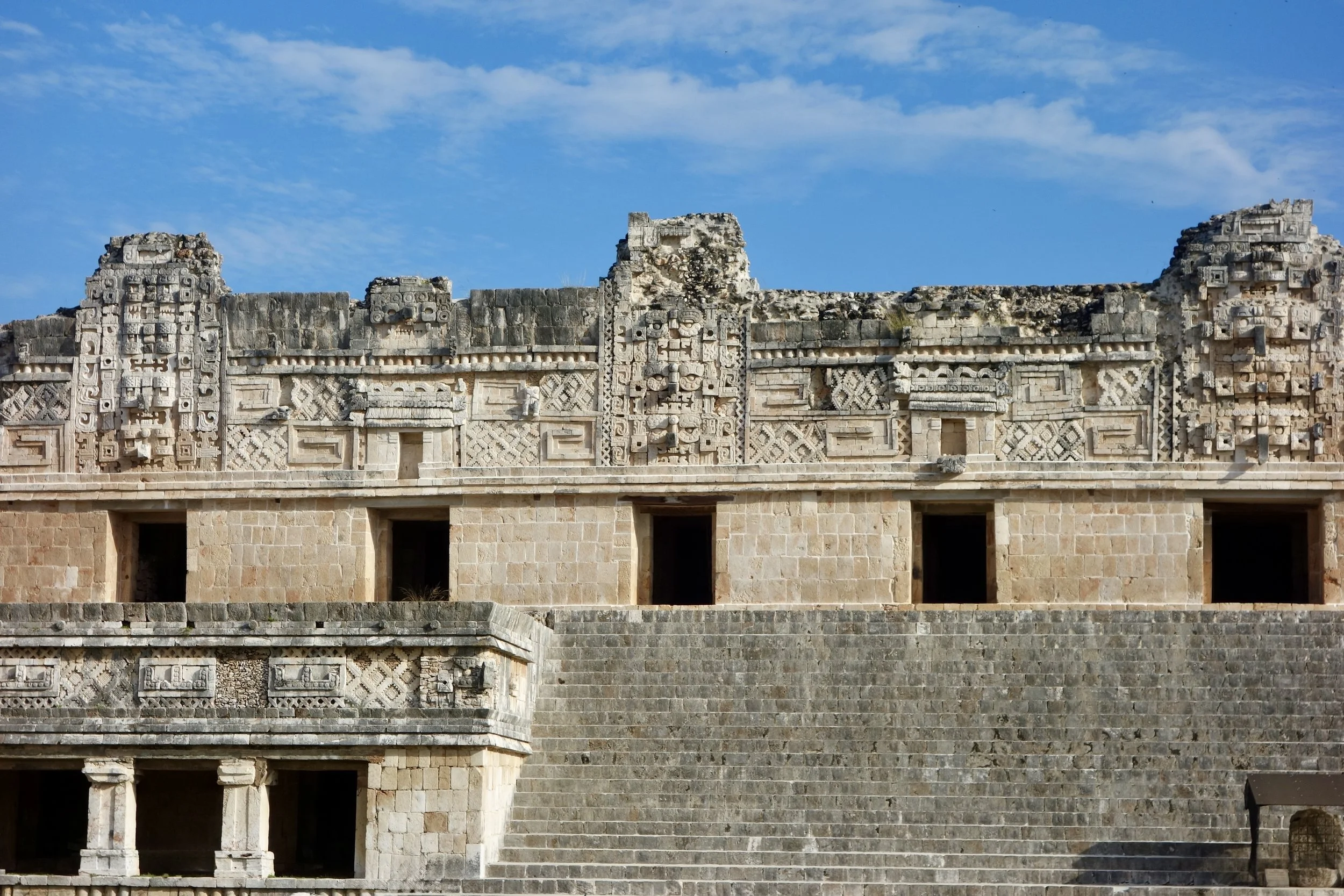
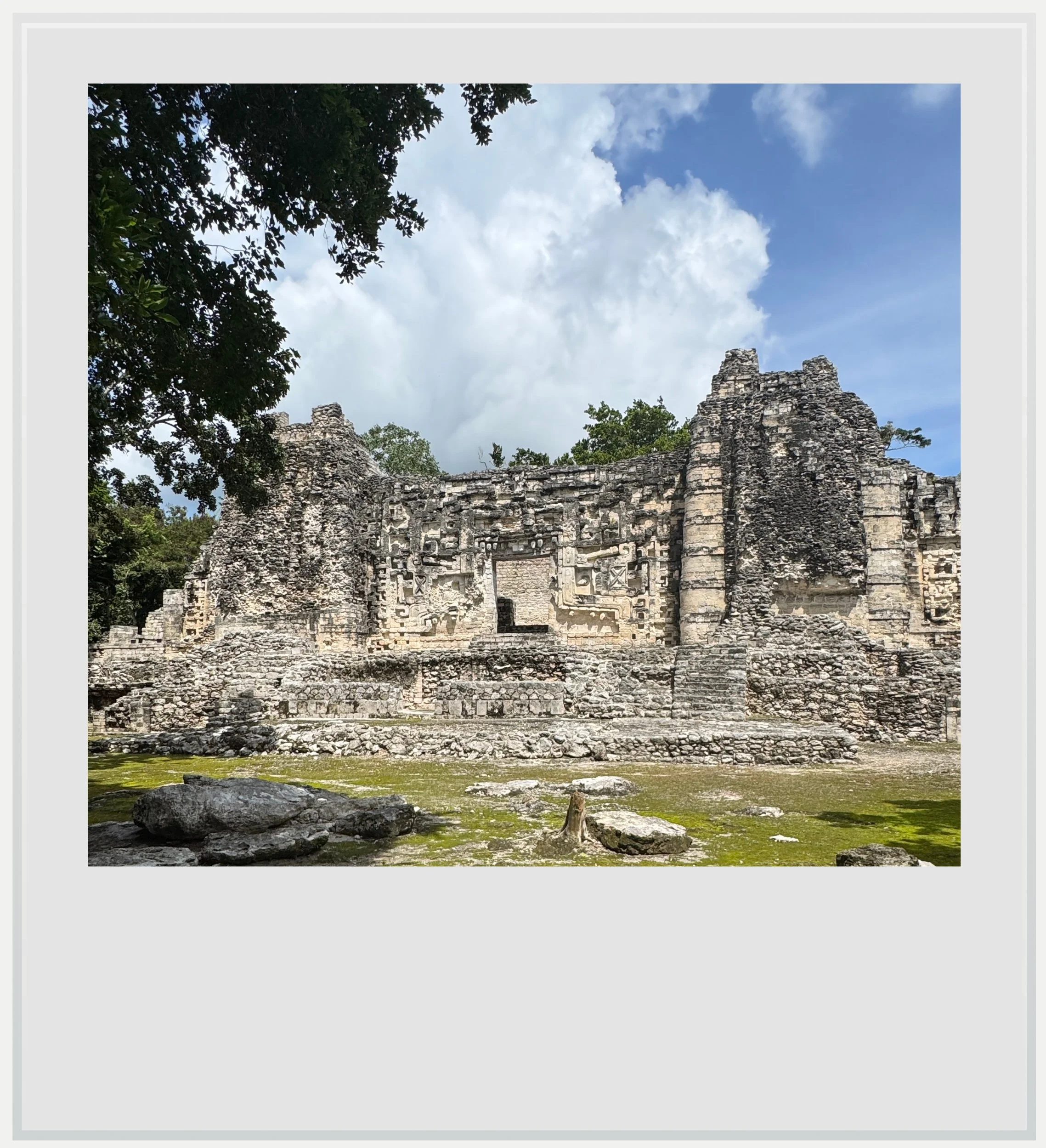
Structure 2 in Hochob, Campeche.
Choosing your bases
Campeche (night 1)
The colonial gateway to the Maya forests of Campeche. An evening of urban comfort before the route turns inland toward Edzna and the Chenes hills.
Best for: colonial architecture, good food, and an easy start to the itinerary.
Recommended stay: well-rated hotels within the walled city
Good restaurants: check out calle 59, car-free and lined up with great food options.
Detailed recommendations in the San Francisco de Campeche article.
Hopelchen (night 2)
A well-located base for exploring Hochob, El Tabasqueño and Santa Rosa Xtampak before continuing toward the Rio Bec cities.
Best for: Chenes architecture and shorter driving days.
Recommended stay: Airbnb or Hotel Jaguar
Good restaurants: La Palapa
Detailed recommendations in the Santa Rosa Xtampak article.
Xpujil (nights 3 & 4)
The practical gateway to the Rio Bec region, Xpujil is strategically positioned for early departures and shorter driving days.
Best for: easy access to the Rio Bec sites.
Recommended stay: Hotel Casa Las Lolas
Good restaurants: Sazon Veracruz, Antojitos Doña Evita.
Detailed recommendations in the Becan article.
Calakmul (nights 5 & 6)
The most immersive base of the itinerary, placing you deep inside the forest and significantly closer to the ruins than staying in Xpujil. Ideal for early access to Calakmul and a fuller experience of the biosphere itself.
Best for: Calakmul, wildlife, forest atmosphere, remoteness.
Recommended stay & restaurant: Hotel Mundo Maya Calakmul.
Detailed recommendations in the Calakmul article.
The itinerary
Day 1: arrival
Arrival at Campeche airport (CPE). Getting there from abroad requires a connection through Mexico City (1 to 3 flights daily). Many car rental brands are available on the premises.
Note: If time allows: enjoy an afternoon walking around the historic walled city of San Francisco de Campeche, and visit its excellent Maya museum.

Day 2: Edzna, Hochob & El Tabasqueño
Morning
– visit the Maya city of Edzna (1h drive, 2 to 3 hours on site)
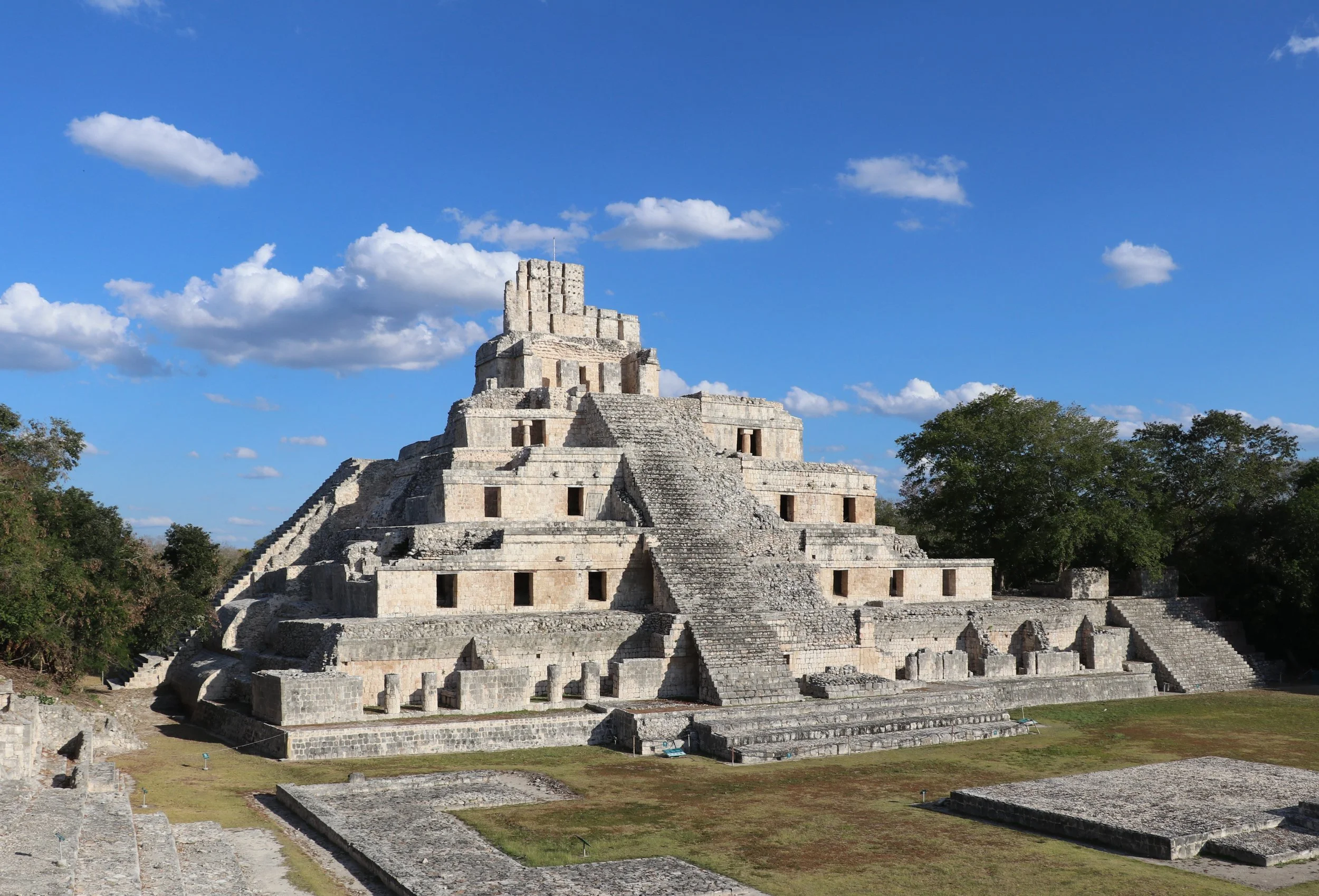
→ one of the great monumental cities of Campeche, Edzna combines vast plazas, elevated temples and unusually geometric urban planning with very few visitors.
– drive into the Chenes hills via Hochob (30 min)
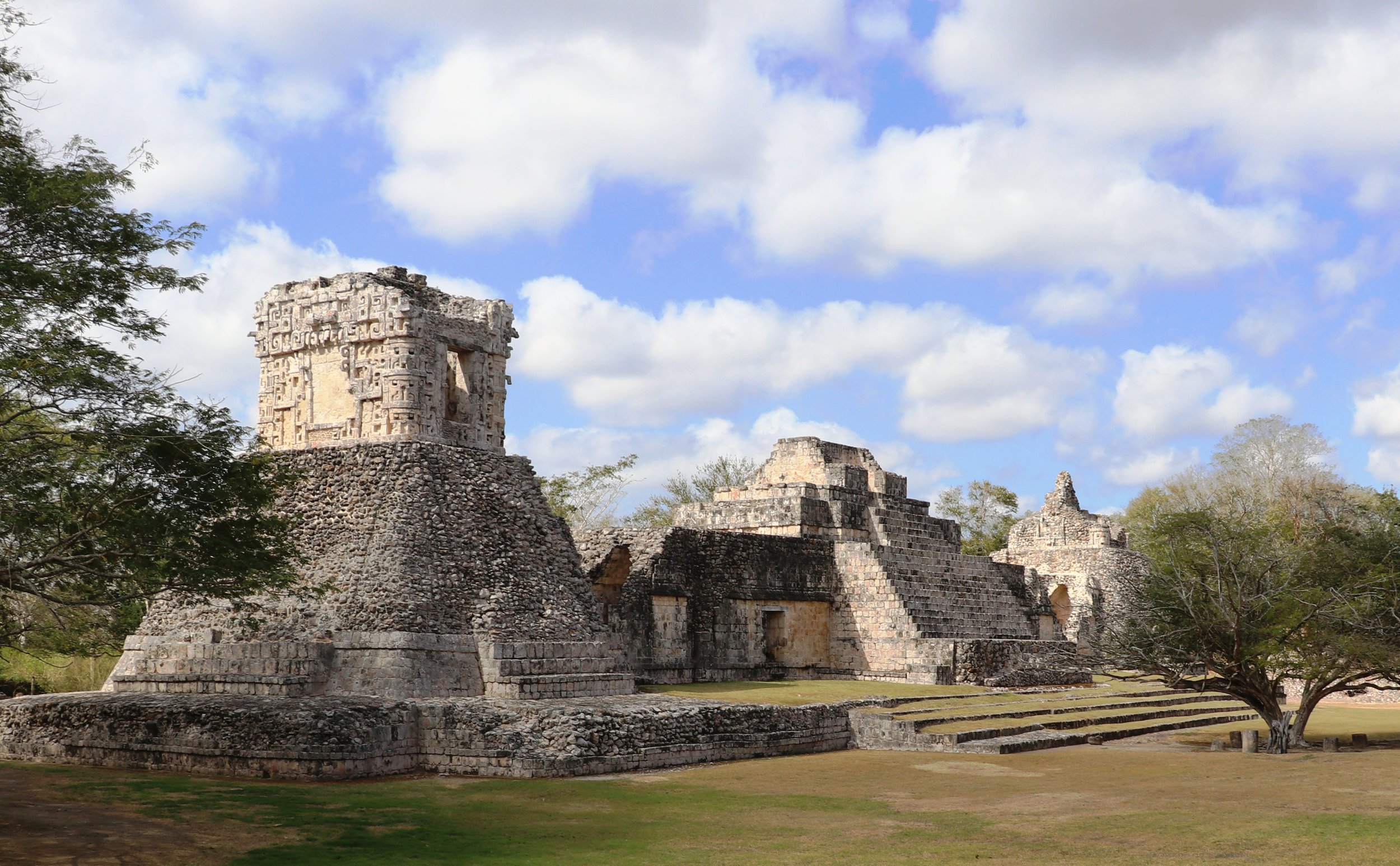
→ smaller and more isolated than Edzna, Hochob features one of the best examples the elaborate stone façades and mask-covered entrances characteristic of Chenes architecture (30 min on site).
- late lunch in Dzibalchen
Afternoon
– drive north towards Hopelchen, and stop en route at El Tabasqueño.
→ smaller and more isolated than Hochob, El Tabasqueño preserves some of the finest Chenes stonework in the region and receives very few visitors (30 min on site).
– overnight in Hopelchen (total afternoon driving time: 2 hours)
Optional: if time and energy allow, detour towards Vicente Guerrero from Dziblachen (before heading north to Hopelchen), so you can visit Dzibilnocac, a little-seen ceremonial complex (round-trip 1h20, visit time 30 min)
Day 3: Santa Rosa Xtampak
Morning
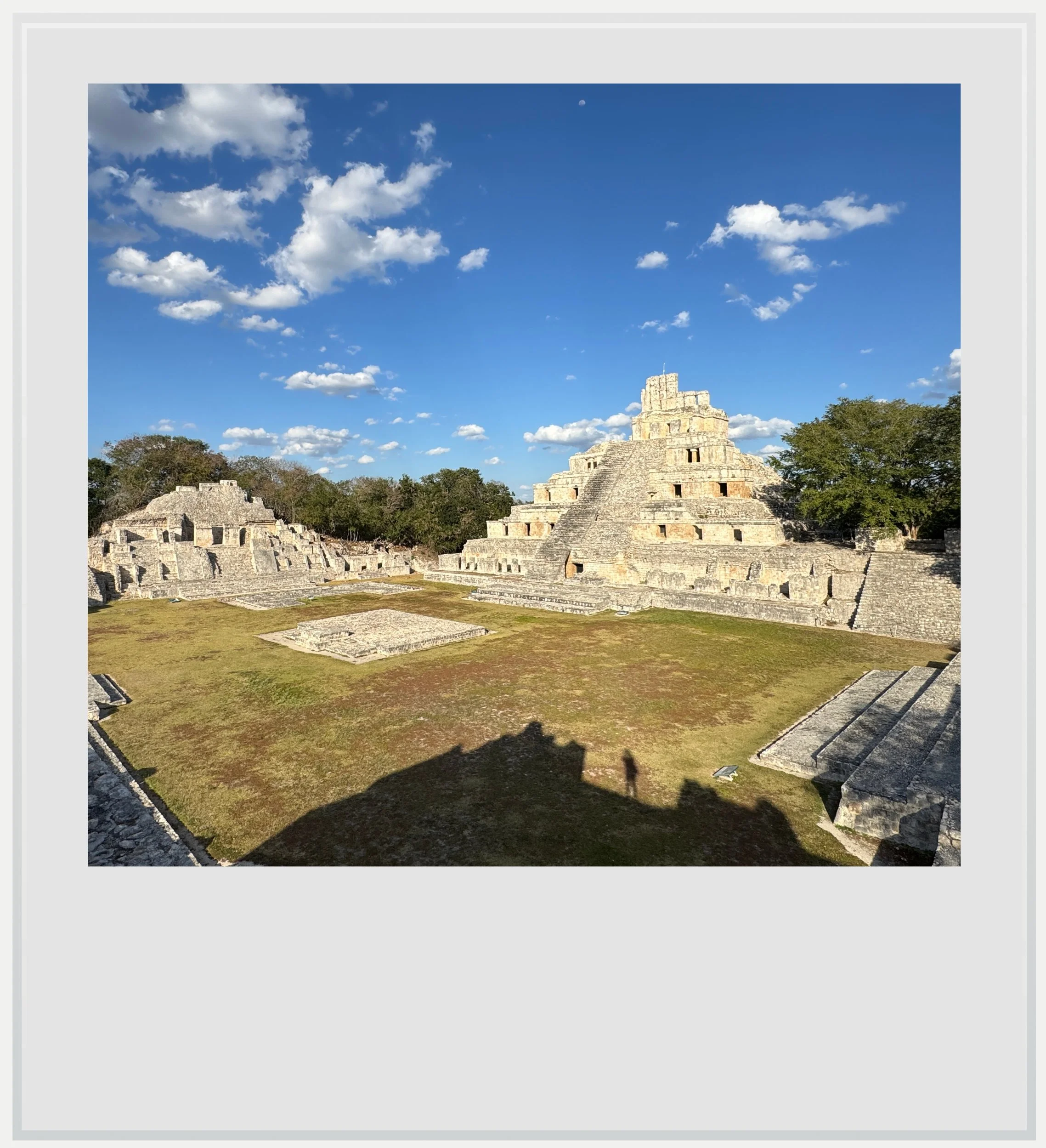
– visit the Maya site of Santa Rosa Xtampak (3h drive round trip on a very rough road, 2 hours on site)
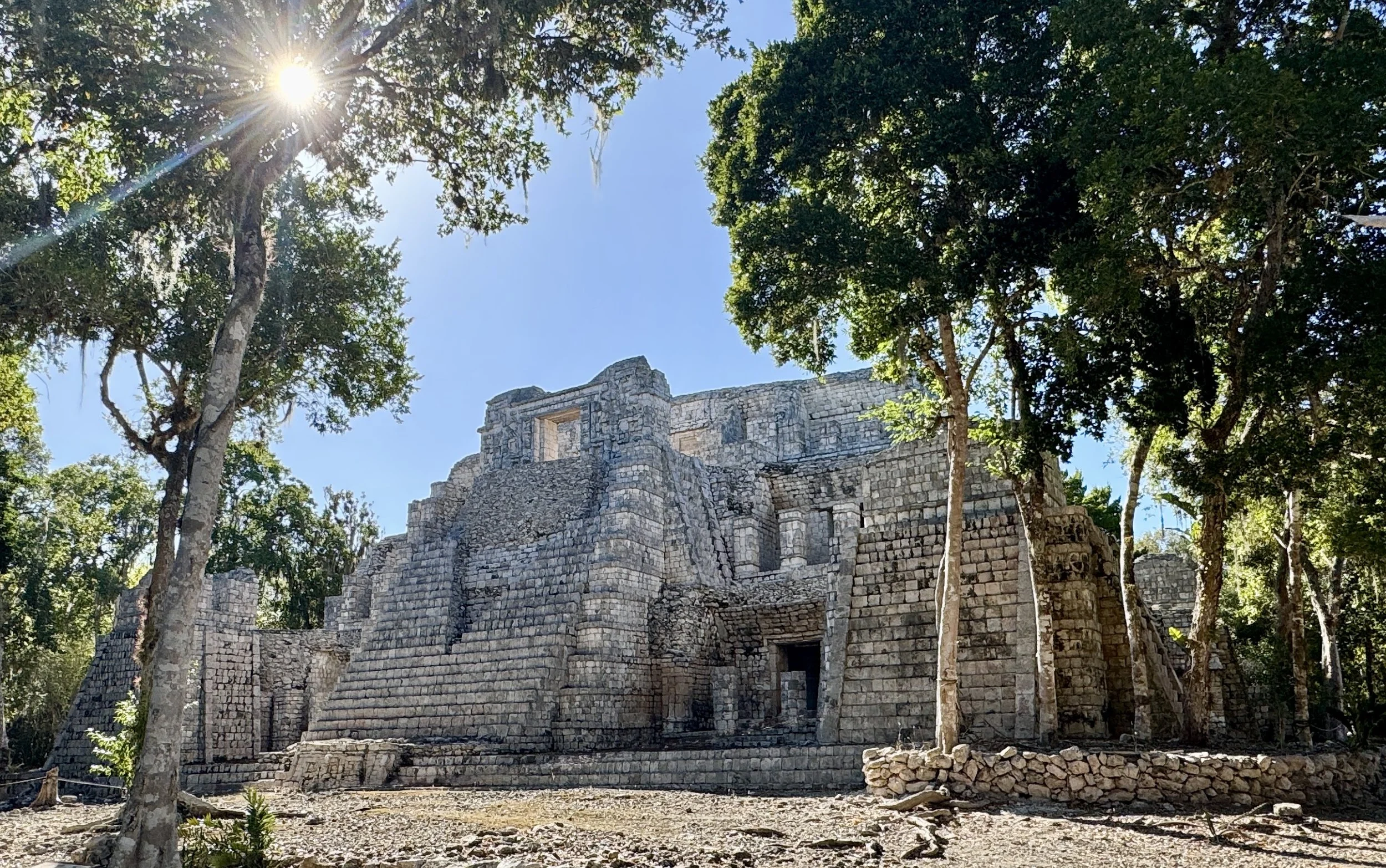
→ the largest and most impressive city of the Chenes region, Santa Rosa Xtampak combines monumental scale with remarkable isolation. Despite its importance, it remains one of the least-visited major Maya sites in Mexico.
- lunch in Hopelchen
Afternoon
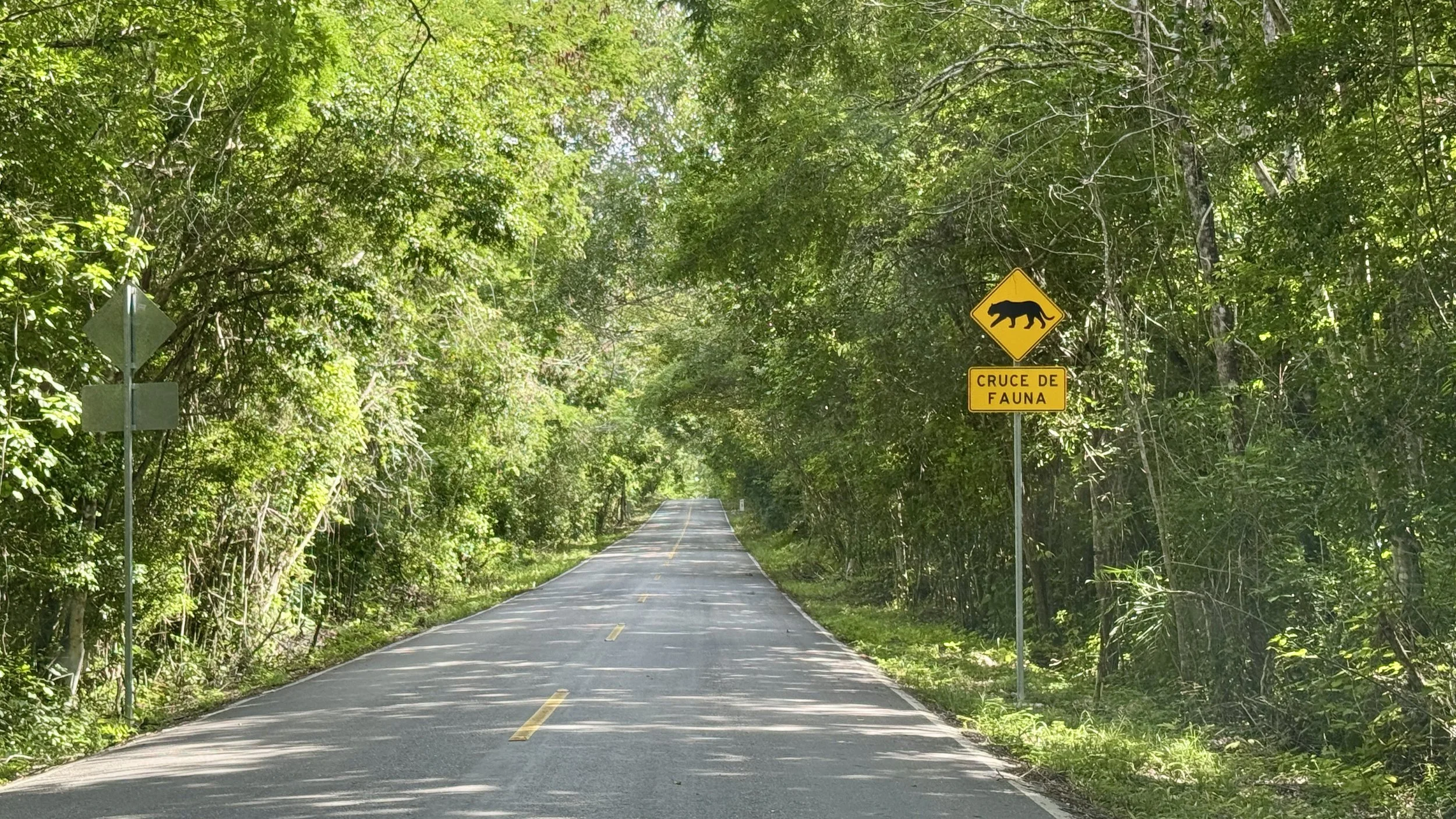
– drive south towards Xpujil. Given the remoteness of the region and the frequent presence of wildlife on the road after sunset, aim to reach town before dark. Total afternoon driving time: 2.5 hours.
– overnight in Xpujil.
Day 4: major Rio Bec sites
Morning
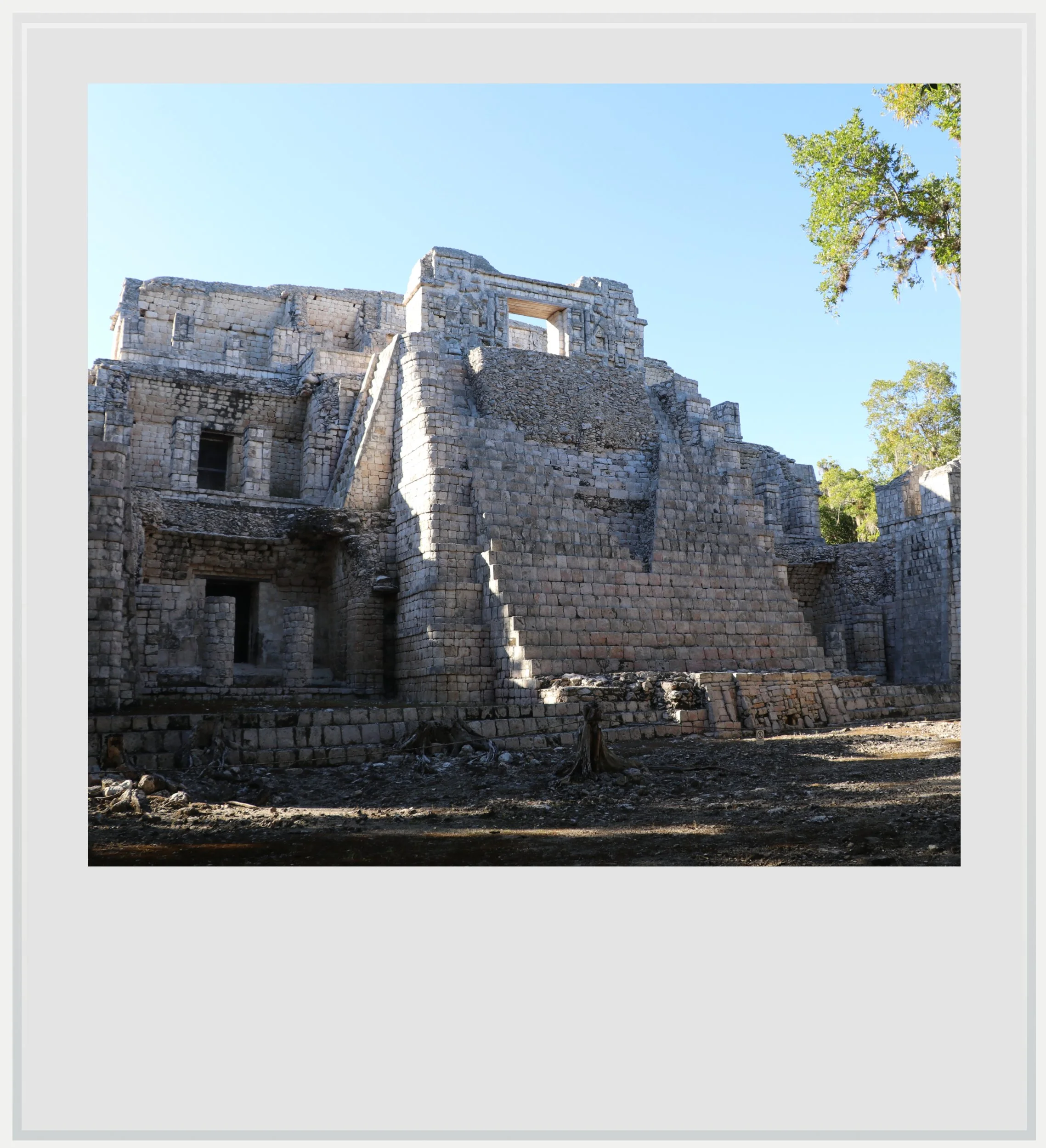
- visit the Maya site of Becan (~15 min travel, ~1h30 on site)
→ one of the largest settlements in the region, Becan combines monumental architecture with defensive earthworks rarely seen elsewhere in the Maya world.
- lunch in Xpujil
Afternoon
- visit the Maya site of Chicanna (~15 min travel, ~45 min on site)
→ smaller and more refined than nearby Becan, Chicanna is known for some of the most elaborate facade work in the Rio Bec region, reminiscent of Chenes architecture.
- visit the Maya site of Xpujil (~10 min travel, ~30 min on site)
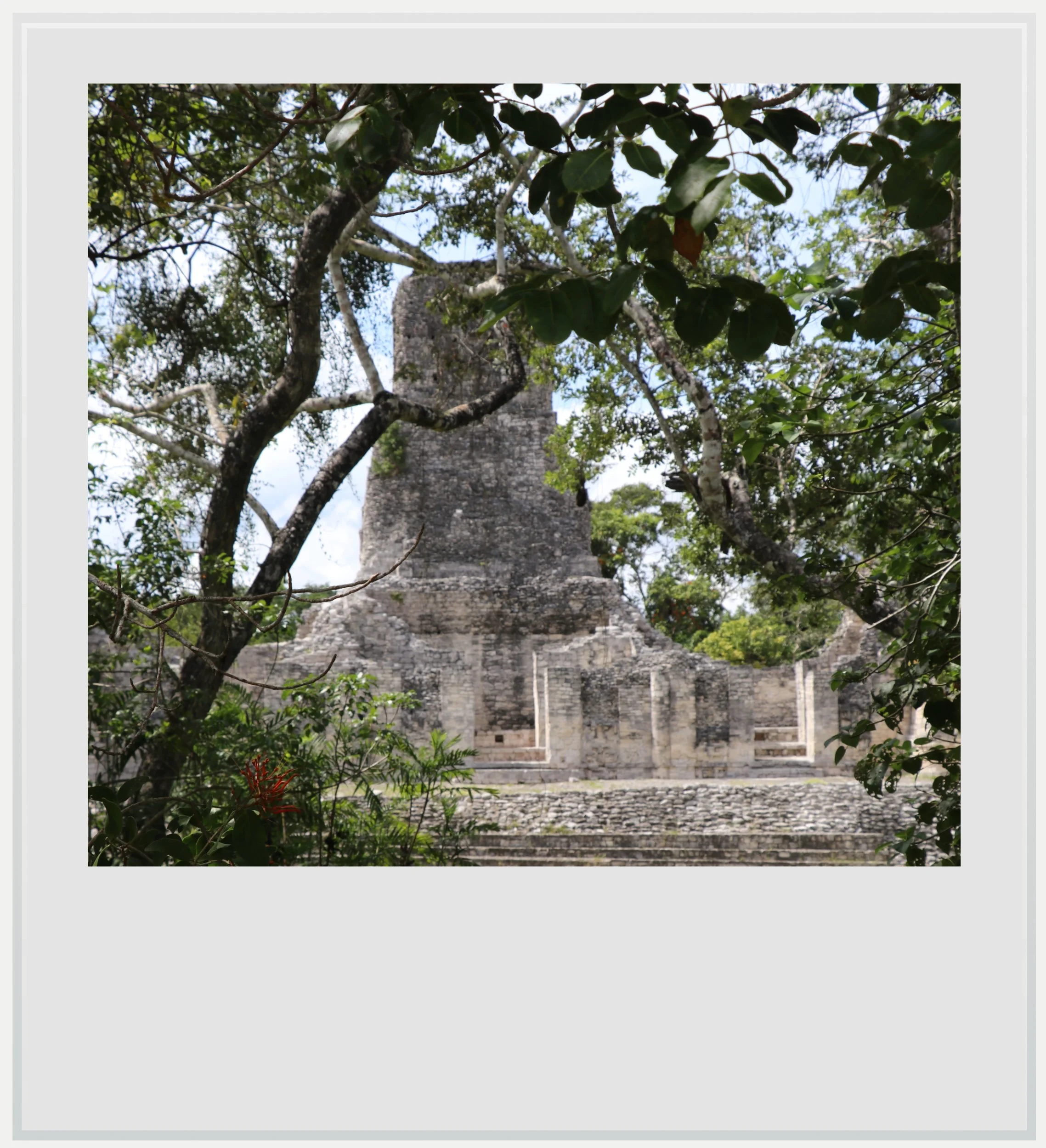
→ a compact roadside site whose surviving towers showcase the typical Rio Bec building style
Note: this day is intentionally light as sites are relatively close to each other. It’s best to visit Becan early in the morning and Chicanna & Xpujil late in the afternoon to avoid the hottest parts of the day.
Day 5: El Hormiguero & Balamku
Morning
- visit the Maya site of El Hormiguero (~60 min travel one-way, ~45 min on site)
→ one of the most remote sites on the itinerary, El Hormiguero preserves some of the region’s most intricate Rio Bec facade decoration.
- have lunch in Xpujil (~60 min travel)
Afternoon
- visit the Maya site of Balamku (~45 min travel, ~30 min on site)
→ modest in scale but home to one of the best-preserved stucco friezes in the Maya world.
- continue toward the Calakmul reserve. (~1h15 travel)
Notes: the access road to El Hormiguero, past the small village of Eugenio Echeverria Castellot, is in a bad condition and requires slow driving. There is very little tourist infrastructure between Xpujil and Calakmul, so plan for lunch in Xpujil and dinner at the Mundo Maya hotel in Calakmul. It is strongly advised to plan your arrival to the Mundo Maya hotel before nightfall to avoid driving through the biosphere reserve at night.
Day 6: Calakmul
Morning
- drive to the Calakmul archeological site from the Mundo Maya hotel and visit the UNESCO-listed Maya city. (~30 min drive inside the reserve, ~3–4 hours on site)
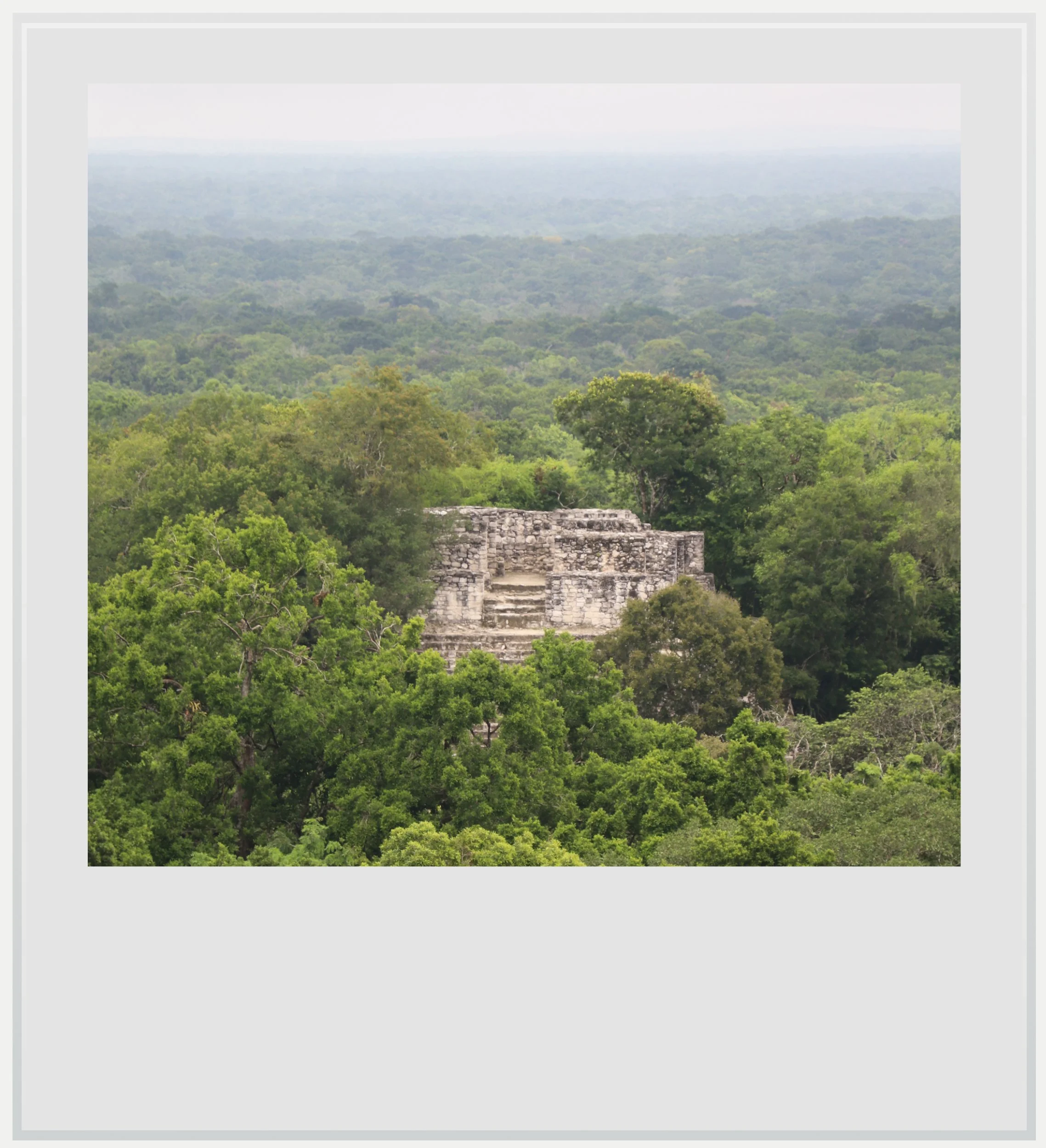
→ one of the most important cities of the ancient Maya world, Calakmul combines monumental scale with an unusually deep forest setting. Beyond its historical importance, it is visually stunning through monumentality and remoteness.
Afternoon
- enjoy the Calakmul Biosphere reserve via a slow, scenic drive on the access road or on some of the marked paths into the forests and marvel at the wildlife.
Notes: getting a sense of the biosphere beyond the majestic ruins will help make the trip more complete, and gives you a second night deep in the jungle.
The stops along the route
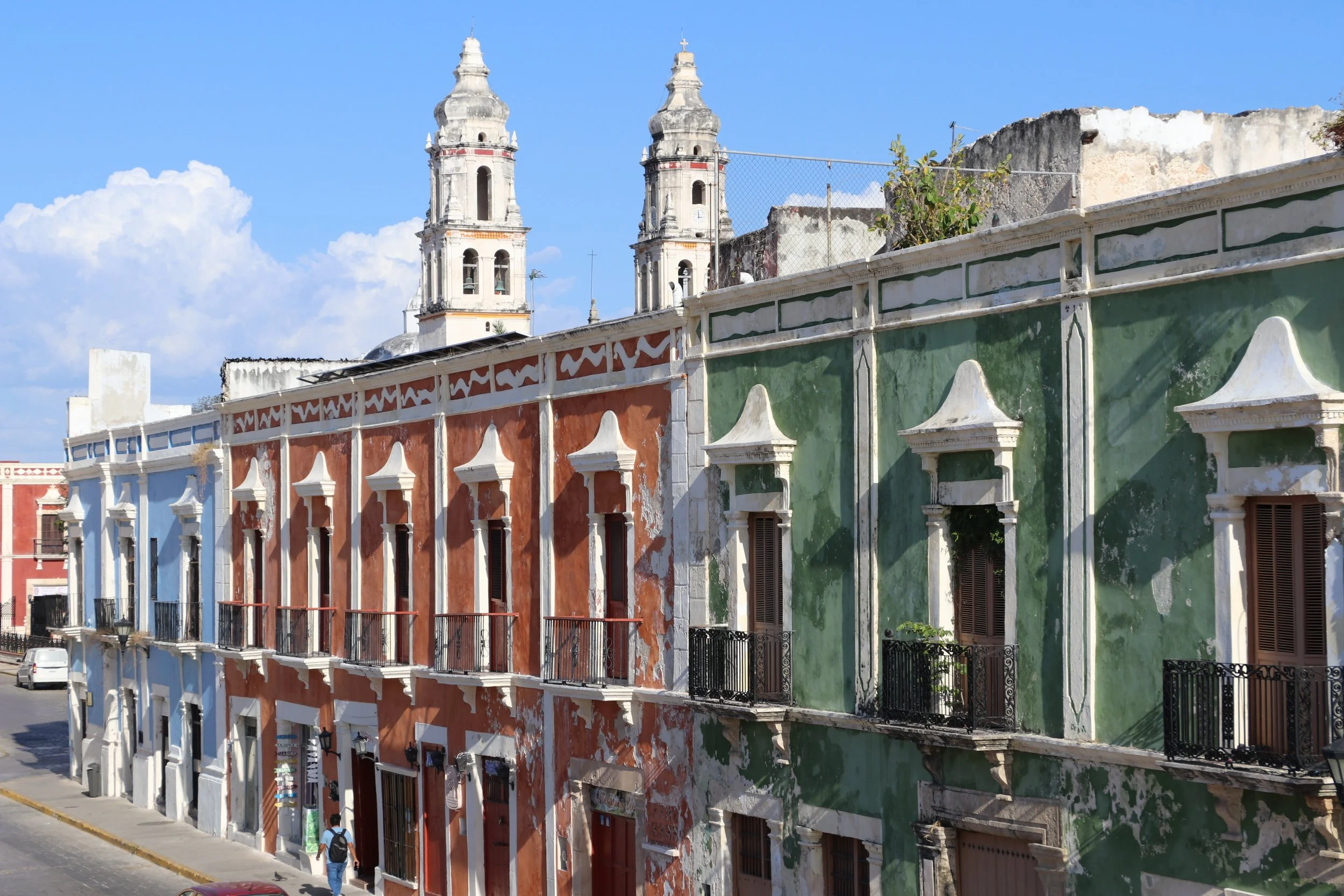
San Francisco de Campeche
A UNESCO-listed colonial city and the gateway to the Maya forests further south.
key site
Edzna
Larger and more formal than the sites that follow, Edzna introduces the itinerary with monumental architecture on a scale rarely seen outside the great Maya capitals.
Hochob
One of the finest expressions of Chenes architecture, Hochob is known for its richly decorated stone façades and mask-covered entrances.
optional
Dzibilnocac
Hidden among the back roads of the Chenes region, Dzibilnocac rewards the detour with substantial architecture and a remarkable sense of solitude.
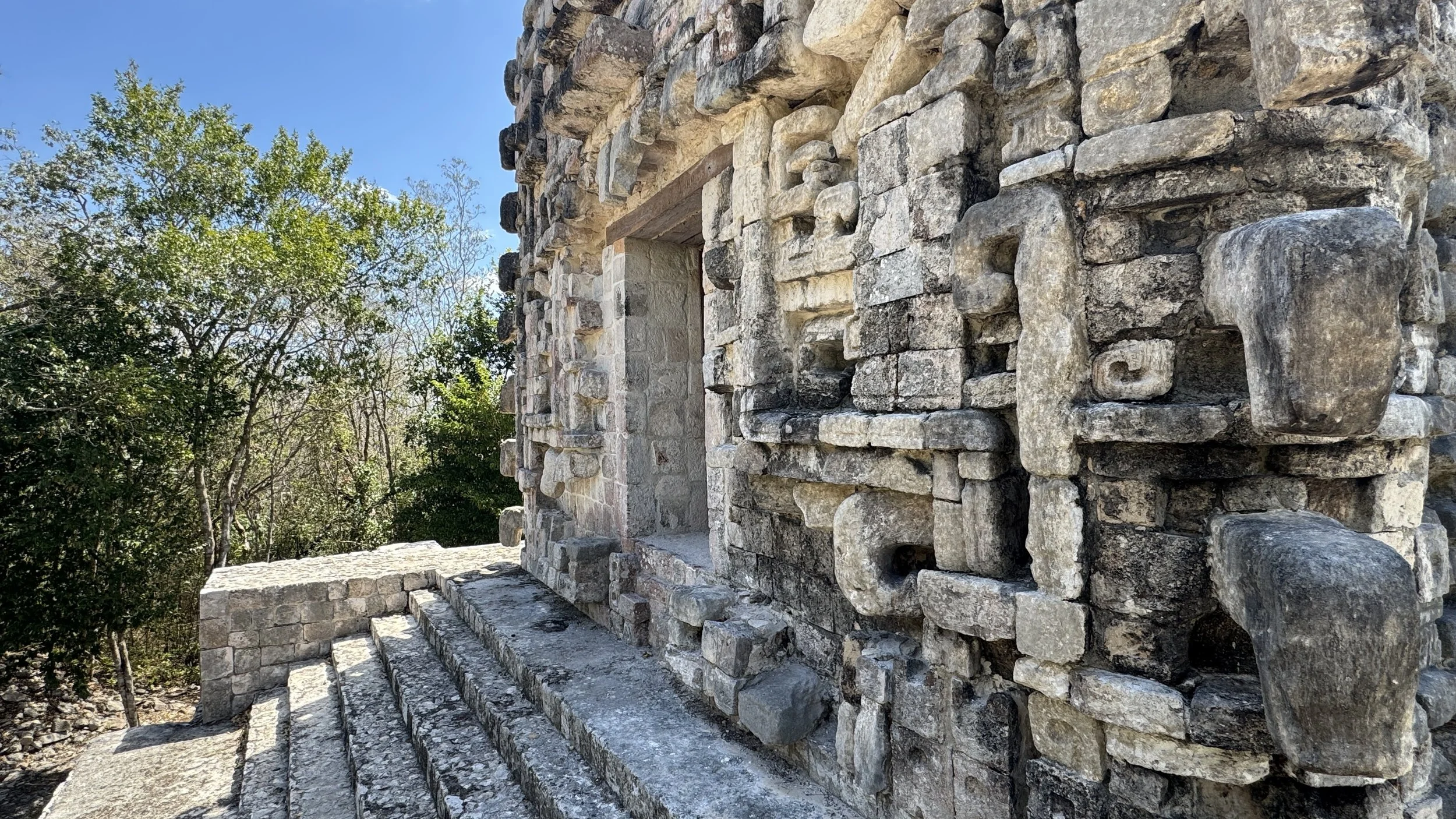
El Tabasqueño
Smaller and more isolated than Hochob, El Tabasqueño preserves some of the finest Chenes stonework in the region and receives very few visitors.
key site
Santa Rosa Xtampak
Reached by one of the roughest roads on the itinerary, Santa Rosa Xtampak rewards the effort with monumental architecture, sprawling ceremonial spaces, and almost no other visitors.

key site
Becan
The largest and most monumental site of the Rio Bec region, Becan combines defensive architecture with some of the area’s most imposing pyramids.
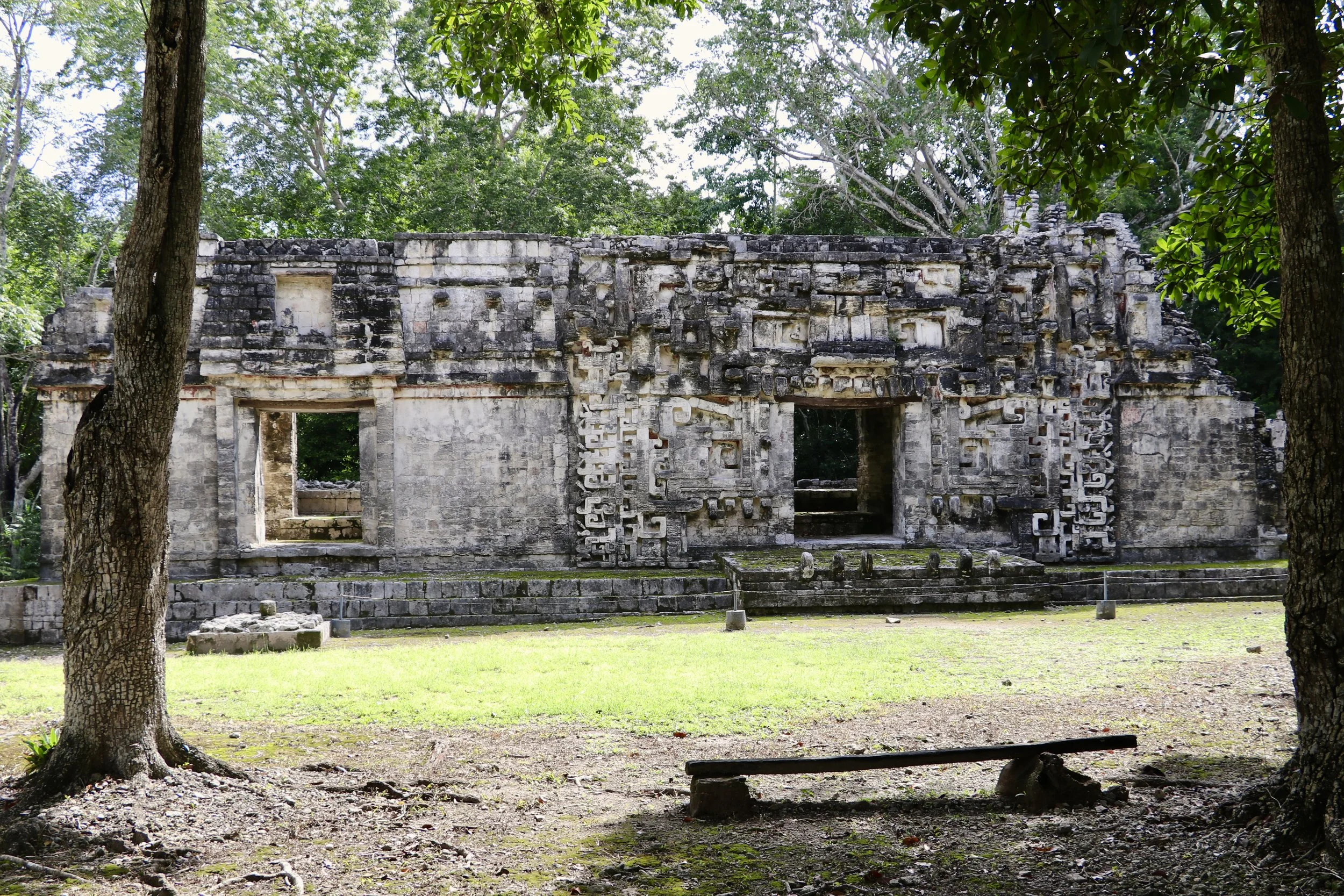
Chicanna
Chicanna stands out for its sculptural monster-mouth entrance and the unusual blend of Rio Bec and Chenes architectural traditions.
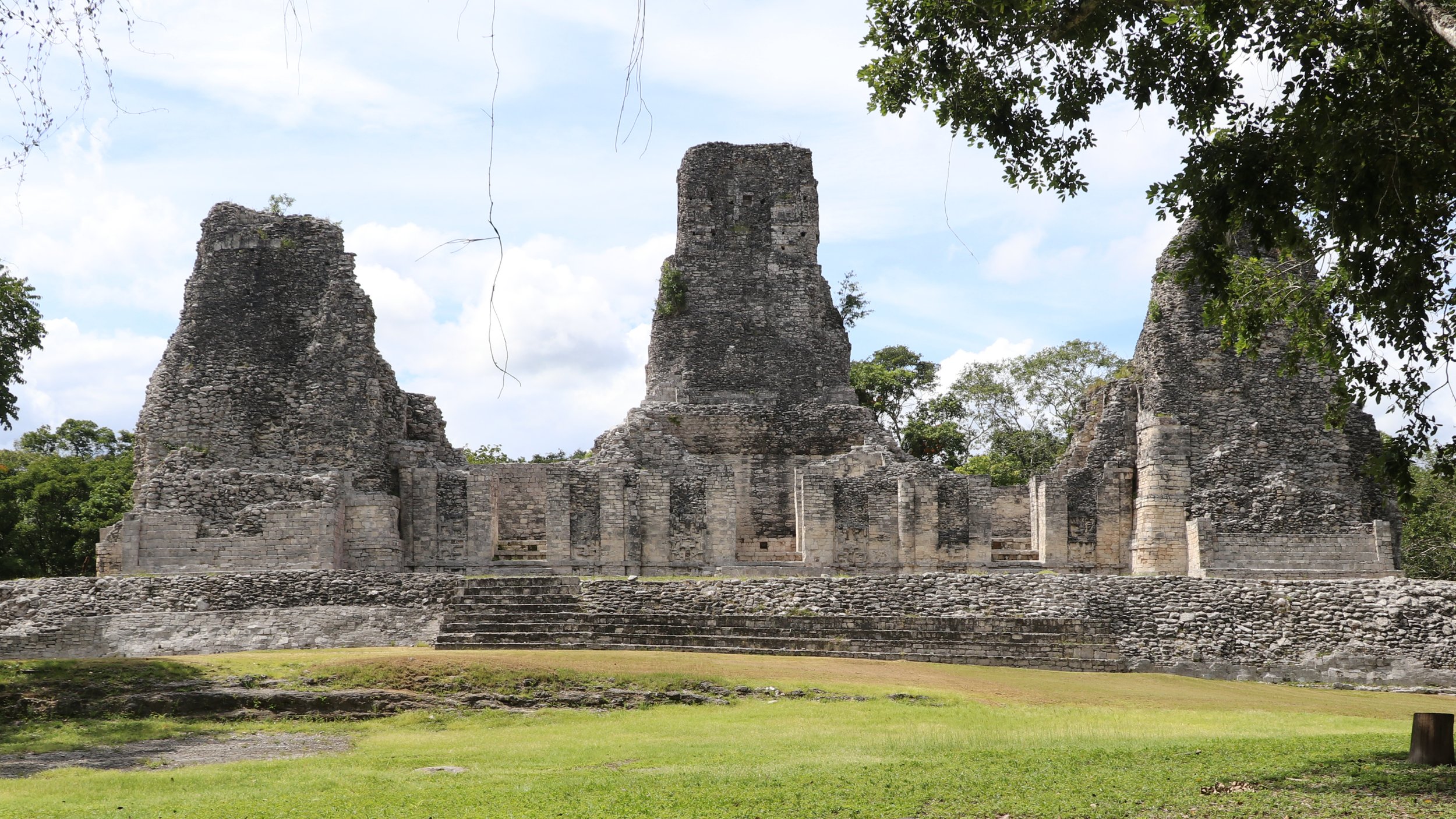
Xpujil
Best known for its dramatic multi-tower facade, Xpuhil is one of the clearest expressions of the Rio Bec architectural style.
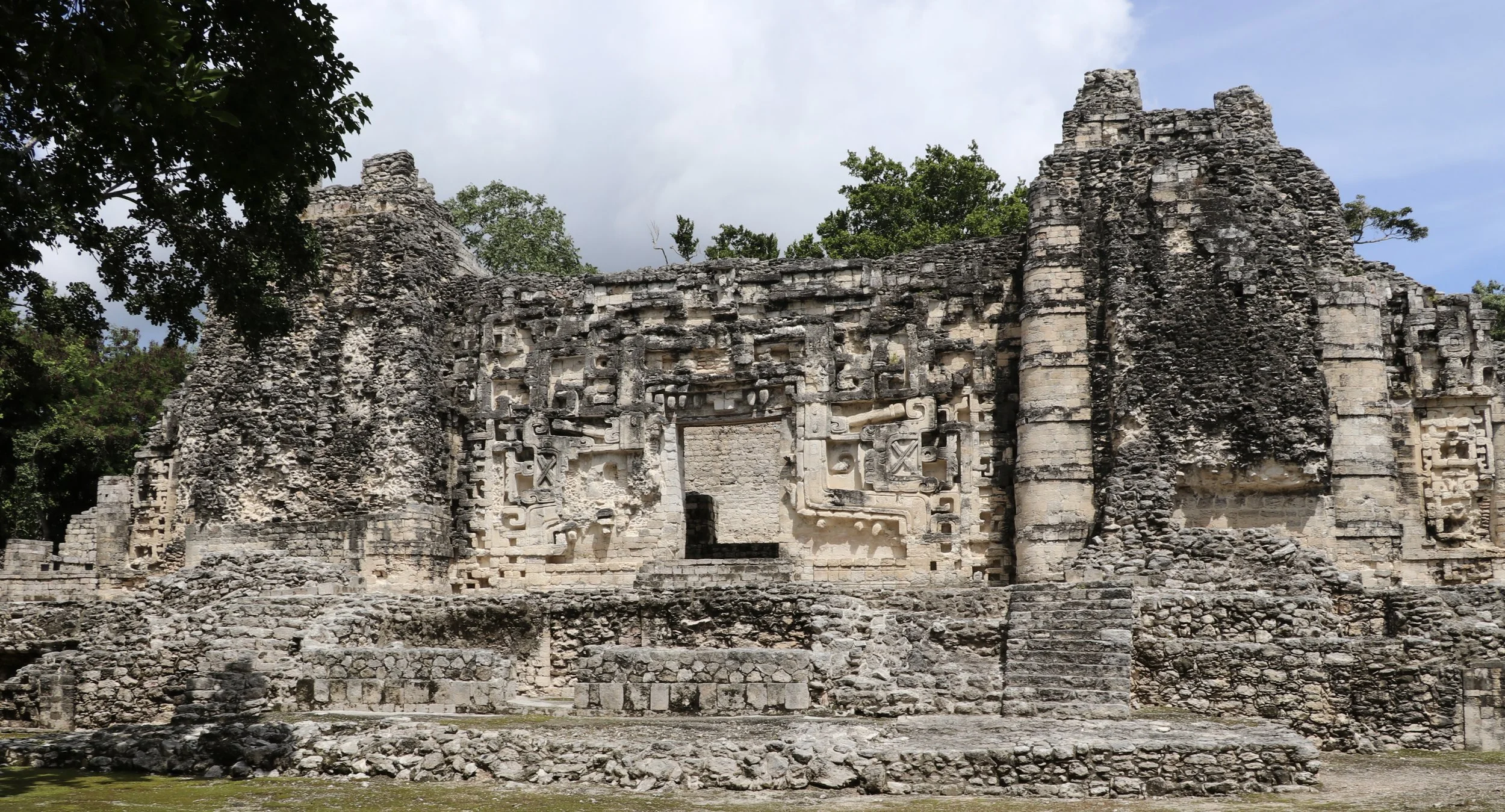
El Hormiguero
Hidden deeper in the forest, El Hormiguero is distinguished by some of the most intricate and theatrical facade decoration in the Rio Bec region.
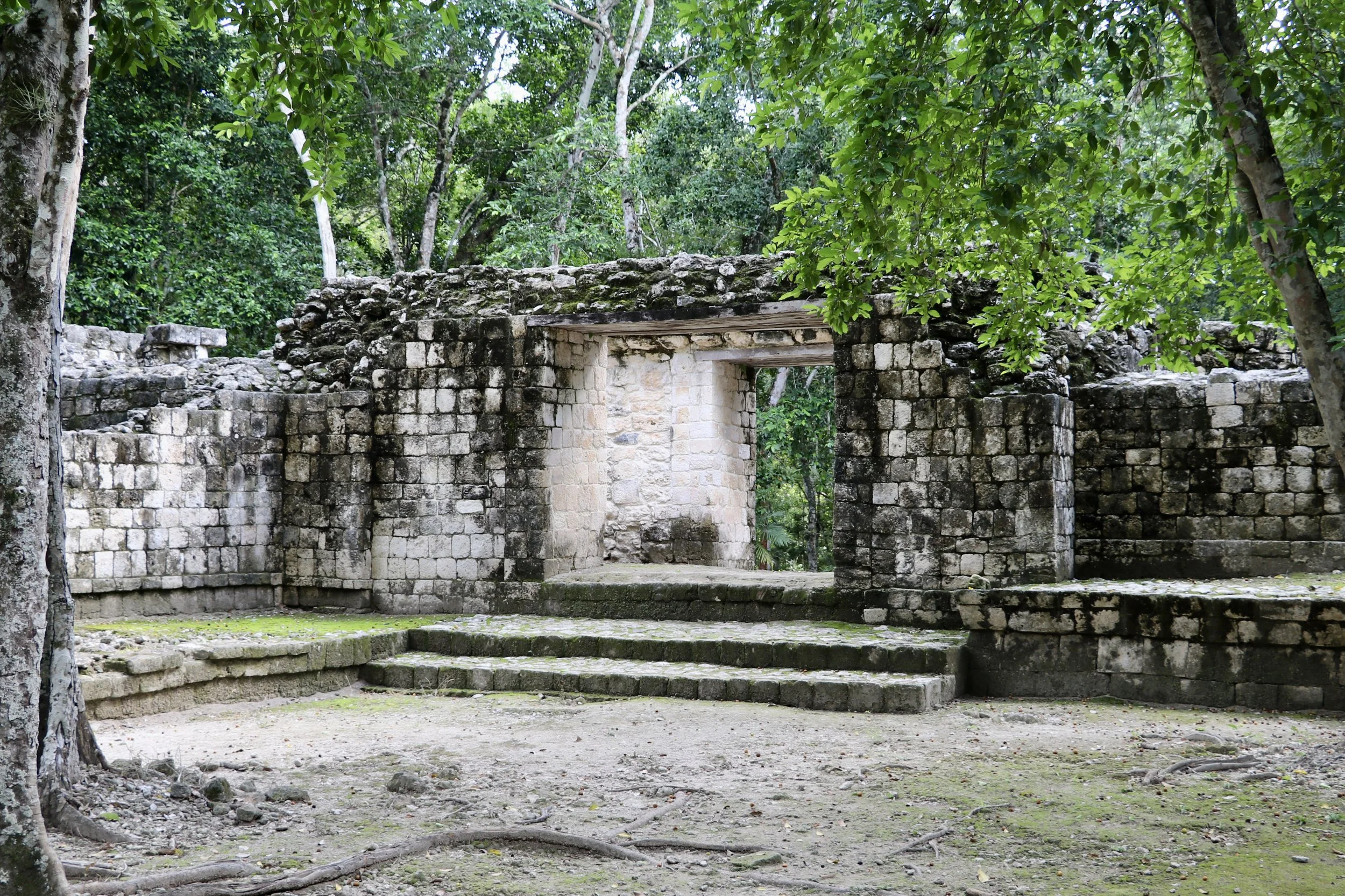
Balamku
A modest site in scale, but home to one of the most extraordinary surviving stucco friezes in the Maya region.
key site
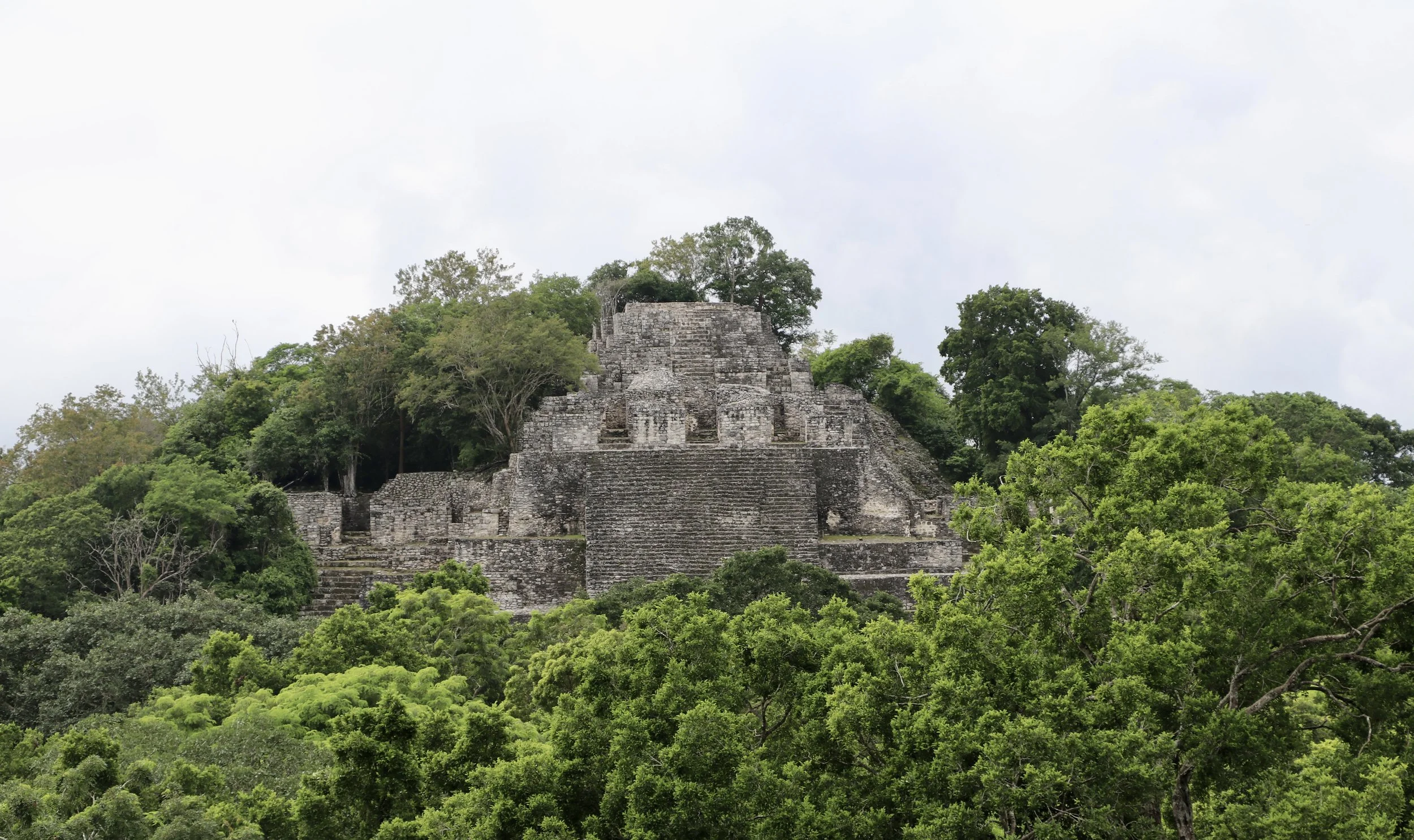
Calakmul
One of the great capitals of the Maya world, Calakmul combines monumental architecture with one of the most remote settings in Mesoamerica.
Field notes
Download maps in advance
Cell coverage is generally reliable around Campeche City and Edzna, but becomes less dependable or completely absent on secondary roads and around Calakmul.
Fuel up before leaving Hopelchen
Services become increasingly sparse beyond the Chenes region. Top up your tank before heading toward Xpujil or Calakmul.
Expect rough access roads
Most highways are in reasonable condition, but access roads to Santa Rosa Xtampak, El Tabasqueño, and El Hormiguero can be slow and uneven. The access road to Calakmul, however, has been recently upgraded.
Start early at Edzna
Edzna offers relatively little shade in its main ceremonial core. Early morning visits are noticeably more comfortable.
Drive before nightfall
Wildlife, limited lighting, and occasional road hazards make daylight driving significantly more comfortable, particularly around Calakmul and in the Chenes hills.
Don’t rush the Chenes sites
Hochob, El Tabasqueño, and Santa Rosa Xtampak are not spectacular because of their size. Their appeal lies in their intricate architectural detail and the absence of crowds.