Edzna, Mexico.
The Lost Grandeur of the Maya Lowlands.
Looking for concrete details and tips? Go straight to the Practical Information section.
It was just past 4pm, and with the sun behind me, I climbed the tall steps of the Great House of Edzna. From the site map, I knew what I had come to see lay behind it, and I hoped the view would be worth the climb.
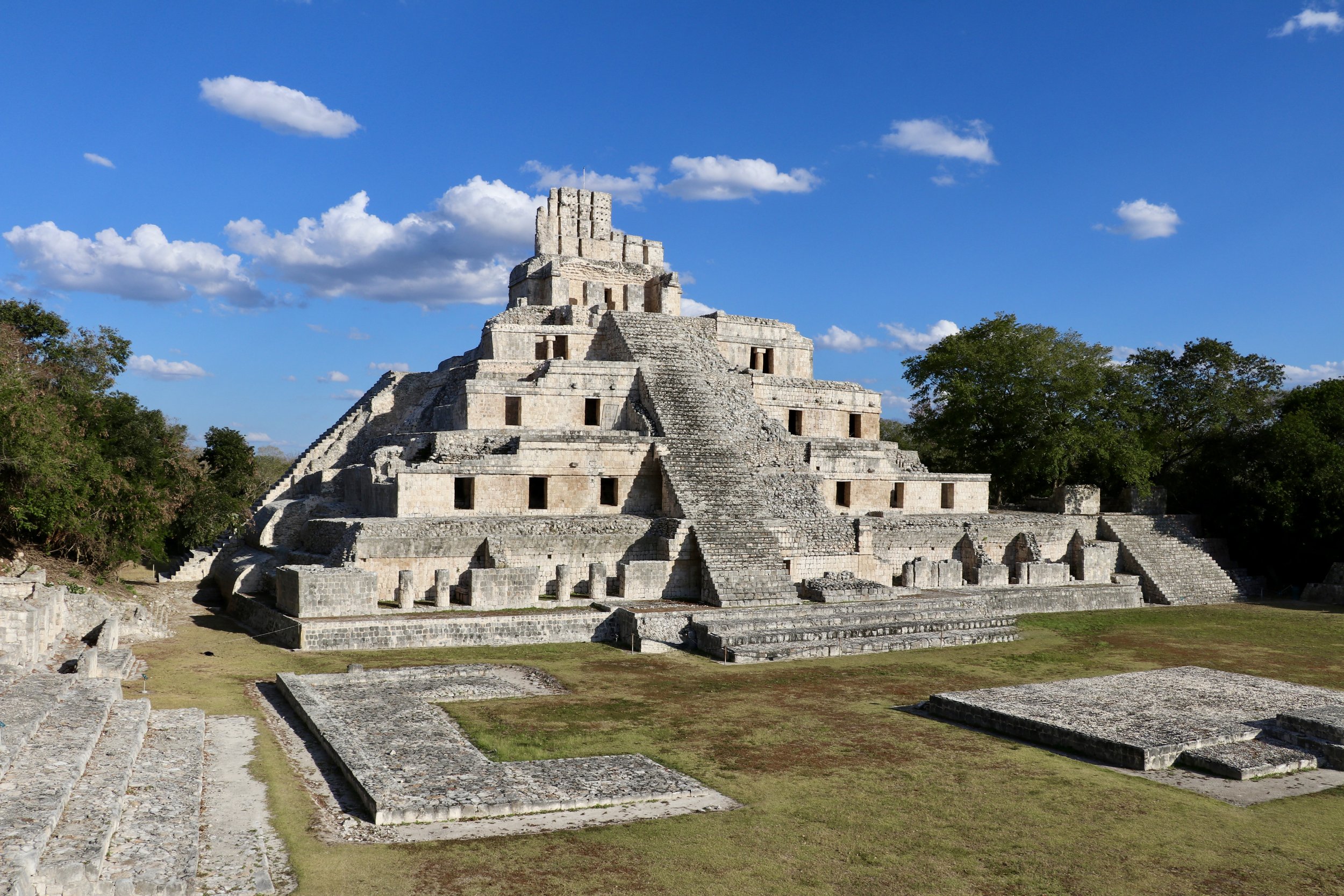
It was fair to say my hopes weren’t dashed. A couple of hundred yards away, lay the famed Great Acropolis, caressed by the gentle glow of the afternoon sun. To say it was a shock would be an understatement. The acropolis centerpiece, the Temple of the Five Stories, stood out as a powerful sight. Partially restored and perfectly maintained, it was such a imposing presence that it took over the whole plaza ahead of me.
My first thought, past the moment of discovery, was that this pyramid rivaled Chichen Itza in terms of impact. By chance, a French tourist climbing down the acropolis steps uttered the same thought out loud at around the same time.
The site was fairly empty, so his voice carried easily across the plaza. “Even better”, he added, “it’s completely empty!” I smiled when I heard him say that. The thought had crossed my mind as well, although I wasn’t yet sure why. What was it about Edzna that made its impact feel so immediate, even when compared to a place as iconic as Chichen Itza?
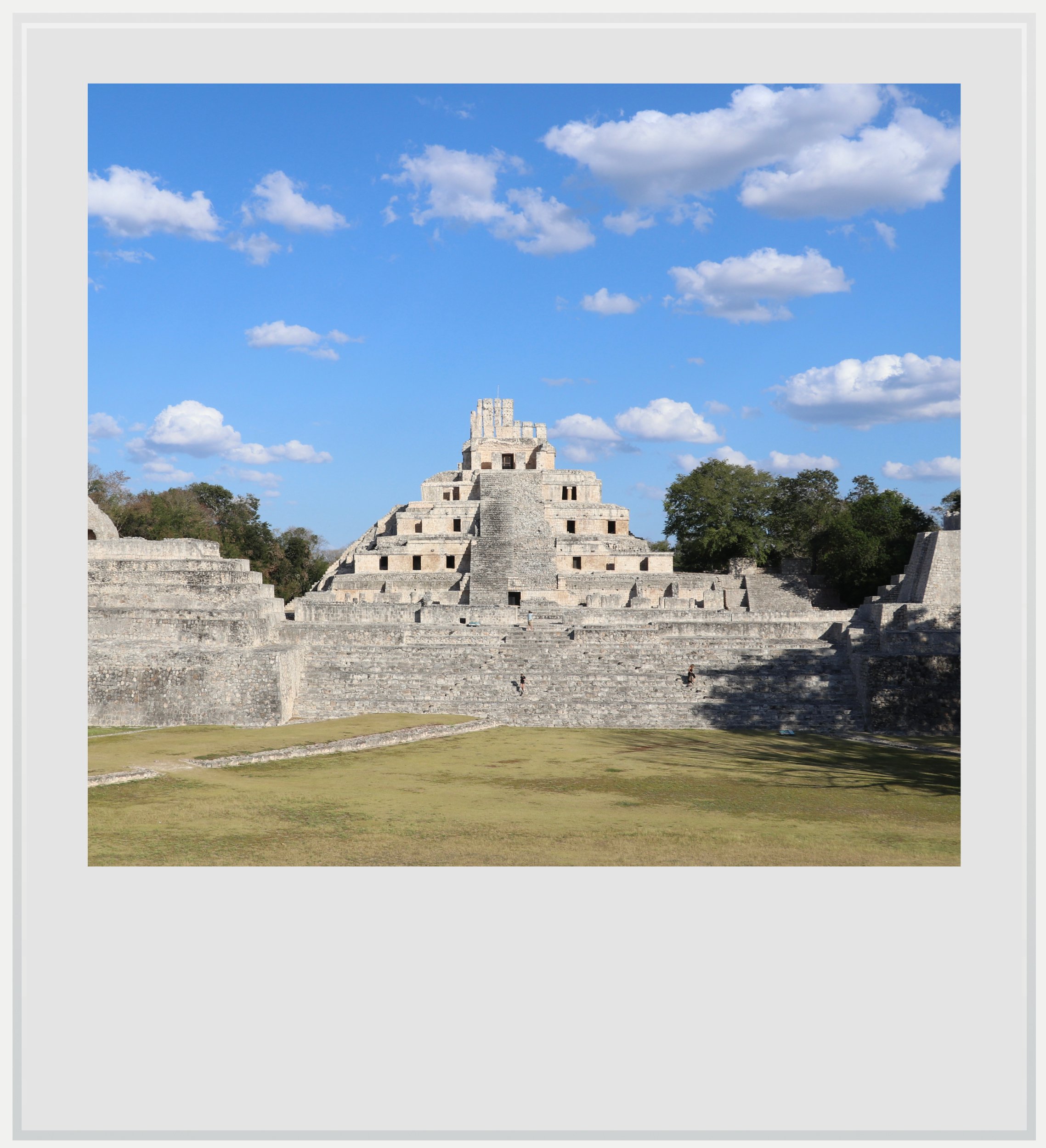
The Temple of the Five Stories, seen from the Great House.
The site’s emptiness was a fact that didn’t require any debate, however. I had visited Chichen Itza twice, both times after 3pm when most tour buses had already left, to try and enjoy it with fewer crowds, and both times, I still had to contend with many tourists. To be candid, I was glad some of the Maya sites received as many visitors as they did, and the Mexican authorities do a great job of making the place enjoyable for the 8,000 daily visitors. It’s important for people to discover this extraordinary pre-Columbian civilization, often overshadowed by Mexico’s beaches and major cities.
Still, I couldn’t help feeling a bit sorry for Edzna, whose constructions looked incredible and yet, as that French visitor remarked, was a rarely visited site.
To understand why Edzna receives so few visitors compared with other Maya sites of the Yucatan, it is important to look at the geography of the peninsula. Most people visiting the region stay near Cancun, at its northeastern point, to enjoy a relaxing week by the beach.
Two Maya sites are easily accessible from Cancun: Tulum, in the Riviera Maya, and Chichen Itza, where the Kukulkan pyramid was named one of the new Seven Wonders of the World. Both are a convenient way to get introduced to the old Maya civilization.
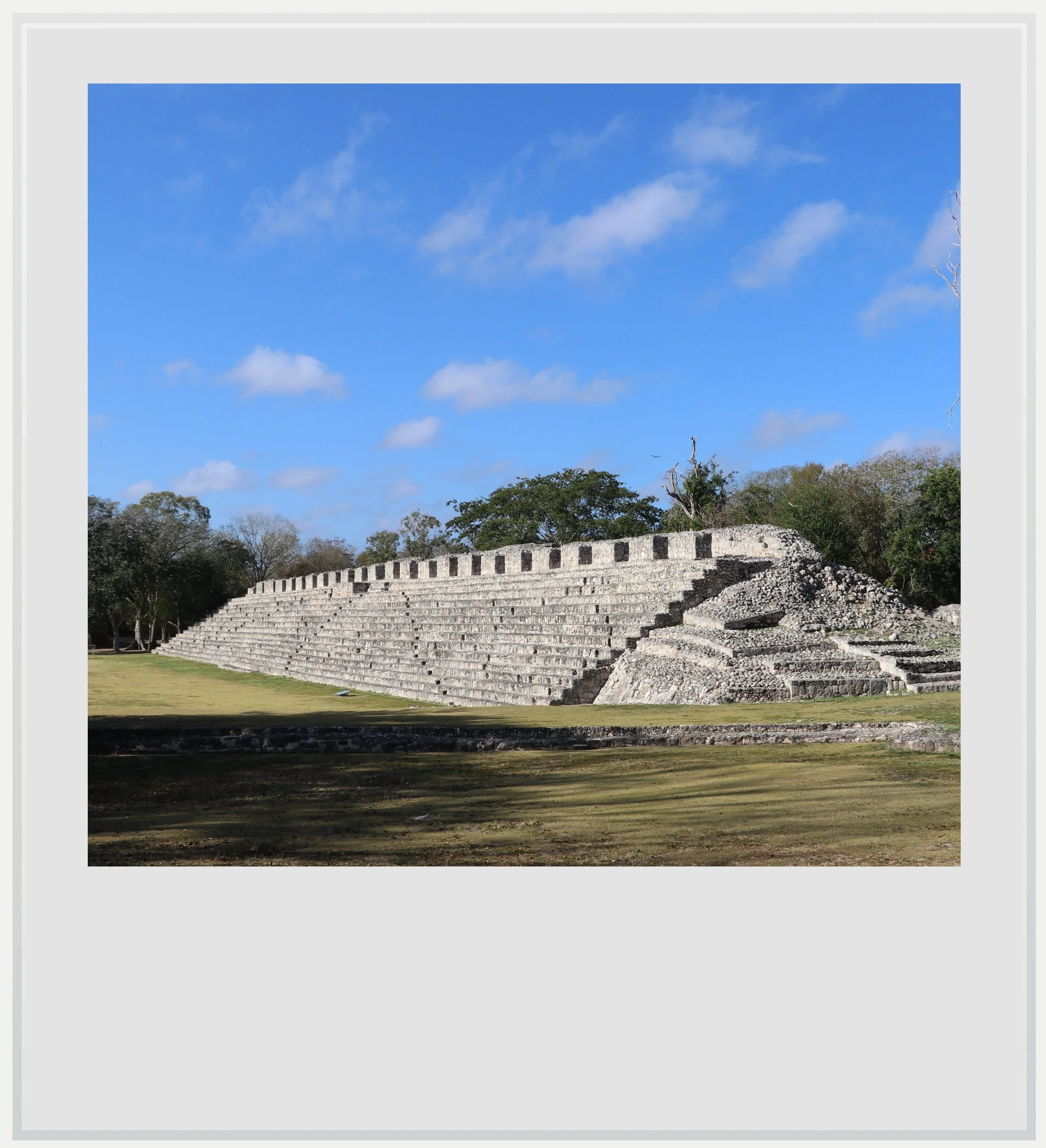
The Great House (Nohoch Na).
Edzna, much further west, and 5h30 away from Cancun by car, can’t be seen as a day trip, and as such, doesn’t benefit from the same pool of sun seekers. In fact, Edzna, in rural Campeche, may not even be the site people think about when they decide to spend a bit more time in the peninsula, basing themselves in the cultural hub of Merida. Plenty of other Maya sites, like Ek Balam and Uxmal, are much closer to the state capital of Yucatan, and therefore more easily on the list for these travelers.
That meant Edzna was pretty much a poster child for The Roads Not Traveled. An incredible site, visually and historically fascinating, shunned by global tourism. As I sat down at the top of the Great House, I almost wanted to grab my pen and start writing.
Edzna occupies a very singular place in the Maya world.
That wouldn’t have been wise, however, for the site closed at 5pm sharp. I had less than an hour to get an overview of it and take advantage of the gorgeous light to snap a few pictures. I had managed to get in early in the area - my initial goal had been to visit the site the following morning, but this afternoon visit turned out to be the best way to discover the overall architecture of the site.
Edzna occupies a very singular place in the Maya world. Geographically isolated from the main clusters of cities, it never quite belonged to a single architectural tradition. Instead, its monuments draw from several styles, creating a city that feels both familiar and slightly distinct. That being said, the settlement I was looking at was a testament to the architectural genius of the Maya builders of its most flourishing period, the Late Classic era, from 600 to 900 AD. It is believed that, until 250 AD, the site only consisted of rudimentary constructions, with none of the grandeur I could see in front of me.

A temple on the western side of the Great Acropolis.
As I moved through the site, I realized that what made Edzna so fascinating was its status as a city mixing influences, owing to the length of time it had been inhabited, and its geographic situation, at the edge of several influential regions of the Maya world. The first major buildings erected on site at the beginning of the Late Classic period borrowed from the Peten style, with massive pyramidal volumes and large platforms, common in cities like Tikal and Calakmul to the south. The base platform of the Great Acropolis and its western steps, as well as the Temple of the South are great examples of that style.
I visited Puuc sites several times, and was in Sayil a couple of days before my visit to Edzna. Less obvious at first glance, the second architectural influence at Edzna is Puuc. Located at the edge of the Puuc hills but never really deeply connected with its capital Uxmal, Edzna nonetheless features some distinct signs of its design language, especially in some of the buildings from the Early Classic era - the Patio Puuc, to the left of the Great Acropolis when looking at it from the Great House, was a great example of this, even if I had to really look for the frieze-like details so typical of the architectural style. The columns and facade treatments of the Temple of the Five Stories were a subtle proof of Puuc influence as well.
Later in the life of the settlement, from around 700 AD, the influence of the Chenes building style became obvious. Once again, Edzna sits at the edge of the Chenes region, whose geographical center is somewhere between the villages of Dzibalchen and Hopelchen, to the east. I couldn’t see any emblematic Chenes-style serpent-mouth doors in Edzna, unlike Hochob or Chicanná, since most of them have been destroyed to build newer buildings in the later occupation periods of the site. Archaeologists know these doors once existed because they have found stones carved as teeth, which in typical Chenes architecture surround the doorway to represent the mouth of a serpent.
The beauty of Edzna, however, is that the site can be understood without any prior knowledge of Maya culture or history: the Temple of the Five Stories, on the massive platform formed by the Great Acropolis, is in itself such a wonderful sight, that I spent a lot of time just gazing at it from all the angles I could - I was helped by the fact most structures at Edzna, save for the main temple, can be climbed.
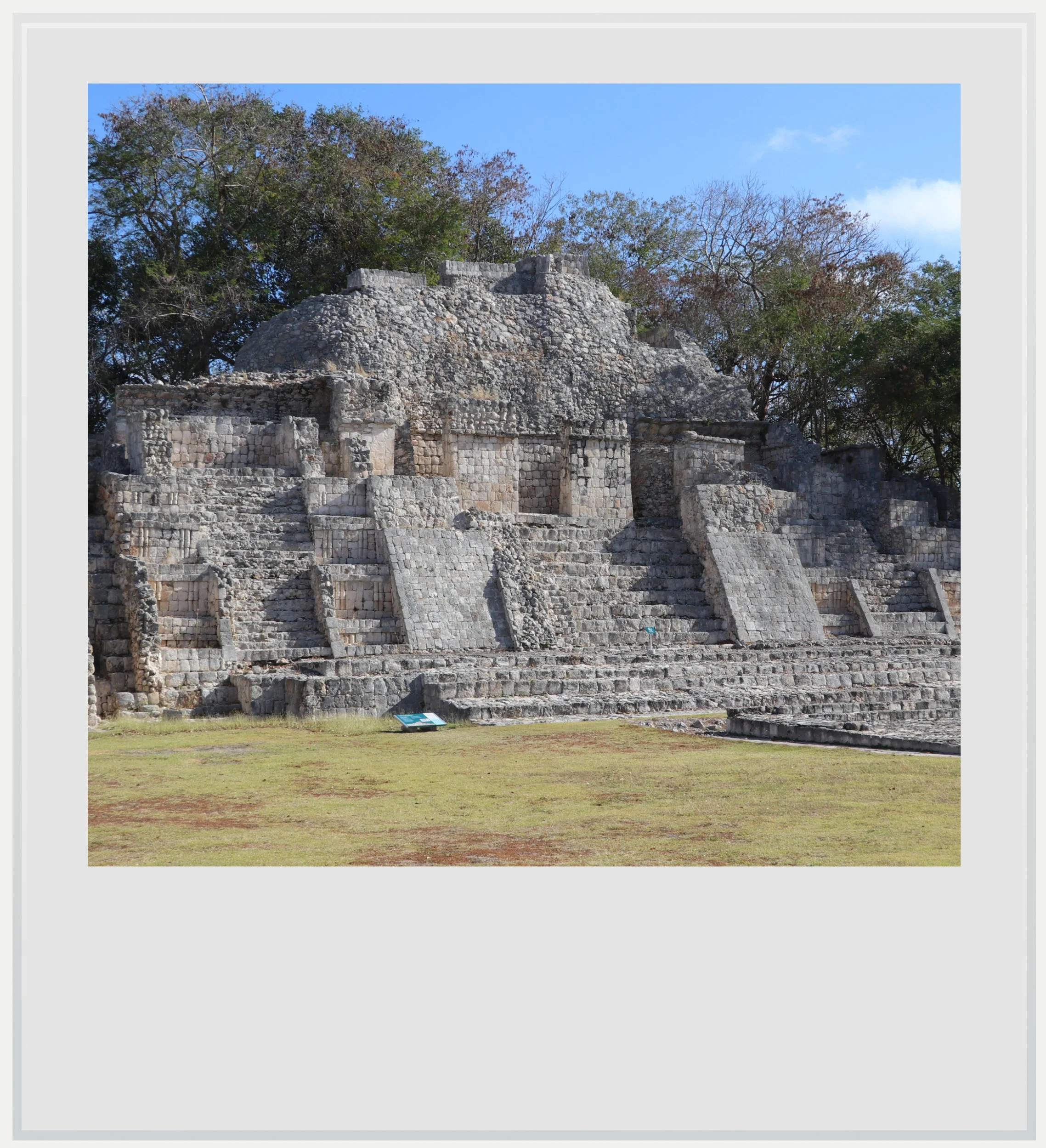
The temple on the northern side of the Great Acropolis.
Aside from its beauty, the temple is fascinating for being a rare example of a pyramid built as a stack of roofed chambers, rising one above the other. That suggests the building may have been used as a house or an official building, and not only as a temple. It creates a stunning contrast with other famous Maya pyramids, like Chichen Itza or Uxmal.
I kept on coming back to the remark uttered by the French tourist at the beginning of my visit. Why did he feel, just as I did, that Edzna’s architectural presence was stronger than Chichen Itza’s? Aside from expectation inflation (Chichen Itza is so heavily hyped that first impressions can suffer), Edzna felt more compelling because I saw it as a true complex rather than a group of separate buildings. Seeing the Great Acropolis from the Great House is seeing a full square, perfectly designed, anchored by the Temple of the Five Stories, but surrounded by other constructions, that together, create a very distinguished sort of urban planning. That cohesion isn’t seen in Chichen Itza, where the Kukulkan pyramid (however visually striking) sits alone in a grass field, with outer buildings further away, and hard to understand as part of the same settlement.
What made Edzna so fascinating was its status as a city mixing influences.
That difference (the fact that Edzna looked like a fully formed city organized around a grand plaza) was what impressed me most, and ultimately what made it such a compelling site.
That’s not to say the settlement should be defined only by the Great Acropolis. The Small Acropolis, the Southern Temple, the Great House and the Knives Platform are all worth checking out, as well as the stucco masks seen in the aptly named Masks Temple, but they can’t rival the main plaza in its visual impact.
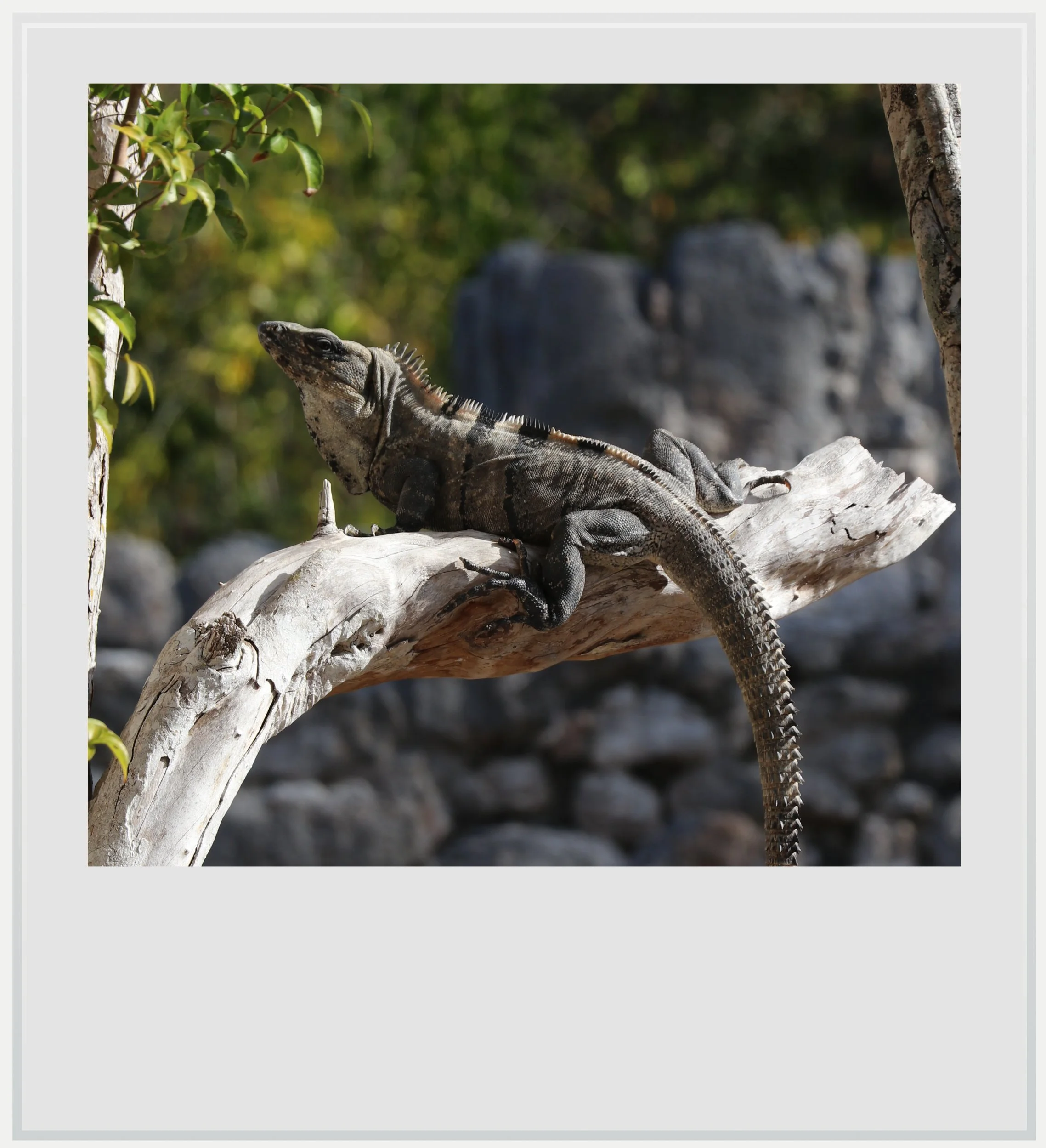
A cautious iguana in the Small Acropolis.
Another striking aspect of the Edzna settlement is how its engineers mastered the constant supply of water. Climate in the Yucatan forests is divided into two seasons, a wet and a dry one, and preserving enough water for life and agriculture during the dry season was an imperative for all Maya cities across the region. It also meant that whoever could ensure a steady supply of water could give their city an incredible advantage over the other ones.
Edzna is located in a plain that tends to flood during the wet season, and its inhabitants found a way to dig an impressive network of canals, basins and cisterns (called chultunes) to store water for use in the dry season. While the canals are hard to see now, some chultunes are clearly visible, notably at the back of the Knives Platform. The extensive water engineering at Edzna helps explain why the city thrived for such a long period (it was lived in until the 16th century).
I left Edzna just before closing time, but vowed to come back the next morning for further exploration.
I woke up early to get to the archeological zone just before opening time, and was the first visitor on site (and was alone until I left, 90 minutes later). My first move was to check out the interpretative center, right after the entrance, which, in my haste to see the site in the afternoon light, I had neglected the day prior.

A wide angle view of the Great Acropolis.
It was a wonderful little museum that gave insightful context (both in Spanish and English) over the site, and showcased some of the most stunning pieces found on site, protected from the elements.
That done, I slowly walked through the forest to the Great House, enjoying the fresh morning smells emanating from the nearby trees, and the constant trilling of local birds, and pinching myself for having the site to myself.
Going back to Edzna the next morning was interesting. The site was as stunning as the day before, but the sun, now behind the Temple of the Five Stories, made the building dark and heavy, in complete contrast with the day before. Where I had seen a masterpiece bathed in the sunlight, I was now confronted with a somber, quasi oppressive sight.
Not everything was lost, however. The side views, especially on top of the Moon Temple, were beautiful, and, with the Temple of Five Stories behind me, the rest of the site, all the way to the Great House, looked much better in the morning.
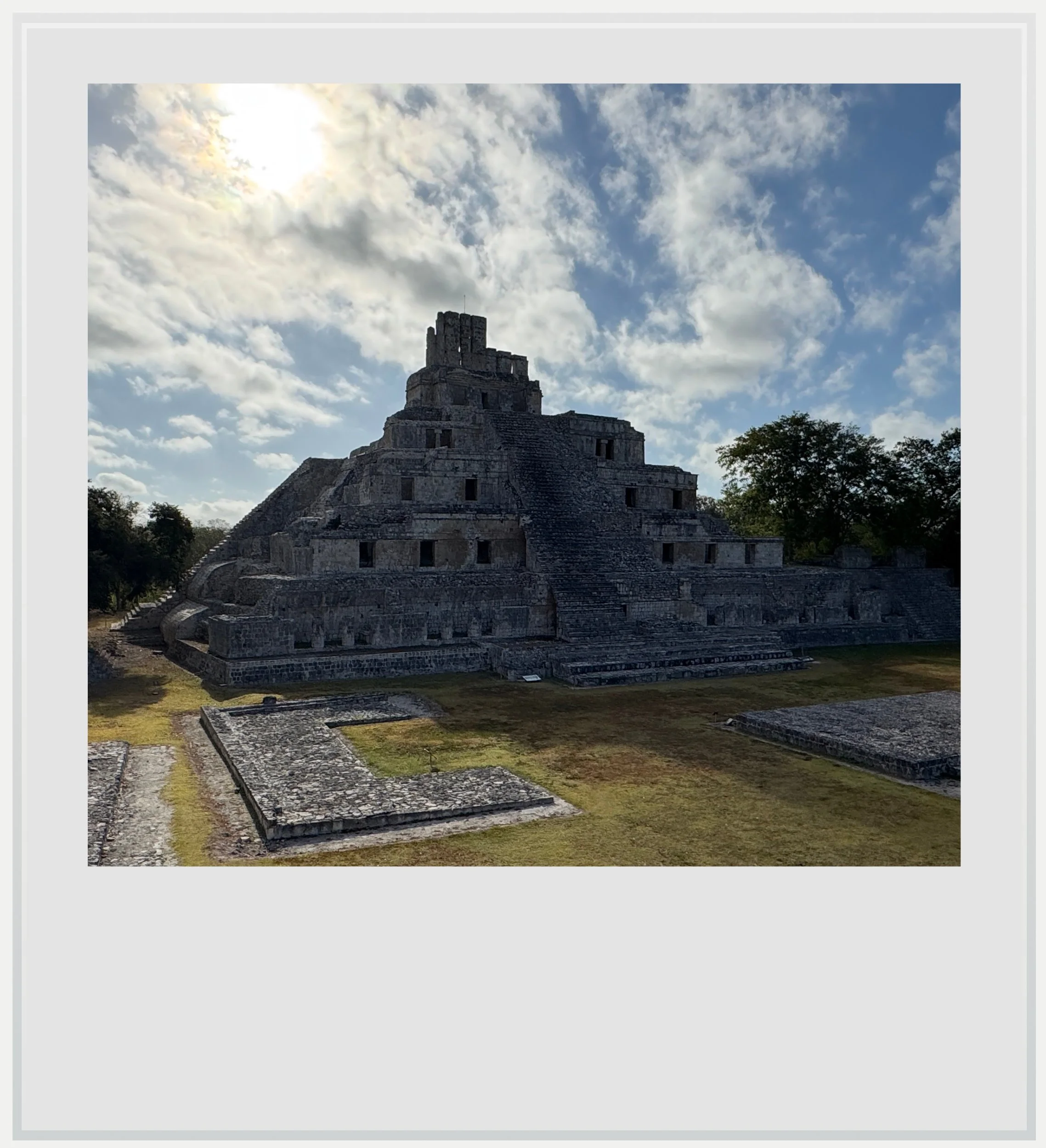
The Temple of the Five Stories in the morning light.
That being said, it was a lesson I would remember. With a lot of major Maya sites featuring a building oriented towards the west, afternoon light always enhances their beauty more than morning light.
I left the site as the shouts of running children approaching the ruins reached my ears and, happy to leave it for other visitors to enjoy, walked back toward my car. Edzna had already secured its place among my favorite Maya sites in the Yucatan.
Practical information
(Everything you could possibly want to know about Edzna - updated March 2026)
In a nutshell
Edzna, a magnificent Maya site south of San Francisco de Campeche, packs as much punch as Chichen Itza, but is rarely visited. The huge site is anchored by the stunning Temple of the Five Stories and several other buildings that are absolutely worth a detour.
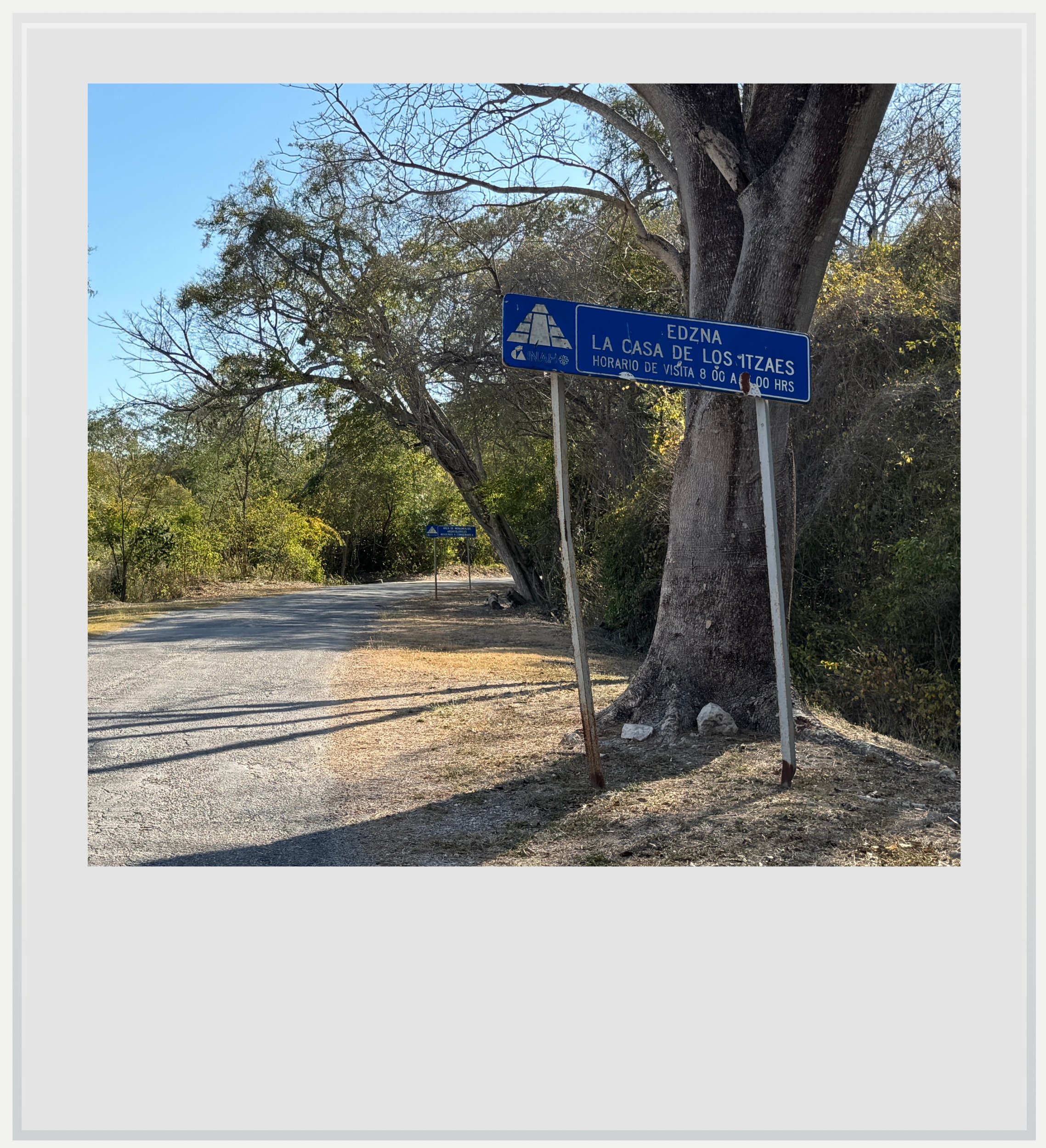
The road leading to the Edzna archeological zone.
Getting to Edzna
How to get to Edzna from the United States: Edzna, about 30 miles (50 km) south of San Francisco de Campeche, isn’t super easy to reach from the US. The closest airport to Edzna is Campeche (CPE), 45 to the north. Campeche is only served by one or two flights a day from Mexico City (MEX) so it isn’t the most convenient airport to get into. Merida (MID) can be an alternative. Travel time to Edzna is about 2h20, and Merida sees a lot more frequent flights to Mexico City (14 on a random day in March 2026) as well as non-stop flights to the US (American flies daily from Dallas (DFW) and Miami (MIA), United daily from Houston (IAH) and Viva several times weekly from Orlando (MCO) and Miami (MIA). For additional directions from each airport, please see below. Note that car rental is your best bet to visit the region, and both Campeche and Merida airports count with several local and international options, which were fairly priced at the time of my visit. While the ADO bus company serves the regions with frequent buses between major cities, only SUR, a regional provider, serves the rural regions of Campeche. As such, bus travel isn’t really an option. More details below.
How to get to Edzna from the Campeche airport: assuming car rental, make a left upon exiting the airport, then another left when you get to the ring road, but don’t get on it as you need to get off at the next intersection, towards Edzna. The trip should last 45 minutes. The Google Maps directions are excellent on this route, but don’t forget to download the regional map before leaving the airport, as cellular service is very spotty in Campeche, so you can follow directions offline.
How to get to Edzna from the Merida airport: assuming car rental, make a left upon exiting the airport, then another left to take the Merida ring road at the next big intersection. Exit the ring road and follow signs toward Campeche (highway 180) all the way to Tenabo. There, exit at the Tenabo exit (on a road that has no number) and, as soon as you exit the highway, there will be a sign to Edzna (but there are no signs to Edzna on the highway itself so do get out when the sign says Tenabo). Follow this non-numbered road to a T-intersection with route 261, where the overhead sign will say “Merida” but once you get to the actual intersection, you’ll see another sign for Edzna. Upon exiting the town of Cayal, turn right on road 188 (the sign to Edzna isn’t obvious so go slow) and follow it until you see a sign to Hochob and Edzna. You’ll be less than a mile from the site, and it’s hard to get lost from there. Don’t forget to download the regional map before leaving the airport, as cellular service is very spotty on the route, so you can follow directions offline. The Google Maps directions are pretty good. The trip should last about 2h20.
Can I get to the Edzna archeological zone on a bus: short answer, yes but it’s far from convenient. While no regular buses serve Edzna, a colectivo service links the ruins to Campeche (confused about what a colectivo is? See this guide). Minibuses depart from here every 30 minutes or so from 8am to 5pm, the trip lasts about an hour and costs MXN 75. Colectivos drop you off close to the entrance of the ruins, and this is where you need to wait for the return trip and flag an incoming minibus. While this is convenient and affordable, you may have to wait a while in the heat for a minibus to arrive, and you cannot miss the last one, otherwise your options to get back to Campeche will dwindle quickly.
Can I get to the Edzna archeological zone on the Maya Train: at this time, not really. The Maya Train isn’t working at full capacity yet, and service is reduced on most of its lines. This means there are only one or two trains a day in each direction between San Francisco de Campeche and Edzna. Moreover, both stations aren’t in town and require either a bus or a taxi to get to and from your destination. The only way this would work is if you were planning to stay a few days in Edzna.
Can I get on a tour to see Edzna: it is possible to get on a tour from either Campeche or Merida. Tours are available on global platforms such as Viator or GetYourGuide. From Campeche, a 4-hour tour costs about USD 100 a person, and from Merida, a full day tour including Edzna but also the old city of Campeche, sells for about USD 300. These are expensive, but offer convenience versus setting up something yourself. It may be possible to find local tour groups offering the service. One place to look would be in Campeche, either by the bus station or near the Malecon (close to Puerta de Mar, here) where there is a decent tourist flow that attracts sellers. Tours will be geared toward Spanish-speaking travelers however, so it is unlikely a tour would be offered in English, but you may get lucky. As I planned my trip a few weeks in advance, I felt like having a car would be the easiest option and didn’t try to look for these options in person while in Campeche.
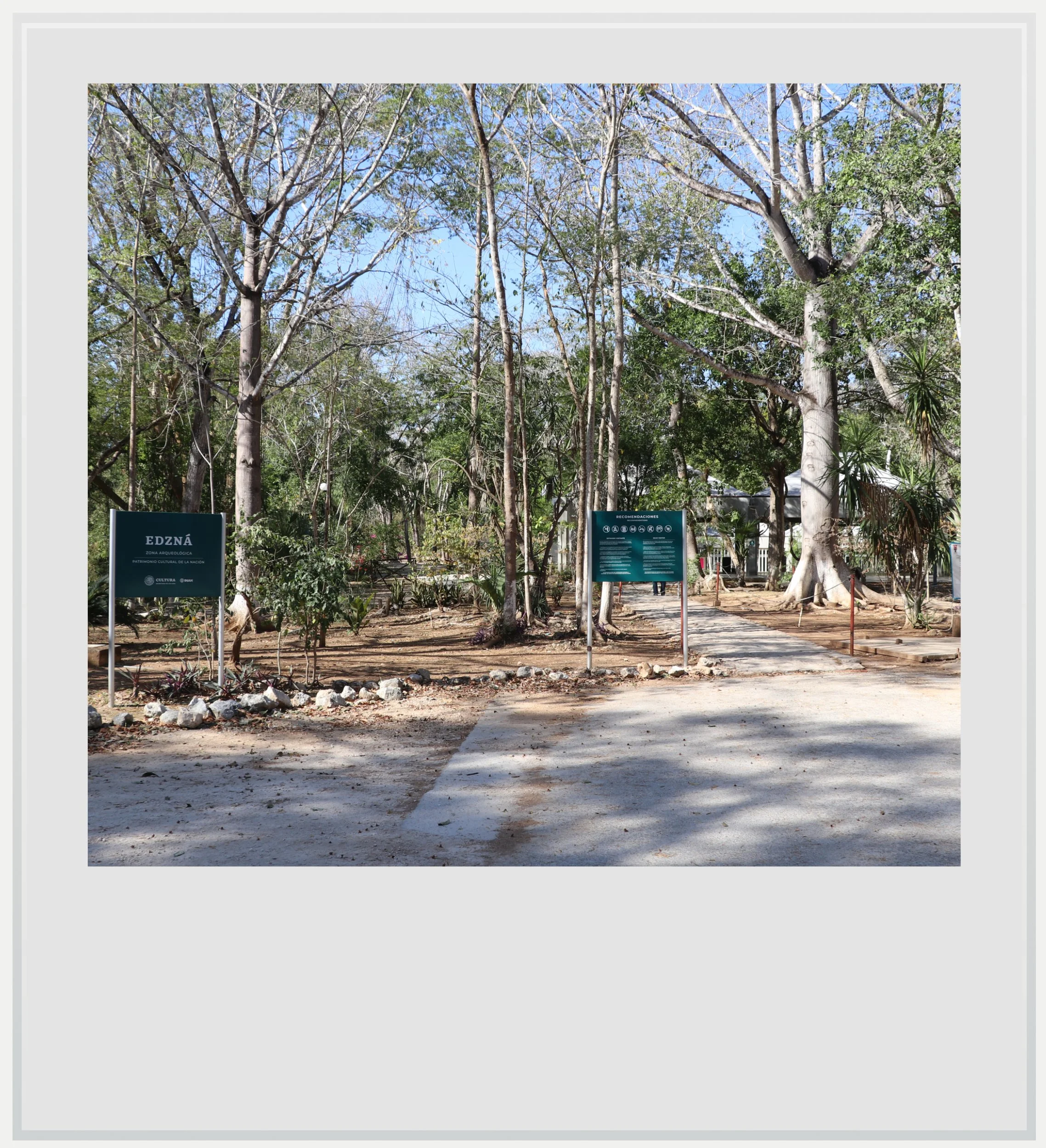
The site entrance for Edzna.
When to go to Edzna
The best months weather-wise to enjoy Edzna are during the dry season, between November and April, with January and February the (relatively) coolest months. This is also peak season but, given its location, the site is never actually crowded.
I went to Edzna in late February. There were very few people on the site while I was there, and even had the site to myself on my morning visit on day 2.
Aim to go to the site early (it opens at 8am) or late (at the latest by 4pm, to give you an hour before they close), to avoid the hottest hours of the day. The site isn’t super shaded so the sun can feel intense.
There are no services whatsoever on the site except bathrooms. Some sites mention a small selection of snacks and drinks may be available, but I didn’t see that. The closest village, Alfredo Bonfill, is 10 minutes away toward Hochob.
What’s the best time of the day to visit Edzna
Given the site’s orientation, it is best to hit Edzna in the afternoon, while the sun is behind you as you look at the Temple of the Five Stories from either the edge of the acropolis or the top of the Great House (Nohoch Na), the two areas with the most iconic views of the temple.
I went to Edzna twice, once late afternoon and once at opening time (8am) and strongly recommend an afternoon visit for the best light. The experience was very different visually on my morning visit, and I don’t think I would have enjoyed Edzna as much had I not visited in the afternoon.
Crowds will not be a factor: there were less than 10 visitors on my afternoon visit, and none during my morning one, so the site felt quiet and undisturbed both times (although the site may get a bit more crowded on Sundays and during the high season, it never gets the visitor flow of Uxmal or Chichen Itza).
How much does it cost to visit Edzna
Price was MXN 210 for foreigners and MXN 105 for Mexican citizens and official Mexican residents, with proof of residency, at time of writing.
Tour guides were available at the entrance, and some spoke English.
The site featured an interpretative center right after the entrance, which gave context on the site’s history and showed some of the artifacts found on site, protected from the elements. Whether you choose to hire a guide or not, this museum is a great first stop to understand what the site is about, and is well done with text in Spanish and English.
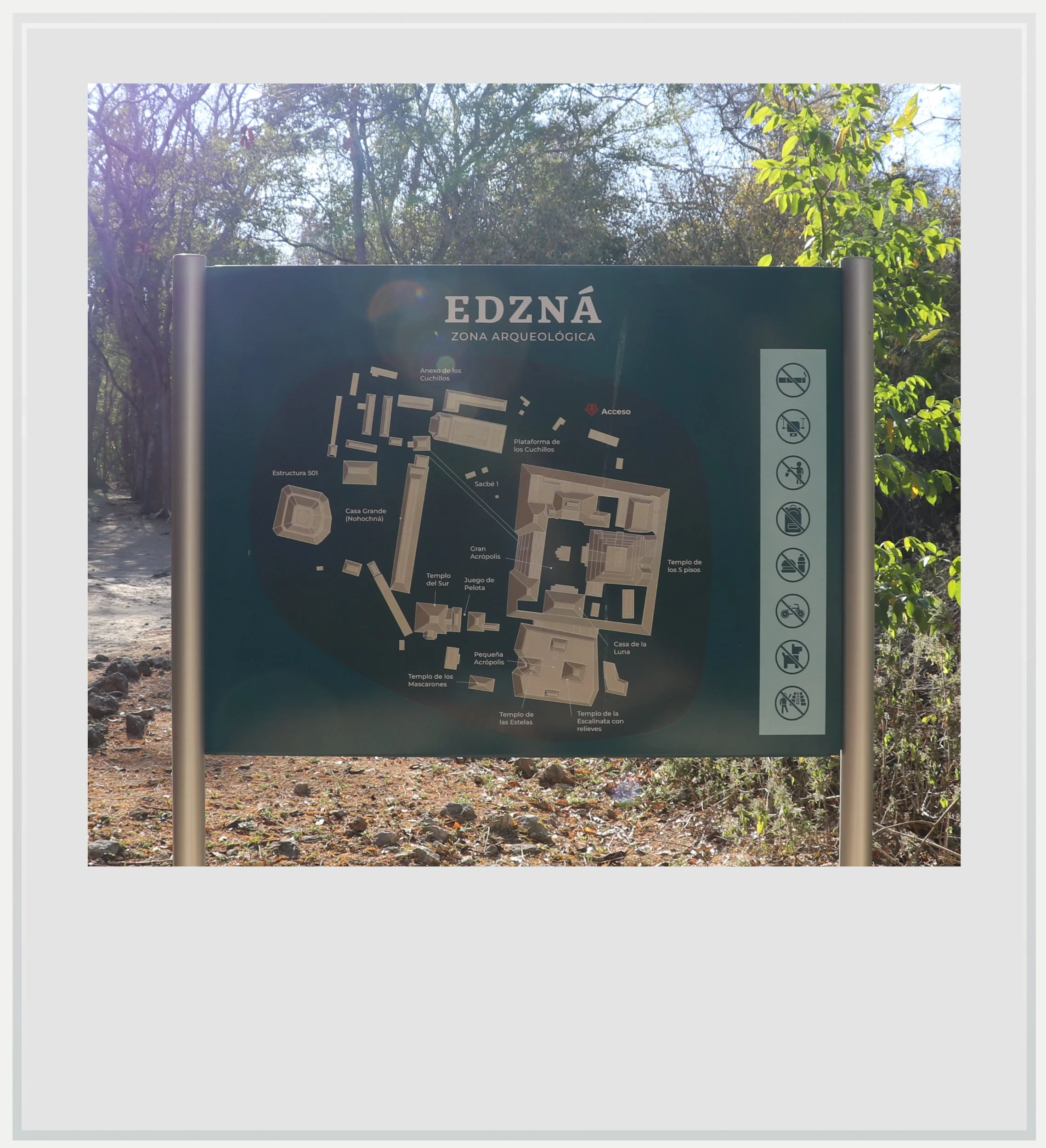
Edzna's site map.
How long should I plan to visit Edzna
Plan to spend at least one hour on site, which is the bare minimum to see all the main buildings. It is fairly easy to spend two hours there, as the site is quite big and lends itself well to contemplation.
What are the opening times of Edzna
The site is open every day from 8am to 5pm with entry allowed until 4:30pm.
What Other Maya Sites Can You Visit Beyond Edzná?
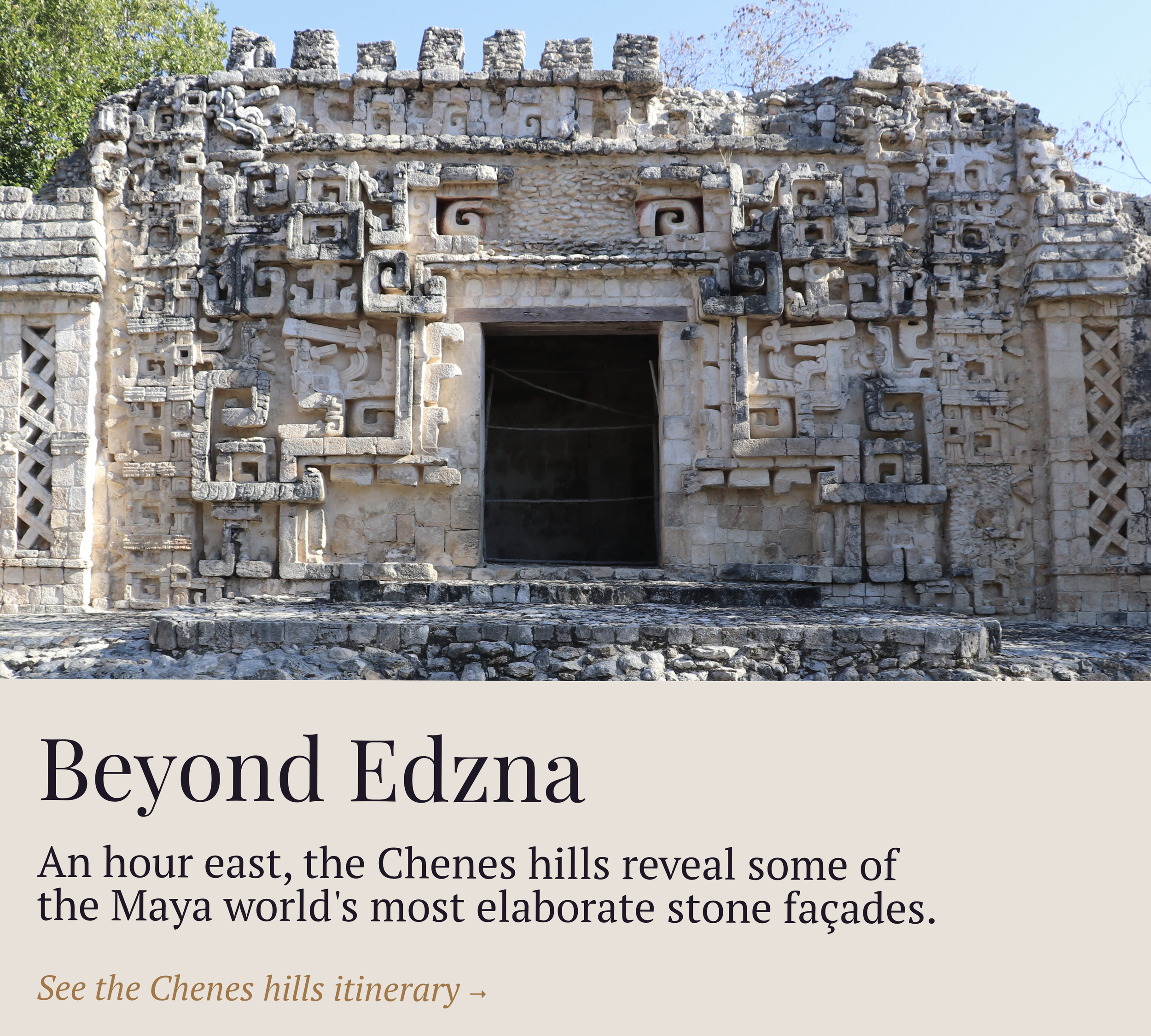
Edzna lies close to the Chenes hills, home to some of the most intricate Maya architecture ever discovered. The region is best known for its elaborate façade carvings, where temple doorways were designed to represent symbolic entrances to the underworld.
Hochob, the closest Chenes site, is located about 60 minutes east of Edzna.
It is easy to combine Edzna with several other Chenes sites on a one- or two-day trip through the region. For inspiration, see Days 2 and 3 of this 7-day itinerary from Edzna to Calakmul.
Safety in Edzna
The Yucatan peninsula is one of the safest areas in Mexico, and Campeche is one of the few Mexican states with no specific travel advisory: it is labeled a level 1 “Exercise Normal Precautions” state by the US Department of State, just like anywhere in the US. As such, there is no need to worry beyond taking normal precautions.
Normal precautions include having enough gas in the tank and enough water with you. There is limited mobile coverage on the site (I was only getting 3G signal with Telcel)
Food & lodging near Edzna
Hotels in Edzna
The Mundo Maya Edzna hotel is the closest accommodation to the site, about 2 minutes away by car (or 12 minutes on foot, but it can get hot walking along the highway without shade). I stayed there and enjoyed my stay very much. Developed alongside the Maya Train to help spur tourism, the Mundo Maya hotels are managed by an arm of the Mexican Army (but to hospitality standards, so you won’t see uniformed servicemen bringing you breakfast), and although they reported a huge loss in 2025, they are seen by the Mexican government as an investment to bring more tourists to the Yucatan peninsula. As such, they represent an incredible value (I paid about $100 for a room that could have sold for at least twice as much). The hotel was luxurious, well laid out, with ample rooms, all with balconies, a comfortable bed, and a big bathroom that would rival many resort properties in Asia. The hotel itself is set among lush grounds, with a pool, and can definitely be a rest stop for more than a night. I felt a little sad to not be able to enjoy it more.
Note that the hotel offers a free shuttle to Edzna twice a day (at 8:30 am and 10:30 am) and a pickup from the entrance of the archeological zone two hours later.
Restaurants
There are no food options near the Edzna site, except for the Hotel Mundo Maya restaurant, a few minutes away, where non hotel guests are welcome. The food is decent and not overpriced.
I enjoyed delicious tacos in the next town over, Alfredo Bonfill, in a small restaurant called Taqueria El Cartero. It was very basic but the tacos were delicious, and the tortillas hand made (MXN 25 per taco).
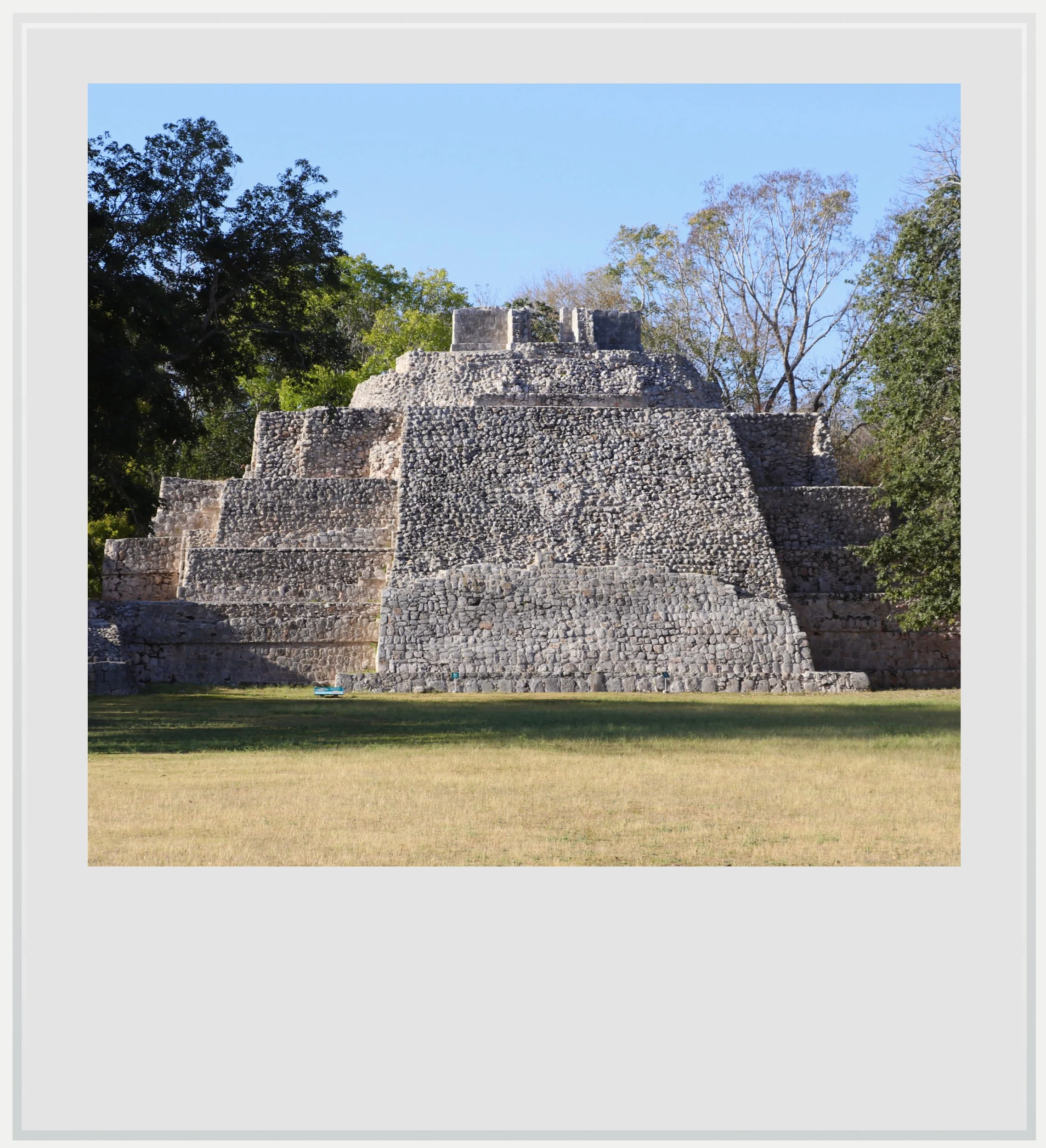
The Southern Temple.
Keep in mind these travel tips
The Yucatan peninsula is one of the safest regions in Mexico, and its main roads are well maintained - although that is definitely not the case for secondary roads, where you have to drive with extreme caution to avoid treacherous potholes. No matter what road you’re on, do not forget the #1 driving advice in Mexico: do not drive at night. This is especially relevant for this remote area of the state of Campeche. Driving at night, on poorly maintained roads means you won’t see the motorcycles without lights, the crazy-deep potholes and the ubiquitous topes, these notoriously hard speed bumps that seem to spring out of nowhere. You may encounter wildlife or, more prosaically street dogs crossing right in front of you. Plan your itinerary to be at your next destination before nightfall. It’s critical, and was one of the key criteria in how I built my itinerary around the region.
No matter the season, there will be bugs in Yucatan. While you may only see the gigantic Tarantula yucateca spider on the roads leading to Calakmul, you’ll find mosquitoes pretty much everywhere, and especially in the shaded forests surrounding the Maya ruins. Be ready with repellent at any time of the day. It’s also a good idea to wear clothes that cover your limbs (pants, high socks, long sleeve T-shirts) while you’re in the jungle. Wear sturdy shoes. You’ll need it in some of the archeological zones, but I also saw a few snakes, and although they fled when they saw me approach, it’s better to be safe than sorry.
SPF will be your best friend. The UV index may be low in the morning and evening, but during the day, it gets pretty high.
Do not forget to hydrate. While OXXOs aren’t as ubiquitous in this rural region than in other ones, you’ll find plenty of abarrotes, these tiny stores selling cold water and sodas along the way. Make sure you always have water handy and drink to make the heat more bearable.
Cell service is very spotty at best in rural Campeche, with Telcel the only provider with decent service in some places. If you’re roaming, check that you can roam on Telcel, or investigate a Mexican eSIM that uses this network.
Every photo’s legend will appear if you hover over it (on a computer) or click on it (on a smartphone).
All photos are mine and copyrighted.