Villa del Carbon, Mexico
In the Highlands North of Mexico City: a Place More Town Than Destination.
Looking for concrete details and tips? Go straight to the Practical Information section.
It was Wednesday morning and I had just sat down for breakfast on a balcony overlooking a small plaza to the side of Villa del Carbon’s zocalo. The sky was bright blue and the sun, still somewhat low, was starting to warm up the town.
Villa was still deserted and quiet, a notable contrast from the previous day, when the main square, busy with the town’s annual fair, was bustling.
There was no traffic, very few people on the street, but I could see the beginning of daily life returning. The tamales guy was setting up his stand. Some of the street dogs were lazily moving off the road to let the first cars pass by. Further down the square, a delivery truck was slowing down, trying to find a place to park. It felt like one of those moments when everything seems to fall into place.
I realized I had found what I had come for: a slow morning in a sleepy little mountain town that was gradually waking up in front of me.
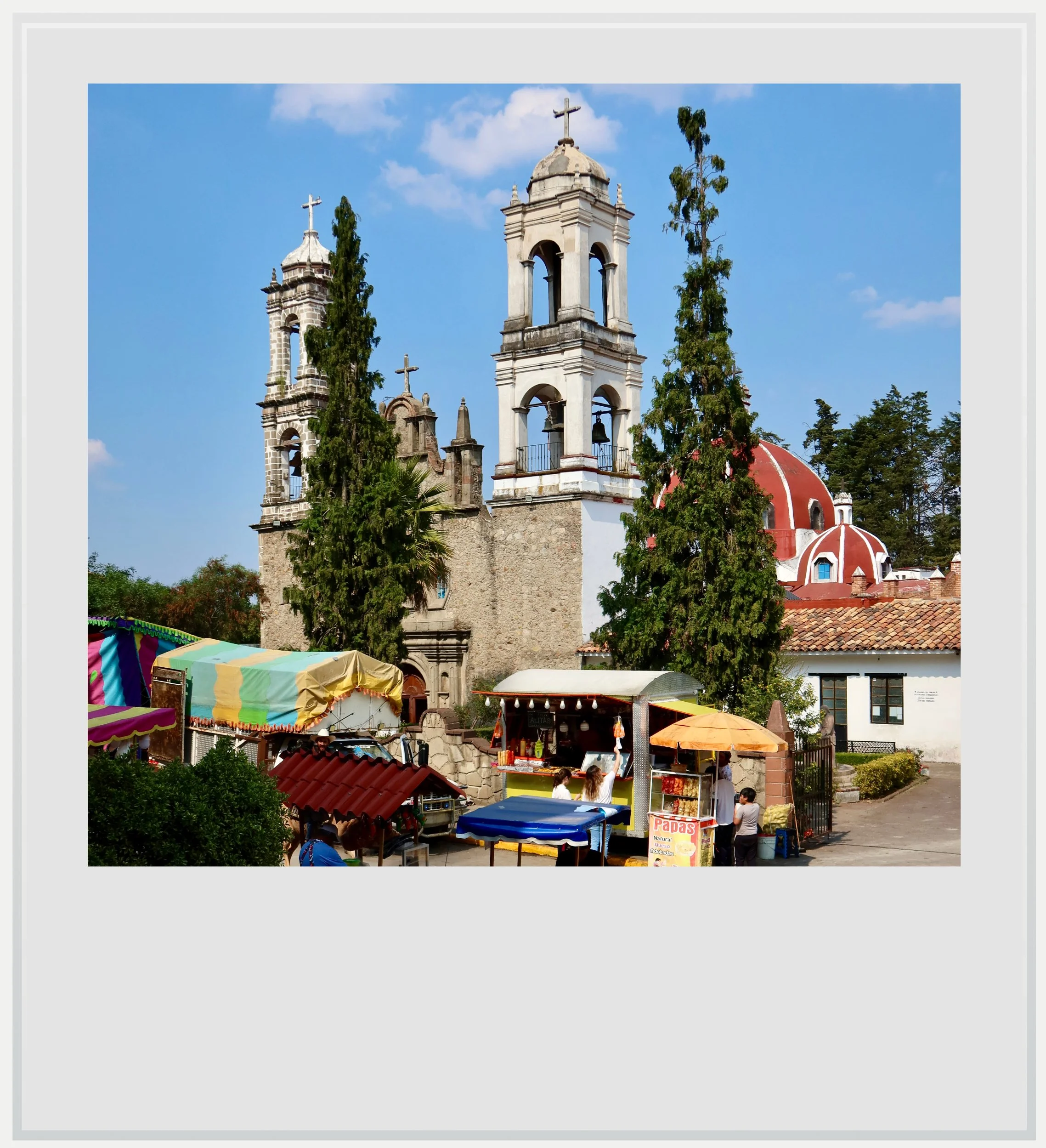
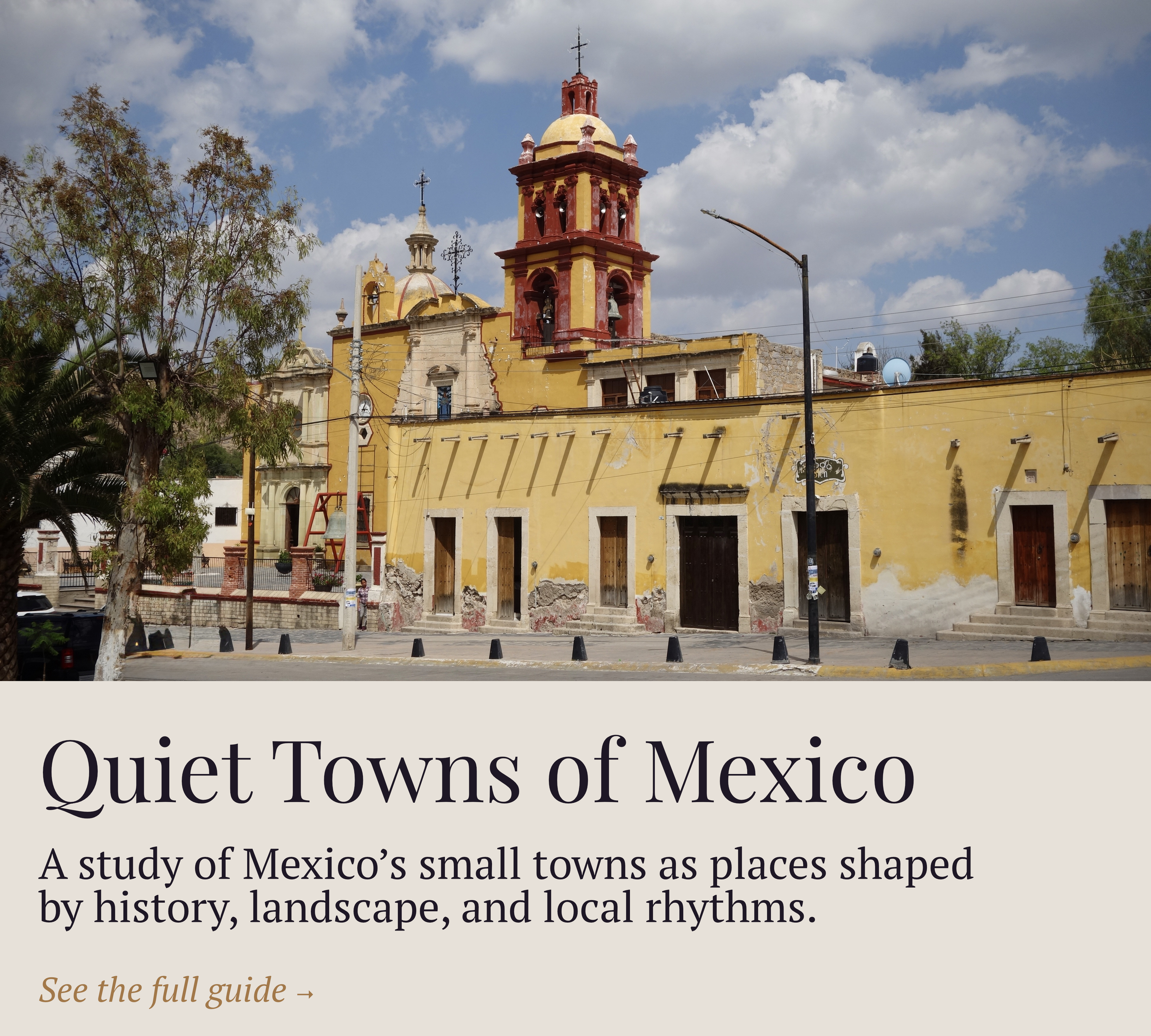
Santa María de la Peña de Francia church, with the town fair in full swing.
Villa del Carbon sits in the wooded hills northwest of Mexico City, about two and a half hours from the capital but separated from it by a completely different landscape. Pine forests cover the surrounding mountains, reservoirs fill the valleys, and the town itself preserves the quiet rhythm of a small colonial settlement. While it carries the official designation of pueblo magico, Villa del Carbon remains far less visited than better-known towns like Valle de Bravo or Tepoztlan, making it one of the most peaceful historic towns within easy reach of the city.
This relative anonymity made it a place I wanted to discover. This is why, on a Tuesday morning in March, I found myself getting out of the El Rosario subway station, in the northern part of the city, aiming to catch a small bus to Atlacomulco, that would drop me in Villa.
Most travelers to Villa del Carbon are Mexico City dwellers who come for a weekend, and most go up there driving. I was therefore the only obvious tourist waiting to board one of the many small buses linking Mexico City to the northern part of the state of Mexico, where Villa del Carbon is located.
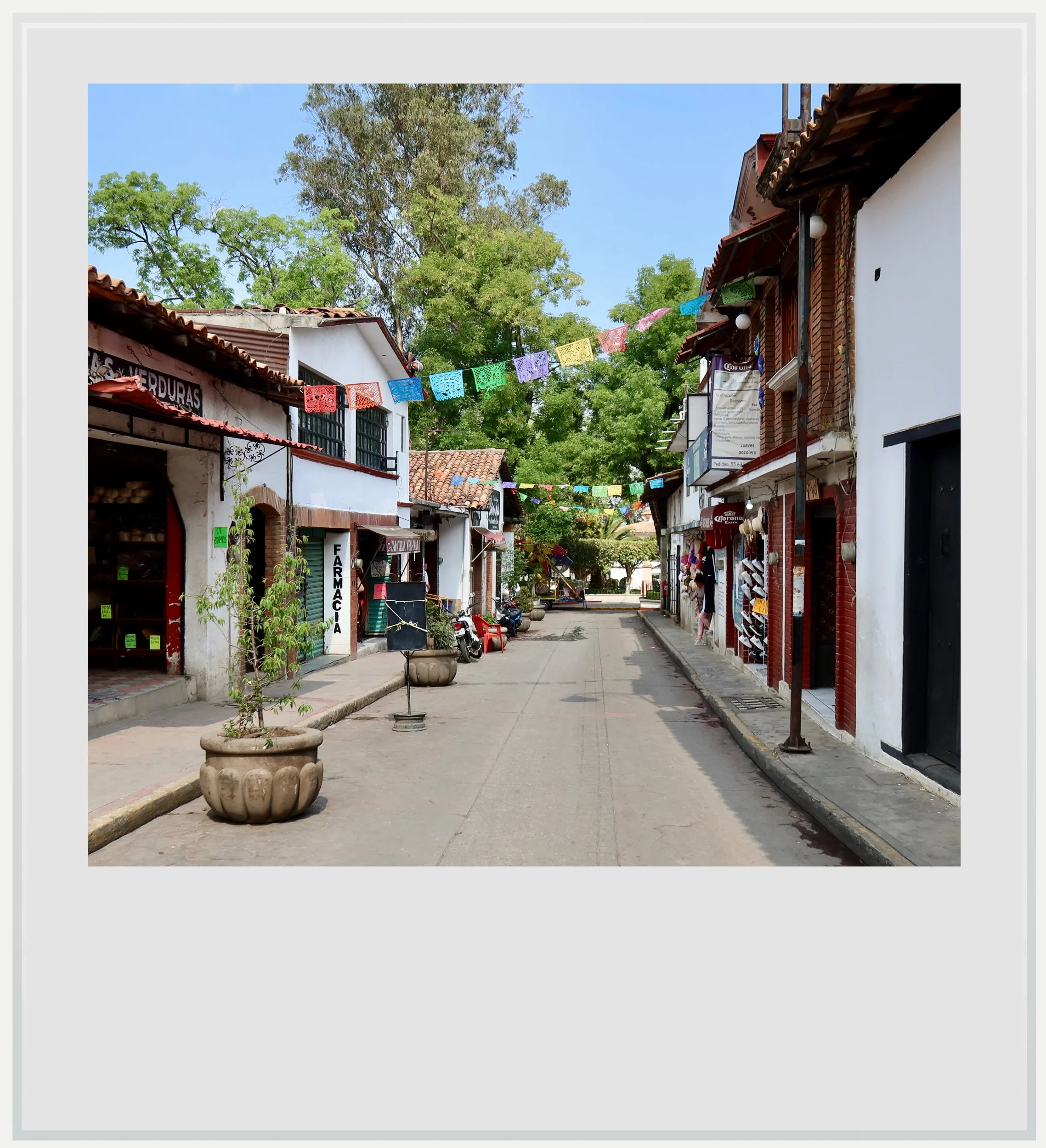
Calle Silviano Enriquez, towards the zocalo.
We passed through the capital’s northern suburbs, alternating between low-income neighborhoods and boxy, modern commercial plazas that seemed out of place, all among heavy traffic. Very quickly, we crossed into the state of Mexico. The border was hard to guess as the area felt like a natural extension of the capital.
People come to Villa del Carbon for the weekend to enjoy the numerous man-made reservoirs scattered beyond the town, offering everything from boat trips and fishing expeditions to, more prosaically, a nice view over the water. Trout farming is an important part of the local economy, showcased along the Ruta de la Trucha (Trout Trail), which links several hamlets throughout the municipality.
Beneath the visual noise was a village I had almost missed.
I was really going there for the colonial streets. Villa del Carbon, previously known as Santa María de la Peña de Francia, the name of its main church, changed its name when coal extraction brought it economic prosperity.
I had to get off the bus at an unusual spot, and quickly understood why. Access to the main square had been roped off to allow for the annual fair, a big, colorful jumble of kid attractions, alongside many temporary puestos selling food to the numerous passersby. Later in the day, I noticed they were packing up, and indeed, they were gone on Wednesday morning.
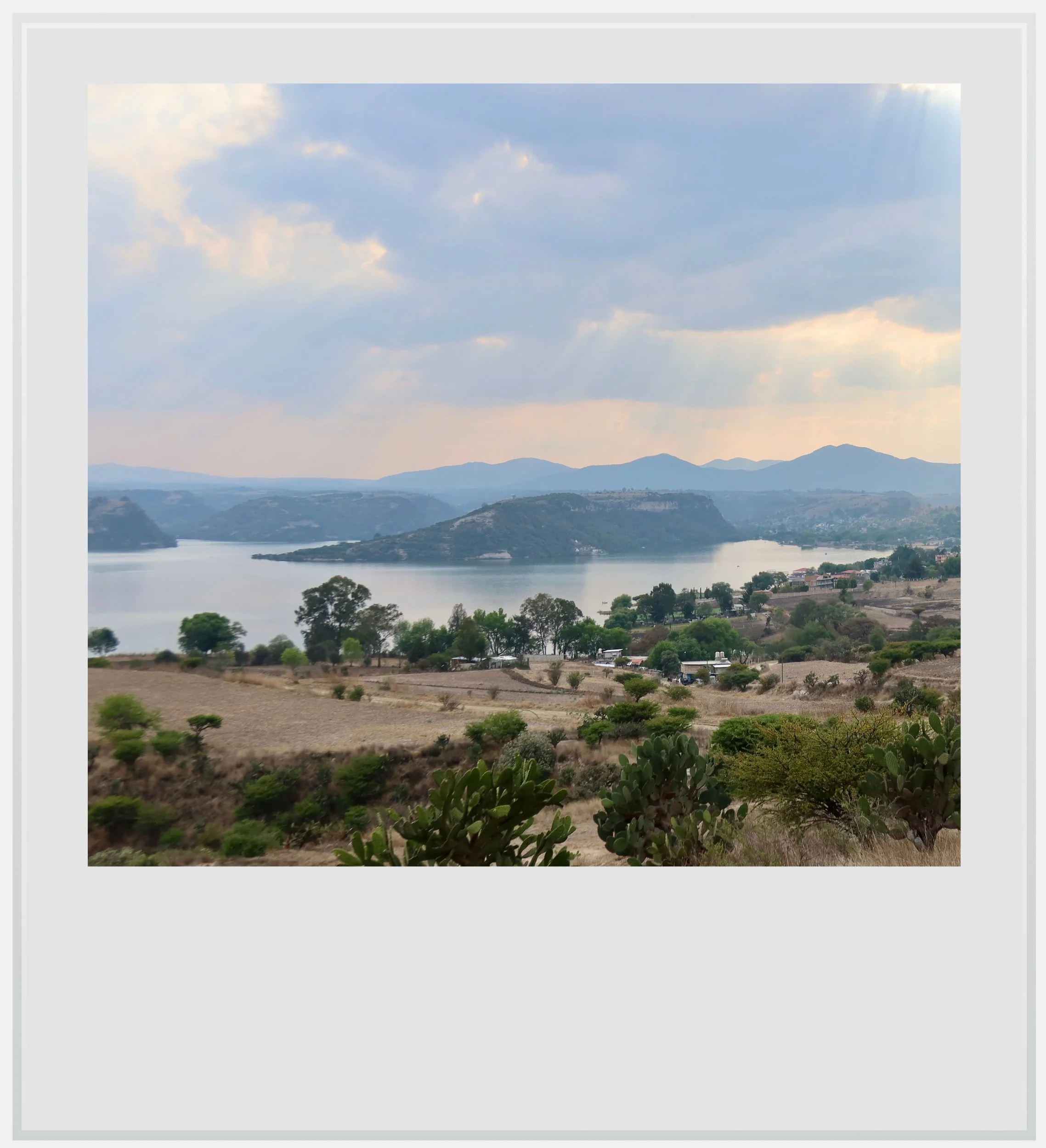
Presa Taxhimay, seen from the east.
Because the town felt a little busy, I decided to use my first afternoon to check out one of the presas, these artificial lakes made for agricultural irrigation purposes. There are three main ones within 45 minutes of town, and I picked Presa Taxhimay.
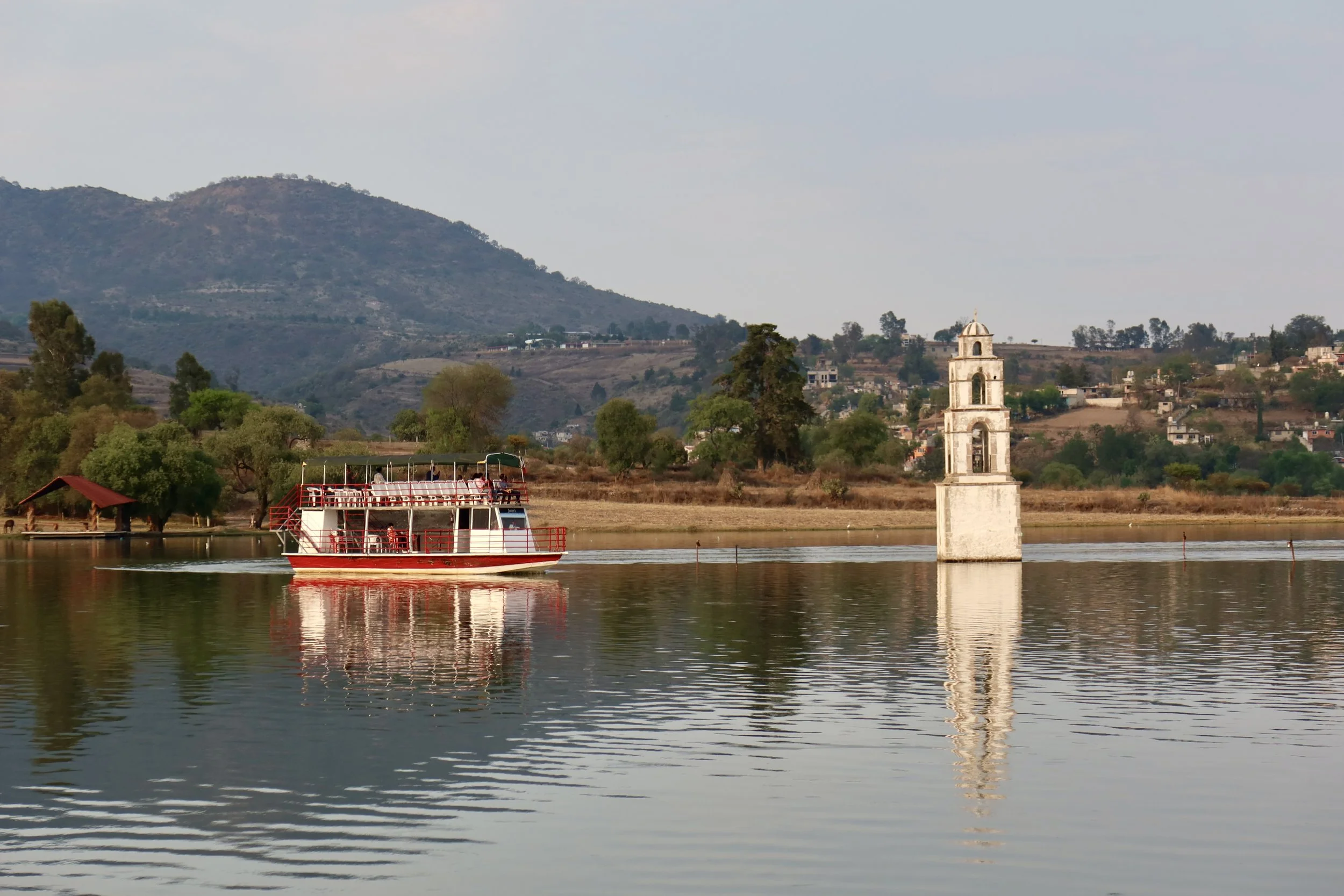
Presa Taxhimay is notable for having been created by drowning the village of San Luis de las Peras back in 1934, leaving only its church tower to peek above the waterline. The site has become a local magnet, and boat tours are offered on weekends to get close.
The lake itself is as gorgeous as the area surrounding it, arid plateaus scarred by ravines with very little greenery, and hardly a soul beyond the small houses along the road - the contrast with the hilly forests around Villa couldn’t have been starker.
After circling the lake for a while, we got down to shore, and I was able to see the old San Luis church tower emerging from the water. The sun, previously hidden behind ominous clouds, showed up just as I was getting out of the car, and, unexpectedly, a tourist boat circled the tower. It felt like the perfect moment.
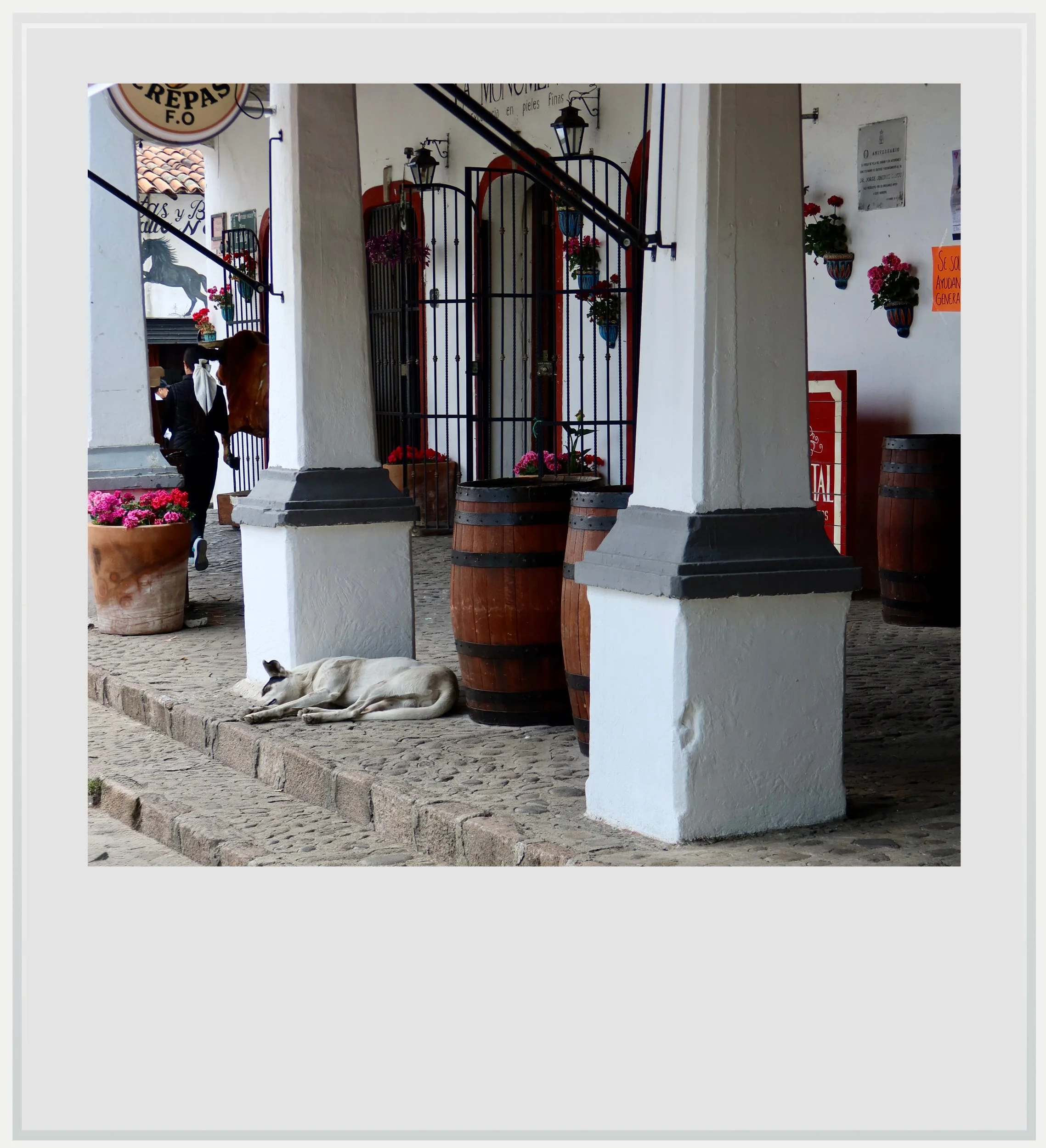
Sleeping dog on Plaza Hidalgo.
These dark clouds decided to linger, and it actually started raining as I was heading back into town. It was the perfect excuse for a slow evening and an early night.
When I got up, it was a little chilly. Villa del Carbon sits above Mexico City, at about 8,530 feet (2,600 m), and the temperature difference was noticeable. Eager to walk its streets without too much going on, I quickly made my way out. My first thought was how different the main square was, devoid of any merry-go-rounds. The activity of the day before, the noise, the crowds, made me appreciate this quiet, sunny morning even more.
Reducing Villa del Carbon to a handful of picturesque streets would miss the point.
I realized I might have judged the town a little too quickly yesterday, driving away to Taxhimay to enjoy the lake views. Beneath the visual noise of the temporary installations was a village I could have seen, had I really stopped and looked around, instead of quickly moving past it.
Villa del Carbon doesn’t see a lot of car traffic because the main road no longer goes through the town. Local traffic, however, doesn’t cross through town in a straight line but instead makes a sharp 90-degree turn on the main square, which means that every car passing by has to go around the zocalo, as if meandering around town.
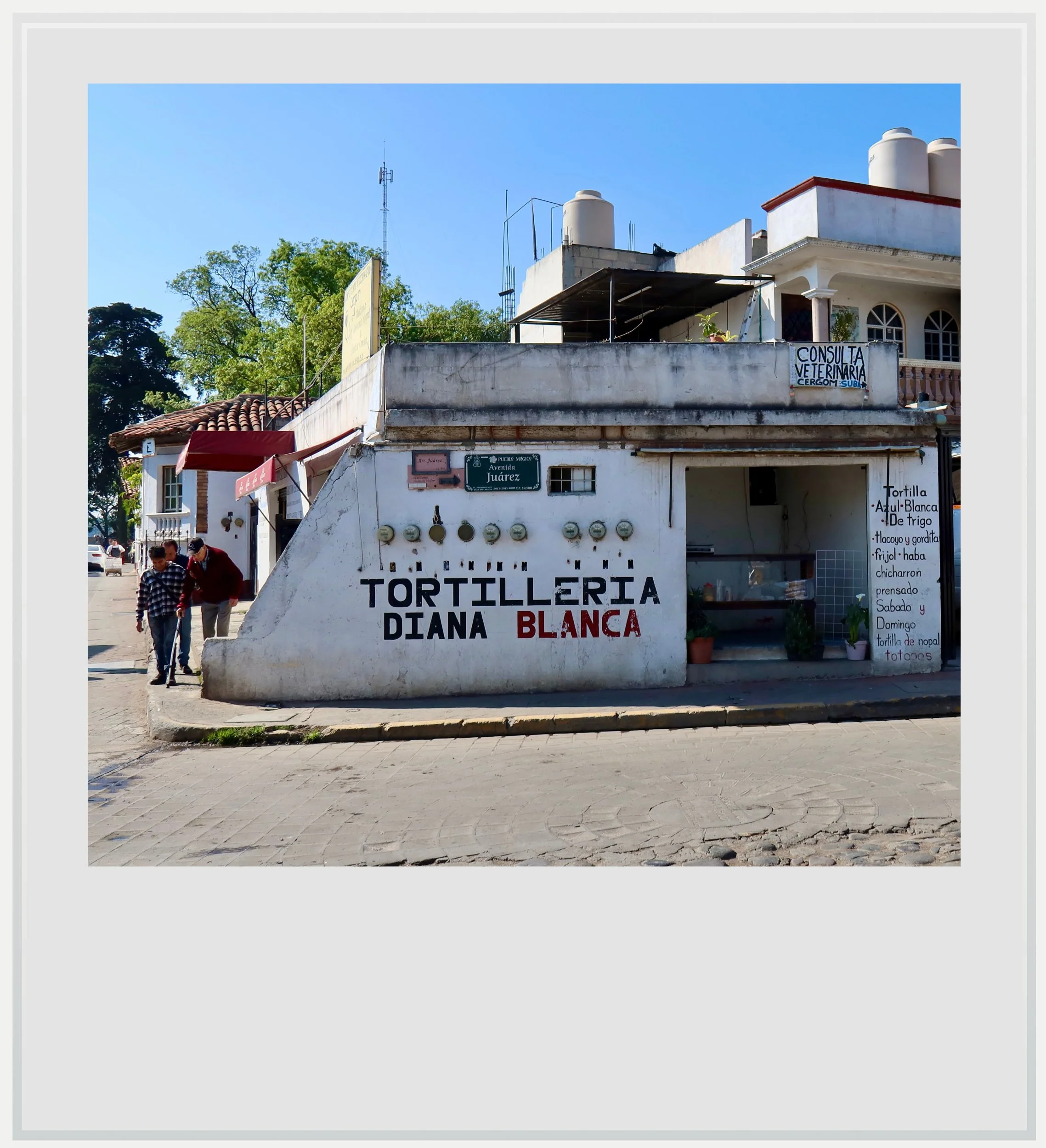
A tortilleria close to the historic core.
Most of the colonial era buildings are grouped close by, in a rectangle starting from the zocalo and extending west for a few blocks. This is where most of the artisan shops and restaurants are located. Villa is renowned for its leather trade, which has a deep connection with the charreada, the traditional Mexican rodeo anchored in the town’s ranching history. Plenty of boutiques offer everything from boots to jackets, a testament to the local craftsmanship.
I spent some time on the zocalo, enjoying its ambiance and its ornate kiosk, from which I was able to take in the view of all the main buildings surrounding the square: the massive municipal palace, the beautiful colonial church, still dedicated to Santa María de la Peña de Francia, the Casa de la Cultura, and a sprawling colonial complex housing, among other things, my hotel. The western side of the plaza was lined with a shaded arcade supported by columns, housing several boutiques, still closed this early.
It was hard not to feel taken with Villa del Carbon at this very moment. I am not sure what it was: the pure air, the brilliant sun, the town’s lack of awareness for its natural beauty, its gentle awakening, the slow rhythm of daily life returning, or even all of it, but I just wanted to stay there, sitting in the central garden of its main square, and make no plans for the day.
I eventually got up and walked the streets around the zocalo. The colonial center itself is fairly small and can be seen in less than an hour.
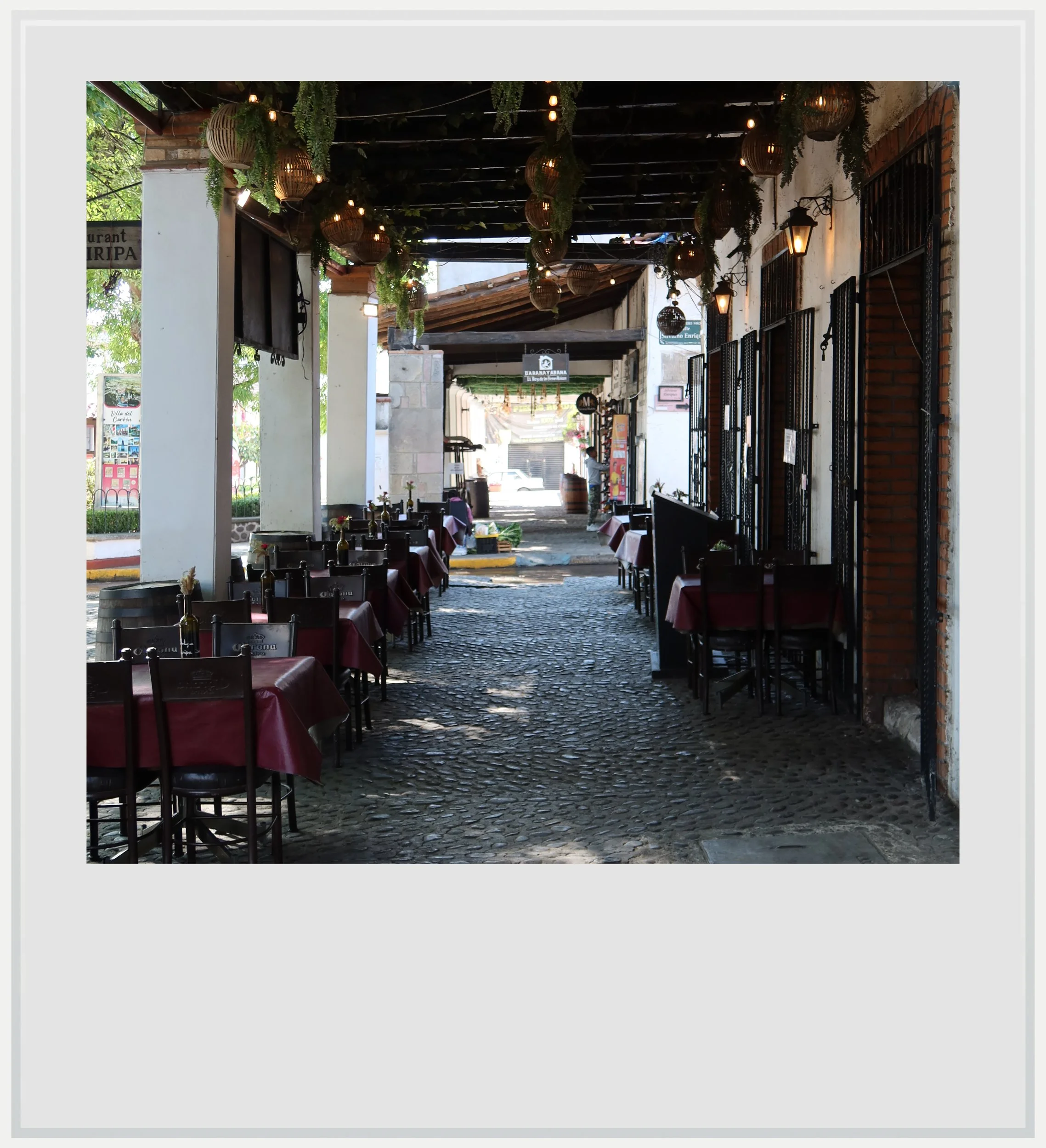
The arcade on the western side of the zocalo.
Yet reducing Villa del Carbon to just a handful of picturesque streets would miss the point. While it may not have the instant photogenic charm of a Bernal or a Taxco, its appeal lies elsewhere: in its remoteness, in the sense that the town still exists mostly for its inhabitants, blissfully oblivious to the usual tourist trappings.
Practical information
(Everything you could possibly want to know about Villa del Carbon - updated March 2026)
In a nutshell
Tucked in the forested highlands north of Mexico City, Villa del Carbón is a sleepy pueblo magico that most travelers have never heard of. Its compact colonial center, cool mountain air and nearby reservoirs make it a rewarding escape from the capital’s chaos.
How to get to Villa del Carbon
How to get to Villa del Carbon from the US:Villa del Carbón, a small mountain town in the State of Mexico about two hours northwest of Mexico City, is best reached from the Mexican capital. To get there, first fly into one of Mexico City’s international airports, MEX (the main one, close to the center of the city) or NLU, also called AIFA (as in Aeropuerto Internacional Felipe Angeles) further north but closer to Villa by about 30 minutes. Note that the AIFA airport only works if you’re planning to get a rental car there, as there are no public transportation options to Villa del Carbon. From MEX airport on public transport, the first step is to reach station El Rosario at the end of subway line 7, then follow the directions below.
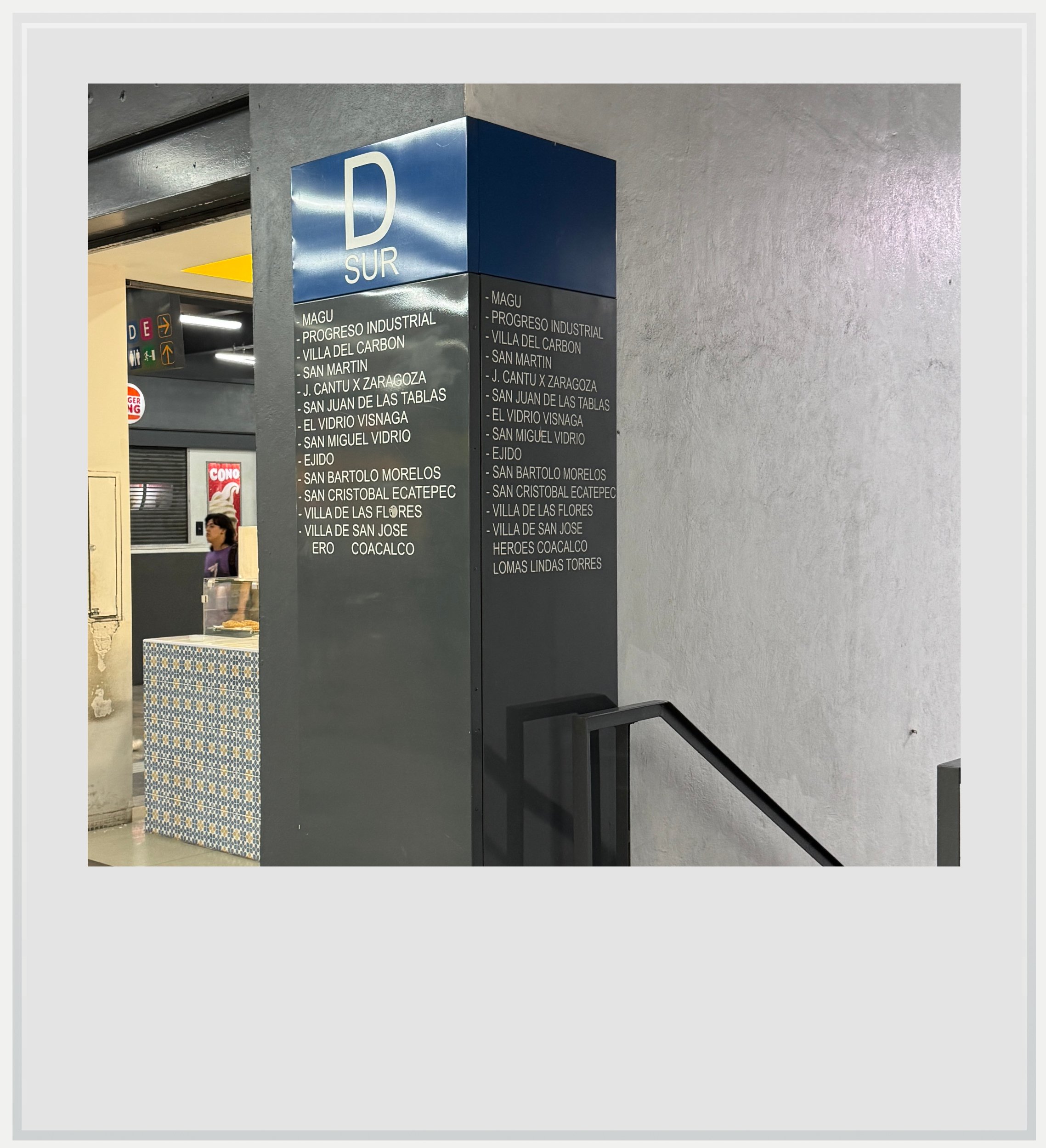
The Platform D South where bus to Villa del Carbon leave from.
How to get to Villa del Carbon from Mexico City: there are two ways to do so:
option 1: make your way to the Cetram El Rosario, a local bus station right next to the El Rosario subway station, at the northern end of line 7. It is easy to get there by subway from central CDMX, but an Uber can be a good choice, although much more expensive and not that much faster (when I left, Uber wanted MXN 219 for a 38-minute trip, while the subway would take 47 minutes and cost MXN 5 - I picked the subway). Once you get to El Rosario, get out of the subway station following signs for SALIDA A PARADEROS. Once out of the subway, follow signs to ANDENES (platforms). Get up one level to the mall (you have to) then back down still following signs for ANDENES towards the middle of the mall until you see the ANDEN D SUR (platform D South). Get down and there will be either a “Rápidos” bus parked or a line waiting for it. It’s the first stop on the platform so it’s hard to miss. All buses to Villa del Carbon terminate in Atlacomulco, so you might see the name of the town on the front of the bus. Pay the driver in cash after telling him your destination. A one-way ticket cost me MXN 40. The bus I took was a relatively modern second class bus (no assigned seating, seats with relatively little padding but at least they are not plastic seats like on other second class services, limited legroom, no AC, no bathroom). It was definitely not a luxurious ride, nothing like Estrella de Oro Diamante to Acapulco, but it was decent and never uncomfortable. If you’re not clear on the various bus types in Mexico, click here for a thorough explanation. Buses leave every 20 to 30 minutes on average (per the driver). My bus left about a third full but I left on a Tuesday morning, probably one of the slowest times of the week. We left at 11:20 am sharp. Google Maps said the trip, non-stop, would take 1h55. I got off at 1:25 pm, so the trip lasted exactly 2h05. Getting back, it is easy to take a bus from the Rapidos bus depot, located here. Note that on the way back you don’t pay the driver, but an attendant that will magically show up out of nowhere once the bus gets in the depot (cash only).
option 2: Autobuses Rapidos also offer regular service between Villa del Carbon and the subway station Politecnico, in Mexico City. I didn’t pick that route because getting to line 7 was easier for me, but this option can make sense for travelers in the northern part of the capital or close to a line 5 subway stop. The buses are similar if a tiny bit smaller, the price is nearly identical (MXN 43 at time of writing, cash only) and frequency about the same, so it boils down to convenience. From Villa del Carbon, buses leave about every 20 minutes, and the company tries to space them out so one bus leaves for Mexico City every 10 minutes (either to El Rosario or to Politecnico). The bus depot is here.
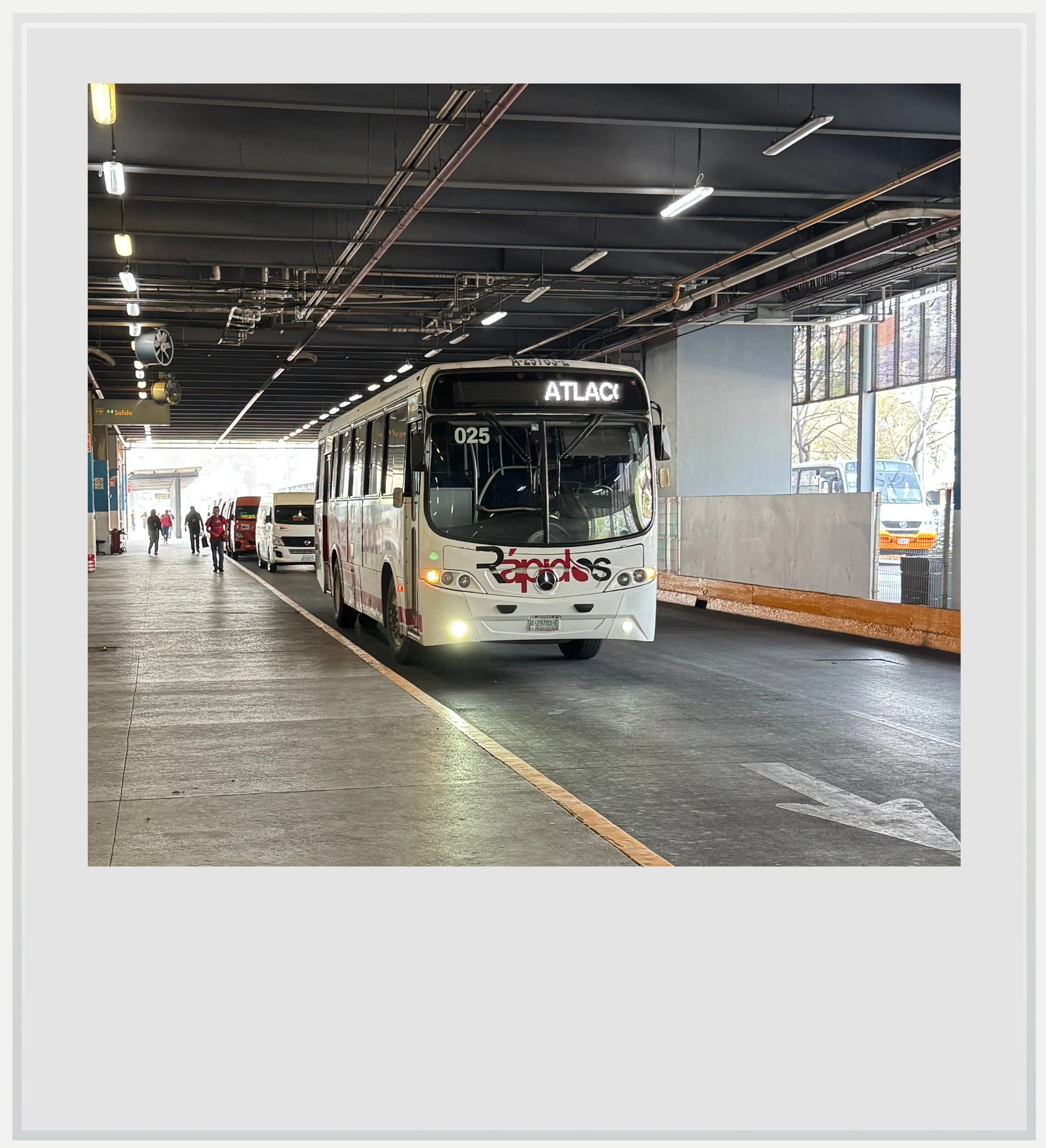
A “Rapidos” bus about to take in passengers on the D platform South.
When to go to Villa del Carbon
Villa del Carbon sits at an altitude of 8,530 feet (2,600 m), quite a bit higher than Mexico City, and you’ll feel the difference at night. Pack layers. Beyond the slightly colder climate, the seasons are similar to the ones in the capital: rainy season starts mid-May and ends late September or early October. This usually means gorgeous, sunny weather in the morning, a cloudy afternoon and rain for a couple of hours in the late afternoon or early evening. The rest of the year is pretty dry and pleasant. December and January are usually the coldest months, with April and May the hottest. I went to Villa del Carbon mid-March, and the temperature during the day was perfect, but a little chilly at night.
Villa del Carbon, like many charming towns within easy distance of Mexico City, get most of its visitors on weekend. While it won’t ever get as busy as Tepoztlan, it will be noticeably more crowded from Friday to Sunday. I came during the week to enjoy the slow rhythm of the village life without many tourists.
How long to stay in Villa del Carbon
If you’re only planning to see the historic heart of town, a day trip or a 36-hour stay with one night should suffice, as the colonial center is fairly small (though very pretty). Many people coming to Villa del Carbon enjoy its famous reservoirs as well as hiking the Cerro de la Bufa mountain. If this is your plan, you will need two or three days in town.
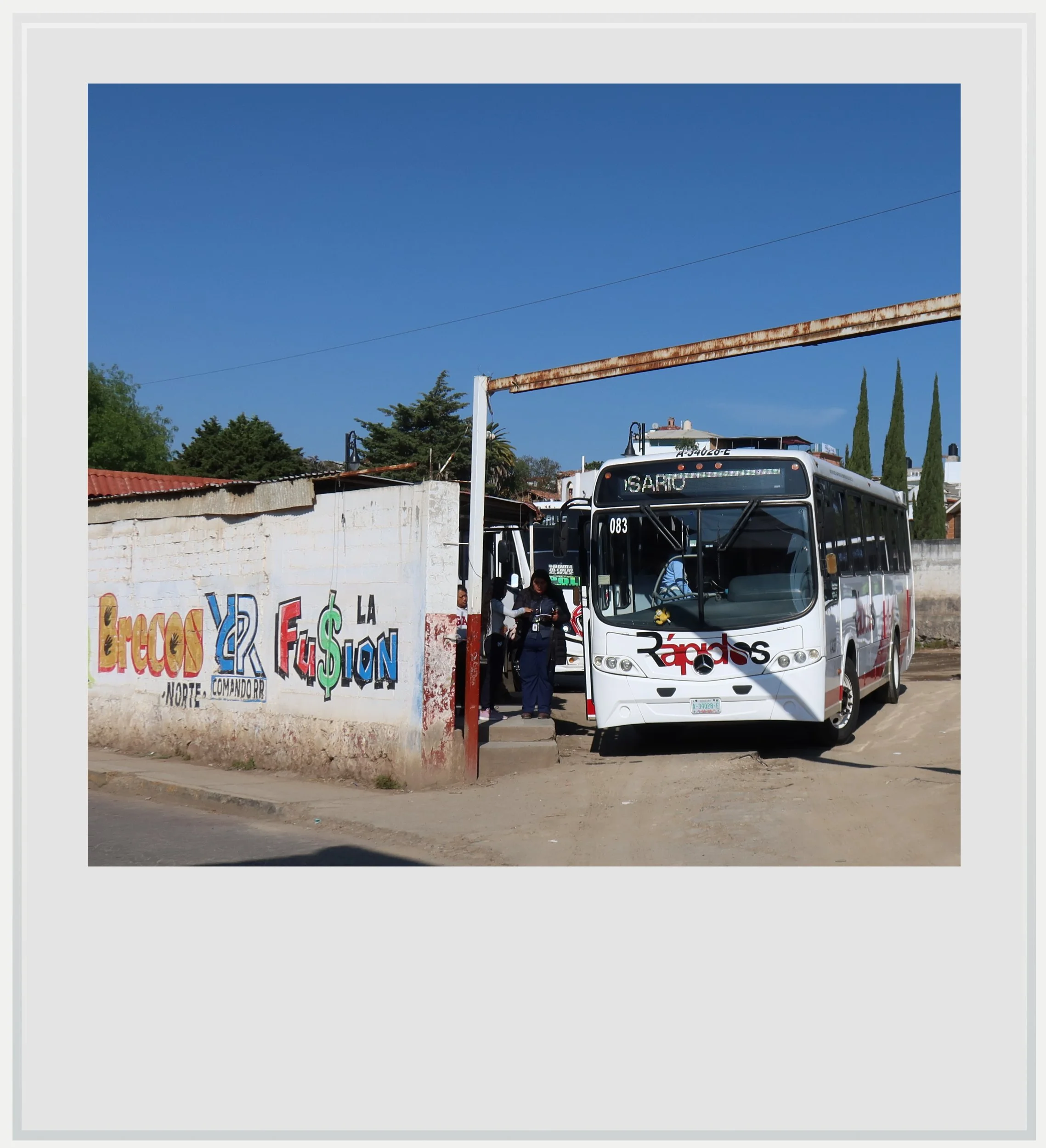
The bus depot exit, a few block from the zocalo.
Food & lodging in Villa del Carbon
Hotels
I stayed in Hotel El Aguila, right in the center of town - the hotel is housed in a building on the town’s main square (the zocalo), with some rooms having zocalo views. It’s a beautiful, classic small-town hotel with nice, colorful rooms in a charming, well-maintained historical building. Prices start at about USD 60 during the week.
Restaurants
Villa del Carbon has a few restaurants that offer good cuisine, but this is a tiny town in the mountains, so expectations need to be kept in check.
El Jardin de Piedad - a simple family restaurant a couple of easy blocks from the main square, it has a vast, quiet garden. Don’t expect anything fancy (think plastic chairs and tables) but the food was really good and fairly priced. Delicious aguas frescas as well. A great pick for a casual lunch.
Restaurant El Aguila - Adjacent to the eponymous hotel, the restaurant has a balcony overlooking small square by the zocalo that feels like the perfect place to enjoy the square from a distance. Breakfast was really good, and lunch was OK. Food was good but nothing seemed to stand out. Nothing beats the view, however.
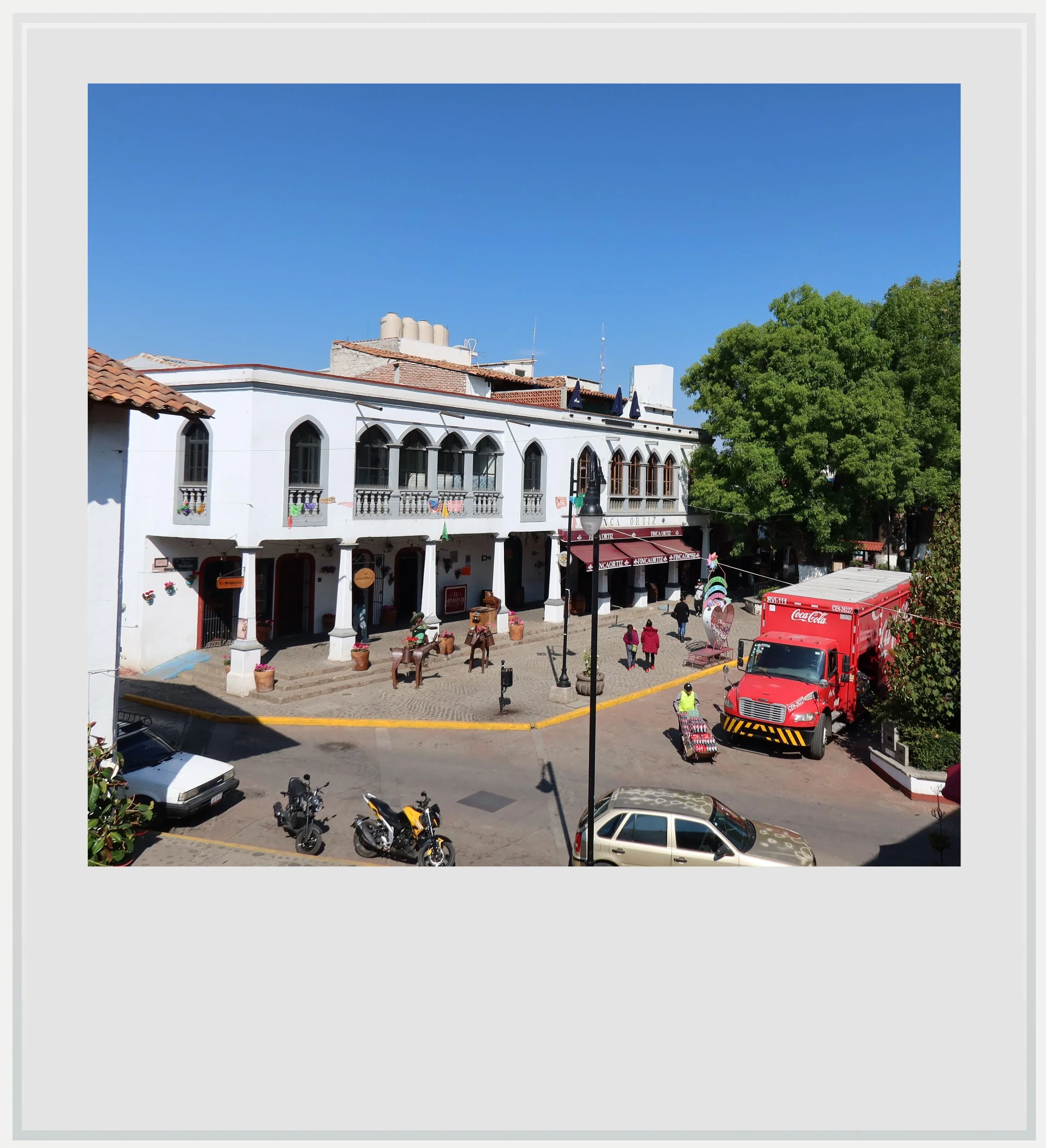
The view from El Aguila restaurant’s balcony.
Safety in Villa del Carbon
Villa del Carbon is very safe. The U.S. State Department lists the State of Mexico under a Level 2 travel advisory, meaning “Exercise increased caution” when you travel (this level 2 also applies to most developed European countries, which are not known for their crime levels). Behave as you would in a place you don’t know well, especially if you don’t speak the language, and you will be fine. The place exudes a small-town vibe where not much happens. I never felt unsafe at any point during my stay.
It is recommended, however, to avoid driving (or being driven) at night, when risk increases: roads in the region are not well maintained, and deep potholes are frequent. The mountain roads have treacherous curves, lack proper lighting, and street dogs can cross ahead of you at any time.
Keep in mind these travel tips
Villa del Carbon sits at a higher elevation than Mexico City, making nights chilly (or downright cold depending on the season). Bring layers to stay warm.
The UV index may be low in the morning and evening, but during the day, it gets pretty high (again, UV rays are more harmful at a higher elevation).
Bring cash. While many shops accept foreign credit cards, bus companies, taxi drivers, and many attractions by the reservoirs do not. Plenty of restaurants were cash-only as well.
Cell service can be spotty in the mountains of the state of Mexico, and although Telcel signal almost never failed me during the trip, other providers may not have the same extended coverage. Away from main cities and roads, Telcel is always the safest bet. If you’re roaming, check that you can roam on Telcel, or investigate a Mexican eSIM that uses this network. Telcel coverage is independently mapped here. Change the network in the drop down menu at the top to see other companies - it looks like both AT&T and Altan networks provide good service in Villa del Carbon, while Movistar may be lacking.
Every photo caption appear if you hover over it (on a computer) or click on it (on a smartphone).
All photos are mine and copyrighted.