Dzibilnocac, Mexico.
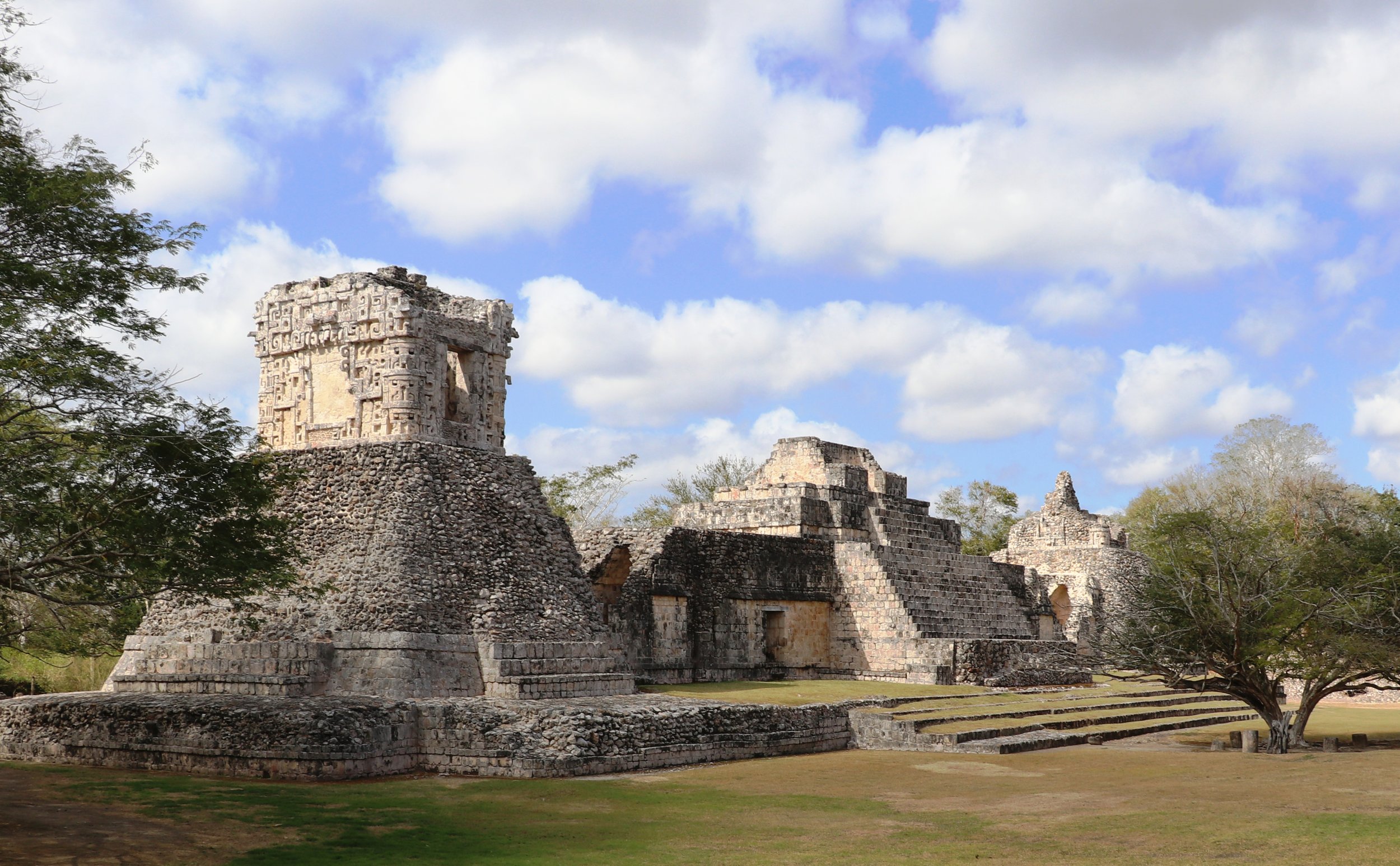
The Three-Towered Temple of the Chenes Region.
Looking for concrete details and tips? Go straight to the Practical Information section.
This is it? I wondered as I got to the end of the Calle 9 in the remote village of Vicente Guerrero. Beyond a pile of gravel, the road turned into an narrow, unpaved trail, and my mapping app was telling me I had arrived. I had driven from Dzibalchen, the small town at the heart of my day trip into the Chenes region, and it felt like a sprawling metropolis compared to the sleepy village where I had just ended.
Dzibilnocac is one of the lesser-known Maya sites of the Chenes region, dominated by a single monumental structure that rises unexpectedly from the flat countryside.
To my right, I saw a small sign indicating the ruins, and to my left, an even smaller sign for the parking spot, which, at most, could fit three small cars. There were no Maya buildings in sight. My mood began to sour. Had I travelled here for nothing?
I stepped into the small house serving as a modest gateway to the ancient settlement, passed a small garden and started walking on a wide, recently cut grassy area, without any shade. It was past 10 am and, at that point, the Yucatan sun was starting to weigh me down.
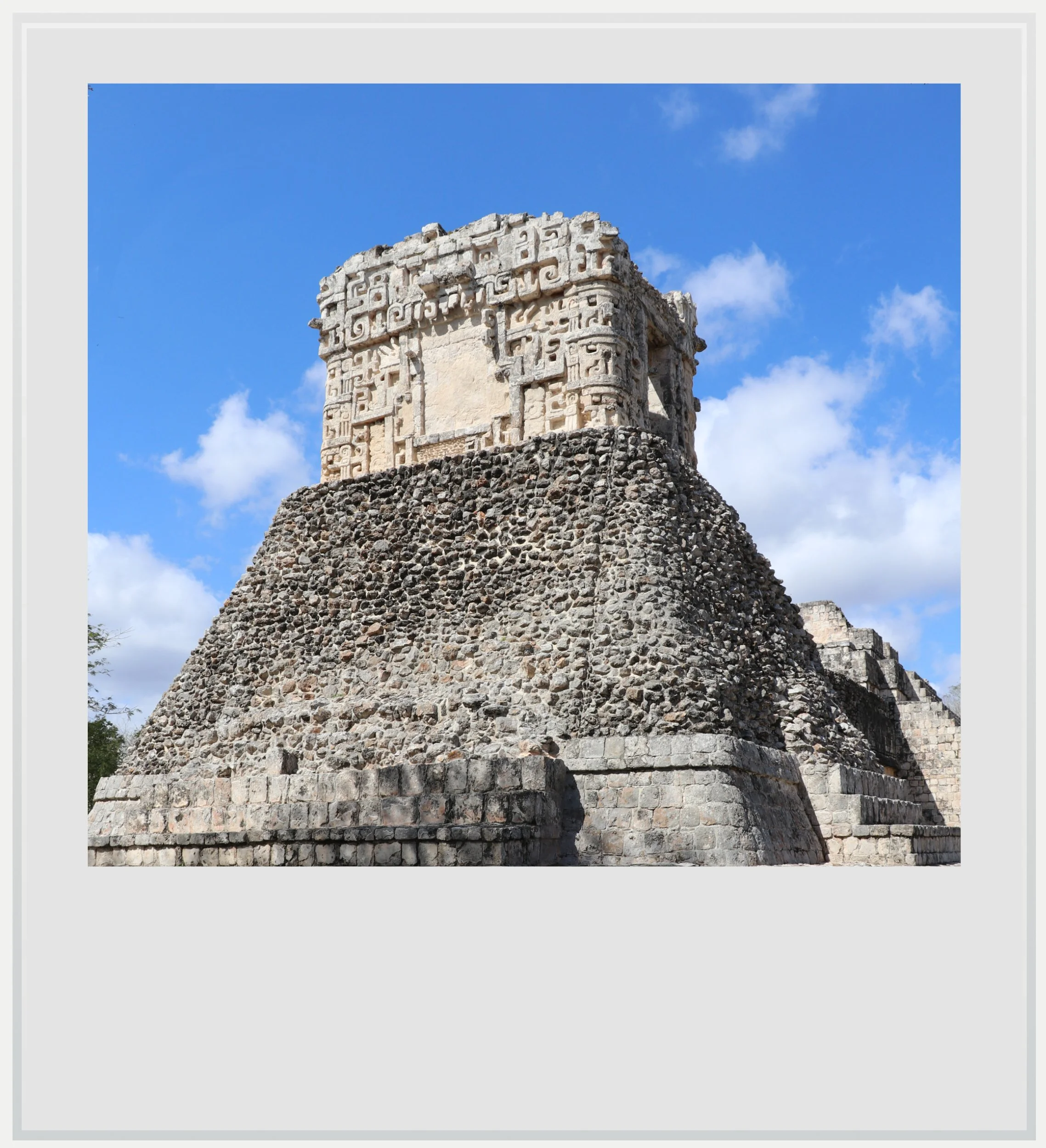
The western tower of with its Chenes door on top.
After about a hundred yards, the site finally revealed itself. In front of me stood a massive, one-story building with three towers soaring above it. In the middle of a flat field where the trees had been cleared, the structure looked unexpectedly imposing.
The temple on the left tower had been restored and featured a striking Chenes-style entrance representing the face of the god Itzamna, the Snake God. The temple on the right tower, by contrast, was in poorer condition.

It is believed that Dzibilnocac’s temple was built during the zenith of the Maya civilization, the Late Classic period, between 600 and 900 AD. Indeed, its Chenes-style door felt very similar to the one I had peeked at Hochob, an hour before.
For all its Chenes splendor, the building reminded me of the Rio Bec style found in southern Campeche. Rio Bec architecture is known for its one-story structures crowned by two or three tall towers. These towers are usually too steep to climb and serve mostly as decorative façades. Here, however, the towers looked usable, as if Maya priests might once have officiated rituals from their summits.
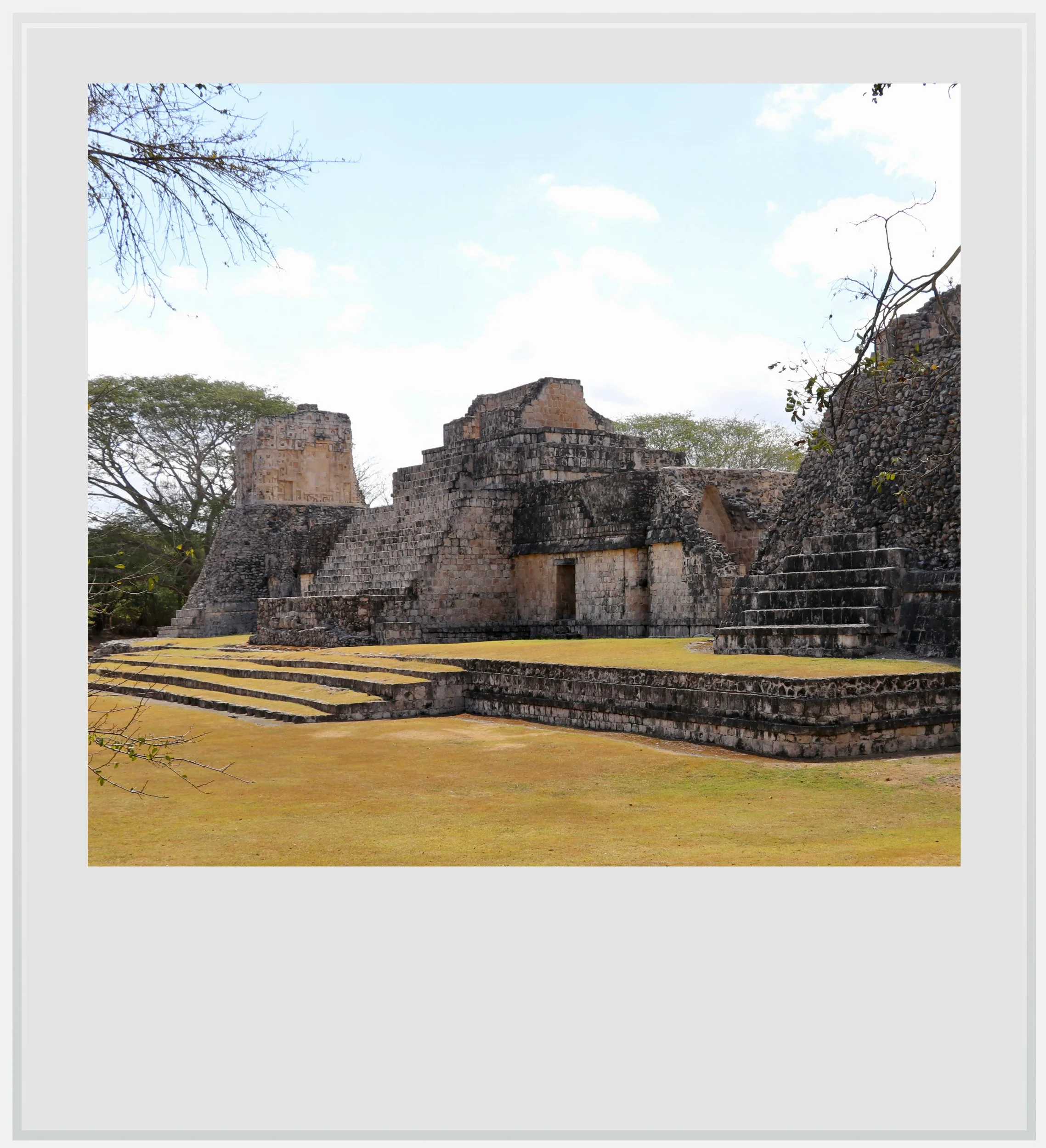
The main temple at Dzibilnocac as seen from the site’s entrance side.
I took my time walking around the building, checked out the other structure on the site, a small circular building whose use isn’t known, and then, inspired by how photogenic it was, decided to climb the tiny hill to its right to take a few photos with a better angle. I annoyed a few iguanas, which scuttled away as I walked towards them, but hesitated when I noticed a long shape sliding among the leaves. I stopped and there it was, a 6-foot long snake, slithering away from me to hide in a pile of twigs next to which I had wanted to take my pictures.
Let’s just say I used a little bit more zoom than necessary to not get too close. It’s funny to think that, as I explored some Puuc Maya sites to the north, I saw plenty of signs warning visitors to stay on trail to avoid snakes but here I was, on a site with no signs whatsoever, and that’s where my first snake sighting had occurred.
After about a hundred yards, the site finally revealed itself.
I must admit that, had I stayed in the area of the site where the grass was perfectly manicured, I wouldn’t have had this encounter, so this was entirely my fault. I didn’t see any other snake in Dzibilnocac, but I paid extra attention where I put my feet for the rest of the visit.
I would go on to visit another Chenes site, El Tabasqueño after this one, and enjoyed Dzibilnocac for its seemingly singular building style. Unlike Hochob and El Tabasqueño, built as a small plaza surrounded by buildings, giving a sense of intimacy to the sites, Dzibilnocac felt like a site willing to show off its power. No wonder why it was a regional capital in Maya times.
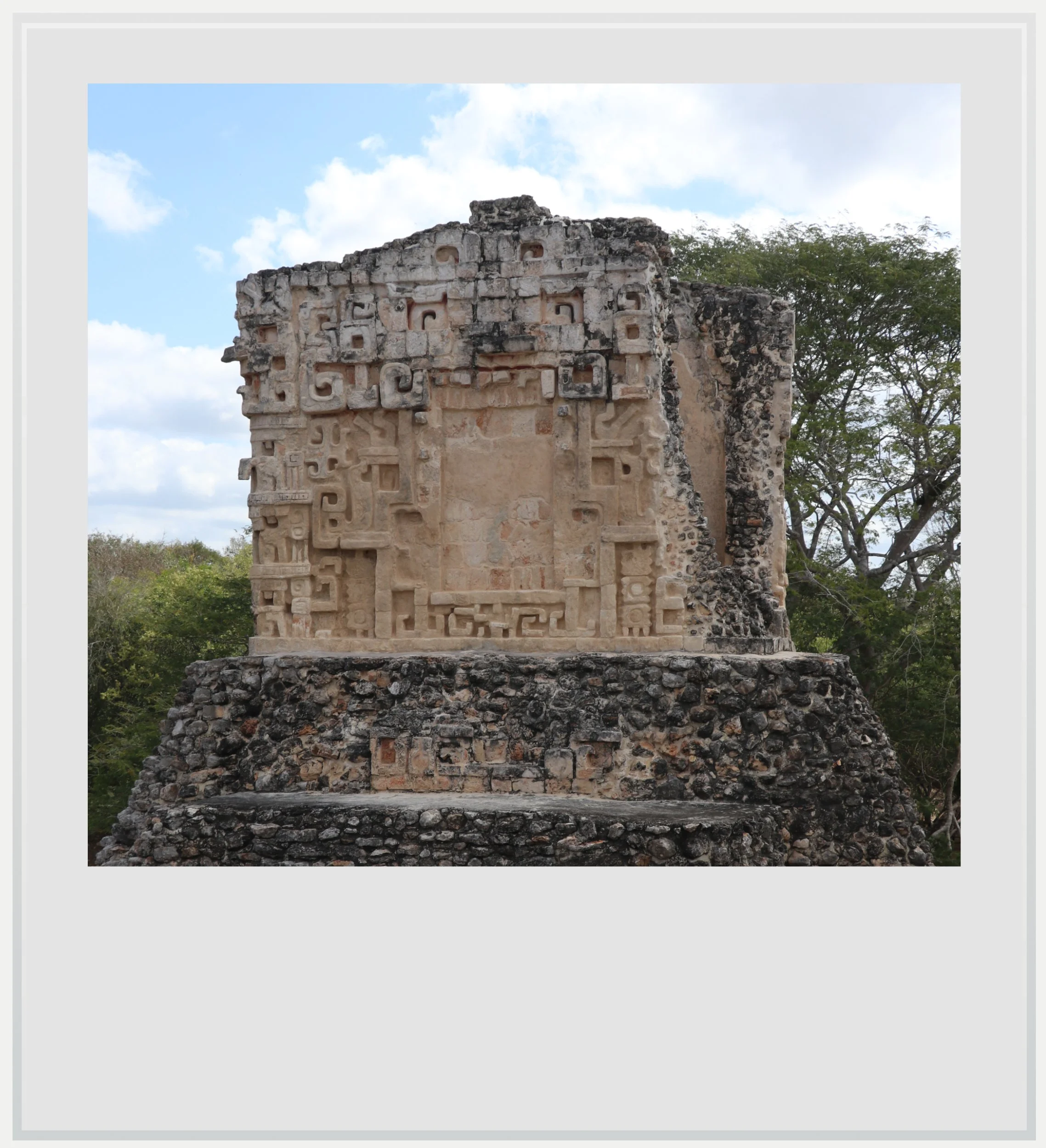
The western tower seen from the top of the temple.
In fact, it is understood the actual Maya settlement was much bigger than the two excavated building visible today. LiDAR studies show that a lot is still yet to be unearthed in the surrounding area. Dzibilnocac probably hasn’t given up all its secrets yet.
Practical information
(Everything you could possibly want to know about Dzibilnocac - updated March 2026)
In a nutshell
Dzibilnocac. a small-sized and remote Maya site in central Campeche, is a great visual testimony of the Chenes architectural style in an imposing building with towers. Set on the outskirts of a small village, it also creates an interesting contrast with other nearby sites, set deep in the forest. The site is compact and not too far from Dzibalchen, which means the visit can be paired with other worthy Chenes sites like Hochob and El Tabasqueño.
Getting to Dzibilnocac
How to get to Dzibilnocac from the United States: Dzibilnocac, in central Campeche, isn’t easy to reach from the US. The closest airport to Dzibilnocac is Campeche (CPE), 2h30 to the northeast. Campeche is currently only served by one or two flights a day from Mexico City (MEX) so it isn’t the easiest airport to get in to. Merida (MID) can be an alternative. Travel time to Dzibilnocac is 3h30 but Merida sees a lot more frequent flights to Mexico City (14 on a random day in March 2026) as well as non-stop flights to the US: AA flies daily to and from Dallas (DFW) and Miami (MIA), United daily from Houston (IAH) and Viva several times weekly to and from Orlando (MCO) and Miami (MIA). For additional directions from each airport, please see below. Note that car rental is your best bet to visit the region, and both Campeche and Merida airports offer several local and international options, which were fairly priced at the time of my visit (about USD 25 per day for a car in the Economy category). While the ADO bus company is present in the region with frequent buses between major cities, only SUR, a regional provider, reaches the rural parts of central Campeche. As such, bus travel isn’t really an option. More details below.
How to get to Dzibilnocac from the Campeche airport: assuming car rental, make a left upon exiting the airport, then another left when you get to the ring road, but don’t get on it as you need to get off at the next intersection, towards Edzná. Once you get to Edzná, follow directions to Hochob. About 10 minutes past Chencoh, you’ll reach Dzibalchen. Turn right at the Pemex station to not go through town, and follow the signs for Dzibilnocac or V. Guerrero, the town right next to it. The Google Maps directions are excellent on this route but send you through Hopelchen, which is another option, but I find the route via Edzná to be an easier drive. One thing where Google failed, however: once I got in the town of Vicente Guerrero, it sent me through back streets, some of them unpaved and fairly bumpy. The detour isn’t necessary. Instead, once you get into town, continue on the main road until you hit the main square (which is hard to miss, its entrance features a small orange house in the middle of the road) and make a right in Calle 9. The Maya ruins aren’t indicated once you get in town, but this way, you’ll get better street conditions all the way there. In any case, don’t forget to download the regional map before leaving the airport, as cellular service is very spotty past Edzná, so you can follow directions offline. The trip should last around 2h30.
How to get to Dzibilnocac from the Merida airport: assuming car rental, make a left upon exiting the airport, then another left to take the Merida ring road at the next big intersection. Exit the ring road and follow signs to Campeche (highway 180) until you see signs for Uxmal (highway 261). Continue on highway 261 all the way to Dzibalchen, passing by Santa Elena, then Hopelchen. In Dzibalchen, follow sings for Dzibilnocac or V. Guerrero (that’s the town right next to the old Maya settlement). Don’t trust Google all the way, however: once I got in the town of Vicente Guerrero, it sent me through back streets, some of them unpaved and fairly bumpy. The detour isn’t necessary. Instead, once you get into town, continue on the main road until you hit the main square (which is hard to miss, its entrance features a small orange house in the middle of the road) and make a right in Calle 9. The Maya ruins aren’t indicated once you get in town, but this way, you’ll get better street conditions all the way there. Don’t forget to download the regional map before leaving the airport, as cellular service is very spotty on the route, so you can follow directions offline. The trip should last 3h30.
Can I get to the Dzibilnocac archeological zone on a bus: yes you can, but I don’t recommend it. SUR, the regional bus company serving the remote region of central Campeche has service to the village of Vicente Guerrero (also sometimes called Iturbide), via line #697. The village is located right next to the ruins. Line 697 starts from the ADO bus station in Campeche, and actually terminates in Vicente Guerrero / Iturbide. Buses go every 30 to 60 minutes during daytime. These buses are old second-class bus with no AC, no bathroom, and plastic seats that aren’t comfortable for a ride that can take more than 3 hours with all the stops. SUR services aren’t bookable online, so the only way to get on is to show up at the station and hope there are seats available on the next service. Buses drop you here in Vicente Guerrero. The Dzibilnocac ruins are here, about 0.5 miles (700m) away, or a 10-minute walk. Taking a bus will not enable you to see other Chenes sites in the area, Dzibilnocac being the only one within walking distance of a bus stop, so if you’re trying to see Hochob, El Tabasqueño or even Santa Rosa Xtampac, a car is a must.
I haven’t personally used SUR. I booked a car for this trip because it really didn’t make sense to try and take the bus, although I usually try to when I can, as bus travel in Mexico is usually cheap and convenient.
Can I get on a tour to see Dzibilnocac: while no tours were available on global platforms such as Viator or GetYourGuide, it may be possible to find local tour groups offering the service. One place to look would be in Campeche, either by the bus station or near the Malecon (close to Puerta de Agua, here) where there is a decent tourist flow that attracts sellers. Ostensibly tours will be geared to Spanish-speaking travelers however, so it is unlikely a tour would be offered in English, but you may get lucky. As I planned from trip a few weeks in advance, I felt like having a car would be the easiest option and didn’t try to look for these options in person while Campeche.
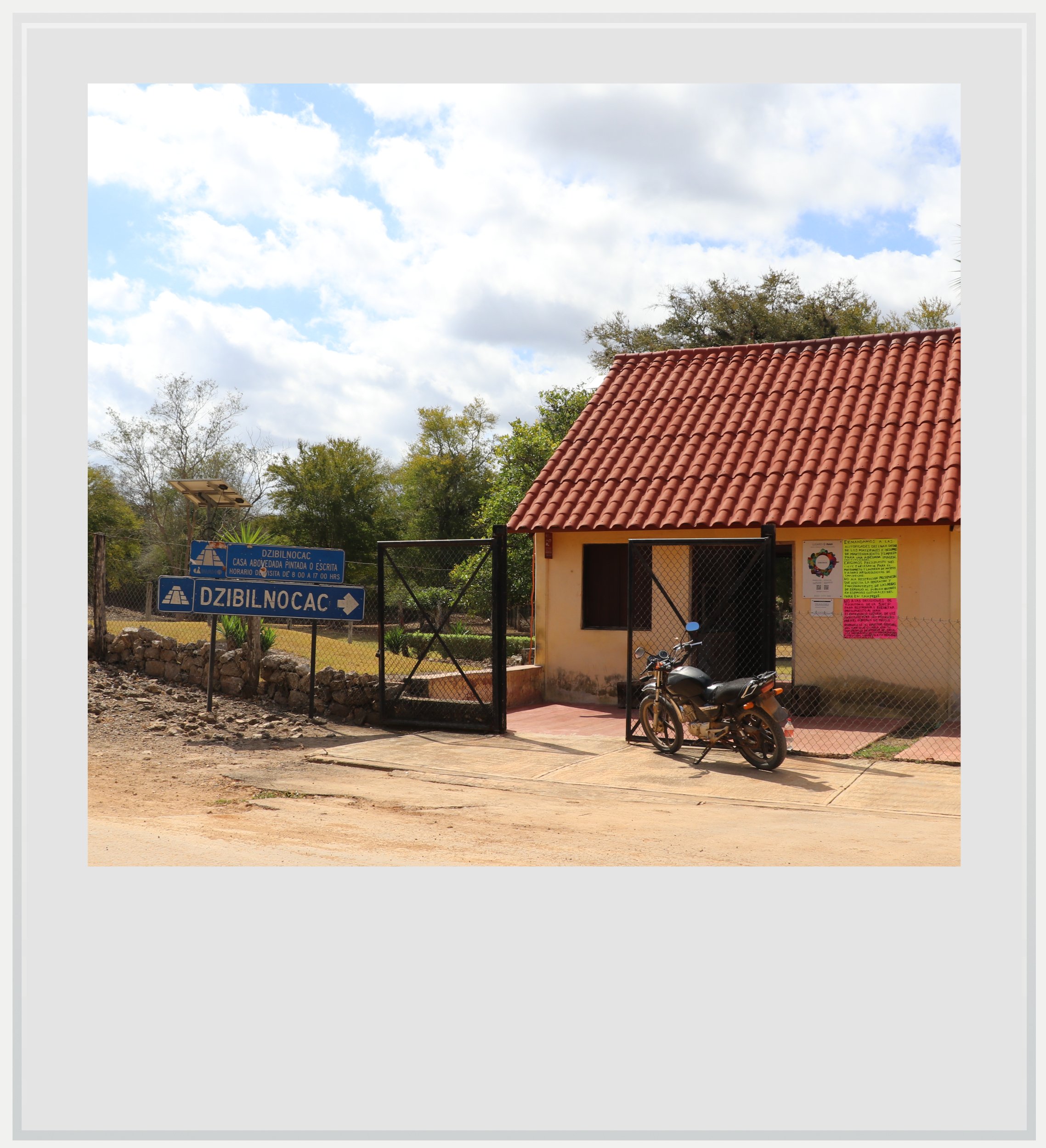
The entrance to Dzibilnocac site.
When to go to Dzibilnocac
The best months weather-wise to enjoy Dzibilnocac are during the dry season, between November and April, with January and February the (relatively) coolest months. This is also peak season but, given its location, the site is never actually crowded.
I went to Dzibilnocac in late February, which is technically low season. I was the only one on the site during my visit and the visitors log showed only a couple of people had come to the site the days before.
Aim to go to the site early (it opens at 8am) or late (at the latest by 4pm, to give you an hour before they close), to avoid the hottest hours of the day. There are no trees near the temple, which is great for photos but less so for the heat. While the grass was cut short and the site seemed perfectly maintained while I was there, I saw quite a big snake on one of the small hills next to the site, which I climbed to get a better angle for a few pictures. Just watch where you step if you get off the lawn surrounding the temple.
There are no services whatsoever on the site except bathrooms.
What’s the best time of the day to visit Dzibilnocac
Unlike most Maya sites, and probably to make the best use of the local topography, the main temple at Dzibilnocac isn’t looking to the west but rather to the northeast, which means the light on the building will be pretty good at least from one side, during the whole day. As such, it can be visited anytime, bearing in mind, of course, that the lack of tree cover on the site means it will get hot between 11 am and 3 pm.
How much does it cost to visit Dzibilnocac
Entrance to the site is currently free.
How long should I plan to visit Dzibilnocac
Plan to spend 30 to 45 minutes on site, as it isn’t very big and consists of one main temple. I liked that it felt very different from other nearby sites like Hochob, with a more imposing temple.
What are the opening times of Dzibilnocac
The site is open every day from 8am to 5pm with entry allowed until 4.30pm.
What Other Maya Sites Can You Visit Beyond Dzibilnocac?
Dzibilnocac is located deep in the Chenes hills, a region known for some of the most intricate Maya architecture ever built. Across the region, temple façades were transformed into elaborate stone compositions, with doorways representing symbolic entrances to the underworld.
From Dzibilnocac, you have two options. You can continue exploring other Chenes sites such as El Tabasqueño, Hochob and Santa Rosa Xtampak, each offering its own variation on the region’s distinctive architectural style. Alternatively, you can head west to Edzna, one of the largest and most impressive Maya cities in the state of Campeche.
It is easy to combine these sites into a one- or two-day road trip through the region. For inspiration, see Days 2 and 3 of this 7-day itinerary from Edzna to Calakmul.
Safety in Dzibilnocac
The Yucatan peninsula is one of the safest areas in Mexico, and Campeche is one of the few Mexican states with no specific travel advisory: it is labeled a level 1 “Exercise Normal Precautions” state by the US Department of State, just like anywhere in the US. As such, there is no need to worry beyond taking normal precautions.
Normal precautions include having enough gas in the tank and enough water with you. There is no cell service on the site or in the town of Vicente Guerrero, and spotty service in Dzibalchen,
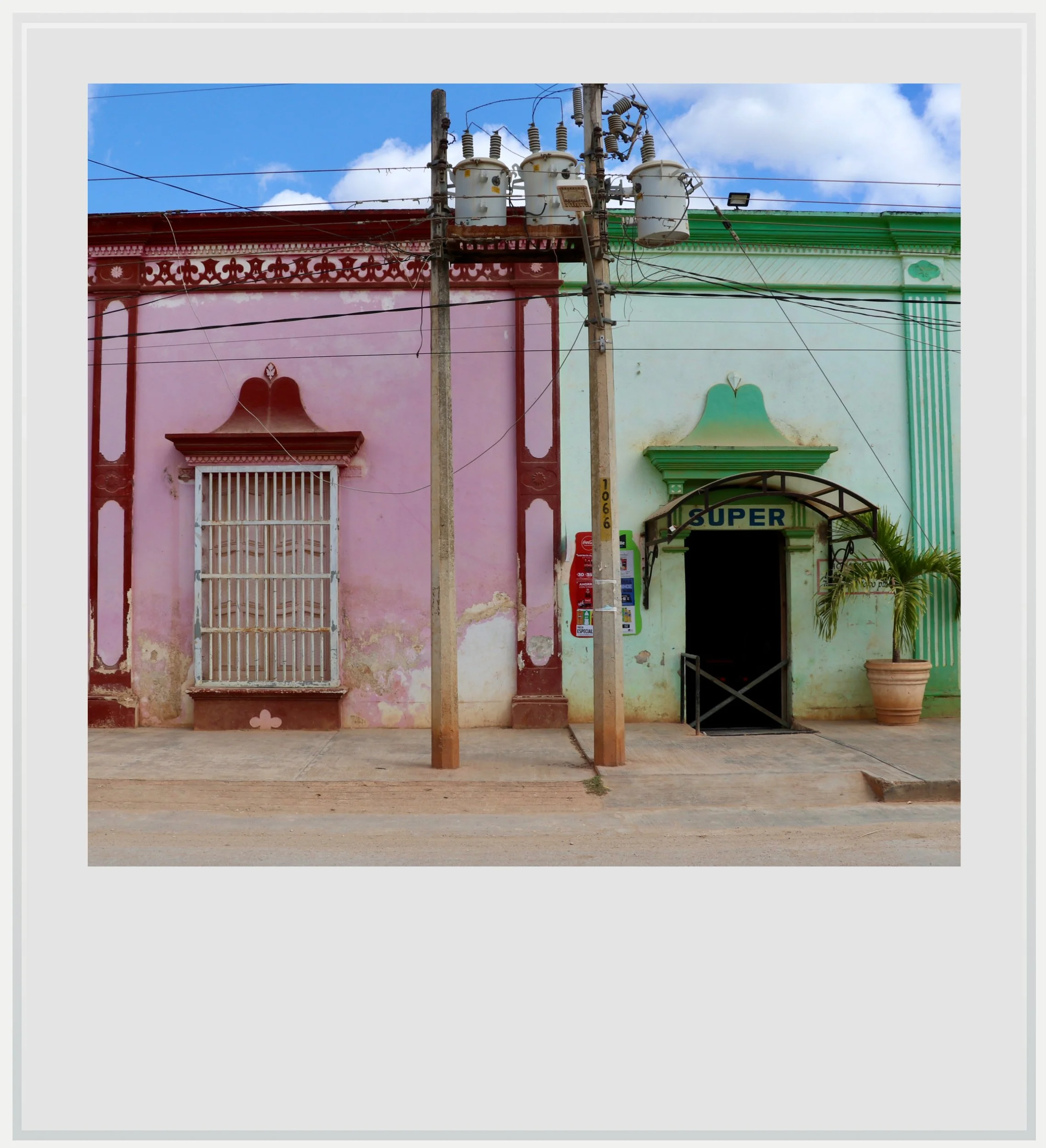
Food & lodging near Dzibilnocac
Although I initially wanted to make Dzibalchen my rest stop to visit the Chenes region (which not only includes Dzibilnocac but also Hochob and El Tabasqueño Maya sites), I wasn’t able to find accommodation there, whether hotel or Airbnb. Instead, I stayed in Hopelchen, about 40 minutes north, where a few hotels and Airbnbs are available.
Hotels in Hopelchen (near Dzibalchen)
I wasn’t exactly wowed by the hotel options in Hopelchen. The central hotel Los Arcos, on the main square, has very mediocre Google reviews, and the two best rated hotels, Hotel Lemar and Hotel Jaguar, were located on the main road which saw noisy traffic, so I didn’t think they were good options for a restful night. In addition, they weren’t available to book on global platforms. Instead, I chose this Airbnb which, at the time of research, was the only one in Hopelchen, and which was absolutely fine (super clean, modern if a little sparse, but perfect for a peaceful night’s sleep) except for the loquacious gobblers in a nearby garden. Cost was around USD 70 for a night.
Restaurants
I didn’t eat in Dzibalchen as my plan called for a day trip from Hopelchen. There are very few restaurants available in town, and a bakery that only opens late afternoon. You will find abarrotes, small stores selling necessities and cold drinks and snacks to tie you over, but I preferred my options in Hopelchen, even if that meant having lunch Mexican-style, around 4pm.
In Hopelchen, my go-to restaurant was La Palapa, well-rated and clean although fairly basic. Food was really good and portions generous, but of course, don’t expect sophisticated fare or service. I paid about USD 15 for a meal and a liter of fresh pineapple and chaya juice which was delicious. The restaurant has free WiFi, which was extremely helpful as Telcel service (the only cell network in the area) was down on my first day in town.
Keep in mind these travel tips
The Yucatan peninsula is one of the safest regions in Mexico, and its main roads are well maintained - although that is definitely not the case for secondary roads, where you have to drive with extreme caution to avoid treacherous potholes. No matter what road you’re on, do not forget the #1 driving advice in Mexico: do not drive at night. This is especially relevant for this remote area of the state of Campeche. Driving at night, on poorly maintained roads means you won’t see the motorcycles without lights, the crazy-deep potholes and the ubiquitous topes, these notoriously hard speed bumps that seem to spring out of nowhere. You may encounter wildlife or, more prosaically street dogs crossing right in front of you. Plan your itinerary to be at your next destination before nightfall. It’s critical, and was a key criteria in how I built my itinerary around the region.
No matter the season, there will be bugs in Yucatan. While you may only see the gigantic Tarántula yucateca spider on the roads leading to Calakmul, you’ll find mosquitoes pretty much everywhere, and especially in the shaded forests surrounding the Maya ruins. Be ready with repellent at any time of the day. It’s also a good idea to wear clothes that cover your limbs (pants, high socks, long sleeve T-shirts) while you’re in the jungle. Wear sturdy shoes. You’ll need it in some of the archeological zones, but I also saw a few snakes, and although they fled when they saw me approach, it’s better to be safe than sorry.
SPF will be your best friend. The UV index may be low in the morning and evening, but during the day, it gets pretty high.
Do not forget to hydrate. While OXXOs aren’t as ubiquitous in this rural region than in other ones, you’ll find plenty of abarrotes, these tiny stores selling cold water and sodas along the way. Make sure you always have water handy and drink to make the heat more bearable.
Cell service is very spotty at best in central Campeche, with Telcel the only provider with decent service in some places (but service happened to be down one of the days I was in Hopelchen, so plan for this by downloading offline maps in Google Maps and knowing where you key stops of the day are) . If you’re roaming, check that you can roam on Telcel, or investigate a Mexican eSIM that uses this network.
Every photo’s legend will appear if you hover over it (on a computer) or click on it (on a smartphone).
All photos are mine and copyrighted.