Balamku, Mexico.
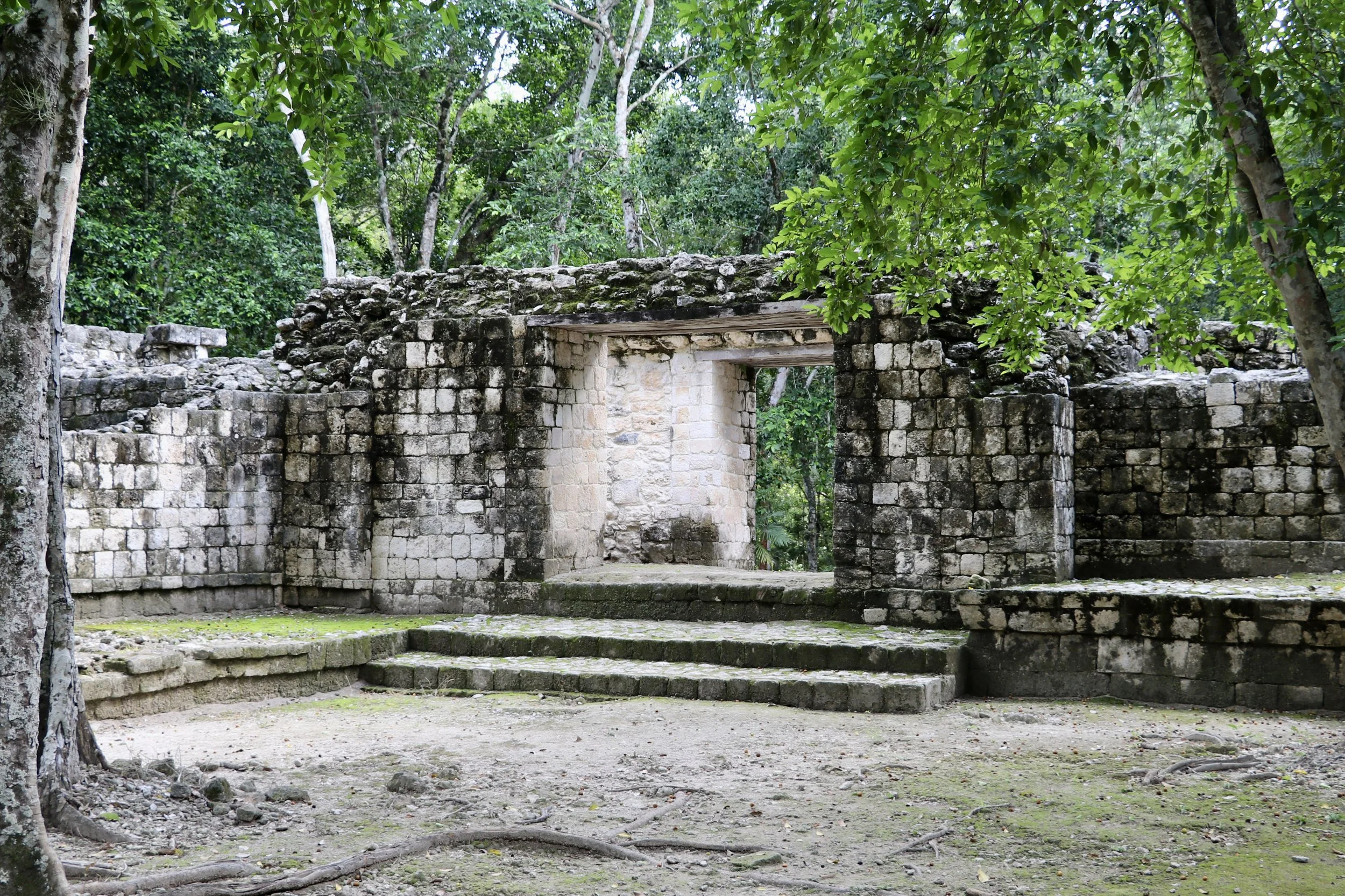
A Language of Power in Close Quarters.
Looking for directions, opening hours, or where to stay and eat? Head straight to the Practical Information section.
Balamku, a smaller Maya site in southern Campeche, was the last stop on a one-week itinerary through some of the remote Maya sites in Mexico. I had been driving there from Calakmul, the commanding UNESCO World Heritage Site further south, and after walking its forested path for hours, I thought I knew what to expect.
After Calakmul, even Balamku felt out of the way, and for a moment I wavered in my decision to visit it. Would it really make a difference? Would I not likely be disappointed?
As I parked in the small area in front of the entrance, I was met with a familiar sight: work was being done to upgrade the tourist facilities. A new welcome center was given the finishing touches before it would be put into service.
I quickly paid my dues and started walking in the forest, passing by a few workers busy with paving a new stone path in the relative cool of the shade. The site’s dwellings felt more restrained than Uxmal or Hochob, part of an earlier phase - the Early Classic era, between 200 and 600 CE - and left relatively unmodified ever since.
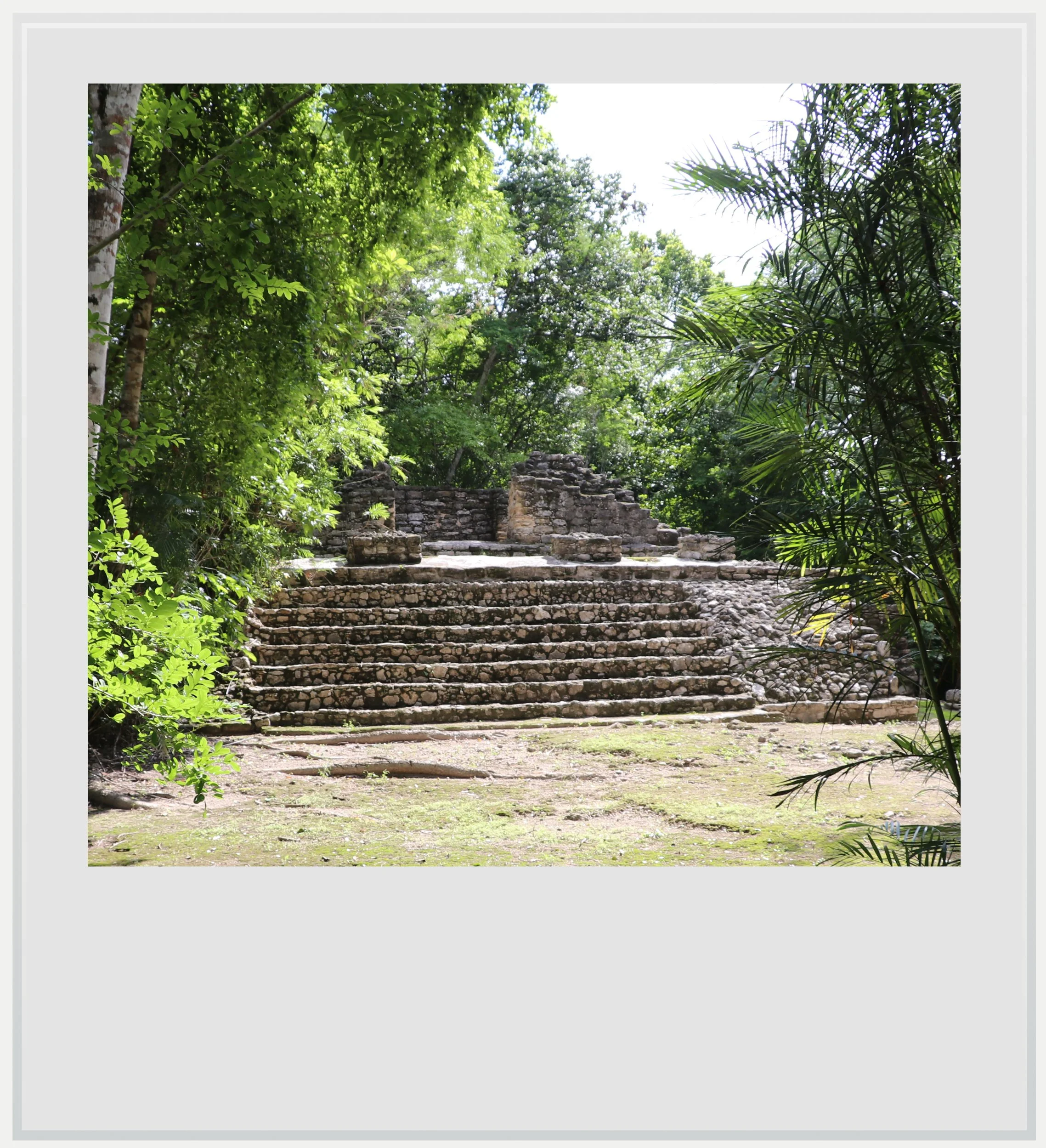
A building in the southern group in Balamku.
Balamku is the modern Maya name for the site, meaning Jaguar Temple, a reference to the main structure of the Central group, towards the end of the path. From the outside, the edifice looked like a nice Maya ceremonial structure partially taken over by the tropical forest, a visual cue I had seen many times in my Yucatan travels.
I almost missed a small set of stairs on the left side of the building, leading one floor up to a screen door. If I hadn’t seen movement - an INAH worker getting out at that specific moment, I might not even have registered that the visit wasn’t fully over.
Balamku seemed to embody a different Maya power language.
Balamku was a very recent addition to the list of notable Maya sites open to the public in Mexico. The ruins hadn’t really grabbed anyone’s attention until the early 1990s, when reports of looting in the area prompted INAH, the country’s national institute of anthropology and history, to investigate.
This led to the discovery of one of the largest and most well-preserved stucco friezes in the Maya world. As a result, the site was partially excavated, and buildings started to sprout from the earth, little by little.
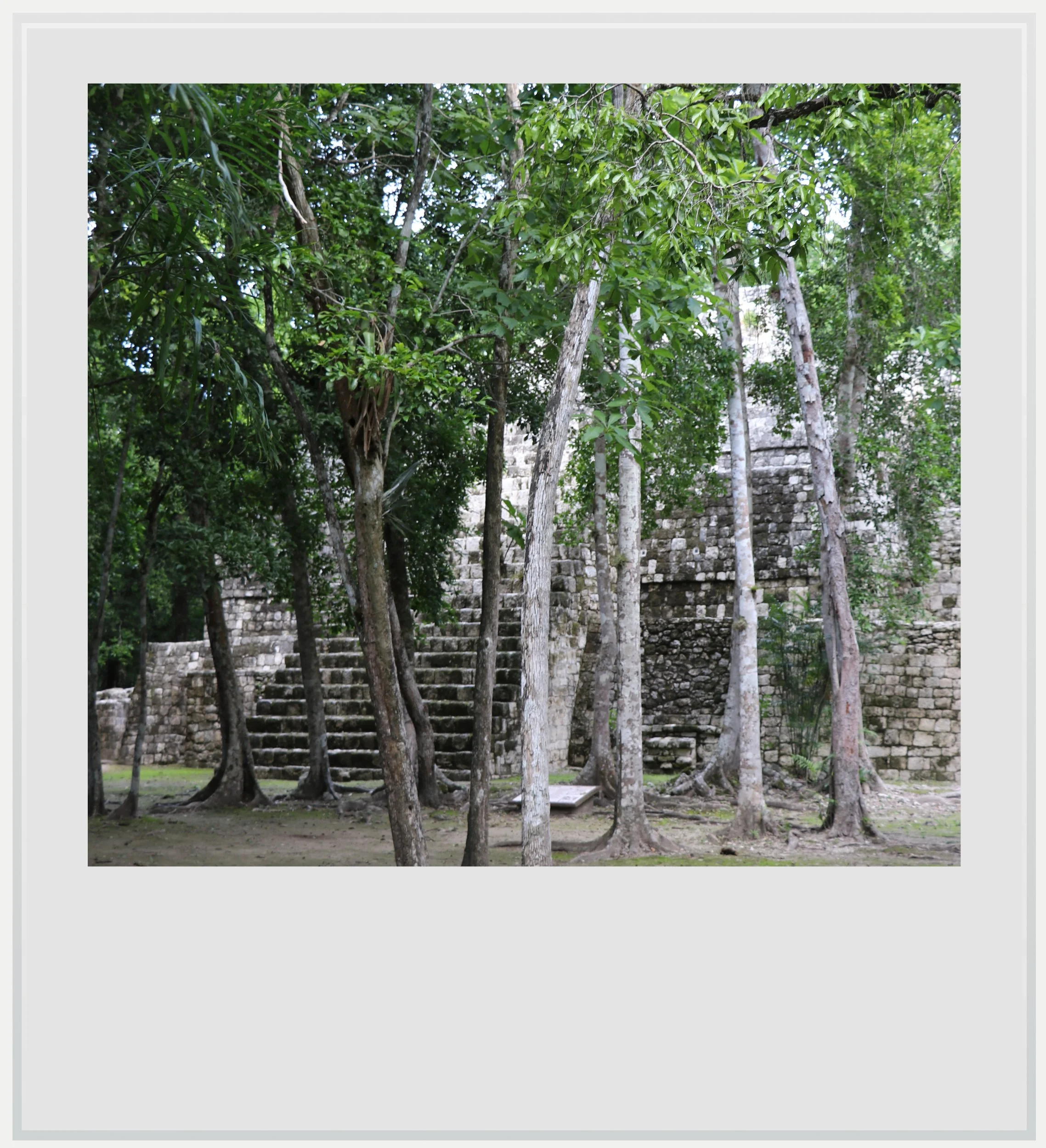
Outside the Temple of the Jaguar.
The highlight is the Central Group, home to the Jaguar Temple. Access was guarded to prevent damage to the frieze - which explained the movement I had seen when I got close. The employee must have seen me approach.
While this wasn’t the first time I had looked at stucco masks up close - the giant ones at Kohunlich had thoroughly impressed me a few days before, it was the first time I saw them laid out as a historical retelling spanning four generations of rulers. Suddenly, I was no longer just looking at individual figures but trying to understand a full story. It was as if the words I had seen at Kohunlich were now assembled in sentences.

I couldn’t pretend to understand everything, but I could see how it was constructed to communicate. Each of the four segments of the frieze followed a similar pattern: at the base, a large zoomorphic mask, likely representing the earth or the sacred mountain itself. Above it, an anthropomorphized figure, believed to be the Maize God, and at the very top, a powerful ruler, shown at the height of his power and adorned with elaborate regalia.
The more I stared at the frieze, the more details began to appear. Animals took shape, abstract carvings assembled into a coherent syntax, and it felt like I was able to get absorbed into the story. It helped that there was no room to step back inside the temple, which made each element even more overwhelming. I had to crane my neck to take it all in.
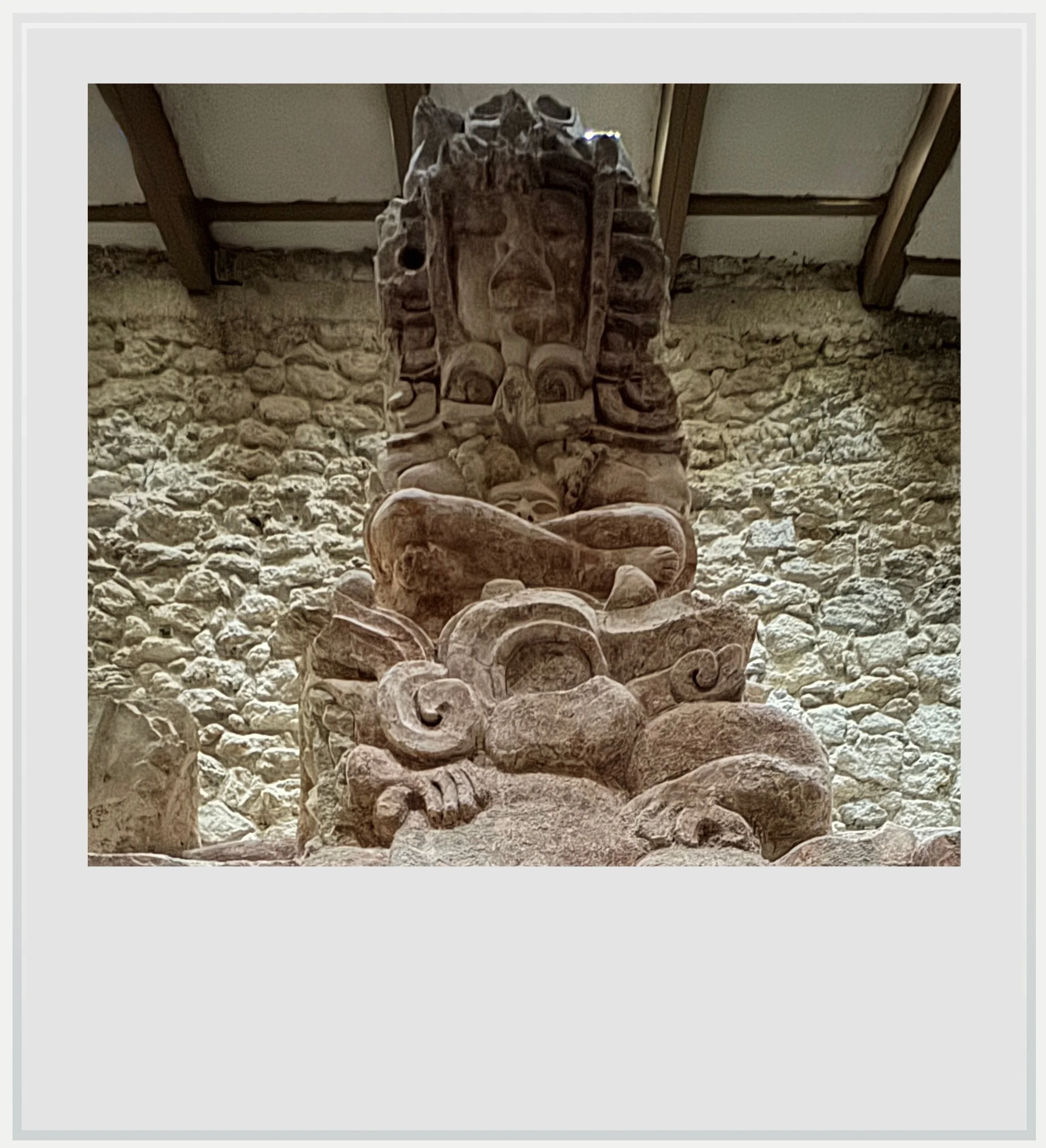
A detail of the stucco frieze in Balamku.
The frieze’s theme was much more complex than what I could decipher - it is believed to represent the dynastic cycle of four rulers and their slow ascension towards the sun. Still, I had begun to see a layer of meaning in it that I would otherwise have missed.
Stepping outside of the temple, I realized I was glad I had followed my curiosity and stopped here, rather than passing it by on a rushed Maya itinerary. Balamku did not overwhelm through size. Everything happened in a confined space, with no room to step back and no way to take it in from a distance. That was its singular power. It didn’t need sheer size to project strength - the tiny room, practically too small for the four ruler sculptures, seemed to embody a different Maya power language, where legitimacy came through concentration rather than display.
Practical information
(Everything you need to know about visiting Balamku - updated April 2026)
In a nutshell
Balamku is a small, little-visited Maya site in southern Campeche, best known for the stucco frieze inside its Jaguar Temple. Unlike larger sites in the region, the experience is confined to a single interior space rather than spread across extensive ruins. The visit is short but distinct, and offers a clearer sense of Maya iconography. It is best visited as part of a wider trip that includes nearby Calakmul, whose scale provides a useful contrast.
Getting to Balamku
How to get to Balamku from the United States: a remote archeological zone in southern Campeche, Balamku, isn’t easy to reach from the US. The closest airport is Chetumal (CTM), which is located over 2 hours away by car and lacks direct flights to the US, making a connection in Mexico City (MEX) indispensable. Campeche airport (CPE), to the north, is 3h15 away, but only receives a couple of domestic flights a day.
If, like me, your visit to Balamku is part of a broader southern Yucatan itinerary, it makes sense to fly into Chetumal and rent a car there, as a lot of interesting Maya sites are scattered between Chetumal and Balamku (see the Maya World Itineraries page for more details). Most people who visit Balamku do so on the tail end of a visit to the bigger site of Calakmul, and Balamku can be a short side trip getting back from the UNESCO World Heritage Site.
Another option could be to fly into Tulum (TQO) or Merida (MID), if planning a trip spanning more of the Yucatan peninsula, as US and Canadian airlines fly non-stop to both, but travel time is over 4 hours from each airport.
Car rental is your best bet to visit the region, and whatever airport you land it will have local and international options, which were fairly priced at the time of all my Yucatan visits (provided you don’t fall for the pushy additional insurance coverage every single rental agent is incentivized to sell you).
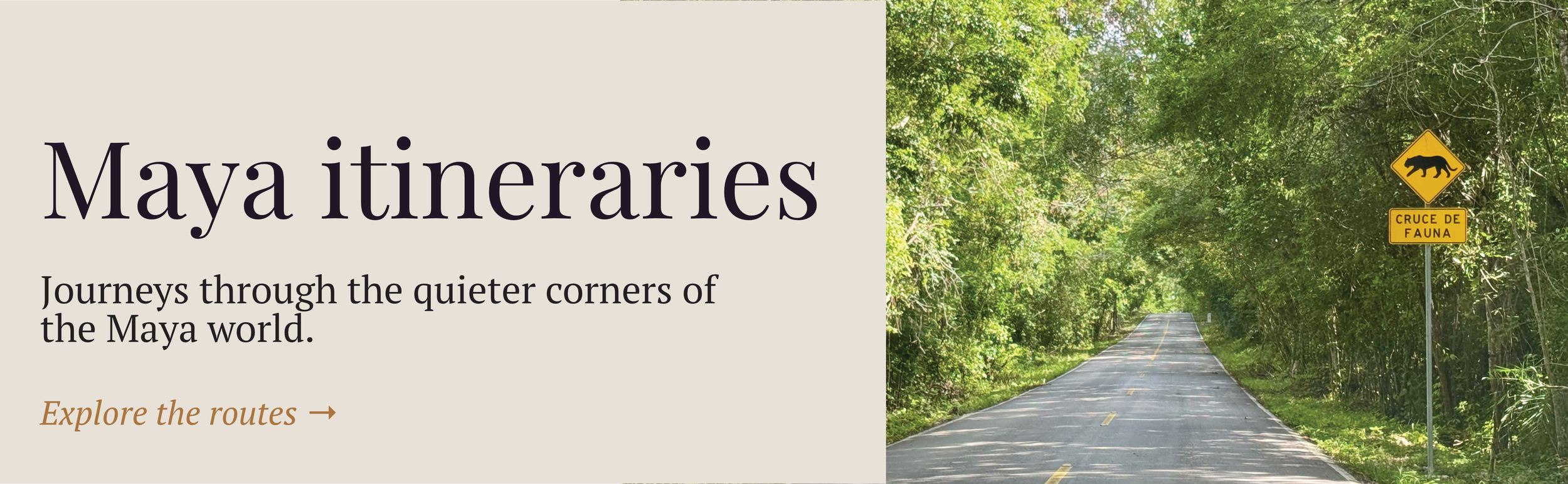
How to get to Balamku from Mexico City: the best way to reach Balamku is to fly into Chetumal airport (CTM), from Mexico City’s main airport (MEX) or its secondary airport (NLU). Aeromexico, VivaAerobus and Volaris operate once a day between MEX and CTM while Mexicana and Viva fly several days a week from NLU to CTM, with base prices starting around USD75. Car rentals are widely available at Chetumal airport, from a variety of Mexican and international companies. Balamku is about 2h15 west of the airport, along Federal Highway 186, a well-maintained, straight-through-the-jungle two-lane road, but again, if your trip includes more stops, you may use Xpujil or Calakmul.
Note that there aren’t a lot of accommodation options near the site (see Food & Lodging section below), which may not matter if Balamku is a stop on a Calakmul trip. Accommodation is available near Calakmul, at the Hotel Mundo Maya, in Xpujil, the base town for the Rio Bec Maya region, or, in a couple of rustic places near Balamku itself.
Balamku sits in a tropical forest region, in the heart of the UNESCO-protected Calakmul Biosphere Reserve, albeit in an area of it that doesn’t require paid access. Access to the site is done just off federal highway 186, 1.5 miles (2.7km) further west than the spur to Calakmul, in the village of Nuevo Conhuas, and is well marked. Once on the small road, drive about a mile (1.6 km) before you find the site’s parking lot.
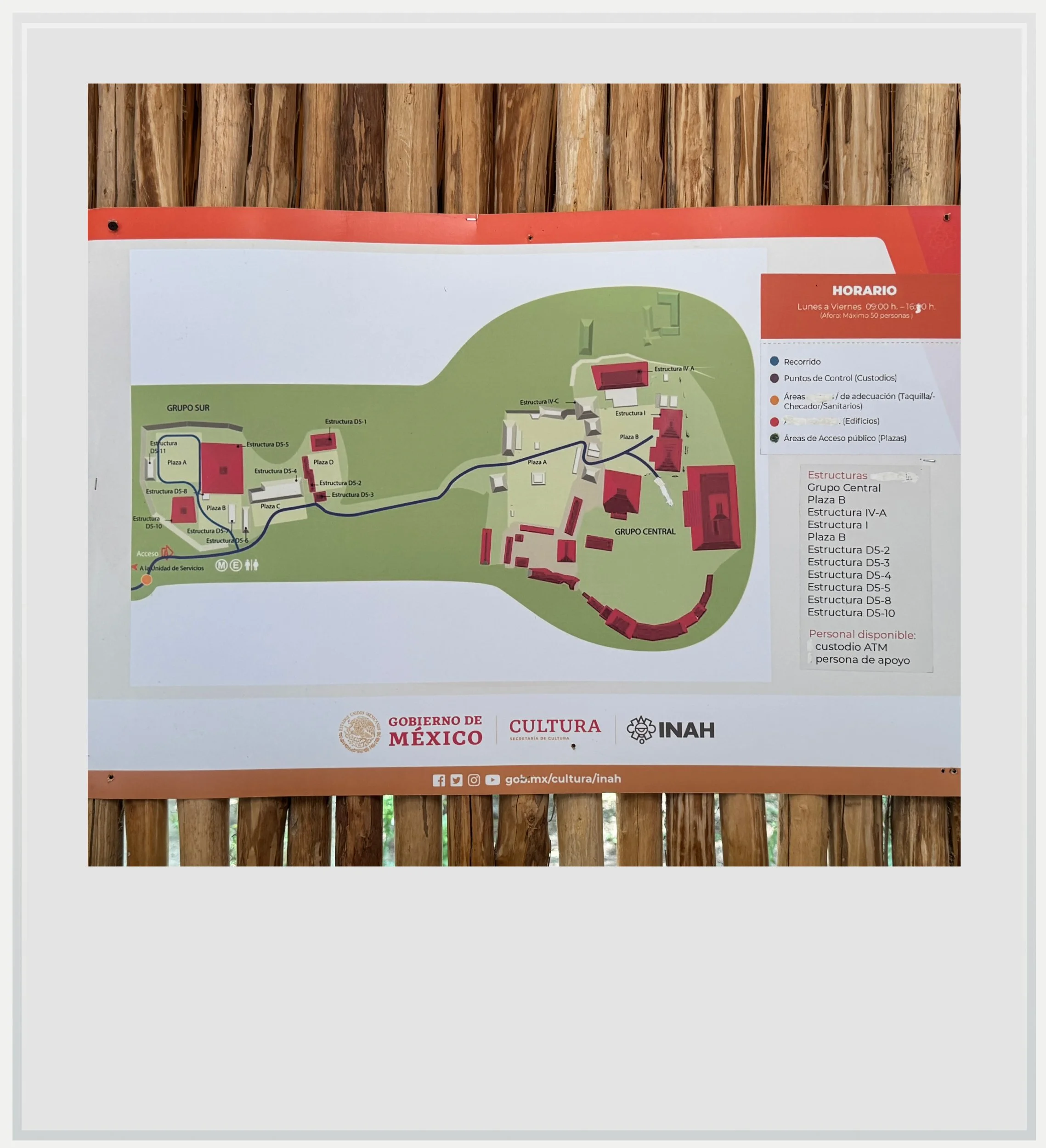
The Balamku site map.
How much does it cost to access the Balamku archeological zone
Entrance cost was MXN145 for foreigners and MXN 80 for Mexican citizens and foreign residents with credential, at the time of writing.
What are the opening times of Balamku
The site of Balamku is open every day from 8 AM to 5 PM, with entry allowed until 4:45 PM.
When to go to Balamku
Like the rest of central Yucatan, the best months to enjoy Balamku weather-wise are those of the dry season, between November and April, with January and February the (relatively) coolest months. This is also peak season but the site is rarely crowded, and it is very possible you’ll have the site to yourself even then.
How long should I plan to visit the Balamku archeological zone
Balamku is a relatively compact site, and its highlight is the well-preserved stucco frieze inside the Jaguar Temple, towards the end of the site. 30 to 45 minutes should be enough to walk the site and see it.
Safety in Balamku
The Yucatan peninsula is one of the safest areas in Mexico, and Campeche is one of the few Mexican states with no travel advisory, holding a Level 1 “Exercise Normal Precautions” rating.
On top of this, Balamku is fairly isolated and the area is never really busy - it is definitely not a place that’s tempting to thieves.
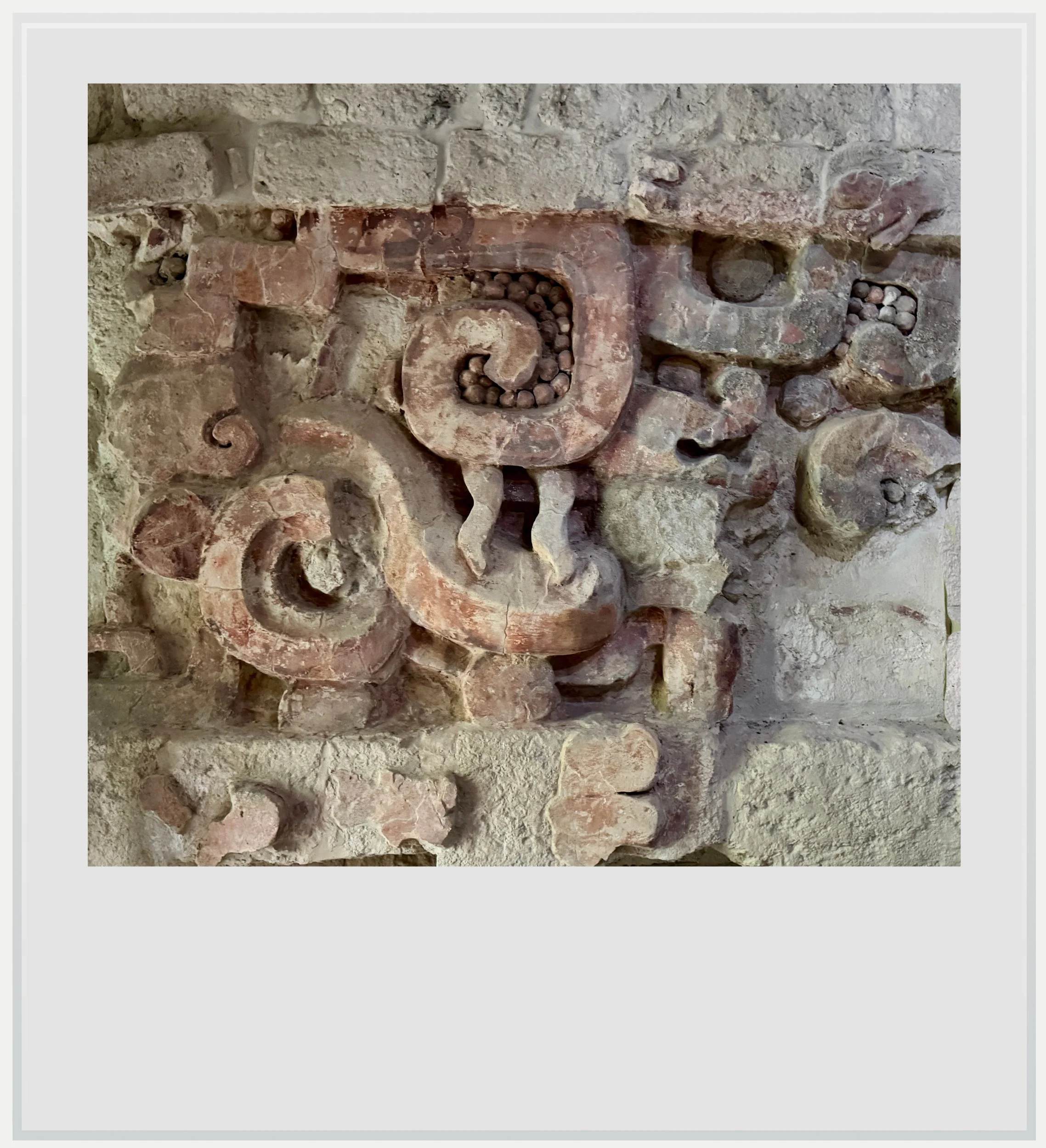
A detail of the frieze in Balamku, showing serpent motifs.
Food & lodging near Balamku
Balamku, deep in the southern Campeche jungle, is a fairly isolated place, and the only international-standard hotel relatively close is the new, fancy Hotel Mundo Maya Calakmul. While not cheap by any means, I recommend it for the ease of getting to the ruins of Calakmul if your plan calls for a visit to there before Balamku. It takes about 1h30 of slow driving to get from Calakmul to Balamku, meaning you can visit Calakmul in the morning and drive to Balamku right after lunch to see Balamku, and still have time to be in Xpujil before nightfall.
Basic accomodations are available closer to Balamku itself, in the village of Nuevo Conhuas, but most accommodations are actually located in Xpujil, 45 minutes away to the east.
Food options are pretty limited as well. Again, if you’re planning a Balamku visit after Calakmul, the Mundo Maya hotel will be the best option for lunch, before driving out of the Calakmul area. Nuevo Conhuas didn’t have any real food option I could recommend, which means Xpujil is the next best option.
I stayed in Xpujil before driving to Calakmul and spending a night at the Mundo Maya hotel. The morning after, I visited Calakmul and then drove to Balamku. It would be a good idea to stock up on snacks and drinks in Xpujil before leaving.
Keep in mind these travel tips
The Yucatan peninsula is one of the safest regions in Mexico, and its main roads are well maintained. This isn’t enough to forget the #1 driving advice in Mexico: do not drive at night. Driving at night, on poorly lit roads means you won’t see the motorcycles without lights, the potholes and the ubiquitous topes, these notoriously hard speed bumps that spring out of nowhere. You may encounter wildlife or, more prosaically street dogs crossing right in front of you. Plan your itinerary to be at your next destination before nightfall. It’s important.
No matter the season, there will be bugs in Yucatan. While you may only see the gigantic Tarantula Yucateca spider on the roads through the jungle leading to Calakmul, you’ll find mosquitoes pretty much everywhere, and especially in the shaded forests surrounding the Maya ruins. Be ready with repellent at any time of the day. It’s also a good idea to wear clothes that cover your limbs (pants, high socks, long sleeve t-shirts) while you’re in the jungle. Mosquito-borne diseases are fairly uncommon in the state of Campeche, but not unheard of.
SPF will be your best friend. The UV index may be low in the morning and evening, but during the day, it gets pretty high.
Do not forget to hydrate. While OXXOs aren’t as ubiquitous in this rural region as in other ones, you’ll find plenty of abarrotes, these tiny stores selling cold drinks along the way. Make sure you always have water handy and drink to make the heat more bearable.
Cell service is spotty at best in southeastern Campeche and non-existent in Balamku. You will only get service back once on highway 186 (the main road between Chetumal and Villahermosa), and only with Telcel. Their coverage is independently mapped here. Think about downloading maps for offline use while in or around Balamku, it will prove very useful.
Every photo caption appears if you hover over it (on a computer) or click on it (on a smartphone).
All photos are mine and copyrighted.