San Francisco de Campeche, Mexico.
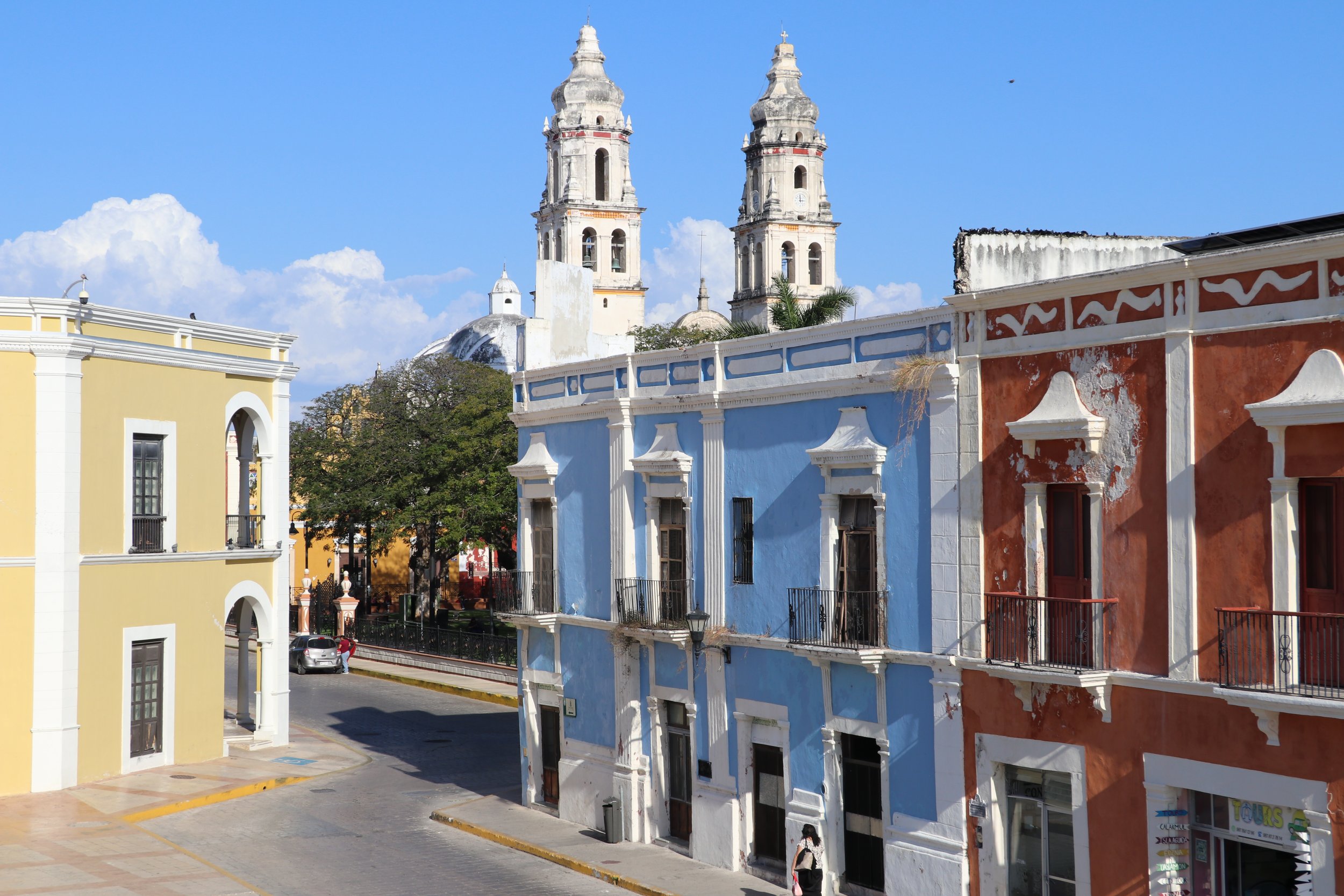
Where Bastions Guard a Colorful Colonial City Too Often Left Out of Itineraries.
Looking for directions, things to see, or safety tips? Head straight to the Practical Information section.
If there is one word I took with me from my visit to San Francisco de Campeche, the capital of the eponymous state, it was “why”.*
Why would a UNESCO World Heritage city not appear on mainstream Yucatan travel itineraries? Why would one of the most cohesive, charming colonial towns in Mexico seem so overlooked when it appeared to have everything travelers usually look for?
My first impression of the city happened at the airport. I assumed getting to the town center, a few miles away, would be easy. In fact, only one or two domestic flights a day land there, and outside of these times, taxis are nowhere to be seen. I quickly found out Uber didn’t operate in the city and decided to take a chance and walk to the main avenue, where I had seen dedicated tracks for a bus linking the Maya Train station to the centro historico.
I sat on the shaded platform and waited. Then waited some more. There was no sign of a bus coming any time soon, and no screen listing the next departures. I resorted to checking timetables online, only to realize that there were only about 10 services a day in both directions, and the next one would come in about an hour. I walked off the platform and tried to hail a taxi, but the few passing by were already busy with passengers.
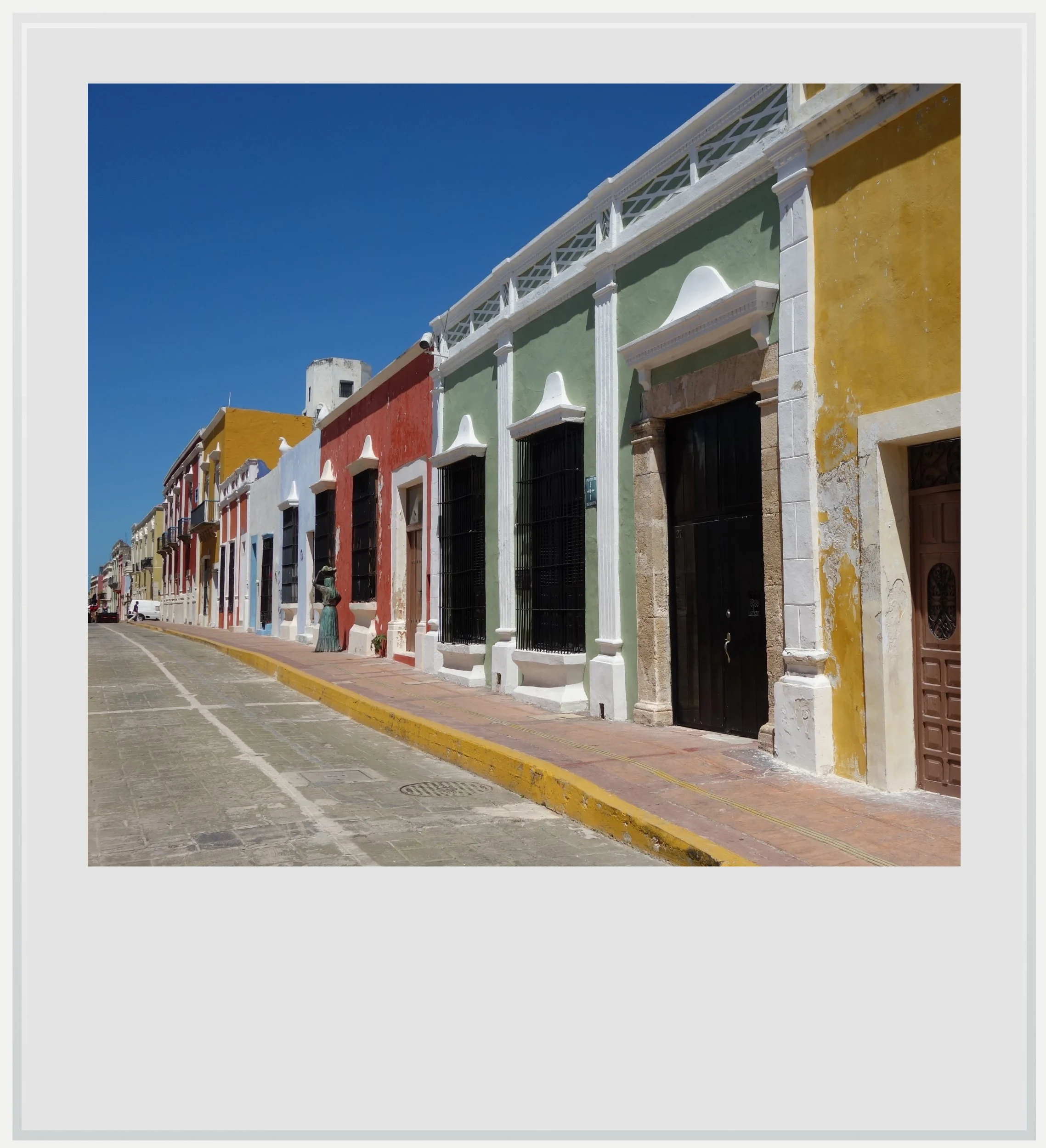
Calle 59 in Campeche’s walled city.
Eventually, I asked for directions in a nearby gas station, and ended up taking a packed colectivo to the town’s market, and then walked the last half-mile to the historic walled city. This was the my first answer to the ”why” question that would be a recurring thought throughout my stay. Perhaps the city’s infrastructure was not yet ready to welcome a strong influx of tourists.
This messy sequence was quickly forgotten as soon as I crossed Avenida Baluartes and entered the historic core, passing the tall fortifications marking its boundary. Suddenly, it seemed like I had entered another world. The chaotic noises of the busy avenue were behind me. I found myself on a narrow street lined with one-story houses as far as the eye could see, nearly no traffic and just a few pedestrians walking by.
I quickly located my hotel, checked in and stepped back out to discover the city. San Francisco de Campeche’s historic core isn’t sprawling, but it is big enough for a two-hour stroll that can be spent strategically checking each street block by block (the city was built on a classical colonial grid) or wandering aimlessly.
I chose the second option, and let my feet guide me through the town.

Colorful façades in the historic center.
Mexico has many gorgeous colonial towns: in fact, more than ten of them are listed as UNESCO World Heritage Sites. While it would be unfair to generalize, I found highland towns (from Guanajuato to San Luis Potosi) to share similar aesthetics, where power was projected through big, almost theatrically beautiful mansions dotting the central streets.
San Francisco de Campeche couldn’t have looked more different. Here, the houses were narrow, and mostly one-story tall. Their façades, although colorful, were pared down and austere, as if to hide the social life that would happen on the inside.
The modesty of the buildings was offset by the exuberance of the color palette.
These contrasts stemmed from the role the city played during Mexico’s colonial era. San Francisco was a strategic port city for the Spanish crown. Because of its location on the Caribbean sea, it was vulnerable to pirate attacks. As a result, the city was not built to impress. Spectacular open mansions made more sense in highlands towns far removed from the threat of foreign fleets, pirates, or privateers. In Campeche’s capital, houses inside the fortifications were meant to be defensive, not showy.
Climate was, of course, another layer explaining the architecture around me. The intense heat and humidity of Mexico’s Gulf coast meant that low profile buildings with few outer windows stayed cooler year-round. As I was sweating my way through town, this felt strangely appropriate.
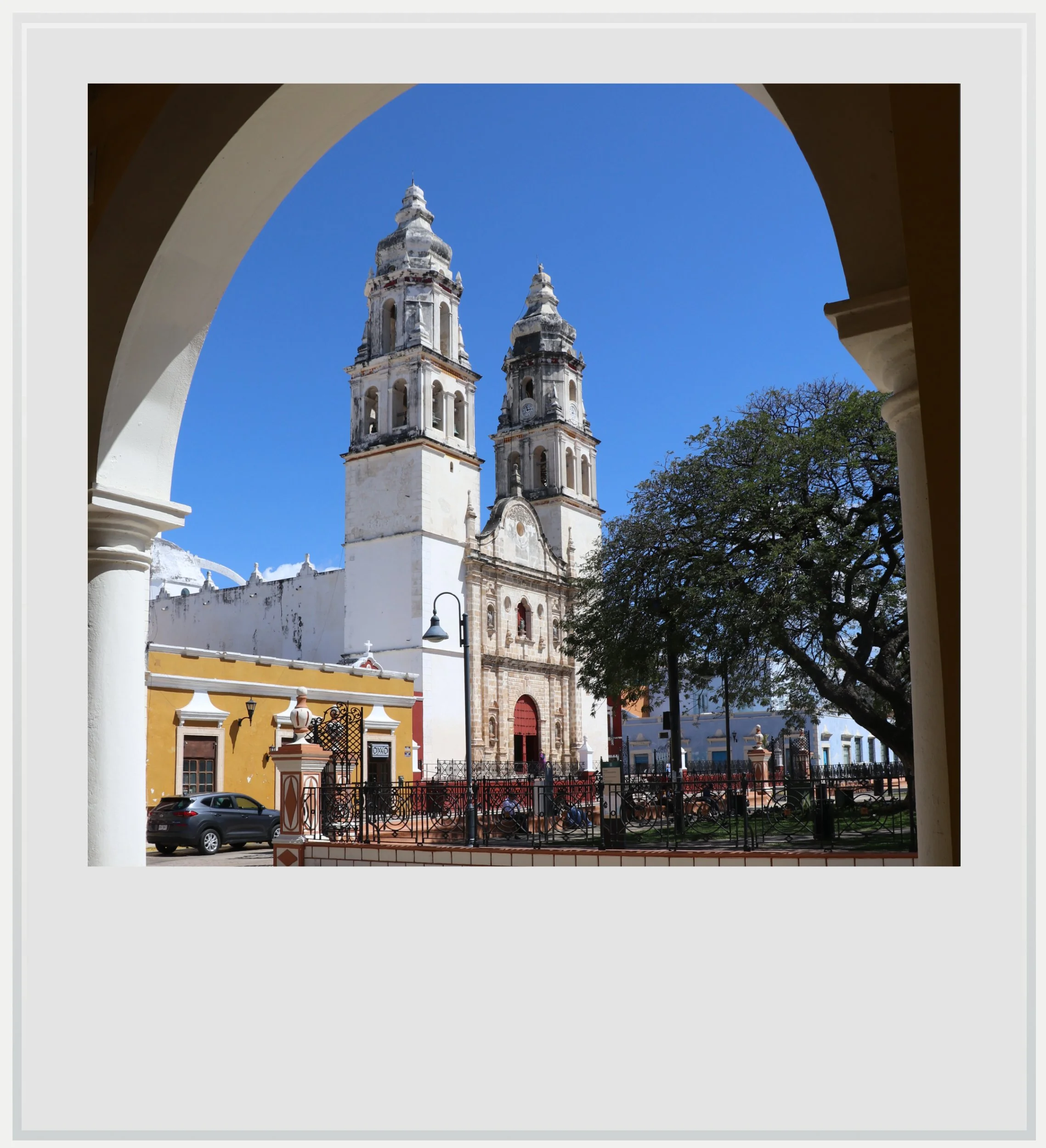
The Campeche cathedral, on Plaza de la Independencia.
The modesty of the buildings was more than offset by the exuberance of the color palette. Against a cloudless sky and under the afternoon sun, the town seemed to want to express its beauty through its vibrant hues, each house brighter than the next.
There were no blue streets or yellow streets here. This wasn’t Izamal. Instead, each street unfolded in a vibrant cacophony of tones. Colors were polished, and buildings had been meticulously restored, but the seemingly random color contrasts between houses, deep purple next to yellow, orange followed by cerulean blue, formed a harmony of their own. Color coordinating wasn’t part of the charm, and it didn’t need to be.
After such a display of color, seeing the central cathedral almost felt like a surprise. The gorgeous church, on Plaza de la Independencia, stood as one of the tallest buildings around and impressed by its pared-down design. Its imposing height, simple Baroque façade and white-washed walls seemed like a visual reset, and a a sharp departure from the colorful horizontality of the nearby streets.
San Francisco’s main plaza almost abutted the city’s northern wall, and I approached it from there, unsure how I could best experience it. In fact, just off the cathedral’s square sat the Baluarte de la Soledad. Baluartes are defensive bastions built into the city walls. They project outward so city defenders could fire at invaders along the walls, not just ahead. There were several of them along the fortifications, and seeing the first one switched my previous perception of peacefulness. The fortress in front of me reminded me that peace had a price.
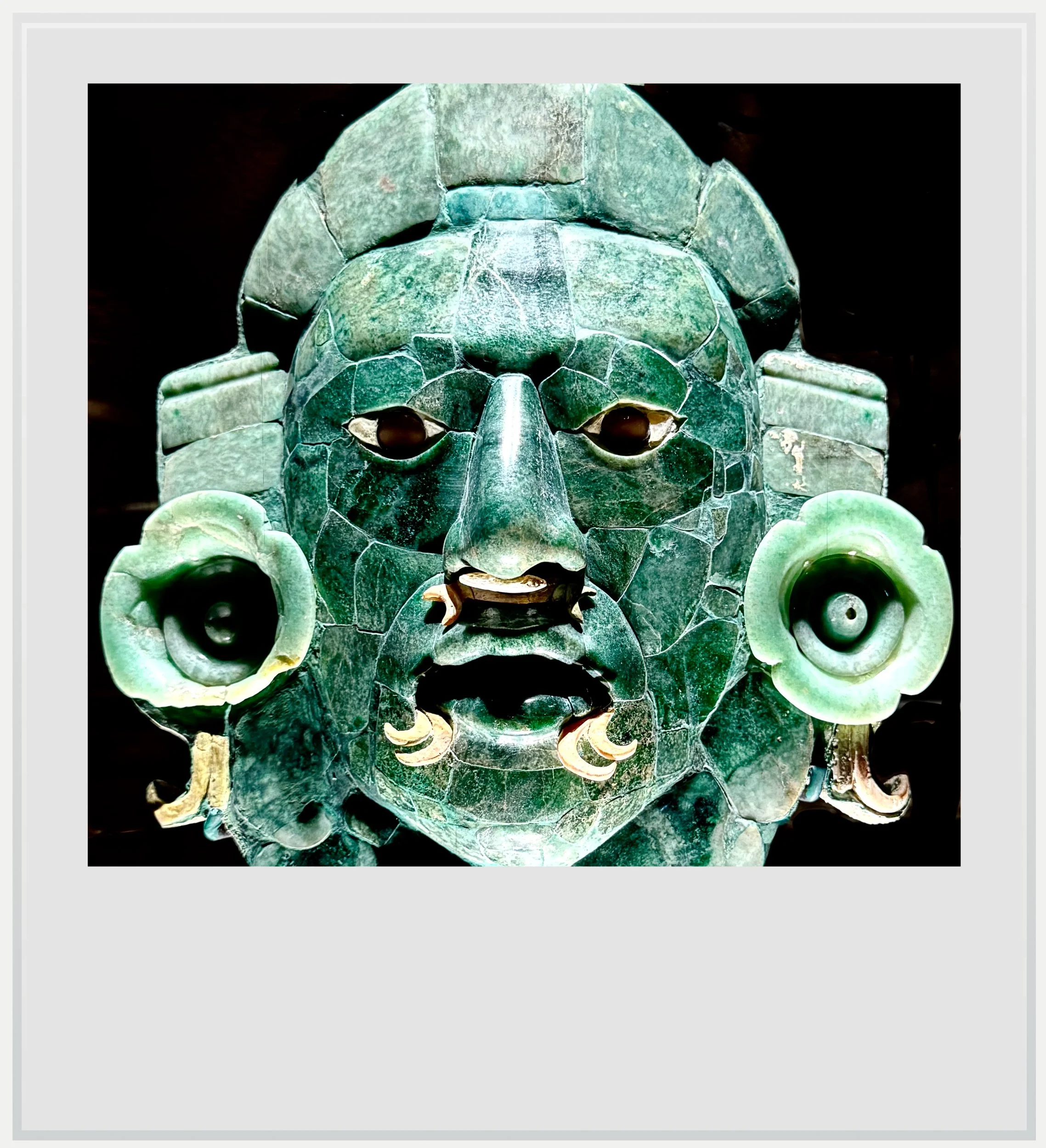
The Calakmul jade mask on display in the Maya museum.
The city’s cheerful architecture took on a different meaning once I stepped a top these thick walls and witnessed the antique cannons that used to repel the sea invaders. Seen from above, the streets felt smaller, almost toy-like, surreal and playful. Maybe this was another key to understand the inner town’s exuberance: it only made sense in contrast with the invasion threats that surrounded it, from which the walls were the ultimate protection.
Today, some of the baluartes house museums and my favorite was the Maya Architecture museum, a compact but fascinating space putting in context the various Maya architectural styles seen throughout the state, from the Peten style of Calakmul to the Chenes temples of Hochob. I liked that it added another dimension to San Francisco’s appeal, beyond the colonial one.
Throughout my walks, the streets were mostly busy with Campechanos.
The museum’s masterpiece was the jade mask of an ancient Calakmul ruler, exhibited in the very last room. It was a striking reminder of the sophistication of the Maya during the Late Classic Period (600-900 CE). The mask was as interesting for what it was - a stunning work of perfectly sculpted jade - as for what it represented, the deified face of a deceased ruler and how it would present himself as he existed in death.
I liked that, in a twist of history, one of the city’s bastions was now used to protect what is considered one of the most sophisticated Mayan artifacts ever excavated, and it felt fair that this would be shown in the state capital, not removed further from its historical place.
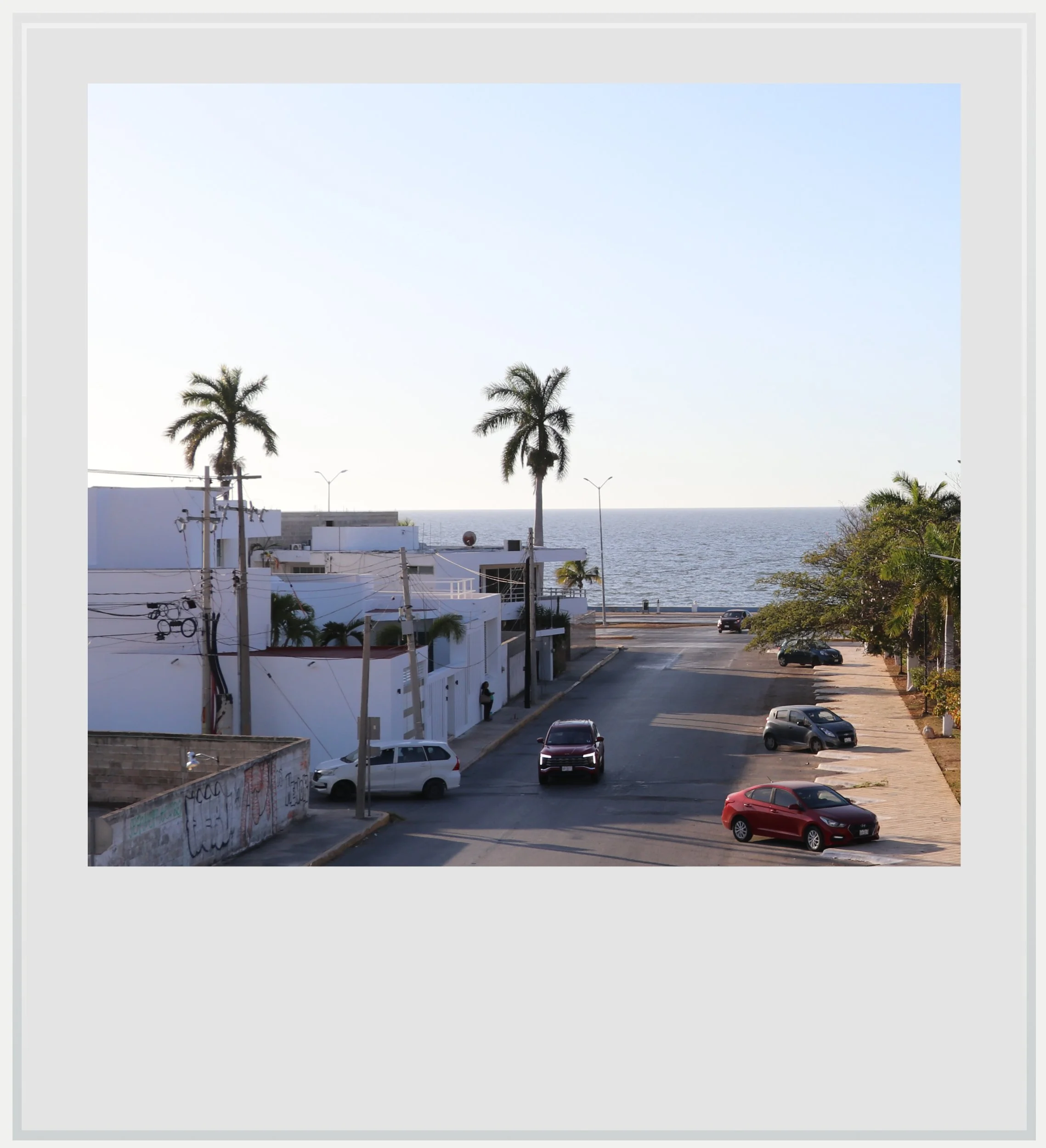
A view over the Caribbean sea from the top of the city's walls.
Having gone up at the top of the walls and seen the sea on the other side, I decided to head out and crossed the Puerta de Mar (the Sea ate). The most important access point to the old city from the sea, where merchandise to and from Spain would arrive and depart, the gate played a vital role in the city’s economy in colonial times. It now stood as an open access to the glistening sea I could see a block away.
While the fortified walls of the city still protect it - mostly symbolically - from the outside world, the urban design shown on the malecon, the promenade along the seashore, couldn’t have been more different from what it must have looked like a few centuries ago. Whereas the waterfront had once been both a lifeline for commercial ships and a dangerous place full of pirates, it was now an well-designed, open area shared by cars, bikes and pedestrians alike. Only the heat prevented me from staying too long. I promised I would come back in the morning, before the sun rose too high, to enjoy it again.
Tempted to find shade along the historic streets, I crossed the Puerta de Mar again. This time, I walked east and quickly left the walled city - the wide Circuito Baluartes road was the visual cue, built where the walls once stood along this stretch of the city. I had stepped into the Barrio de Guadalupe, a historic neighborhood built during colonial times outside of the protected historic core.
Once I crossed the busy road, quiet came back quickly. It was hard to project that, in older times, this barrio would have been subject to much more danger than the walled center. The streets felt visually comparable, with just a little less polish. It felt refreshing, more organically raw, a truly lived-in area and not just a place for tourists to discover.

A side street in the Barrio de Guadalupe.
Throughout my walks, inside or outside the walls, one thing struck me: the streets were mostly busy with Campechanos. I did see some tourists, but very few of them seemed to be foreigners. It made me want to come back to the “why” question I had earlier asked myself. Why was such a colonial gem seemingly ignored by the millions of foreign tourists visiting the Yucatan peninsula every year?
After seeing the place more clearly, I felt I understood the answer. San Francisco de Campeche simply sat outside the main tourist circuit. As unfair as it seemed, it was too far from the usual tourist highlights of Cancun, Tulum and Chichen Itza to register as a must-see. For now, that kept one of Mexico’s finest colonial cities strangely absent from the spotlight and left it beautifully unclaimed.
* The city of San Francisco de Campeche is informally known as Campeche, and referred to as such on road signs or airport tickets. Since Campeche is also the name of the state, for clarity purposes, I used the town’s full name in the article, and left “Campeche” to describe the state itself. In daily life, “Campeche” usually refers to both the town and the state.
Practical information
(Everything you need to know about visiting San Francisco de Campeche - updated April 2026)
In a nutshell
San Francisco de Campeche is one of Mexico’s most appealing small cities: a UNESCO-listed historic center of colorful streets, restored mansions, fortified walls, and unusual calm. While Merida and Valladolid draw most Yucatan-bound travelers, Campeche remains strangely absent from mainstream itineraries despite offering beauty, walkability, history, and a slower, more coherent urban atmosphere. For travelers looking for charm without crowds, it is one of the country’s clearest omissions.
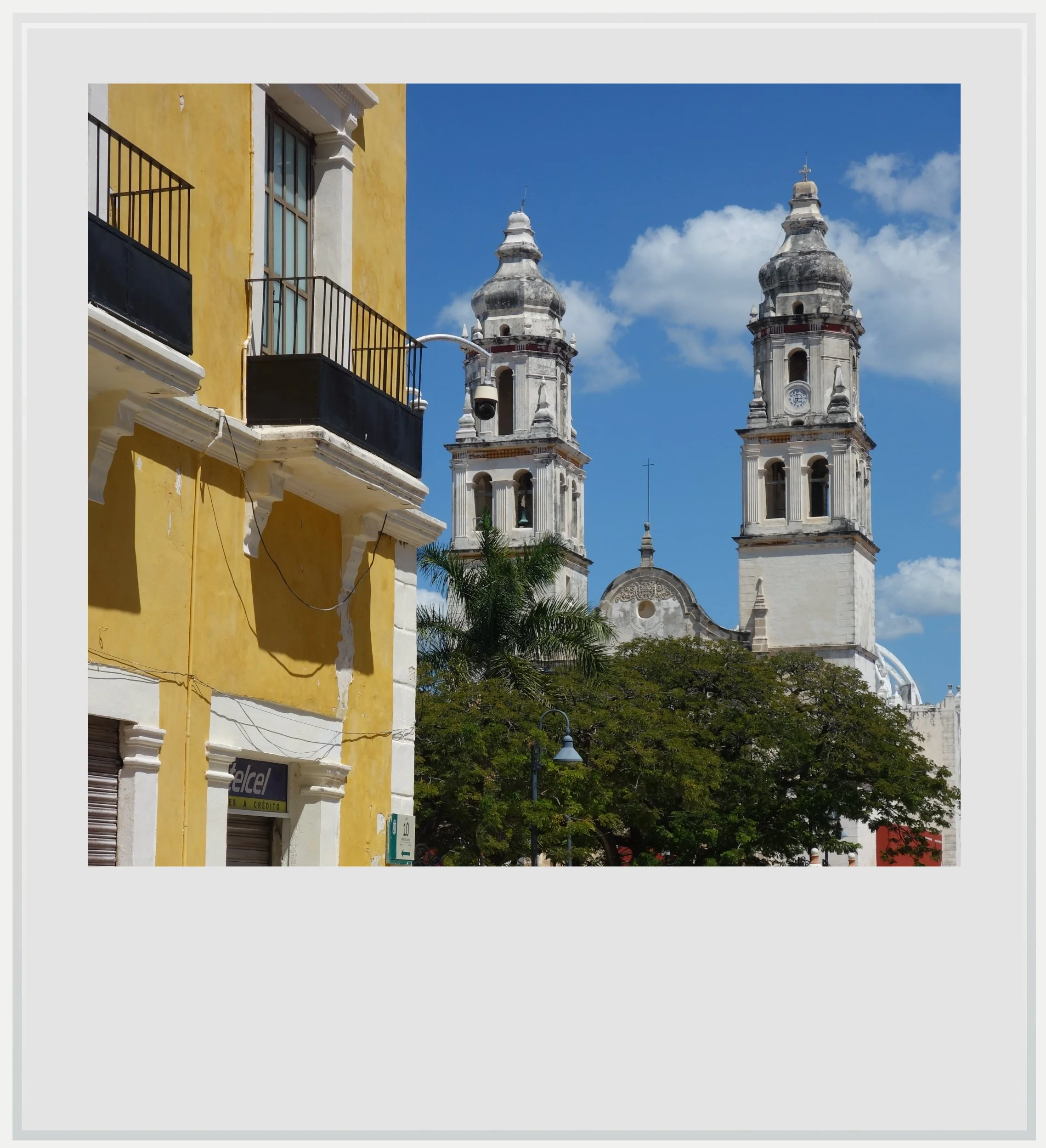
The Campeche catherdral.
Getting to San Francisco de Campeche
How to get to San Francisco de Campeche from the United States: San Francisco de Campeche isn’t very easy to reach from the US. The closest airport is Campeche (CPE), right next to the city. Campeche is only served by one or two flights a day from Mexico City (MEX) so it isn’t the most convenient airport to get into. Merida (MID) can be an alternative: travel time to San Francisco de Campeche is about 2h20 on a well-maintained highway, and Merida sees a lot more frequent flights to Mexico City (15 on a random day in April 2026) as well as non-stop flights to the US. American flies daily from Dallas (DFW) and Miami (MIA), United daily from Houston (IAH) and Viva several times weekly from Orlando (MCO) and Miami (MIA).
How to get to San Francisco de Campeche from the Merida airport:
by car rental: make a left upon exiting the airport, then another left to take the Merida ring road at the next big intersection. Exit the ring road and follow signs toward Campeche (highway 180) all the way to exit 7 (again following signs to Campeche). The trip should last about 2h20.
by bus: with more than 30 departures a day, ADO offers a robust schedule between the two state capitals. Most of them are operated by first-class ADO buses, but a few departures a day feature the more upscale Gran Lujo service (understand the differences between bus service levels in Mexico here). Walk-up fare was MXN 372 at the time of publication, but advance tickets could be purchased for MXN 186, with restrictions. Travel time: 2h25, from town center to town center. Merida’s ADO station, TAME, is here, while San Francisco de Campeche’s bus terminal is located here.
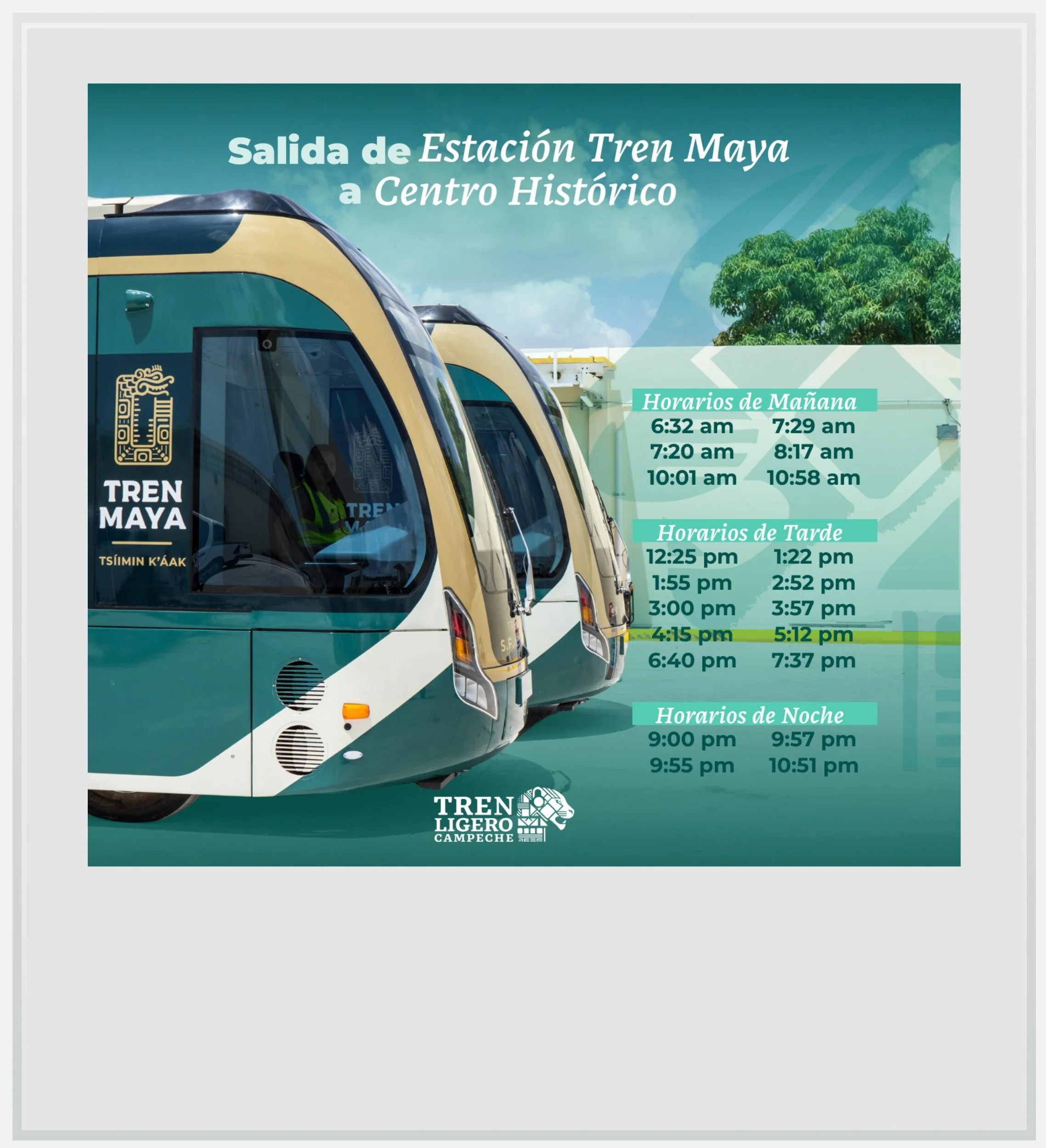
The official light rail timetable as of January 2026 (courtesy ARTEC)
Can I get to the San Francisco de Campeche on the Maya Train: you can, but at this time it isn’t very convenient. The Maya Train isn’t working at full capacity yet, and service is reduced on most of its lines. This means there are only one or two trains a day in each direction between Merida and San Francisco de Campeche. Moreover, stations aren’t located near the towns’ main sights and require either a bus or a taxi to get to and from the city center. Without a car, bus travel is definitely more convenient.
Can I get on a tour to see San Francisco de Campeche: tours are available from Merida, but most of them start and finish in Campeche. As such, it makes more sense to buy a round trip bus ticket and pick up a local tour. An example of a tour from Merida can be found here.
When to go to San Francisco de Campeche
The best months weather-wise to enjoy San Francisco de Campeche are during the dry season, between November and April, with December to March the ideal period with a little less heat. This is also peak season in the whole Yucatan peninsula, but Campeche isn’t truly on the main touristy circuit yet, and is unlikely to feel very crowded.
I went to San Francisco de Campeche in late February, and while Mexican tourists were present, I saw few foreigners, and never felt overwhelmed by the crowds.
How long should I plan to visit San Francisco de Campeche
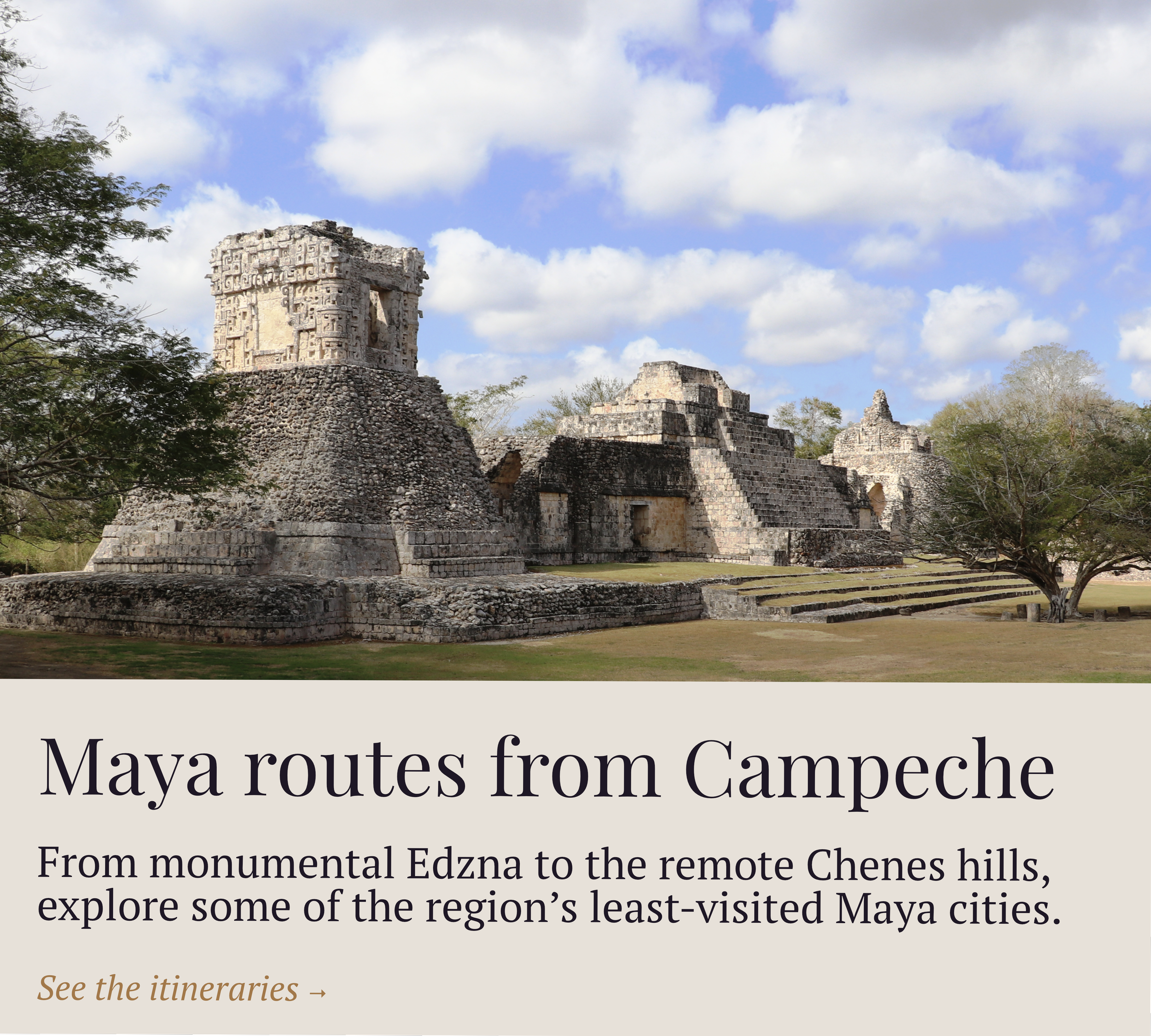
The historic city itself can be seen in a day, between walking along the colorful streets and checking out key museums. It can also be a base to visit stunning remote Maya sites like Edzna or the Chenes region.
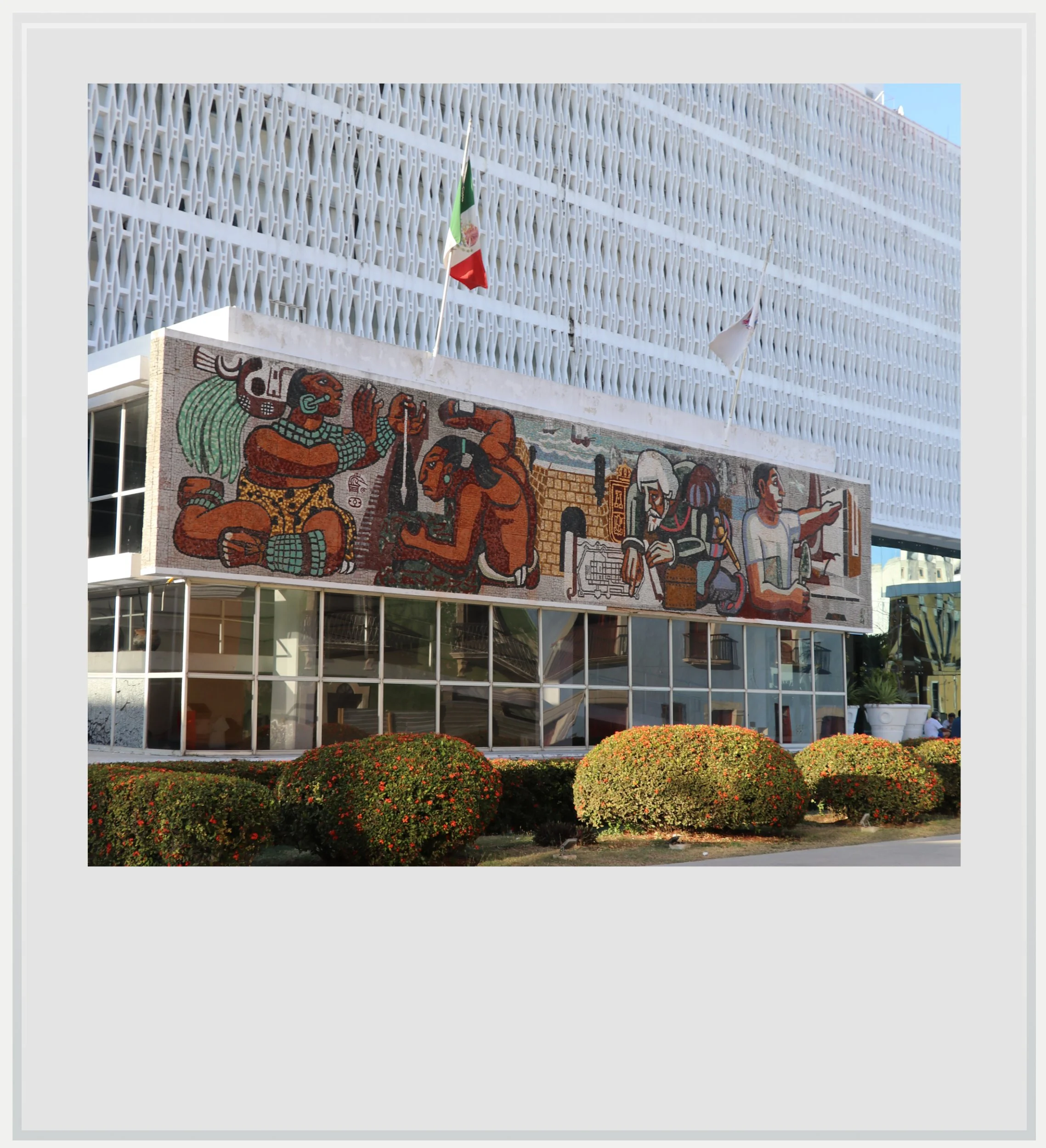
The Government’s palace with a mural by Jose Chavez Morado.
Key sights in San Francisco de Campeche
the ancient walled city. The best preserved example of a walled city in the old Spanish colonial empire, San Francisco de Campeche’s historic core is a feast for the eyes, with restored colorful houses, narrow streets and plenty of colonial-era churches
Our Lady of the Immaculate Conception cathedral. Hard to miss as the visual anchor of the walled city’s main square, Plaza de la Independencia, it is a beautiful example of restrained Baroque architecture, with its white walls, twin bell towers, and balanced façade showing discrete grandeur rather than theatrical excess.
The city’s baluartes are a fantastic way to understand how the city was defended against invaders, Some of them have been transformed in museums. The best one is the Maya Architecture museum, in the Baluarte de la Soledad. It houses an interesting exhibit about the various Maya building styles seen throughout the state, but more importantly, one of the most stunning Maya work of art, a jade mask that belonged to a major ruler of the city-state of Calakmul that can’t be missed. Another interesting museum is the City Museum, in the Baluarte San Carlos.
I found the State Government Palace to be a great example of 1960s architecture, and it is adorned by two murals in the pure tradition of Mexico’s famous art movement, painted by Jose Chavez Morado, a prominent muralist and student of Jose Clemente Orozco.
Barrio de Guadalupe: outside of the walls, this neighborhood feels beautifully raw, a less polished version of the postcard-perfect city inside the walls. It has the same visual impact than the historical center, but feels a little more lived-in, a place people live rather than come visit.
Shopping in San Francisco de Campeche
Beyond the many boutiques in the historical center, there are two main markets to buy local souvenirs. I wasn’t very impressed by the Bazar Artesanal, on the malecon, but really enjoyed browsing the Casa de Artesanias Tukulna. Tucked in a beautifully restored colonial building within the walled city, it is a tasteful assortment of upscale souvenirs that felt just right.
Safety in San Francisco de Campeche
The Yucatan peninsula is one of the safest areas in Mexico, and Campeche is one of the few Mexican states with no specific travel advisory: it is labeled a level 1 “Exercise Normal Precautions” state by the US Department of State, just like anywhere in the US. As such, there is no need to worry beyond taking normal precautions.
Food & lodging in San Francisco de Campeche
Hotels
It would be hard for me to recommend a place to stay, as the hotel I stayed at didn’t really fulfill my hopes. I would recommend to check reviews thoroughly and to understand that the Campeche capital mostly caters to national tourists, and expectations may not align with international standards on comfort or noise insulation. In Campeche, paying a little more often improves comfort and noise insulation.
Restaurants
Food options aren’t lacking in town, but the easiest way to enjoy a nice meal is to head towards Calle 59, parts of which are pedestrian-only, and where, at night, restaurants lay out tables for diners to enjoy al fresco dining. Choice is plentiful.
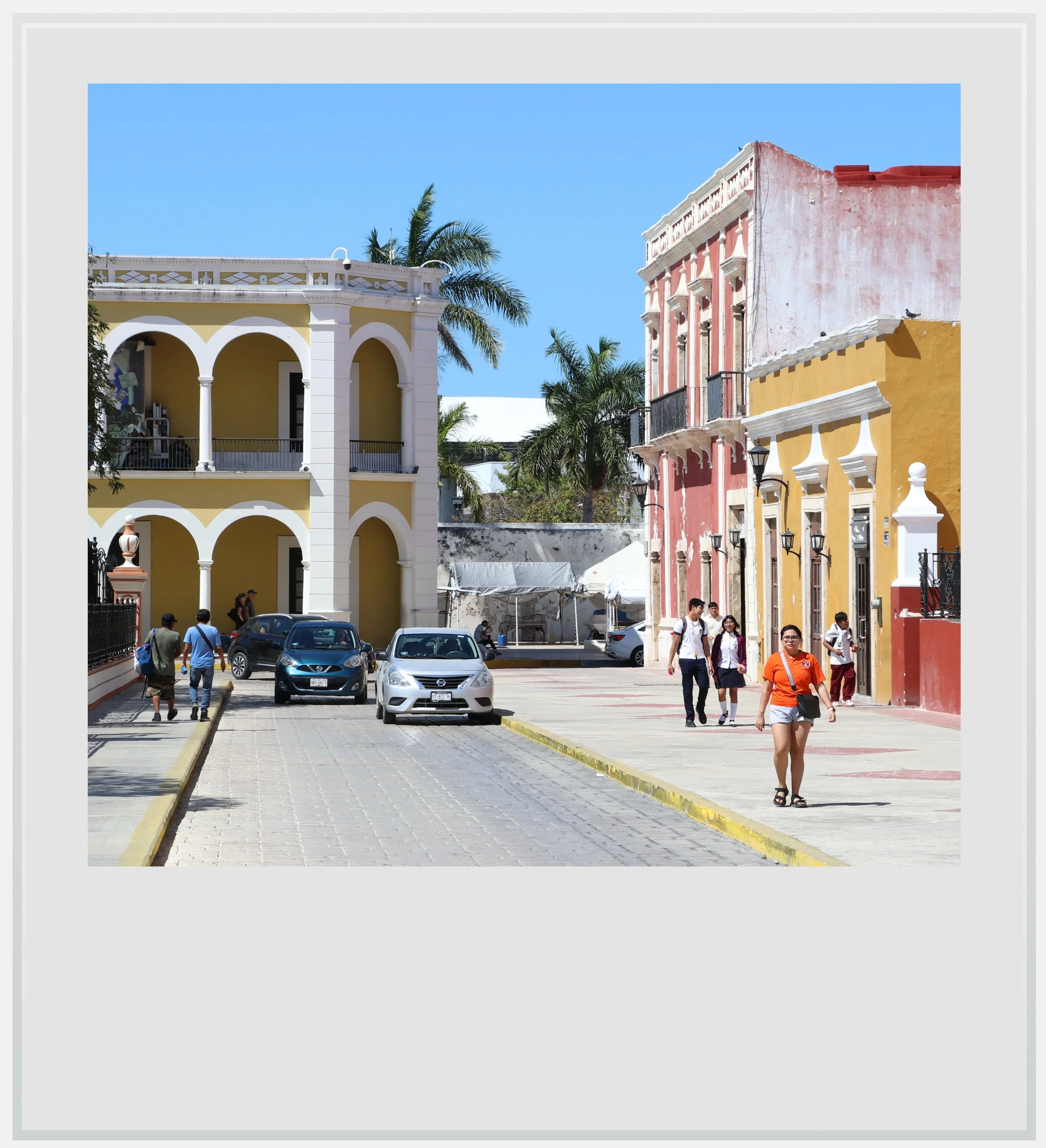
Plaza de la Independencia.
Keep in mind these travel tips
The Yucatan peninsula is one of the safest regions in Mexico, and its main roads are well maintained - although that is definitely not the case for secondary roads, where you have to drive with extreme caution to avoid treacherous potholes. No matter what road you’re on, do not forget the #1 driving advice in Mexico: do not drive at night. Driving at night, on poorly maintained roads means you won’t see the motorcycles without lights, the crazy-deep potholes and the ubiquitous topes, these notoriously hard speed bumps that seem to spring out of nowhere. You may encounter wildlife or, more prosaically street dogs crossing right in front of you. Plan your itinerary to be at your next destination before nightfall. It’s very important.
No matter the season, there will be bugs in Yucatan. While you may only see the gigantic Tarantula yucateca spider on the roads leading to Calakmul, you’ll find mosquitoes pretty much everywhere, and especially in the shaded forests surrounding the Maya ruins (less so in the most touristy parts of the peninsula’s cities).
SPF will be your best friend. The UV index may be low in the morning and evening, but during the day, it gets pretty high.
Do not forget to hydrate. OXXOs and other abarrotes, these tiny stores selling cold water and sodas are ubiquitous and an easy way to get refreshments. Make sure you always have water handy and drink to make the heat more bearable.
Every photo caption appear when hovering over it (on a computer) or clicking on it (on a smartphone).
All photos are mine and copyrighted.