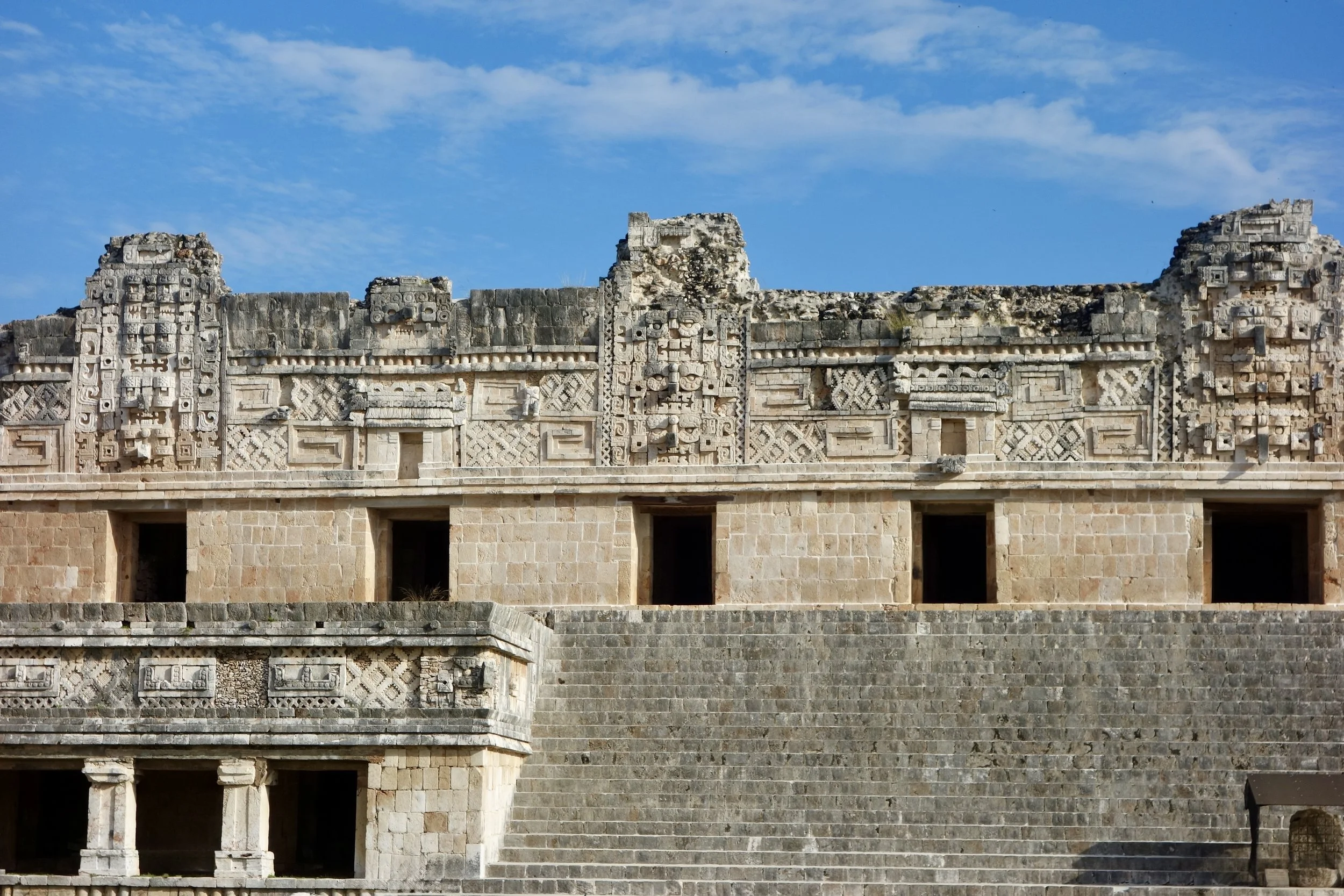
7 Days Through the Lesser-Known Heart of the Maya World: Merida to Campeche
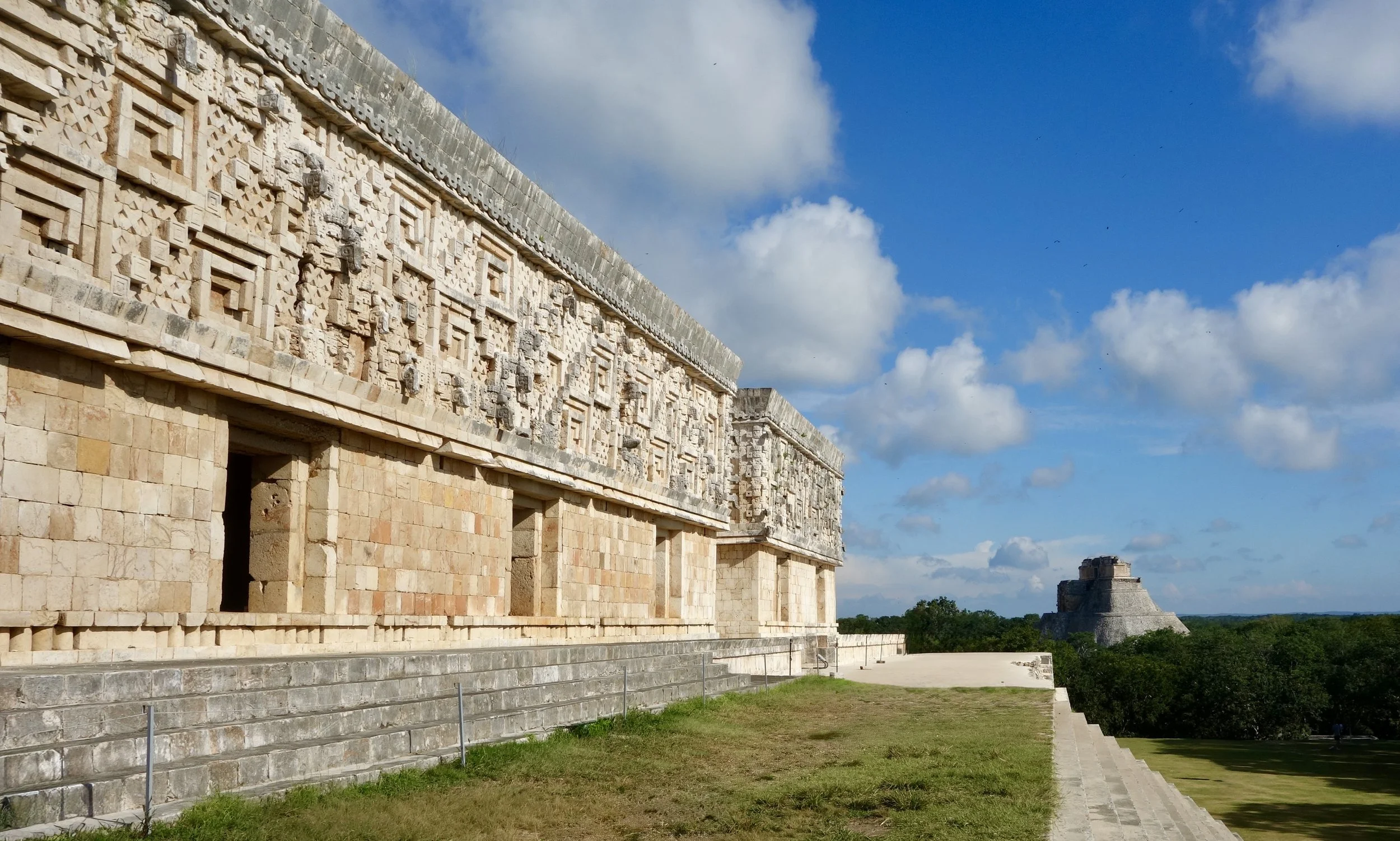
A 7-day journey through the Puuc hills, Chenes region and colonial cities of the Yucatan Peninsula.
Introduction
The Maya world extends far beyond its most famous pyramids. Between Merida and Campeche lies a seldom-visited region home to some of its most sophisticated architecture, from the geometric mosaics of the Puuc hills to the monumental zoomorphic facades of the Chenes region.
This itinerary links the cities of the Puuc route with the distinctive architecture of the Chenes, from Uxmal and Labna to Santa Rosa Xtampak, Hochob and Dzibilnocac, before ending at Edzna and the colonial streets of San Francisco de Campeche.
This itinerary assumes the use of a rental car, which can be easily arranged at the Merida airport.
At a glance
Entry point
Merida airport (MID), in Yucatan (days 1 & 7)
Bases
Merida, Hopelchen, Ezdna & San Francisco de Campeche
Duration
7 days
Route
Merida → Puuc → Chenes → Edzna → Campeche → Merida
Best for
Remote Maya cities, architectural diversity, and overlooked colonial Mexico
Total driving
About 12 hours, over 7 days
Distance
Around 400 miles (650 km)
Roads Well-maintained roads overall, but watch out for the very rough access road to Santa Rosa Xtampak
Key sites
Uxmal (monumental, best example of Puuc style)
Santa Rosa Xtampak (remote, sprawling)
Edzna (grand, impressive)
The route, day by day
Route logic
Although this route looks compact on the map, it is not designed as a straight-line transfer from Merida to Campeche. It follows the architectural sequence of the region: first the Puuc hills south of Merida, then the more remote Chenes sites around Hopelchen, before ending at Edzna and Campeche.
The itinerary is also arranged to balance driving time with time on site. Day 2 concentrates the major Puuc cities in a single corridor, while day 4 links several Chenes sites spread across a wider area. Between them sits Santa Rosa Xtampak, one of the region’s most isolated sites, providing a natural break between two of the itinerary’s busiest days.
Edzna is saved for the final approach to Campeche, where the journey shifts from remote Maya architecture to the colonial city on the Gulf.

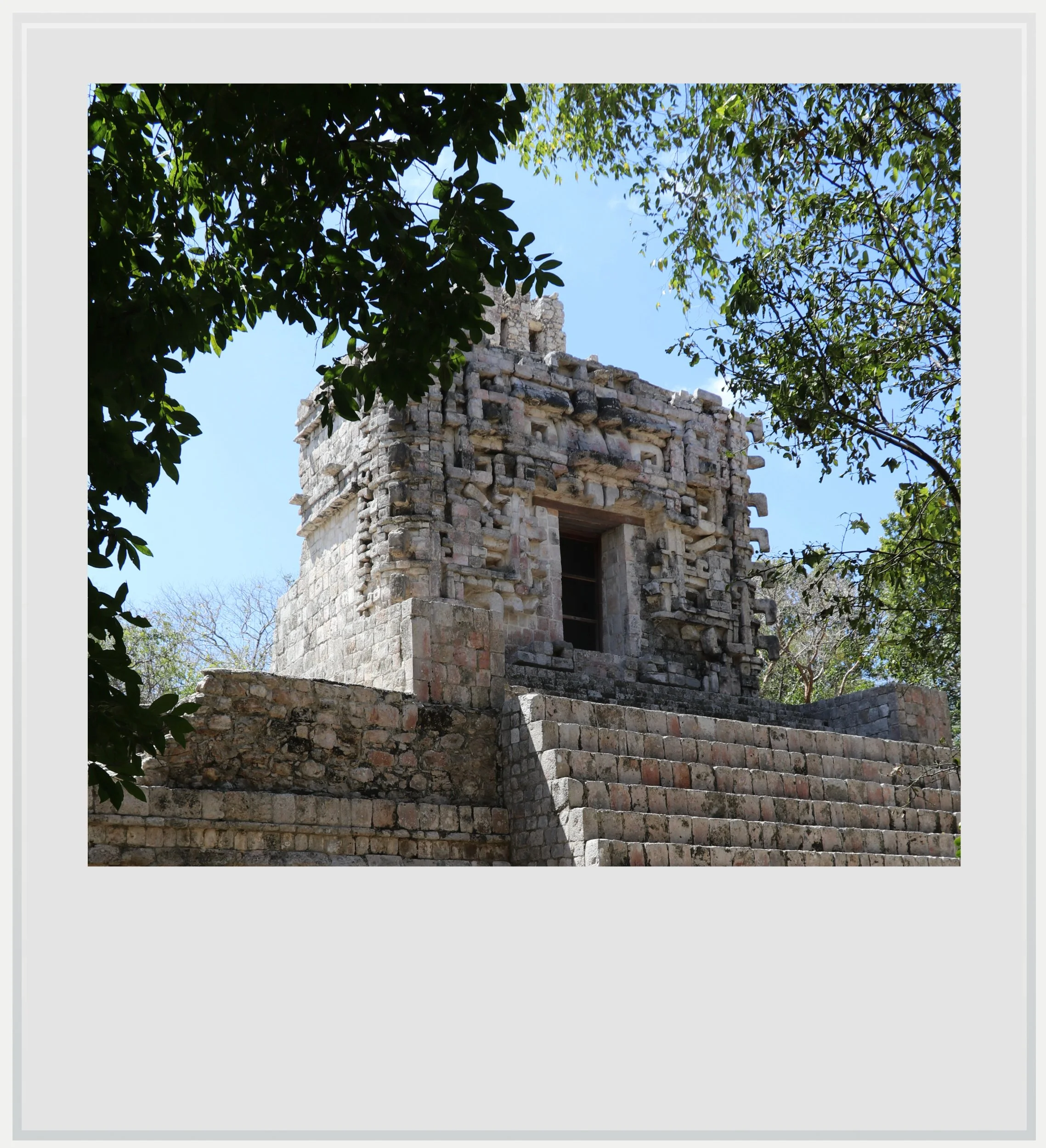
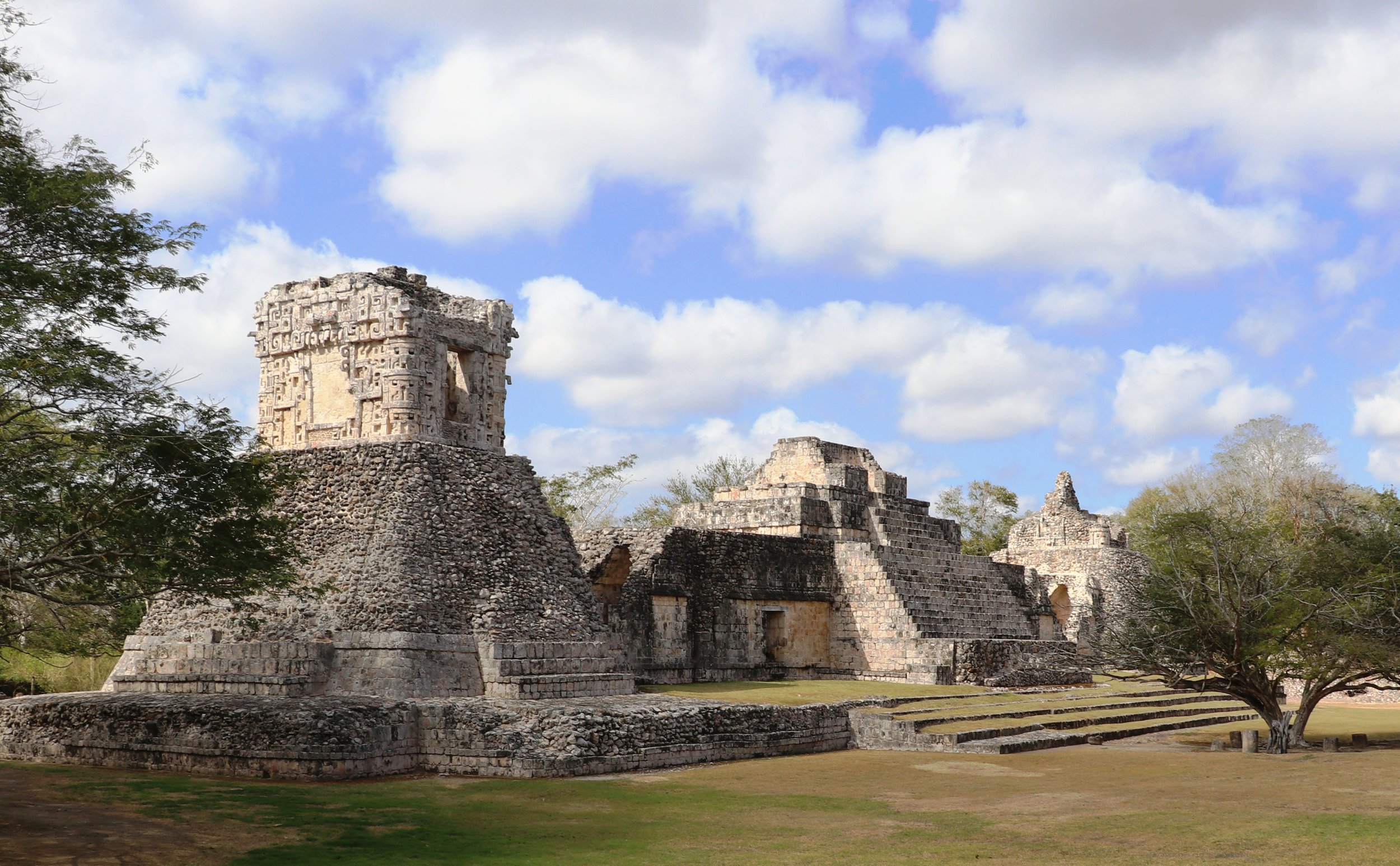
Structure 2 in Hochob, Campeche.
Choosing your bases
Merida (night 1)
The cultural capital of the Yucatan Peninsula, Merida combines elegant colonial architecture, excellent dining, and easy access to the Puuc hills. It is a destination worth exploring in its own right.
Best for: colonial architecture, museums, restaurants, and a comfortable start to the itinerary.
Recommended stay: stay in the historic center where hotels and many AirBnbs are available
Good restaurants: there are plenty of options to pick from, but a special mention to La Chaya Maya and Museo de la Gastronomia Yucateca (more upscale, in a gorgeous historic building). Both are catering to tourists but the food is excellent and authentic.
Hopelchen (nights 2 & 3)
A well-located base for exploring Santa Rosa Xtampak and the Chenes sites before continuing west toward Edzna.
Best for: Chenes architecture.
Recommended stay: Airbnb or Hotel Jaguar
Good restaurants:La Palapa
Detailed recommendations in the Santa Rosa Xtampak article.
Edzna (night 4)
A convenient overnight stop between the Chenes region and Campeche. Staying near Edzna breaks up the drive and allows an early visit to one of the Maya world’s most impressive yet overlooked cities.
Best for: easy access to Edzna and a slower pace between driving days.
Recommended stay:Hotel Mundo Maya Edzna, right next to the archeological zone.
Good restaurants: The Mundo Maya hotel or a very humble taqueria with delicious tacos in the next village over (El Cartero taqueria).
Detailed recommendations in the Edzna article.
Campeche (nights 5 & 6)
The UNESCO-listed finale of the itinerary. San Francisco de Campeche provides two nights to enjoy restored colonial architecture, good food, and the atmosphere of one of Mexico’s most attractive historic centers.
Best for: strolling, dining, and lingering in one of Mexico's most beautiful historic cities.
Recommended stay: well-rated hotels within the walled city.
Good restaurants: check out calle 59, car-free and lined up with great food options.
Detailed recommendations in the San Francisco de Campeche article.
The itinerary
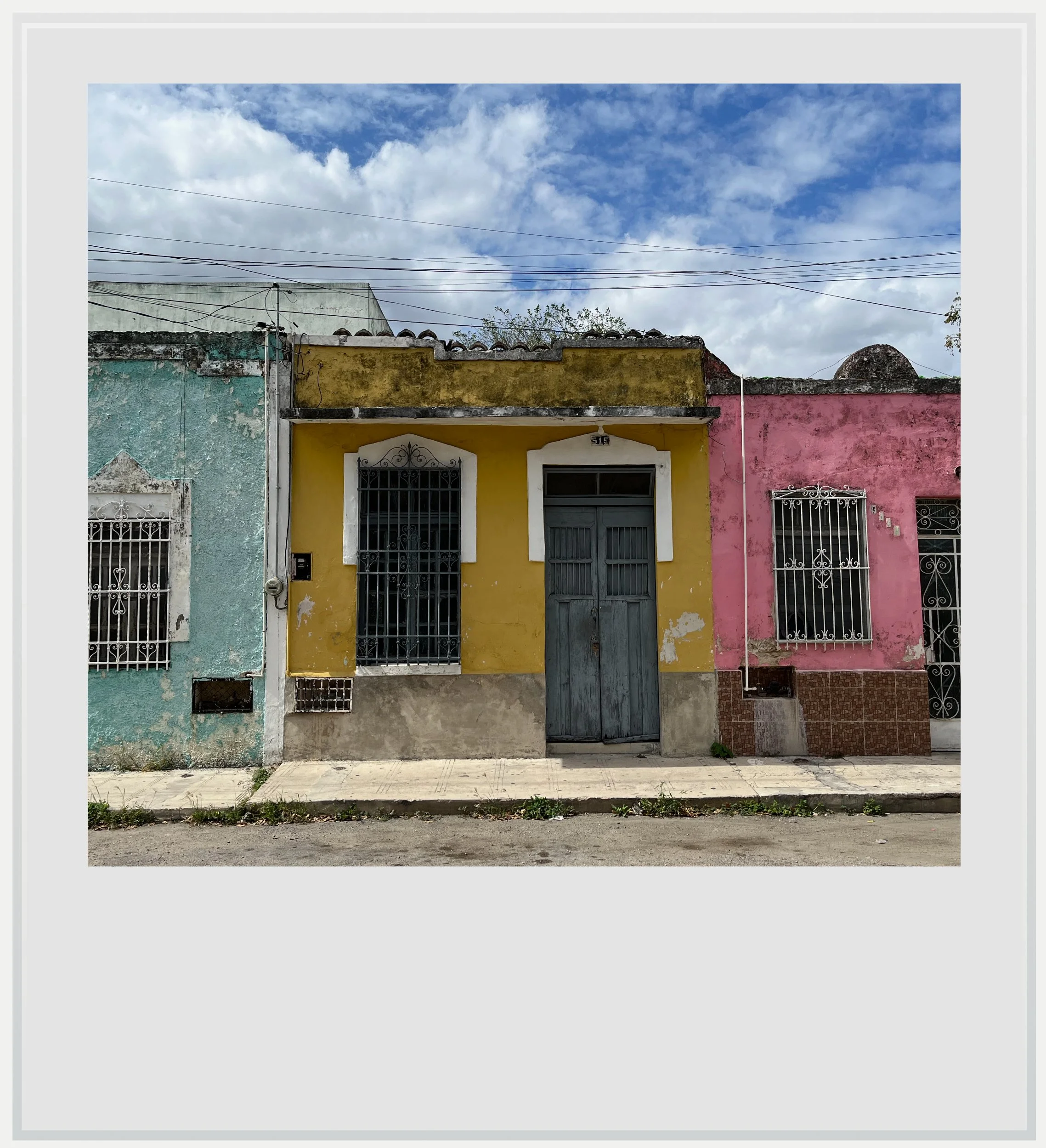
Day 1: arrival
Arrival at Merida airport (MID). Non-stop flights are available year-round from many Mexican cities as well as Dallas, Houston, Orlando and Miami, with Calgary and Toronto served seasonally. Otherwise, getting there from abroad requires a connection through Mexico City (about 15 flights daily). Many car rental brands are available on the premises.
Day 2: the Puuc route
Morning
– drive south towards the Puuc hills (1h)
– visit Uxmal (2–3 hours on site)
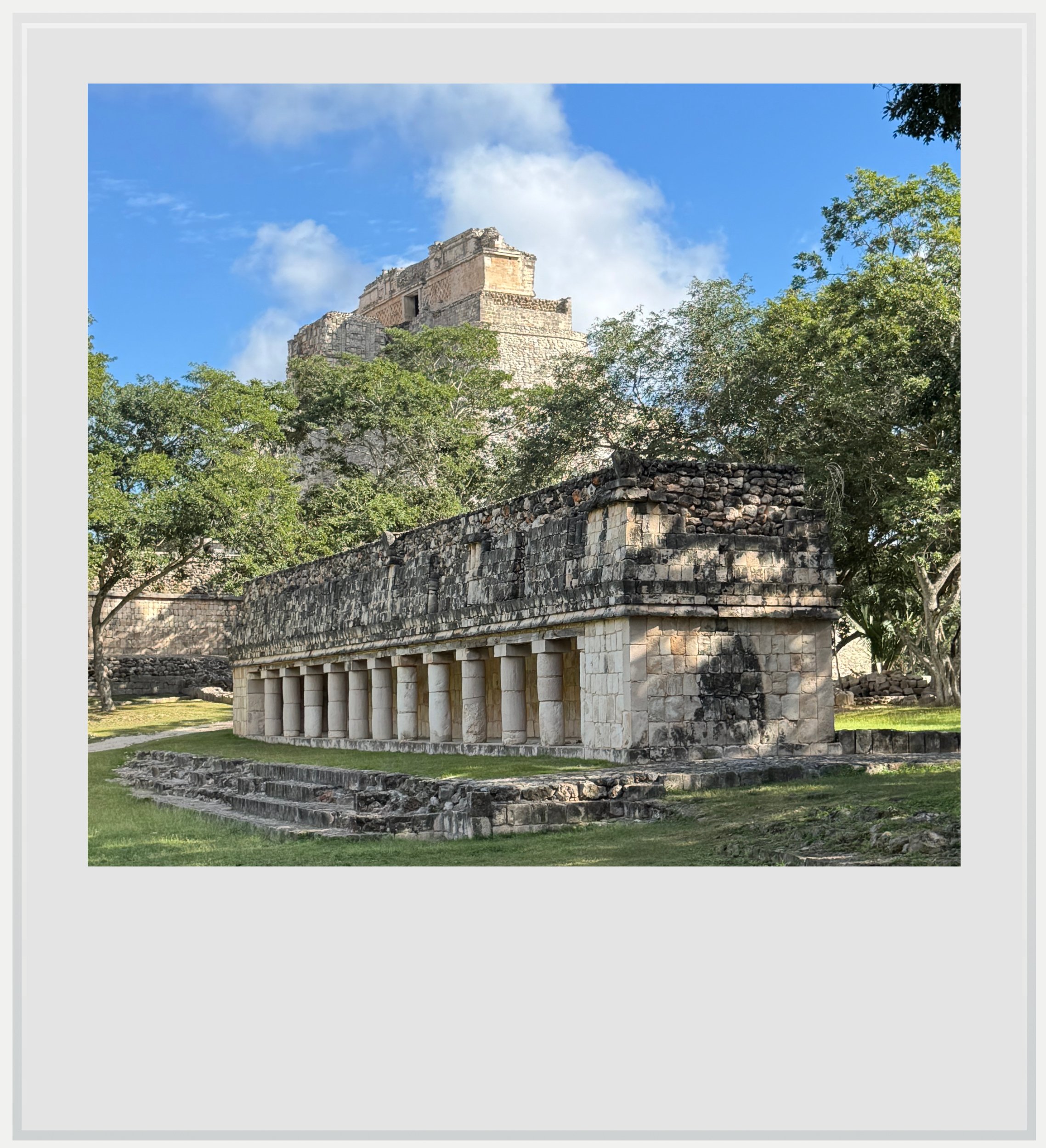
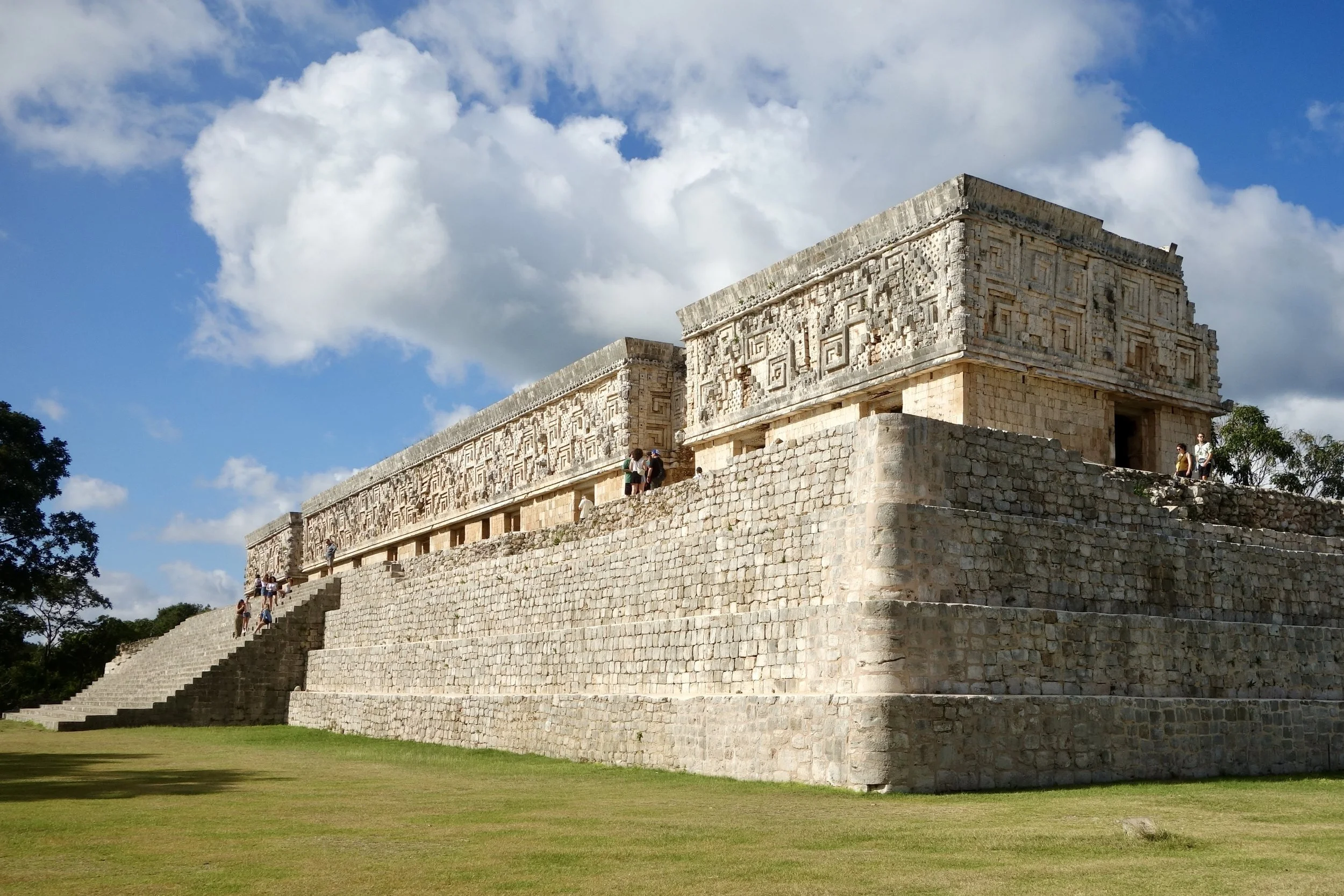
→ the finest city of the Puuc region, Uxmal is renowned for its harmonious proportions, richly decorated façades and some of the most sophisticated stone mosaics in the Maya world.
– continue along the Puuc Route
– visit Kabah (45 min)
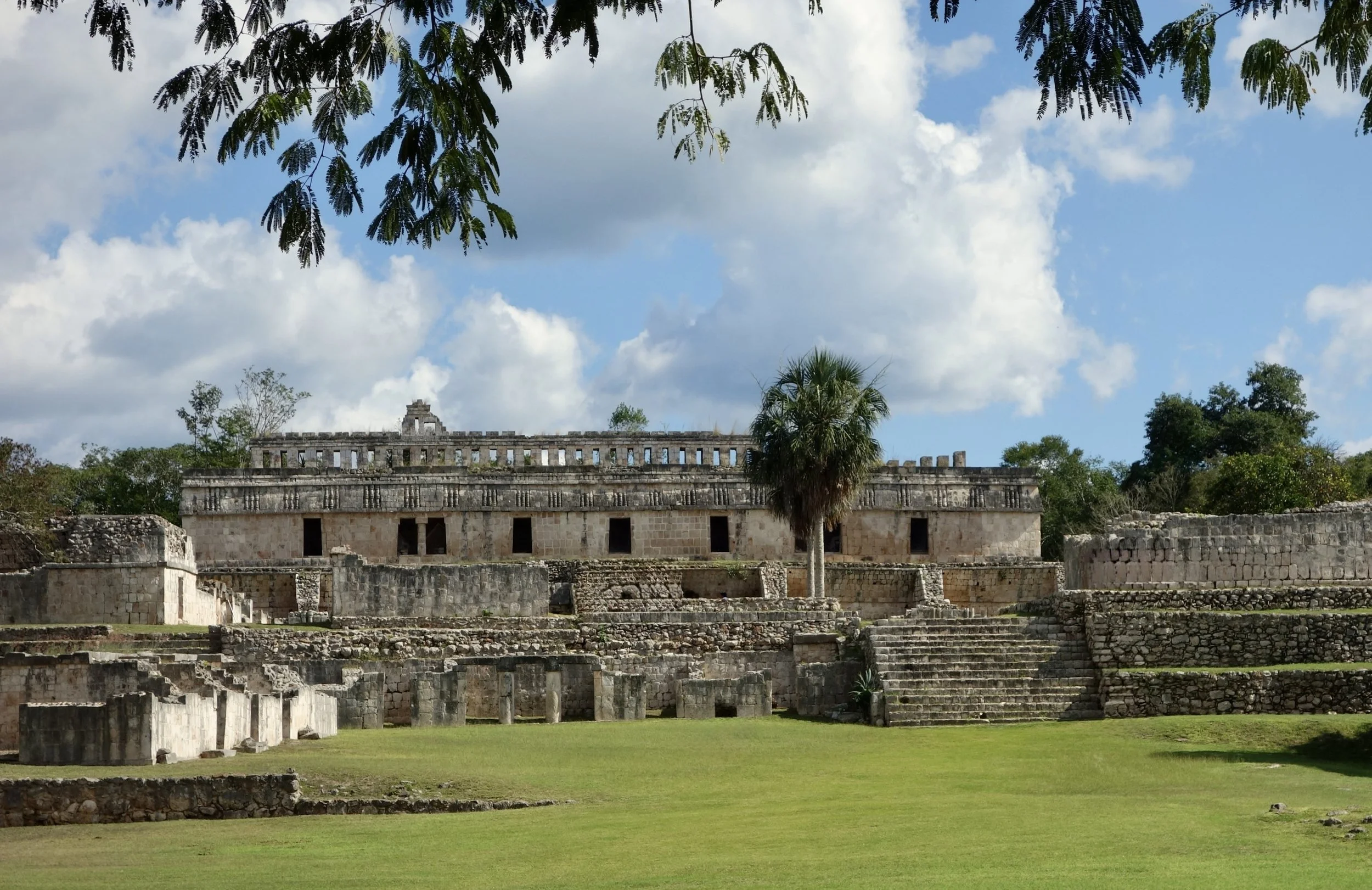
→ smaller than Uxmal but home to the spectacular Palace of the Masks, whose façade is covered with hundreds of representations of the rain god Chaac.
Afternoon
– lunch near Kabah or Santa Elena (backtracking needed)
– visit Sayil (45 min)
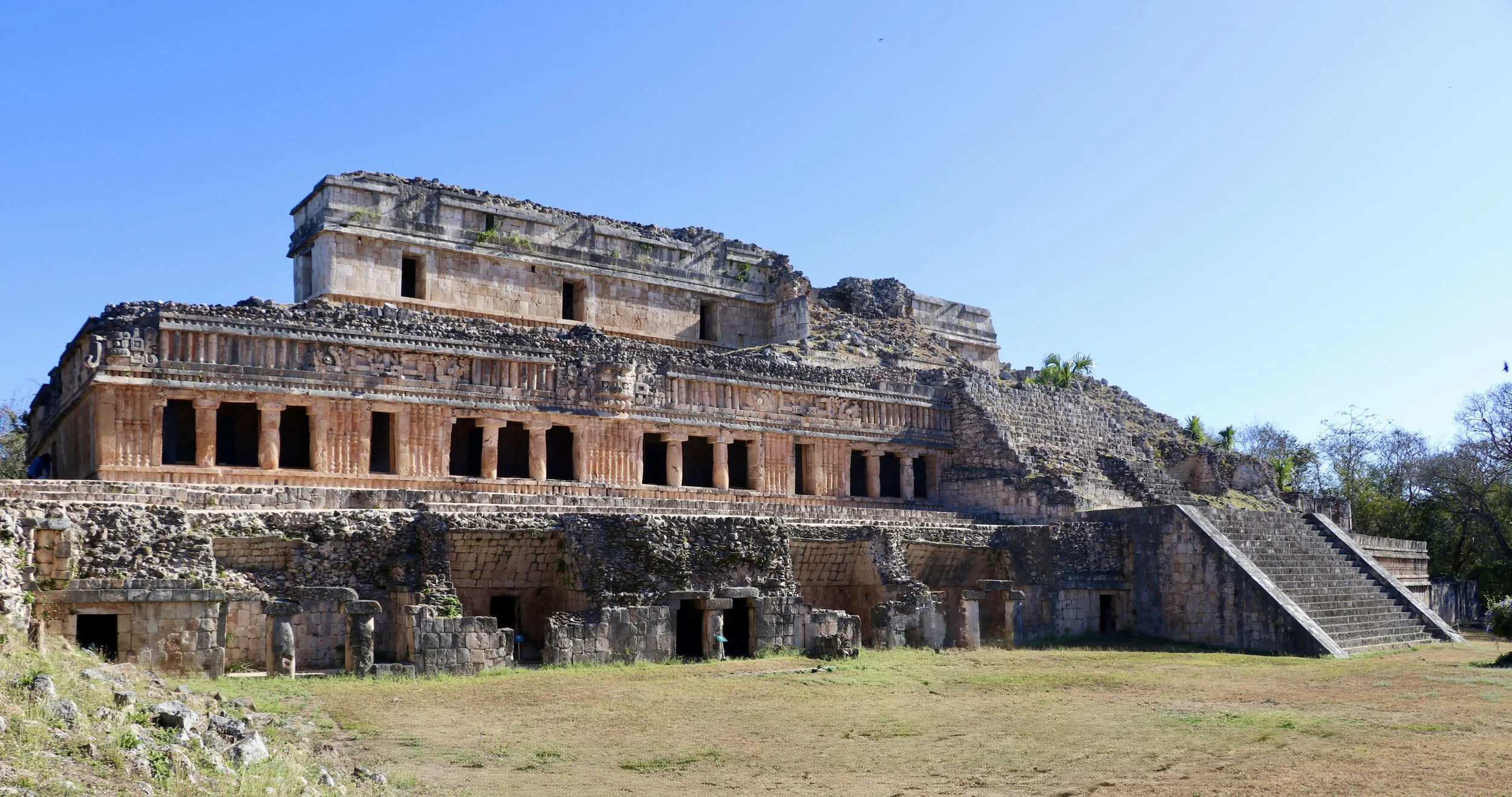
→ one of the largest Puuc cities, Sayil features an elegant multi-story palace set among dense tropical vegetation.
– visit Labna (30–45 min)
→ compact and atmospheric, Labna is best known for its beautifully preserved ceremonial arch, one of the finest surviving examples of Maya architecture.
– drive to Hopelchen (1h15)
Optional: if time allows, stop briefly at Xlapak (20 min), a small but remarkably refined Puuc site located between Sayil and Labna.
Day 3: Santa Rosa Xtampak
Morning
– visit the Maya site of Santa Rosa Xtampak (3h drive round trip on a very rough road, 2 hours on site)
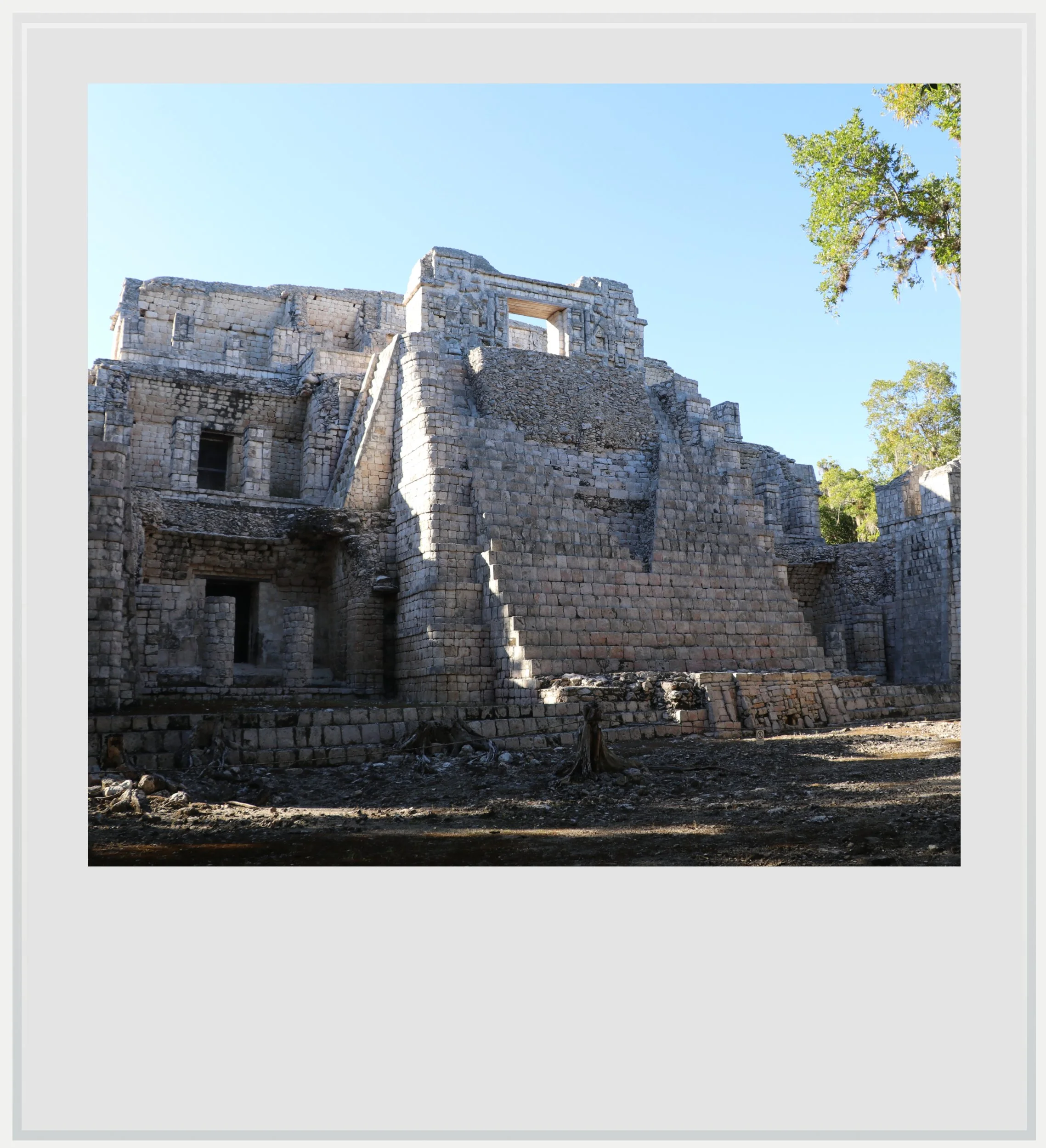
→ the largest and most impressive city of the Chenes region, Santa Rosa Xtampak combines monumental scale with remarkable isolation. Despite its importance, it remains one of the least-visited major Maya sites in Mexico.
Afternoon
– late lunch in Hopelchen
– explore the small historic center of Hopelchen
→ although primarily used as a base, Hopelchen offers a pleasant central square, a relaxed atmosphere and easy access to the surrounding Chenes sites.
– overnight in Hopelchen
Day 4: the Chenes region
Morning
– drive south towards El Tabasqueño (40 min)
– visit El Tabasqueño (30 min)
→ hidden among the forest, El Tabasqueño rewards the detour with beautifully preserved decorative façades and virtually no other visitors.
– continue to Dzibilnocac (40 min)
– visit Dzibilnocac (30–45 min)
→ isolated and rarely visited, Dzibilnocac preserves several elegant pyramids and some of the region's most distinctive Chenes stonework.
– lunch in Dzibilnocac or Dzibalchen (preferred, a few more options available)
Afternoon
– drive west towards Hochob (20 min from Dzibalchen)
– visit Hochob (30–45 min)
→ one of the finest examples of Chenes architecture, Hochob is famous for its elaborate monster-mouth façades and richly decorated entrances.
– drive toward Edzna (1h)
– overnight near Edzna
Note: this day is intentionally light as sites are relatively close to each other. It is possible to compress days 3 & 4 in one day, visiting Santa Rosa Xtampak in the morning and Hochob in the afternoon, before driving towards Edzna, missing a few key sites but shaving one day off the itinerary.
Day 5: Edzna & Campeche
Morning
– visit Edzná (2–3 hours on site)
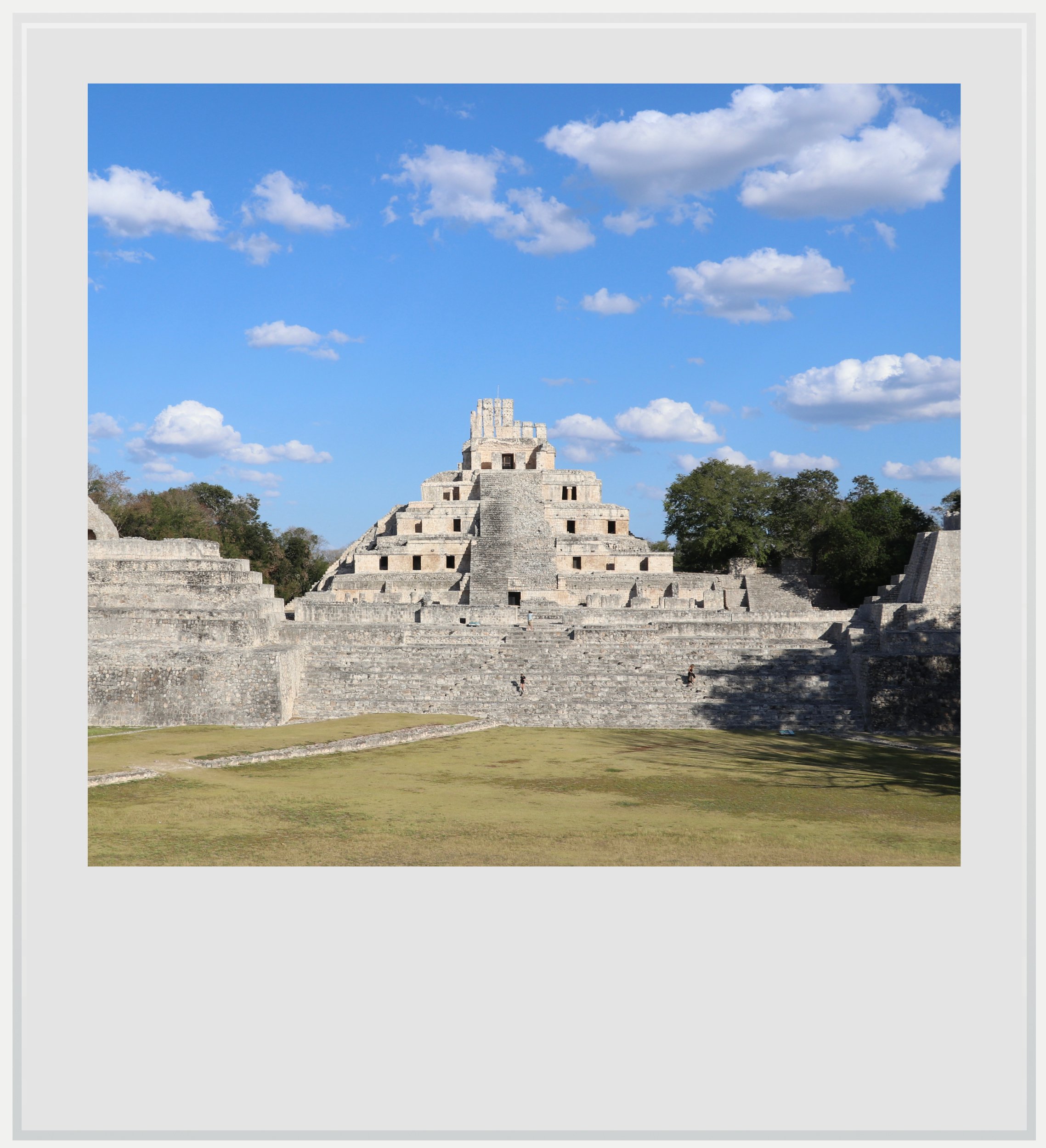
→ one of Campeche state's greatest archaeological sites, Edzna combines monumental pyramids, vast ceremonial plazas and an unusually sophisticated hydraulic system.
Afternoon
– continue to San Francisco de Campeche (1h)
– check into your hotel
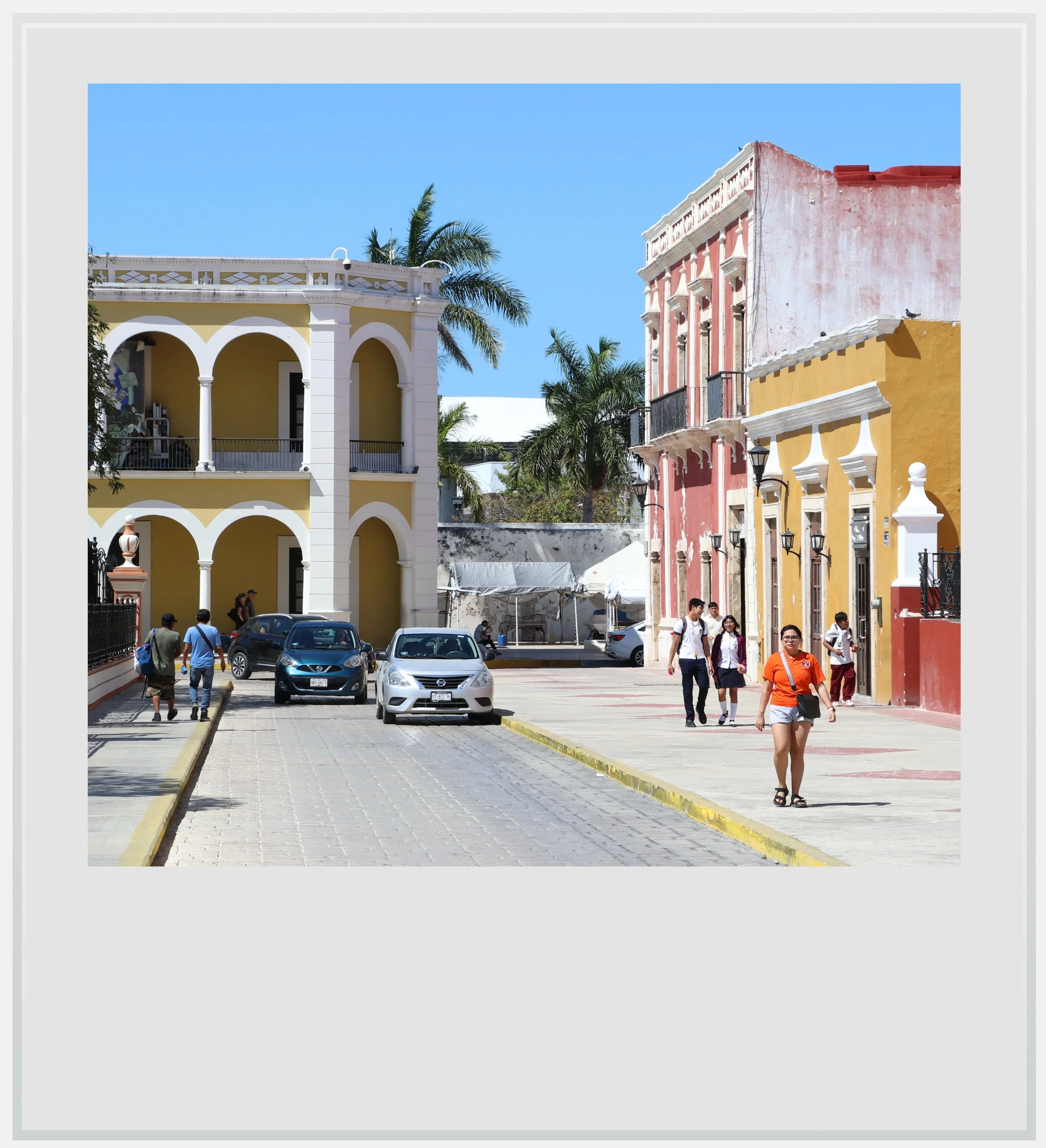
– spend the rest of the afternoon exploring the UNESCO-listed historic center
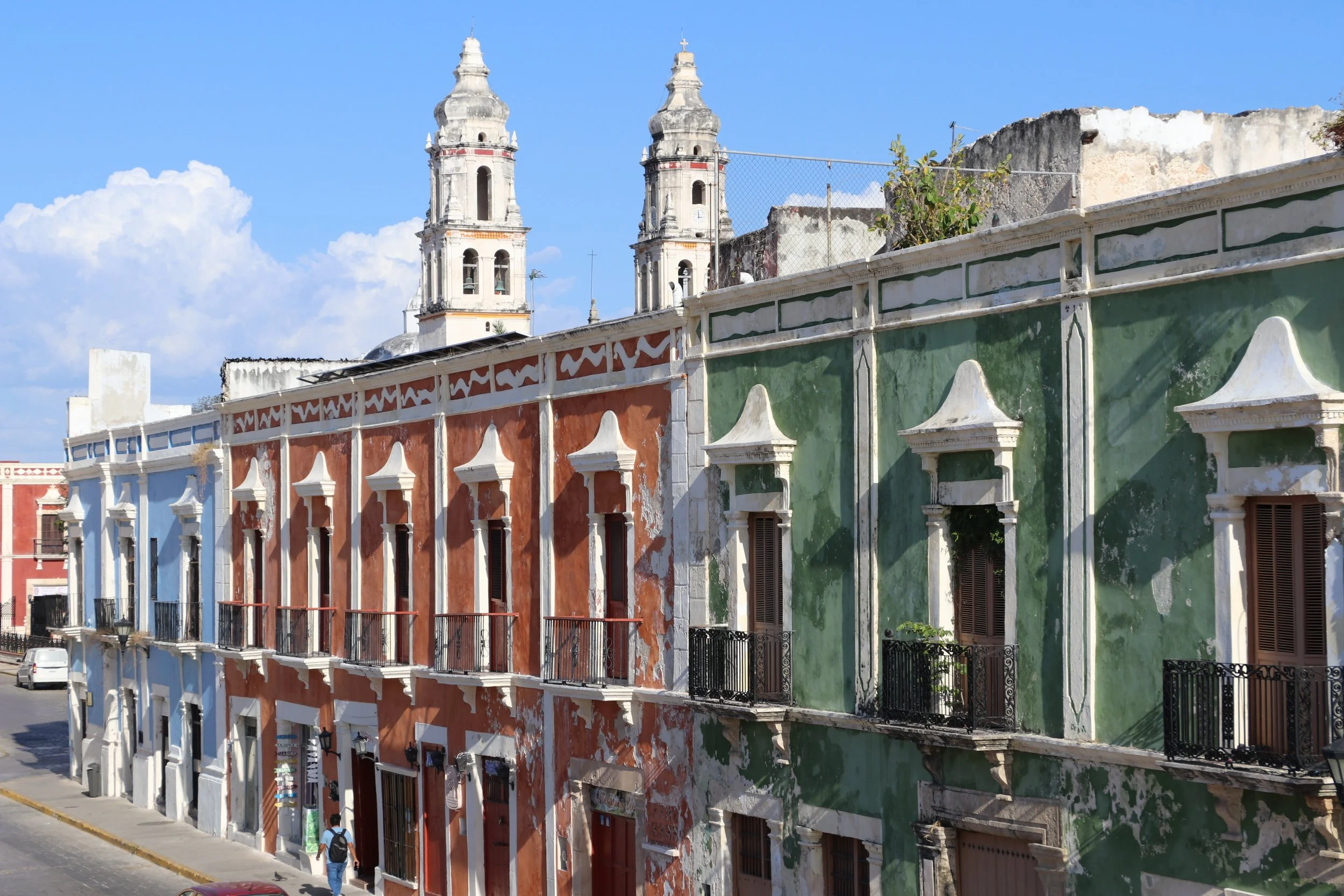
→ enclosed by historic fortifications, Campeche is one of Mexico's best-preserved colonial cities, with colorful streets, handsome plazas and a lively waterfront.
– overnight in Campeche
Day 6: San Francisco de Campeche
Morning
– explore the historic center on foot
→ wander through the narrow streets, plazas and restored colonial houses that make Campeche one of Mexico's most attractive cities.
– visit the city walls and bastions
Afternoon
– enjoy a leisurely lunch
– continue exploring at your own pace, visit museums or relax along the Malecon
– overnight in Campeche
Day 7: Return to Merida
Morning
– depart Campeche for Merida (approximately 2h15)
– return your rental car at Merida airport
Note: it is possible to return the rental car in the Campeche airport, with a one-way rental fee, but flight options from Campeche are more limited with only one or two flights per day to Mexico City, and no flights to the US or Canada. It makes more sense to fly out of Merida.
The stops along the route
key site
Uxmal
The defining expression of the Puuc style. Grand yet remarkably harmonious, Uxmal combines monumental scale with some of the most sophisticated stone mosaics anywhere in the Maya world.
Kabah
A compact but highly expressive site, defined by the dense, almost overwhelming façade of the Palace of the Masks. One of the most direct and legible statements of the Puuc style.
Sayil
A long, imposing palace surrounded by woods, where scale becomes the dominant impression. Less intricate than Kabah, but more about mass and presence.
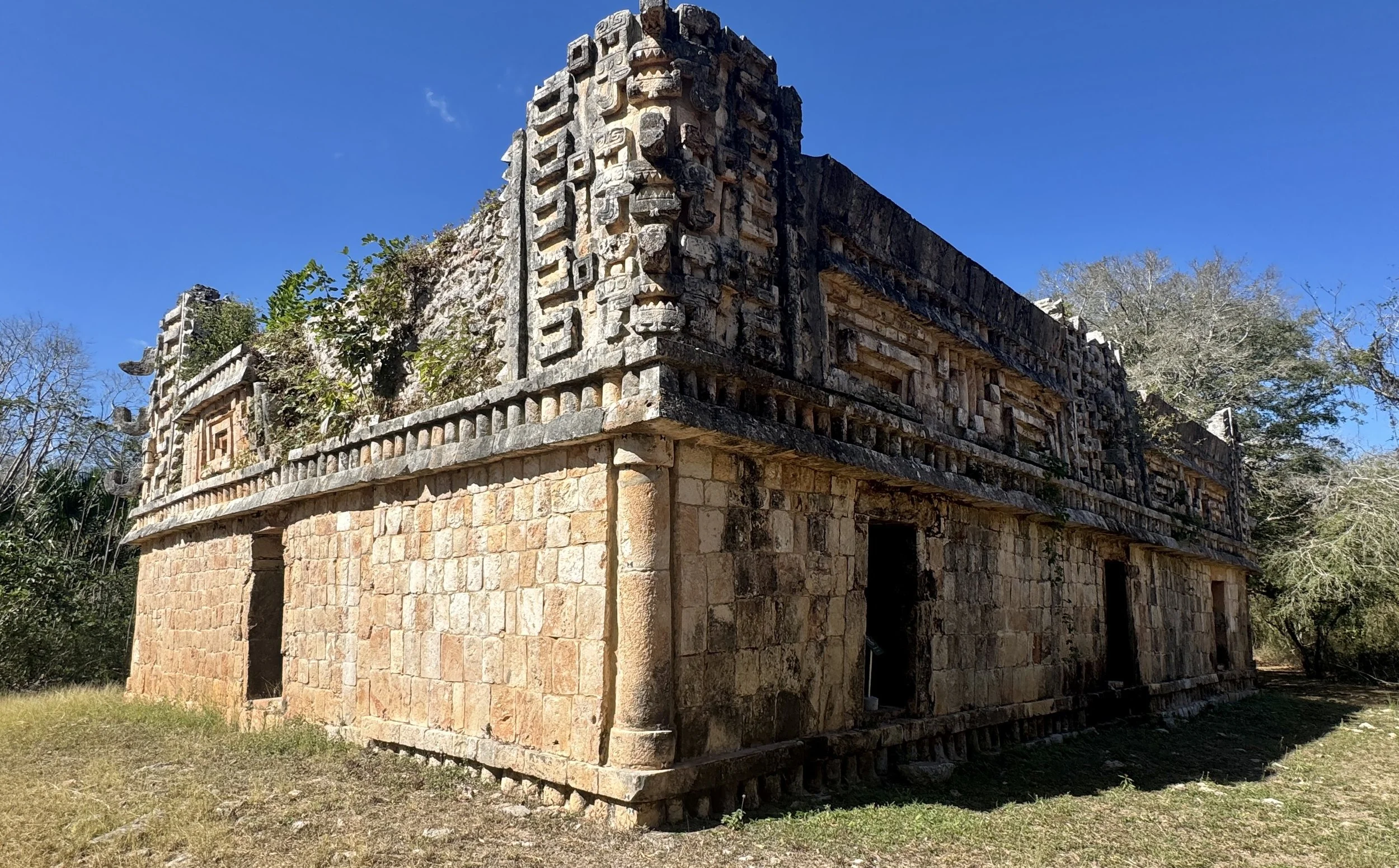
Xlapak
A small, easily overlooked site where the architecture becomes unusually clear. Its compact palace makes the underlying logic of the Puuc style immediately readable.
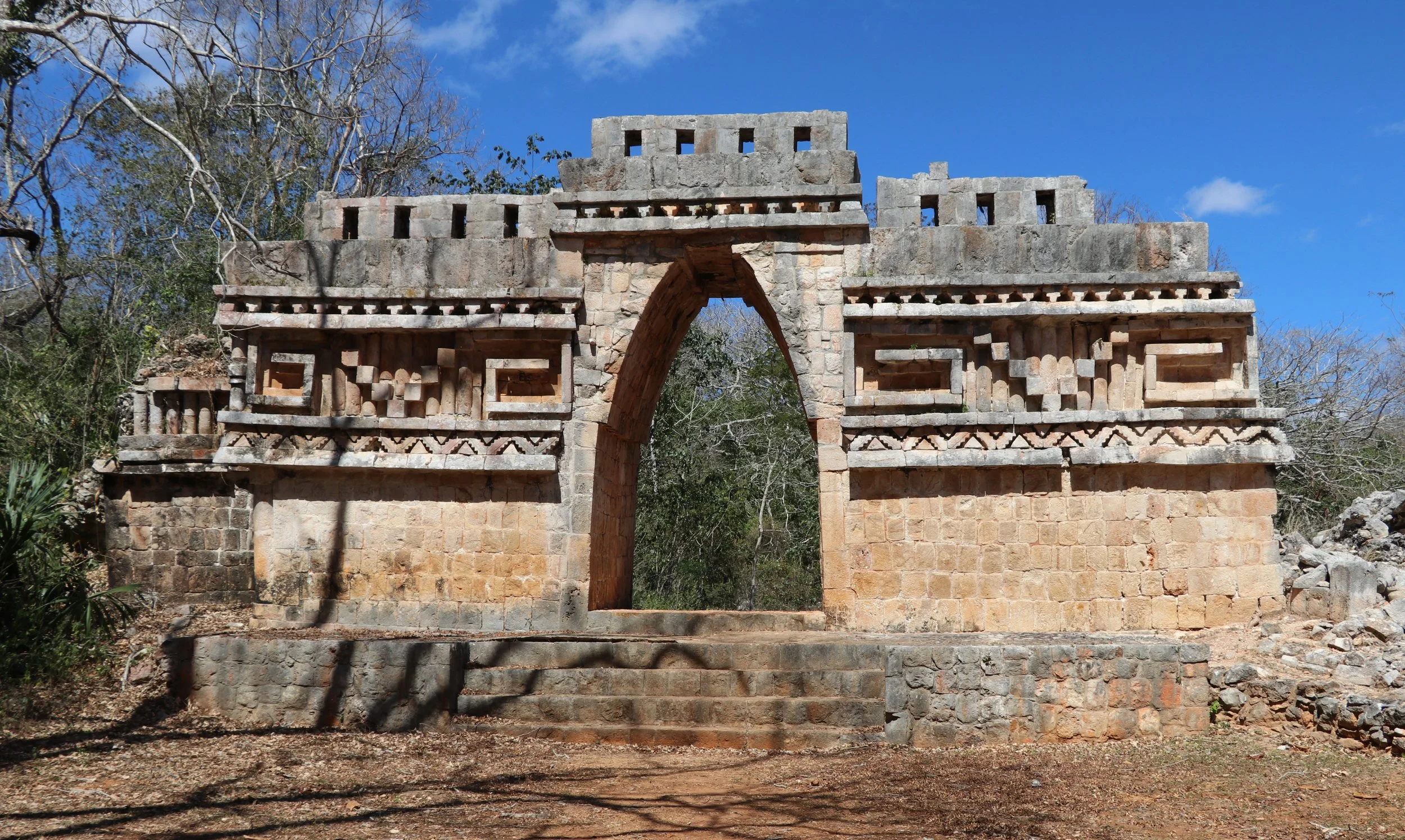
Labna
The southern endpoint of the route, known for its elegant arch and refined palace.
key site
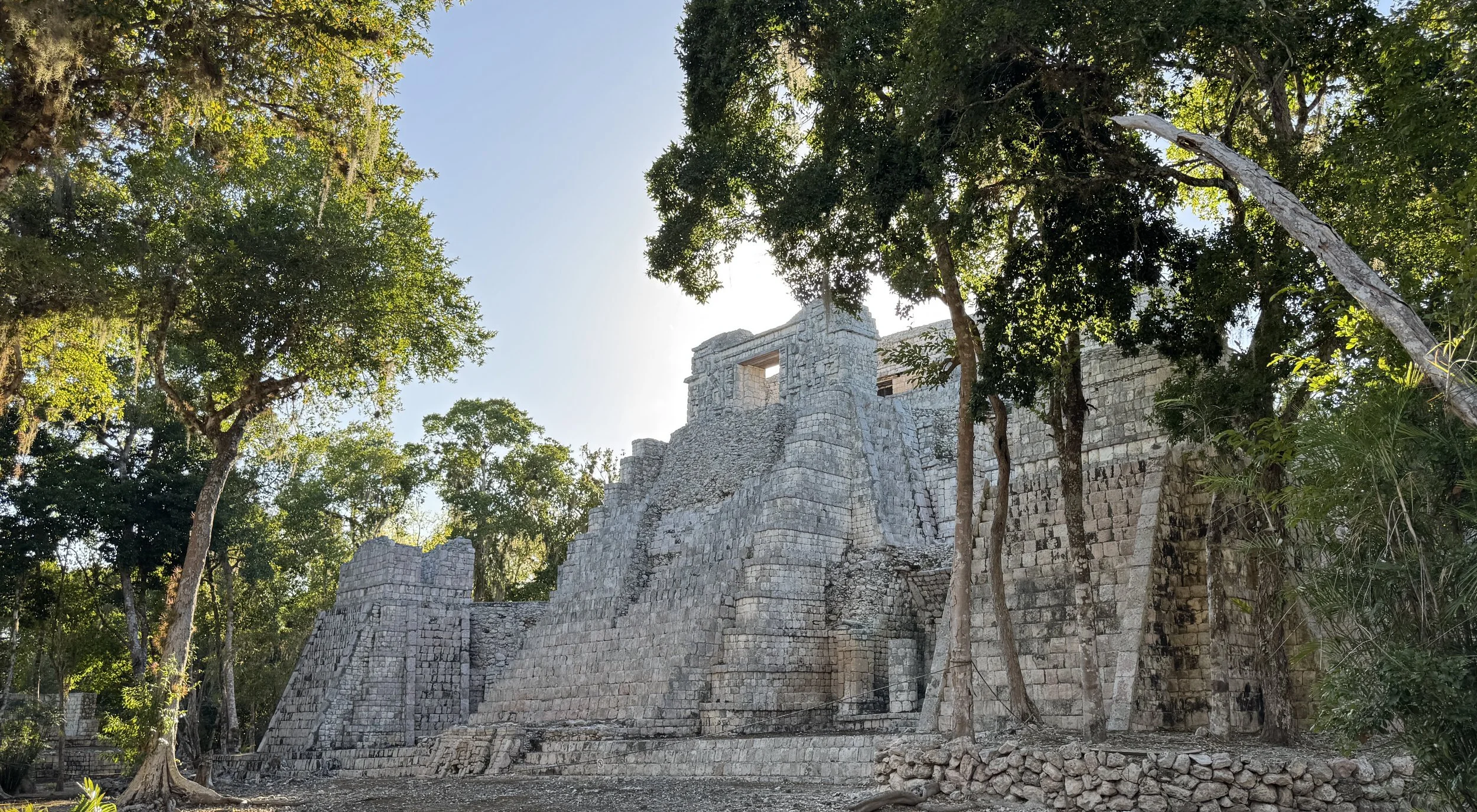
Santa Rosa Xtampak
Reached by one of the roughest roads on the itinerary, Santa Rosa Xtampak rewards the effort with monumental architecture, sprawling ceremonial spaces, and almost no other visitors.
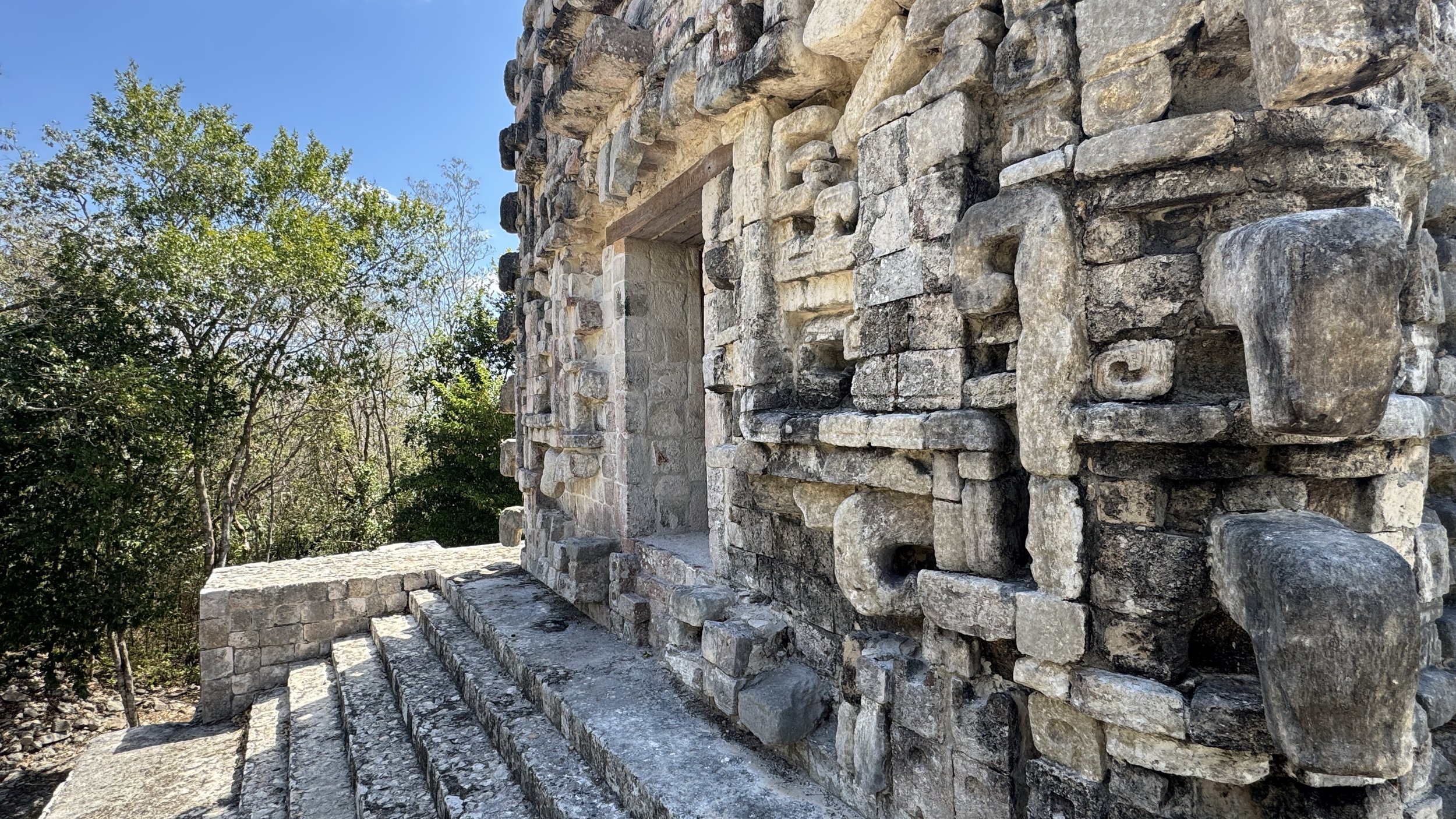
El Tabasqueño
Small and isolated, El Tabasqueño preserves some of the finest Chenes stonework in the region and receives very few visitors.
Dzibilnocac
Hidden among the back roads of the Chenes region, Dzibilnocac rewards the detour with substantial architecture and a remarkable sense of solitude.
Hochob
One of the finest expressions of Chenes architecture, Hochob is known for its richly decorated stone façades and mask-covered entrances.
key site
Edzna
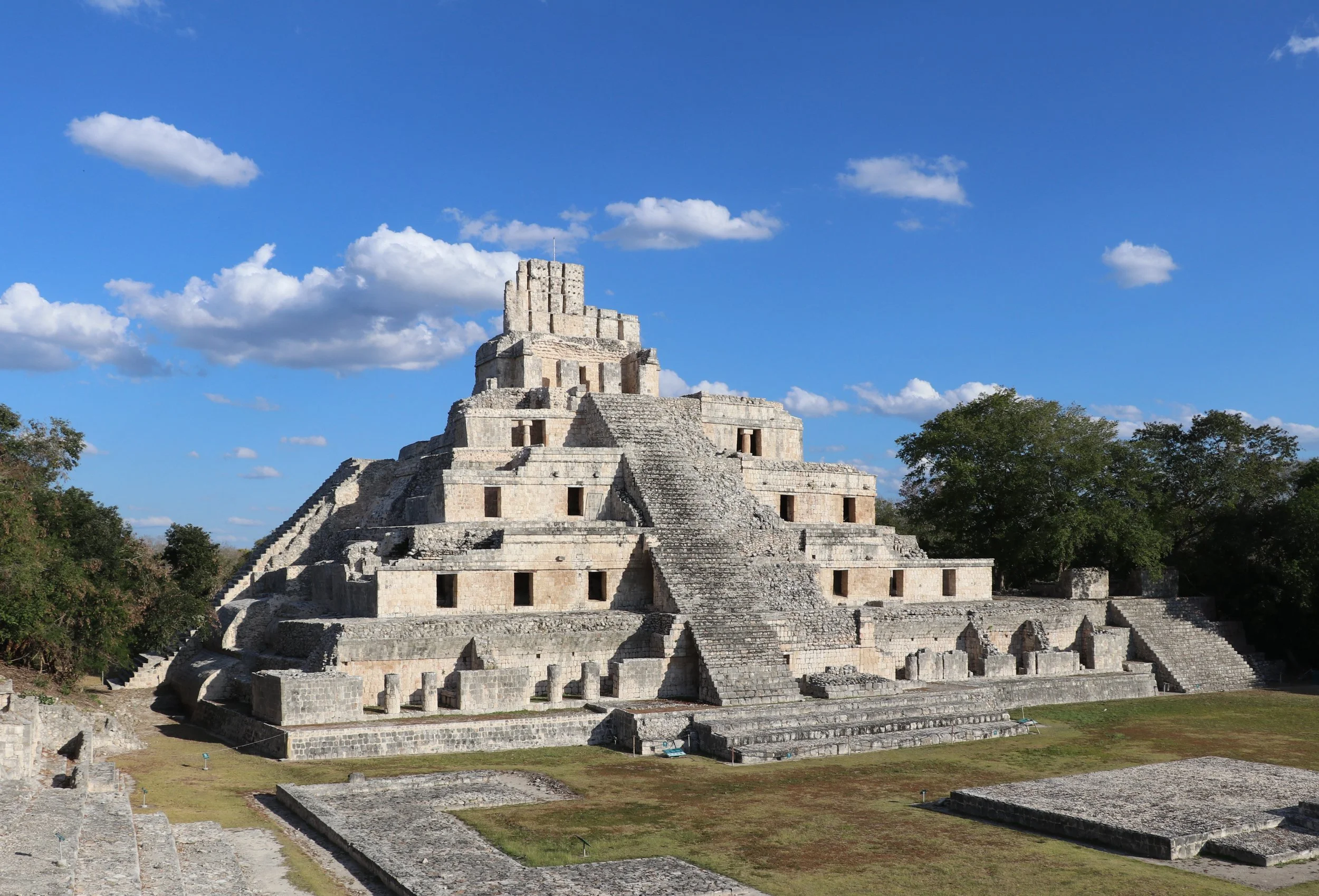
Larger and more formal than the sites that follow, Edzna introduces the itinerary with monumental architecture on a scale rarely seen outside the great Maya capitals.
San Francisco de Campeche
A UNESCO-listed colonial city and the gateway to the Maya forests further south.
Field notes
Download maps in advance
Cell coverage is generally reliable around Merida, San Francisco de Campeche and Edzna, but becomes less dependable or disappears altogether throughout the rest of the itinerary.
Expect rough access roads
Most highways are in reasonable condition, but access roads to Santa Rosa Xtampak or El Tabasqueño can be slow and uneven.
Start early at Edzna
Edzna offers relatively little shade in its main ceremonial core. Early morning visits are noticeably more comfortable.
Drive before nightfall
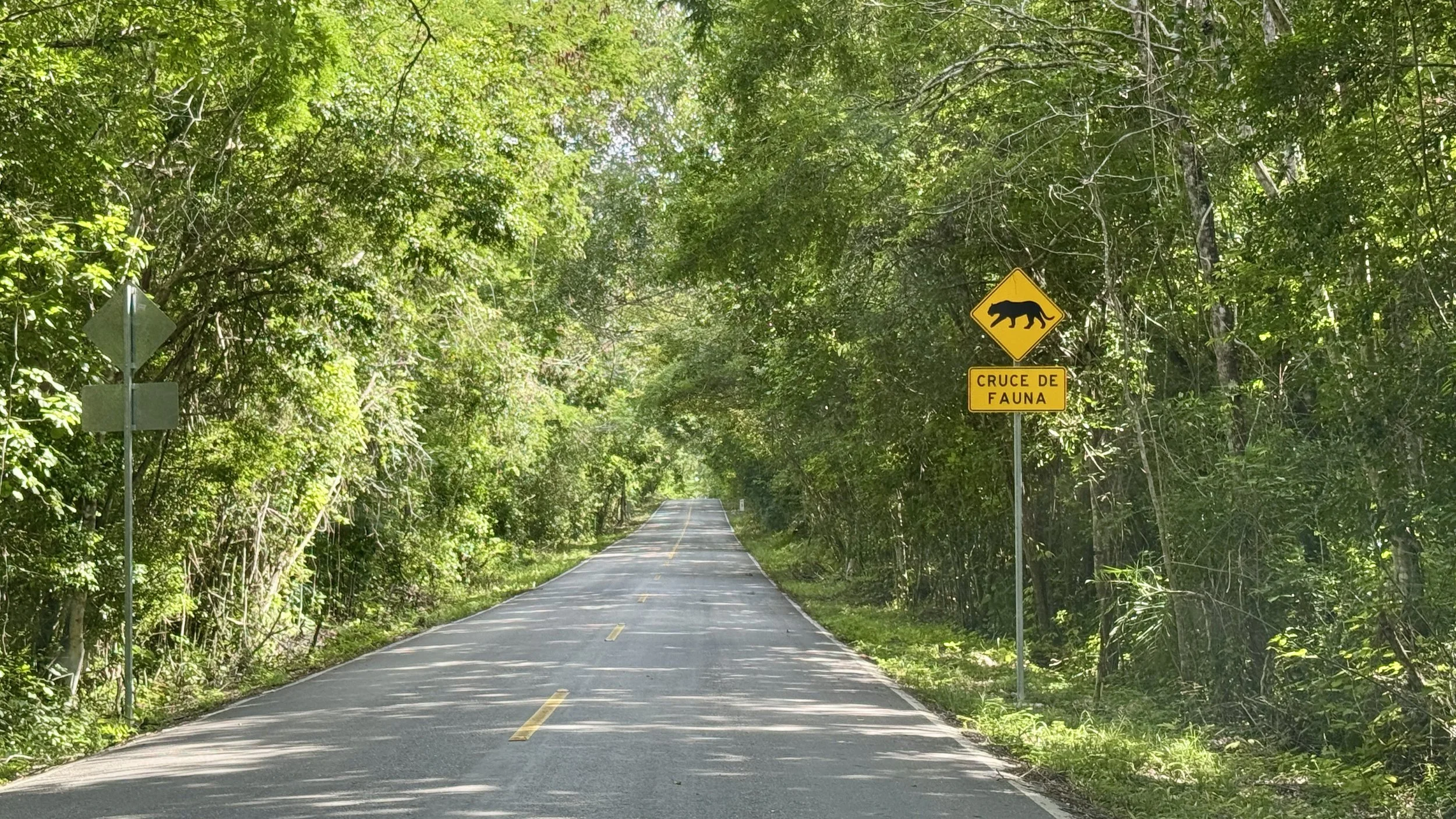
Wildlife, limited lighting and occasional road hazards make daylight driving significantly more comfortable, particularly in the Chenes hills.
Don’t rush the Chenes sites
Hochob, El Tabasqueño, and Santa Rosa Xtampak are not spectacular because of their size. Their appeal lies in their intricate architectural detail and the absence of crowds.