Sayil, Mexico.
A Puuc City in Retreat, Beyond the Great Ceremonial Centers.
Looking for directions, opening hours, or where to stay and eat? Head straight to the Practical Information section.
Sayil, an ancient Maya settlement in the Puuc hills region of the state of Yucatan, wasn’t on my A-list. In fact, on my first visit to the Puuc hills with friends, we skipped it to prioritize Uxmal and a few other sites.
It was on my second visit, a few months later, that I recognized our mistake. It was easy to discount Sayil as just another beautiful Puuc palace, but the reality was much more complex, and ultimately very satisfying.
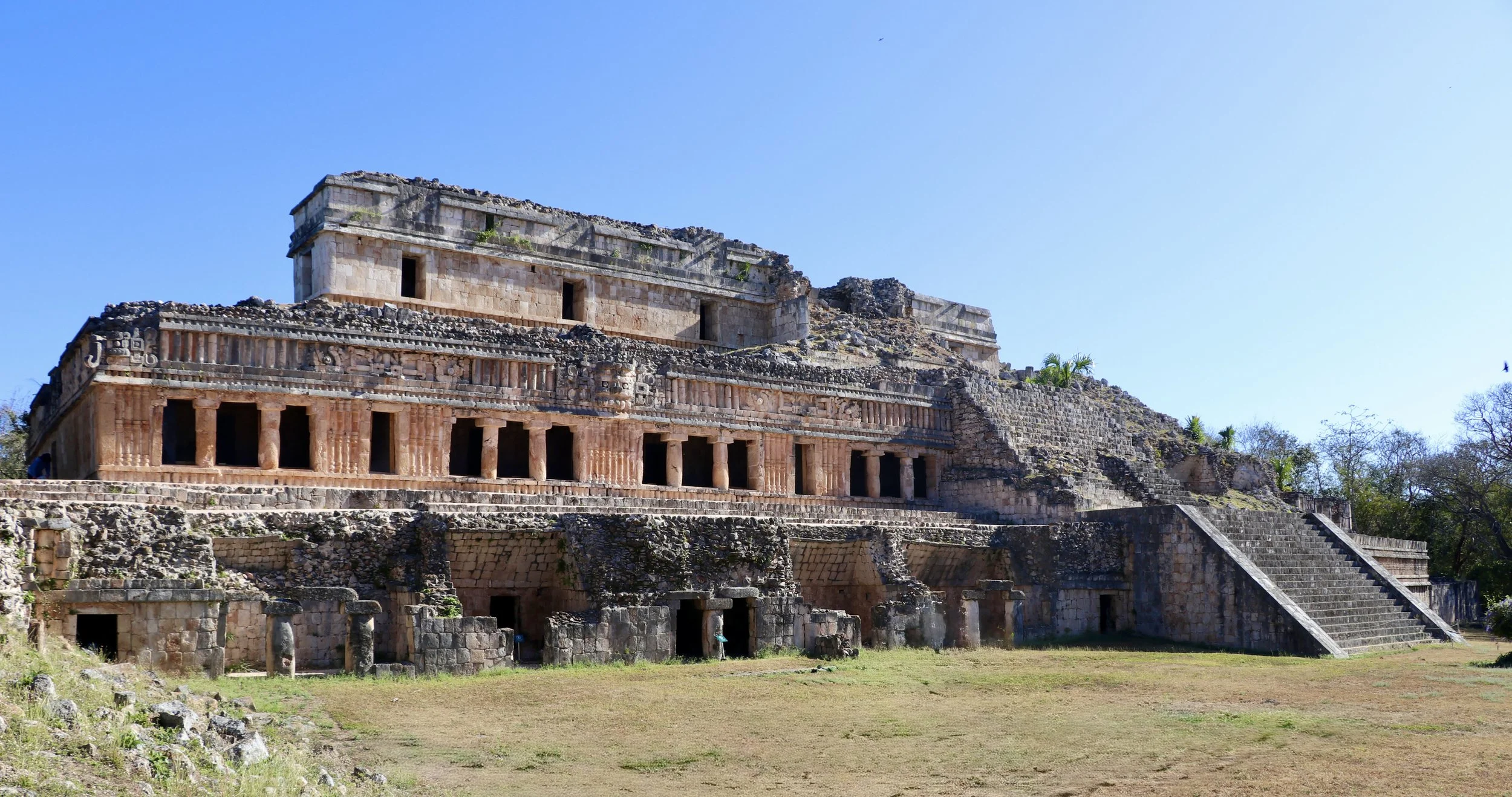
The main building at Sayil was a palace indeed, but it seemed to dwarf all the other private residences I had seen in the Puuc region. My first impression was that I was faced with a massive building, much bigger than the ones at Kabah or Labna.
My second one was that I was witnessing, once again, a variation in the Puuc design language. This palace was three stories tall, and flanked by a wide outside stairwell that felt almost ceremonial. It was Puuc architecture introducing a touch of vertical emphasis.
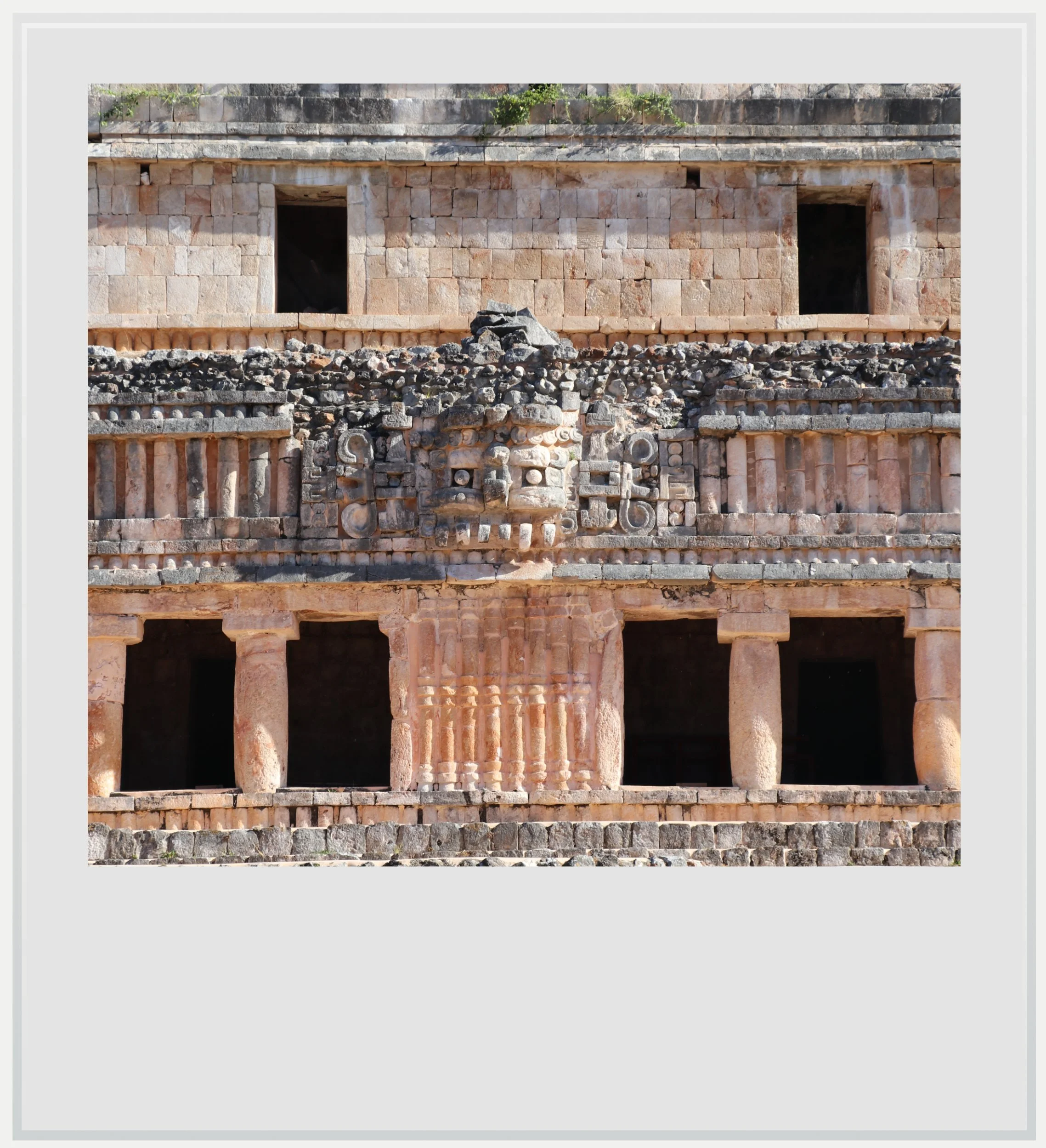
A Chaac mask on the palace façade.
As I started looking closer, I noticed that the palace possessed all the attributes of a classic Puuc building: it was indeed taller, but still read as a series of horizontal terraces, each one telling a different story.
The base layer, only clearly legible on the right side of the building, felt like classic Puuc, with an austere lower wall devoid of any decoration, contrasted by an upper-frieze sculpted in pure Puuc Junquillo style, a succession of tall, thin colonnettes all along its width, not too dissimilar to the Temple of the Columns in Labna.
I started to feel a little weird, as if somehow, the forest was getting to me.
The second floor, in an overall much better state of preservation, seemed to speak a different Puuc idiom: the expressive upper frieze was there, sculpted with prominent Chaac masks, the god of rain, a constant across this dry region where rainfall was as vital as it was scarce. The bottom part of the façade, however, felt much more open, with large spaces reserved for doors, much more present than on the lower floor, and flanked by thin columns on each side. Another oddity: the descending god, seen sculpted as if coming from above, a figure rarely represented on Puuc buildings, whose role and function historians still debate.
Finally, the top layer of the palace looked more like a classic Puuc building, with a pared down lower wall, and subdued decorations on the upper frieze.
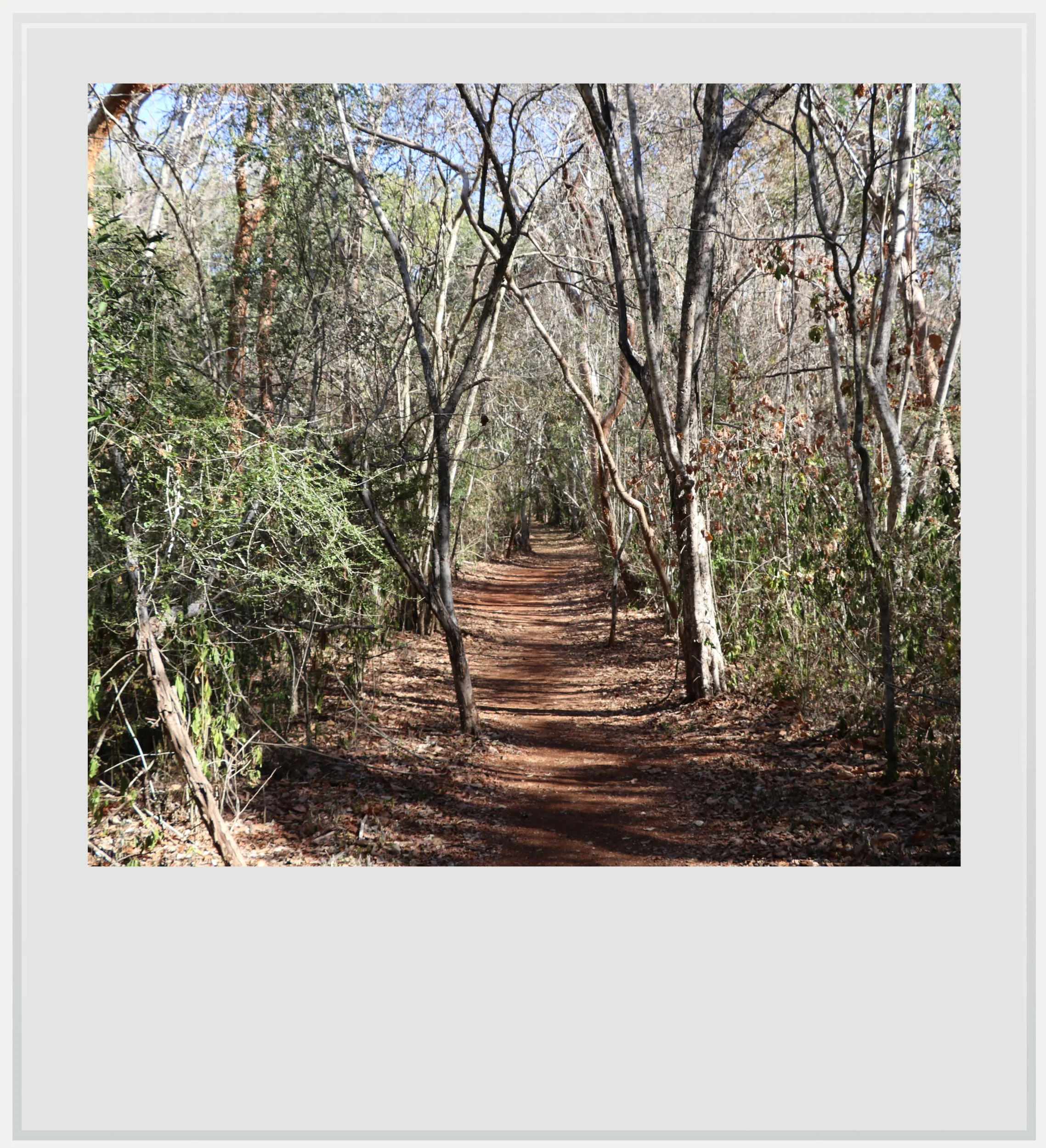
Sacbe in the forest at Sayil, walking from the Palace to the Mirador.
Historians tend to agree the palace was built in phases, during the zenith of Maya civilization between 600 and 900 CE, and each floor reflects a different moment in the life of Sayil.
There was another aspect of the palace that turned the usual horizontality of Puuc architecture on its head: the grand staircase in the middle of the structure. Where most Puuc buildings kept stairs out of the main view, the Sayil palace featured stairs so prominent that archeologists believe their use must have been ceremonial. In any case, the staircase reinforced the verticality of the palace, and added a sense of overarching power to it.
Sayil was much more than its palace: the settlement, spread out and partially hidden in the tropical forest, felt less like a city, and much more like a collection of residential neighborhoods for elite families. My first step after seeing the palace was to get into the woods, past the ominous snake warning signs present along the sacbe, now a simple path in the forest.
It was very easy to forget where I was, as the foliage enveloped me quickly. This was the first time, in the Puuc hills, when I felt truly alone - there were no visitors in the site when I got in. Between the sense of isolation and the snake advisory, I started to feel a little weird, as if somehow, the forest was getting to me.
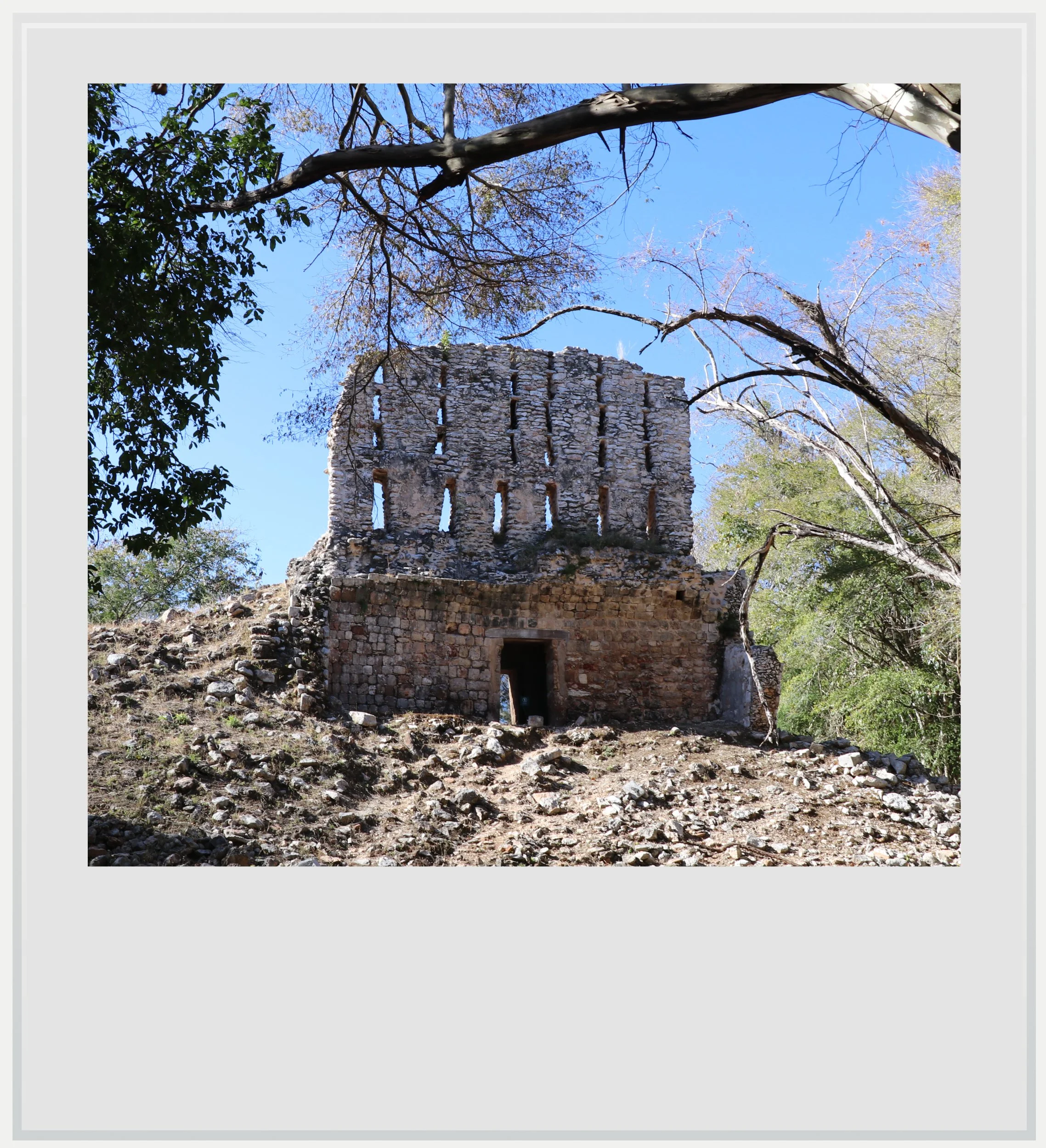
The Mirador at Sayil.
I soon arrived at the second point of interest on the site, the Mirador. Very similar visually to the one in Labna, the temple on top of a small pyramid was used in ancient times as a lookout structure, its line of sight above the tree line. Unlike the Labna one, out in the open, this one, tucked in the thick, dry forest of late winter, seemed ominously scary. I continued on, getting further into the forest.
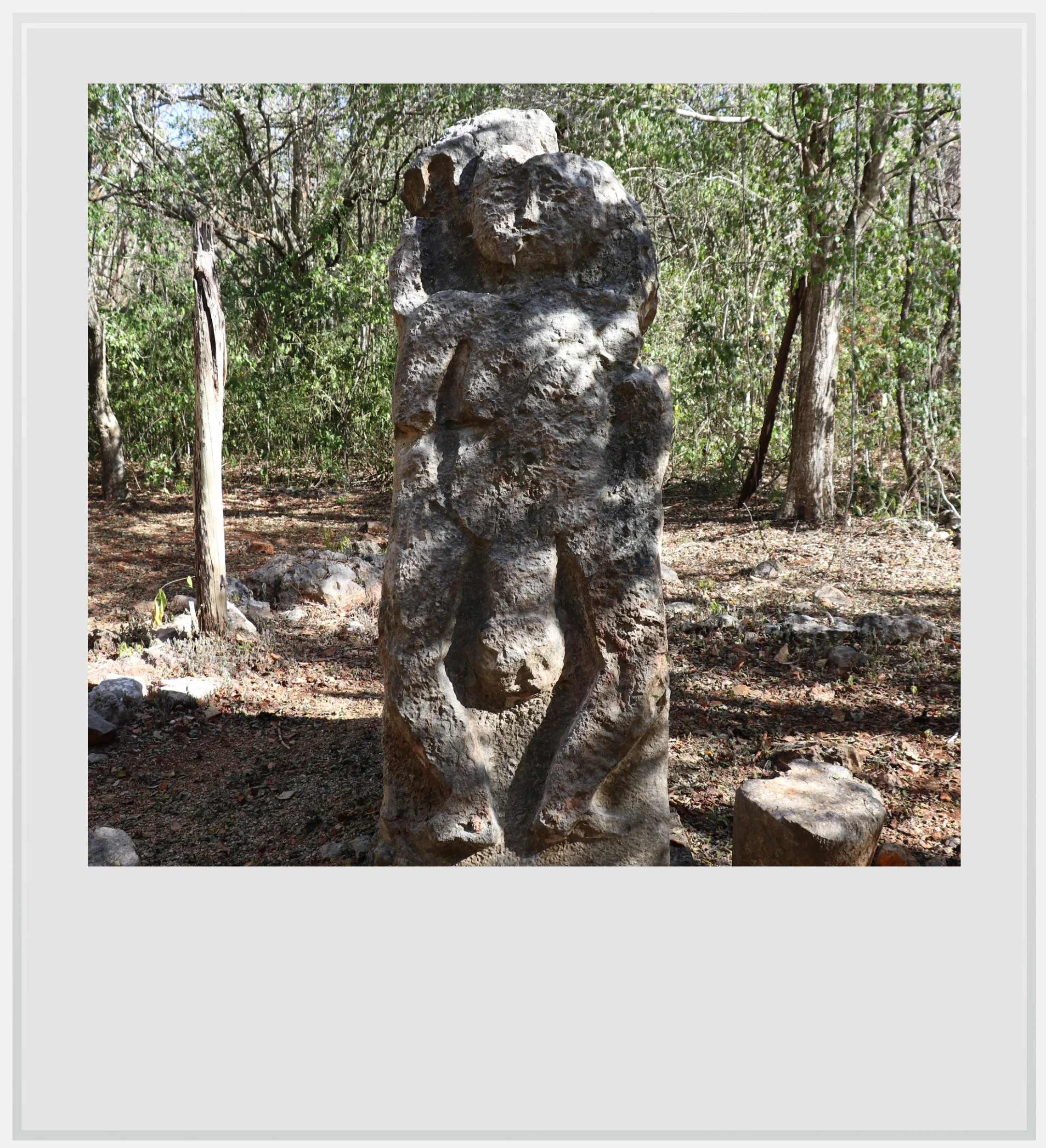
My next stop was Stela 9, representing Nohoch Kep, of the God of Fertility. Illustrated as a naked man with an oversize penis, it felt slightly out of place in the woods, but highlighted how important abundance, especially fertility, was for the ancient Maya.
Getting face-to-face with a jaguar wasn’t part of my plan.
I turned around and walked back towards El Mirador, to check another building, only partially excavated, called The Temple of the Hieroglyphic Doorjambs. Notable for featuring yet-undeciphered hieroglyphs on the sides of its doors, the building is representative of late Puuc architecture, and is estimated to have been built between 800 and 1000 CE.
Sayil featured many more building groups scattered around the forest, but most of them haven't been excavated and can’t be visited. The last major group was the South Palace, and, pushing aside my growing sense of unease, I continued deeper into the forest to reach it.
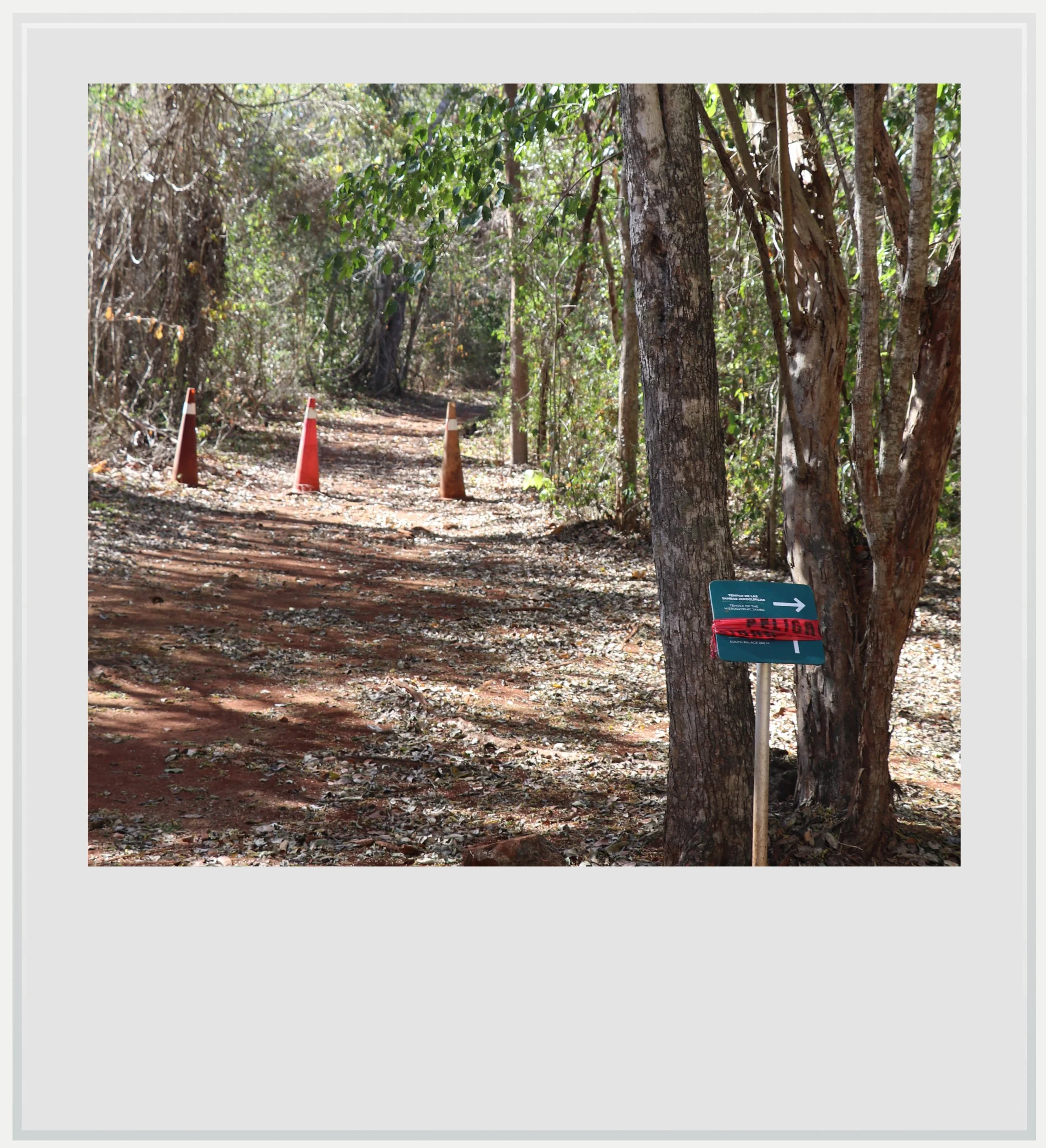
Blocked access because of recent jaguar sightings.
I didn’t actually go very far. A few hundred feet later, the path was closed by road cones, with a red cloth tied around the way-finding sign, labeled “peligro” (danger in Spanish). That’s when I decided to listen to my sixth sense, and promptly turned back.
I would have loved to see the southern palace, a great example of Puuc Junquillo style, and, according to historians, a much smaller version of the main palace, probably built for a different line of the leading family in Sayil.
Curious about the reason, I asked the caretaker about the sign, and he offhandedly told me a visitor had seen a mama jaguar with two of her kittens there a few weeks ago, so they closed the area for safety reasons. “She took pictures!” he added, then: “You can go there if you want, but be careful”.
I wasn’t going to tempt fate today. I had been getting enough weird vibes in the forest already, and getting face-to-face with a female jaguar defending her offspring wasn’t part of my plan. I might have done it in a group, but on that sunny day in February, I went back to my car, kind of glad that Sayil hadn’t given up all of its secrets in one visit.
Practical information
(Everything you need to know about visiting Sayil – updated April 2026)
In a nutshell
Sayil offers a different encounter with the Puuc world. Further south than the great ceremonial centers of Uxmal and Kabah, its monumental palace rises from a quieter landscape surrounded by woods, where architecture feels more residential. Plan for a visit 60 to 90 minutes, best done as part of a Puuc Route itinerary.
How to get to Sayil
How to get to Sayil from the US: the easiest way to reach Sayil from the US is via Merida. There are about 15 flights a day from Mexico City, making a connection from the US through the capital convenient. Alternatively, several airlines provide non-stop service between Merida and the US: United Airlines from Houston (IAH), American Airlines from Dallas (DFW) and Miami (MIA), VivaAerobus from Miami and Orlando (MCO). See below for instructions once in Merida.
How to get to Sayil from Mexico City: around 15 flights a day depart from Mexico City to Merida, either with the Mexican flag carrier Aeromexico, or with low cost airlines VivaAerobus and Volaris. Flying is more convenient than taking a bus. ADO links Mexico’s TAPO station with Merida’s TAME terminal up to 8 times a day, but the travel time is 17 hours and prices not that much cheaper than flying.
How to get to Sayil from Merida: there are two solid options to get to the Maya site:
rental car - this is the most convenient way to visit the area, and pretty much the only option if you’re aiming to visit other sites further on the Puuc route. Car rentals are widely available at the Merida airport and in town, from a variety of national and global brands. Price should hover around USD 25 to 50 per day for an economy car. Driving to Sayil from Merida is fairly easy. The key is to reach highway 180 towards Campeche, then take highway 261 towards Uxmal and follow it all the way to the turn off to Sayil, Xlapak and Labna, past Santa Elena (it is well posted). The direct drive should take approximately ninety minutes (but most people would first stop at Uxmal and other closer Puuc sites), and the roads are in good condition, except once leaving highway 261 - beware of potholes on that last portion of road.
find a tour. Several options to visit Uxmal, the main Puuc site, are available on global platforms like Viator or Get Your Guide, and some include Sayil. Prices vary between USD 120 and 200 depending on options and group size.
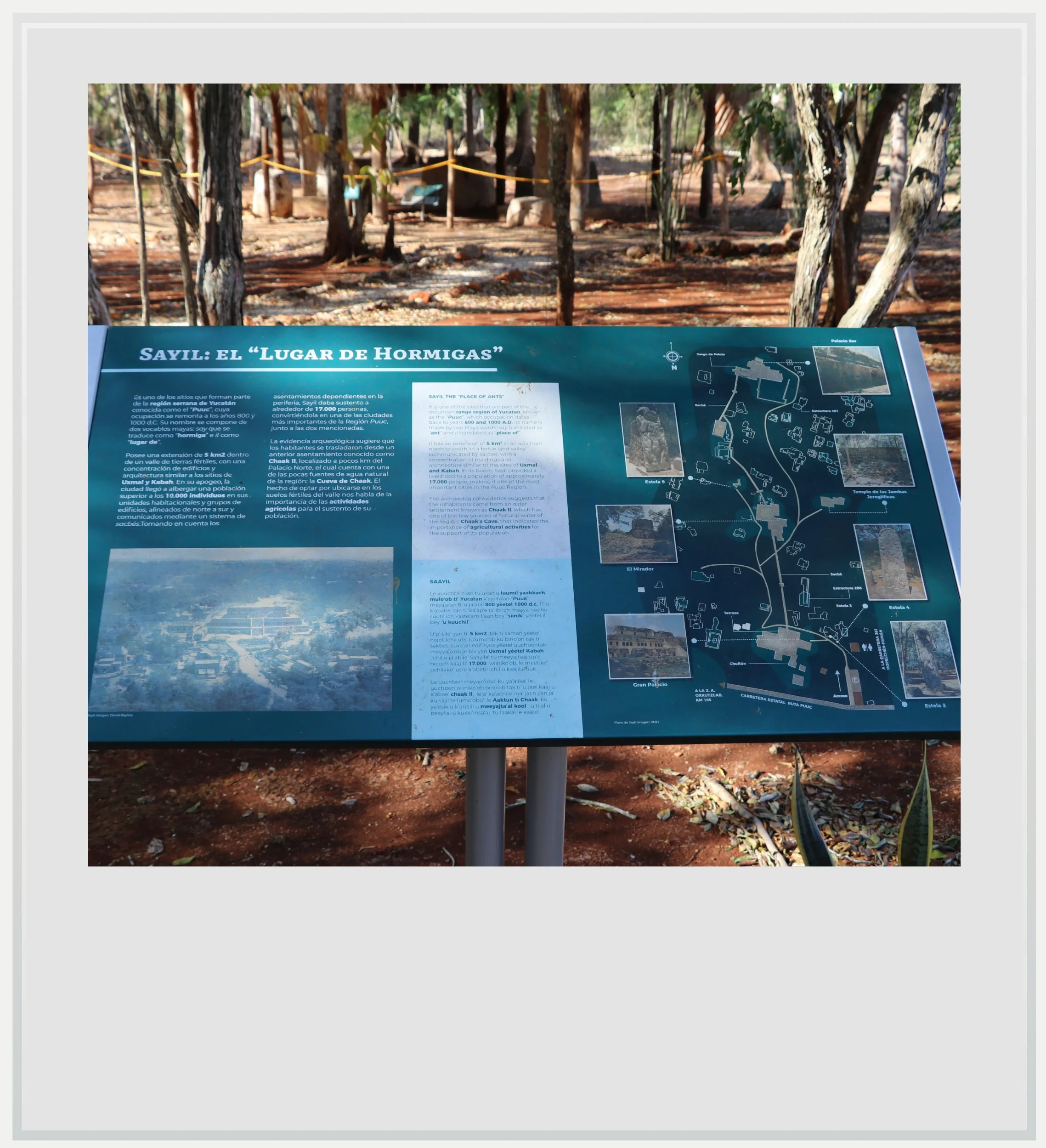
Sayil’s site map.
When to go to Sayil
The best months weather-wise to visit Sayil are during the dry season, between November and April, with January and February the (relatively) coolest months. This is also peak season, but Sayil is hardly ever crowded, as one of the more remote Puuc sites.
Most people visit the Puuc sites in order, starting with Uxmal, so it is likely you’ll hit Sayil just early to mid afternoon, at a time where the sun is strong. There isn’t a lot of shade around the palace, but most other buildings are located within the surrounding woods, making the visit more enjoyable under the afternoon sun.
I visited Sayil in a morning in late February, and the heat was tolerable (but it will be different in the humidity of a summer day).
How much does it cost to visit Sayil
At the time of writing, the entrance cost was MXN 145 for foreigners and MXN 80 for Mexican citizens and residents with credentials.

How long to stay in Sayil
The site isn’t enormous, but it is bigger than other Puuc sites except Uxmal, so it’s easy to spend 60 to 90 minutes on site.
What are the opening times of the Sayil archeological zone
Sayil is open every day from 8 AM to 5 PM, with entry permitted until 4 PM.
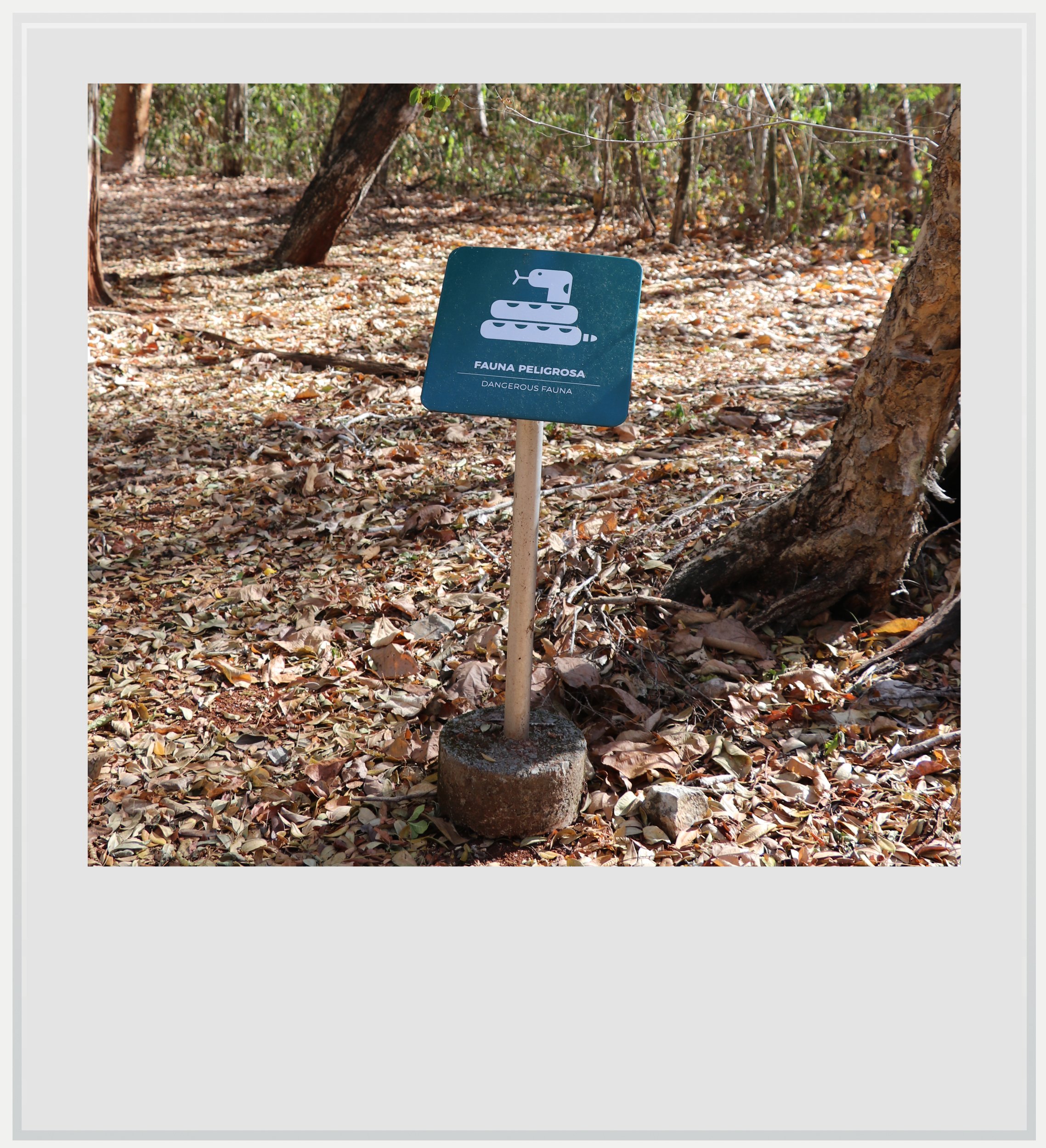
The ominous snake warning sign at Sayil.
Food & lodging in Sayil
Hotels
For most people, accommodation in Merida will make the most sense, if a visit to Sayil is part of a bigger Puuc Route trip. There are plenty of hotel and Airbnb options in the Yucatan capital.
If you would rather stay close to the Sayil archeological zone, say, to save on drive time to the Puuc hills in the morning, I recommend the following two hotels:
The Picked Onion in nearby Santa Elena. I stayed there during my second Puuc route visit, and enjoyed the quiet surroundings. Rooms are single casitas built in the regional style that blend well in a lovely garden. Comfort is basic but decent. Breakfast is included. The hotel sits between Uxmal and Sayil, less than ten minutes from the Kabah entrance (and therefore about twenty minutes from Sayil). Room cost was around USD 120 at the time of my visit.
Hotel Mundo Maya “Nuevo Uxmal”. While I haven't stayed in this hotel, I sampled its sister properties in Calakmul and Edzna, and the experience was similar enough to see a positive pattern. Built by the state alongside the Tren Maya investments, Mundo Maya hotels are meant to bring premium hospitality to more remote areas of the Maya world, to spur a tourism expansion. The hotels are beautifully done, the rooms luxurious, and the prices very competitive. This hotel only makes sense if Uxmal is your first stop of the day, as it is located 30 minutes from the ancient Puuc capital, and about an hour from Sayil. Room price around USD 150 per night.
Restaurants
If you’re coming to Sayil as part of a day trip along the Puuc route, you will need to find lunch along the way, unless you packed it with you. Most of the restaurants on the route seemed well regarded locally, but didn’t always feel like places we could stop at without hesitation. We had trouble finding a place for lunch in Santa Elena, and drove to nearby Ticul to enjoy a really good meal at the El Principe Tutul Xiu hotel, where the restaurant opened at 11 AM for lunch. The opening time is important because if you get to Uxmal at 8 AM and spend 2+ hours there, you’ll get to Ticul just around 11 AM.
We were able to buy snacks right after the entrance in Uxmal, where there is a nice tourist area with a few souvenir shops and a coffee station, but past Santa Elena towards the rest of the Puuc route, there is absolutely no store of food stand so make sure you break for lunch before leaving Santa Elena, and therefore, before getting to Sayil.
Safety in Sayil
The State of Yucatan is considered one of the safest regions in Mexico by the U.S. Department of State and is not subject to a specific travel advisory as of publication. While Mexico as a whole is listed at Level 2 (“Exercise increased caution”) and some states, such as Zacatecas or Guerrero, are classified as Level 4 (“Do not travel”), Yucatan remains one of the safest states in the country, and no precautions beyond basic common sense are generally necessary for visitors.
The main danger in this part of the peninsula is remoteness. It is recommended to avoid driving (or being driven) at night, when risk increases: the area is fairly isolated, with no cell service, so any issues happening on the road at night could possibly spiral.
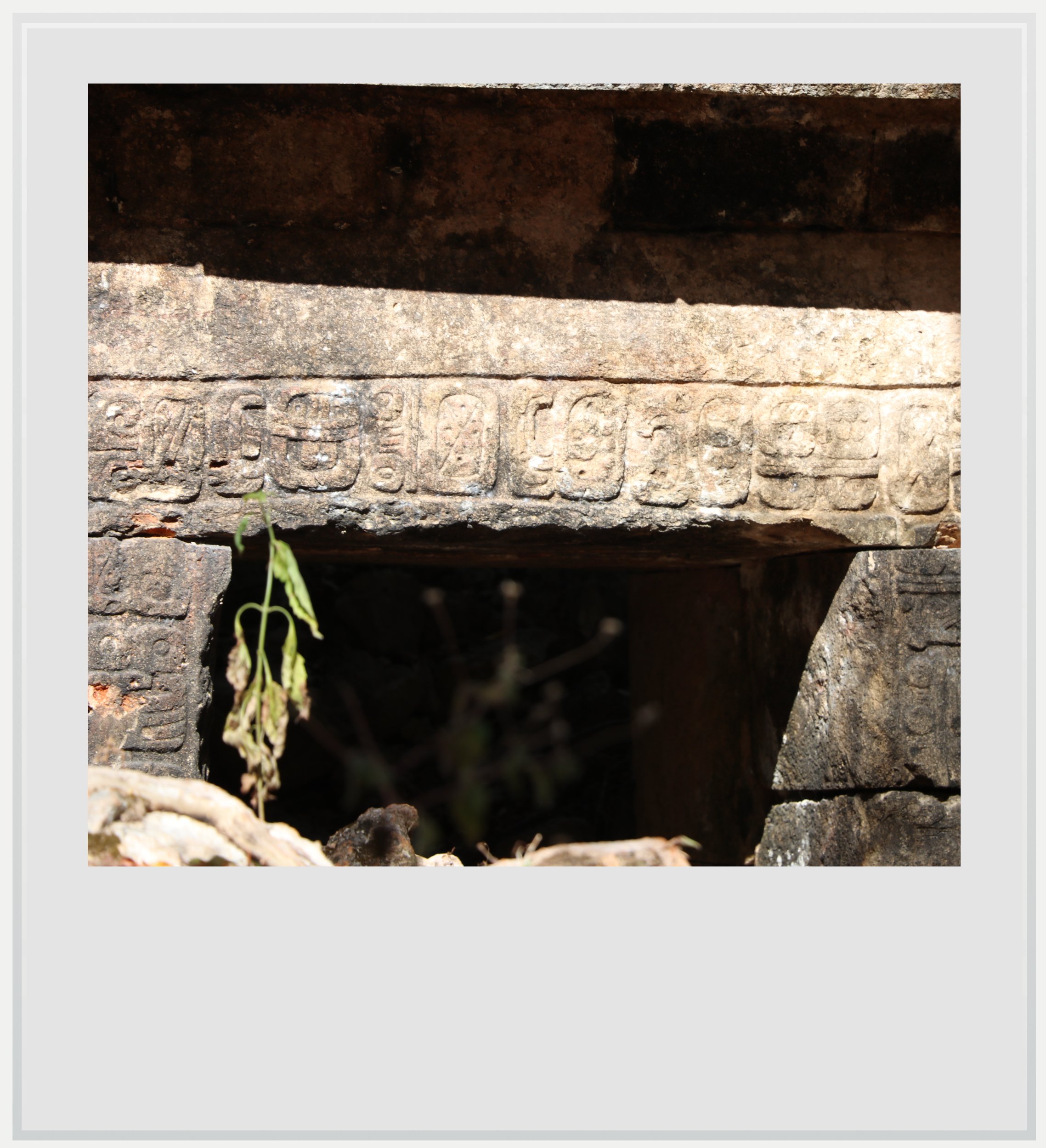
Detail of hieroglyphs on a doorjamb in Sayil.
Keep in mind these travel tips
Heat isn’t a joke in Yucatan, and even in the dry season, temperatures can reach very high levels around midday. Make sure you hydrate regularly and keep a water bottle with you.
The UV index may be low in the morning and evening, but during the day, it gets pretty high. Wear SPF.
Bring cash. While many shops accept foreign credit cards, bus companies, taxi drivers, and many smaller boutiques do not. Some restaurants were cash-only as well.
There are no shops on the route past Santa Elena, so any drinks or snacks will need to be purchased there before heading further south, or in Uxmal, where a coffee station offers beverages and snacks, inside the fee area.
Cell service can be spotty outside of cities, and although Telcel signal was strong overall near Merida, it disappeared approaching Uxmal, and didn’t reappear later along the Puuc route. Sayil is therefore a no-service zone. No other provider covered the area either. Telcel is always the safest bet, though. If you’re roaming, check that you can roam on Telcel, or investigate a Mexican eSIM that uses this network. Telcel coverage is independently mapped here. Change the network in the drop down menu at the top to see other companies.
Every photo caption appears if you hover over it (on a computer) or click on it (on a smartphone).
All photos are mine and copyrighted.