The Chenes Region

Across central Campeche, architecture grows more sculptural, with temples framed by masks, teeth and open jaws.
The Chenes region at a glance
click on a dot to explore
The Chenes landscape
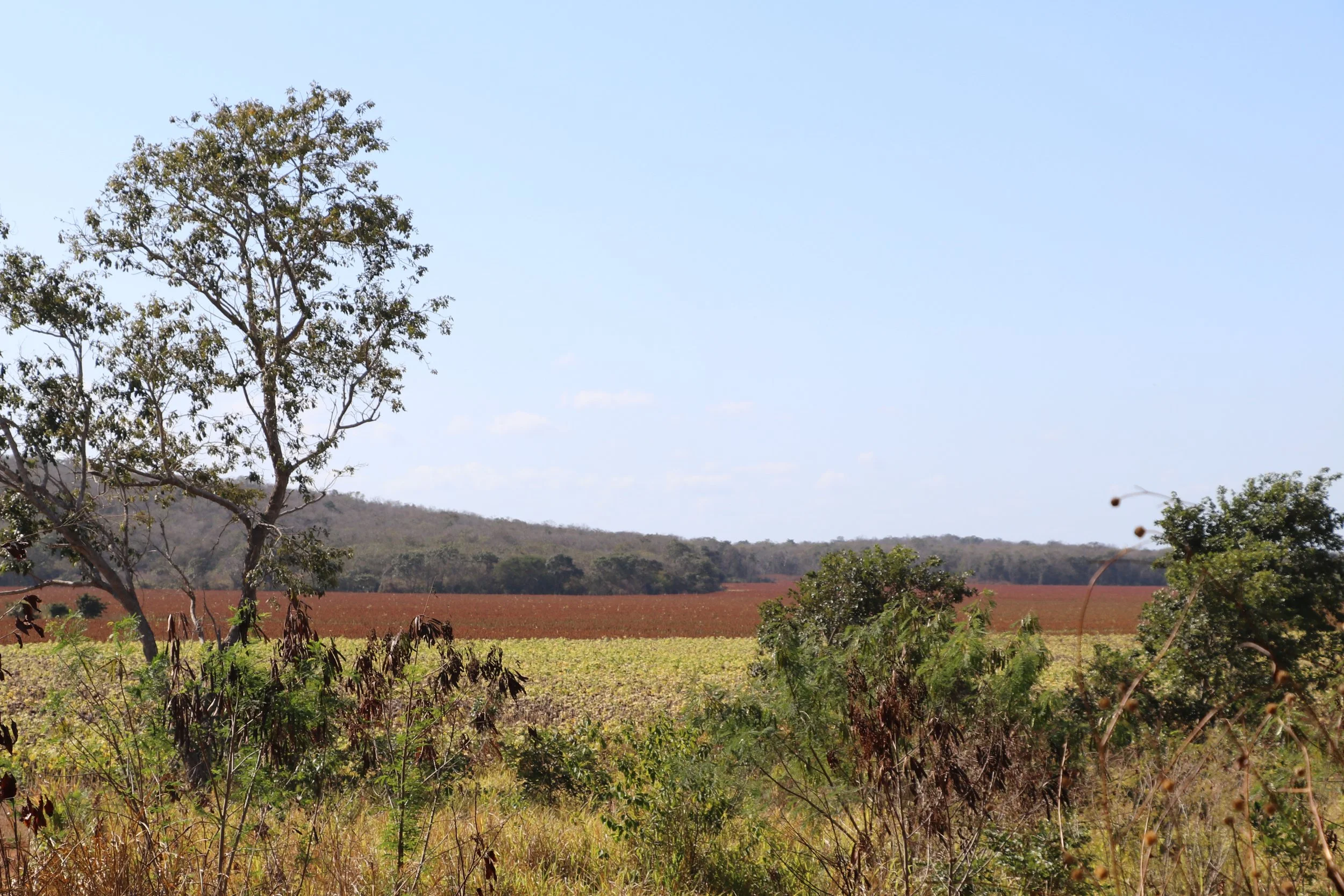
The Chenes region stretches across the interior of northern Campeche, a sparsely populated landscape of low hills, forest and fertile red soils. Its ancient settlements often occupied natural elevations, which the Maya reshaped with terraces and platforms. Santa Rosa Xtampak and Hochob were both built on hills modified as their communities expanded.
With no rivers crossing the region, water remained a fundamental constraint. The Maya captured seasonal rainfall in chultunes, underground cisterns distributed throughout their settlements. At Santa Rosa Xtampak alone, archaeologists have recorded dozens of these reservoirs, while similar systems supplied communities such as Hochob.
Between the seventh and tenth centuries, this remote landscape supported a network of thriving Maya communities. Santa Rosa Xtampak emerged as its principal city, surrounded by smaller centers including Hochob, Dzibilnocac and El Tabasqueño. Their isolation today contrasts with a region once connected through political influence and long-distance exchange.
The Chenes architecture
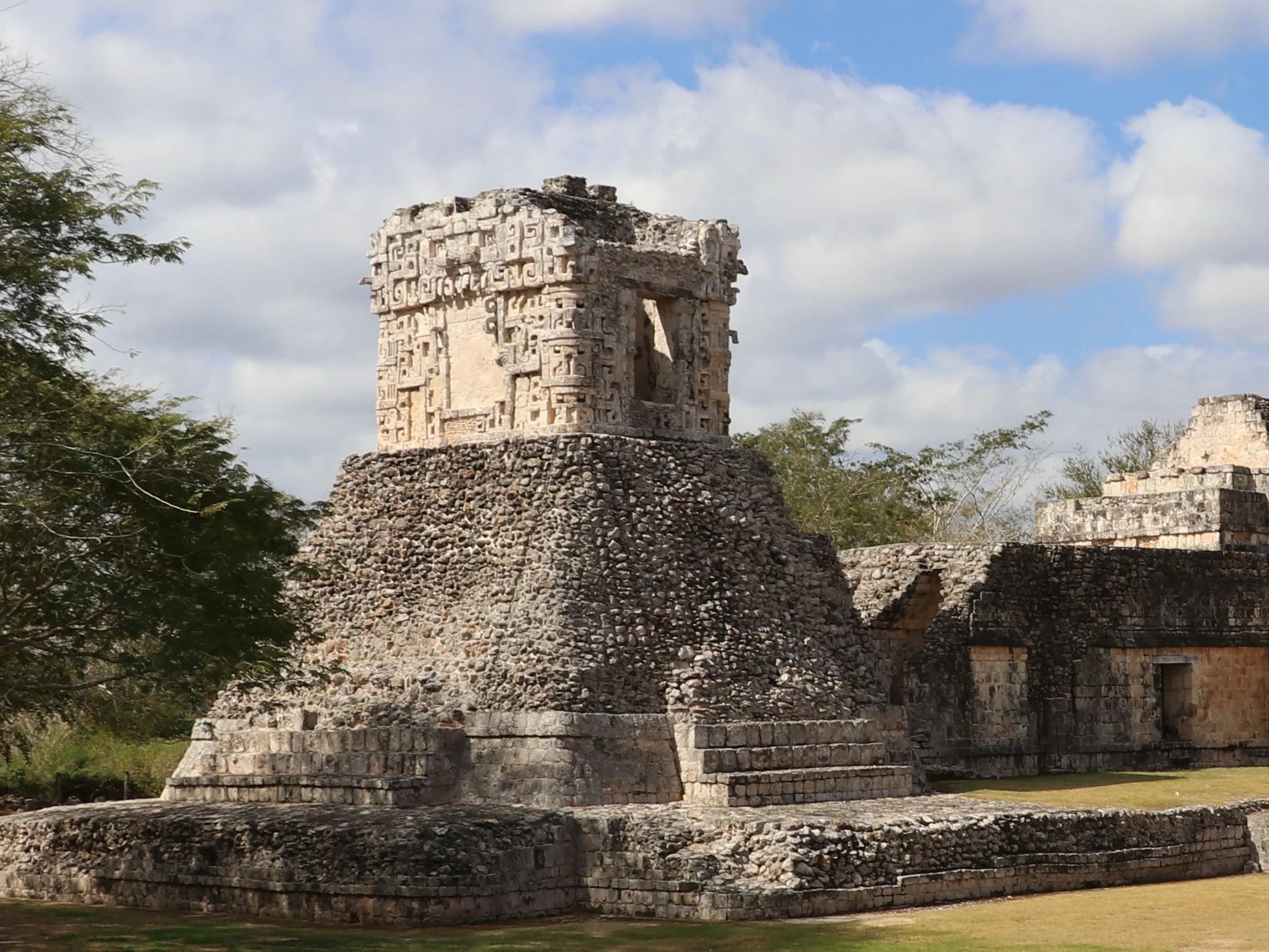
Chenes architecture is immediately recognizable for its extraordinarily elaborate facades, assembled from carefully cut pieces of limestone into dense geometric mosaics, masks, columns and other sculptural forms. Unlike in the neighboring Puuc style, decoration can cover much of the facade rather than being concentrated principally above a more restrained lower wall.
Chenes builders also combined these richly decorated facades with imposing architectural forms, including towers and elevated temples. The result could be highly theatrical, with buildings conceived as monumental compositions rather than simply surfaces carrying decoration.
Santa Rosa Xtampak represents the tradition at its most monumental, while Hochob, El Tabasqueno and Dzibilnocac (pictured) preserve some of its most striking examples.
The monster mouth
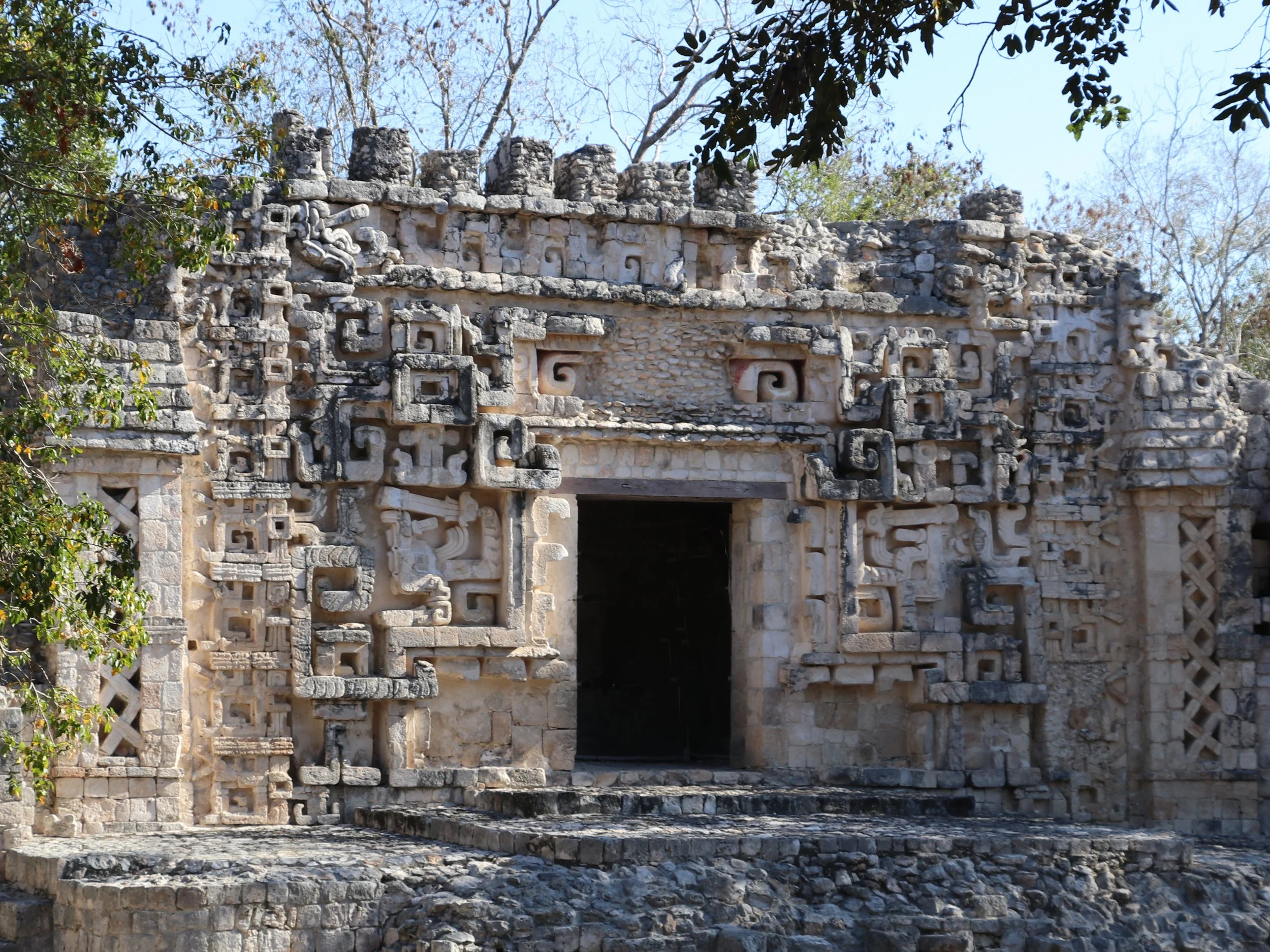
The most spectacular expression of Chenes architecture is the monumental zoomorphic doorway. Eyes, fangs and other sculpted elements transform an entire facade into the face of a supernatural creature, with the entrance forming its open mouth. At Hochob (pictured), entering the building meant literally passing between its jaws.
These zoomorphic facades are generally interpreted as representations of the sacred mountain or Earth Monster. In Maya cosmology, mountains and caves marked entrances to the supernatural world, connecting the human realm with the underworld and the forces associated with water, fertility and regeneration.
Turning a doorway into such a threshold gave the simple act of entering a building a powerful symbolic dimension. The motif appears in particularly elaborate form at Hochob and El Tabasqueño, while examples also survive at Dzibilnocac and Santa Rosa Xtampak.
Santa Rosa Xtampak, the Chenes highlight
key site
Santa Rosa Xtampak
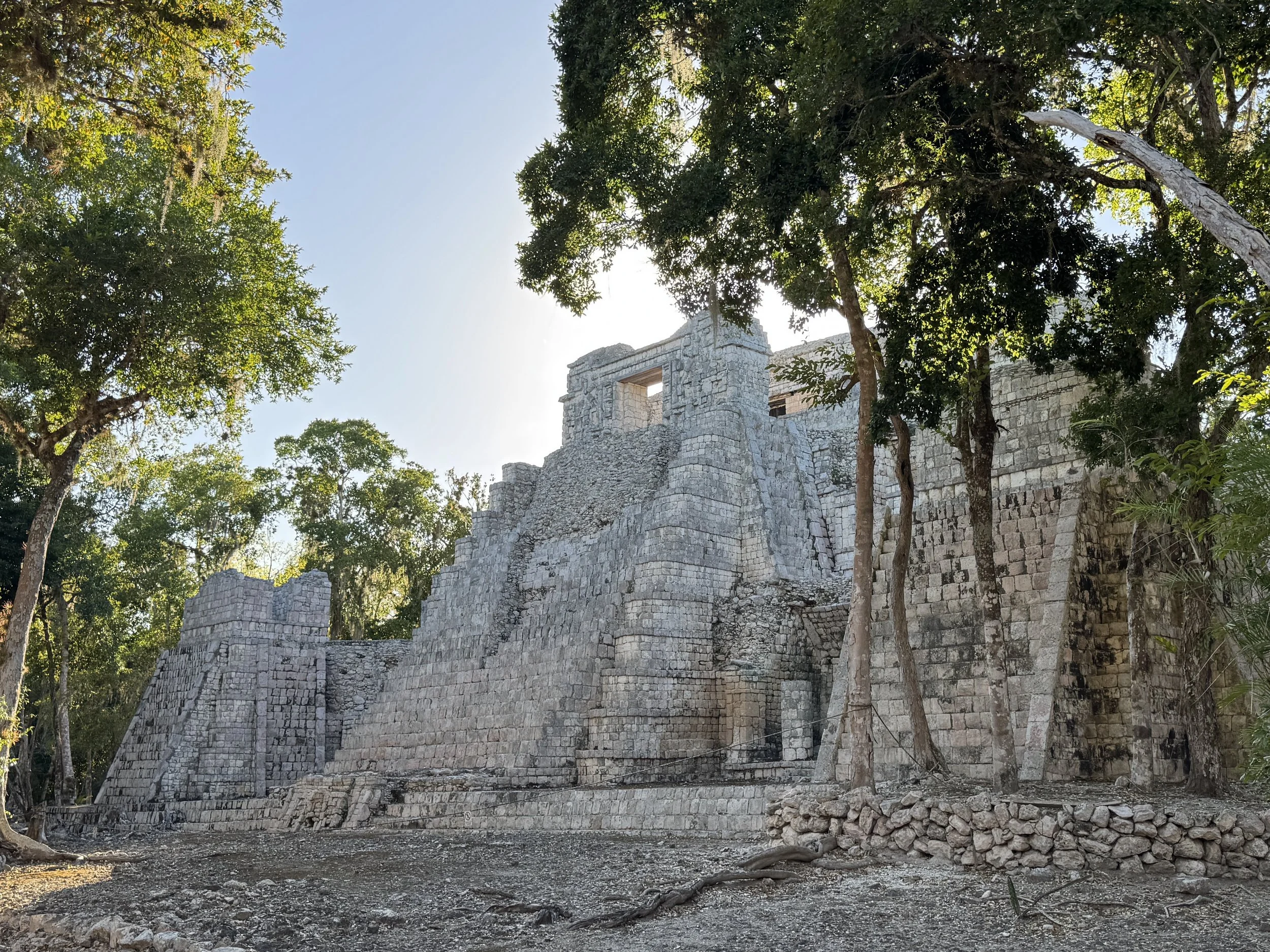
The principal city of the region, Santa Rosa Xtampak developed into a powerful regional capital in the Late Classic period. Its pyramids, plazas, carved stelae and elaborate Chenes facades reflect a scale and complexity unmatched by the smaller centers surrounding it. The extraordinary three-level Palace, with more than 40 rooms and rare internal staircases, is one of the most remarkable buildings in the region.
The other Chenes sites

Hochob
A compact but highly refined site, centered on one of the best-preserved Chenes facades. A precise and legible expression of the style.
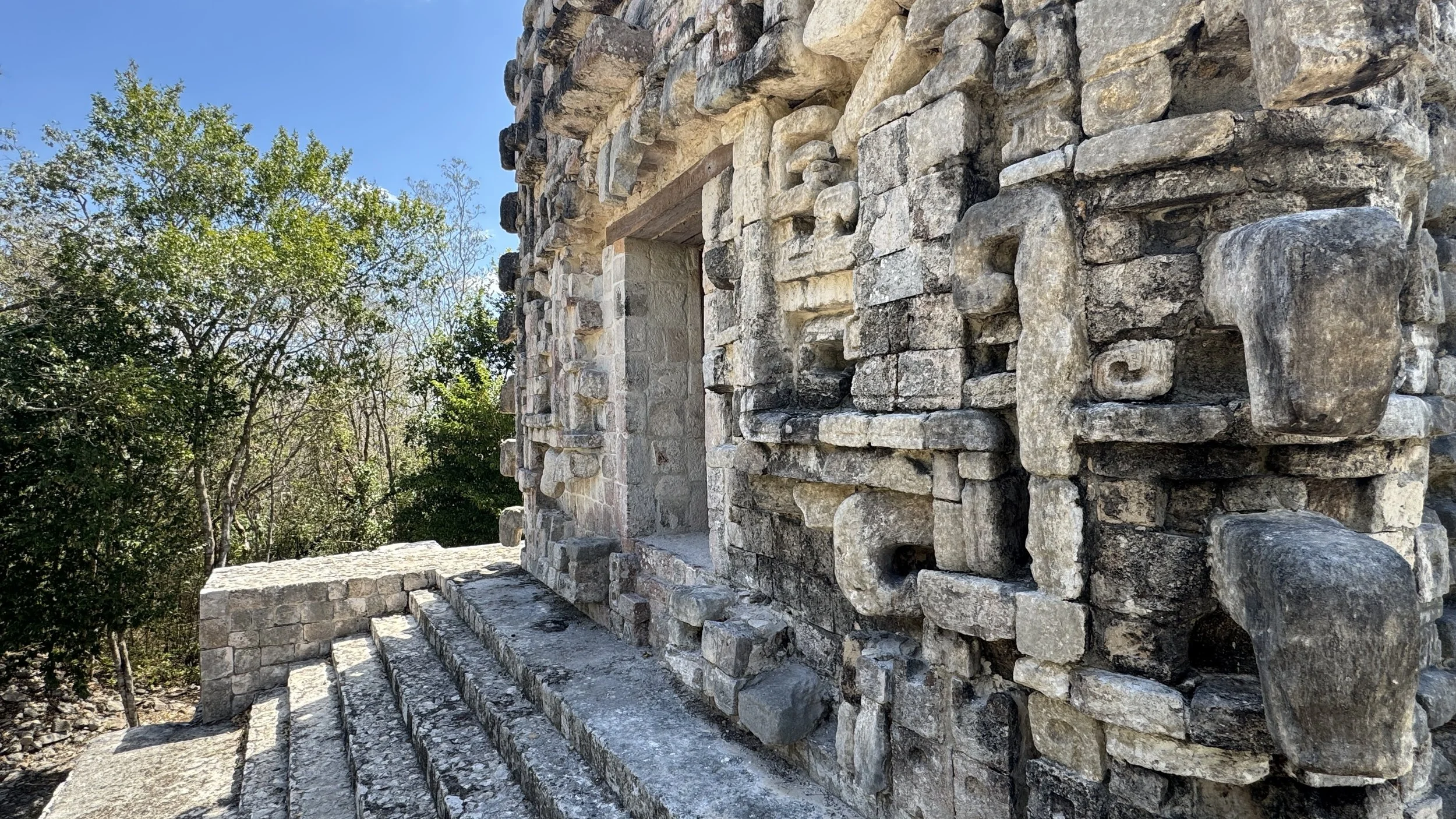
El Tabasqueño
A smaller site centered on an elaborate zoomorphic facade and distinctive tower. More intimate than Hochob, in an even more remote setting.
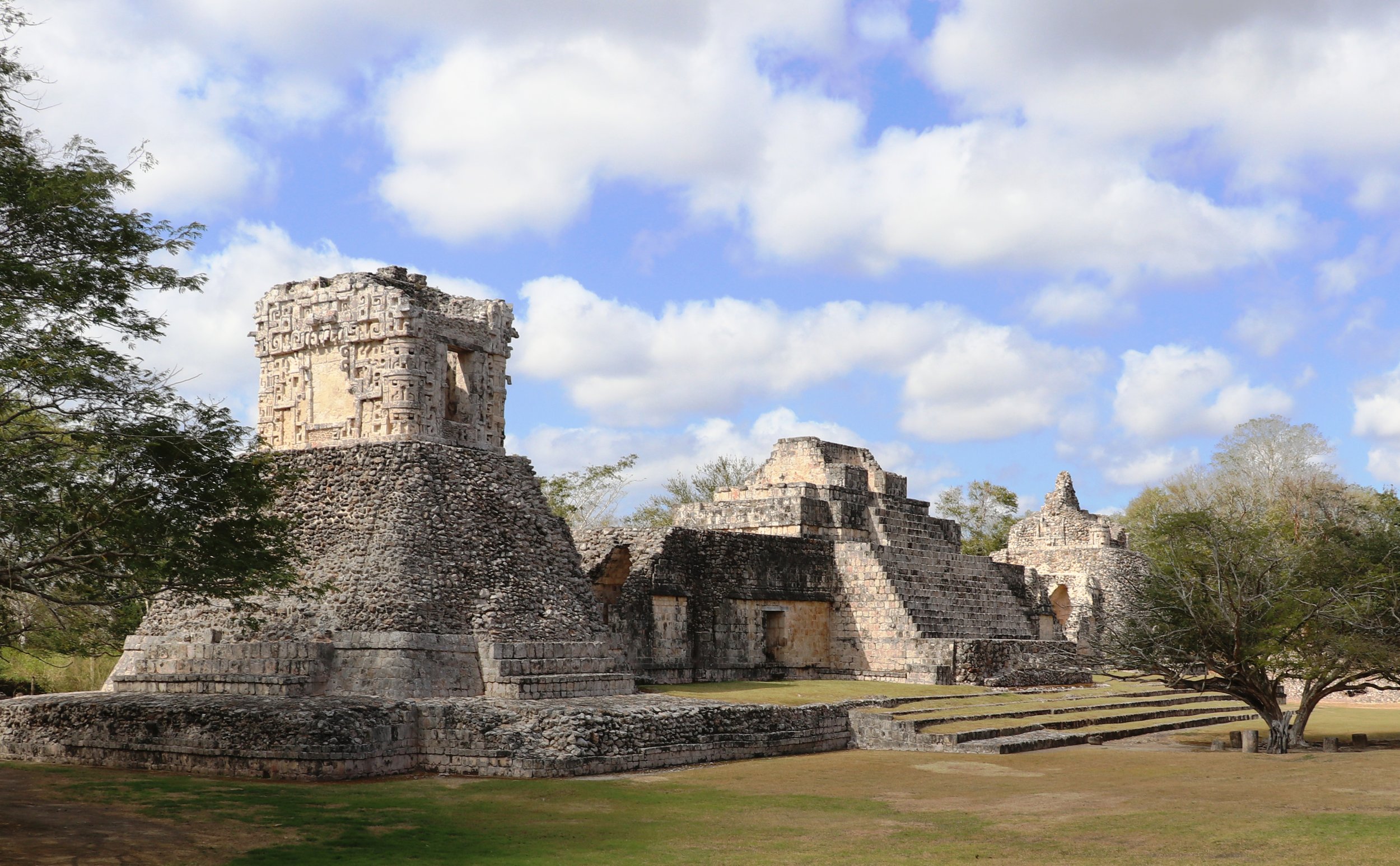
Dzibilnocac
Defined by its towers, the site is larger in scale than Hochob, with a stronger sense of mass and presence.
Further sites with Chenes influence
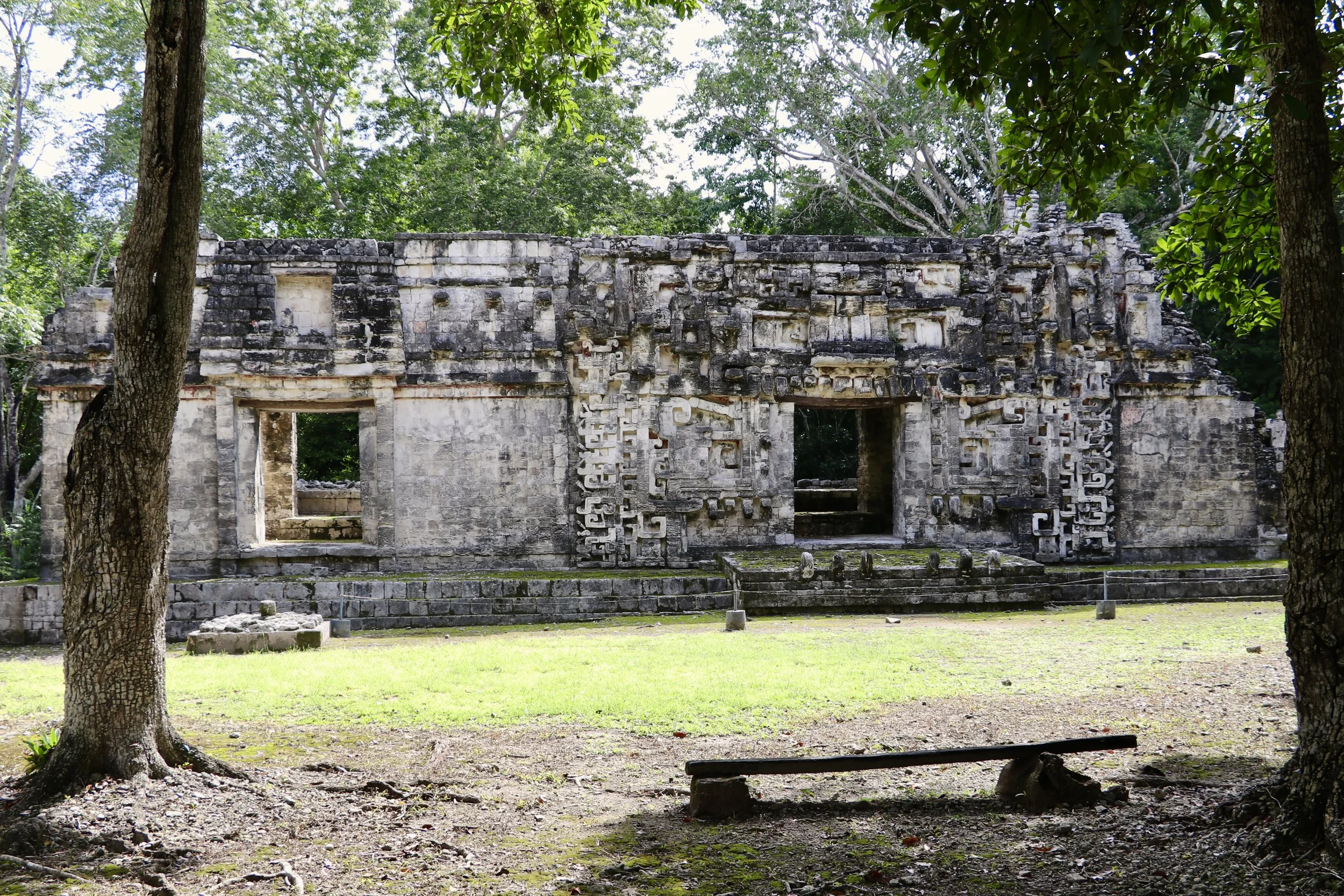
Chicanna
Although part of the Rio Bec region, Chicanna shows a strong Chenes influence. Its elaborate zoomorphic facades, with entrances framed by open jaws, closely echo those found at sites such as Hochob.
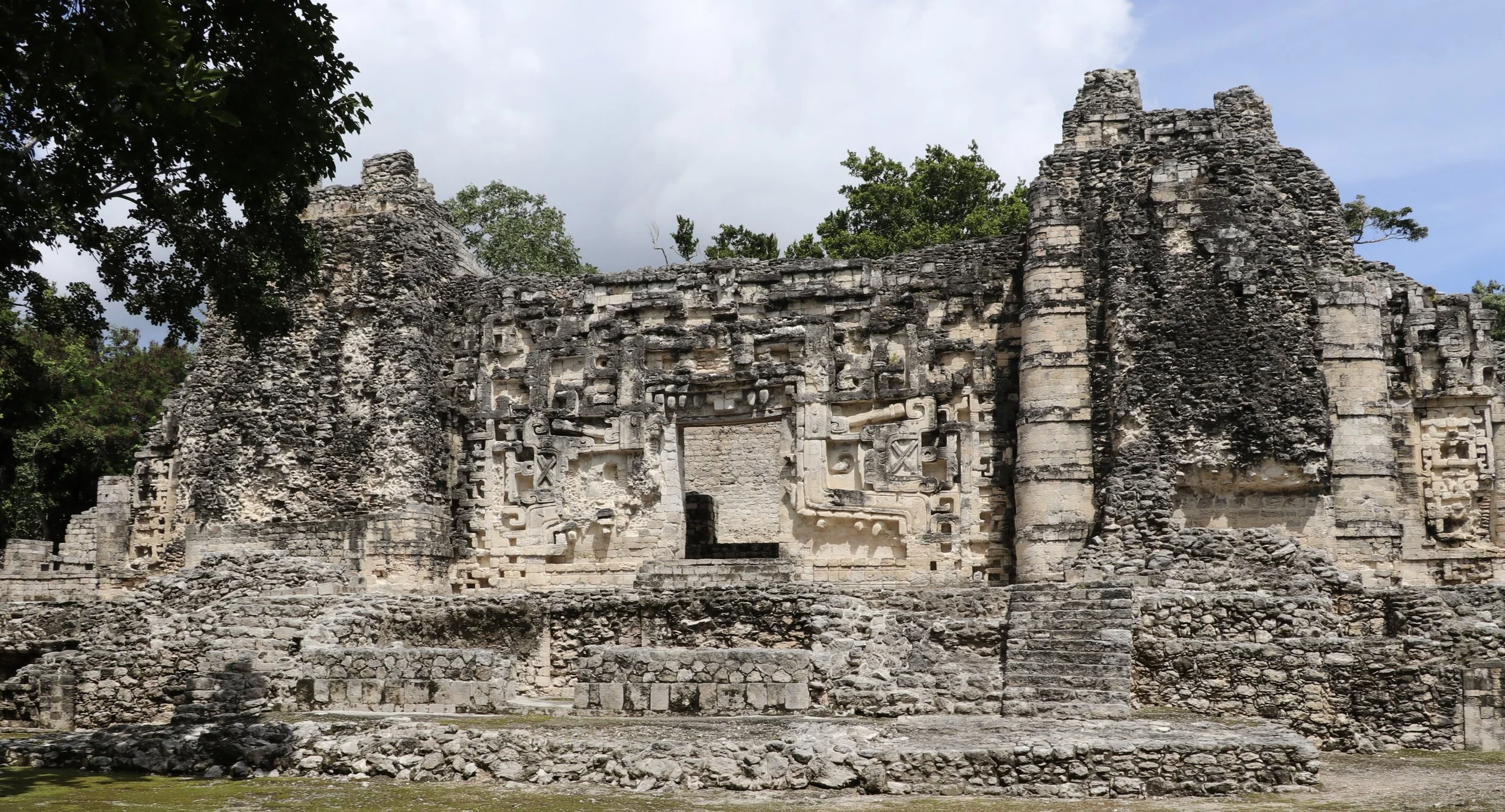
El Hormiguero
At El Hormiguero, Chenes influence appears within distinctly Rio Bec architecture. Monumental towers flank elaborate zoomorphic entrances, combining elements of both traditions.
Chenes itineraries
1-day itinerary
The Chenes sites
A flexible route through the principal Chenes sites, centered on Santa Rosa Xtampak and its monumental architecture. Continue to Hochob, Dzibilnocac and Tabasqueño for some of the region's finest surviving facades.

7-day itinerary
Through the Hidden Maya World:
Merida to Campeche
A 7-day road trip taking the slow route from Merida to Campeche through the Puuc hills, the little-visited Chenes region and Edzna, showcasing some of the Maya world's finest architecture.
KEEP EXPLORING
Continue through the Maya world
Discover its cultural regions, archeological sites and itineraries.