The Rio Bec Region
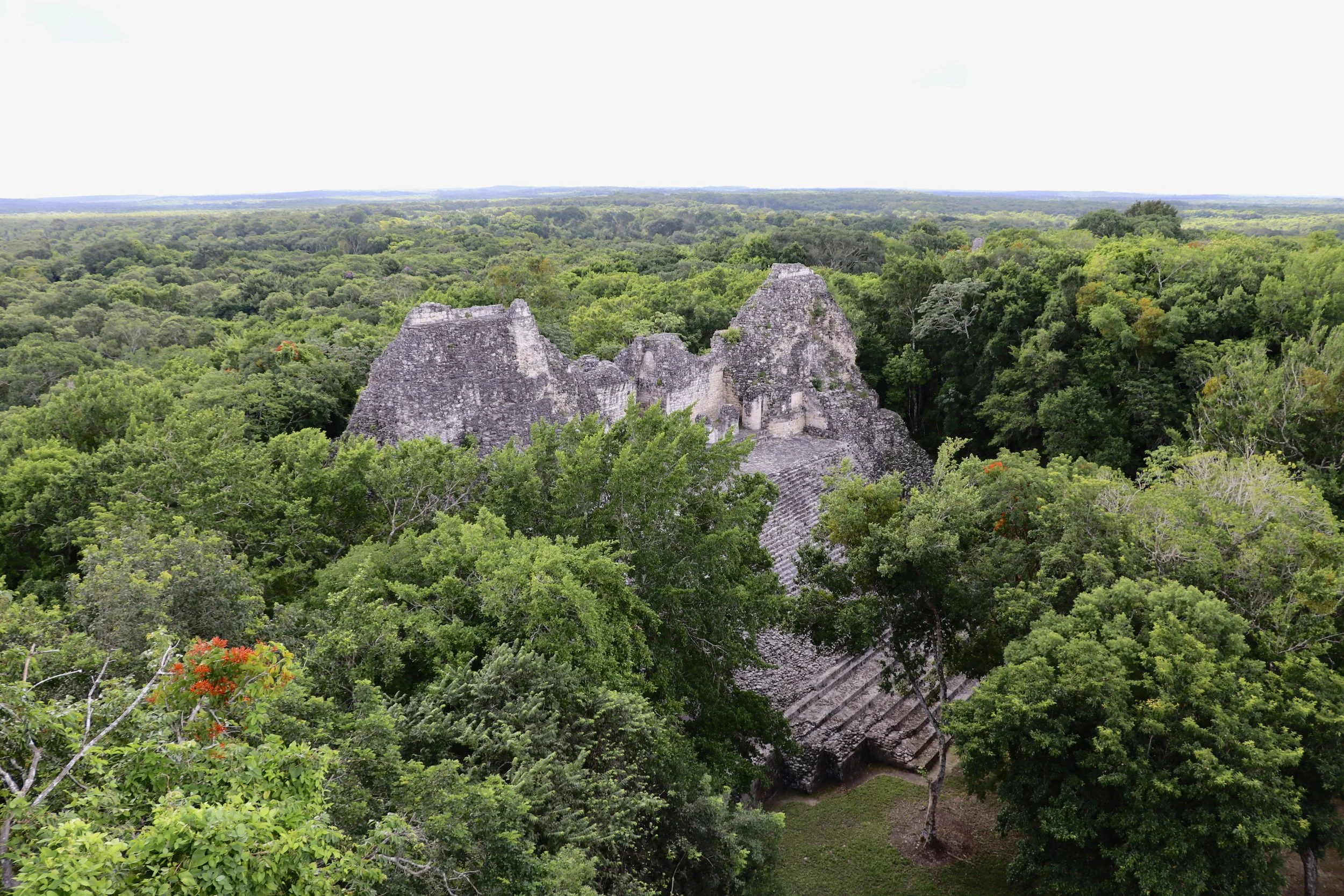
Across southern Campeche, Maya architecture takes on a staged monumentality, with soaring towers rising above the forest.
The Rio Bec region at a glance
click on a dot to explore
The Rio Bec landscape
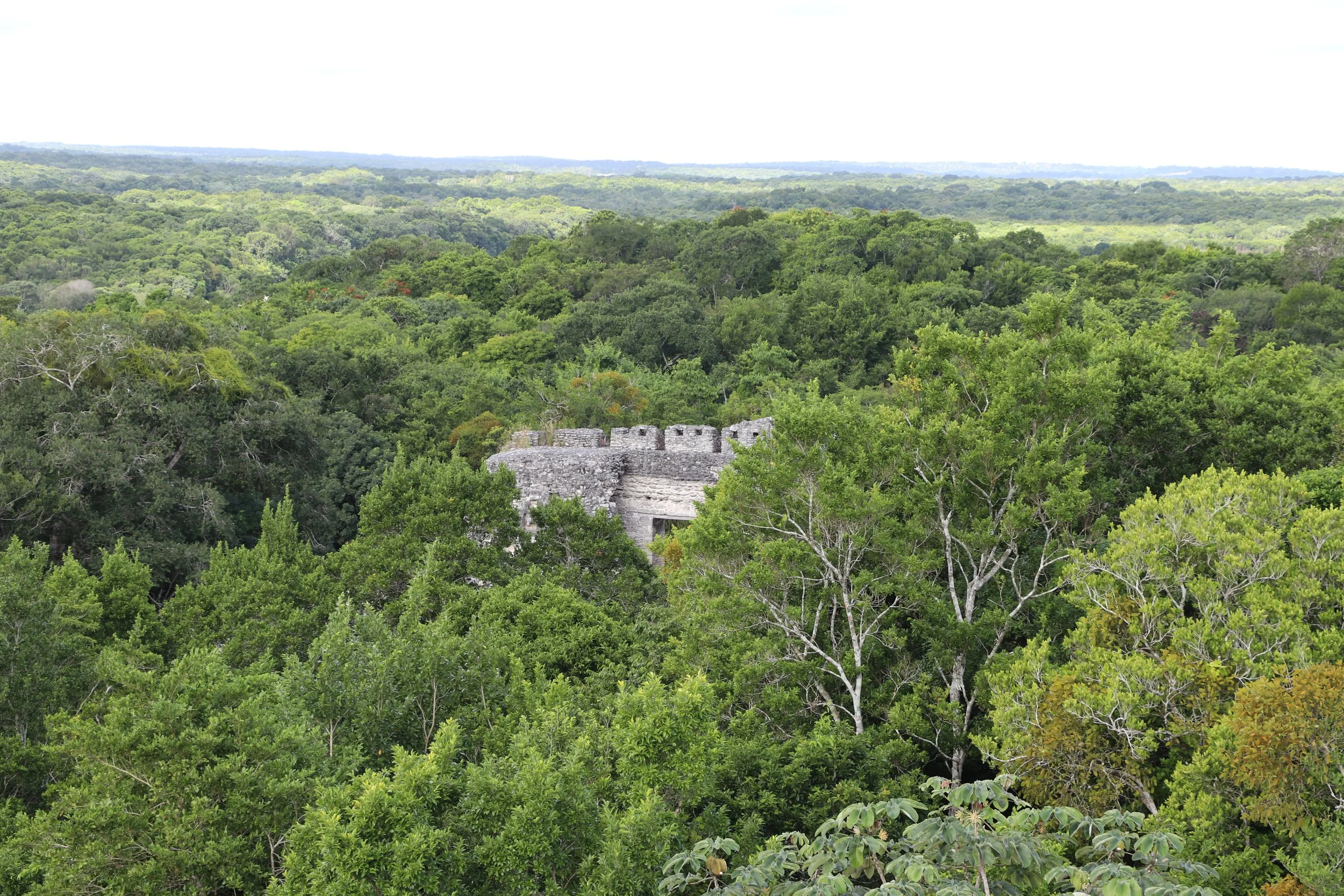
The Rio Bec region stretches across southern Campeche, a sparsely populated landscape of low hills and dense tropical forest. Ancient settlements were scattered through this rolling terrain, their buildings occupying slightly elevated ground above seasonal wetlands and lower-lying areas.
With no permanent rivers crossing the region, water remained a fundamental constraint. The Maya captured seasonal rainfall in chultunes and other reservoirs, essential in a region that, despite its lush vegetation, experiences a long dry season.
Settlement here was unusually dispersed, with residences and monumental groups spread across the landscape rather than always concentrated around a single urban core. Becan developed into a substantial center, but elsewhere monumental architecture rose among smaller groups scattered through the forest - a pattern that still shapes the experience of exploring Rio Bec today.
The Rio Bec architecture
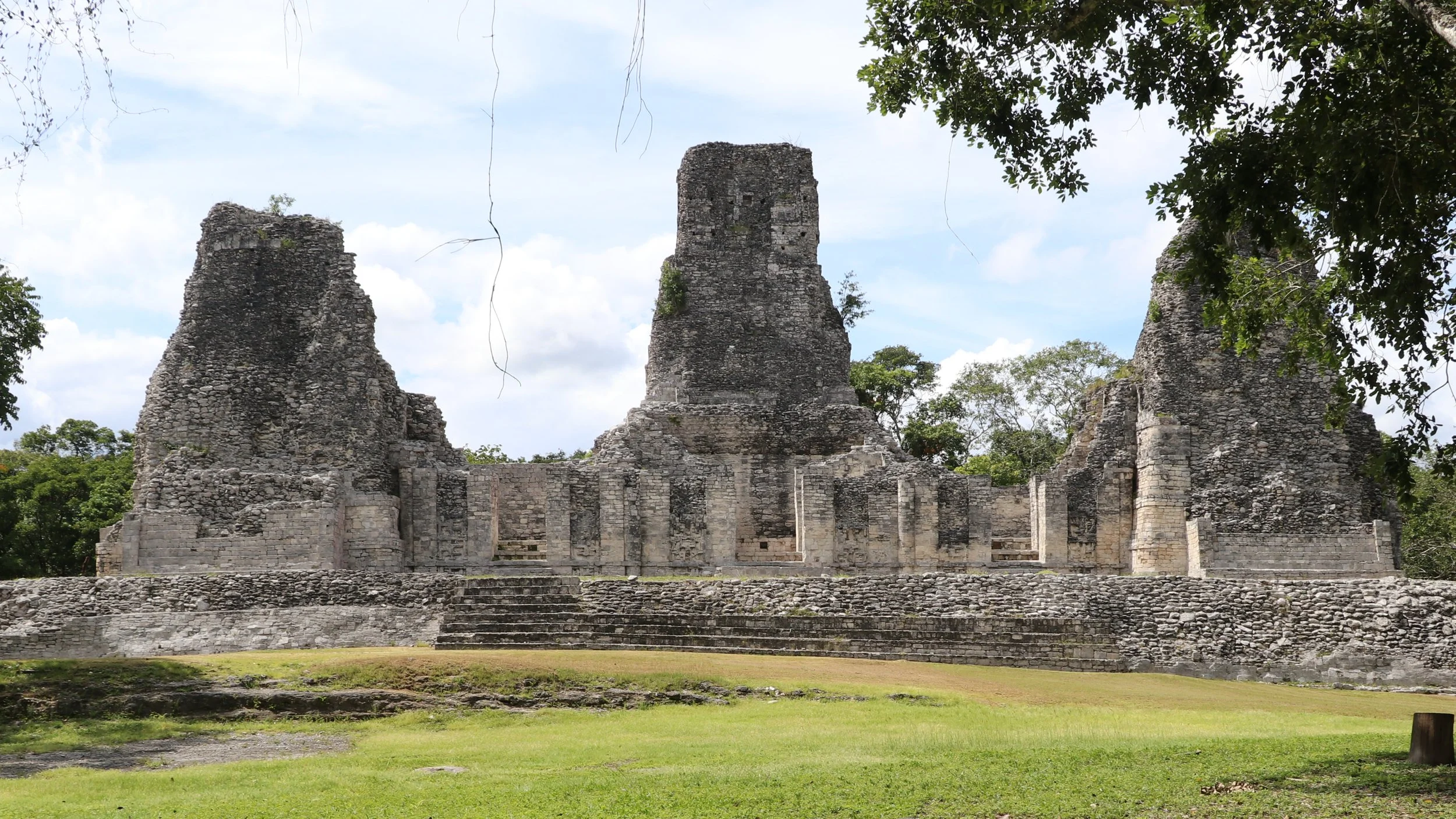
Rio Bec architecture took inspiration from the great temple-pyramids of the Peten, but transformed their monumentality into something largely theatrical. Instead of enormous pyramidal structures, architects built lower, elongated buildings crowned by tall towers that reproduced their distinctive silhouette.
Much of that apparent architecture was an illusion. Stairways were too steep to climb, temples at the summit were often unusable and filled with stone, and towers narrowed as they rose to exaggerate their height. The buildings looked considerably more monumental than they actually were.
Developed primarily during the Late and Terminal Classic periods, this distinctive architecture spread across the region, appearing at sites including Becan, Xpuhil, Chicanna and El Hormiguero. Each interpreted the style differently, from the three-towered facade at Xpuhil to the particularly elaborate towers of El Hormiguero.
A region of its own
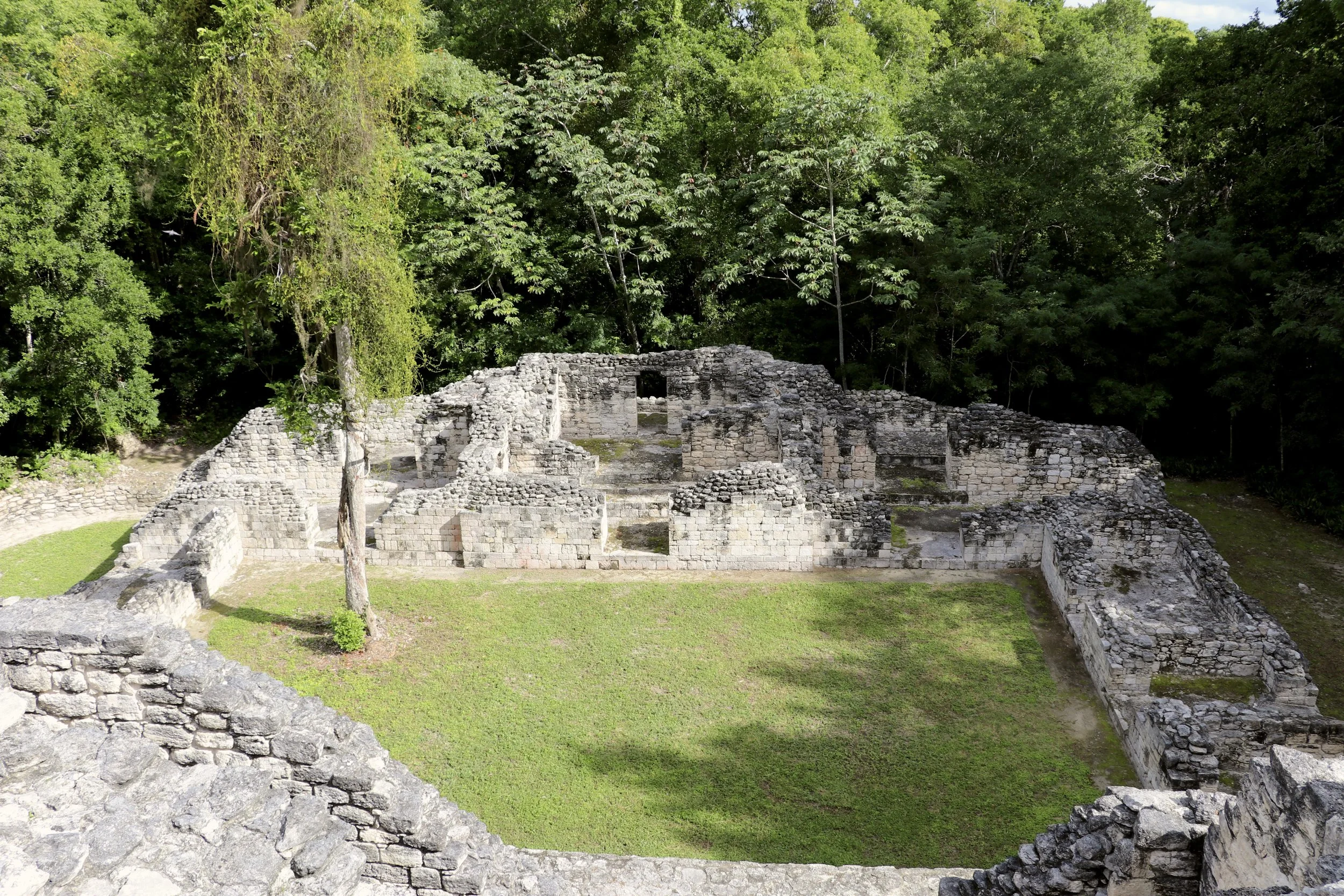
The Rio Bec region occupied a remarkable position in the Maya world, roughly between Dzibanche and Calakmul, the two great centers associated with the powerful Kaan dynasty. As Kaan power shifted westward toward Calakmul during the seventh century, Rio Bec lay almost directly between the dynasty’s old and new centers.
Yet the region appears to have followed a surprisingly independent trajectory. Archaeologists have found little evidence of the dynastic monuments and inscriptions that might be expected from communities closely controlled by Kaan rulers.
Instead, Rio Bec developed a strong identity of its own, expressed in its distinctive architecture as well as its patterns of settlement and political organization. Its location placed it between two centers of Maya power. Its development tells a much more independent story.
Becan, the Rio Bec highlight

key site
Becan
The largest and most imposing of the Rio Bec sites open to visitors, Becan developed into an important regional center during the Classic period. Its monumental plazas, towering temples and distinctive moat set it apart from the smaller settlements surrounding it. Rio Bec architecture appears throughout the city, with some of its most impressive buildings concentrated around the Great Southeastern Plaza.
The other Rio Bec sites
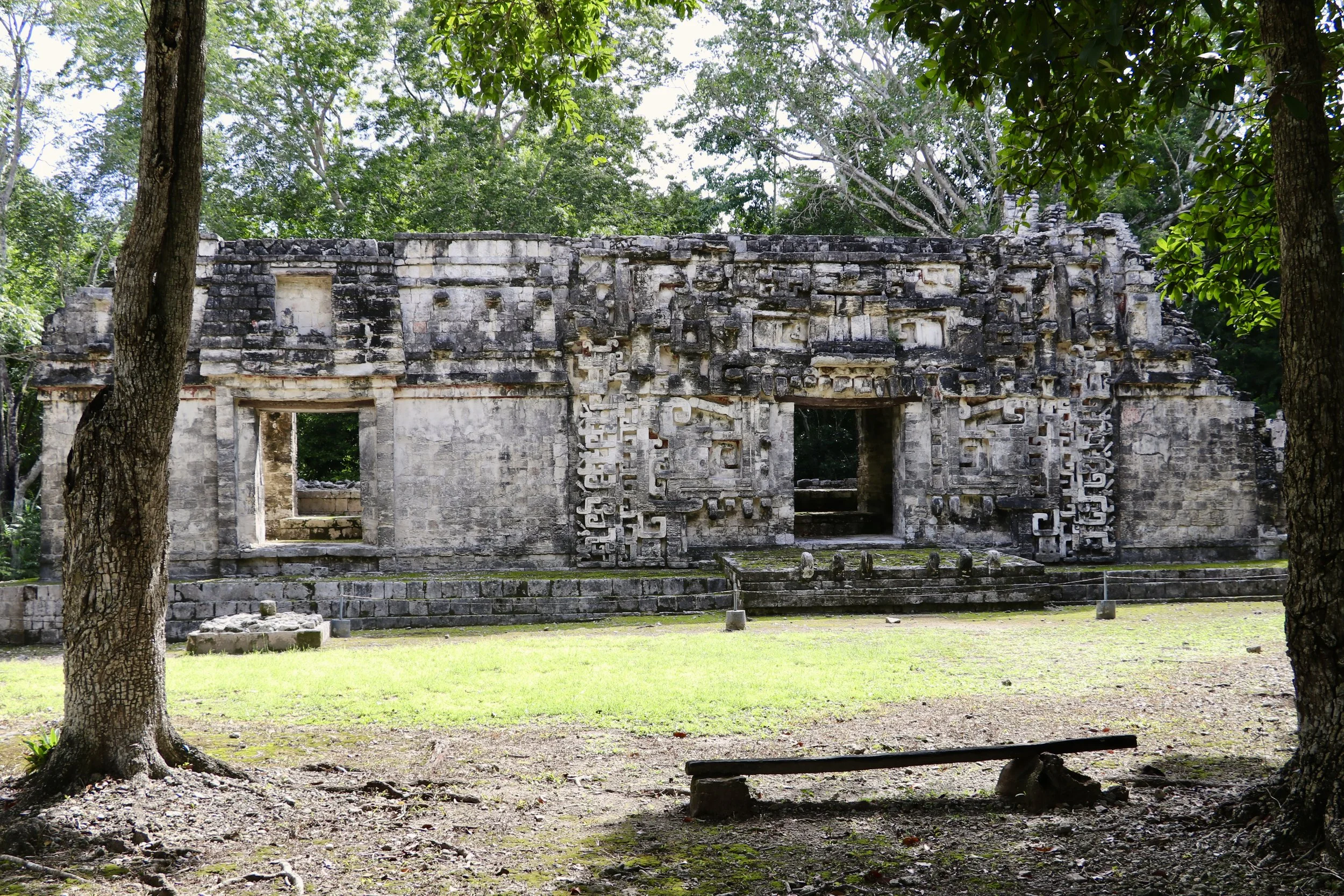
Chicanna
A compact site where Rio Bec architecture meets elaborate Chenes decoration. Its richly ornamented facades make Chicanna one of the region’s most distinctive smaller centers.
Xpujil
Best known for its extraordinary three-towered Structure I, Xpuhil offers one of the clearest and most unusual expressions of Rio Bec architecture.
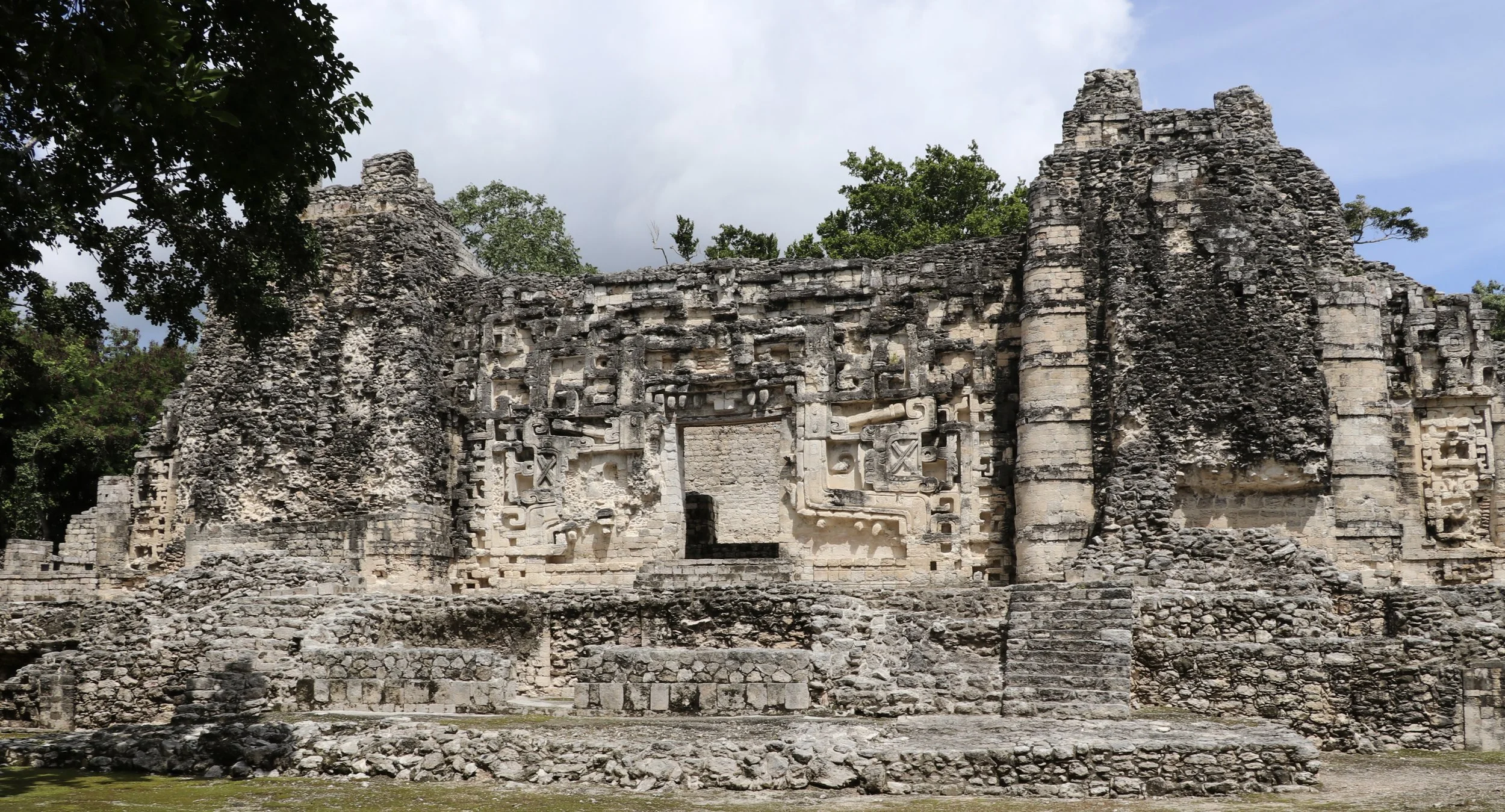
El Hormiguero
Remote and atmospheric, El Hormiguero combines soaring Rio Bec towers with elaborate monster-mask facades, creating some of the region’s most spectacular architecture.
Further sites with Rio Bec influence
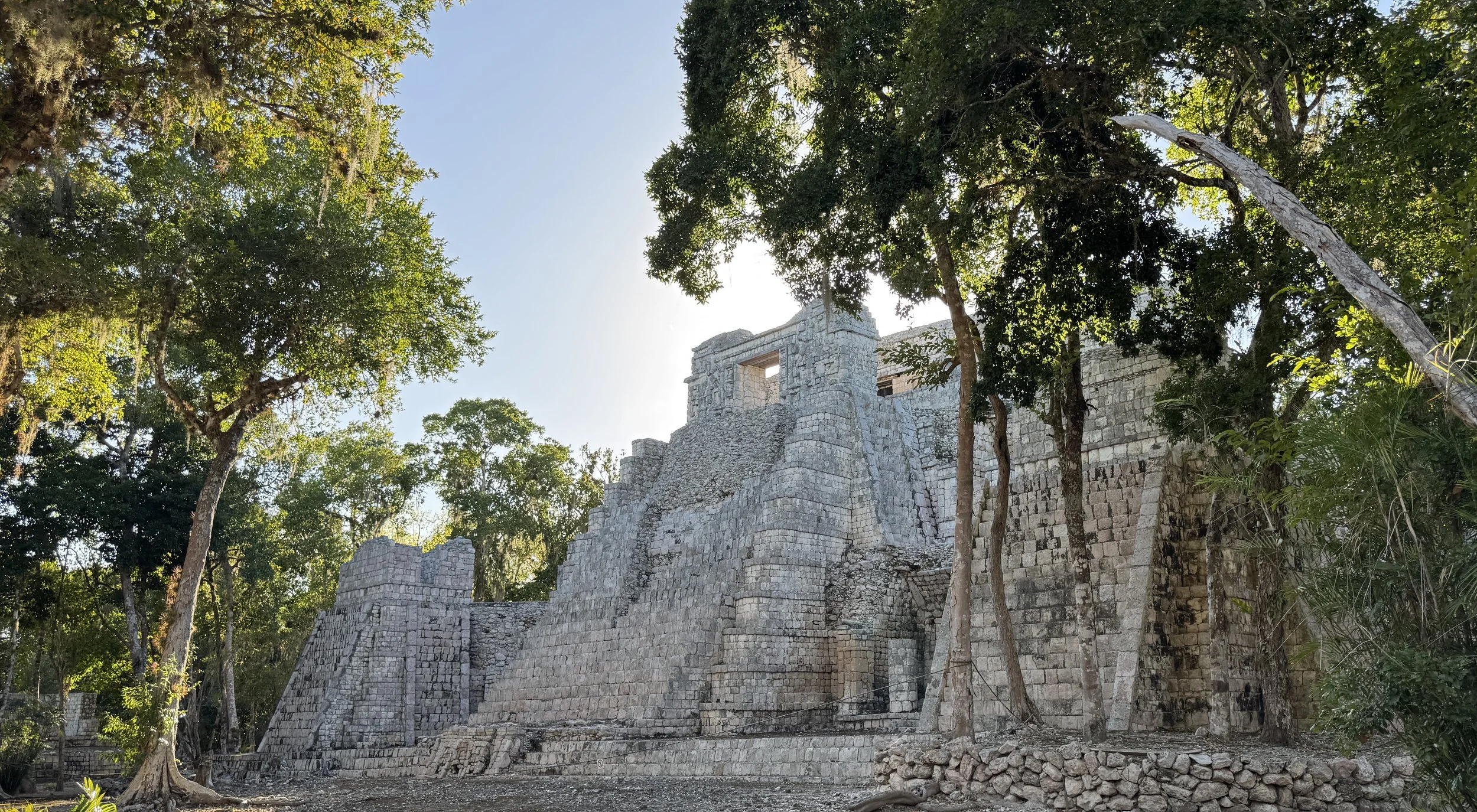
Santa Rosa Xtampak
The great Chenes capital also absorbed elements of neighboring Rio Bec architecture. Its monumental Palace incorporates massive towers, steep stairways and pseudo-temples alongside distinctly Chenes features.
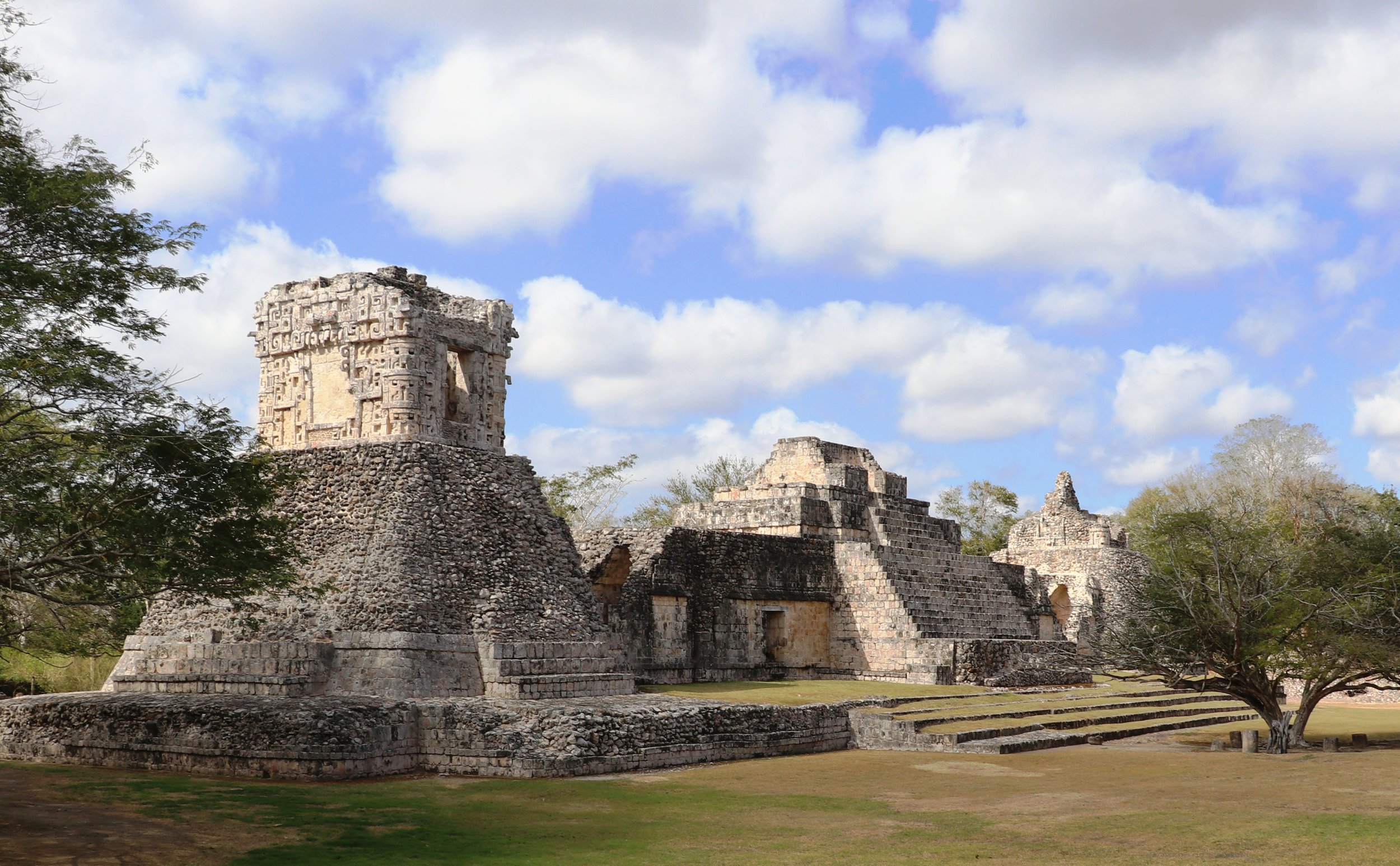
Dzibilnocac
Dzibilnocac offers an especially clear meeting of the two traditions. Its great Palace-Temple combines Chenes decoration with three monumental towers closely related to Rio Bec architecture.
Rio Bec itineraries
1-day itinerary
The Chenes sites
A flexible route through the principal Chenes sites, centered on Santa Rosa Xtampak and its monumental architecture. Continue to Hochob, Dzibilnocac and Tabasqueño for some of the region's finest surviving facades.

7-day itinerary
Through the Hidden Maya World:
Merida to Campeche
A 7-day road trip taking the slow route from Merida to Campeche through the Puuc hills, the little-visited Chenes region and Edzna, showcasing some of the Maya world's finest architecture.
KEEP EXPLORING
Continue through the Maya world
Discover its cultural regions, archeological sites and itineraries.