A Day (or Two) in Tortola, British Virgin Islands.
Beyond the Pier, the Islands in Layers.
Looking for concrete details and tips? Go straight to the Practical Information section.
My two calls in Tortola were part of a three-cruises-in-three-weeks trip in November of 2025. I went from Miami to San Juan, PR with Virgin Voyages and stopped once in Tortola, took a Princess cruise to and from San Juan to discover another side of St Martin, as well as Dominica and Grenada, and finally, sailed back to Miami on my first Explora Journey cruise with stops in St Barths and Tortola, among others.
Day One
I would have loved to write about how I gently awoke on the day our Virgin Voyages ship arrived in Tortola, grabbed a coffee and sipped it on my cabin terrace while the boat was slowly gliding towards the peer… instead, we had already docked when I woke up. So much for a lyrical introduction.
I had never been to Tortola before this trip, but I would go back before long. In fact, my Explora cruise would call again in Tortola a few weeks later, and I used both times to connect with the island.
On my first day in the British Virgin Islands, I wanted to get the lay of the land, and my first stop was Road Town, its capital. It was already pretty hot by the time I stepped off the ship, but my mistake for not setting an early alarm. I would suffer through the heat and not complain.
I had been to a few capitals in the Caribbean islands, so I didn’t expect much from this one. A few duty free shops, colorful houses, maybe a cathedral. In fact, Road Town didn’t fit in the mental picture I had formed. The nicely paved streets, the bigger than average colorful buildings, the pristine-looking commercial facades. I quickly realized this town had money.

Walter James Francis drive in Road Town.
Although the British Virgin Islands’ Gross Domestic Product is very small, given its population of about 40,000 souls, its GDP per capita is pretty high - according to the United Nations’ 2023 numbers, the territory ranks 30th in the world in GDP per capita, just behind Italy.
That a small territory in the middle of the Caribbean could boost such a high number was surprising until I dug deeper. The majority of the BVI’s wealth actually comes from one source: financial services. The island is a well-known tax-haven, or, more euphemistically, a global offshore financial center, thanks to very lax tax regulations and a focus on privacy that allows for, ahem, tax optimization.
The BVI got their start as a tax haven in the 1980s, after the US unilaterally terminated a very generous bilateral tax treaty, which prompted the islands’ government to create a very lax legal framework to attract incorporated business to the islands. In 1989, when the US invaded Panama to oust its ruler, General Noriega, the British Virgin Islands incorporation business started booming. Fleeing Panama, the premier tax haven in the Americas, where the US invasion had created political uncertainty, many companies and wealthy individuals looking to optimize their tax liability chose the next best territory: the BVI.
Today, it is estimated that these financial activities represent about sixty-per cent of the economic output of the islands. I began to understand why so many banks and accountant offices were lining up Walter James Francis drive, Road Town’s main thoroughfare.
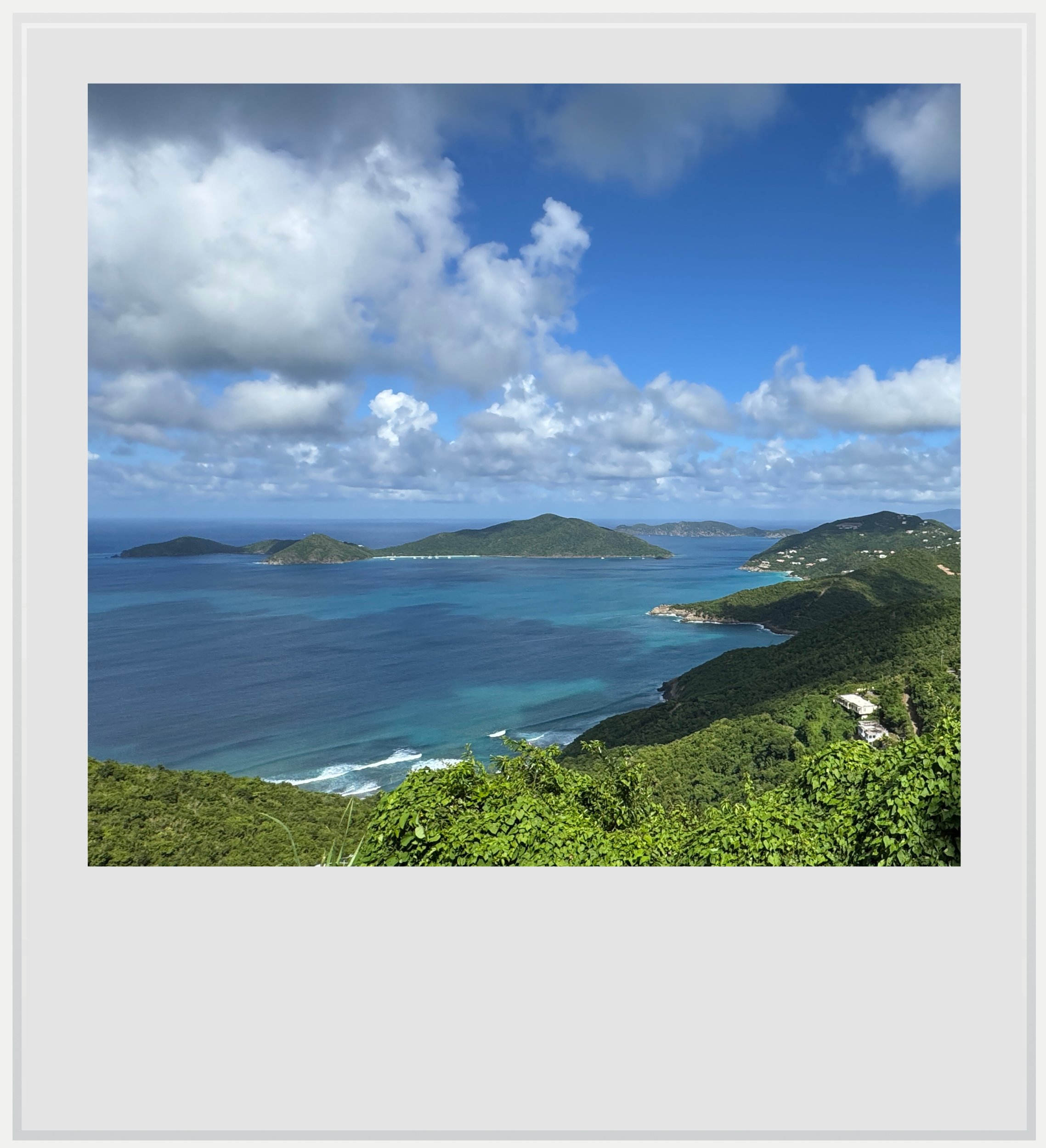
The sight from Ridge Road with Guana island in the background.
I wasn’t in Tortola to research tax avoidance schemes, however. I spent a bit of time walking up and down Walter James Francis drive, past the small ferry terminal where daily boats bring travelers to nearby St Thomas, in the US Virgin Islands, and ended up at Queen Elizabeth II National Park, a lovely green space on the edge of town with a colorful, made-for-influencers Tortola sign. We were only two people in the park that day - so much for going viral in Tortola, I guess - but the view was lovely.
On the way back, I decided to lose myself in Tortola’s back streets, found one leading up the hill by the hospital which afforded me a beautiful view of the bay, and walked back to the ship via the streets less traveled, which decidedly looked much more traditionally Caribbean to me (older, wood-framed houses colorfully painted, with a bar here, a general store there).
I would suffer through the heat and not complain.
Beside this small area by the hospital and on Main street (a narrow, one-way road that was everything but the town’s principal artery), the urban design of Road Town felt much more American than European, with wide avenues made for cars, scattered charmless buildings adorned with big signs surrounded by vast parking lots. In fact, the US influence on the islands is so strong that the US Dollar has been its legal tender since 1959, and not, as I expected, the British Pound.
After a couple hours walking around town in the searing heat, I walked back to the ship, rested for a bit and got ready to enjoy another side of the island - literally. I am no fan of cruise-sponsored excursions. I’d much rather stumble upon a deserted beach, a lovely little village no one passes by than be in a bus with dozens of my fellow travelers stopping every ten minutes or so for a quick photo op. Yet this is exactly what I did in Tortola.
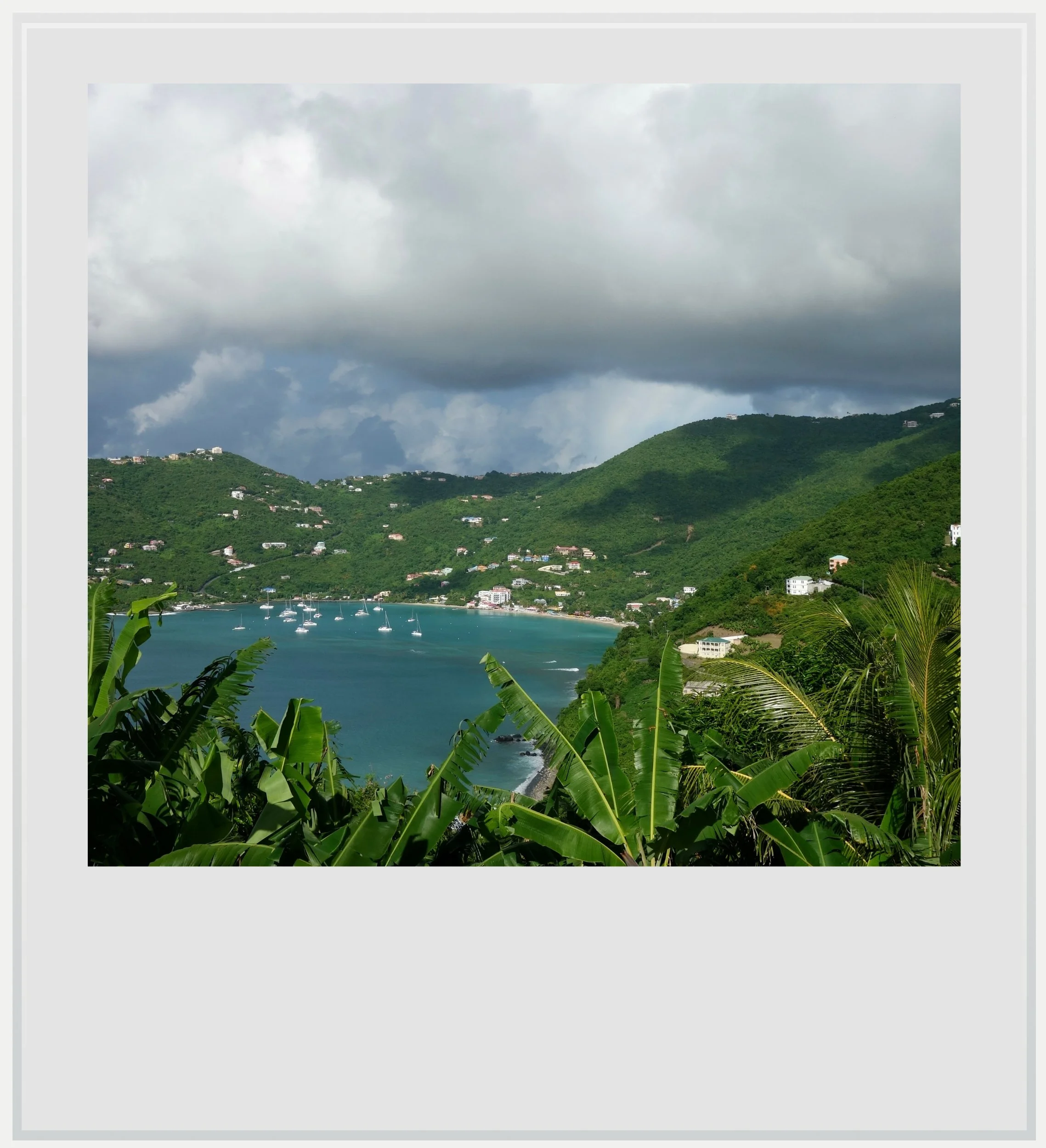
A view over Brewer’s Bay from Rudy’s Bar.
My only excuse was that I had cruise money to spend, and I felt that discovering more of the island was a better use of it than watching it melt along the ice cubes in countless piña coladas. I wasn’t expecting much of my little cruise outing, but was pleasantly surprised.
An open bus picked us up around 11am by the pier, right next to the rather well-conceived duty-free village welcoming cruise guests as soon as they get on land. For the next few hours, we drove around the island, hitting scenic spot after scenic spot and, in a feat of sheer coincidence, bar after bar, set up right next to where tourists got on and off the bus - Virgin Islanders still get a good chunk of their Gross Domestic Product via tourism, and some of them smelled a good opportunity to cash in on the near continuous flow of this trapped audience. I couldn’t blame them, especially after a glass or two of the local cocktail, the painkiller.
I am very partial to piña colada - it may in fact be my Caribbean vacation cocktail of choice. I loved discovering a slightly different take on it. Using dark rum aged in oak barrels giving the drink a hint of smoked flavor, a splash of orange juice and a little nutmeg to give the mélange a little kick, the painkiller felt like an edgier version of a classic. I really enjoyed it.
The tour I picked was called North Side Views and Seaside Landmarks, and a full detail of its stops can be found in the Practical Information section below. Getting around Tortola was lovely, not only to discover the island itself, its hills, and some of its charming beaches, but also because it afforded us a view over the other islands making up the archipelago, from Guana to Jost Van Dyke. Seeing these smaller isles dotting the calm blue waters of the Caribbean sea made me long for a day of exploration on a smaller boat - which I would do on my second day on the island, a couple of weeks later.
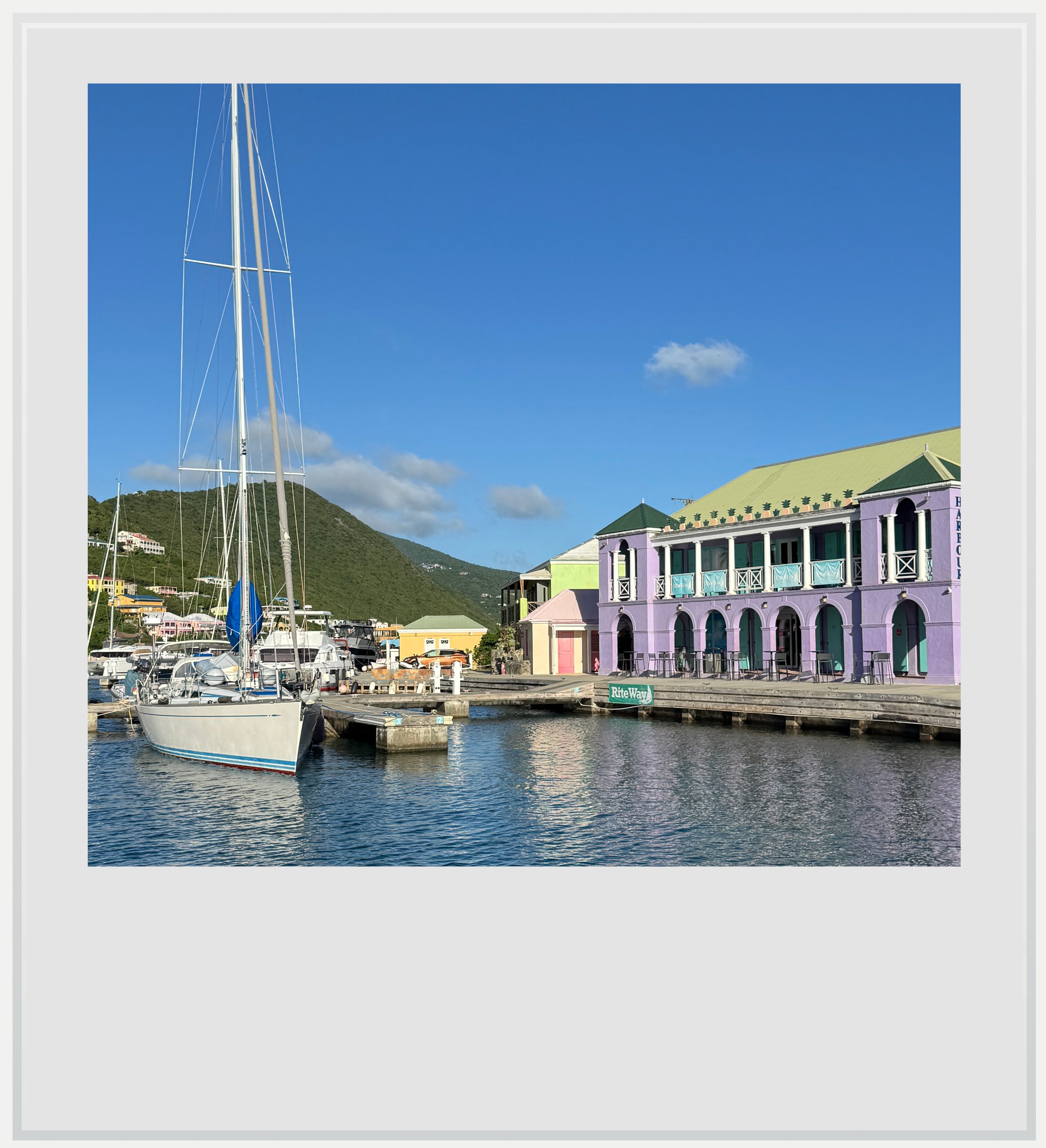
The marina on Frenchman’s Caye.
For now, I was happy to let the buzz of my third painkiller take over me on Frenchman’s Cay, the last of our stops and a lovely little harbor with cute shops and yes, the famous Pusser’s Landing bar.
We drove about thirty minutes back to the boat where I had a late lunch, then went back down to give the duty free stores a chance, and, to my surprise, some of them had more than the usual tourist t-shirts and mugs. If you’re looking for souvenirs, this port could be a better alternative than, say, Philipsburg in Sint Maarten, especially among the shops closest to the ships.
Day Two
I hadn’t planned to spend two days in Tortola, but in the course of cruise planning, it turned out that the two one-way cruises I had picked to leave Miami and come back would both stop there. I didn’t think too much of it - I reasoned that if my first day was meh, I could always stay on board on the second one, but in fact, having sampled a little bit of the Virgin Islands vibe, I was excited to head back out on day two and experience it some more.
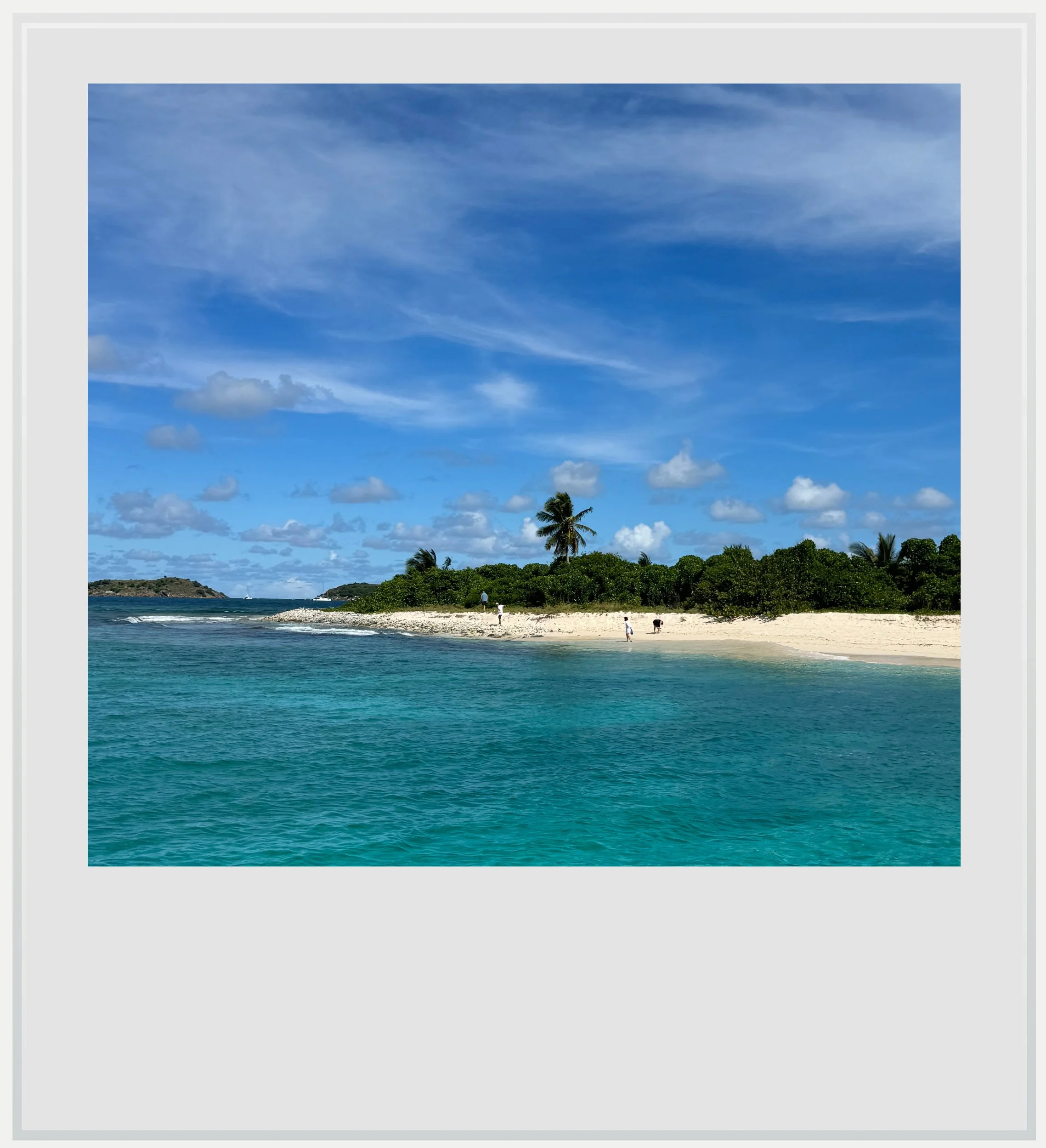
Getting to Sandy Cay National Park.
This second day was different: I was cruising on Explora I with a good friend of mine, and my friend shared a desire to go explore the islands beyond Tortola, so we found an excursion to do just that. This one wasn’t organized by the cruise line, but rather by an independent company and it promised to bring us to two of the gorgeous places, Sandy Cay and Jost Van Dyke island.
This felt like the perfect outing for our day in port. We had to get up at 6.30am -never fun- to be ready and off the ship at 8am and catch our excursion taxi to Frenchman’s Caye, the tiny islet I had visited on day one, from where our catamaran tour to Jost Van Dyke island would be starting.
I was happy to let the buzz of my third painkiller take over me.
The sailing was organized by Aristocat Daysails, a local company (as always, full details in the Practical Information section). I liked that this wasn’t an official, overpriced cruise-sponsored outing, although I would say most of the people with us came from our ship. It didn’t have to be this way, as two other ships were in port that day, the Norwegian Epic and the Royal Caribbean Brilliance of the Seas. We left the dock at 9.30am on a decent-sized catamaran that had room for at least twice as many people, which made the trip super comfortable.
The ride was super pleasant. The two-person crew, James and Maddie were lovely and friendly. We quickly hoisted the sails and aimed first at a small island between Tortola and Jost Van Dyke, Sandy Cay. Previously owned by the Laurance Rockefeller estate, the island has been a national park since 2008, and showed as a picture-perfect tropical island when we got close to it: pristine, with a white-sand beach, gently waving palm trees and surrounded by bright blue, almost transparent waters.
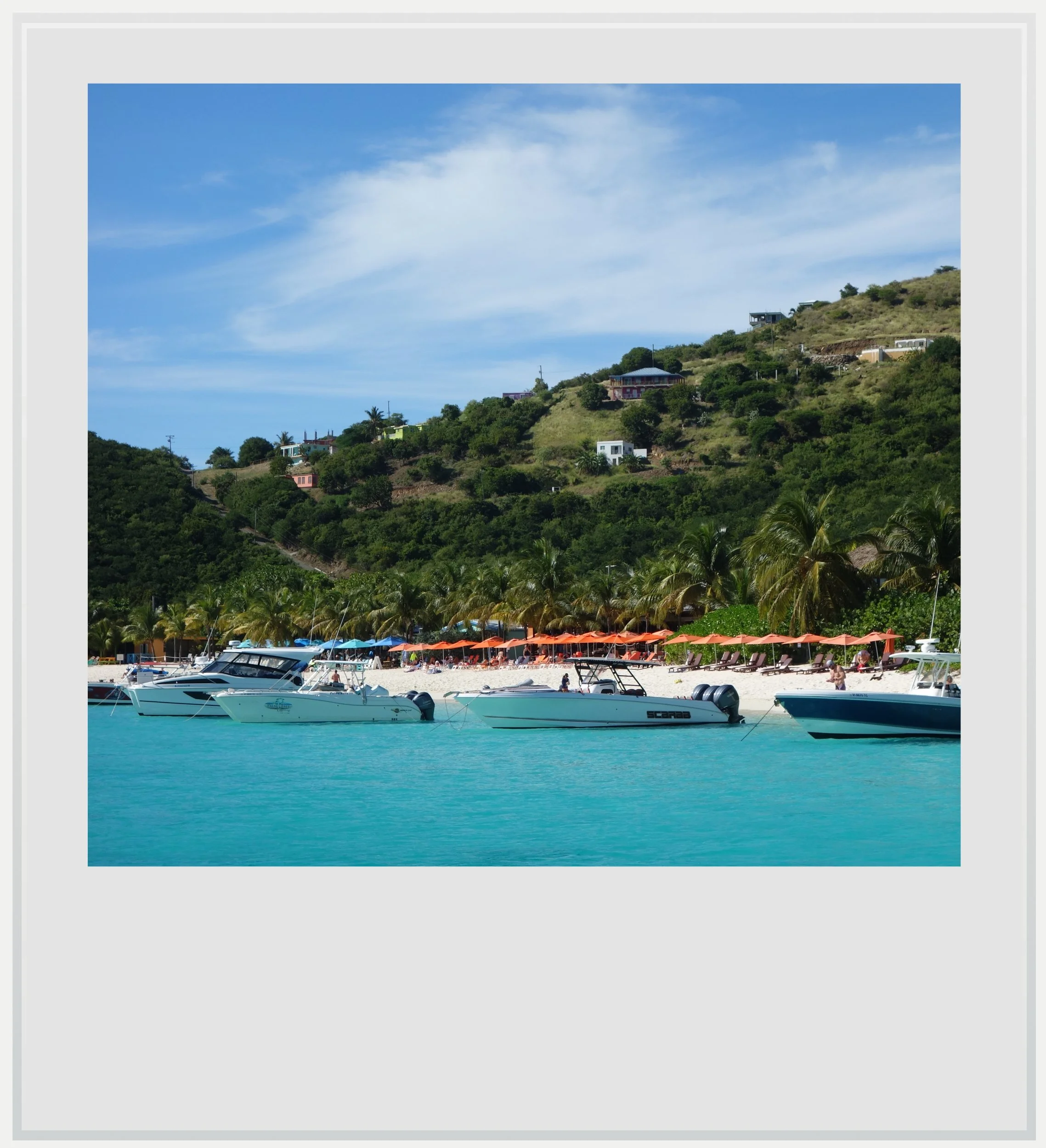
White Bay on Jost Van Dyke island, seen from our catamaran.
We spent about 45 minutes on Sandy Cay, missed the one-trail going through the 14-acre island, as we were too busy taking photos of the incredible beach, and swam back to the catamaran to sail to our final destination of the day, Jost Van Dyke, a much bigger island located about 5 miles (8km) north of Tortola. It is said that its name comes from the 17th-century Dutch pirate Joost van Dyk, and you’ll hear this countless times on the island, but the story is fuzzy, and there are no definitive proof this is how the island was named.
In the mean time, we dropped anchor super close to JVD, near White Bay beach, on the southern side, and ate a good lunch prepared by the catamaran crew, before swimming to shore to spend some time on another incredible-looking beach. This one was much more crowded - people love to come here for the day and hang out at one of the bars dotting the shoreline, the Soggy Dollar being the most famous of all of them.
It took about an hour to sail back to Tortola, and after another cab ride, we were back at the cruise ship pier around 4.15pm, with time to spare before the last tender boat, set for 5pm.
I was happy to have the opportunity to discover the BVI beyond Tortola. I would certainly recommend a catamaran outing like we did, for the views, the beaches and the quietness of tiny Sandy Cay.
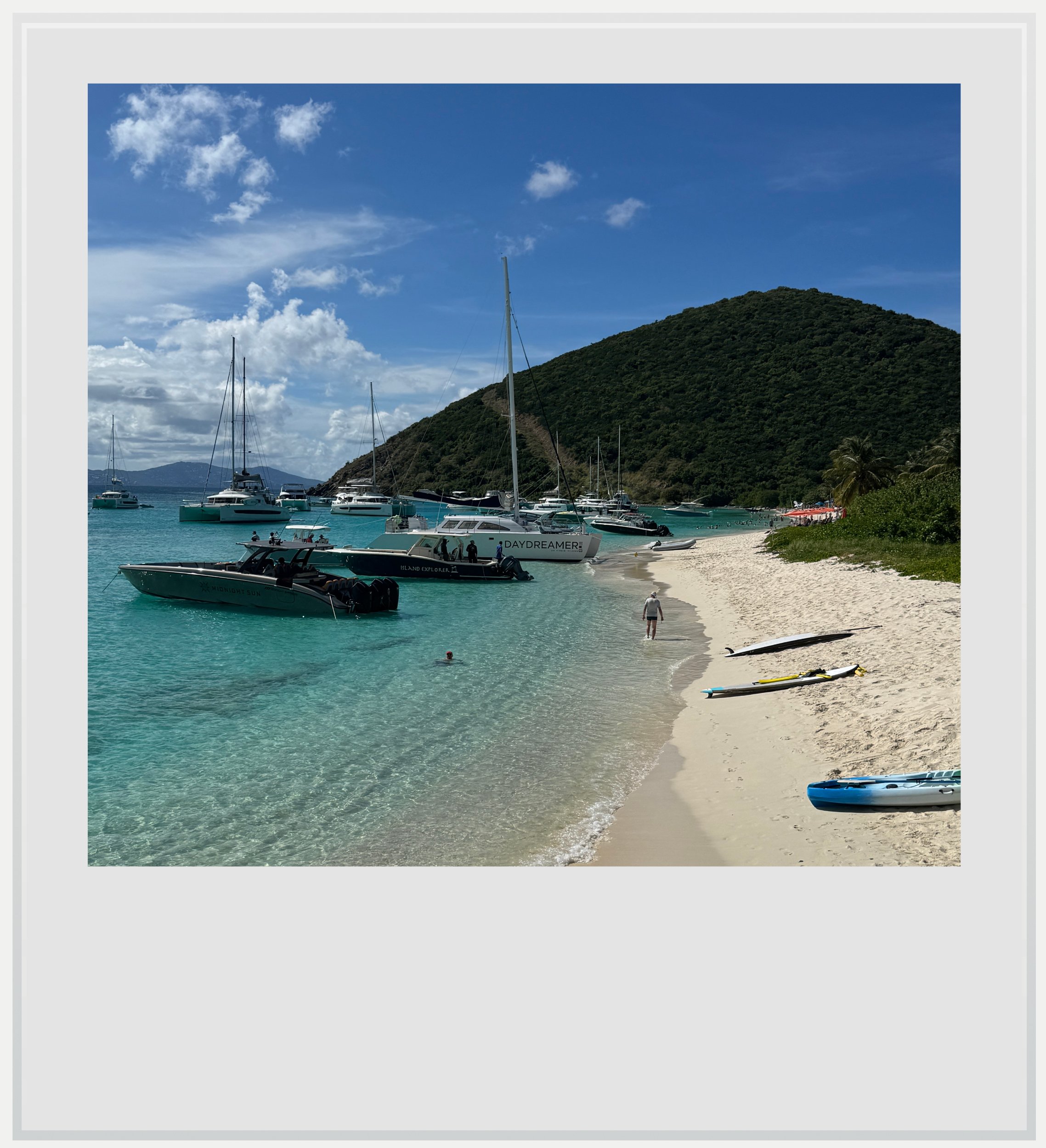
White Bay beach on Jost Van Dyke island.
What stayed with me
As I was chatting with a fellow traveler on the catamaran, she shared she was staying one week on Tortola and had decided to hit one island a day. She knew that by the time she left, she would only have scratched the surface of all of what the BVI have to offer. The multitude of small cays scattered around what looked like a tranquil, smooth Caribbean sea transported me back to the pirates era, and I dreamed I could explore all of these at my own pace, one day, with a painkiller in my hand.
Practical information
(everything you wanted to know about Tortola - updated January 2026)
In a nutshell
Tortola, the largest of the British Virgin Islands, is a lovely stop on any cruise itinerary, or a Caribbean destination in itself. Beyond Tortola and its views, neighboring islands with pristine beaches are within easy reach and can make for a pleasant outing.

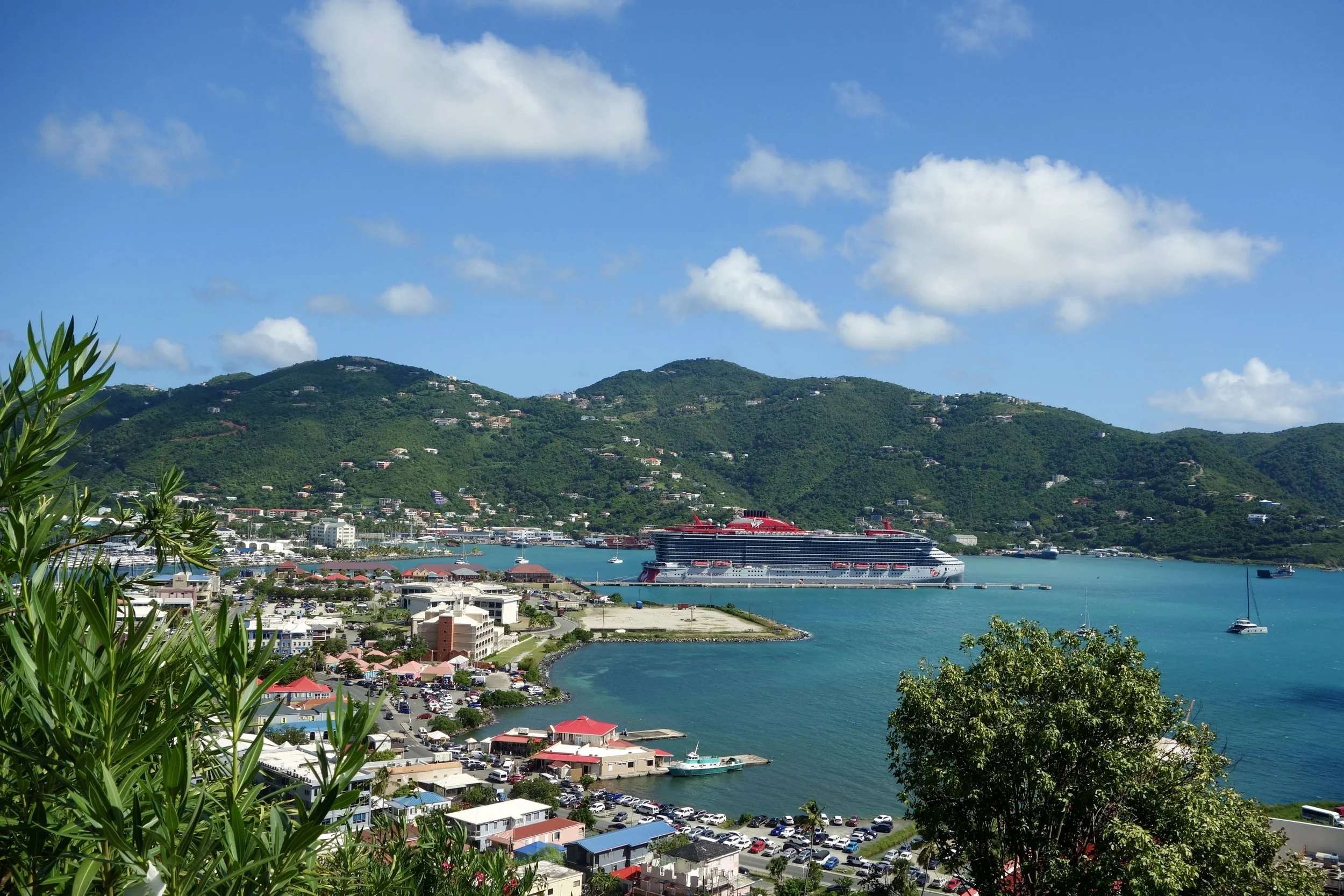
A view of Road Town from Ridge Road on Tortola.
Getting to Tortola
How to get to Tortola from the United States: most tourists will visit Tortola as part of a cruise itinerary. In fact, Tortola saw almost 70 cruise ships dock in December 2025 - that’s more than two per day. If you’re not coming on a cruise, you will most likely fly through Miami (MIA), where American Airlines offers between one and three daily flights to Tortola (airport code EIS), or San Juan (SJU), where Cape Air and InterCaribbean airlines offer about 10 flights a day to Tortola, some of them on tiny planes. Flight time from Miami is three hours, and from San Juan, 40 minutes. It is also possible to connect in St Thomas (STT), in the US Virgin Islands, with Cape Air a few times a day.
The last option is to take a ferry from either St Thomas or St John, in the US Virgin Islands. There are four rotations a day between Tortola and St Thomas, and one a day with St John. Ferry schedules and operating companies are available here.
When to go to Tortola
The best months weather-wise to visit Tortola are during the dry season, between December and April, with February and March being the driest months. This is also peak season so the tiny island may be a little crowded and prices a tad bit higher than the rest of the year. This is especially true around the December holidays.
November and April are good shoulder season months, with pleasant weather and fewer crowds.
It is possible to visit the island year-round - in fact, more than 10 cruise ships are scheduled to dock in Tortola in June 2026, but chances of rain are much higher, and the BVI are in the hurricane danger zone (the Atlantic hurricane season runs form June 1 to November 30, with the highest probability of damaging hurricanes in September).
I docked in Tortola twice in November and beyond the cruise ship tourists, there weren’t many vacationers on the island, so it felt relatively tranquil. It could be important to check Tortola’s port schedule - if a giant cruise ship is on the planning the same day you’re in town, it may feel busier (link here).
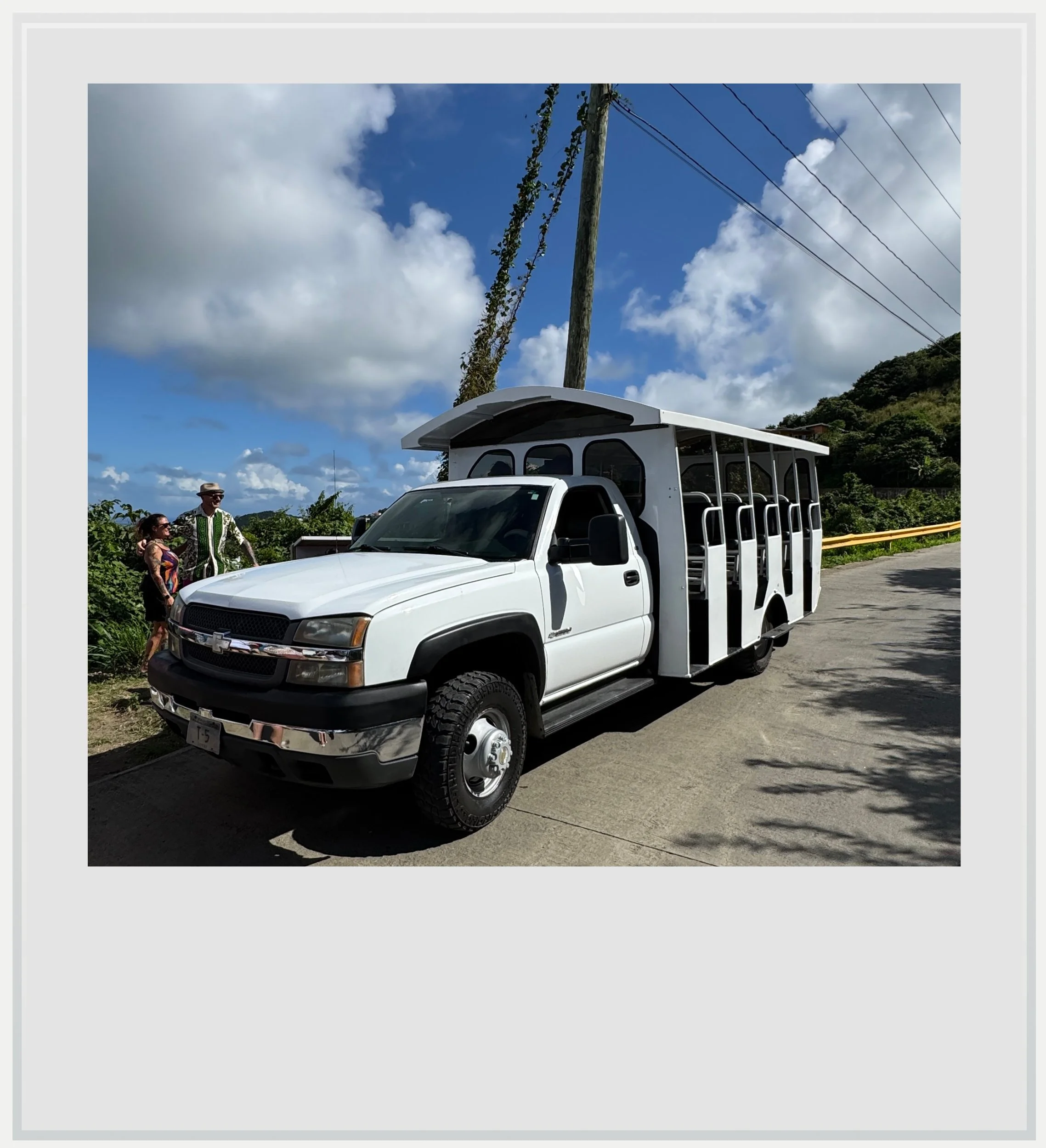
Our tour bus at the first stop on Ridge Road in Tortola.
Tours in Tortola
Many tours are available on Tortola to help you discover the island, or bring you to neighboring ones. Depending on time, preference and budget, either of the below could make sense. I enjoyed both for different reasons. Note many people consider a trip to the Baths, near Tortola, to be the one thing to do on the island. Being willing to try something different and a bit less crowded, I opted for other tours.
Island tour
I did this tour via the Virgin Voyages excursion deck, but many independent minibuses wait at the end of the Duty Free mall (here) to pick up passengers for similar ones, with destinations and prices listed. As such, you can wing this and decide day-of what you would like to do.
The tour I picked was called North Shore Views & Seaside Landmarks, and lasted 4 hours. It cost USD80 at time of publishing and included the following:
a stop on the aptly named Ridge Road, to enjoy a panoramic view over Josias Bay and Guano Island in the distance.
a slow pass (without stopping) by the Fahie Hills murals, a somewhat touristy visual story about life on the island
another stop on Ridge Road, this time to enjoy the view over Road Town and the other side of the island (next to a bar with a nice viewing platform)
a stop where Ridge Road and Cane Garden Bay Road split, specifically by Rudy’s Bar, for a beautiful view over Brewer’s bay (and another painkiller, for the rum-inclined)
a stop on North Coastal Road to enjoy a light local soup - I could have done without this stop to be honest, but it only lasted twenty minutes
a final stop on Frenchman’s Cay, where we stayed for a while in the lovely harbor, enjoying one last painkiller at Pusser’s Landing (this one included in the tour price) and a view over the small port
Minibuses by the Duty Free mall charge USD30 for a three-hour tour, including one hour at the beach. It doesn’t offer the same stops but can be a more economical alternative. Buses leave frequently (when full).
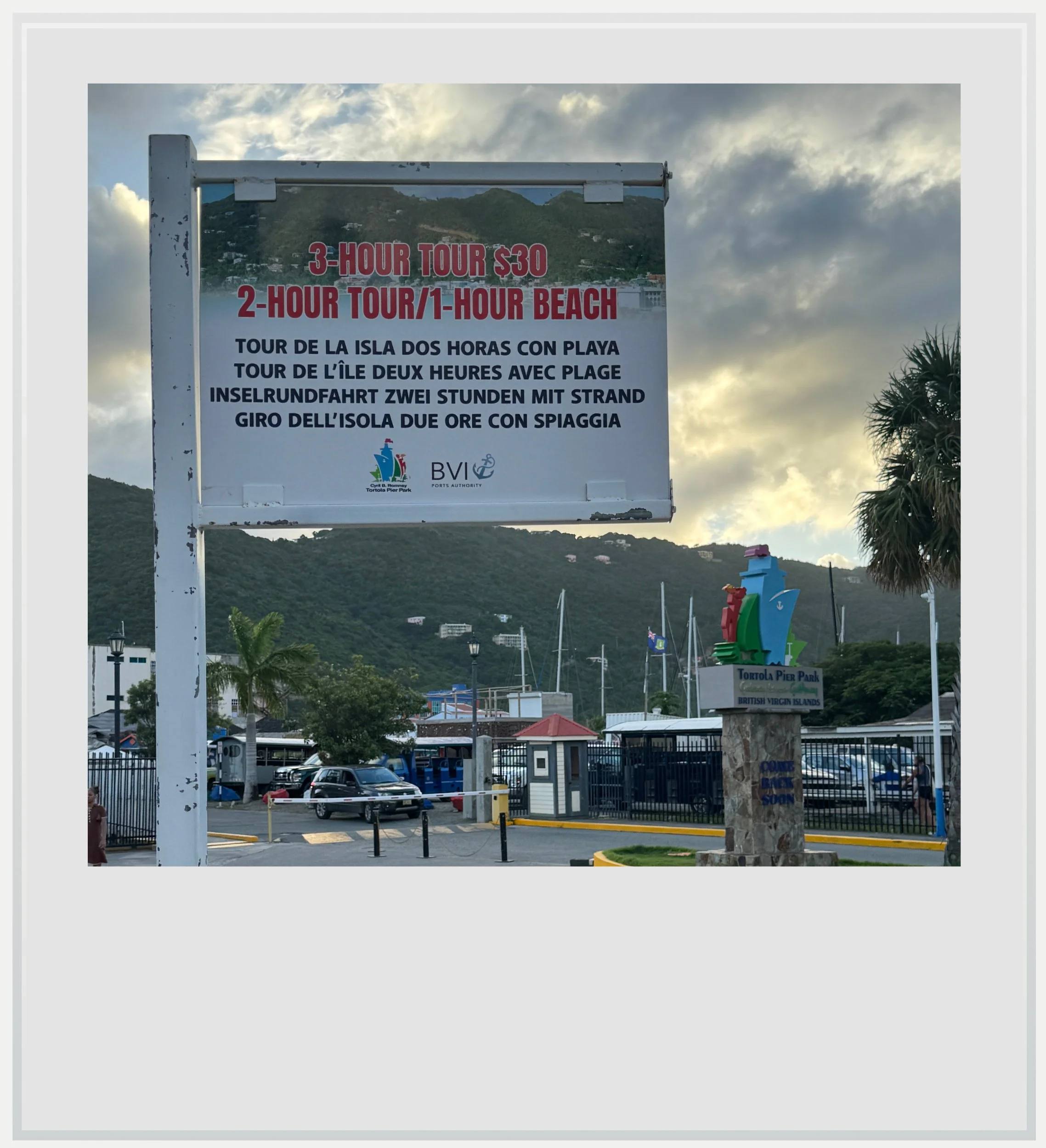
A bus stop sign for excursions by the duty-free mall in Road Town.
Sailing to nearby islands
Sailing tours can be set up via the cruise line’s excursion desk, but I preferred doing my own research and found Aristocat Daysails, with a five-hour catamaran trip calling at Sandy Cay national park, a small island with a pristine beach, and White Bay, on Jost Van Dyke island, an idyllic but somewhat busy beach , home of the famous Soggy Dollar bar. They also offer trips to Norman island. You have to enter the date of your Tortola stop first, so they can show you what options are available on that day.
The cost is USD215 per person (USD 135 for children) and included a taxi ride to and from the cruise ship pier.
Tour starts at 9.30am in Frenchman Cay’s marina, which means an 8.30am taxi pick up at the pier. The tour ends at 3.30pm. We were back at the pier at 4.15pm, for an all aboard time of 5pm.
The crew was super friendly and fun, always willing to engage, help with photos or make you another cocktail. A nice lunch taken on the boat before getting off in White Bay is also provided.
Safety in Tortola
The British Virgin Islands are labeled a level 1 territory by the US Department of State, meaning there are no specific actions to take. This is as safe as it gets, level 1 being the lowest level possible, meaning this is a safe place to visit.
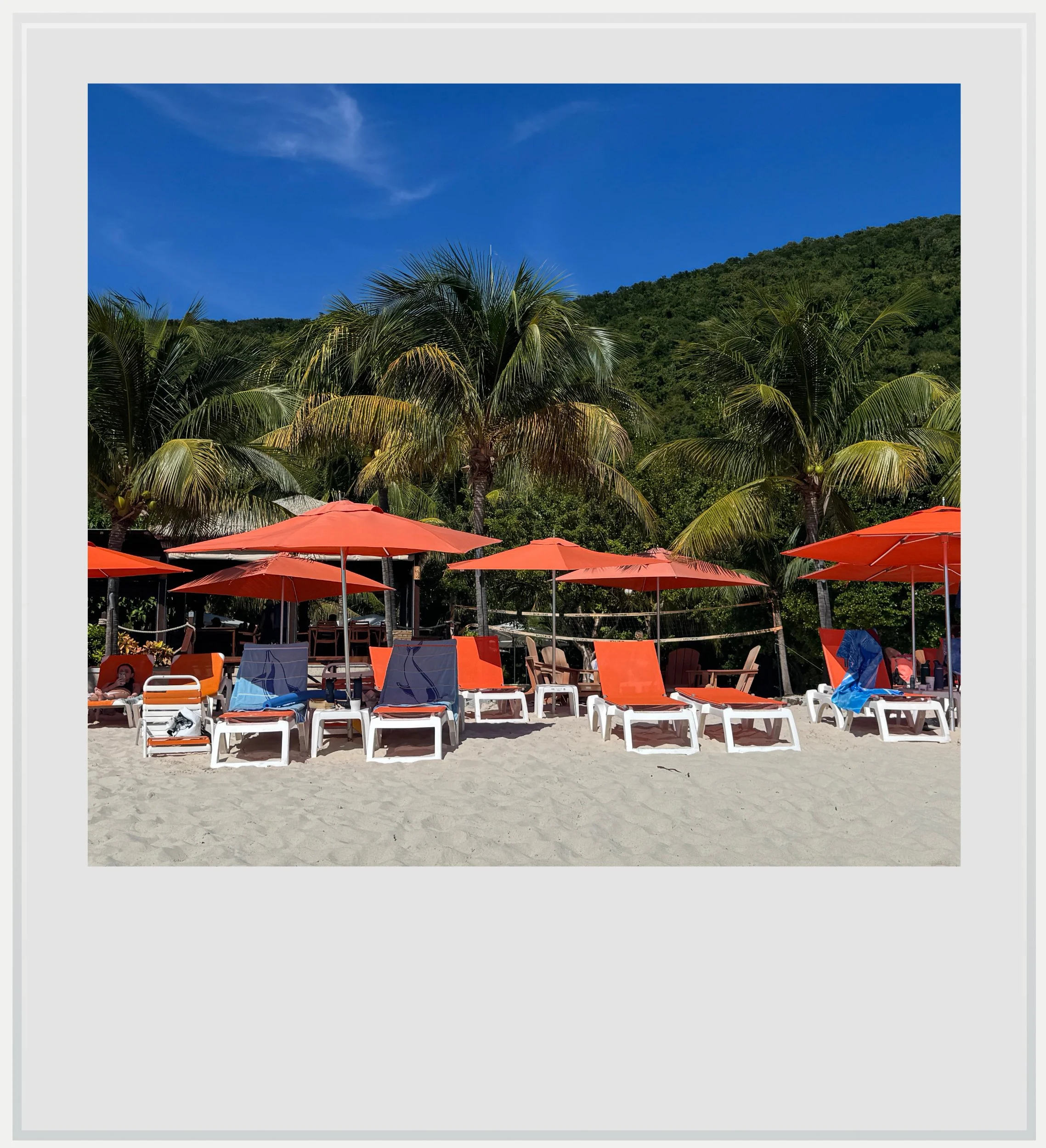
A beach club on White Bay beach, Jost Van Dyke island.
Keep in mind these travel tips
Due to commercial links with the US and the proximity of the US Virgin Islands, the British Virgin Islands have been using the USD as their currency since 1959. Credit cards are widely accepted in the territory even for small amounts - it was never an issue for me, but I only used my Visa card, I read reports AMEX acceptance wasn’t as widespread.
It is easy to rent a car on the island but people drive on the left side of the road with left-seat steering-wheel US-made cars, so this can be treacherous if you’re not used to it. Add to that many roads are winding and narrow due to terrain, and you’ll understand while driving in Tortola isn’t for everyone.
SPF will be your best friend. The UV index may be low in the morning and evening, but during the day, it gets pretty high.
Every photo caption appears if you hover over it (on a computer) or click on it (on a smartphone).
All photos are mine and copyrighted.