A Day in Grenada.
The Spice Island wows with natural beauty and quiet authenticity.
Looking for concrete details and tips? Go straight to the Practical Information section.
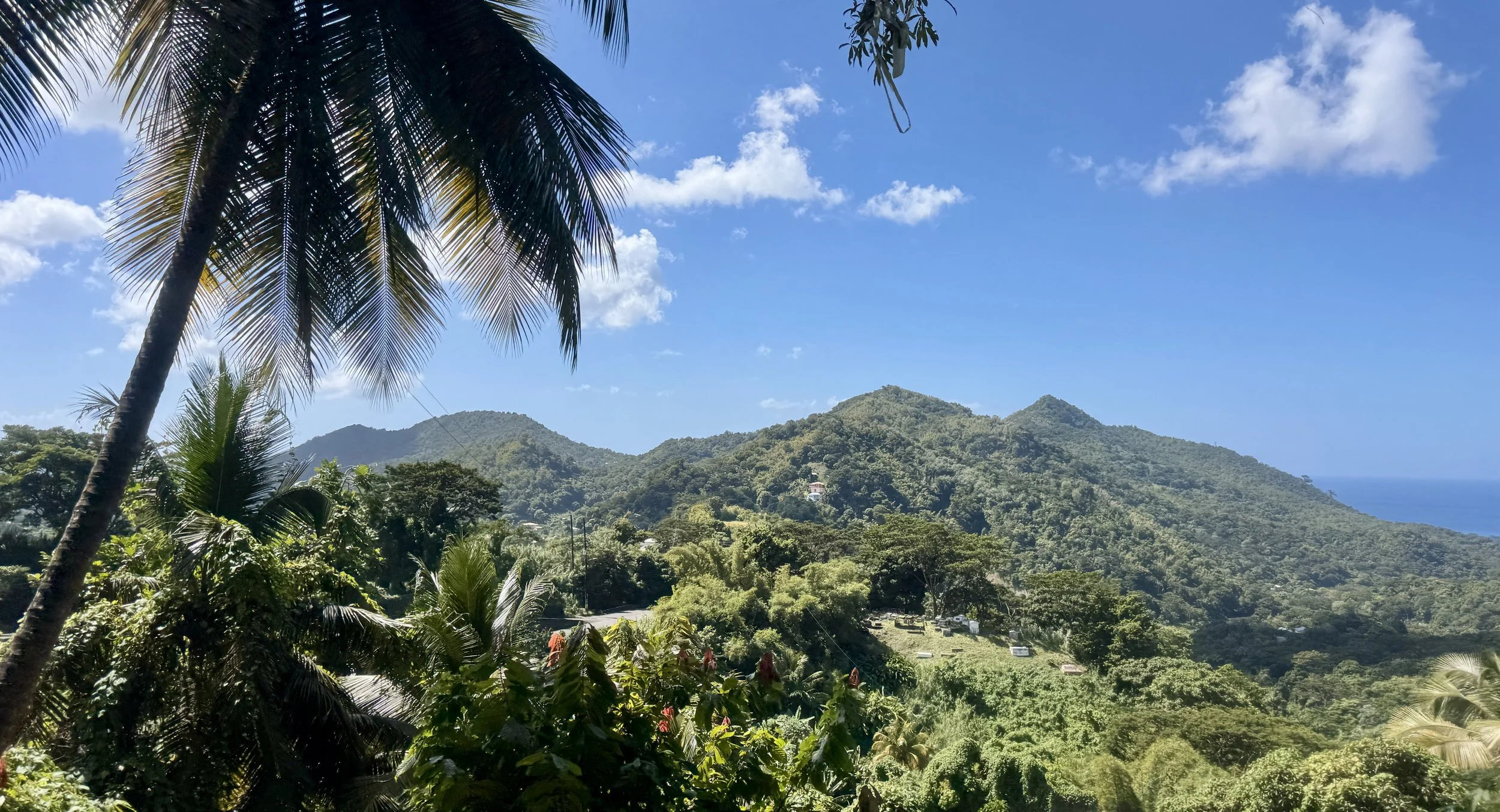
As our minibus was slowly crawling up the sinuous mountain road, we veered to the right and, on my left, a whole valley appeared, reaching almost to the Caribbean Sea, far away. For a second, I had to convince myself I hadn’t been teleported to Hawaii. The jagged peaks, the lush green scenery, the scattered houses peeking through the foliage… it just looked like a miniature Kauai to me.
Yet I wasn’t in the middle of the Pacific Ocean, but on the tiny island of Grenada, south of St Vincent and the Grenadines, the southernmost island I had ever been to in the Caribbean Sea. It wouldn’t be honest to pretend I arrived on Grenada by chance. In fact, I had specifically picked the cruise I was on because it hit two Caribbean island nations I had never been to, that I was excited to check out, Dominica and yes, Grenada.
Funny enough, Dominica and Grenada ended up having a fair bit of common history. Both islands were first claimed and colonized by France towards the end of the 16th century. They also became British together, as a consequence of France’s defeat in the French & Indian War in 1763. Finally, they gained independence roughly at the same time, Grenada in 1974 and Dominica in 1978.
Another geopolitical fact ties the two countries together. In the early 2000s, after a lot of lobbying by China, both Dominica and Grenada ceased to recognize Taiwan and pledged to abide by the One China doctrine, whereby recognize Beijing’s sovereignty over the Republic of China (Taiwan). The concrete consequences of this shift were obvious in both countries, but nowhere as much as in Grenada, where China funded the rebuilding of the country’s massive cricket and soccer stadiums, north of the capital, St George’s.
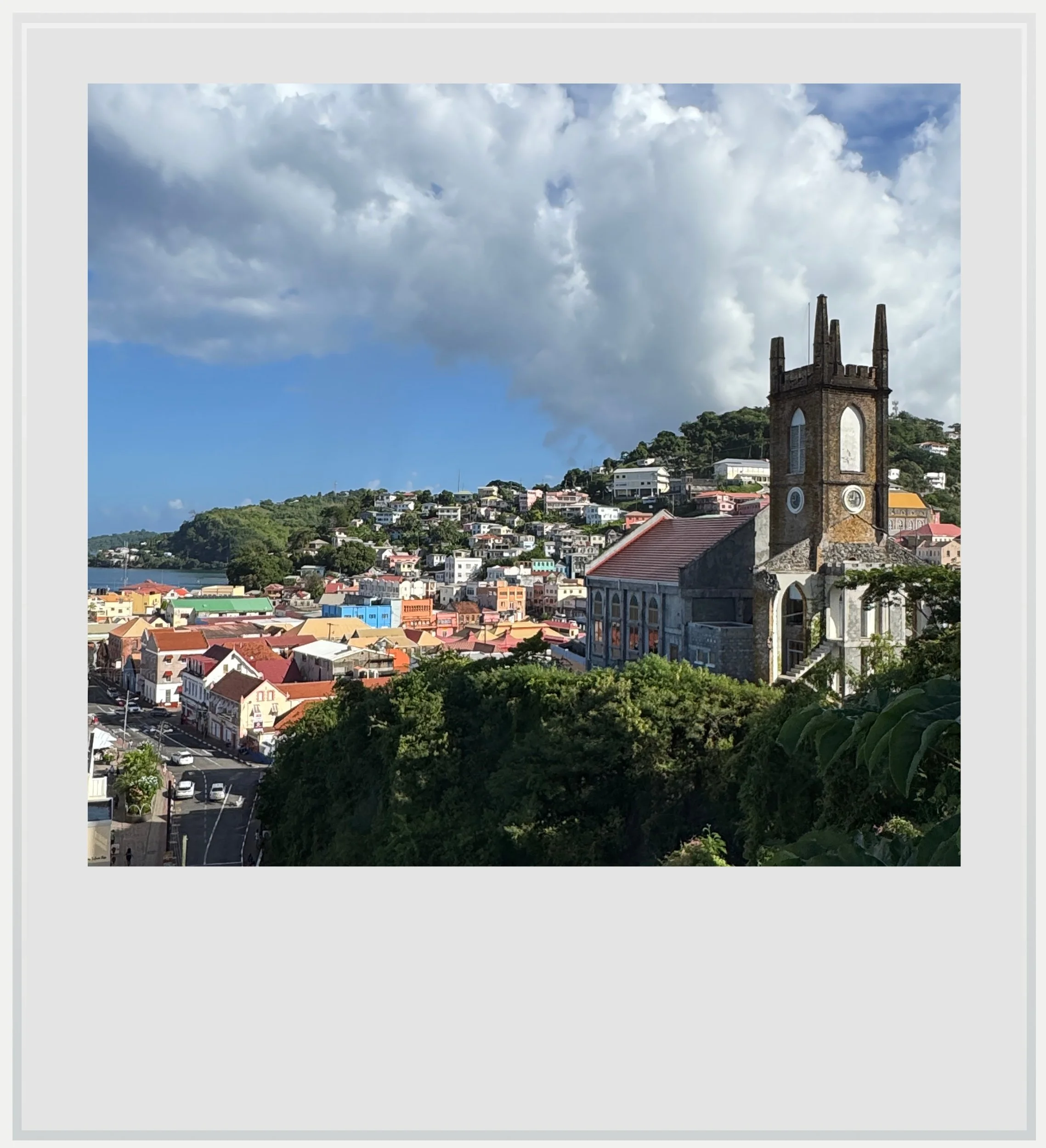
A view of St George's, from its hospital.
Grenada is a great showcase of this mixing of influences throughout its history. Initially populated by the Carib people, it saw its culture being shaped over several centuries by French colonists, African slaves, British settlers and more recently, Chinese investments.
Where Dominica and Grenada differ, however, is in the ways America’s foreign policy influenced each country’s history. In 1983, after a leftist coup brought the Marxist faction of the New Jewel Movement to power in Grenada, the United States organized a military operation to restore a regime they felt would be less friendly with its own foes, namely Cuba and the Soviets. Operation Urgent Fury, ordered by President Reagan, was a success and is commemorated yearly in Grenada on October 25, as Thanksgiving Day.
I had to convince myself I hadn’t been teleported to Hawaii.
As a town witness to this tumultuous history, St George’s, the capital, seemed unlikely quaint. Coming in from the sea, I first saw the northern part of the settlement, with its square blocks of tight colorful houses built on a hill. Once I stepped ashore and walked up to Fort George, I realized why travel magazines sometimes dub St George’s “the most beautiful capital in the Caribbean”: hidden from view by the peninsula on which Fort George was built, appeared a small, horseshoe-shaped harbor, surrounded by rolling hills. It felt picturesque in the best way possible, almost unexpectedly so. Named Le Carénage, a French word meaning place to moor boats to protect them from the open sea, it reminded me a bit of a miniature version of Marseille’s old port.
Having seen Le Carénage from above, I quickly found my way to it on foot - which wasn’t as easy as it sounded, for the numerous hills in St George’s made the town look and feel like San Francisco - and sometimes, the shortest route from A to B didn’t look at all like a straight line.
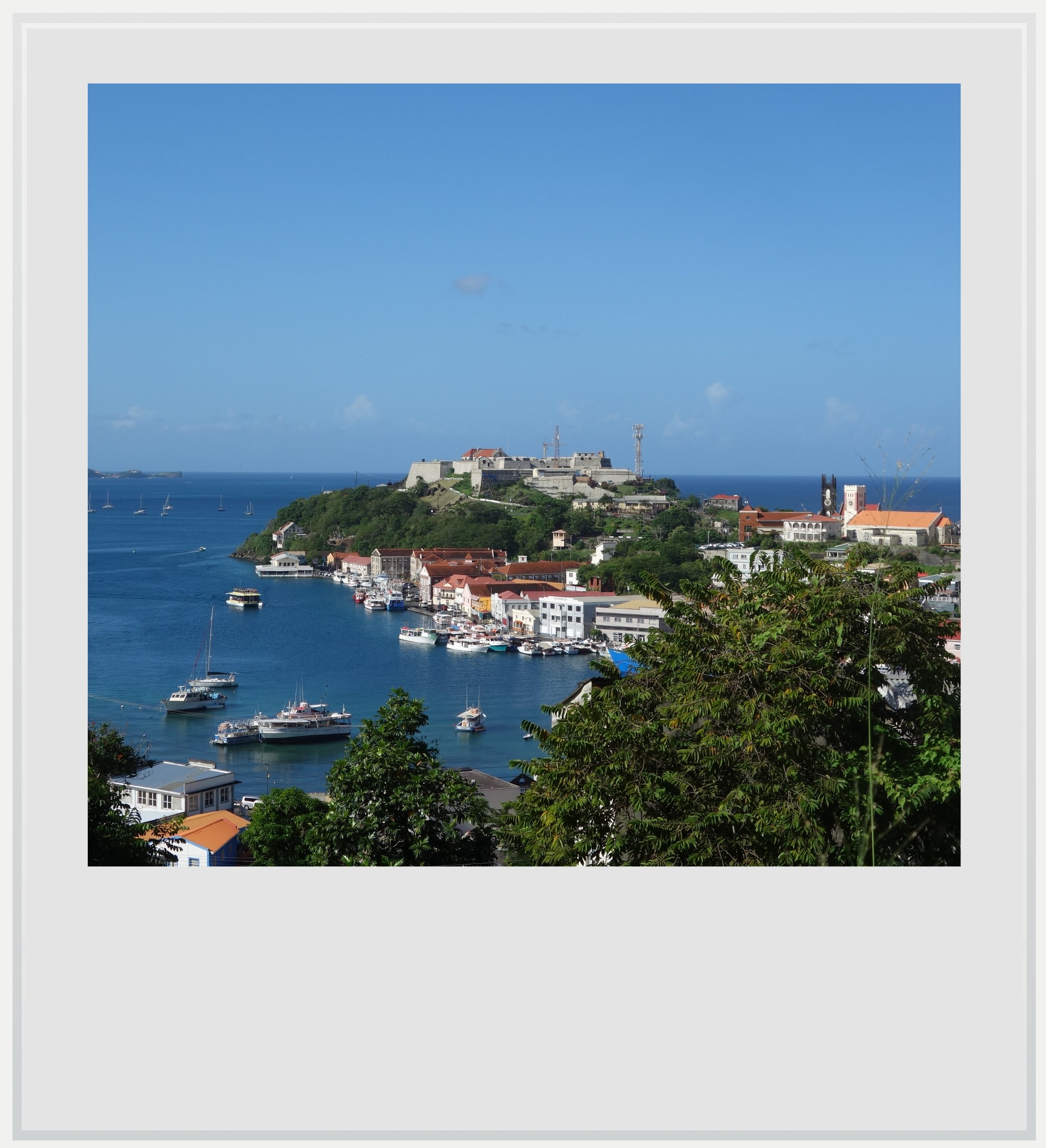
Le Carénage with a view of Fort George in the capital of Grenada.
It wasn’t even 9am and the city was already abuzz with morning traffic. A female police officer was directing traffic from an old wooden box at an intersection, seemingly oblivious to the concert of car horns around her. Most streets in St George’s lack a proper sidewalk but do feature a very deep gutter to handle intense rain showers, and with many cars parked somewhat randomly, it felt like a challenge to jump around to avoid traffic.
Following a hunch, I turned left into stairs on Cooper Hill, which led me, after a tough climb, to Woolwich road, from which I enjoyed gorgeous view of the tiny harbor, walking back towards the fort.
I had decided to walk all the way to the cemetery, on the north of town, to catch a glimpse of the Chinese-built stadiums, and to do that, passed by St George’s busiest area, full of shops, schools and churches. Built just above sea level with Granby street as its spine, this was really the heart of town, leading to the tourist mall anchoring the cruise ship docks. Another ship was in town with us, the Azamara Quest, which I had already seen during my previous cruise, in St Maarten, and the 3,500 or so cruisers from both ships were probably helping in making the town very lively.
I had been walking in town for about two hours, and to be fair, felt I had seen most of it. The heat was starting to feel very intense, so I decided to activate my #1 Caribbean island strategy of walking early morning and late afternoon, and seeking shelter in bus for the rest of the day.
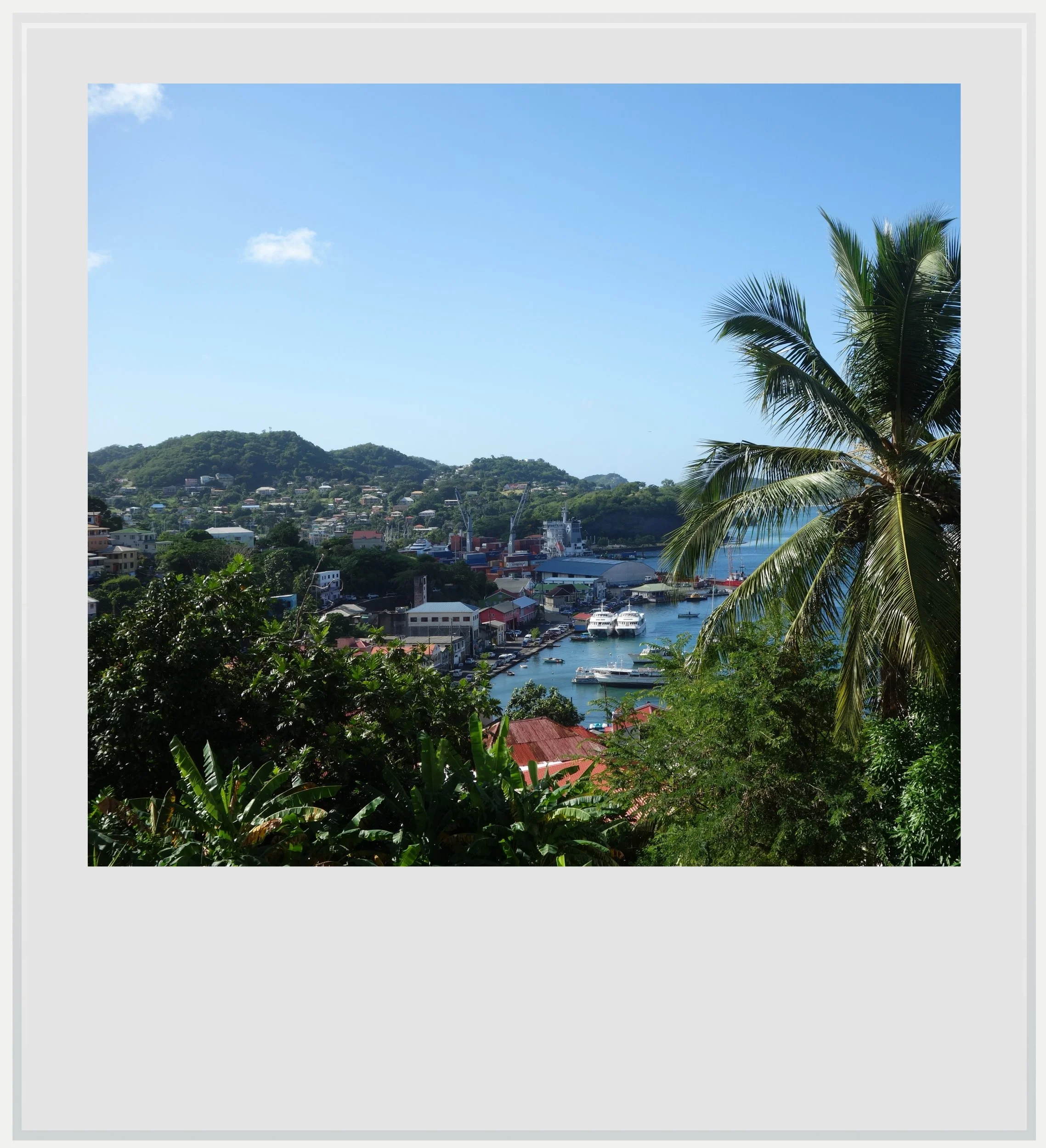
St George's Carenage - the protected harbor.
There were plenty of tour vendors in the mall by the piers, but, unlike in Dominica, my timing wasn’t right. I was the first one to show up for a tour that needed at least 8 passengers, and the prospect of waiting a long time for the bus to fill deterred me. Instead, I went the easy route and did something I usually try my hardest to avoid: I booked a last-minute tour from the cruise ship’s excursion desk.
Cruise-tour excursions are, for me, one of the parts of a cruise I enjoy the least. If I am already spending most of my day on a ship with hundreds or thousands of people, I yearn to explore on my own when I am on land. I don’t love sharing the sights with 40 or so people from the same cruise on the same bus or worse - getting to a site and realize a few other tour buses are already there. So much for exploring the roads less traveled.
I realized why travel magazines sometimes dub St George’s “the most beautiful capital in the Caribbean”.
This wasn’t my first cruise excursion. To mitigate the issues above, I always look for two things: first, tours that include a little bit of walking, which filter out the people for whom experiencing an island from the windows of a bus, without ever getting off, is the perfect mode of discovery. Then, I strive to find tours that do not leave early: it gives me the opportunity to visit on my own terms in the beginning of the day, and ensure the rush of tourists happens beforehand, so that when my tour gets to the sights, the biggest wave has come and gone. A lot of cruise tours will leave early to bring people back on the ship around lunchtime, and therefore, any tour leaving from 11am onward is likely to encounter much less people at whatever stop it makes.
The tour I had picked was called Best of Grenada, and it seemed to hit a lot of the key points of interest on the island. It was actually a nice tour, with the usual caveats that I felt we never really stopped at a place too long, and the guide’s commentary was lacking in historical and cultural context, but aside form getting my own accredited private guide, this was the best I could do.
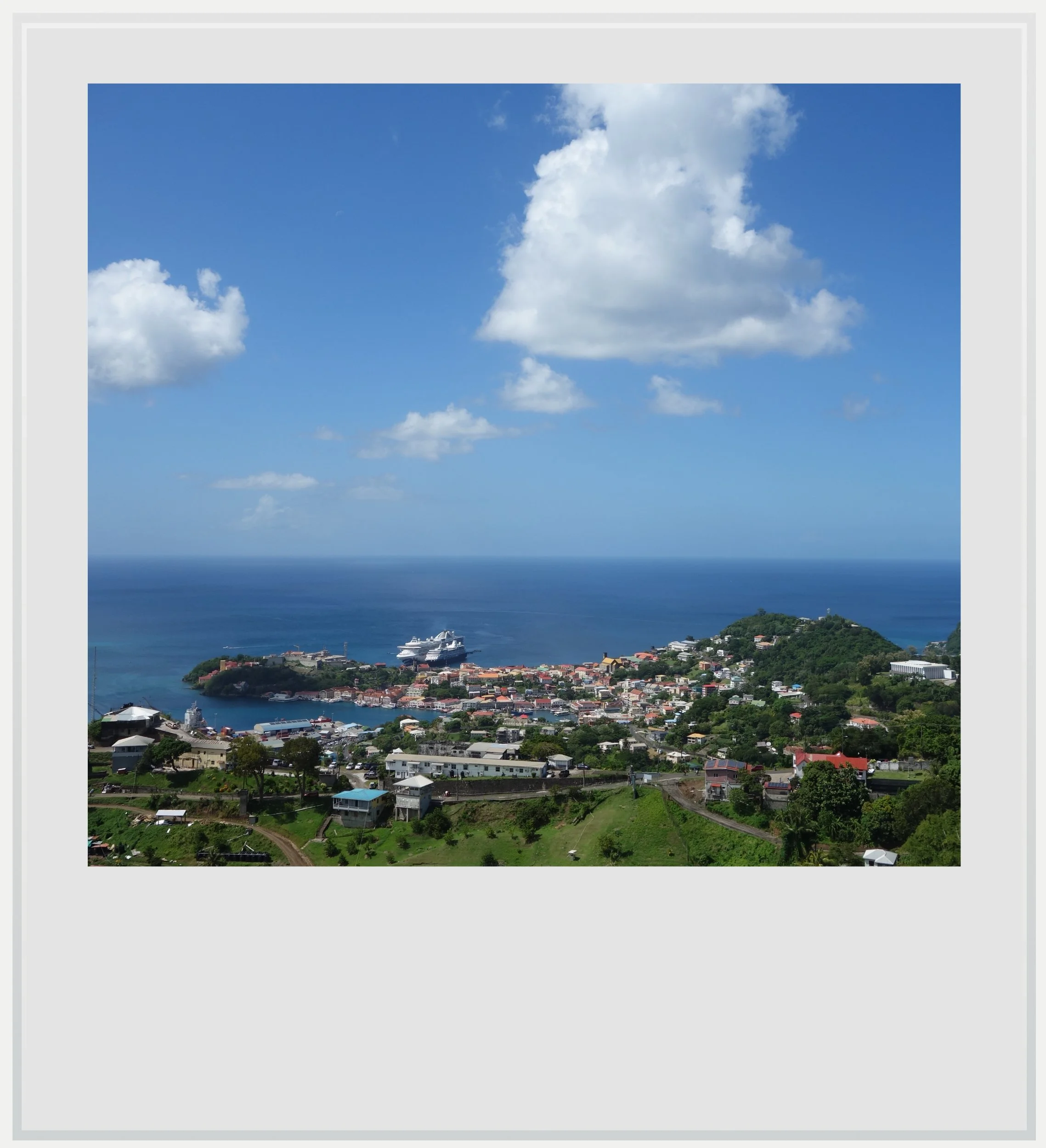
The view from Frederick Fort, above St George's.
Our first stop, Laura’s Garden of Herb and Spices, wasn’t why I picked the tour (as always, location and prices are featured in the Practical Information section below). I feared a walking tour that would resemble a permanent sales pitch. It turned out our guide was funny, knowledgeable and never pushy, and it was fun to learn, touch and smell all the herbs and spices that grew on the island.
Grenada was, at some point, the second biggest producer of nutmeg in the world - up until hurricane Ivan destroyed most of the nutmeg trees in 2004. Because the trees are slow-growing, the Spice Island hasn’t recovered its place in nutmeg production yet, but compensates with others, like cloves, cinnamon and pimento.
Our second stop was Fort Frederick, on Richmond hill, with a stunning view over St George’s and the whole bottom part of the island. I love a panoramic view, and was really wowed by this one. Whether you take a tour or make your own arrangements, make sure to add this to your list.
After about twenty minutes at the fort, we headed up to Grand Etang National Park. Created in 1992 to protect some of the island’s most beautiful rain forest, the park is a great opportunity to spend some time with nature, away from beach resorts. Several hiking trails are available but we didn’t have the time to discover any of them. Grand Étang, French for “big lake” is a quiet body of water at the heart of an extinct volcano. At 1,739 feet (530 m), it isn’t the highest point on Grenada - in fact, you can get the best view of the lake from the slightly elevated visitor center, a couple of hundred yards away. I walked down to the lake from there - it’s a quick 5 to 10 minute walk depending on your rhythm and saw a few monkeys along the way. It was a lovely walk but the truth is, the lake felt more impressive from above, at visitor center’s level, where I could see it sitting in the caldera.
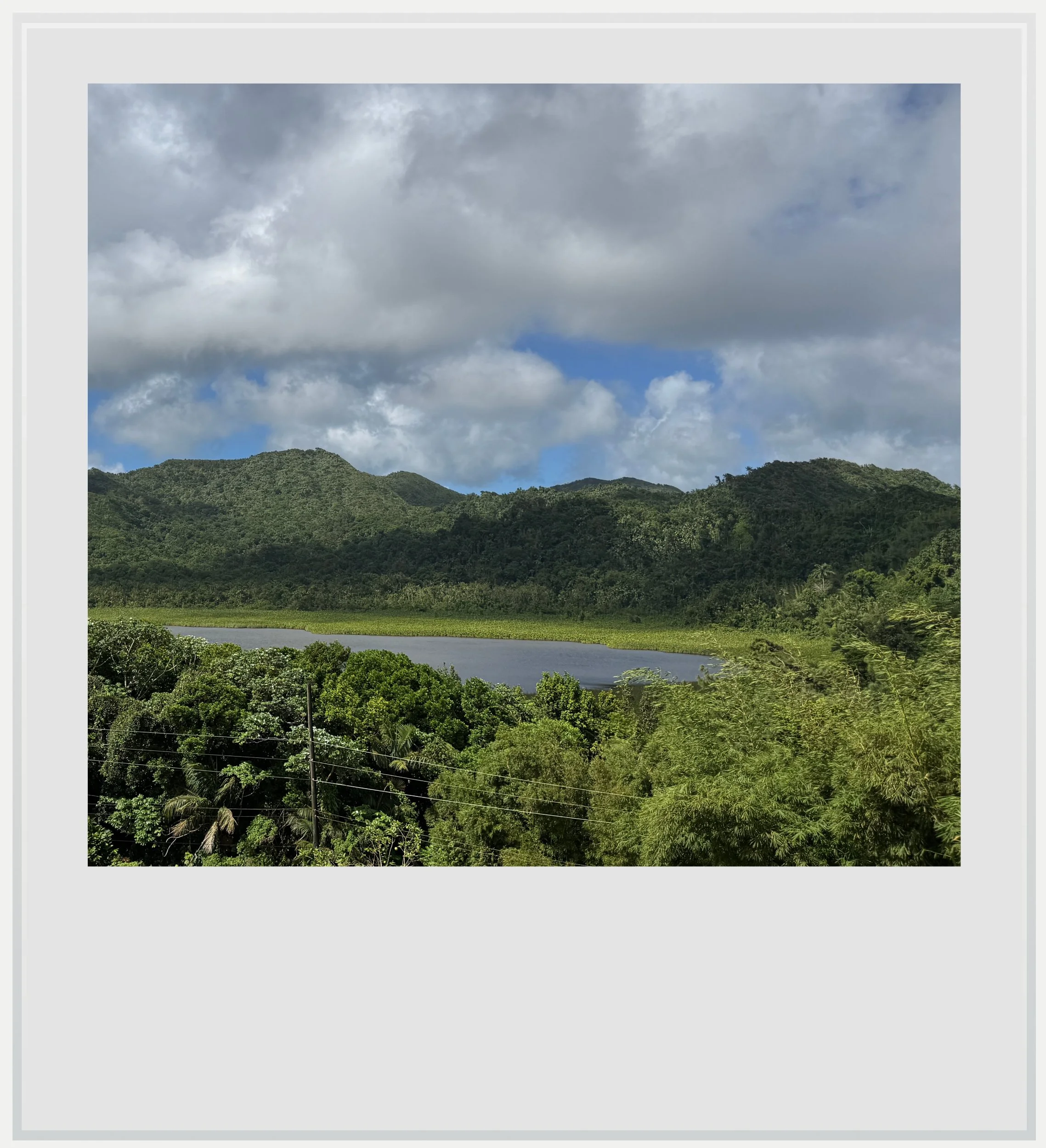
Grand Étang lake seen from the Grand Étang National Park visitor center.
Our final stop was the Annandale falls. While nowhere near as impressive as the Trafalgar falls in nearby Dominica, the cascade was sort of hidden in a lush forest with a few trails around it. It felt a little more commercialized than other stops, and although the setting was cute, I left a little underwhelmed. I would skip this in the future if I had other options to consider.
I was back on the Princess ship by 3pm, after a nice - if frustratingly short - overview of Grenada. The heat was still pretty strong, and prevented me from taking another stroll in downtown St George’s. I decided enjoy the rest of the day looking at the island’s green mountains from my balcony and, as we slowly left port, felt like the island deserved a lot more time, which I’ll try to find in the future.
What stayed with me
Grenada showed my one of the best reasons to take the road less traveled. Barely on the radar, this lush island feels like nothing else in the Caribbean, and its authentic, unspoiled beauty was a welcome contrast to more commercial islands in the region. No matter where I went, I knew I was discovering a part of the Caribbean very few people get to experience, and it made the day stop a fulfilling experience.
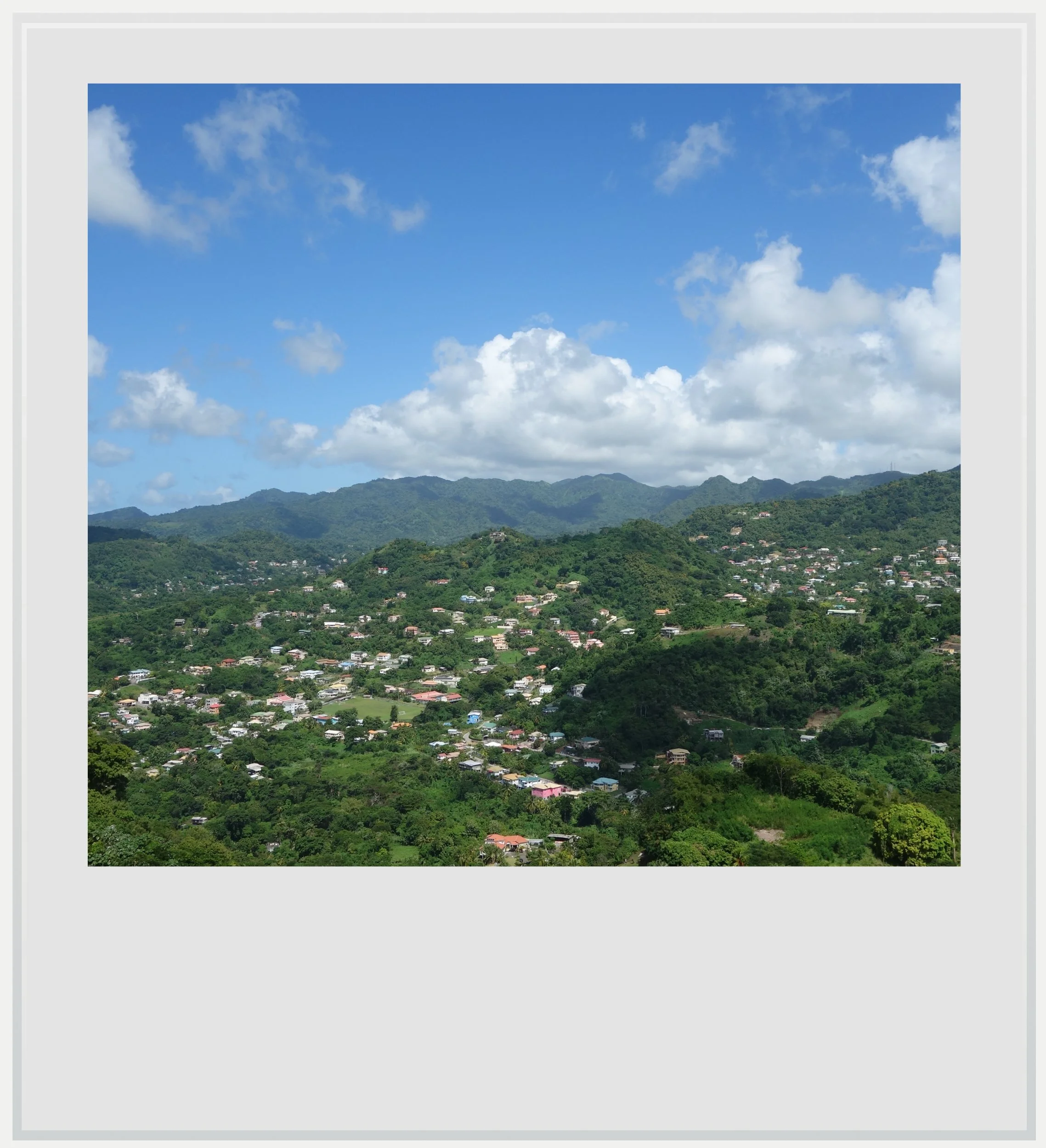
A view over Grenada's lush hills from Fort Frederick.
Practical information
(everything you wanted to know about Grenada - updated January 2026 with latest Department of State travel advisory)
In a nutshell
Lush and pristine, Grenada offers a different take on a Caribbean vacation, with less focus on beach time and more on hiking. It’s a great, off-path destination for travelers looking for a more authentic island experience, mostly away from the crowds and the fancy resorts.
Getting to Grenada
Grenada’s international airport, Maurice Bishop International (airport code GND) is fairly well connected with North America and Europe, receiving scheduled flights from New York, Miami, Toronto, London and Frankfurt, through flights to Europe aren’t daily. The airport sits on the westernmost point of the island, a 25 to 40 minute ride from St George’s, depending on traffic and a cab ride should cost between $25 and $30.
The majority of tourists arrive in Grenada on a cruise ship. Of the 522,000 tourists visiting the island in 2024, 314,000 (or sixty per cent) were cruisers. Cruise ship tourism is very seasonal, with one or two ships in port every day during the winter and basically zero cruise traffic in the summer (there is only one ship scheduled to dock in St George for the whole summer of 2026, on June 19).
Cruise ships dock right in front of downtown St George. The port facility, reclaimed from water 20 years ago, has been well maintained, and the air-conditioned building is full of various shops to buy souvenirs, duty-free items or negotiate an island tour with taxi companies. Once you get out of the building, you’re right in the center of town, making a visit by foot easy from the ship - do bear in mind the city is hilly and sometimes feels like a mini San Francisco.
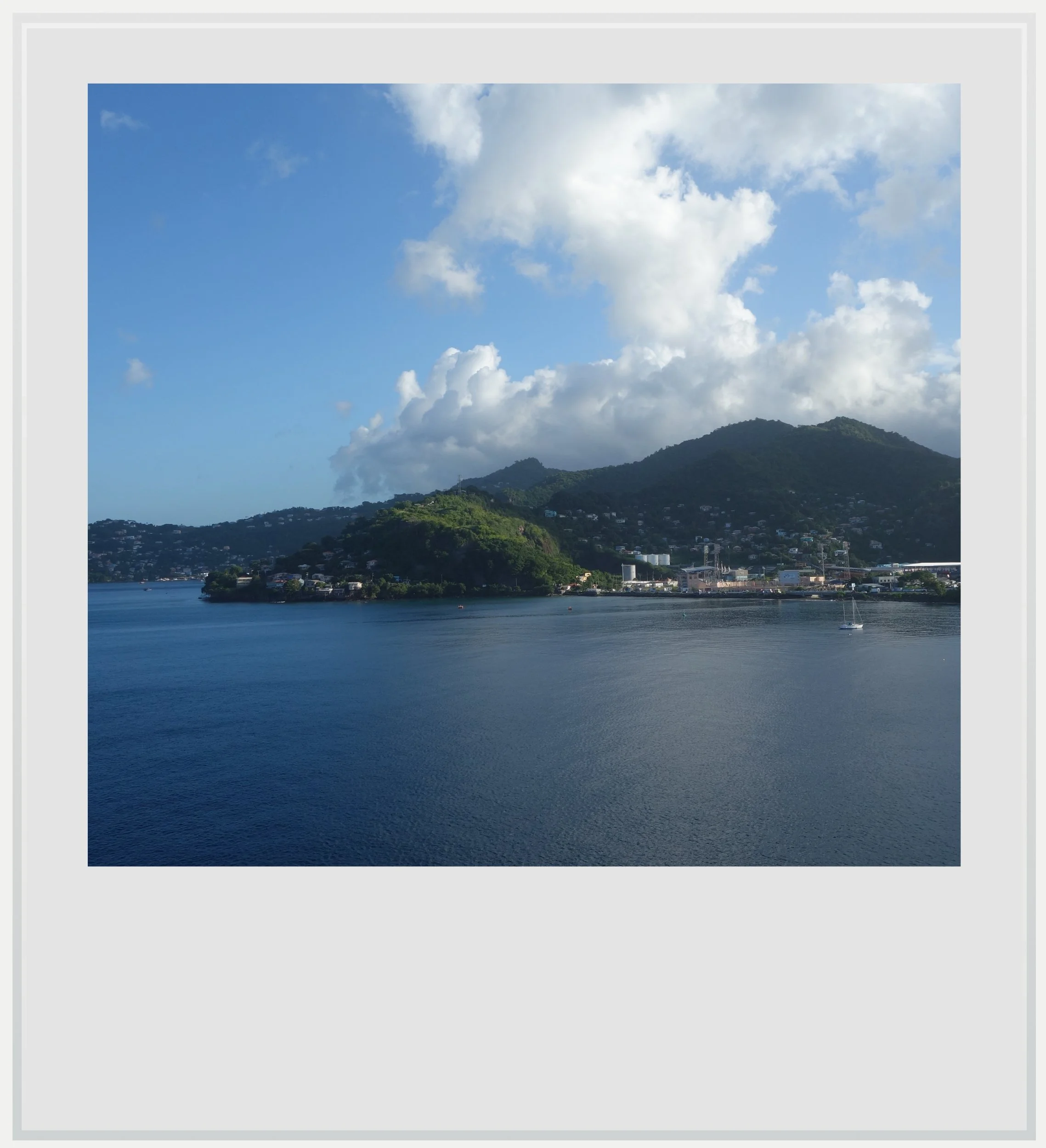
The view getting into Grenada on a cruise ship.
When to go to Grenada
The best months weather-wise to enjoy Grenada are during the dry season, between December and April. This is also peak season island may be a little more crowded and prices a tad bit higher than the rest of the year. Two of the three biggest tourist peaks, the holidays in December, and the weeks around the independence celebrations, early February, happen in the dry season. The other peak to be aware of is in the summer, around the Spicemas festival.
I went to Grenada in November, on a Princess cruise I had picked specifically because it was calling in Dominica and Grenada, two countries I hadn’t yet visited. The weather was perfect all day long, with a few clouds here and there but not a drop of rain. The heat, however, was intense, so I explored by foot early morning and late afternoon, and took a bus with A/C to be shuttled through key sites during the hottest part of the day.
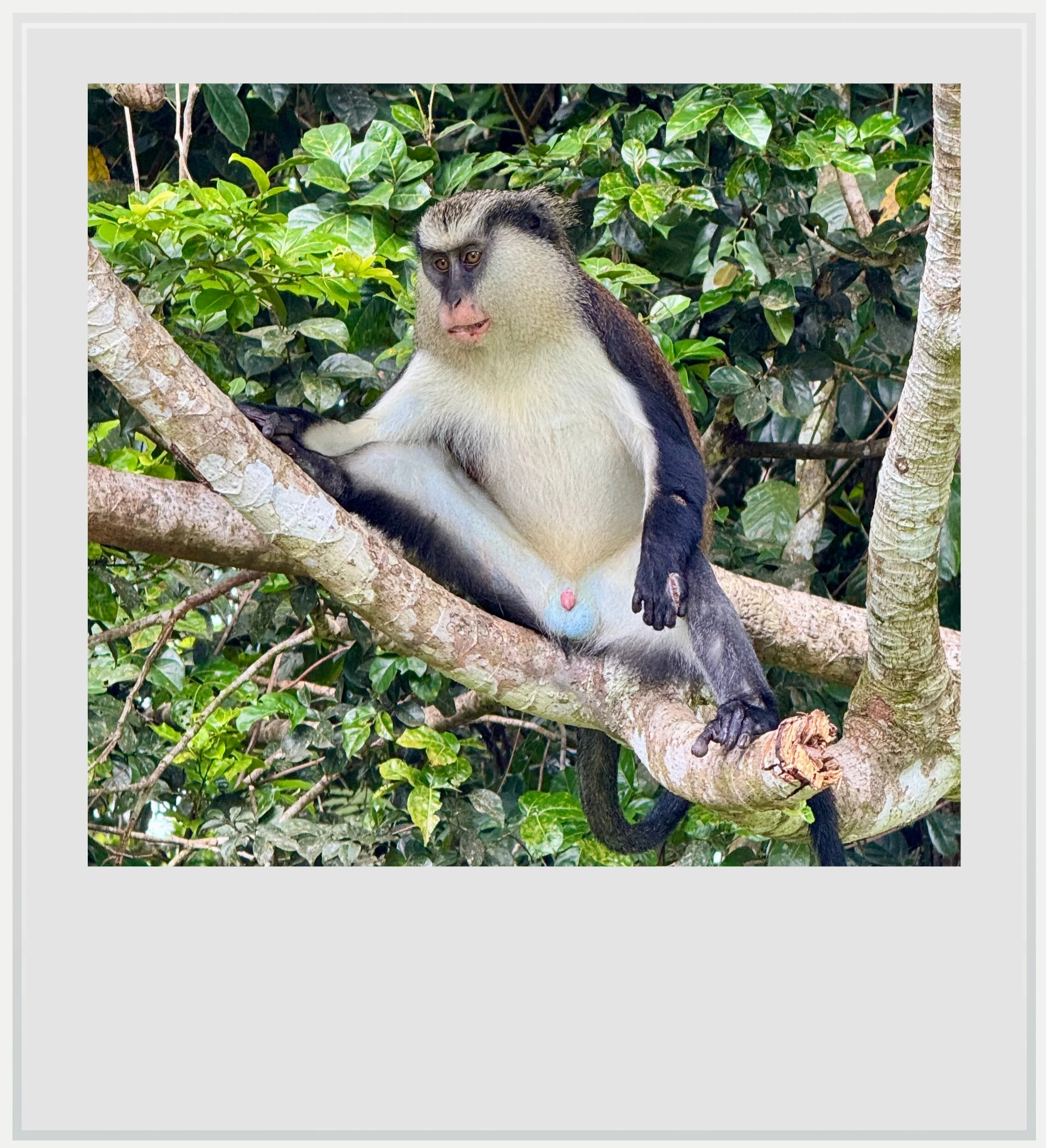
A Mona monkey in the Grand Etang national park.
Key sights in Grenada
St George’s. The country’s capital with its hills and its intimate harbor seems like a picture-perfect Caribbean town. Let yourself get lost among its busy streets, check out the Carénage harbor, the sea front and enjoy a typical slice of island life, Grenada-style. I enjoyed the best view of the harbor from Woolwich road and of the busier downtown from Fort George, which was closed the day of my visit and still is as of publishing time.
Laura’s Herb and Spice Garden. Entrance USD 5. Open 8am-3.30pm. A lovely garden of herbs and spices where you can touch, smell and taste without so much as the hint of a sales pitch. It can get busy with cruise tours, so check the port schedule or ensure you get there later in the day for a quieter experience.
Fort Frederick. Entrance USD 2. Open 8am to 4pm. Built by the French, the fort lets you get a 360-degree view of the island and its gorgeous mountains. It’s an exhilarating sight and a great photo op spot.
Grand Etang National Park. Entrance USD 2. Home to trails for the hiking-inclined, this national park, up in Grenada’s rain forest, can also be enjoyed in a car, stopping at the eponymous Grand Etang lake and the educational visitor center to learn about the island’s flora, and maybe see a few monkeys.
Annandale falls. Entrance USD 10. Open 8am to 5pm. A nice stop on the way back down to St George’s, these falls are only about 20 minutes from the capital, but aren’t a big enough reason for a detour. The falls themselves are lovely, surrounded by a lush forest, but not impressively tall, and too commercialized to my taste. Skip them if you don’t have a lot of time.
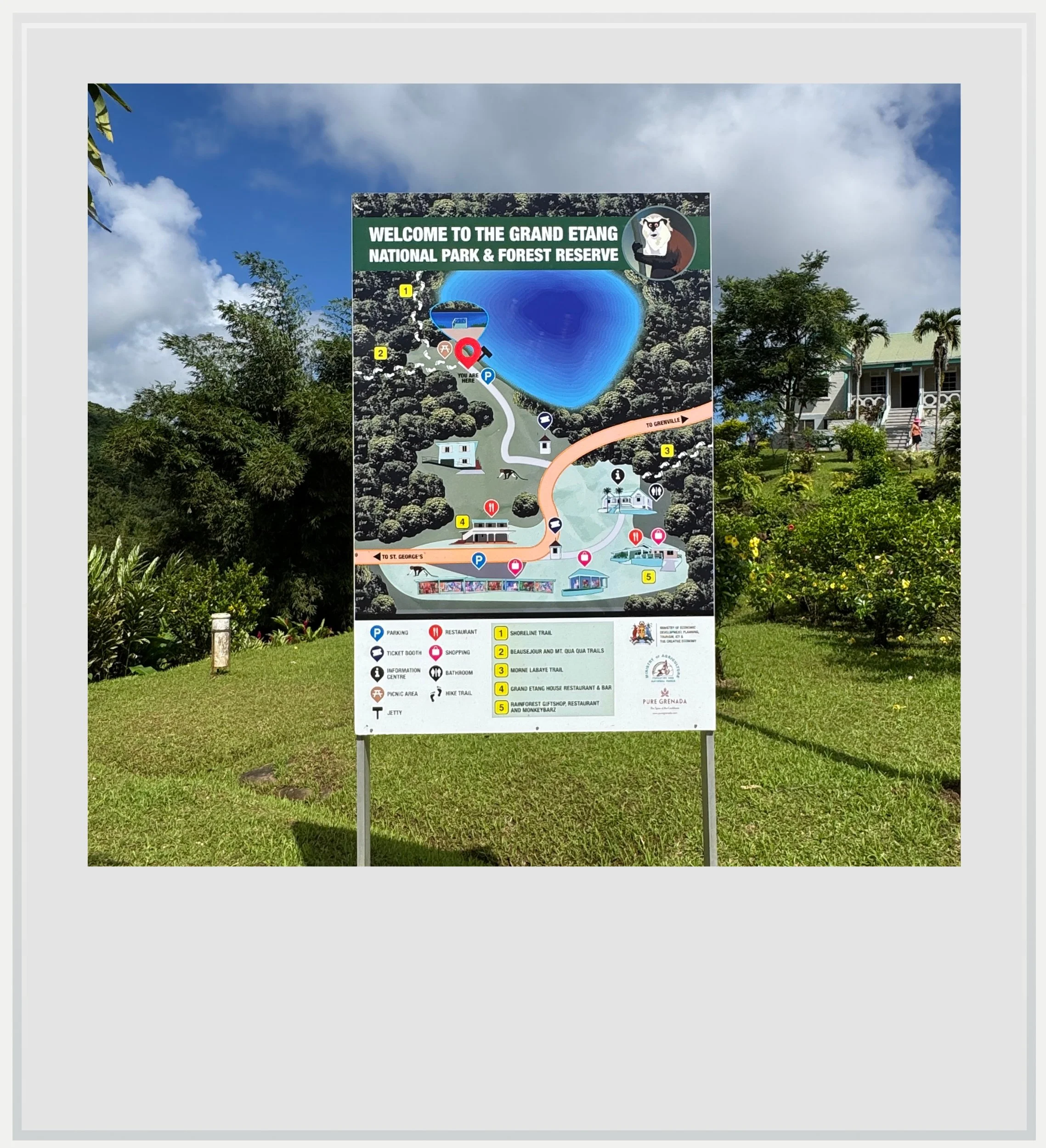
The sign at the entrance of Grand Etang national park. Note the sign’s “You are here” location is incorrect as this sign sits right by the ticketing booth at the bottom of the map.
Safety in Grenada
Grenada isn’t a dangerous country to travel to - however, as of January 2026, its safety level was downgraded to level 2, from level 1 by the US Department of State, meaning “exercise increased caution”, the rationale being that “Violent crime can occur anywhere in Grenada. American citizens in Grenada have been victims of armed robbery, assault, burglary, and rape. In some cases, American citizens have been killed. Police response times are not as fast as one may expect in the United States.” While it sounds ominous, a level 2 advisory isn’t reason enough to not travel there. After all, the same level is applied to many countries in Europe with swarms of Western tourists (namely Spain, France, Italy or the UK). Just be aware of your surroundings, and behave as you would in a place you’re not familiar with - low profile and without flashing any obvious signs of wealth.
Keep in mind these travel tips
Grenada uses its Eastern Caribbean Dollar as currency, but it is pegged to the US dollar at a fixed rate of 2.67 ECD to 1 USD. You can use US notes in Grenada, although the change may be given in ECD (this wasn’t the case for me, but I was told it could happen as vendors are not required to hand over change in USD). Credit cards are not widely accepted the country so make sure to have enough USD notes with you.
The heat can be intense, but it is easy to find cold refreshments wherever you go - St George has a few supermarkets and, like many a Caribbean island, a KFC outlet serving cold sodas. Almost every tourist stop has its share of vendors offering water, sodas and beers on top of souvenirs. Except to pay $2 for a non-alcoholic beverage.
SPF will be your best friend. The UV index may be low in the morning and evening, but during the day, it gets pretty high.
Every photo’s legend will appear if you hover over it (on a computer) or click on it (on a smartphone).
All photos are mine and are copyrighted.