One Day in Dominica.
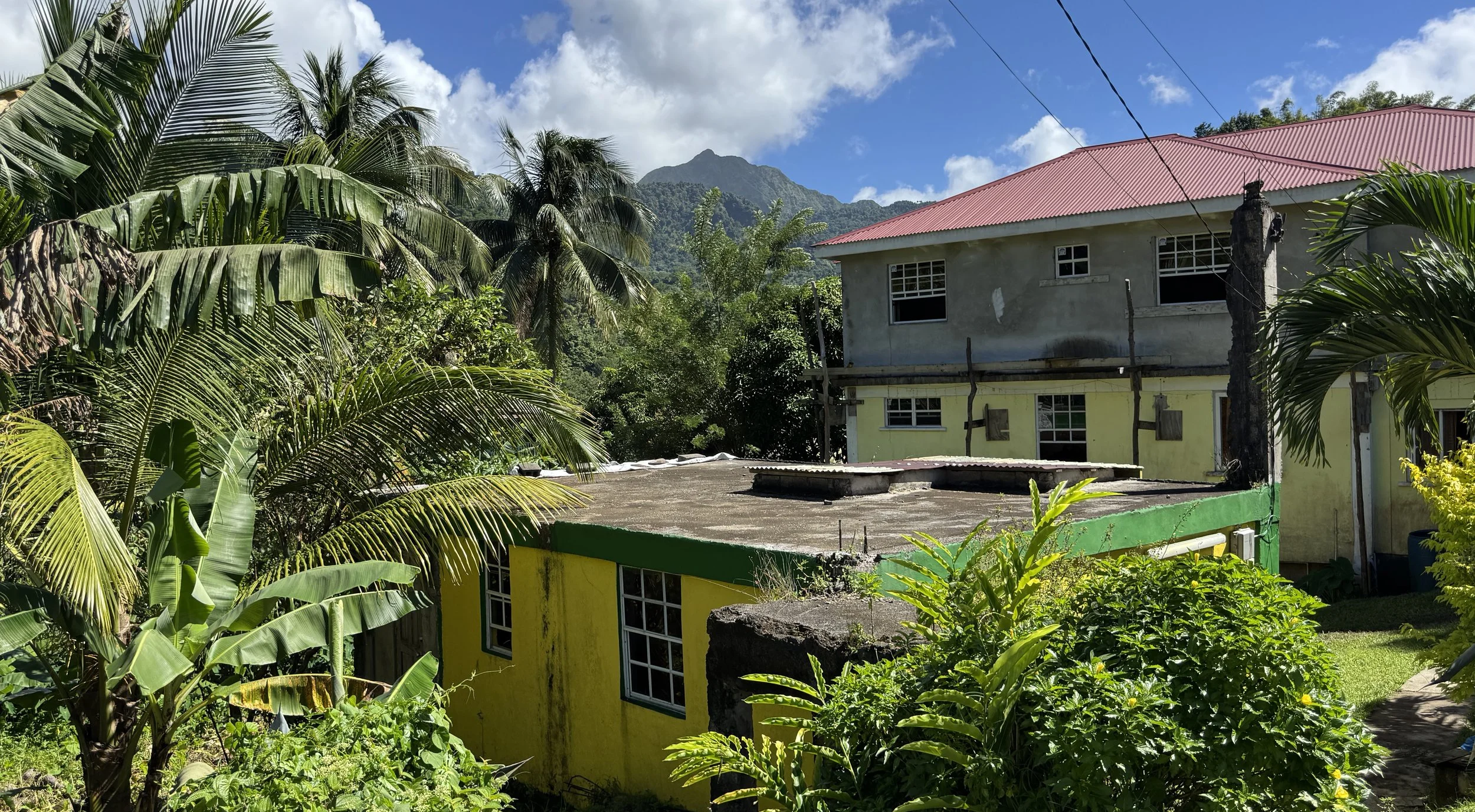
Unspoiled and unfiltered, the Nature Island still feels like the Caribbean before tourism.
Looking for concrete details and tips? Go straight to the Practical Information section.
When the sunlight peaked under the blinds of my cruise ship cabin, I knew I had to take a look at the ocean. It was past 6am, and we were supposed to dock in Roseau, Dominica in less than an hour. Surely, the island would already be in sight.
I was in luck, for my cabin was on the starboard side of the ship and from there, Dominica was solemnly emerging from the waters with its tall, lush peaks, a vibrant visual reminder that this volcanic island was the youngest in the Lesser Antilles.
Dominica featured pretty high on my list of islands to discover, for its remoteness and lack of tourism infrastructure. The island is one of the least visited in the Caribbean, for a few reasons. To start, it’s hard to get to: the first regular flight to the continental US only started in December 2021, and, in 2025, there still aren’t daily year-round flights between the two countries. Then, the island can offer incredible nature to discover, but lacks the social media friendly white-sand beaches people think of when they think of the Caribbean. This relative lack of interest means the country doesn’t have a well-developed tourism infrastructure, a bit like what Hawaii must have looked like a century ago. A tropical, volcanic island with a chill way of life, somewhat disconnected from the global world.
I had no idea, while the ship was approaching the pier, that Dominica would grab my heart the way it did.
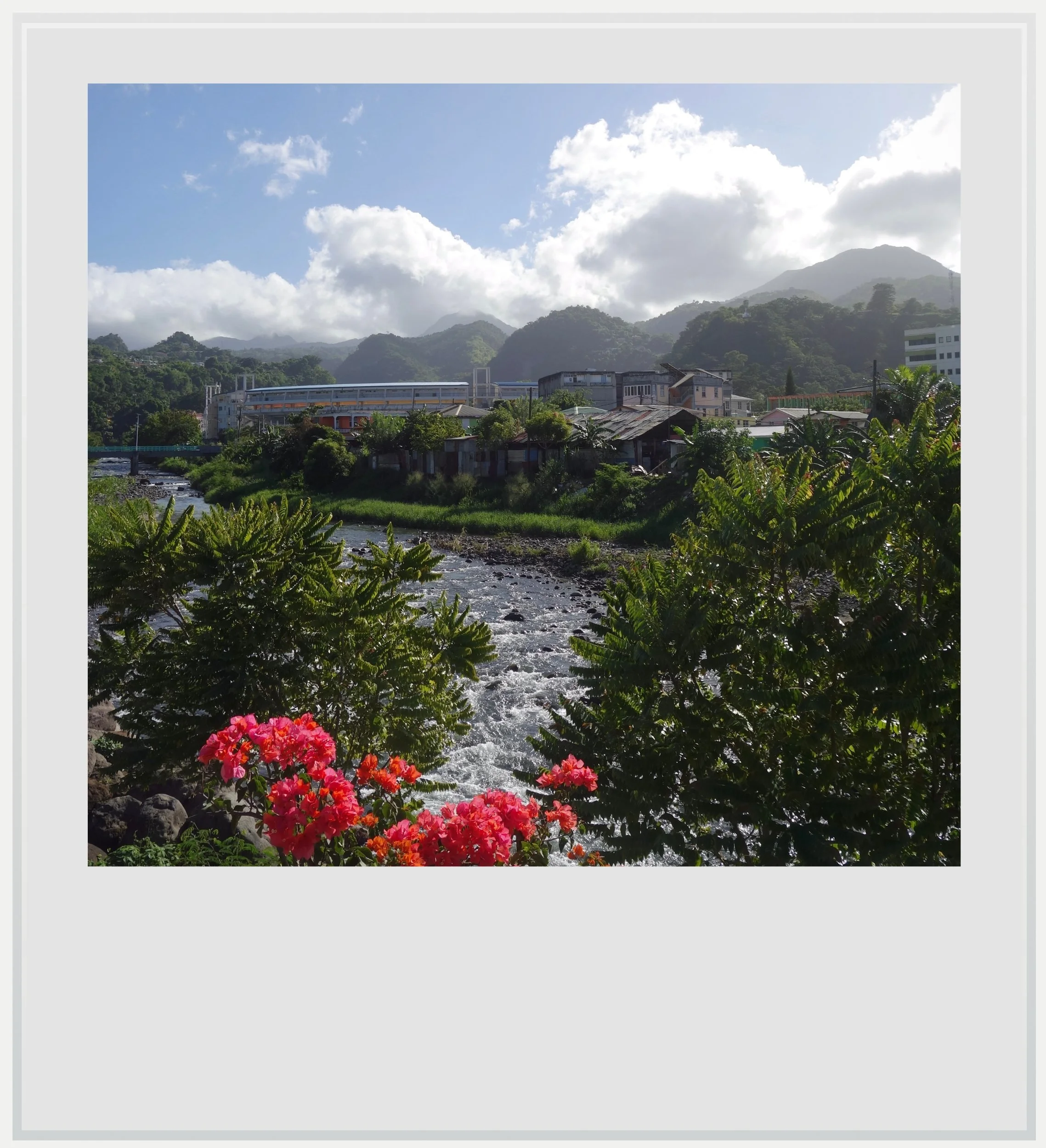
The Roseau river in the capital of Dominica.
I started my day early - I figured sunlight had woken me up for a reason, and was off the boat around 8.15am. Unlike some other cruise lines, Princess ships do not dock right in front of downtown Roseau, the capital, but in the commercial port, about a mile north. When I exited the ship, the port area was a bustling mess of street vendors, tour guides hawking their itineraries and somewhat confused cruisers wondering where to line up for their prearranged excursions.
As busy as it was, the port was refreshingly small and unpolished, a far cry from the made-for-tourists vibes of ports like Puerto Plata or Philipsburg, staples of classic cruise itineraries. I took it as a sign that my experience would be more authentic.
Dominica was solemnly emerging from the waters with its tall, lush peaks.
I walked under a punishing sun for about twenty minutes to get into town, but decided to head further and climb Morne Bruce, a small hill overlooking the city of Roseau, offering a sprawling view over the coast. While huffing and puffing my way to the top, I watched with a mix of envy and pride as other Princess cruisers passed me in air-conditioned buses.
Morne Bruce is not by any means the highest peak on the island (that would be Morne Diablotins, at 4,747 feet, or 1,447 meters) but in the heat, it felt like I had climbed Mount Kilimanjaro. Before I even caught a glimpse of the view, I bought an ice-cold bottle of water from one of the street vendors (USD2, cash only) and sat down on a shaded bench to drink it.
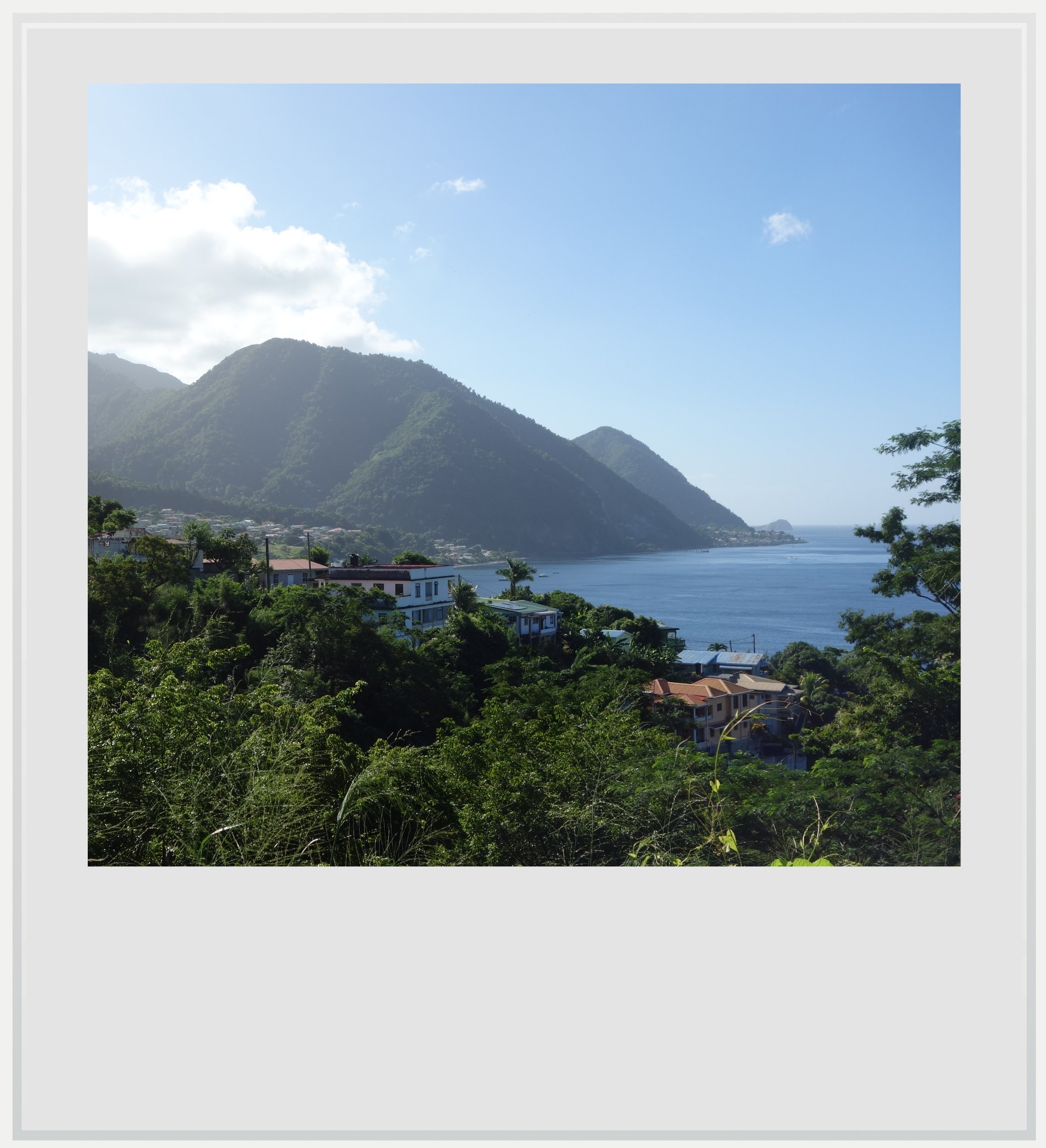
The coast of Dominica south of Roseau.
Morne Bruce used to house a British garrison, posted up there to help defend the island capital against any possible French invasion. The island’s colonial history is actually full of battles between the two European nations.
Before Christopher Columbus sailed by and gave the island its modern name, in November 1493, Arawak and Carib people had called it home. While Spain tried to colonize the island, the lack of gold and the fierce resistance of its inhabitants made it less of a priority for the Habsburgs. France seized the opportunity and started establishing settlements in Dominica in 1690, formally claiming it as a possession in 1727.
This wouldn’t last long, however. After a brutal war known as the Seven Years’ War, Great-Britain took over the territory and managed to mostly maintain sovereignty over it until Dominica achieved independence on November 3, 1978, 485 years to the day after Columbus had discovered it.
The dueling influence of France and Britain can still be felt on the island today. France left behind a capital, Roseau, with typical French urban planning (tight square blocks of small houses), making Roseau feel almost intimate, and a second language, called patois, derived from French, that many people still speak. Some of the cities or mountains in the country bear a French name, starting with Roseau, which means “reed” in French.
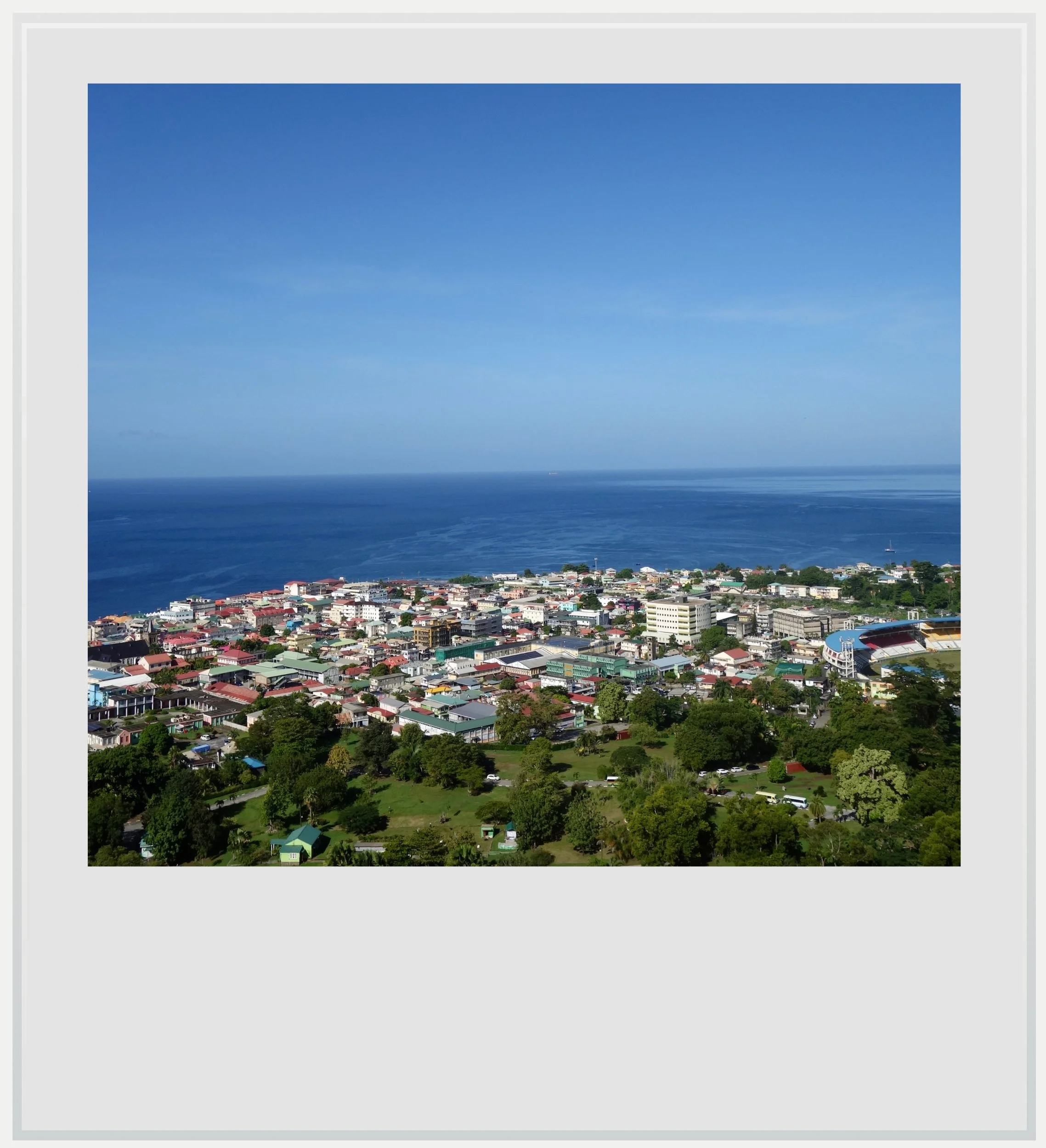
The view over Roseau from Morne Bruce.
From Morne Bruce, I walked down to the urbanized part of Roseau via Jack’s Walk, a shaded, steep path used by the British army recruits back in the day as a shortcut to reach their barracks, and quickly ended up in the botanical garden, a vast, relatively well-maintained area reclaimed from the old Bath plantation nearby.
Walking through Roseau was an exhilarating experience - not so much visually, as the small city of barely twenty thousands has all the trappings of a town in the developing world: lots of traffic, non-existent sidewalks, buildings in disrepair. Beyond that, however, was a city with a lot of soul. A few old French colonial houses were still standing -some barely- and the narrow streets allowed for a gentler, more chilled pace than in places where wide avenues seemed made for cars, like Tortola, in the British Virgin Islands.
In front of us unfolded a panorama that could have been taken from King Kong’s Skull island.
More importantly, the town felt like it hadn’t been transformed by tourism. Beyond a small square in the -tiny- original French quarter, the city was devoid of the shops you’d expect to see in every single Caribbean port. I couldn’t see any duty-free jewelry store, loud t-shirt stands, and the only liquor store I passed by was definitely catering to locals.
It was so refreshing to feel like a guest in another country, breathing in the culture, without thinking for a second that the activity on the street was meant for me - a random tourist.
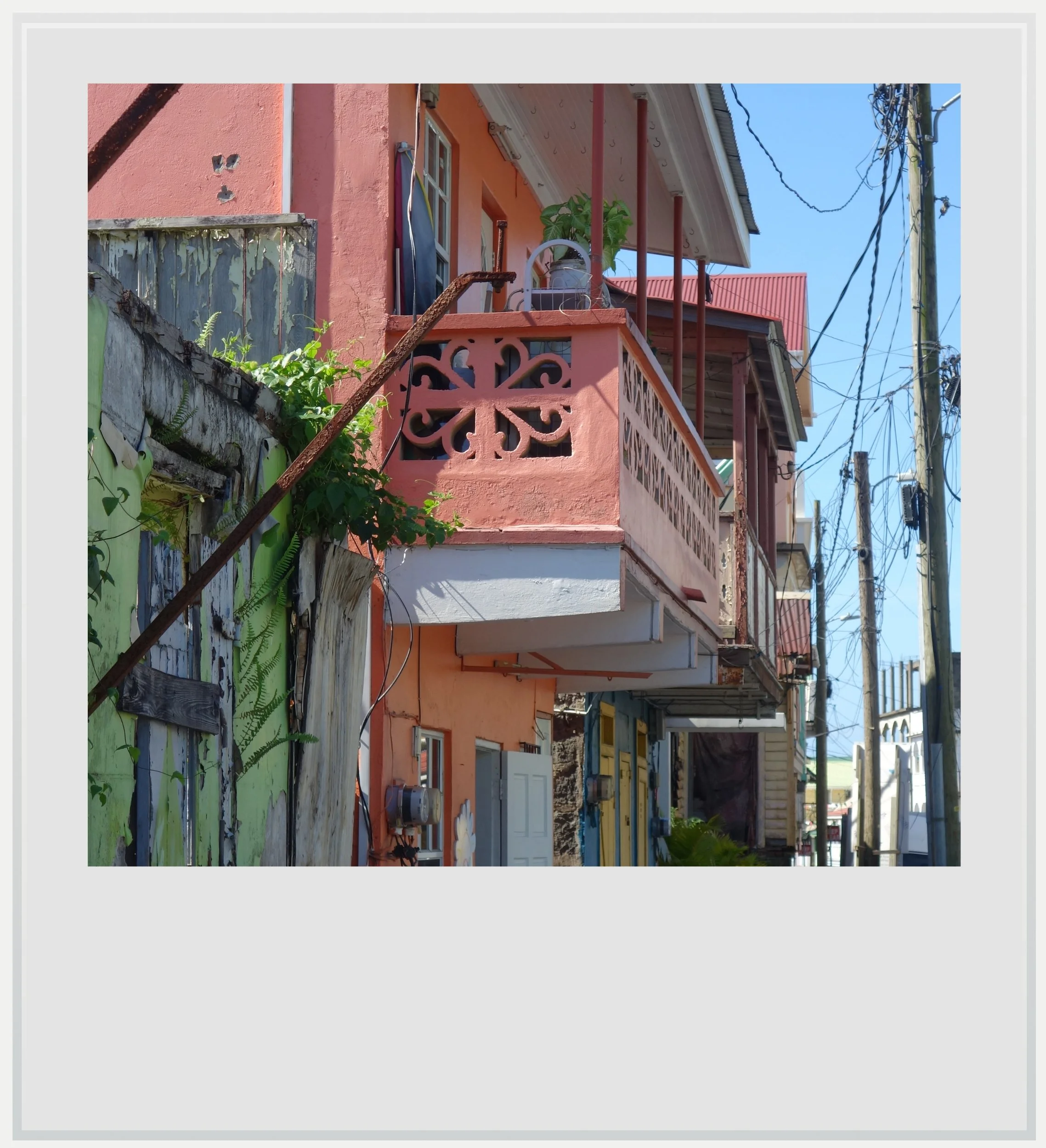
A colorful house in Roseau.
Although poverty was everywhere, and the sorry state of some of the buildings was a stark reminder of the country’s long road to development, there was a grace to this town that was hard to pin down. I reluctantly walked back to the ship after a couple of hours, only because the heat was starting to get to me. I walked above the seasonally quiet Roseau river, and was back in the air-conditioned goodness of my cabin around 11am.
Splitting a day in port in two parts had become somewhat of a habit earlier in the month, on the first cruise (a Virgin Voyage trip from Miami to San Juan). I liked the idea of doing my own thing early in the morning and discover what I could on foot, at my own pace, then head back to the ship before midday to avoid the worst of the heat, only to go back out mid-afternoon.
Another benefit of this routine was that, when it was time to find a tour, most people on pre-booked excursions had left, some had even returned, and it was a lot easier to chat with sellers on the side of the road, with no crowds to manage. It would also mean the places we would visit would be quieter, having seen the bulk of tourists earlier in the day.
As luck would have it, as I left the ship again, a minibus was waiting for one last passenger to get started on a 3-hour tour of the island, hitting some key points of interest, and 30 dollars later, I was on board, ready to experience another side of Dominica (the equivalent cruise-sponsored tour was selling for double the price).
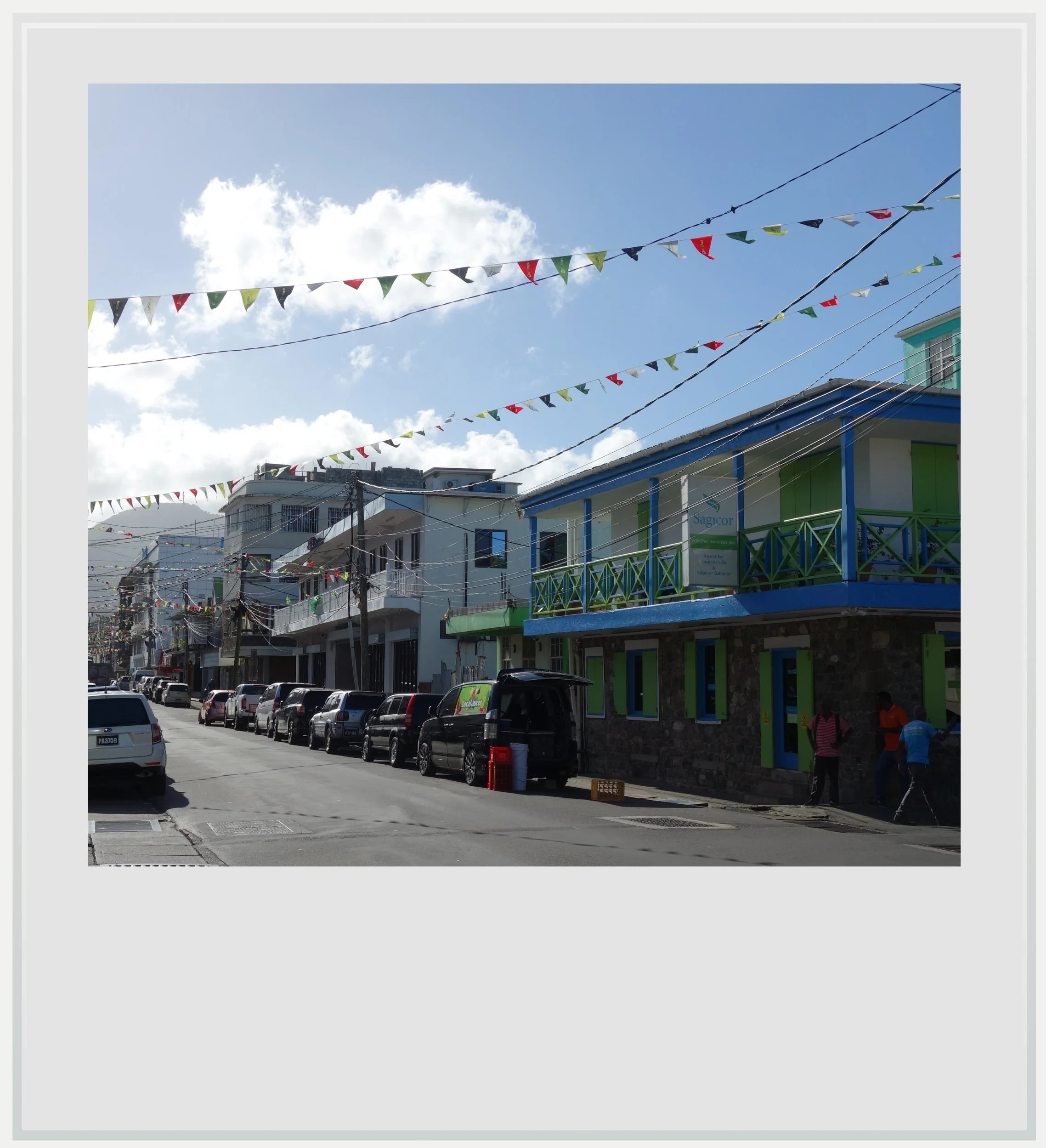
Downtown Roseau.
Driving in Dominica isn’t for the faint of heart. A lot of the roads we took, aside from the main one into town, were in various states of disrepair or being worked on, and what usually were narrow, two-lane highways had become treacherous one-way streets, potholes included. Some of these works were financed by the Caribbean Development Bank or the World Bank, and were especially useful after the country’s recent encounters with hurricanes - Maria, in 2017, having been the most damaging one.
Dominica ranks among the Caribbean’s poorest countries, and repeated hurricane damage is only one reason for the island’s low development. An agriculture-focused economy that isn’t enough to significantly improve people’s individual wealth is another big one. It is estimated that about 30 percent of the island’s population lives below the poverty line.
The dueling influence of France and Britain can still be felt on the island today.
This makes outside help a lifeline for this small isolated territory, which may explain why Dominica has received significant aid from China. In 2004, the country ceased to recognize Taiwan and switched allegiance to mainland China. A success for China’s small country diplomacy, this meant additional funding for infrastructure and development for Dominica. The most visible sign of this cooperation in Roseau was the Dominica-China Friendship hospital, which opened in 2019.
In a telling symbol of the nation’s changing support network, the hospital was built on the site of an older health facility called Princess Margaret Hospital, highlighting the fading ties with its former colonial power.
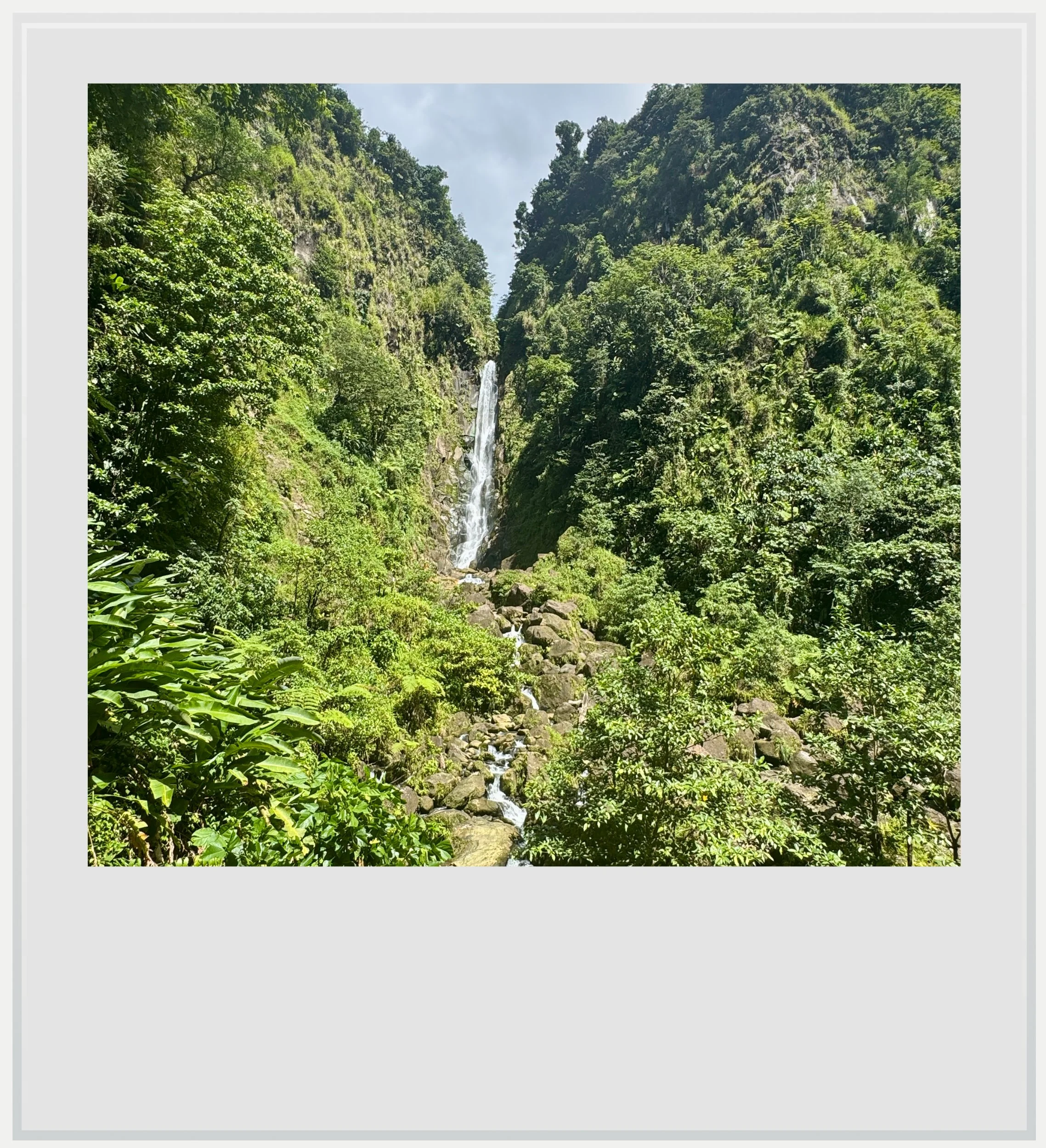
One of the two cascades at Trafalgar Falls.
Geopolitical considerations weren’t on my mind as we slowly negotiated our way on Dominica’s narrow, twisting roads to get to Trafalgar Falls. One of the country’s main natural attraction, the falls are a poster-child for the island’s beautiful nature and its gorgeous scenery. After passing through a small visitor center and paying the entrance fee (USD 5), we walked about five minutes on a well-marked path leading to a viewing platform. In front of us unfolded a panorama that could have been taken from King Kong’s Skull island: surrounded by an impossibly dense tropical forest, two waterfalls, framing a steep peak, were spilling out gallons and gallons of water into the valley below.
This was as unexpected as it was beautiful, for the slow path getting there hadn’t prepared us for such a sight. There were very few people on the viewing platform with us, because most of the tour groups had left already, and the experience was as peaceful as the flow of water was frightening.
After a few contemplative minutes, we headed back to the bus and drove to our next destination, smelly sulfur springs in Wotten Waven. Dominica, being a young volcanic island, counts with many of them as ground water, heated by geothermal activity, rises from underground as it dissolves sulfur compounds from surrounding rocks. It makes for a pretty nauseating smell but, at the same time, has notable health benefits, including improving skin condition and even arthritis. I didn’t partake in a sulfur bath - even if I had wanted to, I wouldn’t have had the time - but it was possible to do so.
We finished our tour with another view atop Morne Bruce. The late afternoon light was beautiful and a nice complement to my morning visit, and a few photos later, we were on our way back to the ship.
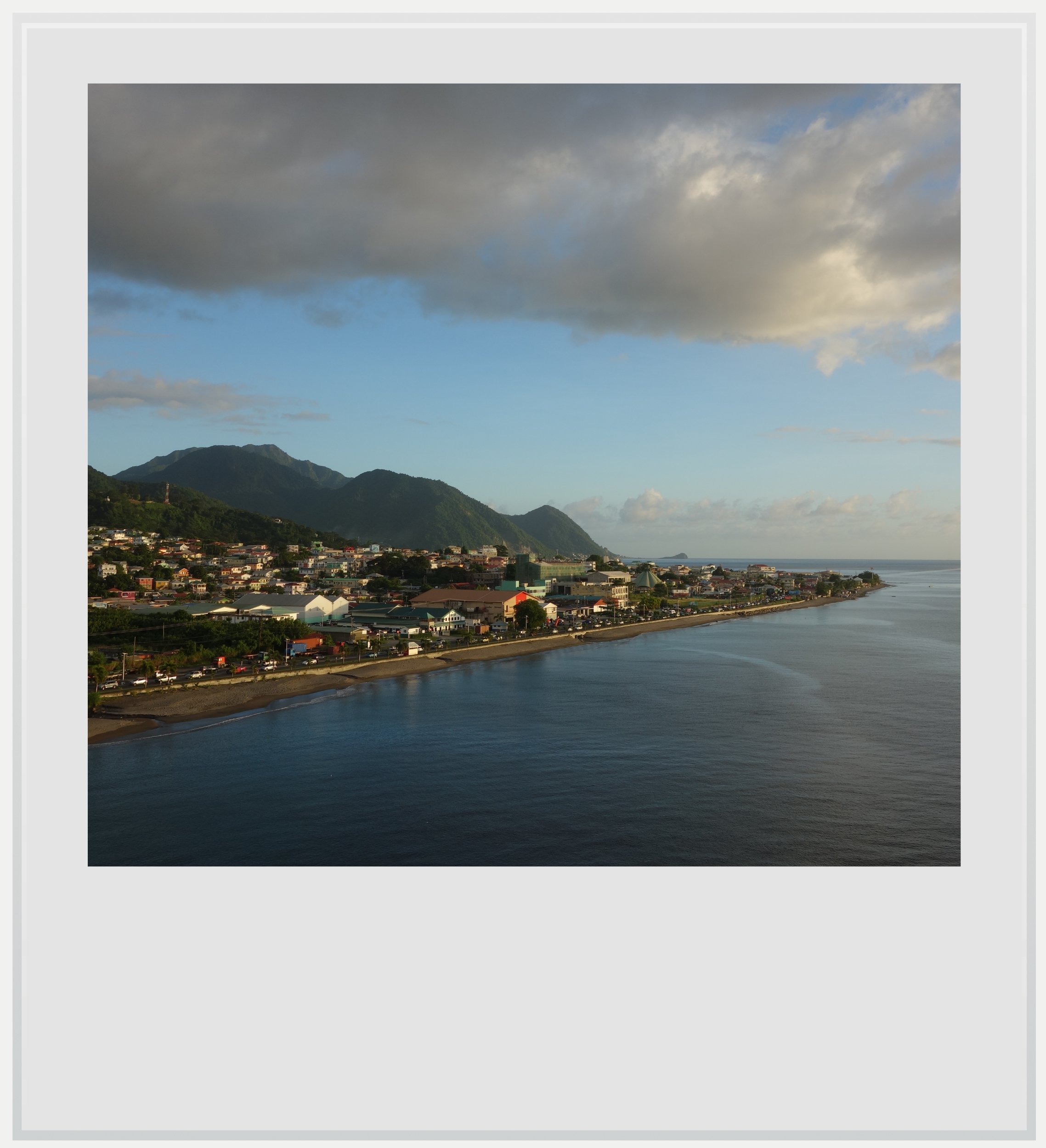
Leaving Dominica on the Grand Princess just before sunset, with Roseau in the foreground.
I really enjoyed my tour - it was fairly basic, which meant our driver didn’t bother with boilerplate chatter about the island that is so common from tour guides on some of these excursions, but we got to enjoy a refreshing slide of the Nature Island, away from the crowds that would have been with us in the morning.
As the ship left the port a few hours later, I watched the island disappear in the horizon, thinking I would want to come back and spend more time in its incredible, hardly visited landscapes.
What stayed with me
Although my stay in Dominica was short, walking in Roseau, the lone tourist among locals and away from its main attractions, was probably the most rewarding experience. This isn’t to discount the island’s wonderful natural sights, which I enjoyed. My walk in the Dominican capital was one of the only times in my month of cruising around the Caribbean when I felt truly disconnected from the rest of the world, walking among brightly colored buildings and street traffic, feeling like I was truly immersed in an experience most people only pass by. Roseau’s beauty was an unpretentious, raw mix of Creole, British and French, uninterested in catering to cruise ship traffic. For a second, I saw myself coming back and staying there for a while. Deep down, I knew I would thoroughly enjoy it.
Practical information
(everything you wanted to know about Dominica - updated December 2025)
In a nutshell
Dominica, not to be confused with the Dominican Republic, hundreds of miles to the north, is a young volcanic Caribbean island with stunning scenery, that is mostly visited by cruise ships. The country’s low development and relative isolation allows for a travel experience that feels refreshingly unpolished. You can hit the highlights in a day, but, if given the chance, could enjoy the island for longer than that.
Currency: East Caribbean dollar (pegged to the US dollar at a fixed rate)
Language: English (official), patois (derived from French Creole)
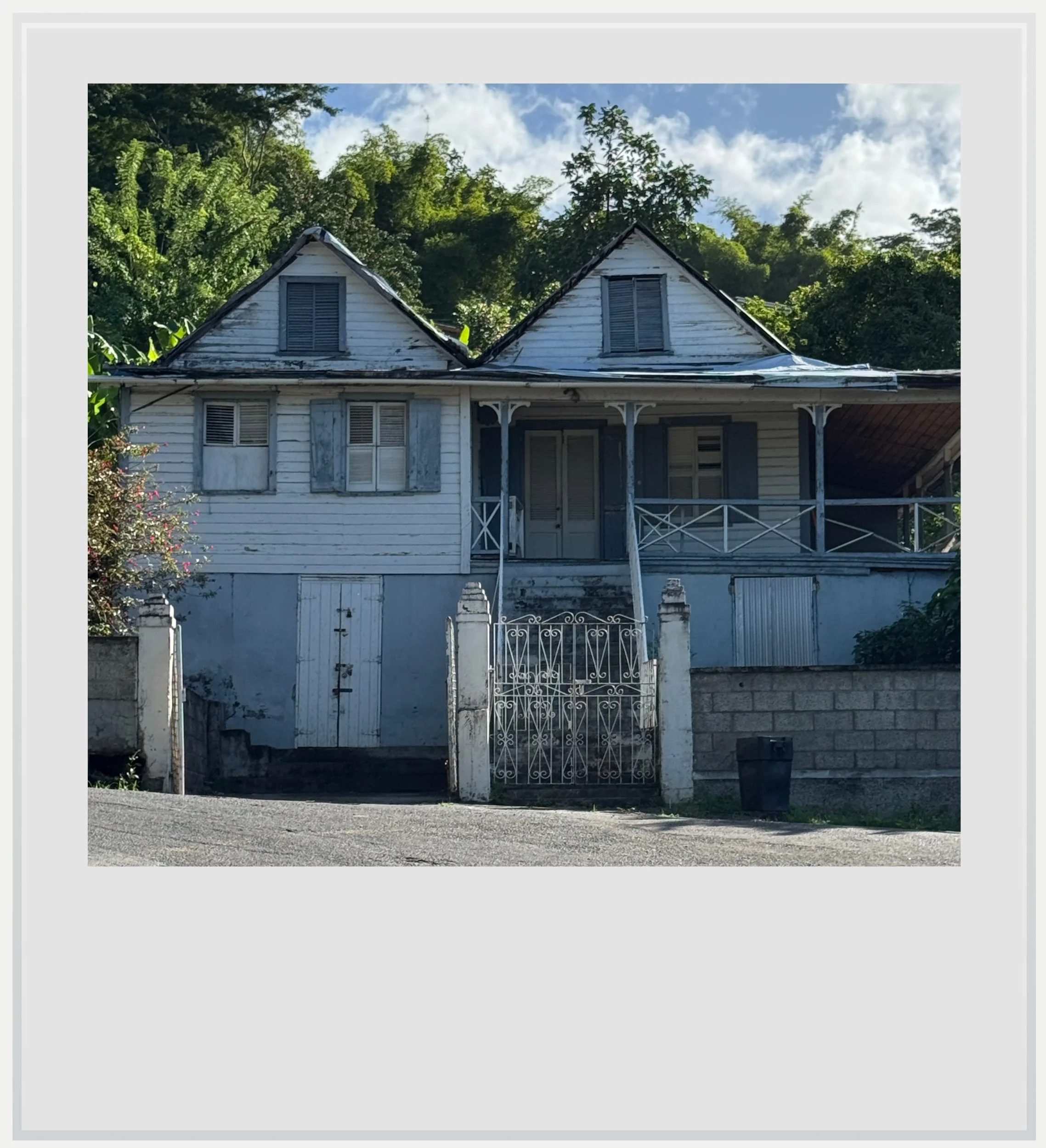
A house in Roseau.
Getting to Dominica
How to get to Dominica from abroad: While Dominica is due to open its new international airport in 2027, the current main gateway into the country is the Douglas-Charles airport (DOM), on the northeastern side of the island. American Airlines serves DOM at least once a day from Miami (MIA) in high season, and several times weekly in low season. United Airlines debuted a weekly, seasonal, Saturday-only flight from Newark (EWR) in February 2025. For the 2025-2026 winter season, the flight is biweekly with a rotation every Wednesday and Saturday. It is also possible to fly into Dominica from San Juan, Puerto Rico, and a few of the neighboring islands.
The majority of tourists arrive in Dominica on a cruise ship. There were about 300,000 of them in 2023 (the most recent year with data available). Cruise ship tourism is very seasonal, with one or two ships in port every day during the winter, and less than a handful of ships calling in Roseau in the summer months. Most cruise ships dock downtown Roseau, by the ferry terminal, which is super convenient to stroll around the capital. Princess ships tend to dock at Woodridge Bay, in the commercial port, about 1 mile north of downtown Roseau. Other lines may dock there if too many ships are in town on the same day. The walk to Roseau is fairly straightforward, on a well maintained road with a sidewalk, along the sea.
When to go to Dominica
The best months weather-wise to enjoy Dominica are during the dry season, between December and May. This is also peak season so the island may be a little more crowded and prices a tad bit higher than the rest of the year. The two biggest tourist peaks are the holidays in December, and the weeks around carnival, in February.
I went to Dominica in November, on a Princess cruise I had picked specifically because it was calling in Dominica and Grenada, two countries I hadn’t yet visited. The weather was perfect all day long, with a few clouds here and there but not a drop of rain. The heat, however, was still intense, so do keep that in mind if you aim to travel in the shoulder season.
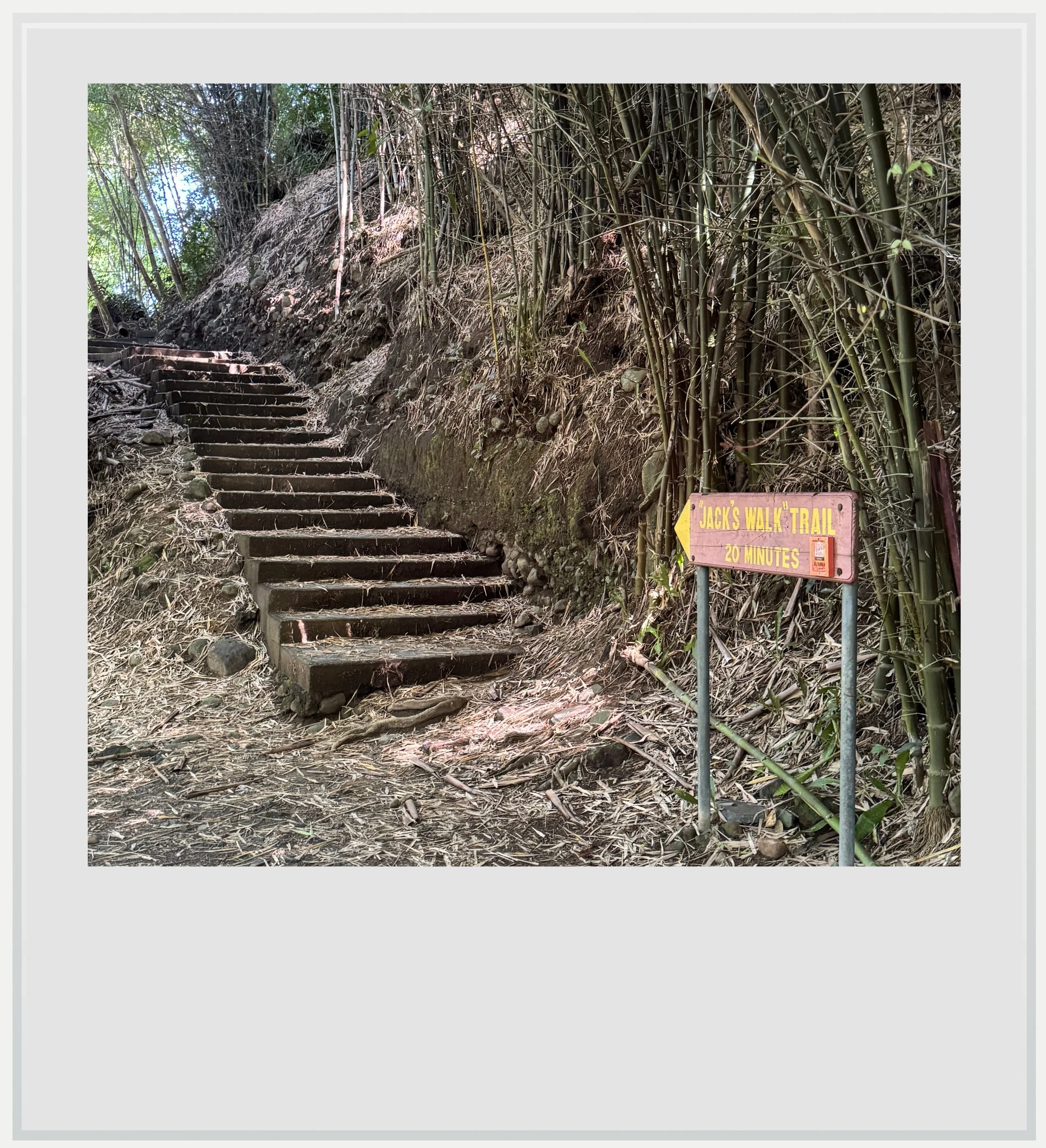
The beginning of Jack's Wall trail leading to the Morne Bruce viewpoint in Roseau, Dominica.
Just one day in Dominica?
On a cruise stop for a few hours? It would be tempting to jump into one of the tour buses (be it one chartered by the cruise line or an independent one) as soon as you get off the boat. I would recommend, however, that you take the path less traveled and start your day by exploring Roseau on foot. Often overlooked by cruisers, the town is endearingly unpretentious and is a great way to feel steeped in traditional Caribbean culture.
In the afternoon, once most cruisers have come back to the ship, it is now time to head out and discover Dominica’s wonderful countryside. Highlights to look for on a tour are:
Morne Bruce viewpoint for a panoramic view over Roseau and a bit of a history lesson on British rule on the island. Tours will get you there, but you can also walk up from the Botanical Gardens via Jack’s Walk trail, a somewhat steep but shaded path used by the British soldiers as a shortcut back in the day (the path is signposted).
Trafalgar Falls, impressive twin falls among lush surroundings. The falls are located within the Morne Trois Pitons National Park, home of other wonders like Titou Gorge, Boiling Lake and Middleham Falls. You will probably not have the time to see all of these, so pick carefully. The Trafalgar Falls are usually pretty much at the top of guides’ recommendations, and if you visit them in the afternoon, you’ll have them (almost) to yourself.
Being a young island, Dominica has a few sulfur springs to check out, the most iconic being the aforementioned Boiling Lake.
Dominica has a lot of beaches, including Mero, Champagne and Purple Turtle beaches, but you won’t find any looking like the typical white-sand Caribbean one. As such, there are better islands for a beach day.
Safety in Dominica
Dominica is a very safe country - it is labeled a level 1 country by the US Department of State, meaning “exercise normal precautions” - this is the lowest level on the scale, and it basically means you can get around the island nation without worry.
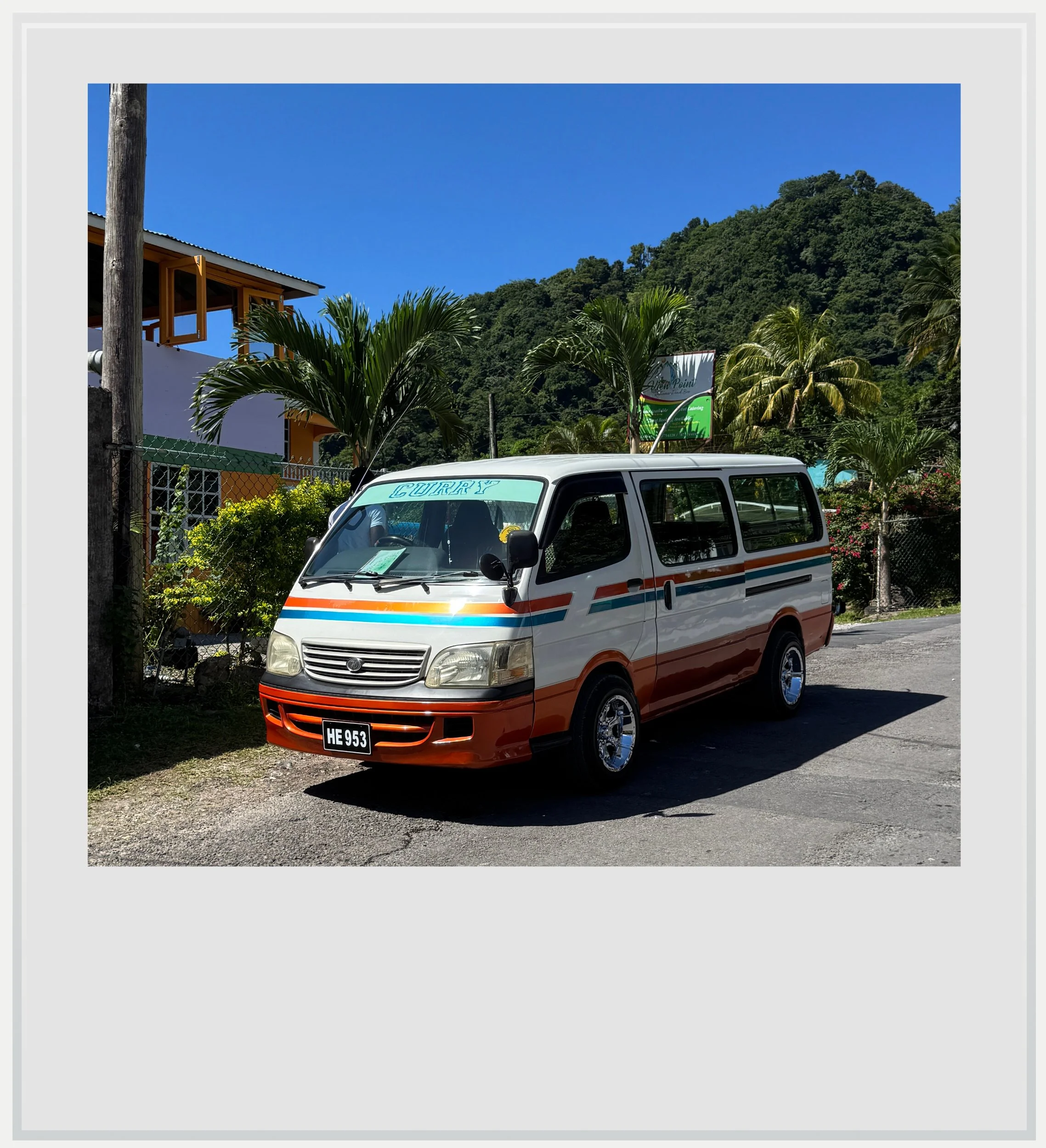
Our colorful 8-person bus on a tour of Dominica.
Keep in mind these travel tips
Dominica uses its Eastern Caribbean Dollar as currency, but it is pegged to the US dollar at a fixed rate of 2.70 ECD to 1 USD. You can use US notes in Dominica, although the change may be given in ECD. Credit cards are not widely accepted throughout the country so make sure to have enough USD notes with you.
The heat can be intense, but it is easy to find cold refreshments wherever you go - Roseau has a few supermarkets and almost every tourist stop (be it Trafalgar Falls or Morne Bruce) has its share of vendors with coolers offering water, sodas and beers. At time of writing, the going rate was USD2 for water and USD3 for sodas.
SPF will be your best friend. The UV index may be low in the morning and evening, but during the day, it gets pretty high.
Every photo’s legend will appear if you hover over it (on a computer) or click on it (on a smartphone).
All photos are mine and copyrighted.