One Day in St Barths, France.
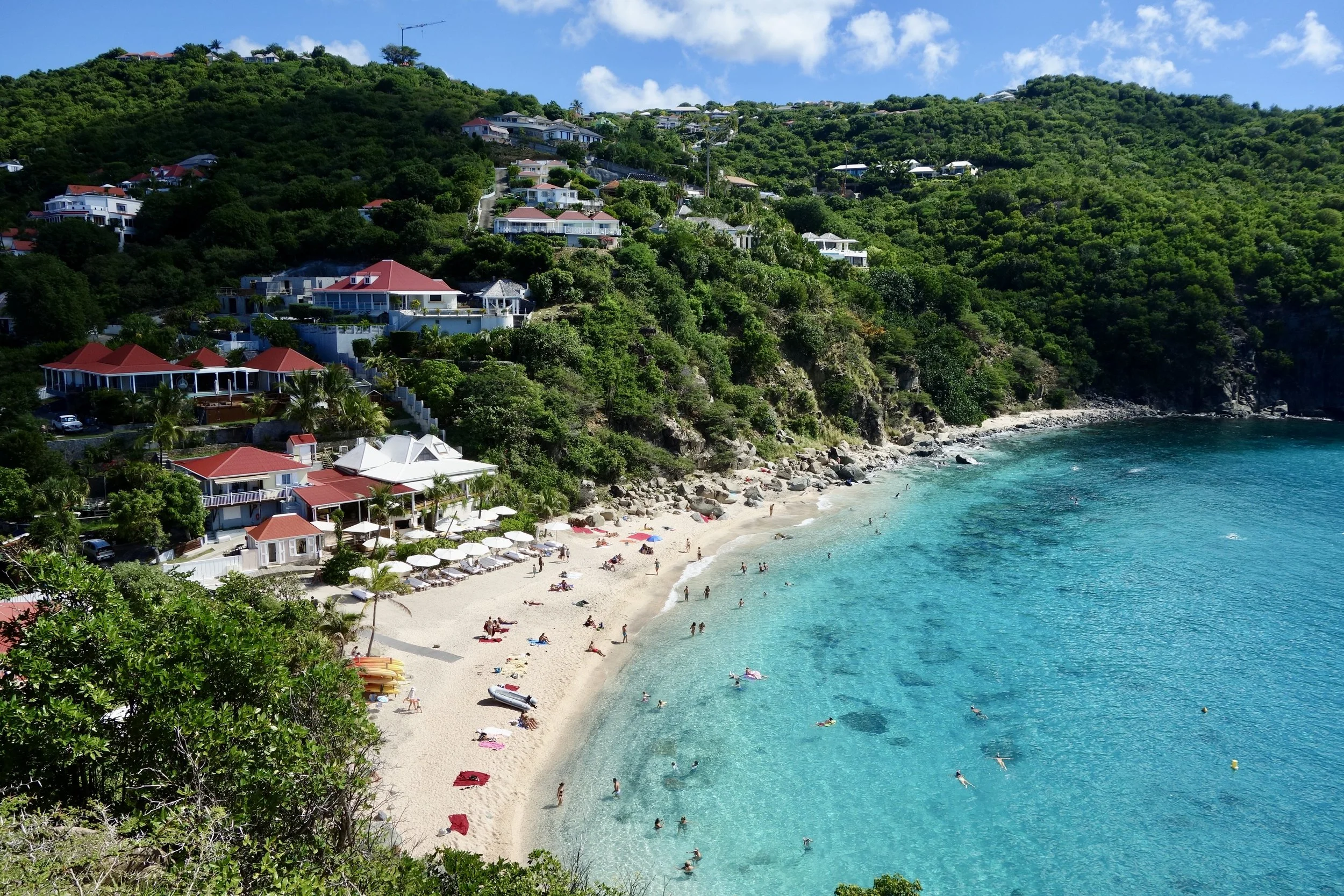
A Caribbean island where the asphalt gleams and the money whispers.
Looking for concrete details and tips? Go straight to the Practical Information section.
I went on an Explora Journeys luxury cruise in November 2025 and visited a few Caribbean island on a voyage linking San Juan with Miami: Anguilla, Antigua, St Barths and Tortola.
The second I stepped off the tender boat in Gustavia, St Barths’ capital, I knew I had set foot in a Caribbean island like no other. While every small island can look the same from afar - densely forested hills dotted with houses, golden sand beaches, bright blue waters - the vibe in Gustavia was noticeably different.
It instantly smelled like money. The ferry terminal was in pristine condition, its wood planks perfectly polished, almost apologizing for even being there, seemingly asking why anyone would want to take a boat and leave this place.
What really got me though, were the roads. I grew up in France and remember how obsessed the country was with how smooth the macadam should be, how a pothole would signal the end of civilization as we knew it, the unmistakable sign that things were going by the wayside, that we were running out of money. “They can’t even fix the roads!” the papers would write.
Gustavia felt like a rich French town from my youth, with perfectly smooth road surfaces. It may sound trivial, but after spending three uninterrupted weeks island-hopping in the Caribbean, it actually felt like a brutal, if welcome, change.
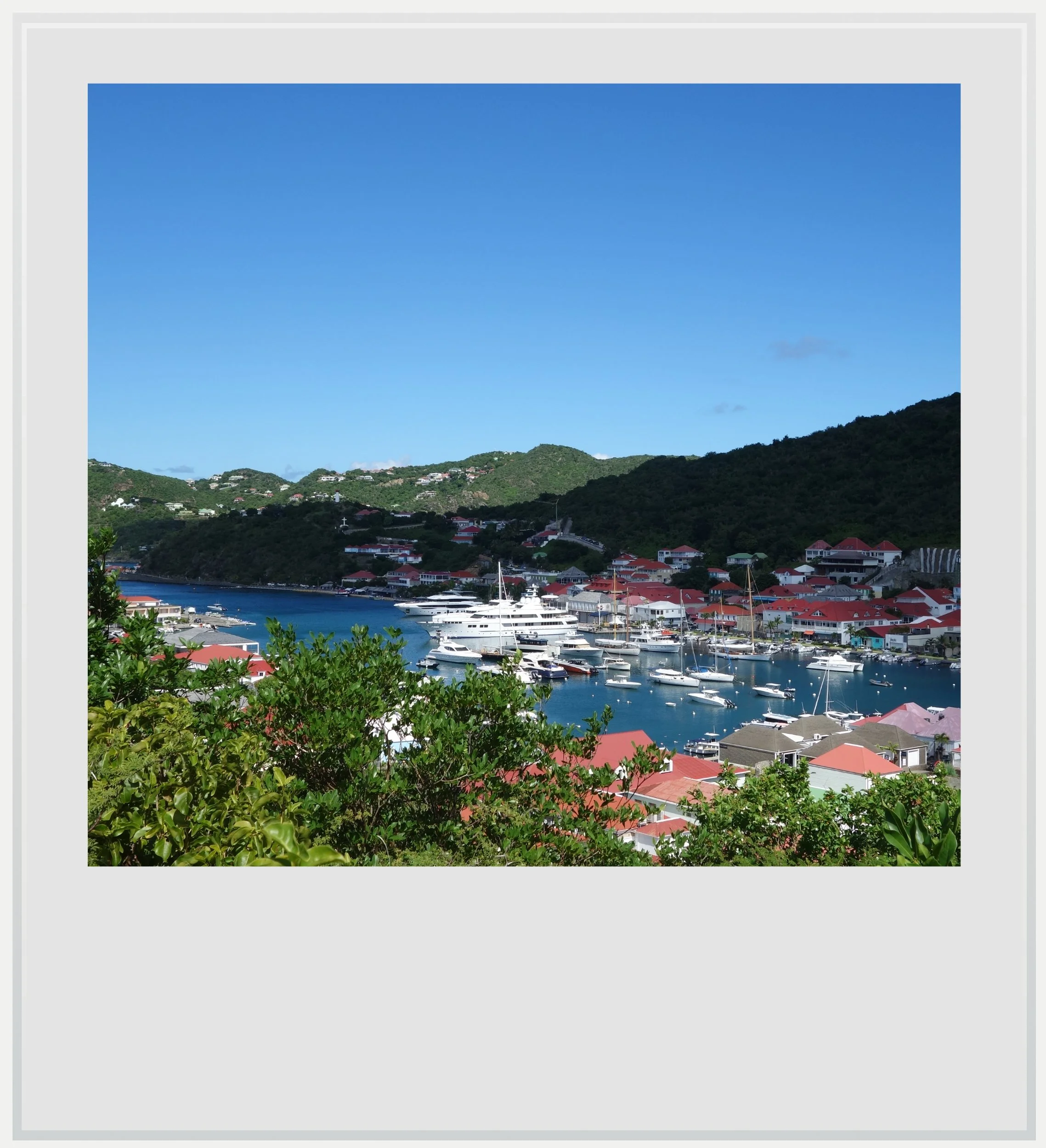
Gustavia harbor.
It turned out the asphalt’s perfect state was only the beginning. As we started walking, rather aimlessly, on Rue de la République (Republic street), I noticed the stores lining up beside the sidewalk were telling a very clear story of unmitigated privilege: Prada, Louis Vuitton, Hermès, Cartier… it felt like I had stepped into a miniature version of Rodeo Drive in the Leeward Islands.
It wasn’t lost on us that we had come on shore on a Sunday, a somewhat sacred day in France, when most businesses were required to be closed so time could be spent on non-consumerist endeavors (we actually witnessed the tail end of Sunday mass at the Anglican church on Fahlberg street a few minutes later). The city center was deserted, and the only people trying to get into closed stores were Explora Journeys passengers who, like us, expected a lively, posh French town in the Caribbean ready to welcome them.
Swedish rule left a profound mark on the territory.
It was a sobering reminder that not everything, at least in France, revolved around the tourist business. Slightly disappointed by the lack of shopping opportunities but, perhaps, secretly relieved, we decided to check out a place where we knew French people would be: the beach.
Shell beach, or Plage des Grands Galets, is a small cove that happens to be the closest to downtown Gustavia - in fact you could argue it is within the city itself. Opposite the sheltered harbor, it was a mere five minutes walk from it, in a heat that was already stifling. The beach looked wonderful and was, indeed, full of people. We weren’t wearing swim trunks so couldn’t partake, and instead decided to observe the beach from above, walked back and climbed the little hill to the north of it (there was a well-marked path to do so). At the top, the beach looked even better, a little oasis of white sand and shallow turquoise waters surrounded by abrupt cliffs. Behind us, we could see the Gustavia harbor and, beyond it, our boat, anchored in the bay.
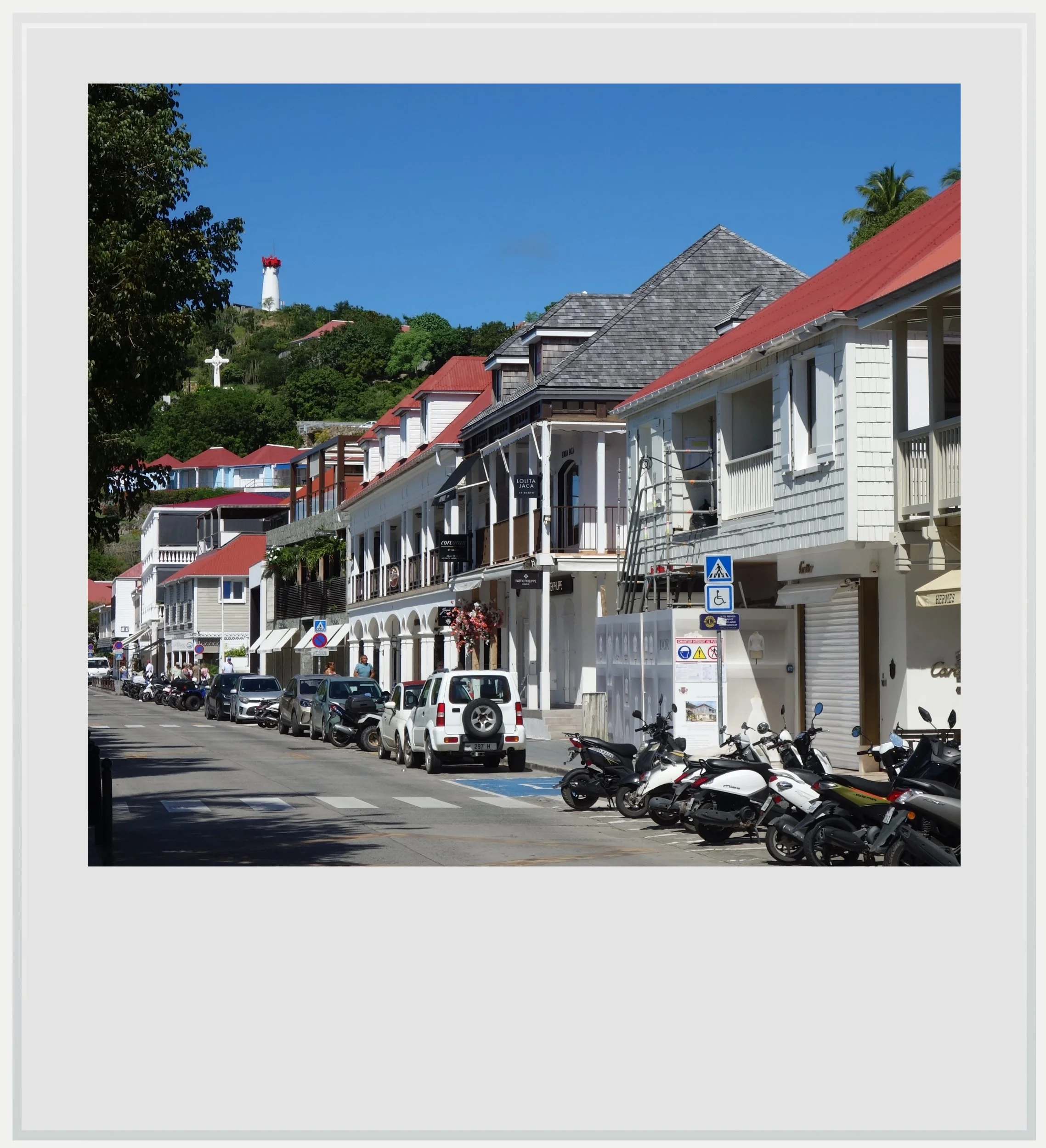
A street in Gustavia.
We walked a little more in Gustavia, all the way to a fort we had seen on the tender boat coming in, Fort Oscar. Initially built in the 18th century to protect the island, the fort had been, for a long time, a listening station for the DGSE, the French secret services, and was now home of the French police, and, because of that, closed to visitors with a stern sign reminding people that serious business was happening there, and it would be a bad idea to go in to sight see. Vive la France, I guess.
It was getting really hot, and we had plans for the afternoon on the island, but felt it would make more sense to head back to the boat for now. It would have been hard to find anywhere to eat in town anyway, because Sunday.
St Barths, even more so than many other Caribbean island, has a fascinating history. It is believed the island wasn’t inhabited when Christopher Columbus first laid eyes on it, in 1493, and named it Santo Bartolomeo, after his brother. The French formally started settling the island by the middle of the 17th century but given the lack of fresh water and the hilly terrain, exploiting its resources wasn’t profitable. In 1784, after a few attacks by the British Army, France sold St Barths to Sweden which, at that time time, wanted to increase its presence in the region. Swedish rule lasted almost 100 years but in 1877, the Swedes, feeling like the cost of maintaining a presence in the Caribbean was now outweighing its benefits, sold back the islands to France after a local referendum.
Swedish rule was short, but it nonetheless left a profound mark on the territory. The island’s main town, Le Carénage, was renamed Gustavia to honor the ruling monarch, Gustav III, but more importantly became a free port, which boosted trade, and came to explain part of St Barths’ growth. Today, street signs around Gustavia bear a French name and a smaller Swedish one as remembrance of this time. Many signs in town are also written in three languages (French, English, but also Swedish).
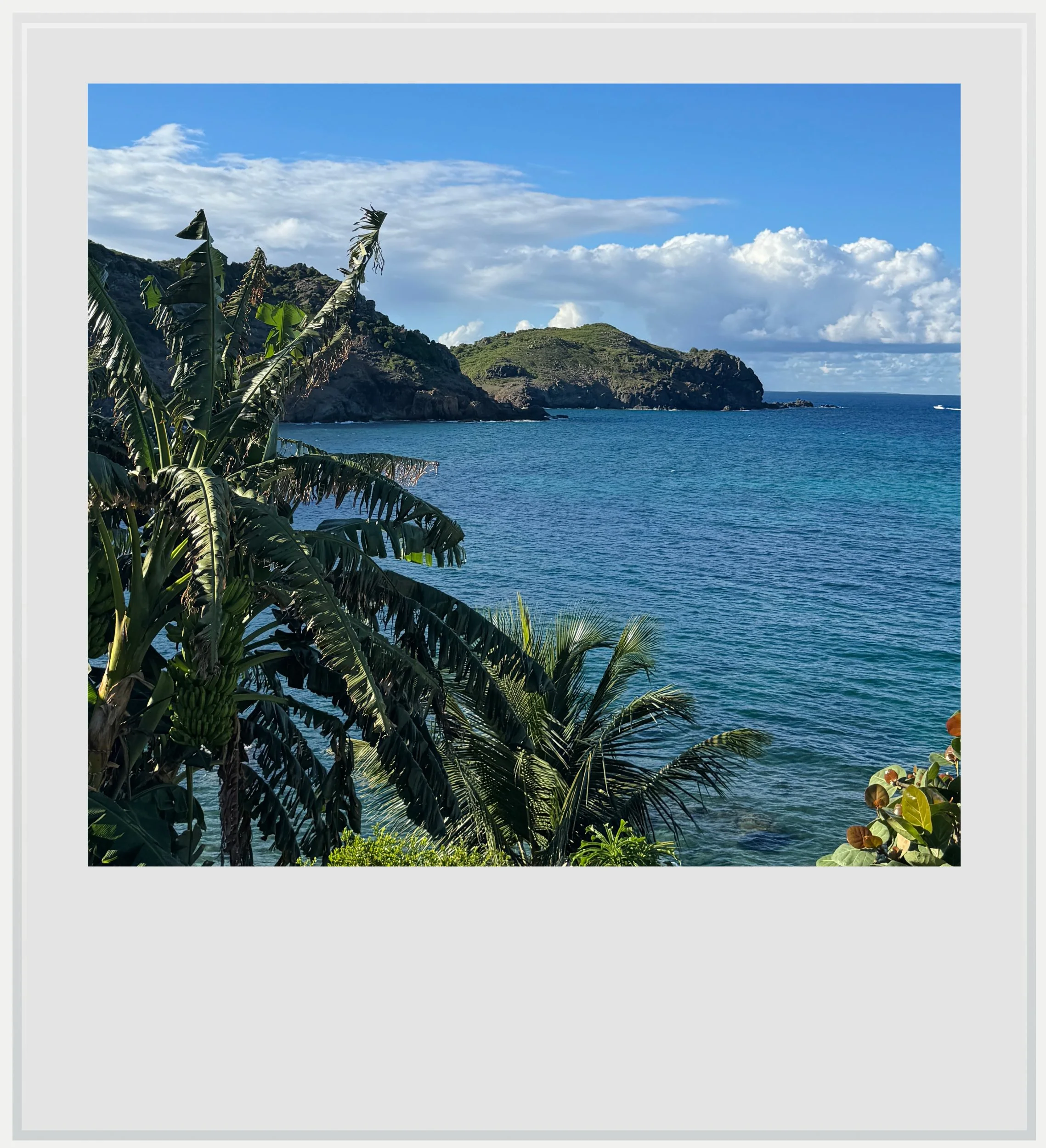
On the way to Anse Colombier by foot, passing by Petite Anse.
We returned ashore to explore when the heat became more tolerable, around 2.30pm. We waited a while for a taxi to show up at the station by the ferry terminal, but one eventually came and drove us to Flemish beach, home of the extremely famous and extremely expensive Cheval Blanc hotel. This wasn’t the reason for our trip, but we promised ourselves we’d check it out on the way back.
What we wanted to do was reach Anse Colombier, a secluded beach to the northwest that was only accessible by foot or boat - in essence, the epitome of a Roads Not Traveled destination. It took us about thirty minutes, some of them spent on a treacherous rocky path the French liked to call Chemin des Douaniers, or customs officers’ path, seeing more tortoises than humans, before getting to a beautiful, calm bay. Hemmed in by a massive sand dune, the beach was impressive, and almost ours. It felt like the most secret beach on this hush-hush Caribbean island, and we enjoyed its warm waters and silky-smooth sand for a while.
St Barths made a perfect vacation escape for the jet-setting crowd.
We got back to Flemish beach in time to witness dreamy sunset shades of red by the Cheval Blanc pool, a fancy cocktail in hand, before getting a taxi back to the terminal.
St Barths is well known for being the island for the rich and famous. In fact, Billionaire Island is one of its stickiest nicknames.
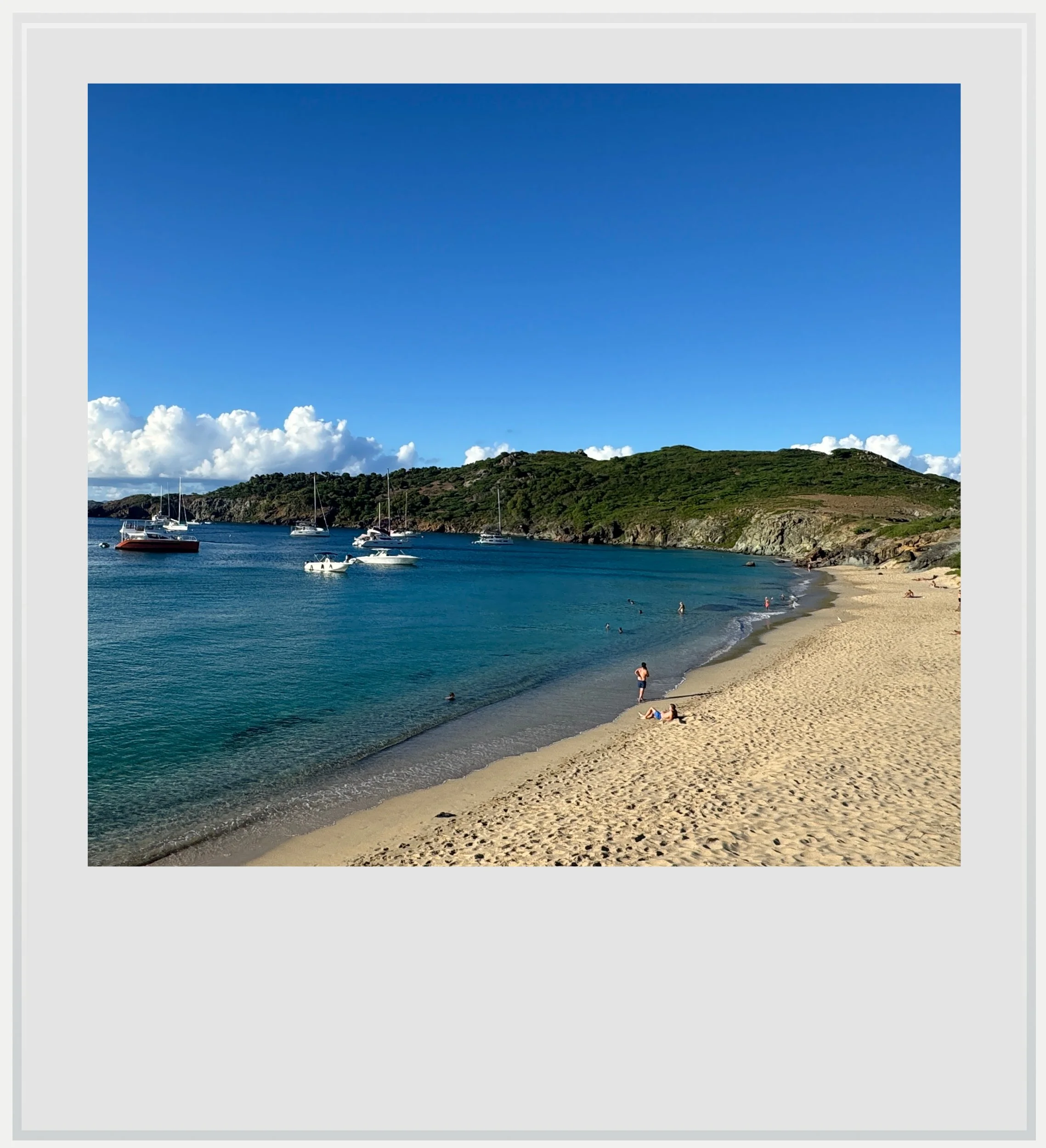
Anse Colombier beach in St Barths.
1946 is widely seen as a turning point in the island’s history. That year, aviator Remy de Haenen was the first to land a plane where, years later, Saint Barth’s airport would be built, but which was at the time a flat meadows with grazing sheep. In love with the island, he built the Eden Rock hotel which quickly became a magnet for celebrities looking for R&R away from the paparazzi - Greta Garbo was said to be one of the first guests.
In 1957, David Rockefeller, a grandson to the American tycoon, purchased land there to build a winter home, followed by members of the Rothschild family, and the island quickly morphed into the confidential A-list paradise it still is today.
St Barths had all the ingredients to make a perfect vacation escape for the jet-setting crowd: it was indeed a gorgeous spot, but it was also tiny and not populous - a great place to be left in peace. The Swedes had left Gustavia a free port, which meant luxury stores could sell their goods duty-free, making the town a great destination for shopping. Finally, French rule meant a solid judicial system, and a guarantee of law and order.
For all I had heard about St Barths being this exclusive luxury island, I was pleasantly surprised to find a place that, although refined, didn’t scream exclusivity. Yes, the island was well kept, its palm trees perfectly manicured, but nowhere did I feel like there was an invisible velvet rope separating the pleb from the powerful. It might have been there, but I never felt it.
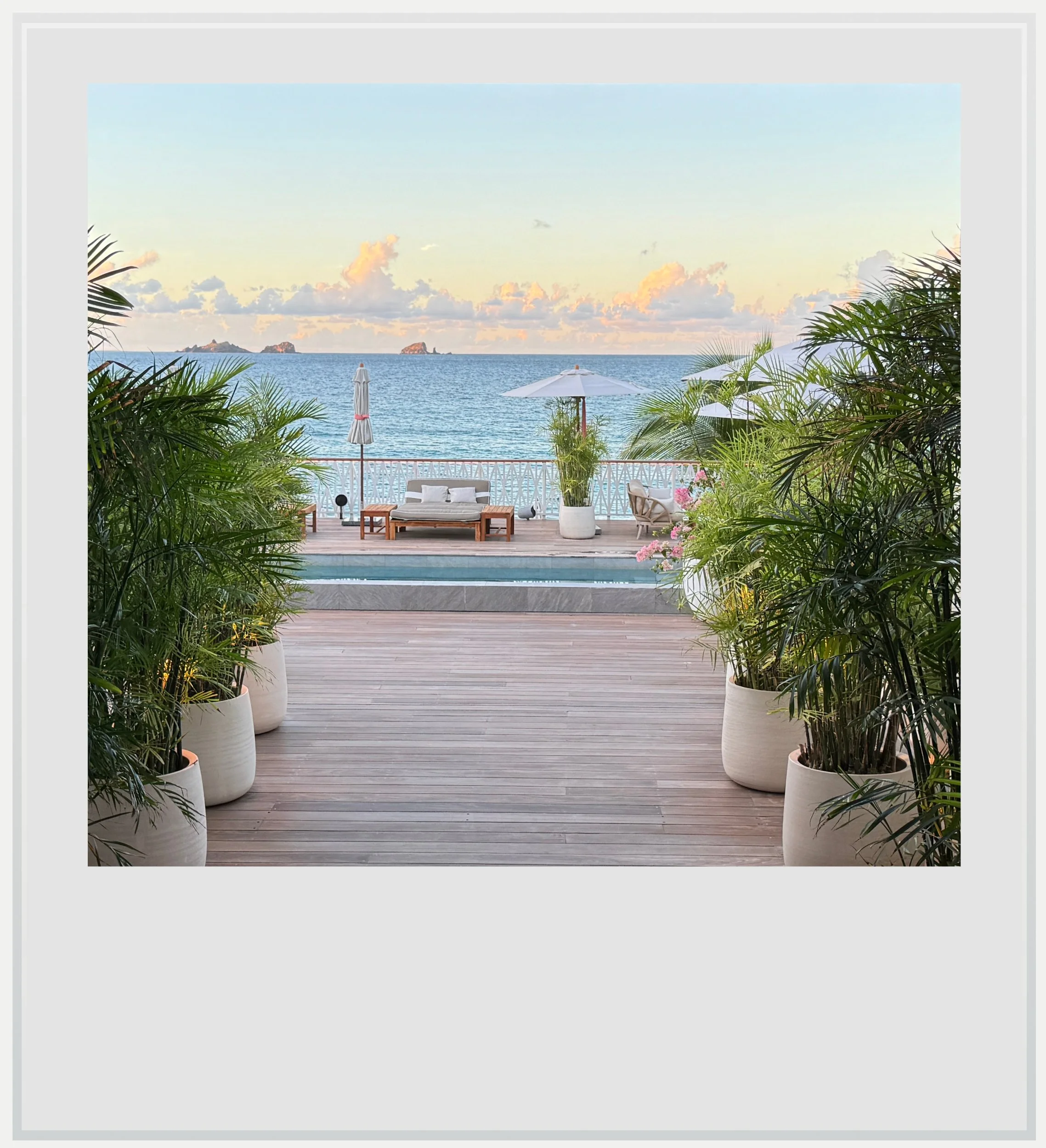
Getting to the pool at the Cheval Blanc hotel on Flemish beach.
What stayed with me
I expected St Barths to be this in-your-face resort island, the Deauville of the Caribbean. Instead, I was touched by its authenticity, the sheer beauty and joie de vivre of a place that, unlike some of the neighboring islands, didn’t have to sell its soul for concrete-clad mega resorts and casinos, a spot that felt preserved and, at least for now, away from the main travel circuit.
Practical information
(everything you wanted to know about St Barths - updated November 2025)
In a nutshell
St Barths, Caribbean’s Billionaire Island, is a miniature paradise of stunning beauty and preserved nature, among exclusive resorts and fancy mansions. Don’t come for the luxury duty-free shopping. Instead immerse yourself in its fascinating Franco-Swedish heritage, the perfectly preserved capital Gustavia, and one of the islands’ many splendid beaches.
Currency: Euro (credit cards are widely accepted).
Language: French, but English is spoken, or at least understood, by a lot of islanders.
Getting to St Barths
How to get to St Barths from the United States: there is a small airport in St Barths, but given its runway length, it only accommodates flights from neighboring islands - the furthest flights operates to and from San Juan, Puerto Rico. Most tourists coming to St Barths will fly into Princess Juliana International Airport (SXM), on the neighboring island of St Maarten, and either connect on a small plane to St Barth’s Rémy de Haenen airport (SBH) or take a ferry.
Flights are also available from a smaller airport in St Martin, on the French side (Grand Case, airport code SFG).
Winair operates about 20 flights between SXM and SBH, with round trip flights around $300. The flights take less than 15 minutes and are operated on small DeHavilland Twin Otters. Winair interlines with many airlines like AirFrance, United or Jetblue, making one-ticket itineraries possible from many points in the US (and Europe), meaning you won’t have to re-check your luggage at SXM.
St Barths’ Remy de Haenen airport, also informally known as Gustav III airport, is a very tricky airport to land at because of the surrounding hills and short runway, and pilots need special training to do so. Travelers recall quite impressive landings (and indeed, planes barely seem to clear terrain before diving down to the runway).
Ferries are also available to cross the channel between St Maarten and St Barths. Great Bay Express operates from Philippsburg, on the Dutch side with 5 services a day (3 on Sundays), and return tickets start around USD100 with a 45-minute crossing time. Voyager offers service from Marigot, on the French side, with 4 rotations every day. The trip lasts about one hour and prices start at USD85.
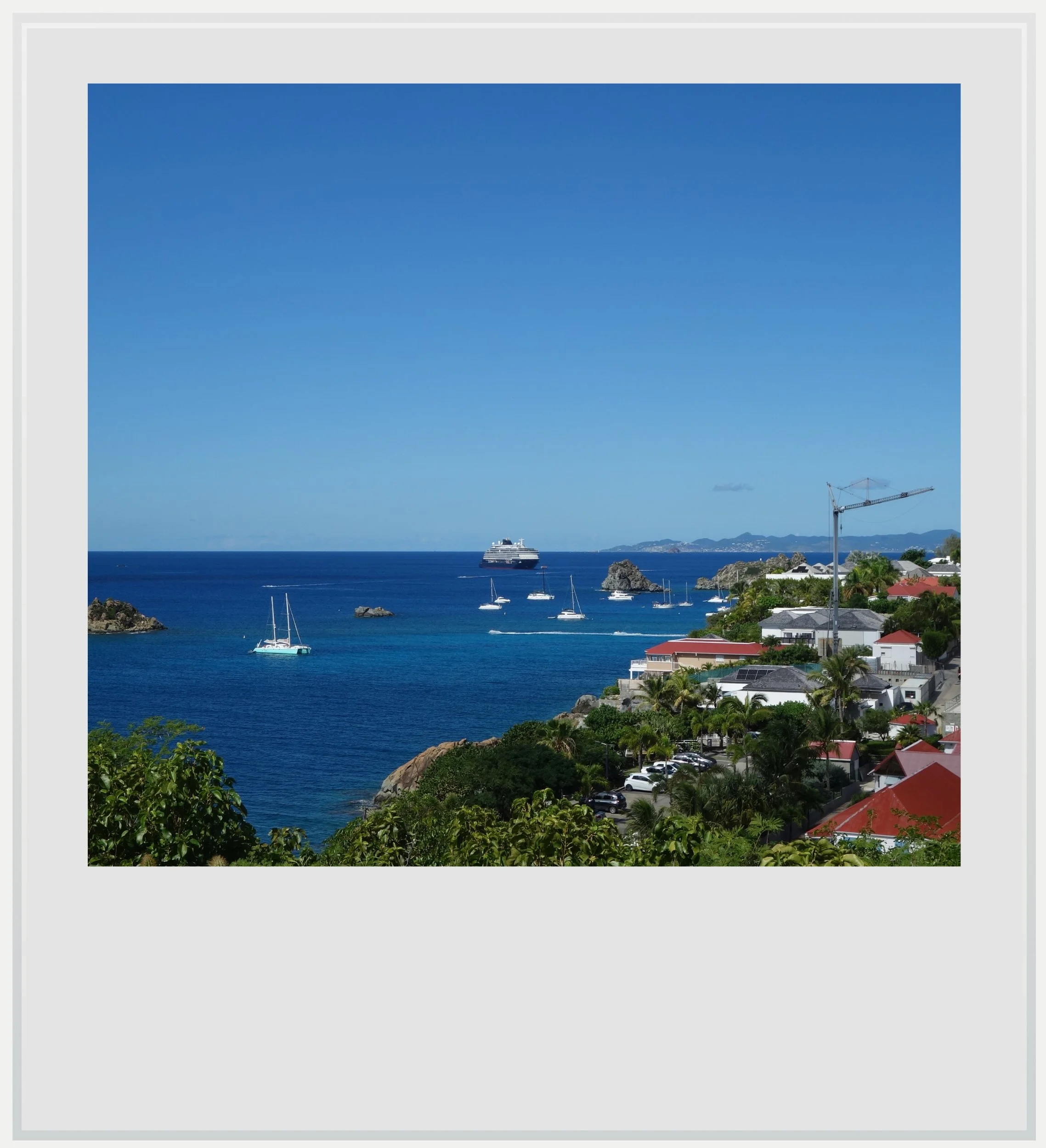
The Explora I ship anchored near Gustavia.
When to go to St Barths
The best months weather-wise to visit St Barths are during the dry season, between December and April. This is also peak season so the tiny island may be a little crowded and prices a tad bit higher than the rest of the year. This is especially true around the December holidays.
November and May are good shoulder season months, with pleasant weather and fewer crowds.
It is possible to visit the island year-round but keep in mind the Atlantic hurricane season runs form June 1 to November 30, with the highest probability of damaging hurricanes in September.
Our Explora Journeys cruise ship anchored near St Barths in late November and, beyond the cruise ship tourists, there weren’t many vacationers on the island. It felt refreshingly uncrowded.
Although St Barths sees regular cruise traffic, mega ships do not call near the island, whose infrastructure doesn’t really cater to this demographic: there is no cruise ship dock and the tiny city of Gustavia doesn’t offer the kind of duty-free stores selling affordable t-shirts or mugs with cheesy taglines that you could find in Basseterre or Philipsburg.
In fact, most of the cruise ships anchoring in the Gustavia bay are from luxury cruise lines, from Silversea to Oceania (the biggest, with up to 1,200 passengers). This ensures the island never feels crowded the way Cozumel can feel when 5 enormous ships dock on the same day.
Check which cruise ships may anchor nearby on the days of your visit here.
Just one day in St Barths?
Walk around Gustavia, the capital, for a little while, to discover its cute streets, wonderful natural harbor, and sweeping views from either Fort Karl or the lighthouse, then grab a cab to one of the beaches (St Jean, Flemish) and spend the afternoon lounging on a beach chair - or if you’re more adventurous, hike to Anse Colombier like we did, to be away from the crowds. Once back on Flemish beach, the valet at the Cheval Blanc hotel will call you a cab to head back to Gustavia (EUR 45 one way).
If you’re planning on visiting St Barths from St Martin, don’t forget to check out Pinel Island, a little wild gem near St Martin that is a lot closer than St Barths, and could be a great way to escape the crowds.
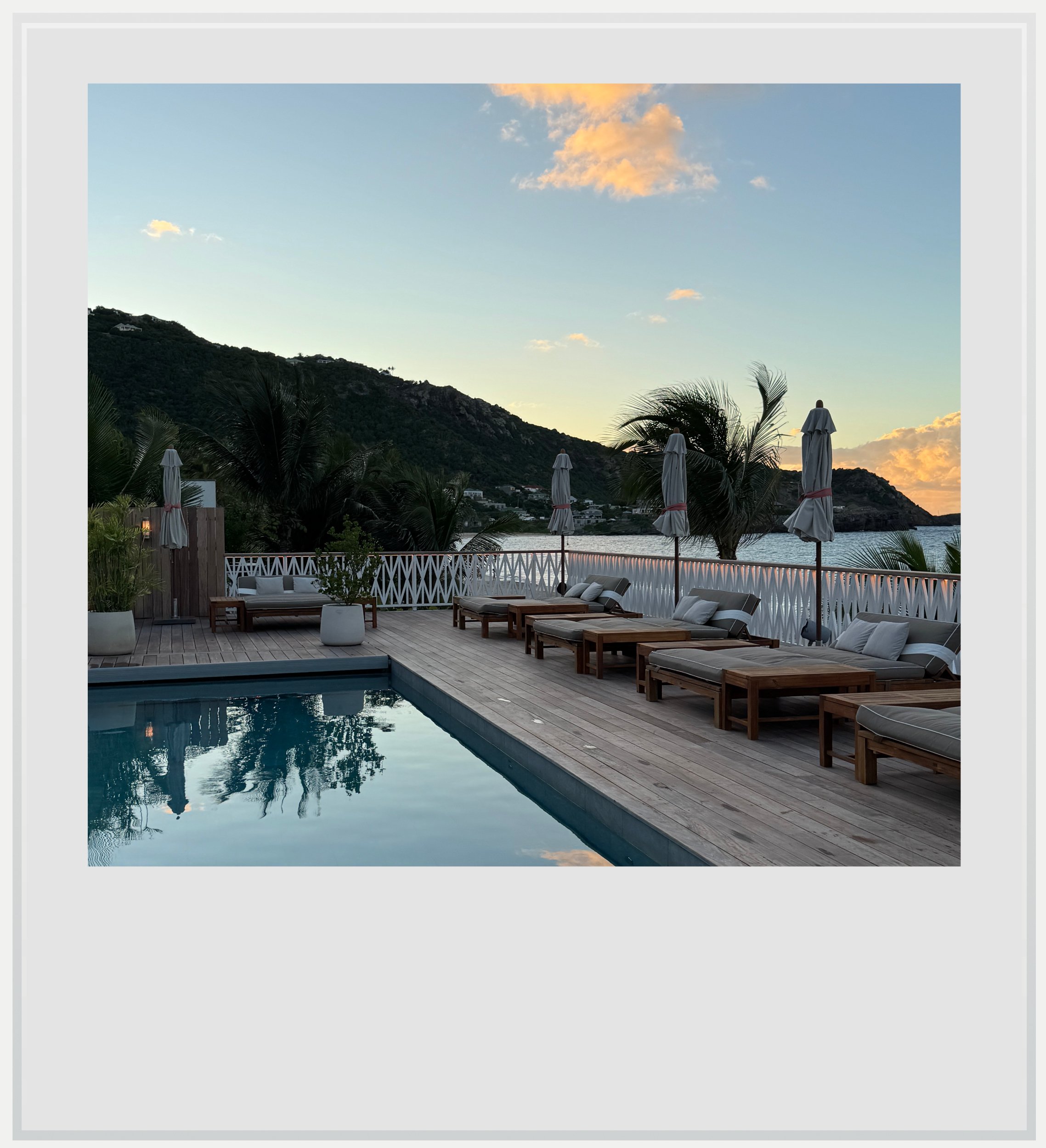
The Cheval Blanc hotel pool.
How to get to Anse Colombier
if you don’t have a boat, your best bet is to hike to the beach. Start on Flemish beach, walk to the western end and take the road that continues beyond the beach towards Petite Anse. The road ends with a warning sign to not trespass, which we were told to ignore as public beach access is a right in France. The road becomes a small, rocky path, somewhat treacherous so pay attention, especially because some rocks are actually tortoises (we almost tripped on a couple of them), which leads you to Anse Colombier. Walk down several steps, jump down on the sand and you’re there. The trek takes about 30 minutes.
There is no shade on the beach but some at the edge of the small forest around it, above the sand dune. It is a remote beach without services or food, so bring your own if you want to hang out for a while.
Safety in St Barths
St Barthélémy and the French West Indies are labeled a level 1 territory by the US Department of State, meaning there are no specific actions to take. This is as safe as it gets, level 1 being the lowest level possible, meaning this is a safe place to visit.
Keep in mind these travel tips
St Barth’s is a French territory, and uses the Euro as its currency. Credits cards are widely accepted (this is a fancy island, after all)
The island is small and while car rental outlets exist, taxis are plentiful (Uber isn’t available). There is a taxi station to the right of the ferry terminal. Taxis use fixed-rated pricing based on your destination.
SPF will be your best friend. The UV index may be low in the morning and evening, but during the day, it gets pretty high.
Every photo’s legend will appear if you hover over it (on a computer) or click on it (on a smartphone).
All photos are mine and copyrighted.