Xelha, Mexico.
Inside the Painted World of an Ancient Maya Port.
Looking for directions or opening hours? Head straight to the Practical Information section.
When I planned my foray into the Costa Oriental, the eastern part of the Yucatan peninsula, important archeological zones like Muyil or Coba were on my list. Zooming in on the map, however, I noticed several other sites dotted along the main highway between Cancun and Chetumal, and one piqued my curiosity.
Its name was Xelha, and for a moment I thought this was a mistake. The Xelha I knew was a famous ecotourism park built around a natural inlet along the Caribbean coast. It seemed incongruous for an ancient Maya settlement to be connected to it.
A few weeks later, here I was, driving south on the highway and, past Playa del Carmen, passing by colorful billboards signaling the access road to the water park. I remained on the road for a few hundred yards, until I saw a white stone wall on the right side of the road. I had arrived at the Xelha archeological zone.
The Google Maps pictures were taken in late 2023, and didn’t do justice to the glow-up the site had received after that. Thanks to federal funds appropriated to upgrade the tourist facilities in the region as part of the Maya Train project, Xelha had actually reopened mere weeks before my visit. The signage was new, the parking lot freshly graveled, the welcome area recently rebuilt. I felt I had missed the inauguration by only a few minutes.
El Palacio.
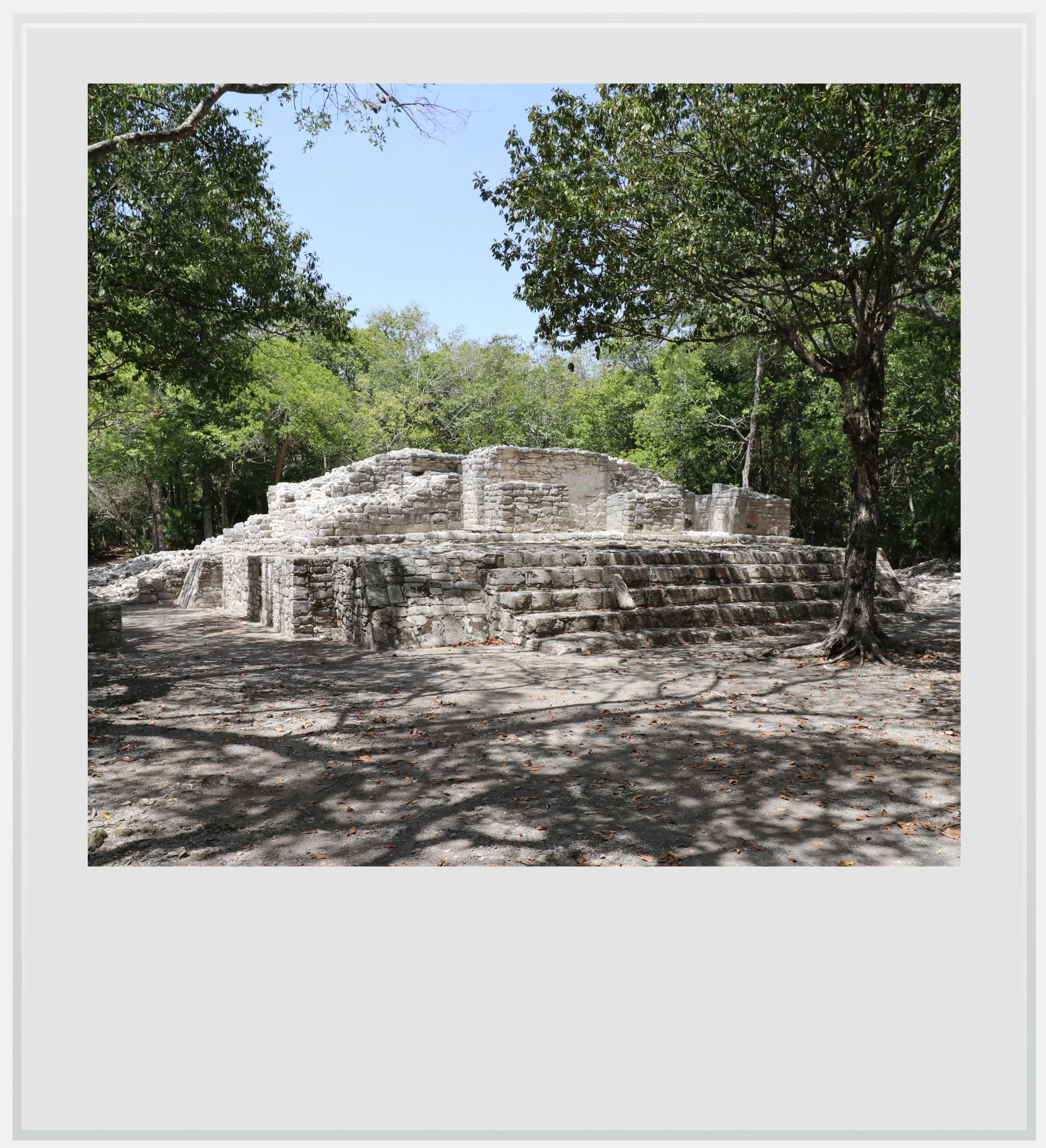
I was the only visitor on this August morning and quickly started exploring. Walking through the settlement was a strange experience, as the stillness of the surviving buildings, scattered over a larger area than I expected, contrasted with the incessant rumble of cars and trucks on the four-lane highway running alongside it.
Today, the main archeological area sits on the western side of the road but the edifices found there are only a small portion of what Xelha once was. Much as at El Meco further north, the site once extended further but development of the Riviera Maya over previous decades had resulted in the modern highway cutting the site in two.
During the Early Classic period (250 to 600 AD), Xelha was one of the main commercial ports on the Caribbean coast, and is believed to have been the maritime trading gateway for the powerful city of Coba, about 40 miles (65 km) to the northwest. After a period of decline, it regained its importance in the Late Postclassic period, from about 1250 AD.
Historians believe the Costa Oriental grew in importance after the decline of inland cities such as Chichen Itza, as Maya communities expanded their maritime trade networks.
The House of the Birds.
Xelha, with a natural harbor protected from the elements, occupied a strategic position along the coast, which helps explain why several of the building groups seen there today date from the Late Postclassic, when the area developed.
That Xelha was once a port seemed difficult to imagine as I was walking along the shaded path leading me to the first building cluster. There were none of the multilevel temples seen in other Costa Oriental settlements. There was a sense that I was looking at the suburbs of an old city, its beating heart much closer to the sea and not where I was. It reminded me of Chicanna, a satellite of the much grander Becan, in the Rio Bec area.
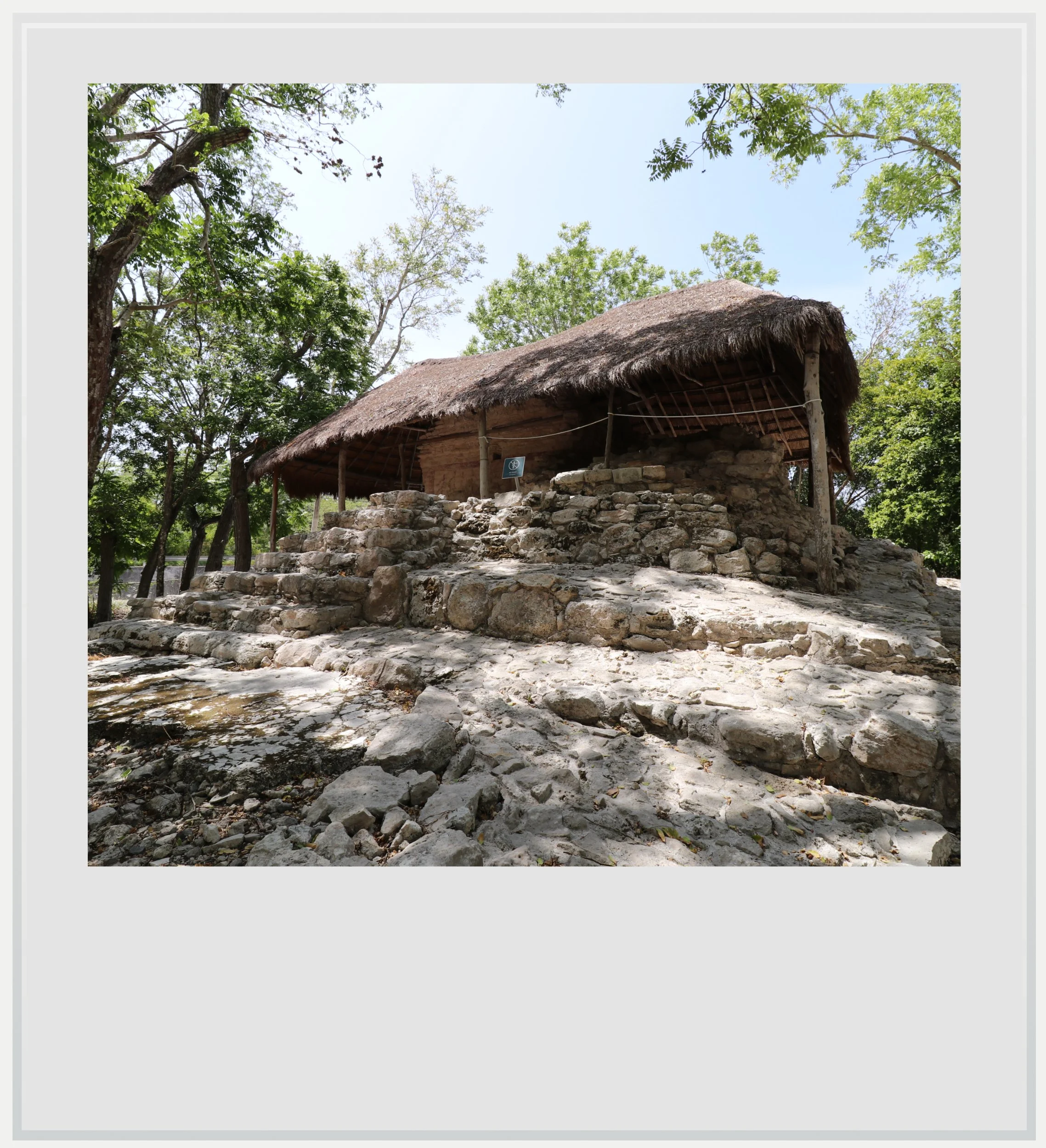
The sophistication of Xelha became clear once I approached the House of the Birds.
This impression wasn’t totally correct. There is no proof that there was ever a major temple anchoring the site. Nor was Xelha exceptional in this regard: major temples were relatively rare along the coast, with Tulum and El Meco among the few exceptions.
I was also misreading the architecture. It is easy to understand the importance of Uxmal or Calakmul as powerful Maya capitals, given how massive some of their buildings are. On the Costa Oriental, by contrast, size didn’t equal importance. Its most representative buildings were flat-roofed, one-story columned structures that appeared, at first glance, more modest.
The birds mural in the House of the Birds.
The sophistication of Xelha became clear once I approached the House of the Birds. One of the tallest edifices at the site, it was covered by a thatched roof - an unmistakable sign, in Mexican archeological zones, that something worth extra protection was underneath it. The building was clearly significant, although archeologists aren’t sure whether it was an elite residence or had any ceremonial role. It was built in several phases during the site’s occupation.
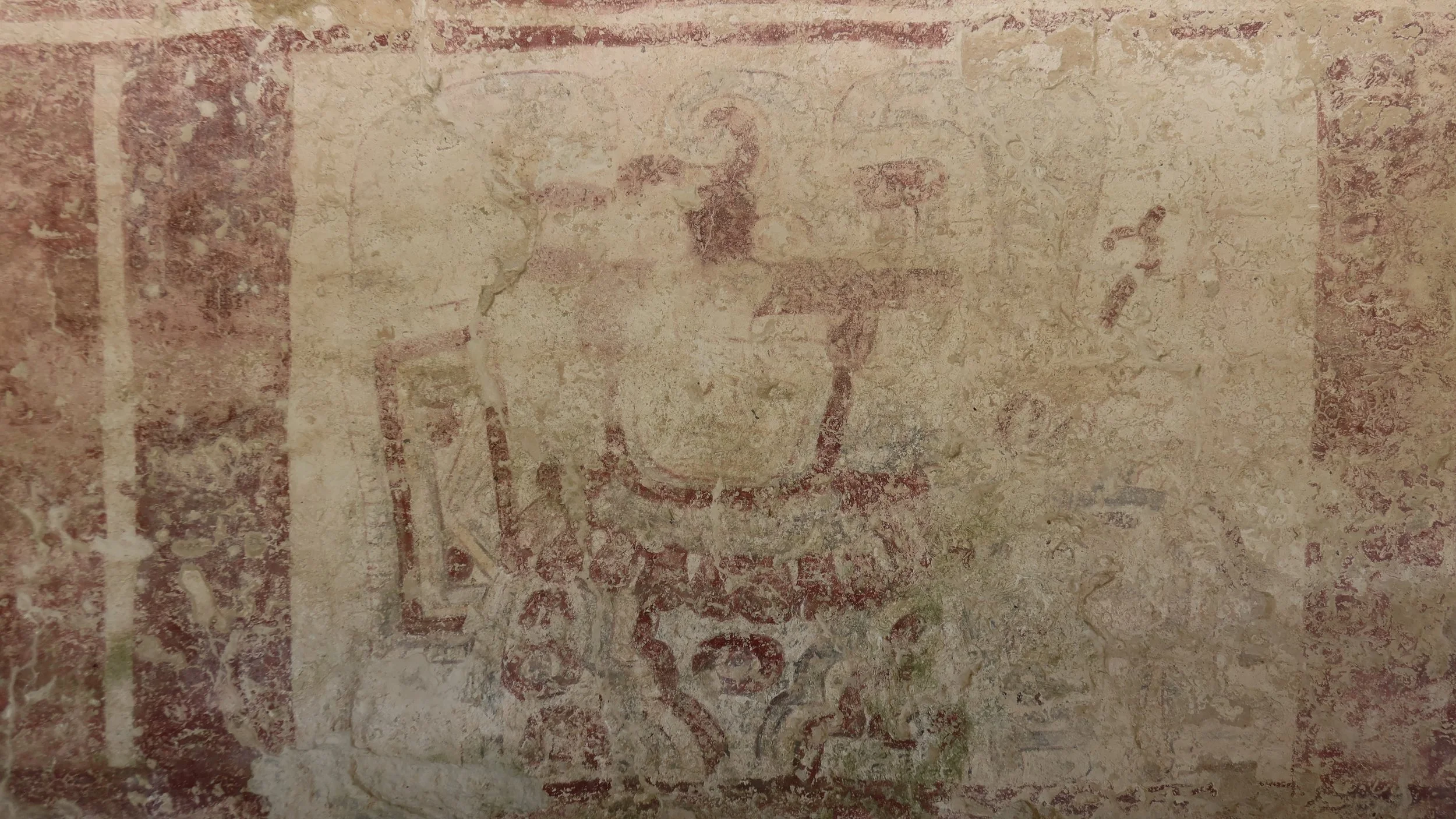
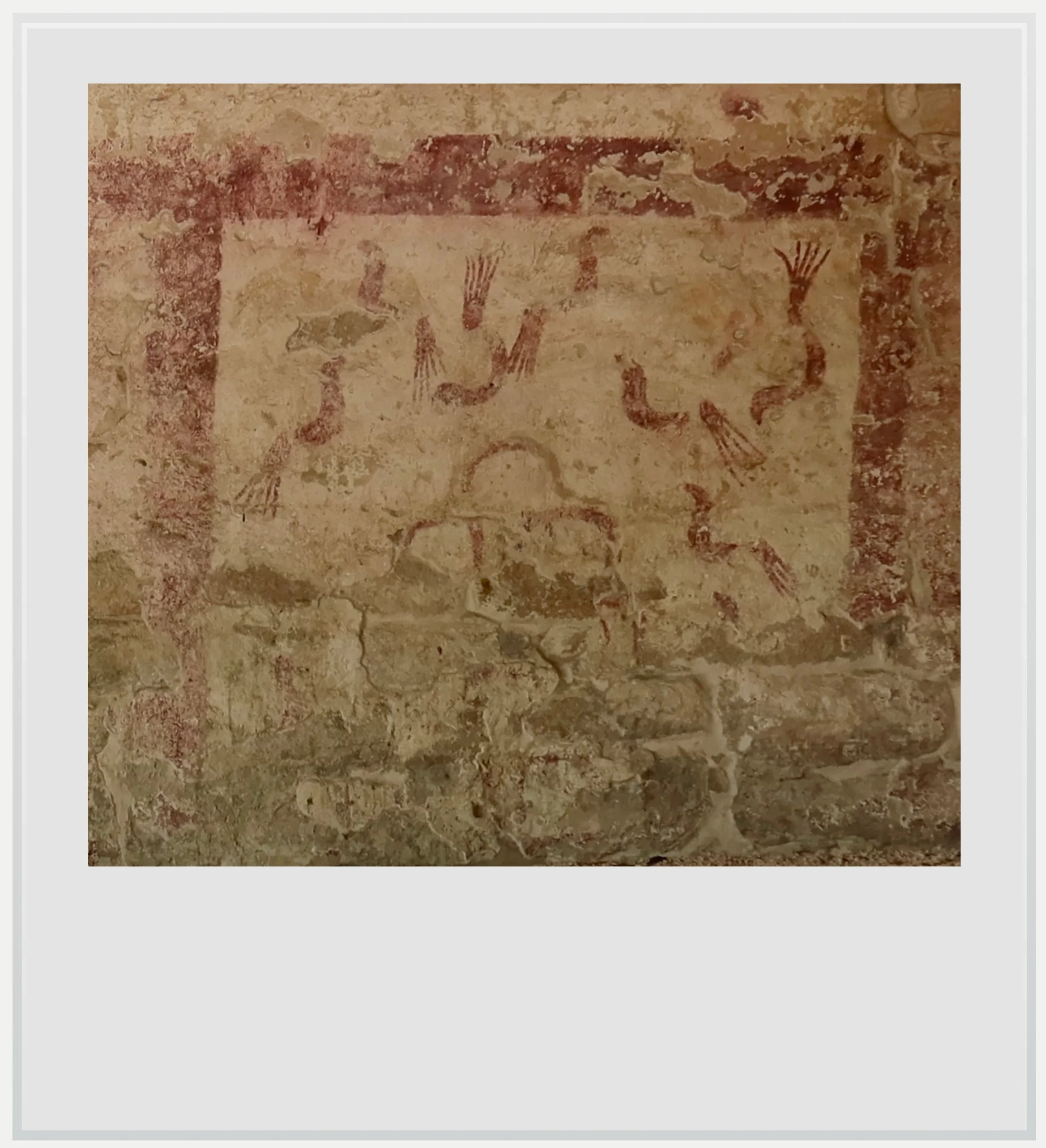
What was striking wasn’t really the building itself - road machinery demolished the outer walls of the palace’s two vaulted rooms during the construction of the Chetumal to Puerto Juarez highway in the 1970s. The central wall separating the two rooms was miraculously spared, leaving a mural on each side. These paintings are still visible today, and are rare examples of Early Classic Maya paintings found on the Costa Oriental.

Seeing paintings from more than 1,500 years ago was an incredible moment I wasn’t fully prepared for. Most of the paint has faded but parts of it are remarkably well preserved - I assumed later construction phases may have helped protect them from daylight and the elements. I also appreciated that they hadn’t been repainted during the restoration work. They were certainly cleaned and stabilized, but not enhanced. On the north side of the building, the painting depicts many birds flying - INAH interprets it as an allegory of nature.
The composition on the southern side was even more awe-inspiring, particularly the deity-like figure represented on the right panel, its aesthetic clearly inspired by Teotihuacan, then one of the largest cities in the Americas, located just north of present-day Mexico City. The use of green and blue pigments as well as the presence of Teotihuacan imagery imply contacts with other cultures during the Early Classic period, and highlight Xelha’s role as an important trading post this early in its history.
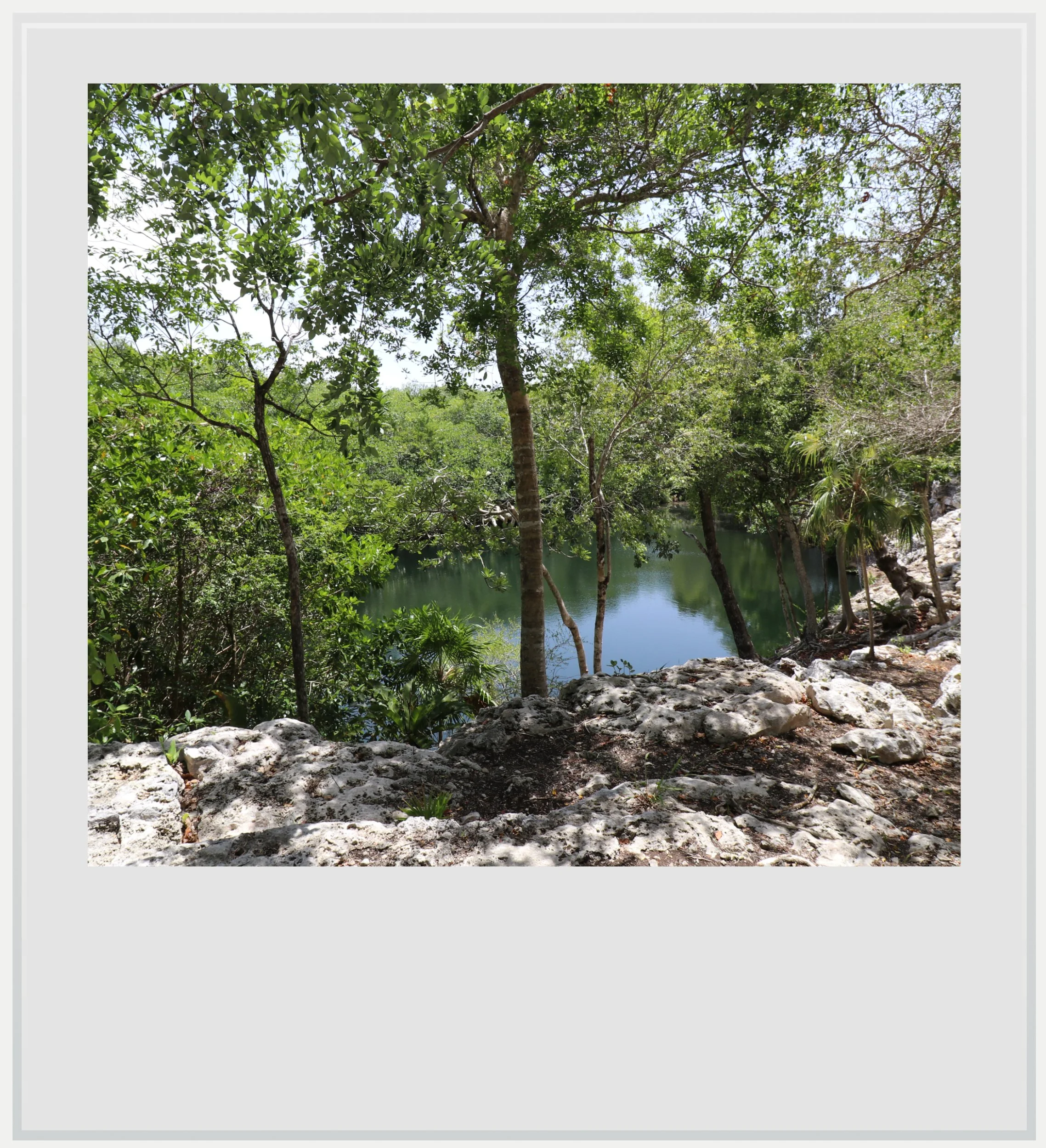
The cenote by the Jaguar Group of buildings.
The late morning heat was starting to take its toll on me but I soldiered on to visit the last part of the settlement open to the public, the Jaguar Group. Set apart from the rest of the structures, it is accessed via a sacbe, a raised Maya causeway built to connect different parts of a settlement, and abuts a cenote. This area of the site is even more secluded, and I was able to see a group of deer cross ahead of me, absolutely not frazzled by my presence.
The Jaguar Group was probably a ceremonial complex built during Xelha’s resurgence in the Late Postclassic, and its location next to a cenote, an entrance into the sacred subterranean world of the Maya, reinforces that hypothesis. Once the noise of the highway disappeared, the silence of the forest gave the Jaguar Group a charged atmosphere.
I wasn’t able to see the jaguar mural that gave this group its modern name, but I suddenly felt out of place. Perhaps that was why the iguana, perched on a stone above the cenote, was looking at me intently, or why I had stopped the deer in their tracks. They seemed to wonder what I was doing there, an unexpected human presence in this remote area of the site.
I was happy to have stopped in Xelha. It may not have been the most visually impressive Maya archeological zone along the Mexican Caribbean coast, but its ancient murals told a story of sophistication and connections that I hadn’t seen expressed so clearly in other, more important sites.
Practical information
(Everything you need to know about visiting Xelha - updated September 2026)
In a nutshell
Often confused with the neighboring water park, Xelha was once one of the most important Maya ports on the Caribbean coast. Its scattered archeological remains preserve rare Early Classic murals, Teotihuacan imagery and a secluded ceremonial complex reached by an ancient sacbe.
Getting to Xelha
How to get to Xelha from the United States: Xelha, located just off the main highway between Playa del Carmen and Tulum, is fairly easy to reach from the US. While the closest international airport is Tulum (TQO), about an hour away by car, Cancun (CUN), 1h15 to the north, offers a lot more non-stop options from the US and Canada. On a typical day in November, 25 cities in the US and Canada have non-stop service to the famous Mexican resort.
How to get to Xelha from Mexico City: Mexico City to Cancun is one of the busiest air routes in Mexico, with more than 20 flights a day, while the Mexico City to Tulum route offers a few daily flights, depending on the season. Flights take approximately 2 hours.
How to get to Xelha from Cancun and Cancun airport: from the city, the Hotel Zone or the airport, follow directions for Chetumal or Playa del Carmen on the carretera Cancun-Chetumal (highway 307), and continue until you get to the archeological zone, which sits directly to the right of the highway, here. Google Maps directions are straightforward, and the archeological zone offers parking. From the Cancun area, it should take between 1h15 and 1h30 depending on your starting point.
How to get to Xelha from Tulum: Xelha is fairly close to Tulum. Follow directions for Cancun on highway 307 and the ancient settlement of Xelha will be on your left, directly on the highway, in about 20 minutes.
How to get to Xelha from Tulum airport: Tulum airport isn’t as close to the city of Tulum as one might expect, and on the wrong side of town to get to Xelha. As a result, expect a little less than an hour to get there, passing through Tulum and then following the directions for Cancun on highway 307, until you see the parking area for Xelha on the left side of the highway.
Can I visit Xelha on a tour: I wasn’t able to find any tours with a stop in Xelha (many tours labeled ‘Xelha’ on global booking platforms refer to the large eco-park nearby, which is completely separate from the archeological zone.
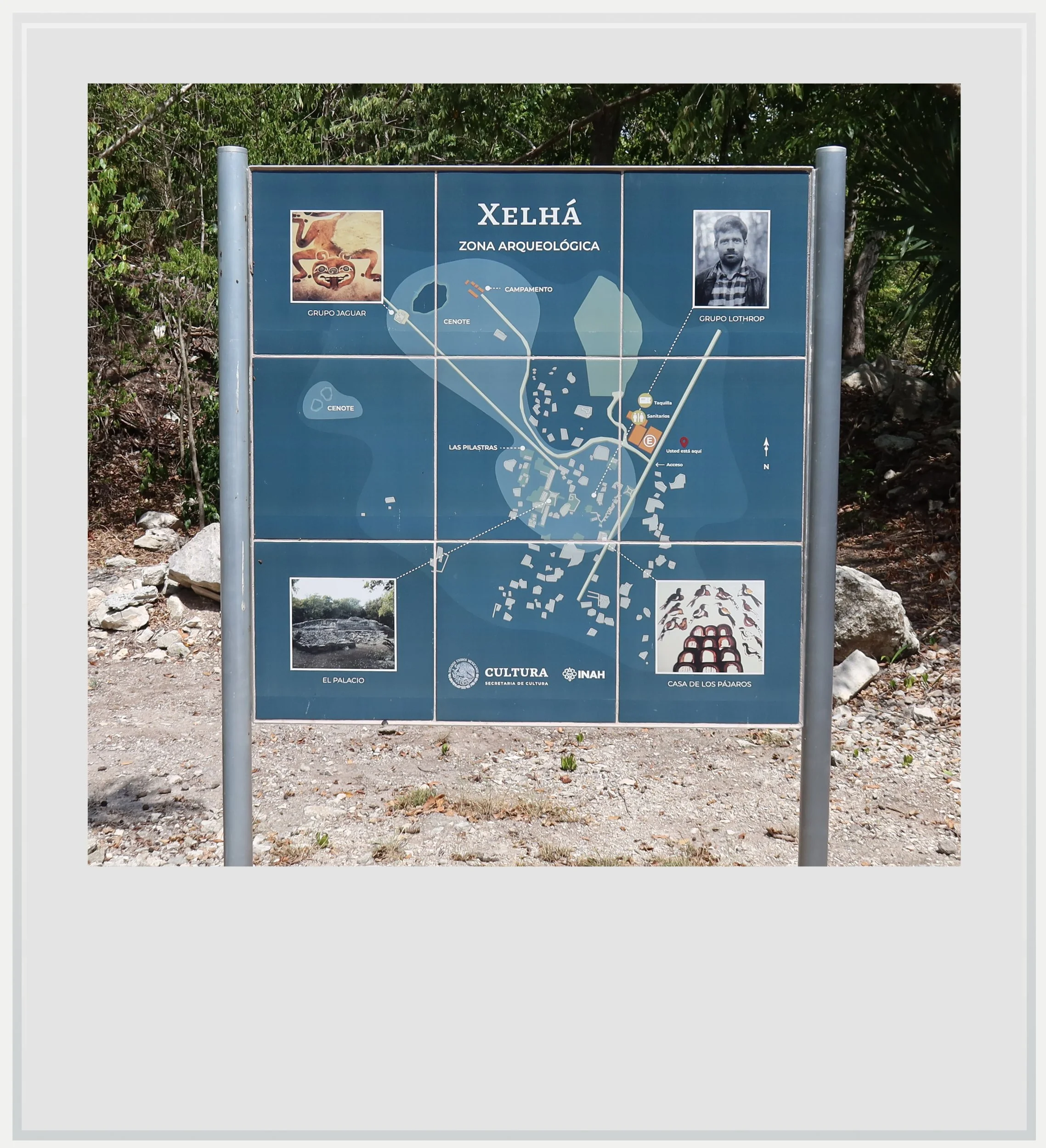
Xelha’s site map.
When to go to Xelha
Weather-wise, the best time to visit Xelha is the dry season, from November to April. This is also peak season but the site doesn’t see a lot of visitors, so it is unlikely to ever get crowded.
How much does it cost to visit Xelha
At the time of my visit, the entry price was MXN 210 for foreigners and MXN 105 for Mexican citizens and foreigners with residency in Mexico (with proof of residency).
How long should I plan to visit Xelha
Plan to spend 40 to 60 minutes there if you want to see the whole complex, including the Jaguar Group, located away from the main structures.
What are the opening hours of Xelha
The archeological zone is open every day from 8am to 5pm (last entry at 4.30pm).
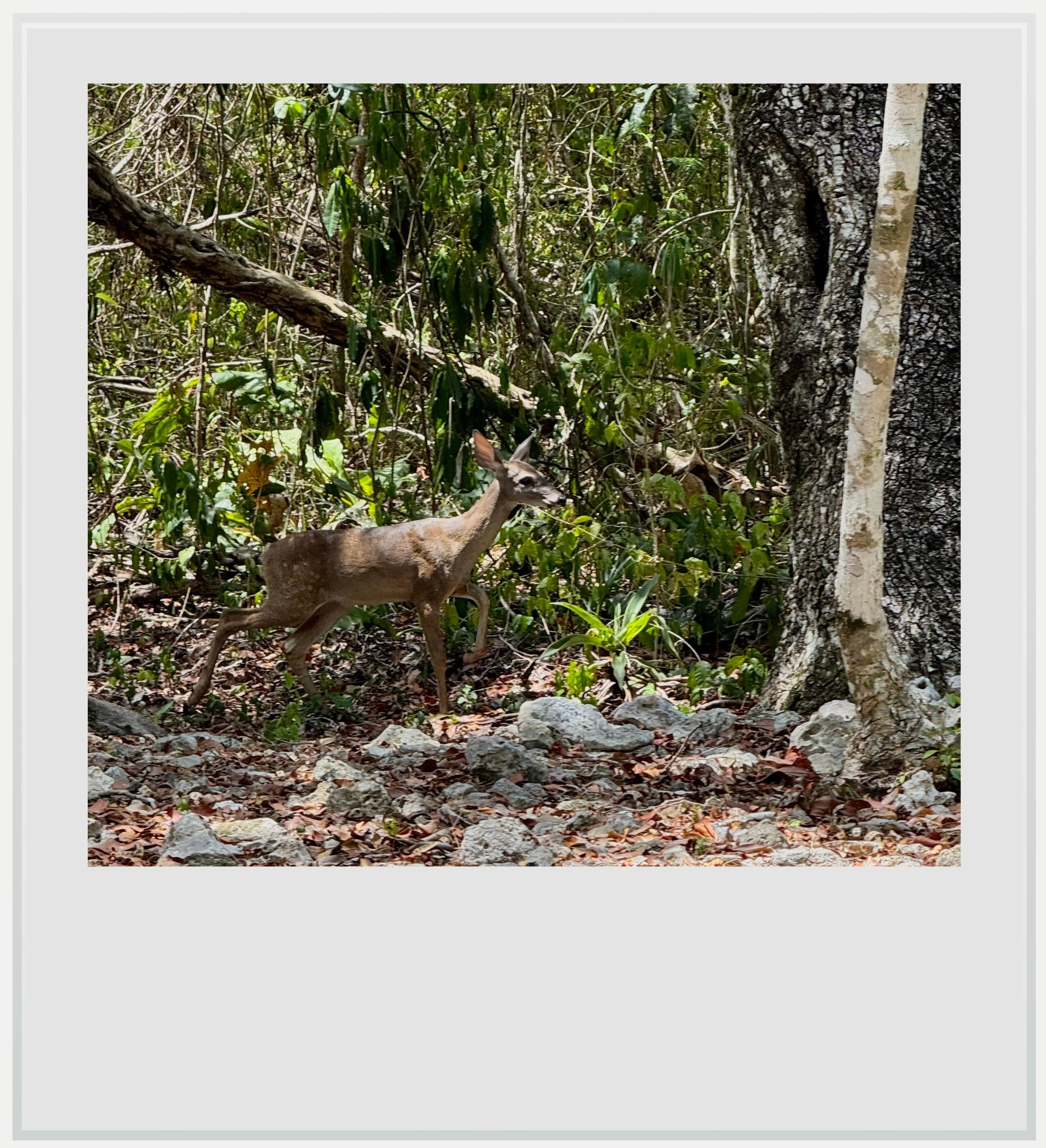
A Xelha resident.
Safety at Xelha
The Yucatan peninsula is one of the safest areas in Mexico. The U.S. State Department currently classifies Quintana Roo as Level 2, meaning travelers should “exercise increased caution.” This is the same warning level as Mexico as a whole, and similar to the level assigned to several European countries such as France, Germany and Italy.
Quintana Roo, however, has been in the news because of a few highly publicized violent events in recent years, from a shooting at the Xcaret hotel in 2022 to the murder of a Canadian citizen in a Cancun gym in 2023.
In these highly publicized cases, it is understood tourists weren’t targeted and foreigners involved in these incidents had, according to Mexican authorities, links to organized crime. It would be misleading to describe Quintana Roo as free of violence. The risk, however, is generally localized and extremely unlikely to affect an ordinary trip to the state.
Xelha itself felt perfectly safe to visit. It sits beside the busy main road between Cancun and Chetumal and has an official INAH presence.
Keep in mind these travel tips
Sunscreen will be your best friend. The UV index may be lower in the morning and evening, but during the day, it gets pretty high.
Do not forget to hydrate. OXXO and GoMart convenience stores are ubiquitous on the Riviera Maya, and always stock cold water and drinks. Make sure you always have water handy and drink regularly to make the heat more bearable.
Every photo caption appears when you hover over the image (on a computer) or click on it (on a smartphone).
All photos are mine and copyrighted.