A day in Toluca, Mexico.
Beyond the industrial city: the making of an accidental capital.
Looking for directions, what to see or where to eat? Head straight to the Practical lnformation section.
At the center of the eponymous valley, the city of Toluca is rarely on any Mexico visitor’s must-do list - except maybe for avid hikers, the Nevado de Toluca being one of the most rewarding mountain hikes in the country.
For anyone else, Toluca may be written off as an unremarkable industrial city not worth a look, with a few attractions that don't rise to the level of “worth-a-day-trip”. I decided to test this hypothesis. As a fan of rail travel, I wanted to experience the brand new Insurgente suburban train, linking Mexico City to Toluca, and, on a February morning, saw myself gazing at the mountain scenery on the way between the two cities (the trip report of my train ride is here).
Unforgiving topography delayed this long awaited train link, leaving the somewhat tortuous highway as the only way to get from one city to the other. The Sierra de las Cruces mountains, topping at 12,625 ft (3,848 m), separate the two highland valleys. Its most famous peak is Monte de las Cruces, the highway pass, and the site of one of the most important battles for Mexico’s independence, in 1810.
We gently climbed from the Observatorio station, passing the high-rise neighborhood of Santa Fe, before spending a few minutes zipping through alpine valleys of the Sierra de las Cruces and slowly descending towards Toluca.
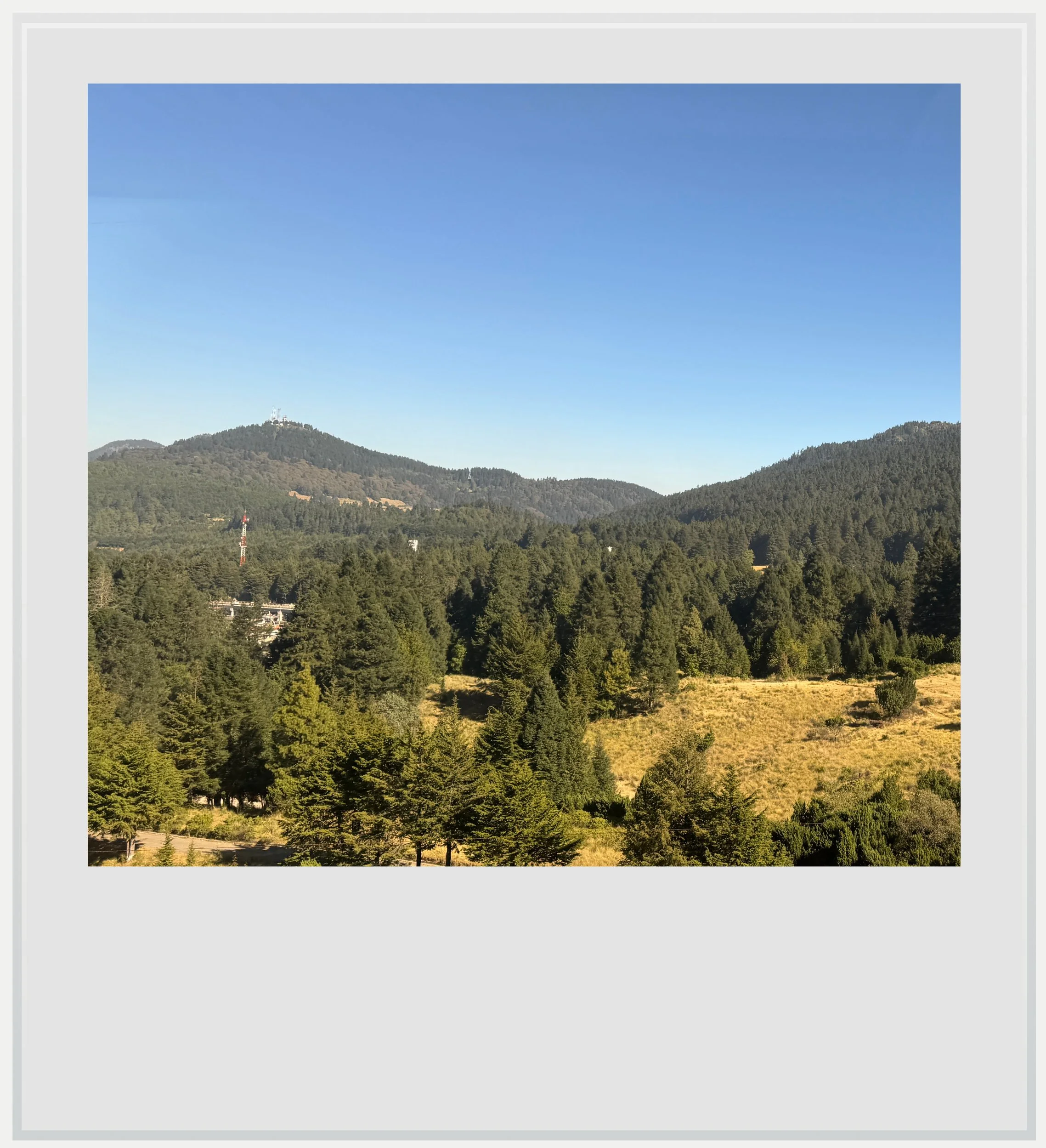
Crossing the Sierra de las Cruces on the Insurgente train.
Seeing Toluca from afar made me hesitate to get off the train. From the high ground of the Insurgente line, the city was all smog and industrial sprawl, a grey maze of factories and humble buildings. The only sight that seemed worth my while was the majestic Nevado de Toluca, which pierced through the fog as we approached. At 15,350 ft and 4,680 m, it seemed to dominate the valley with its snow-capped peak, and made the city look very small.
I got off the train at Toluca-Centro. The line was built above ground and most of it sits on an elevated track, which gave me a great perspective over the surrounding area. From my vantage point, I still didn’t see anything I would want to spend time discovering. Part of me wanted to turn around and wait for the next train back to Mexico City, but I was there, the centro historico seemed close by, and decided to make the most of it. I got in an Uber and we made our way north towards downtown.
Only when the driver dropped me behind the Cosmovitral botanical garden did I start to realize what Toluca had in store for me.
The city’s historical center is rather compact, and can be seen in a few hours, but my first stop, the Cosmovitral, seemed like it would make the visit worth it on its own. Housed in a stunning Art Nouveau building that used to be the town’s main market, its most notable feature is a series of monumental stained-glass panels covering the upper walls and parts of the ceiling.
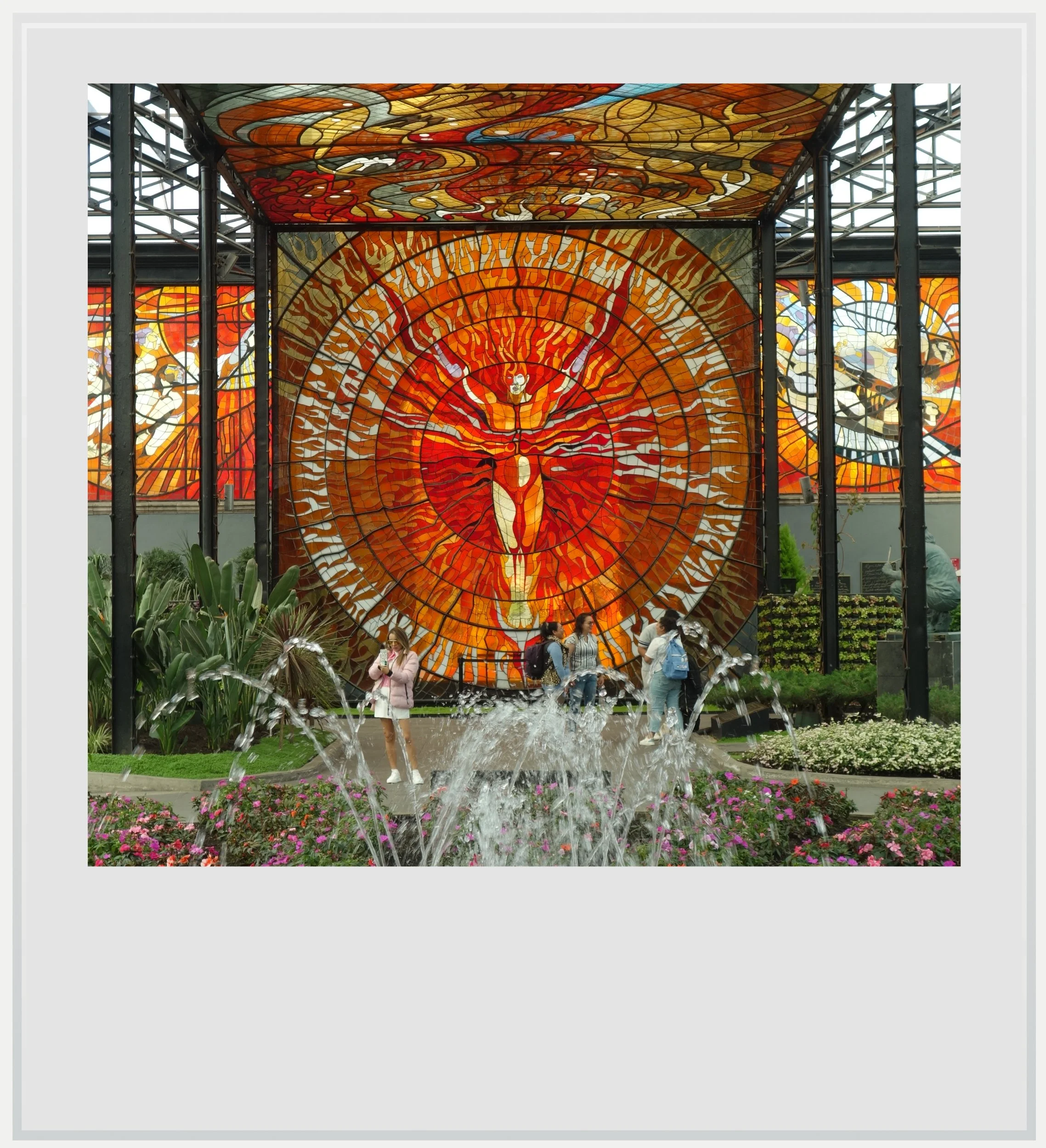
The Cosmovitral.
Inside, the garden is divided in several geographic sections, presenting flora from the state of Mexico as well as the rest of the world. The contrast between the bright reds and blues of the stained glass and the plants on the ground, bathed in the light coming through the glass, was quite a sight. I enjoyed the garden for a while, wondering why so few foreign tourists ever get there (they represent a mere 5% of all visitors), and finally exited on one of Toluca’s grandest squares, Parque de la Ciencia Fundadores.
Inaugurated just before the 500th anniversary of the foundation of Toluca, in 2022, the park was a major urban revival operation that helps make sense of the major buildings surrounding it. To the right, an ancient, yellow-hued monastery housing the Fine Arts museum and the Iglesia del Carmen church. Ahead of me, the State of Mexico’s government palace, and past Martyrs’ Square, to my left, the grand San Jose cathedral.
Toluca wasn’t built to become a capital. Rather, after becoming one, it gradually rebuilt itself to look the part.
Without planning it, starting from the Cosmovitral gardens and exiting on the plaza had given me the perfect point of view to embrace most of what historic Toluca had to offer. It also gave me a first clue to the city’s fascinating history over the past two centuries in a way that would reveal itself later. The bright, yellow church to the right of me was most appealing and so I started walking towards it.
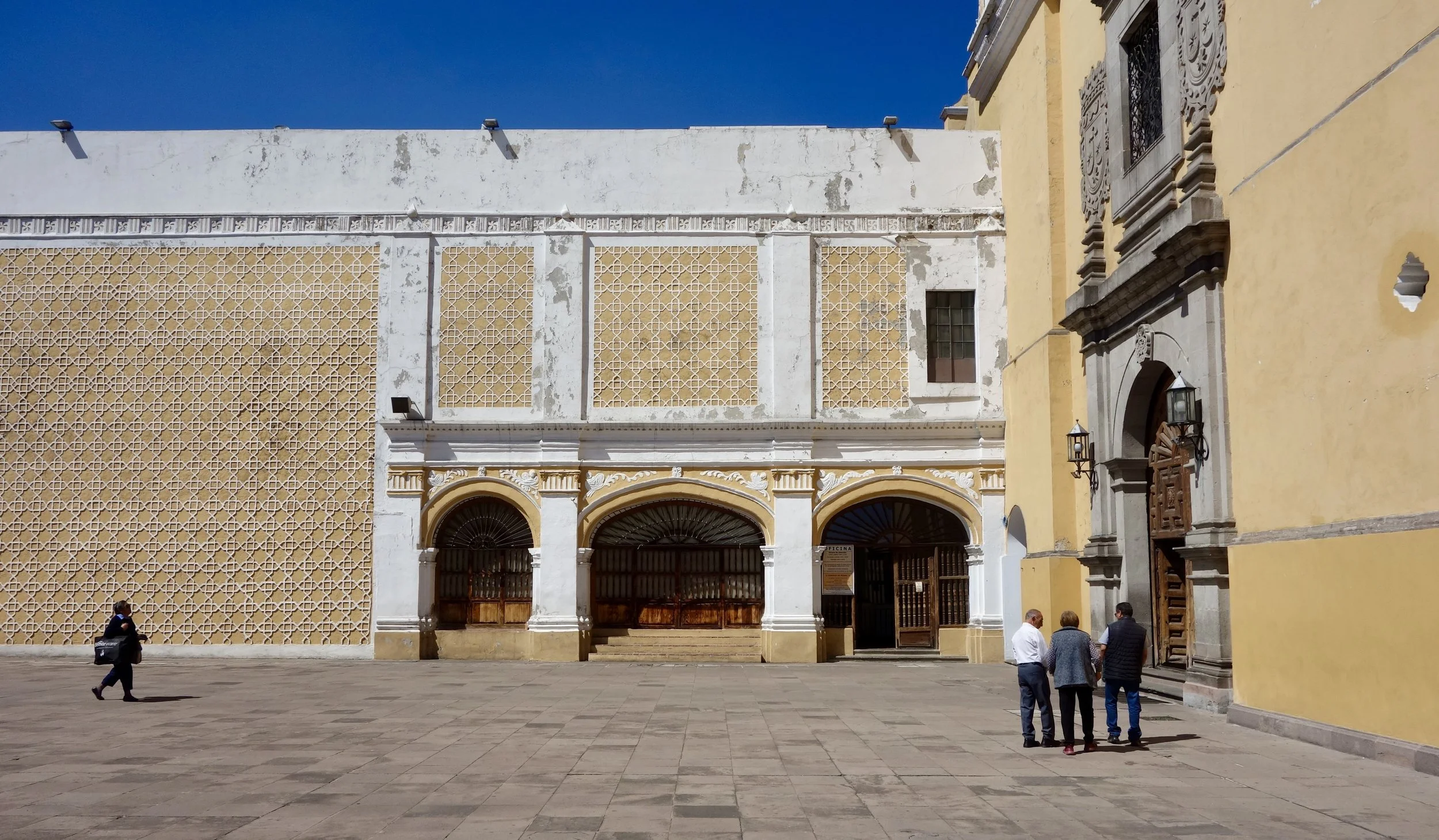
The Iglesia del Carmen traces its origins to a Carmelite convent founded in 1698, although its yellow façade, now an iconic landmark in central Toluca, appears to be the result of more recent repainting.
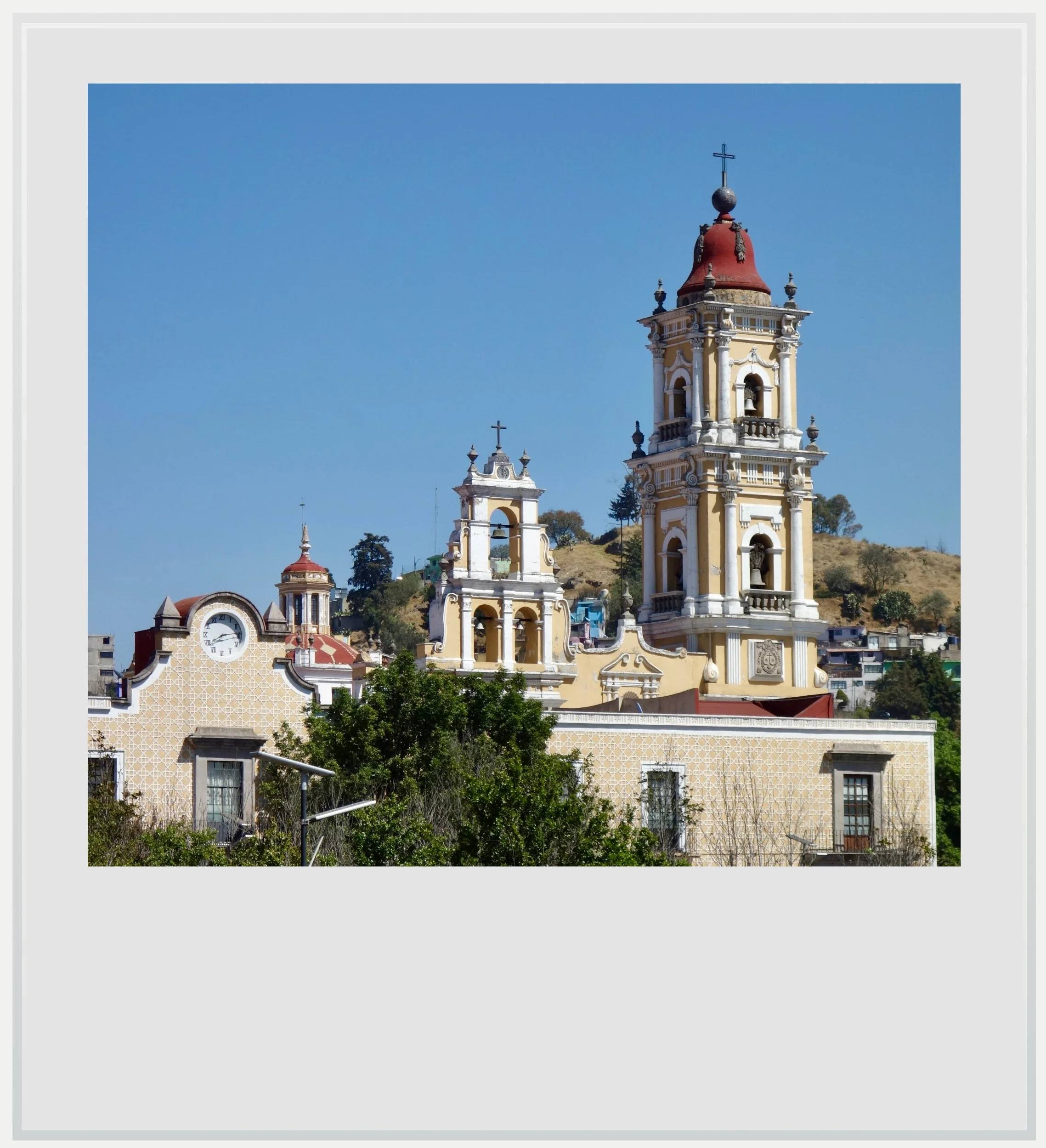
Iglesia del Carmen in downtown Toluca.
Today, the convent is no longer but parts of it house the beautiful Fine Arts museum of Toluca, which I recommend entering if only for its beautifully restored colonial architecture.
My next stop was supposed to be the cathedral, but I had to pause en route to admire the massive government building as I walked past it. It was the first concrete sign that Toluca punched way above its historical weight: the capital of a state of 17 million people, much more populous than many Latin American countries, wasn’t always destined to have so much power. After Mexico’s independence, in 1821, Mexico City was designed the nation’s capital, and, in 1824, a federal constitution created the state of Mexico.
At that time, the state was enormous, encompassing today’s states of Mexico, Guerrero, Hidalgo, Morelos and Mexico City. Very quickly, it was decided that, on the model of other polities like the District of Columbia, the country’s capital should not be part of the state, and the Federal District (Distrito Federal) was carved around Mexico City.
In 1830, after another city, Texcoco, was used as capital, Toluca became the state’s political center. Guerrero, Hidalgo and Morelos separated over the next few decades, but Toluca nonetheless grew as the capital of one of the most powerful states in the nation, a fate very few would have guessed in the years leading to the revolution.
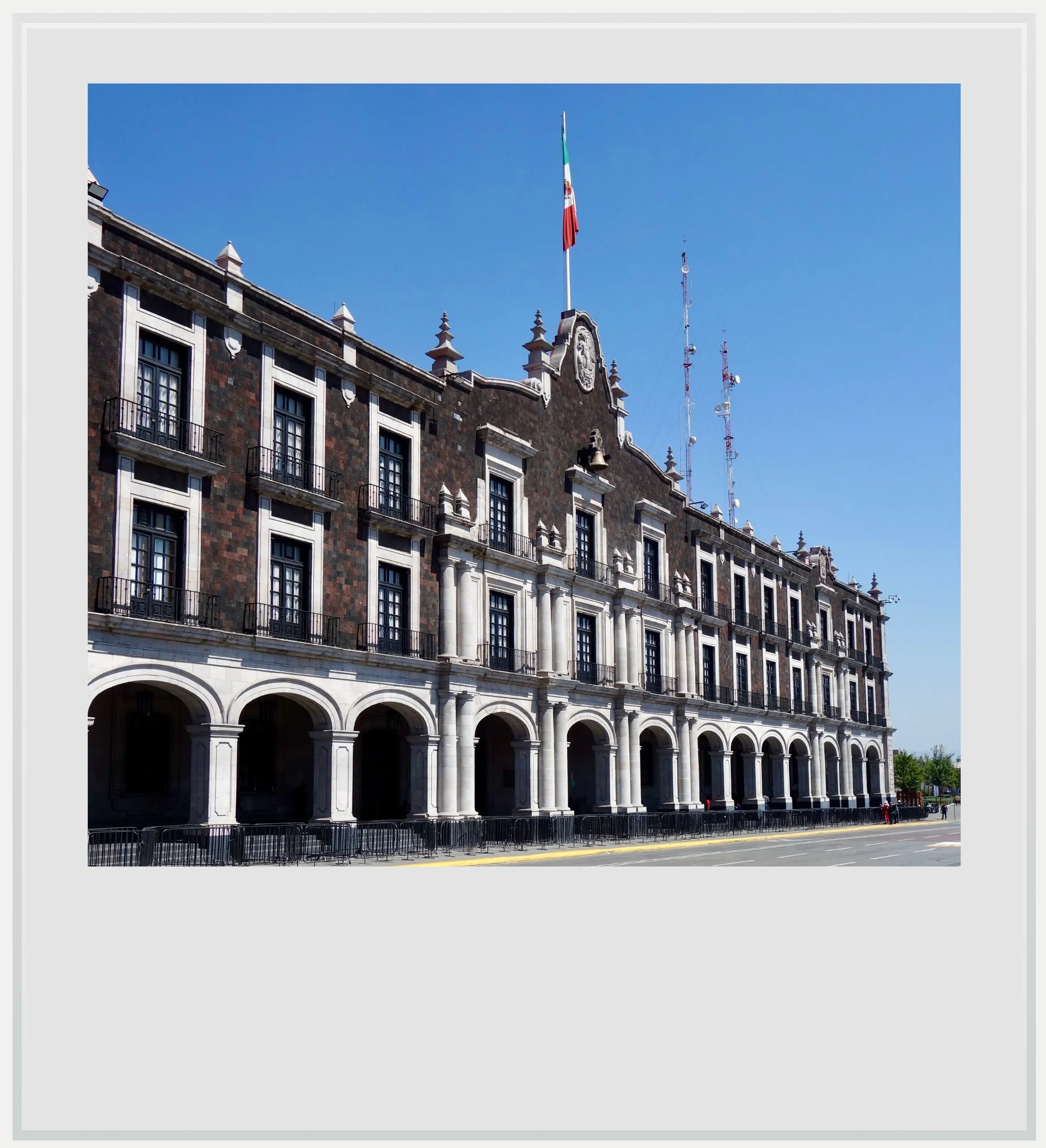
Toluca's Palacio de Gobierno.
The imposing Government Palace was a stark reminder that the city consolidated power in the post-colonial era. Although it looks like it may have been built then, it was actually part of a sweeping redevelopment of downtown Toluca launched in the 1960s. Seeking to give the capital of the State of Mexico a civic center worthy of its political importance, state authorities demolished several older buildings, and embarked on a decades-long project whose most visible legacy is the vast palace that dominates the square today.
In other words, the palace was built to look colonial, but was the result of several decades of 20th-century urban redesign. It felt as if the architects wanted to give Toluca the historical heft they feared it lacked. In any case, it worked. I left the area thinking how powerful a city Toluca must have been in colonial times, and didn’t know any better until urban cognitive dissonance began to hit me an hour or so later.
Continuing my walk towards the cathedral, I stepped into another testament to Toluca’s new power, the Plaza de los Martires (Martyrs’ Square). Originally modest gardens dedicated to the martyrs of the Mexican Revolution, the square was remodeled and expanded in the 20th century, alongside the historic center’s urban redesign that gave birth to the new monumental Government Palace.
The square impressed me by its dimensions. Framed by the palace to the north and the grand cathedral to the south, it acts as a wonderful natural buffer between two of the most important centers of power in the city.
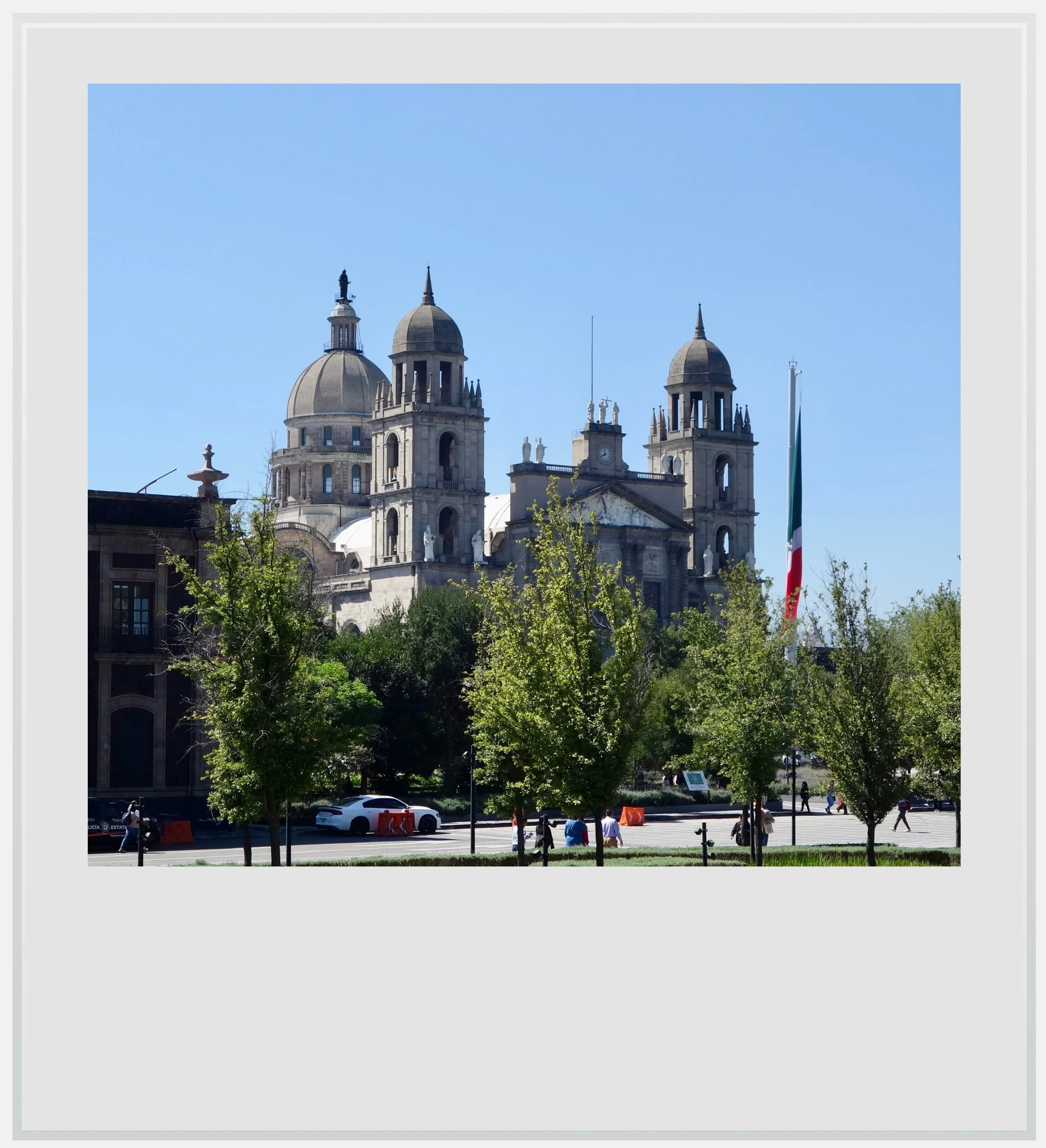
The San Jose cathedral in Toluca.
As I was looking at the cathedral from the outside, eager to get in, I couldn’t help but notice how it formed a powerful counterweight to the Government Palace, its size made even more commanding by the relative emptiness of the urban landscape around it. This wasn’t a main church anchored on a relatively compact square, like in San Luis Potosi or even Puebla. In fact, the wide, open space surrounding the cathedral reminded me of Mexico City’s zocalo in its ambition to make people feel minuscule in front of a seat of power.
Unlike the Government Palace, the cathedral’s construction didn’t start in the 20th century - but the building in front of me didn't date back to colonial times either. In fact, the current church was built over what used to be the convent and church of San Francisco, one of the oldest religious foundations in the Toluca Valley. As it had fallen into disrepair, it was decided to rebuild it as a grander edifice in 1867. At that time, Toluca was a state capital, and locals probably felt the status of their city made it deserve a major church.
In 1830, Toluca became the state’s political center.
What was even more interesting is that it wasn’t meant to be a cathedral right away. In 1867, Toluca wasn’t an episcopal see yet, but the construction of the new church took so long that, by the time it was inaugurated in 1978, the Diocese of Toluca had already existed for 28 years, allowing the church to be consecrated as a cathedral.
Coming out of the edifice, I saw what looked like a smaller, ornate church to the right, and decided to investigate. A few blocks from the cathedral, the Templo de la Santa Veracruz offered a glimpse of a different Toluca. Surrounded by narrower streets and smaller buildings, it felt more in keeping with the scale of the old city. After the vast plazas and imposing public buildings of the civic center, I suddenly found myself wondering which version of Toluca had come first.
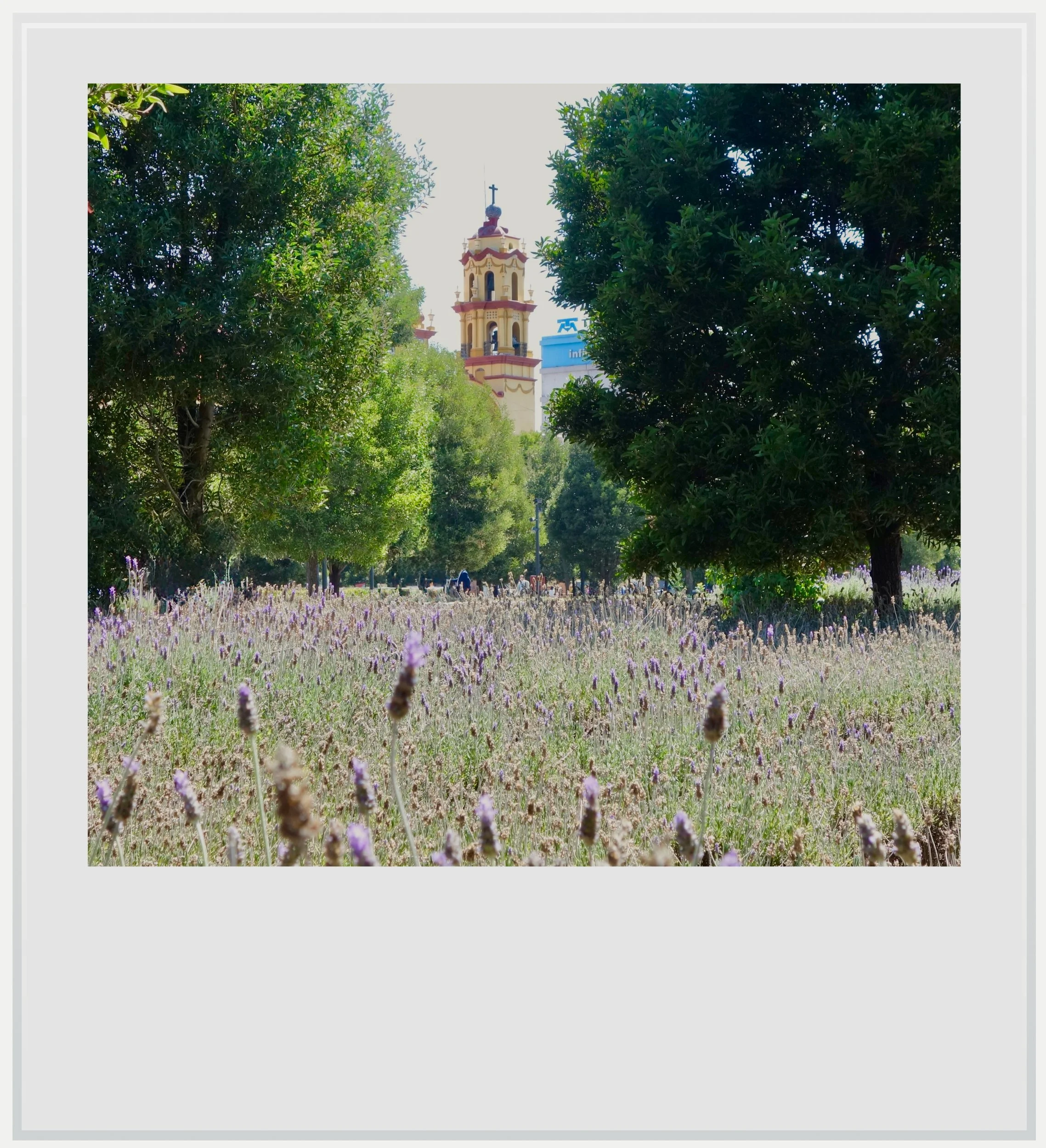
Martryrs' Square and Santa Veracruz church.
In fact, I stood by the church for a while, as it sat right at the junction of two different urban realities of the city: to its north and west, the stately version of Toluca, the grand capital of the state of Mexico was in full display, with the cathedral, the government palace, and ample squares around them. To its south and east, narrow streets busy with passersby, a gallery full of small shops selling a wide variety of goods, a more intimate yet much busier version of the city.
Toluca, it turned out, used to look a lot more like the humbler side I was just now discovering, a relatively prosperous provincial city, up until, by a twist of history, it became the capital of the state of Mexico in the 19th century.
It was hard for me to resist imagining the tempting tale of local elites, conscious their provincial city now needed to look like a state capital, remodeling the town under a grand plan devised over two centuries. There is no proof this ever happened - what’s undeniable, however, is that over that period, the city has undergone waves of urban redesign aiming at strengthening its identity as a state capital.
Suddenly, the contrast between the two sides of the city made sense. After its election as the seat of political power, the city chose to erect a grander church, which would become a cathedral. In the 1960s, it gutted its government palace, replacing it with a massive building made to look as if built in colonial times - as if to tell the story Toluca had been a capital for much longer - and surrounded it by vast, open garden spaces worthy, again, of the capital of a nation somewhere in Latin America. Instead of destroying the magnificent municipal market, it transformed it into a no less stunning botanical garden that wouldn’t look out of place in Mexico City itself. Finally, a few years ago, it remodeled another important plaza sitting between that Cosmovitral and the Government Palace.
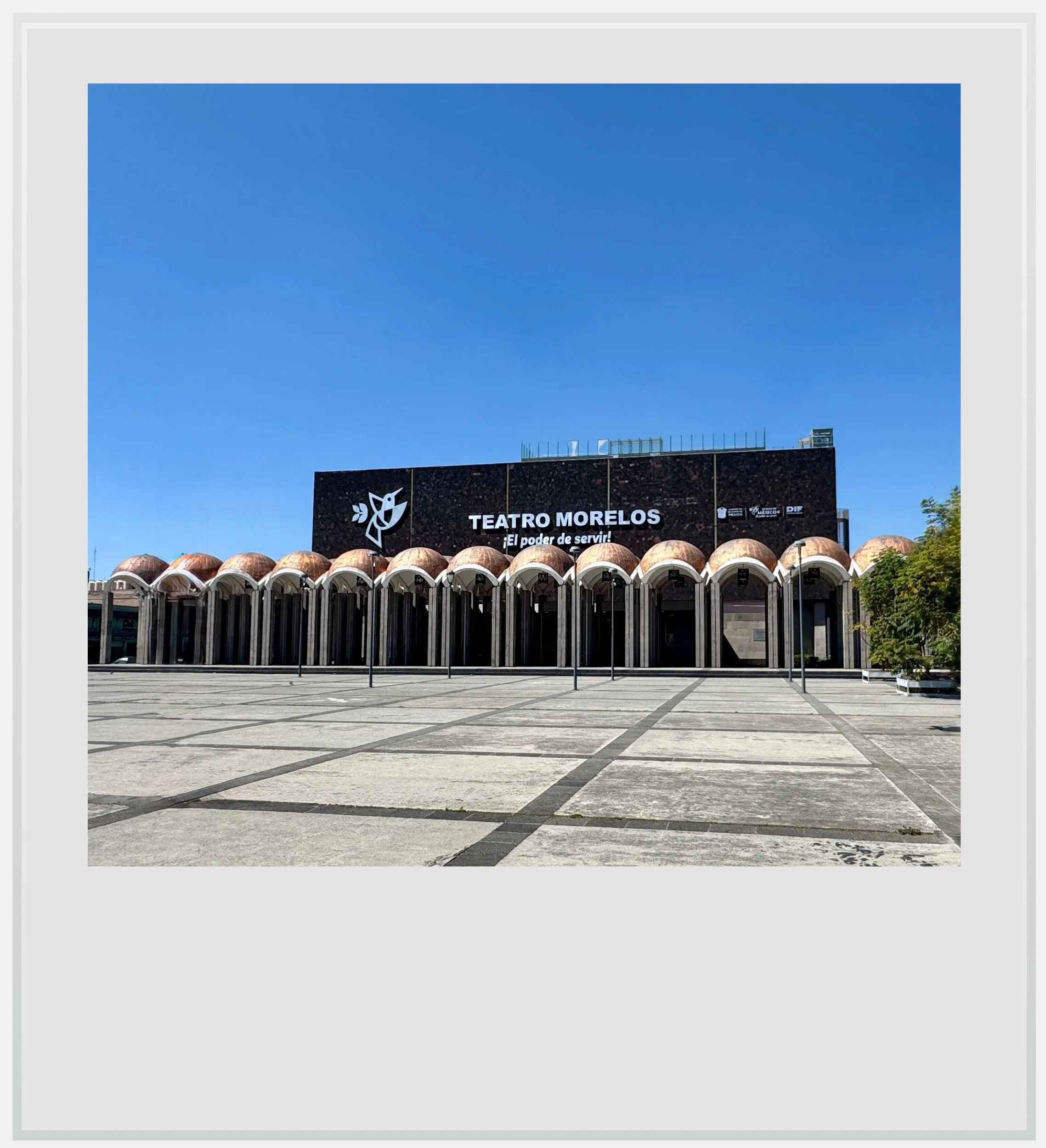
The Morelos theater in downtown Toluca.
Toluca wasn’t built to become a capital. Rather, after becoming one, it gradually rebuilt itself to look the part.
From that perspective, the full urban landscape began to fall into place. I remembered my puzzlement upon arriving at the Toluca-Centro station that morning, trying to reconcile the raw concrete, unfinished buildings and weathered facades with my idea of what a state capital should look like.
It was a good lesson in discovery. Had I turned around and headed back to Mexico City after seeing only the area around the train station, I would have missed what makes Toluca so interesting: not the story of a city built as a capital, but of one that learned to become one. Few cities wear that history quite so visibly.
Practical information
(Everything you need to know about visiting Toluca - updated June 2026)
In a nutshell
At first glance, Toluca can feel like an unlikely destination. Look a little closer, however, and a fascinating story emerges: that of a provincial city that became the capital of one of Mexico’s most powerful states and gradually reinvented itself to look the part.
How to get to Toluca
How to get to Toluca from the US: Toluca, the capital of the state of Mexico, lies an hour west of Mexico City by train. It is therefore linked to the US via both Mexico City airports, MEX (Benito Juárez International, close to Mexico City’s center) and NLU (Felipe Angeles International, further north). Toluca has its own airport, Adolfo Lopez Mateos International (TLC), but it currently only receives Mexican domestic flights.
How to get to Toluca from Mexico City: since the opening of the Insurgente suburban train early 2026, it has been markedly easier to reach Toluca from Mexico City. Previously, most travelers either drove or rode a bus, but delays in getting into Mexico City in the morning or back to Toluca in the evening were notorious. The Insurgente is a modern, frequent and affordable train service, linking both cities in about one hour. The Mexico City terminal sits in the western part of Mexico City, within easy reach of the city center via subway line 1, which terminates there. Therefore the easiest way to Toluca is to get onto subway line 1 to Observatorio (MXN 5, now payable directly at the turnstile with a tap of your Visa or Mastercard, even one issued abroad). Once there, change for the Insurgente train (housed in the same multimodal terminal, MXN90, with the CDMX multimodal travel card or by getting a paper ticket with a QR code at a vending machine, payable with cash or credit card) and let yourself be taken through the mountains to the Toluca valley. I wrote about this very trip here. Once at the Toluca Centro station, get down and grab an Uber or a Didi to the town center (10 min, MXN 100-140). You could walk but the scenery isn’t great, or take a local bus though the signage isn’t obvious.
How long does the trip to Toluca take from Mexico City
The whole trip from city center to city center should last less than 2 hours, including waiting times, and half of that will be spent on the Insurgente train, watching gorgeous scenery unfold.
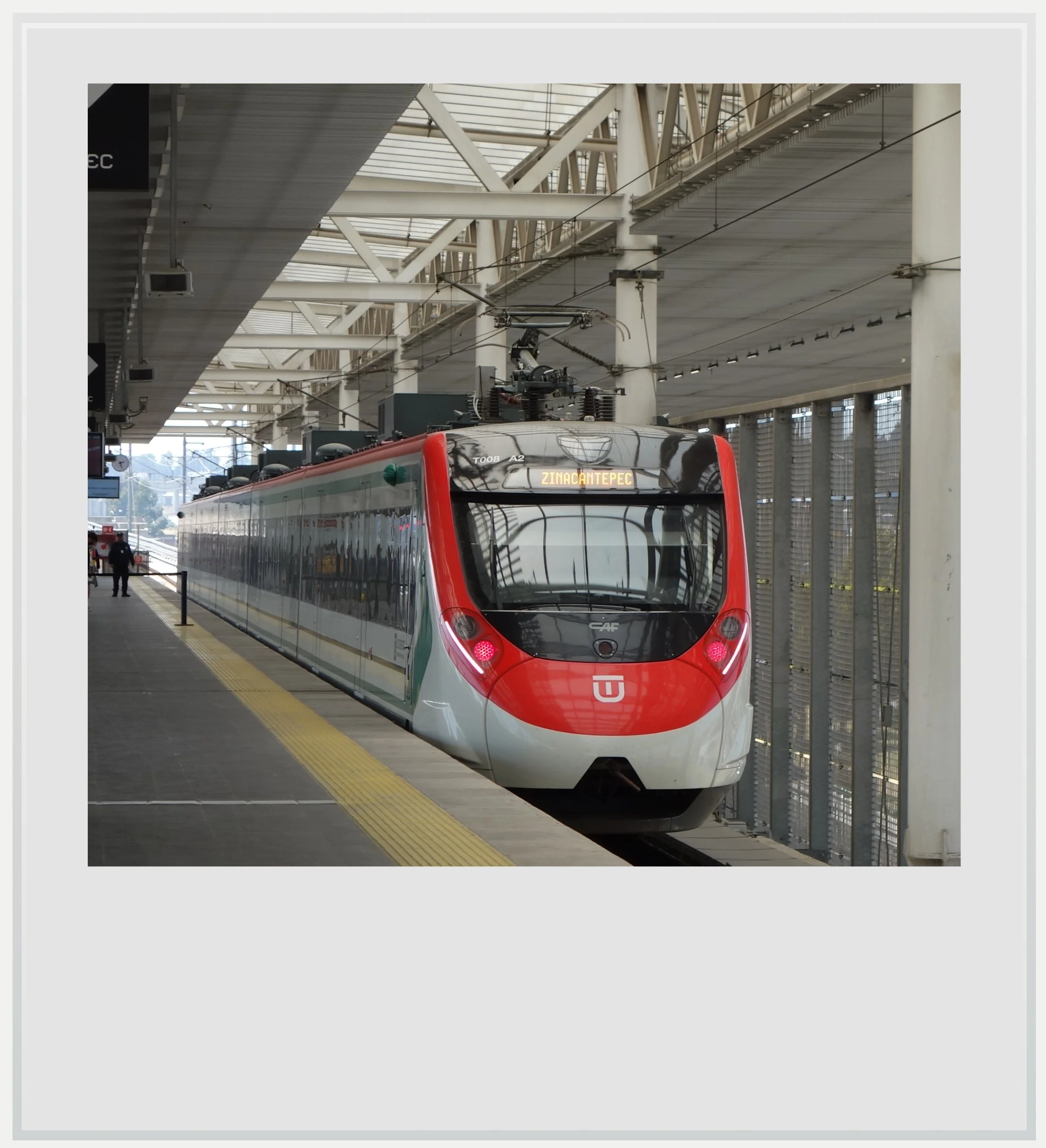
An Insurgente trainset in Toluca-Centro station.
What is the cost of a trip between Mexico City and Toluca
Subway ticket in CDMX: MXN 5
Insurgente train ticket: MXN 90
Uber or Didi in Toluca: MXN 100-140
One way total: MNX 195 - 235 (USD 11-14 at current rates)
What station to use to get to Toluca
Four Insurgente train stations serve the greater Toluca area, but the closest to the city center, where most sights are located, is Toluca-Centro. You may call at Metepec, one station before, to check out the eponymous pueblo magico, which I have yet to do.
When to go to Toluca
Although pretty close to Mexico City, Toluca is separated from its bigger neighbor by a relatively tall mountain chain, and sits at a higher altitude (8,800 ft or 2,700 m, which is about 1,500 ft or 500 m higher than Mexico City). As a result, the average temperatures in Toluca are 5 to 9 F below CDMX (3-5 C). This is especially noticeable in the morning and evening, so don’t forget to pack layers, otherwise getting out of the suburban train in Toluca Centro may feel a little chilly.
In general, Toluca is a little cloudier and wetter than Mexico City, but follows the same rough season patterns of a dry season from October to April, and a wet season from May to September. The rainy season isn’t London-wet, however: you can count on sunny mornings with clouds rolling in around noon, and rain happening for an hour or two around 5pm.
How long to stay in Toluca
Toluca is a great city for a day trip from Mexico City, or as a day stop on the long way to Taxco from the capital. You can check out the city’s main sights in a day.
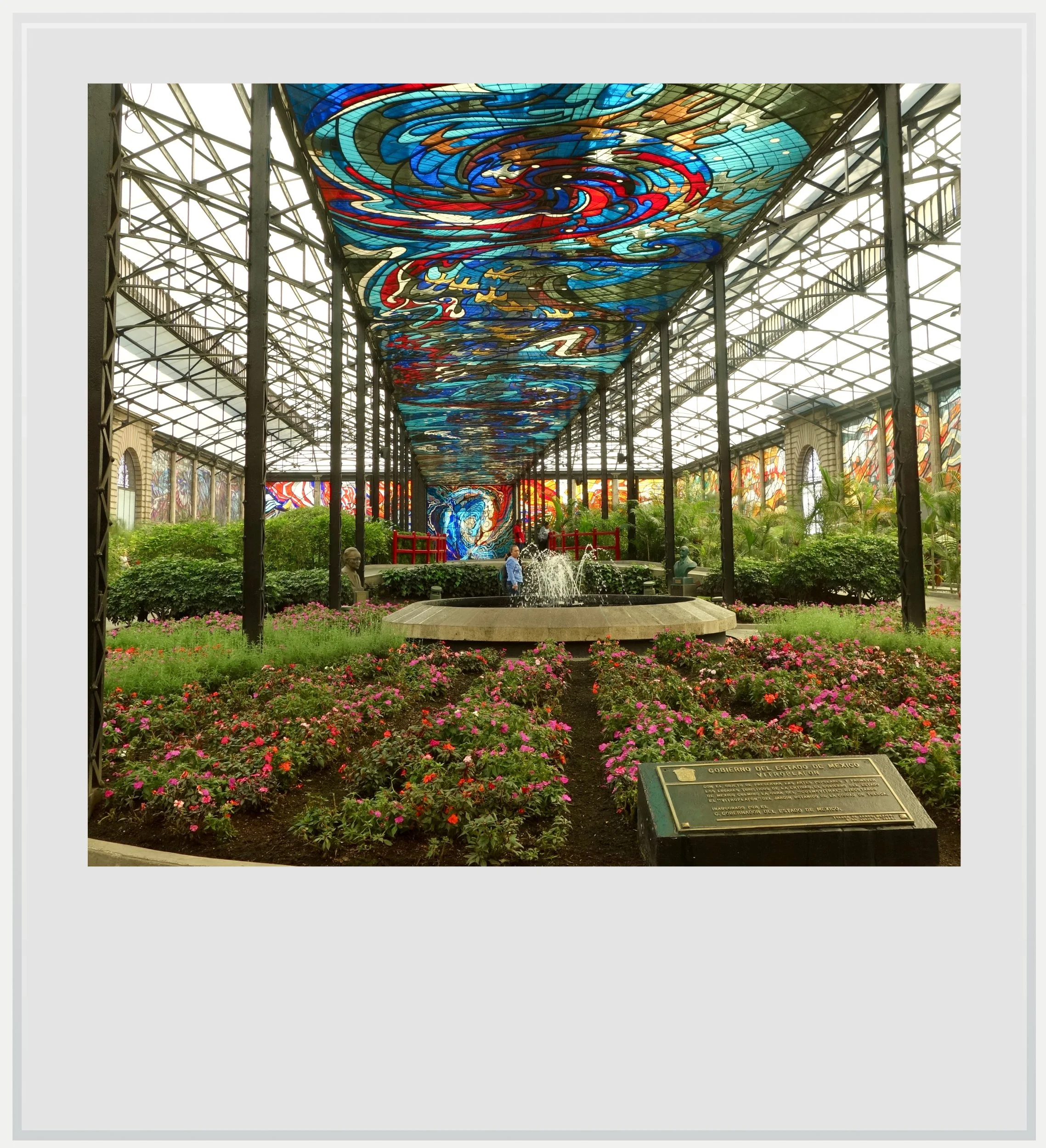
The Cosmovitral.
What to see in Toluca in a day
Toluca’s historical center seems vast but is actually compact enough that a couple of hours will show you most of what it has to offer (I was able to see all of them on my day trip):
Cosmovitral: Toluca’s signature attraction and, by itself, a good reason to visit the city. Housed in a former Art Nouveau market hall, the botanical garden is surrounded by monumental stained-glass panels created by local artist Leopoldo Flores, creating one of the most striking interior spaces in Mexico. MXN 25 (free on Wednesdays). Open Tuesday to Sunday, 10:00 a.m. to 6:00 p.m.
Government Palace: the imposing Government Palace is the clearest symbol of Toluca’s status as the capital of the State of Mexico. Although it looks colonial, the building is largely the product of a major 20th-century redevelopment project that reshaped the city’s civic center and gave Toluca much of the monumental character it displays today. Exterior only for most visitors.
Plaza de los Martires (Martyrs’ Square): Toluca’s grand central square serves as the stage on which the city’s political and religious power is displayed. Framed by the Government Palace and the cathedral, its oversized dimensions are a reminder that Toluca grew into one of Mexico’s most important state capitals (free).
San Jose Cathedral: one of the largest churches in central Mexico, the cathedral dominates the southern end of Plaza de los Martires. Although it feels much older, the current structure was only completed in the late 20th century, reflecting Toluca’s ambition to build a cathedral worthy of its growing political importance (free).
Iglesia del Carmen: founded as part of a Carmelite convent in the colonial era, Iglesia del Carmen is one of the most recognizable landmarks in Toluca thanks to its distinctive yellow façade. It provides an elegant contrast to the grand civic architecture that surrounds it (free).
Fine Arts Museum: housed in the former Carmelite convent right by Iglesia del Carmen, the museum is worth visiting as much for the beautifully restored colonial architecture as for the exhibitions themselves. Its cloisters offer one of the most atmospheric spaces in the historic center (free admission).
Luis Nishizawa Workshop Museum: dedicated to one of the State of Mexico’s most celebrated artists, this small museum displays paintings, sketches and personal objects from the life of Luis Nishizawa. It offers an intimate introduction to an artist whose work blended Mexican and Japanese influences, as well as a chance to explore one of the finest colonial-era mansions in central Toluca (admission MXN 20).
Jose María Velasco Landscape Museum: a tribute to Mexico’s greatest landscape painter, this museum showcases works inspired by the valleys, volcanoes and countryside of central Mexico (admission MXN 20).
Morelos Theater: like much of central Toluca, the Morelos Theater reflects the city’s 20th-century transformation. Its striking façade, covered in bronze-colored hemispheres, gives it a distinctly modern identity and provides an interesting counterpoint to the cathedral, plazas and government buildings nearby (exterior only unless attending an event).
Plaza Gonzalez Arratia: one of the most pleasant corners of downtown Toluca. While the square itself is attractive, the real charm lies in the arcades surrounding it, which are lined with cafés, restaurants and small businesses. It is an excellent place to take a break, have lunch and watch daily life unfold in the city center.
Food in Toluca
Toluca’s green chorizo is famous enough that trying it felt almost obligatory. I had lunch at La Vaquita Negra del Portal, beneath the arcades of Plaza Gonzalez Arratia, and can confirm that the reputation is deserved. It was also a good excuse to spend some time in one of the most attractive corners of the historic center before continuing my walk.
Location here. Cash only.
What to bring back from Toluca
One of Toluca’s most distinctive local products is Moscos, a traditional orange liqueur that has been produced in the city for generations. Sold in a variety of bottle sizes, it is easy to transport and makes for a fitting reminder of a city whose culinary traditions extend beyond its famous green chorizo.
A good place to buy it is Moscos de Toluca, located on Plaza Gonzalez Arratia, just a few steps from La Vaquita Negra del Portal. One small note: some Google Maps photos make it appear as though the entrance is inside the arcades, but the shop actually opens directly onto the square, making it easy to miss if you’re looking in the wrong place.

Bottle shelves at Moscos de Toluca.
Safety in Toluca
Toluca is the capital of the state of Mexico, which the US State Department labels a “level 2” state, meaning use increased caution as you travel. For context, this is a similar level of warning as Mexico City, or many developed European countries.
The main difference is that Toluca isn’t a big tourist destination, and feels more local than many tourist favorites like Merida or San Miguel de Allende. It may appear rougher around the edges and less polished, which doesn’t mean less safe, but it might color a visitor’s first impression.
The city center, where most sights are, is well patrolled and busy enough that I never felt unsafe. That being said, the state of Mexico contains pockets of territory where crime is rampant and are best avoided day and night. As such, the usual precautions apply: be aware of your surroundings, stay in the historic center, prefer car service apps to random street taxis, and be especially cautious at night.
The Insurgente train is also heavily patrolled, with guards reminding you to not store your belongings on the seat next to you, and others making sure you exit the station quickly. It felt extremely safe to me.
Keep in mind these travel tips
Toluca sits at a higher elevation than Mexico City, making days a little colder, and mornings and nights noticeably chillier, so bring layers.
The UV index may be low in the morning and evening, but during the day, it gets pretty high, especially at the higher elevation, so don’t forget to wear SPF.
Bring cash. While many shops accept foreign credit cards, buses, taxis and many shops or restaurants may not.
Cell service is excellent in and around Toluca. All the main mobile operators offer 4G or 5G service. You can check coverage for each network here. The link opens the Telcel map but you can pick any other provider in the drop down menu at the top.
Every photo caption appear if you hover over it (on a computer) or click on it (on a smartphone).
All photos are mine and copyrighted.