Trip report: Papantla to Cuetzalan by bus.
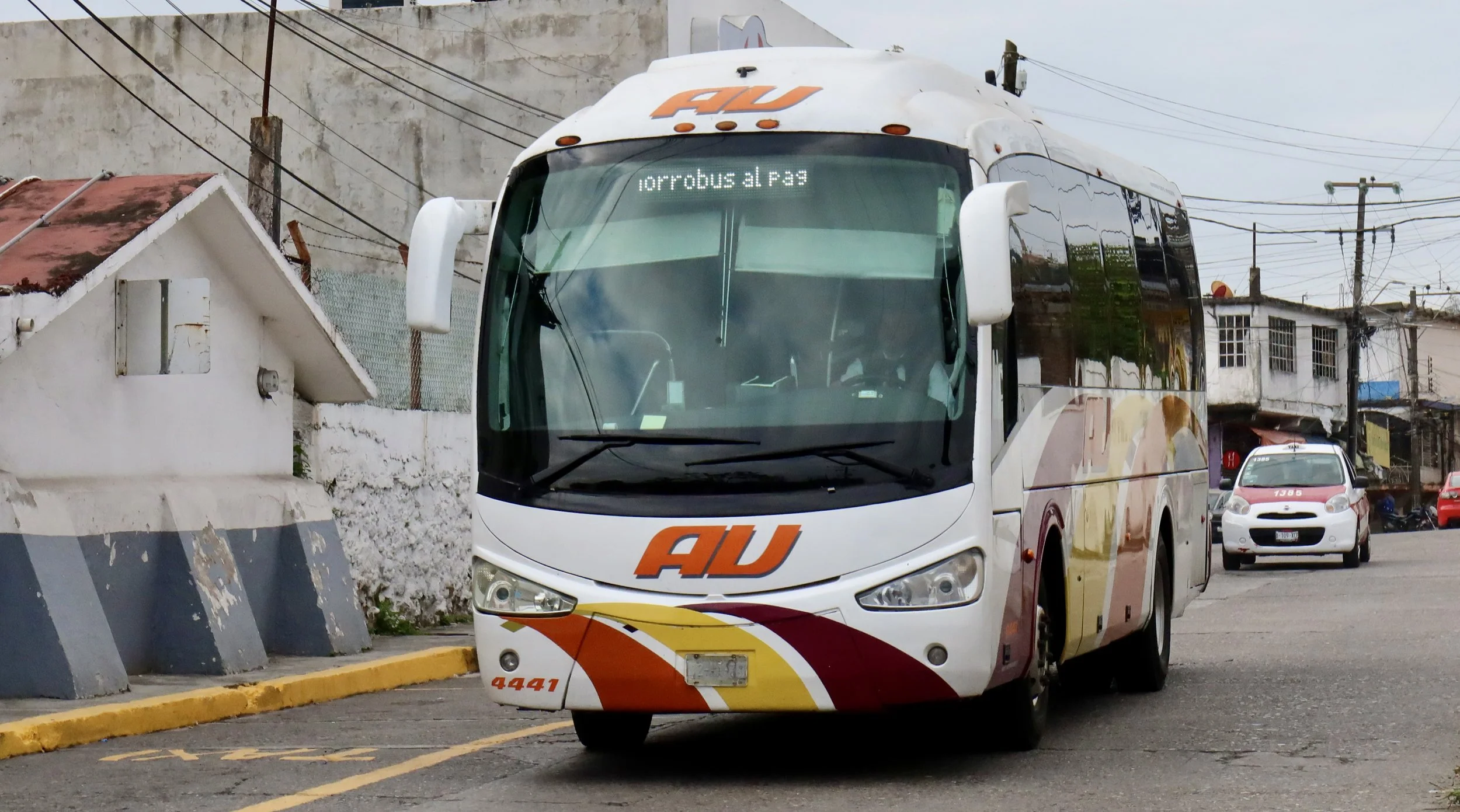
Three buses, a big detour and gorgeous Sierra scenery.
Looking for concrete details and tips? Go straight to the Practical Information section.
It wasn’t even 7 AM when I left my hotel and crossed Papantla’s main square. The city was still asleep; only a few people moved through what had been, the day before, a busy hub of activity.
I had a feeling I was leaving Papantla without saying a proper goodbye, and I regretted sneaking out like that. The walk from the zocalo to the ADO bus station went downhill so it was a fairly easy 10-minute trek.
Getting to Cuetzalan from Papantla was not going to be a walk in the park. There is a direct road that spans 57 miles (91 km) between the two, and Google Maps evaluated the travel time at around three hours, a lightning-fast 19 mph, so I feared it would be one of these tortuous mountain roads no one is ever happy to take.
In any case, no buses took that route and I had to be very creative to find an itinerary getting me to Cuetzalan.
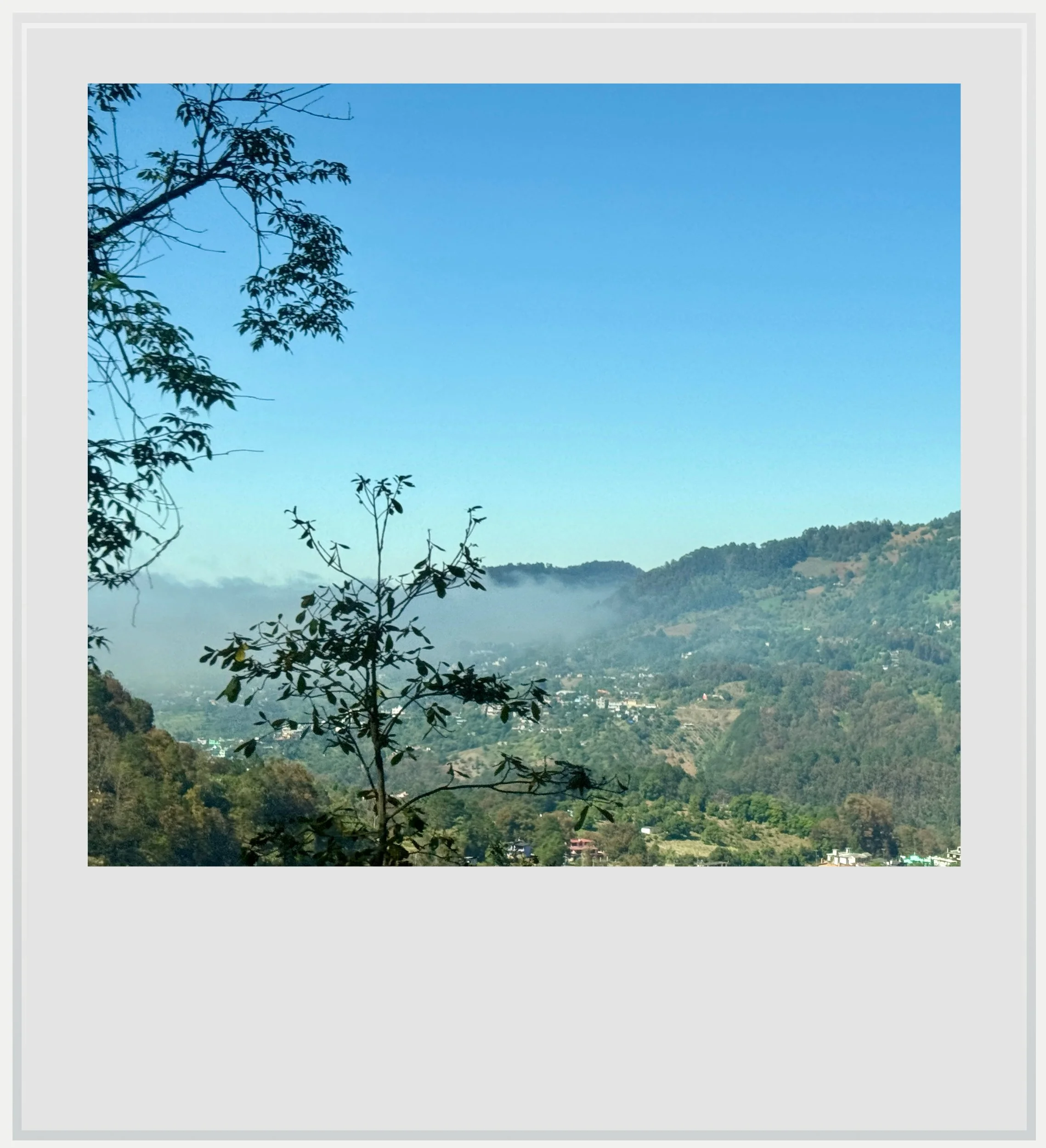
Sierra landscape near Cuetzalan.
My first leg would get me to Teziutlan, a town in the state of Puebla, in a valley where the Sierra Madre Oriental is lower than the surrounding mountains: the relative ease of passage between the coast and the highlands has made it an important transit route for centuries. Once in Teziutlan, I would have to find my own way to Zaragoza, another highland town 40 minutes west. I couldn’t find bookable buses online, but knew there would be at least a colectivo service to get me there. In Zaragoza, I would take the once-daily Mexico City to Cuetzalan bus, a second-class service by AU, or Autobuses Unidos.
As the departure time got closer, there was no sign of my ADO bus. A VIA service leaving at the same time (7:40 AM) left the station around five minutes late, but still, my bus was nowhere in sight.
I knew the bus was calling in Poza Rica, but I realized it may not originate there, and instead come from another part of the country. That meant the delay in getting here could be an hour or so, and there was no way to know.
Buses quickly came and went. VIA services to Teziutlan or Poza Rica. Another ADO bus which I initially mistook for mine, that was going to Gutierrez Zamora.
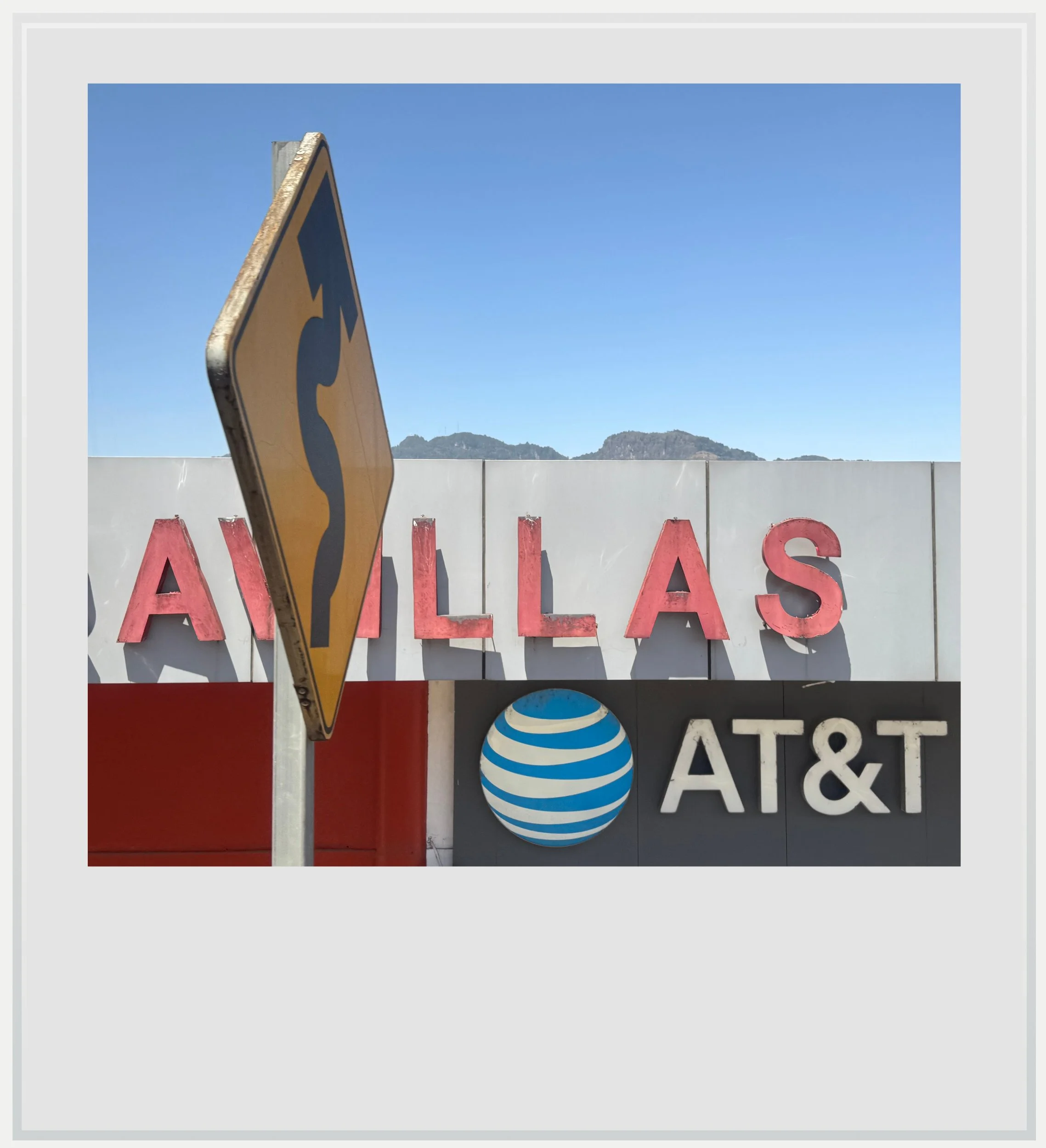
A road sign near Teziutlan.
Still no sign of my bus to Puebla.
At 8.25am, 45 minutes behind schedule, the ADO unit finally came into view, and got into the station. I quickly took my seat, by the left window right behind the cab, and decided to not stress about the delay and my possible missed connections.
The driver explained the bus had started its recorrido at 8pm the evening before, in Matamoros, Tamaulipas, next to the Texas border. It would get to Puebla at 1:35 PM, after an almost 18h trip.
We left at 8.35am, 55 minutes behind schedule. The bus was about half-full, and, for now, I had no one next to me. When I booked my seat, I hadn’t taken an ADO bus in a long time and had forgotten to check the location of the ever-blasting TVs. It turned out one was right above my head, and I hoped the driver would have mercy and not show a horror movie at full volume.
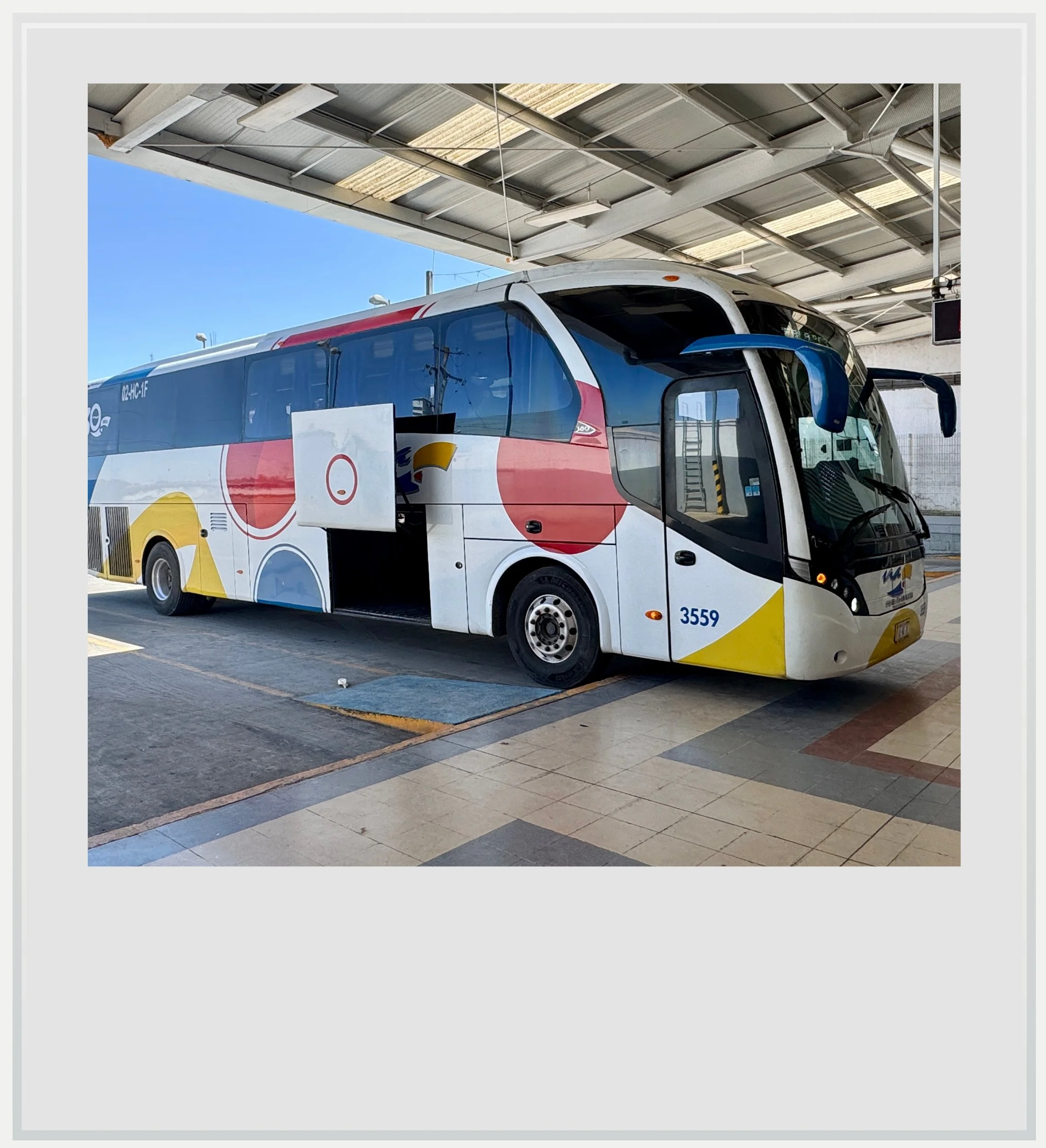
A VIA unit at the Zaragoza ADO station.
We quickly got on to a toll road, 180D, and the bus accelerated through flatter, lush landscapes
We got to Martinez de la Torre at 9.45am, having left the toll highway about 20 minutes prior. We started driving south, with the Sierra Madre far ahead of us, looming in, a powerful yet distant force.
The road narrowed and we left the flatlands of Veracruz behind us.
The road towards Teziutlan felt very different, with lots of potholes that reminded me of the worst roads in rural Campeche. The bus average speed went down dramatically as the driver made every effort possible to avoid the deep holes in the macadam.
There was hope however, as we passed a construction team redoing the road a few miles later.
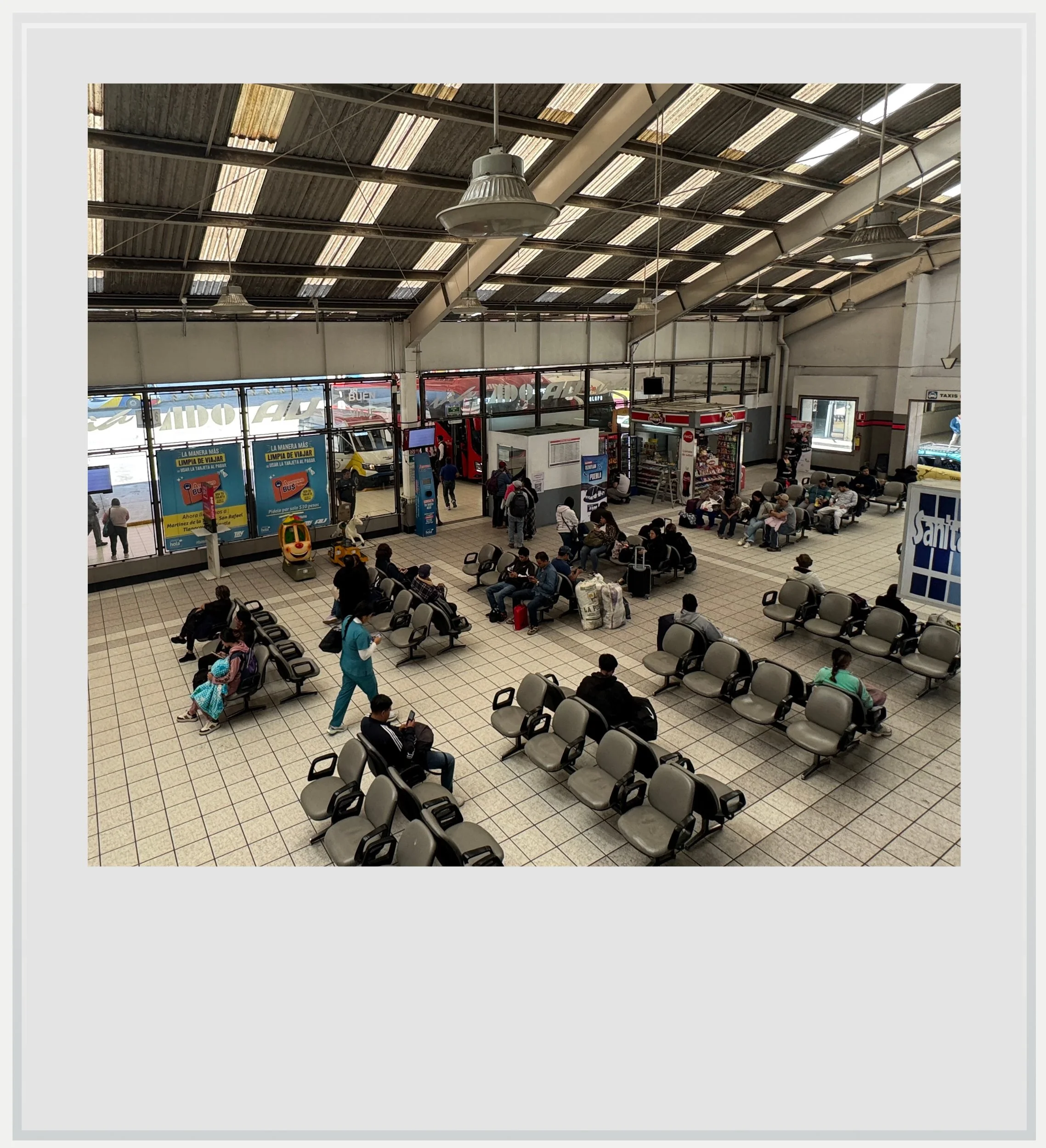
The waiting room inside the ADO station in Teziutlan.
We started to climb in elevation once we passed Tlapacoyan. The road narrowed and we left the flatlands of Veracruz behind us. The vegetation grew denser, quasi impenetrable, and punctuated with banana trees. The sky became cloudy, almost ominously so. We were definitely entering mountain territory.
While on the way east towards Papantla a few days ago, I had crossed the Sierra Madre on a modern highway, ignoring the terrain through viaducts and tunnels. Today, the road was everything but that.

We were going up, curve after curve, crossing little villages and after a while, it felt like we were above the jungle-covered hills.
We finally got to Teziutlan, where I needed to get off my ADO bus, with only twenty minutes of delay. I quickly went upstairs to use the restroom and then worried about getting on the connecting bus to Zaragoza. I walked to the only ticket office there, ADO, and asked for help. It turned out that VIA, the regional second-class bus network, was sold by ADO and the nice gentleman behind the counter was able to get me a ticket on the next service, which was actually just getting into the station. By chance, I barely had to wait two minutes before leaving Teziutlan.
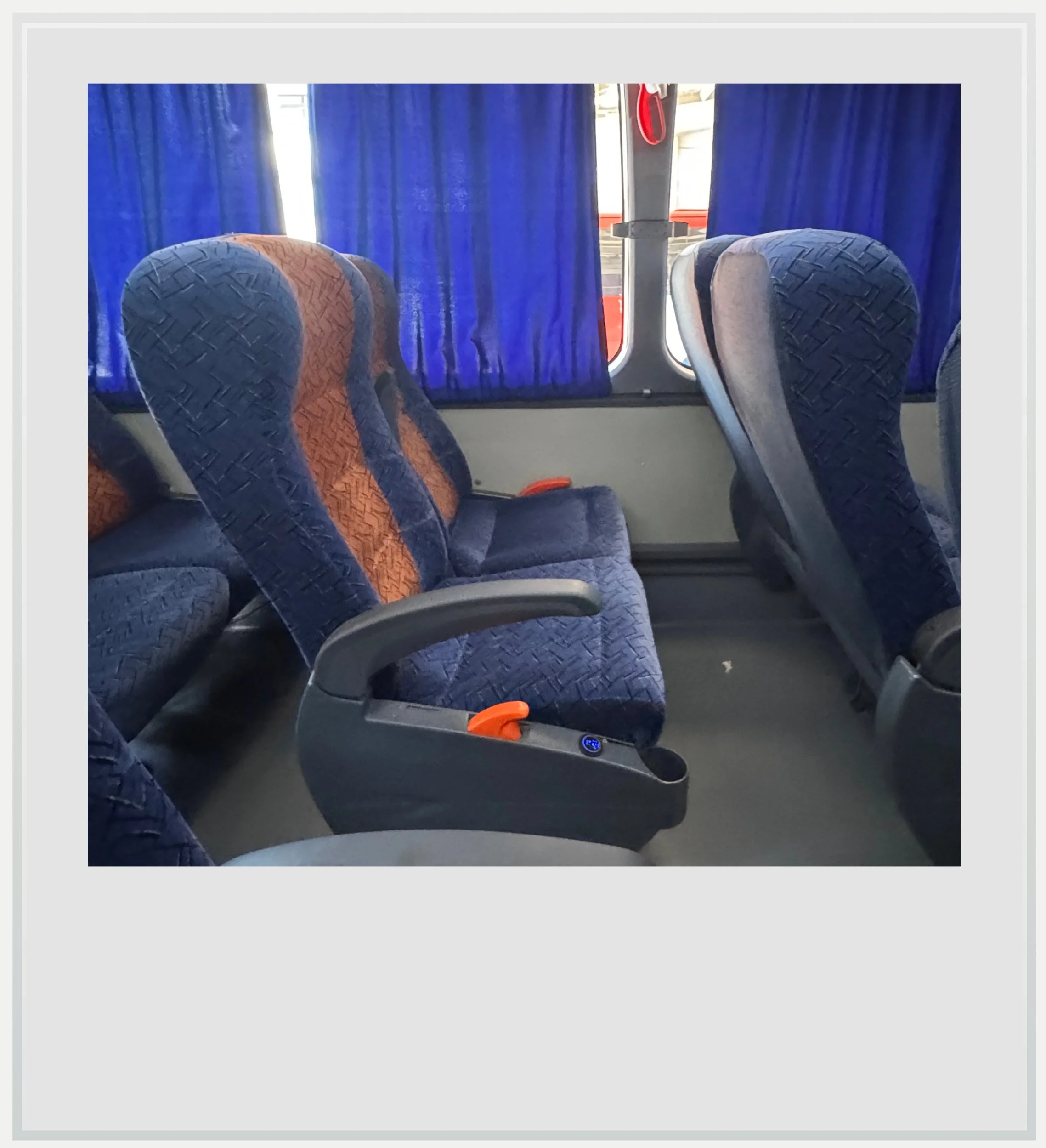
Seats in a second-class VIA bus between Teziutlan and Zaragoza.
VIA, a second-class service, offered assigned seating, decent legroom and AC, but no bathroom. I had to put my bag in the hold myself, as many second-class buses don’t offer the attendant service. As I was getting off at the next stop, it didn’t bother me too much. I would be among the first to get off and pick up my bag.
The bus was also about a third full, so I had a full row to myself. The one-way, last minute ticket cost me MXN 42 at the counter.
The regular road to Zaragoza went through quite a bit of curves, though there was a much straighter highway linking the two cities. I knew the ADO bus was going through this toll road towards Puebla, so I assumed the slower VIA service would actually go through the little winding road.
Exiting Teziutlan, the scenery was gorgeous. To our south, mountains, partly engulfed in altitude clouds, were peeking through, seemingly out of nowhere, while we were crossing above town, under a splendid sun. There was a grace to the landscape that made me want to come back.
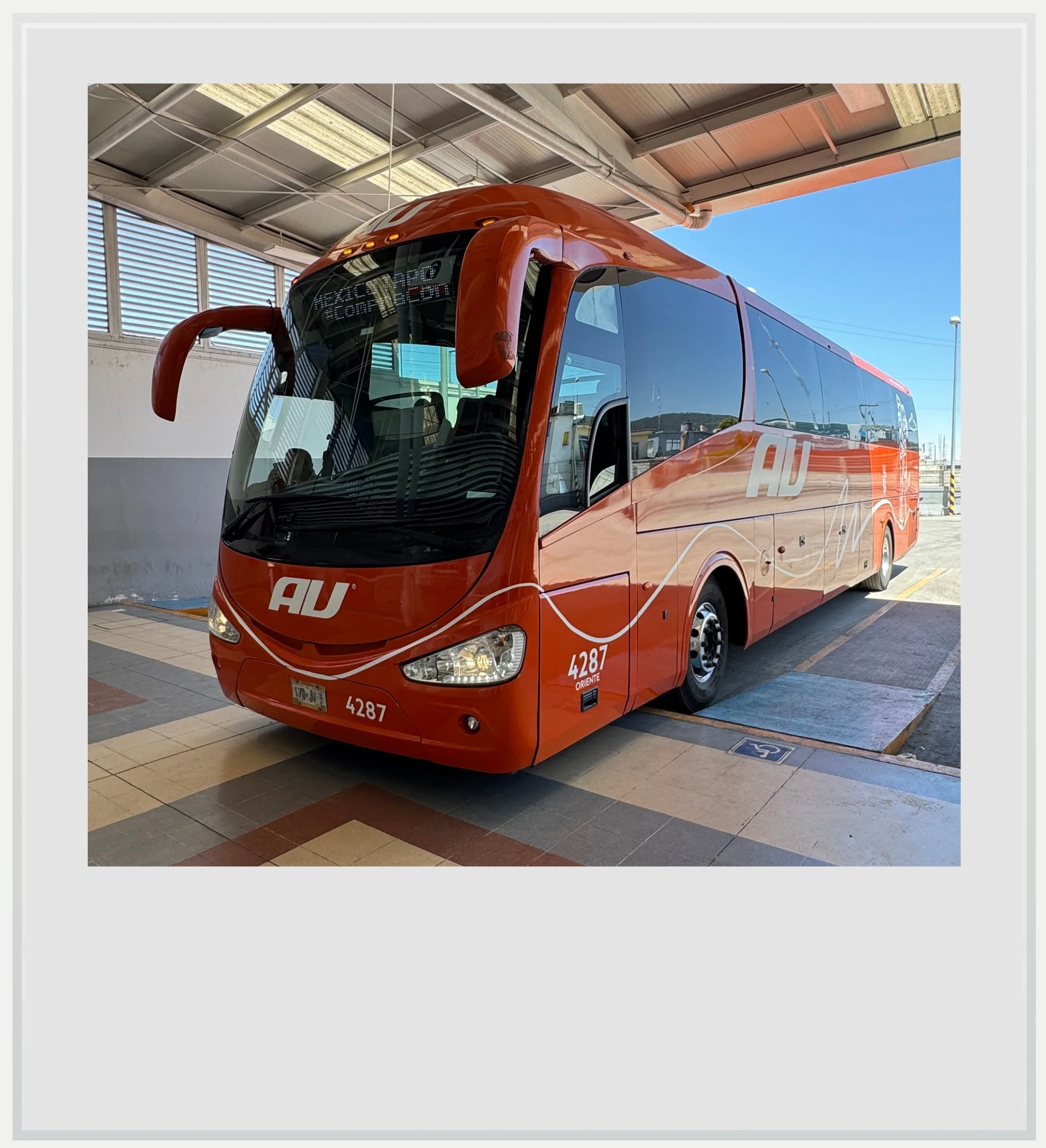
An AU bus sporting the new corporate livery, seen in the ADO bus station in Zaragoza.
I watched with trepidation as the bus took the entry lane to the highway: we would actually be taking the fast route to Zaragoza. The highway was a one-carriageway, two-lane road, but at least it was drawn straighter than the old mountain road and the ride through the mountains felt unexpectedly smooth.
We got to Zaragoza a little bit after 12:20 PM, in a station I didn’t expect to big this big - it had seven departure bays and even a few shops.
The bus had started its recorrido the evening before, at the Texas border.
Regional lines are poorly documented online, and VIA was a great example of that. I only found its timetable inside ADO stations. Had I known that I could take a VIA bus to Cuetzalan from Zaragoza instead of waiting for the one AU bus, I would probably have done so, to save an hour.
That being said, I had never taken an AU bus and therefore I was excited to take one on this trip. The AU unit arrived more than 30 minutes late and unlike advertised, was a regular AU bus, not one of the upgraded coaches with a bathroom. I had seen the Cuetzalan-to-Mexico-City bus call at the station earlier, and that one was a new unit. The driver confirmed that most services use newer units with a bathroom, so my return a few days later would likely have one. I wasn’t sure how I would have fared without access to a bathroom for five hours.
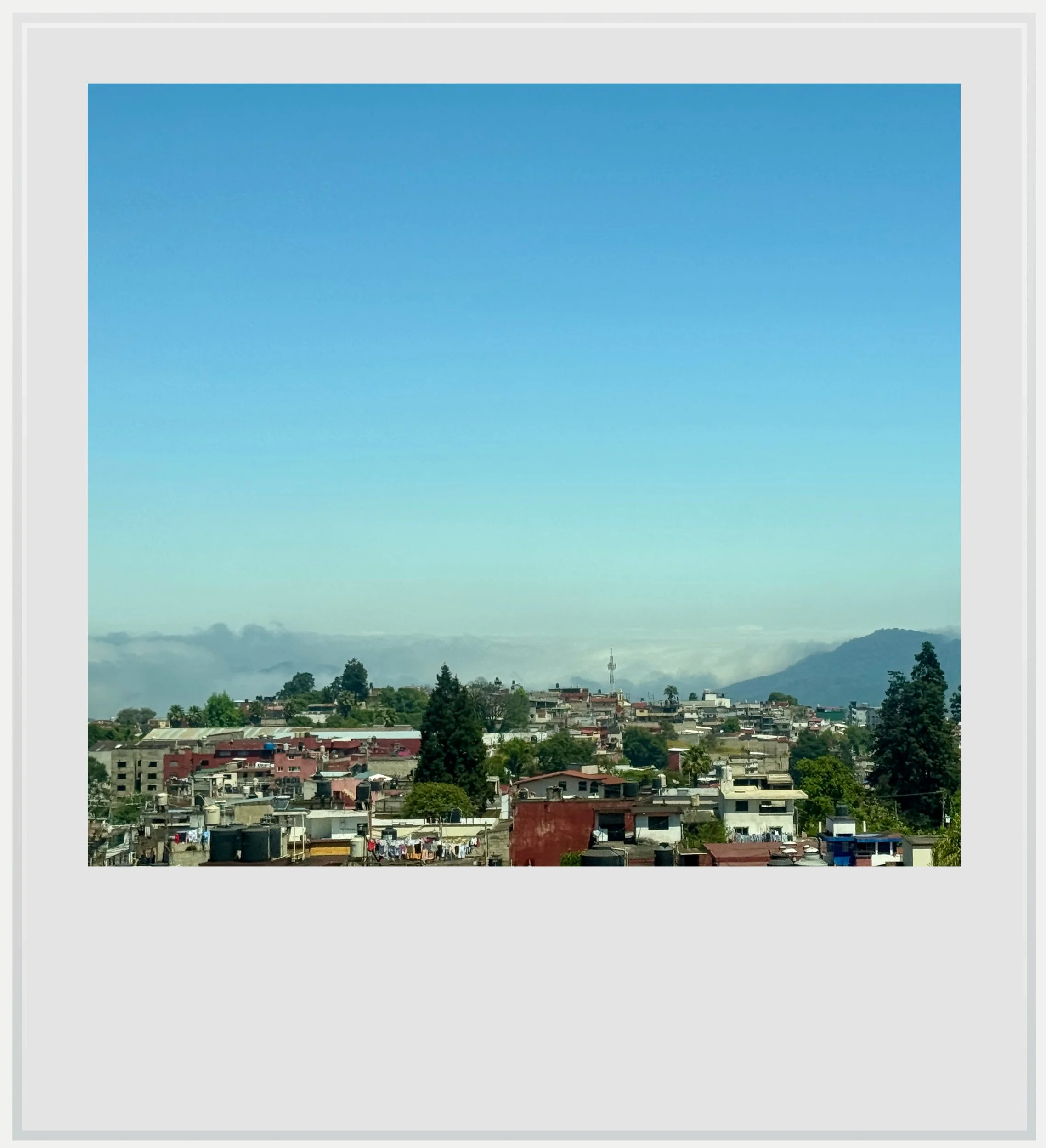
Scenery near Teziutlan.
Sitting down and getting comfortable, I was actually quite impressed by the legroom which felt identical if not slightly better than the ADO first-class ones.
In Zaragoza, an attendant helped me with my luggage and gave me a ticket which I didn’t expect on AU. The only issue was that the bus could - and in our case did - make unscheduled stops to let people off and during these, no one watched over the luggage so that made it a little bit more unsafe.
Once we got to Zacapoaxtla, the weather changed again and clouds reappeared. The road became narrower and narrower, and the curves tighter - not that it made the bus driver slow down, I assumed he was a regular on the route. We were going deeper in the Sierra. Whenever we could see around us, it felt grandiose, deep forest valleys with steep cliffs, layers of mountains like raging waves from an ocean in fury.
The last forty-five minutes unfolded in deep fog, so arriving in Cuetzalan came as a surprise - especially when it briefly lifted. I was able to walk in the village for a bit before the fog enveloped the buildings again, in a thick shroud. It was time to head to my hotel room, because the elements had decided this would be all I’d see of Cuetzalan today.
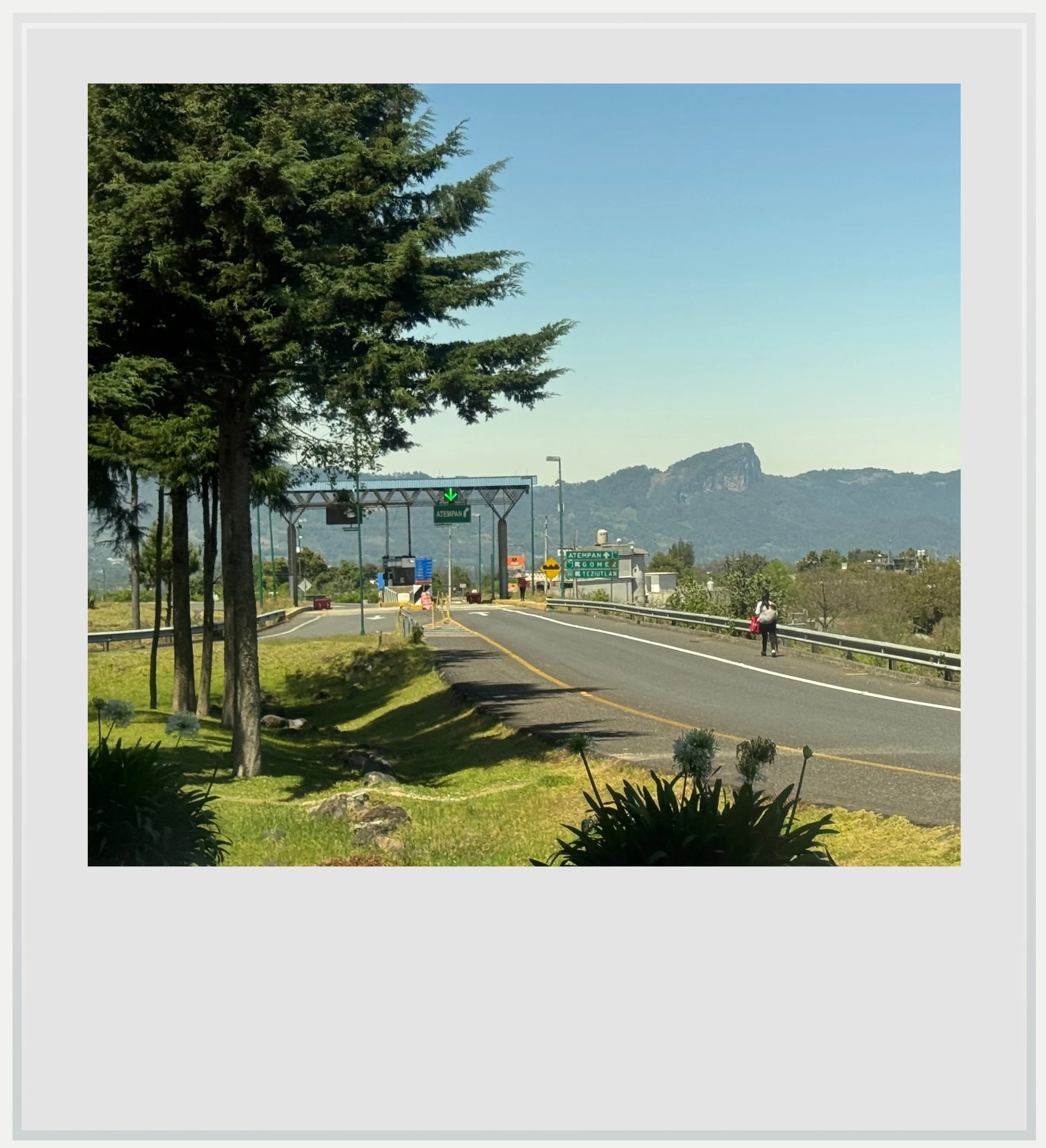
A tool booth on the highway between Teziutlan and Zaragoza.
Practical Information
(updated as of March 2026)
In a nutshell
Getting to Cuetzalan, a very remote pueblo magico in the middle of Puebla’s Sierra Madre isn’t easy from Mexico City, but it became a whole adventure to reach it from Papantla, Veracruz.
Three buses and 10 hours later, MXN 550 lighter, I arrived in Cuetzalan after having crossed many beautiful Sierra landscapes, and seen parts of Mexico very few tourists ever reach.
Bus companies offering service between Papantla and Cuetzalan
Though distant by only 57 miles, there is no direct service between Papantla and Cuetzalan. The road linking the two isn’t easy to drive on - Google Maps estimated a 3-hour trip, which worked out to about 19 mph on average - a good indication of how slow the journey would be. In any case, without a rental car, this option wasn’t one for me.
Instead, I pieced together an itinerary based on what I could find online. I first took the one daily ADO bus linking Papantla to Teziutlan, another magical town in the Sierra Madre, then a regional VIA bus to Zaragoza, forty minutes north, where I finally got on the one daily AU bus to Cuetzalan. That route was now a 129-mile affair (207 km) with a Google-estimated 5-hour trip time. Traveling by bus, the actual trip time was close to 10 hours, including delays and waiting time between buses.
I wanted certainty, and booked these online about a week before my trip, but in hindsight, should have known that many regional bus networks have little online presence, and that I was very likely to find more options showing up at the station.
Indeed, there were frequent second-class buses between Papantla and Teziutlan - actually one per hour, so I needn’t have gotten up at 6:30 AM to catch the 7:40 AM ADO bus. There were frequent VIA buses as well between Teziutlan and Zaragoza, and finally, about hourly departures, also on VIA, from Zaragoza to Cuetzalan.
My trip could have taken less time had I relied on the VIA network, as my connections would have been shorter, but I liked the certainty of a confirmed seat a few days in advance. In any case, know that VIA offers a lot more timing options.
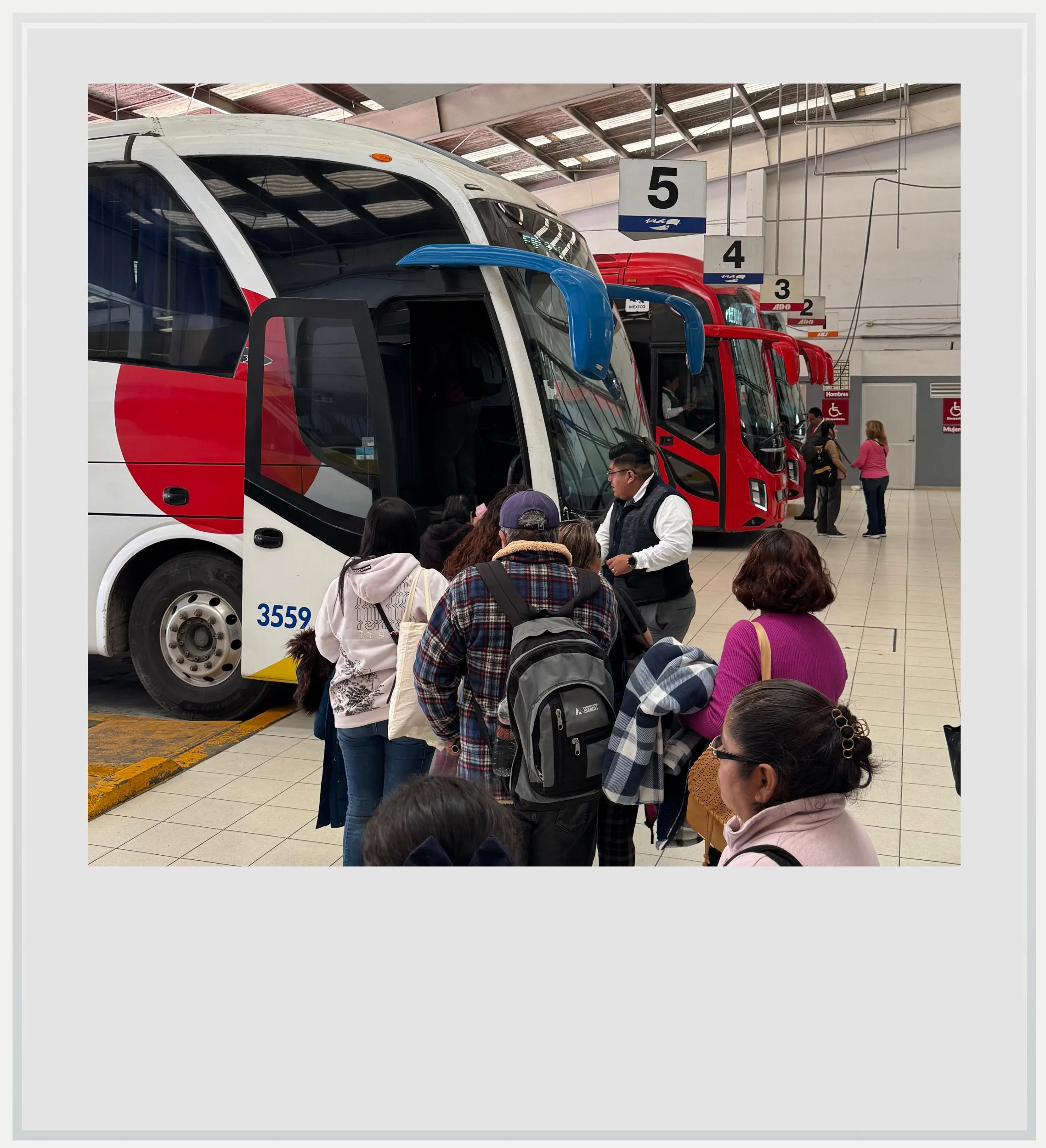
Boarding a VIA service in Teziutlan.
First class, Executive class or Luxury service?
Counterintuitively, bus classes aren’t as they seem in Mexico.
Second class (clase economica):
The most basic intercity bus service, these buses offer comfortable seats, assigned seating and AC, but usually don’t feature a bathroom (to cram more seats in the bus) or entertainment. They make more stops than first-class services, and are used by the most price-sensitive travelers. AU, an ADO brand, is the quintessential second-class bus line in Mexico.
First class (primera clase):
The standard class for most medium- to long-distance travel in the country, this is the default level of service. You get good legroom, a seat that reclines, and entertainment beamed to several overhead screens throughout the bus. Seats are assigned and buses feature AC and toilets. ADO, Futura, Omnibus de Mexico, Pullman de Morelos are examples of this class of service.
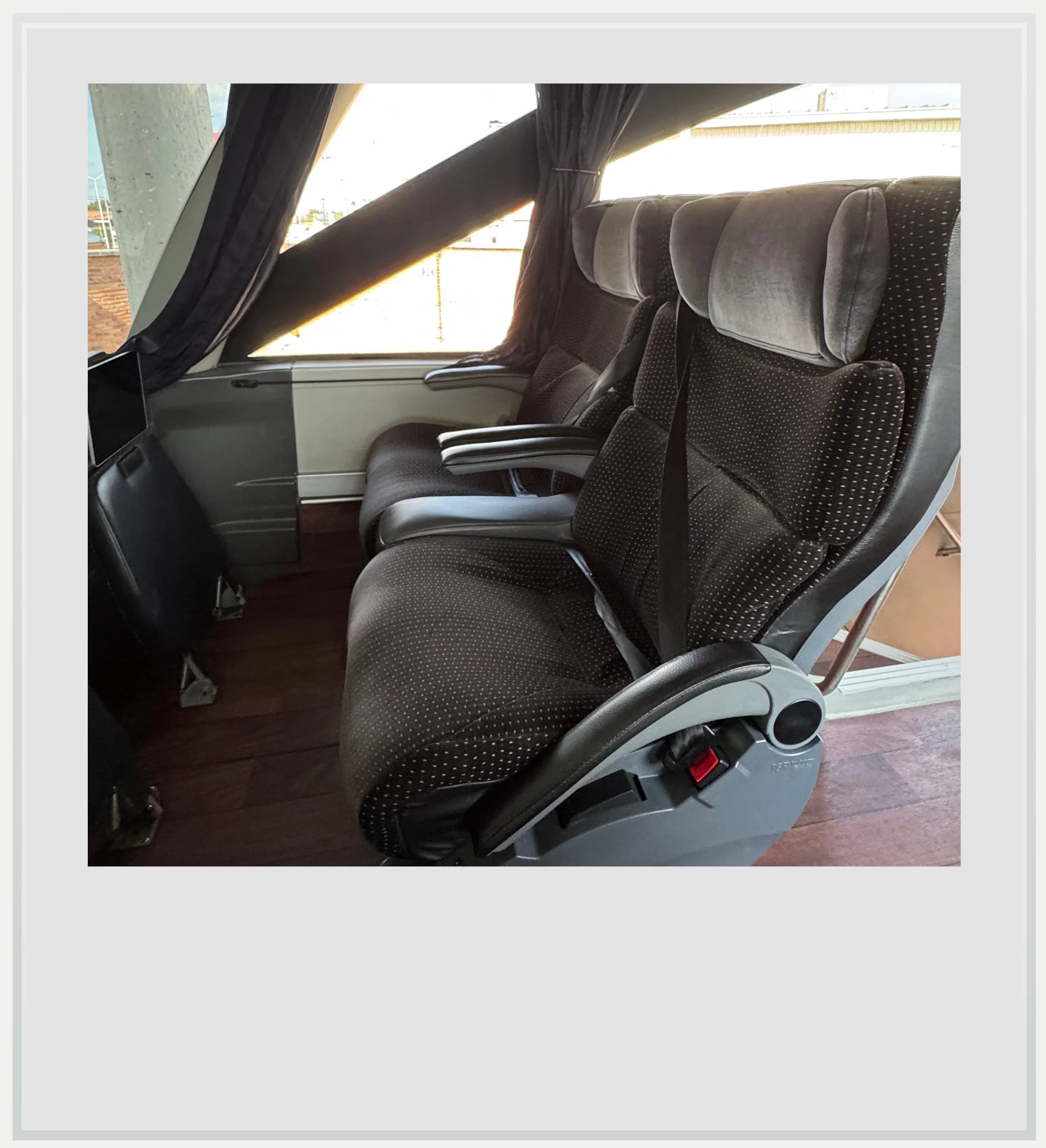
Seats on a luxury bus operated by ETN.
Executive class (clase ejecutiva):
A notable step up from first class, Executive buses offer the same features with much more legroom, a seat with a movable leg rest, and individual entertainment screen at every seat. It’s a much better proposition for trips longer than a few hours, and usually comes at a premium of 15 to 20% above first class. Futura Select, ADO Gran Lujo, Estrella de Oro Pluss, Senda Diamante are all in this category.
Luxury class (clase de lujo):
This is the best experience you can get on a bus. Seats are no longer four-abreast but three-abreast, so each seat is wider, legroom is even better than on executive buses and recline is much deeper. Cost is usually 10 to 20% higher than Executive services, and for trips longer than 4 hours, I would recommend considering them - especially if you’re traveling solo, as you can pick a seat on the left side of the bus with no immediate neighbor - effectively both an aisle and a window. Companies offering this service are ADO Platino, Estrella de Oro Diamante, ETN, among others.
I wrote a full article with pictures on the differences between these services to help visualize the differences between classes, and you can check it out here.
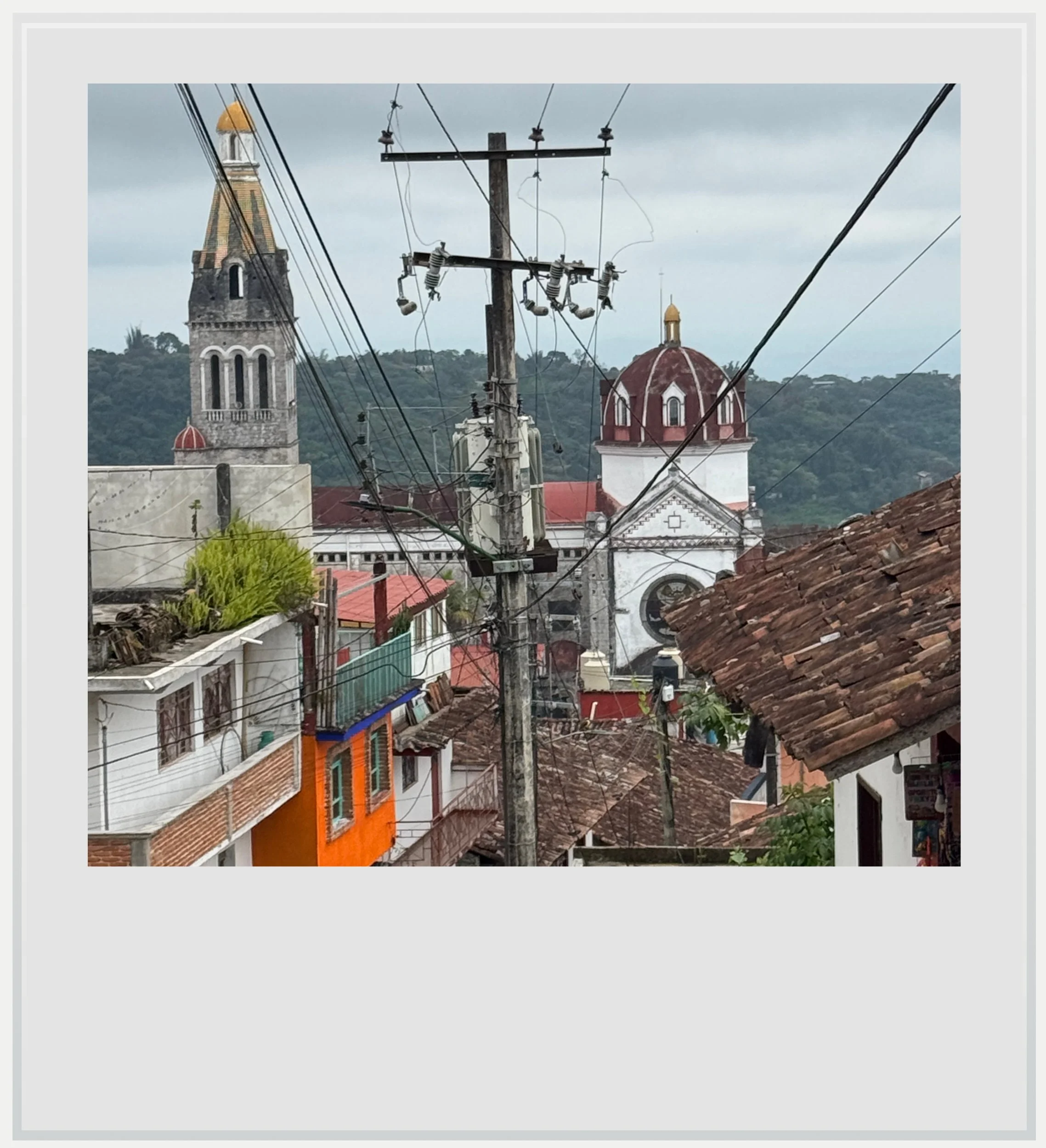
My first view of Cuetzalan, getting off the bus.
Bus safety
Buses in Mexico are generally very safe, and bus travel is definitely safer than renting a car, especially when crossing remote areas of the country: bus drivers know the route very well, they are usually aware of any issue on the road by other drivers ahead of them, and it allows you to rest while someone else does the driving.
All photos are mine and are copyrighted. Hover over the photo (on a desktop) or click on it (on a phone) to see the caption