Trip Report: Mexico City to Papantla, Veracruz by bus.
Across the Sierra Madre toward the Totonac heartland.
Looking for concrete details and tips? Go straight to the Practical Information section.
I had planned a trip to Veracruz, one Mexican state I hadn’t yet visited, to see another of Mexico’s incredible archaeological wonders, the Pyramid of the Niches in El Tajín, and the nearby magical town of Papantla.
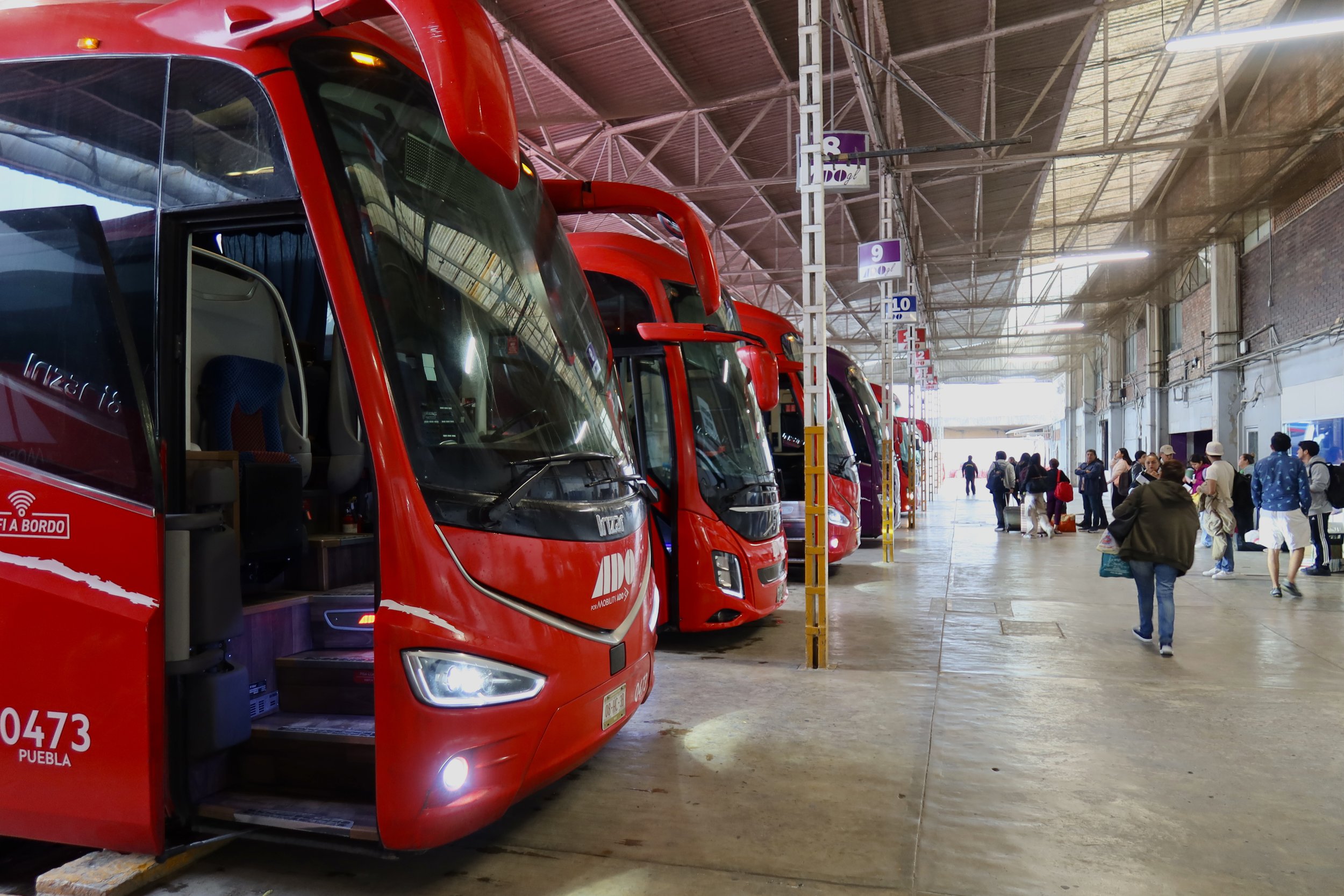
On a sunny Monday in March, I took a DiDi to the Northern Bus Station. It was 9:30 am and the city was deserted: the day I had picked to travel was a national holiday, so I got to the terminal in fifteen minutes. It was as busy as usual: people queuing at ticket offices, waiting for their bus on the metal seats by the boarding gates, or rushing toward the nearby subway station.
A comprehensive booking system for buses in Mexico doesn’t really exist. A few sites try to aggregate routes from the many companies crisscrossing the country, but none of them are complete. Even Rome2Rio, often presented as an exhaustive resource, misses many lines and destinations. If you want to go from Mexico City to somewhere like Papantla, you’re mostly left to your own devices.
After a few website searches, it turned out the only direct services were run by ADO, a massive bus company covering most of southern Mexico, including some pretty remote towns, sometimes their only link with bigger cities, from Veracruz to Chiapas.
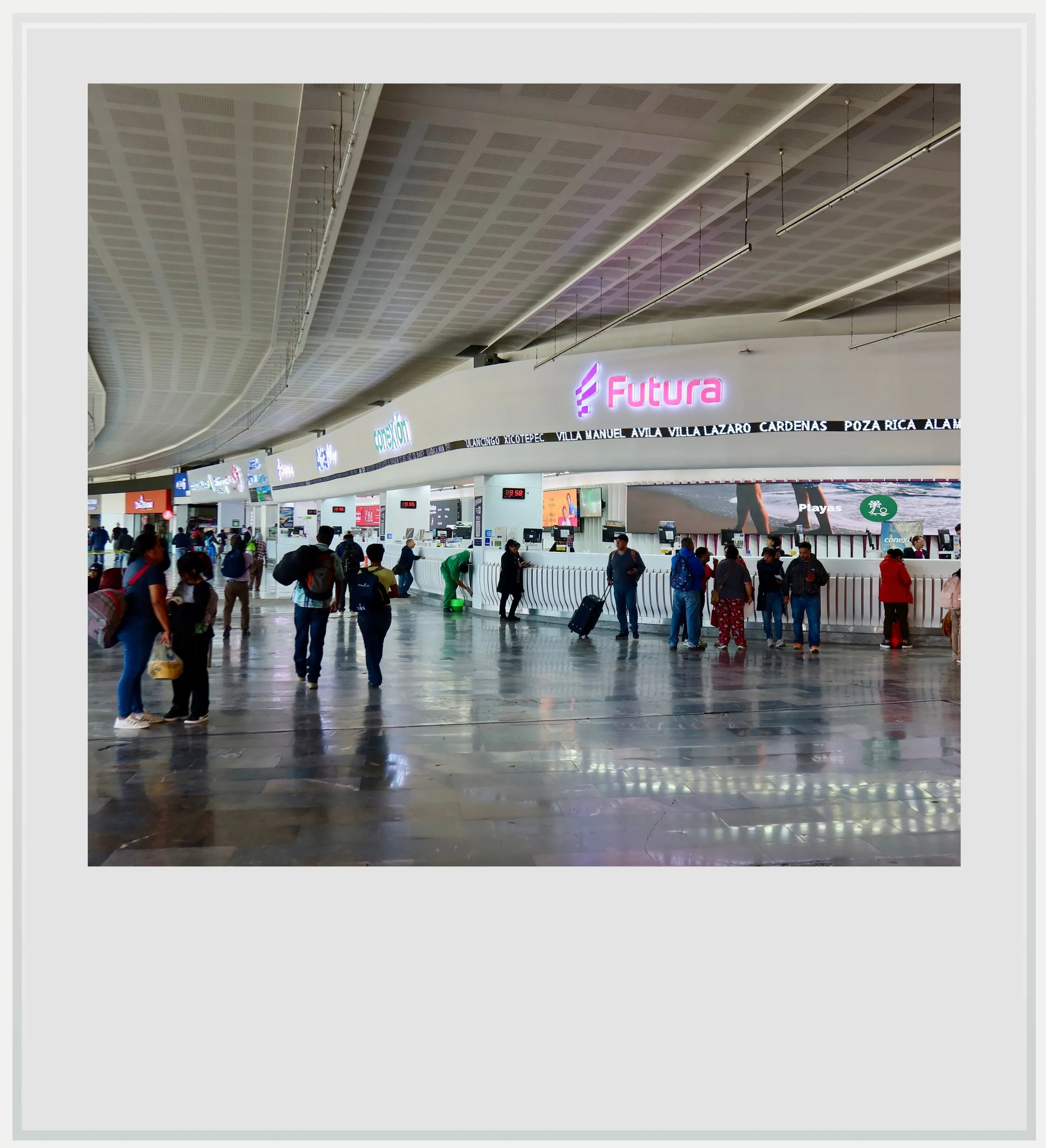
The Futura ticket counters inside the Estacion del Norte, in CDMX.
The trip would last about five hours. I wasn’t super excited about riding a first-class bus for five hours straight. These buses are very comfortable, but they are best for trips of up to four hours, after which the legroom, although somewhat generous, starts to feel a little cramped.
As a result, I searched for other options and quickly realized that the way to better choices would be to actually take a bus to Poza Rica, a bigger town about 45 minutes north of Papantla. Poza Rica is served many times a day by ADO, but also by Futura, which has an executive service on the line, called Primera Select, that is basically a first-class bus with more legroom and slightly more comfortable seats.
The bus timetable called for a 3h30 trip to Poza Rica, but Google Maps disagreed.
It felt like a good trade-off to skip the direct bus and instead ride an executive service for three and a half hours before picking up a different coach to get to Papantla.
Futura, like many other bus services in Mexico, offers significant discounts when booking a trip ahead of time. I bought my ticket about a week ahead, so I was pretty sure my trip was going to happen and wasn’t afraid of losing the MXN 353 (about USD 20) I was going to spend.
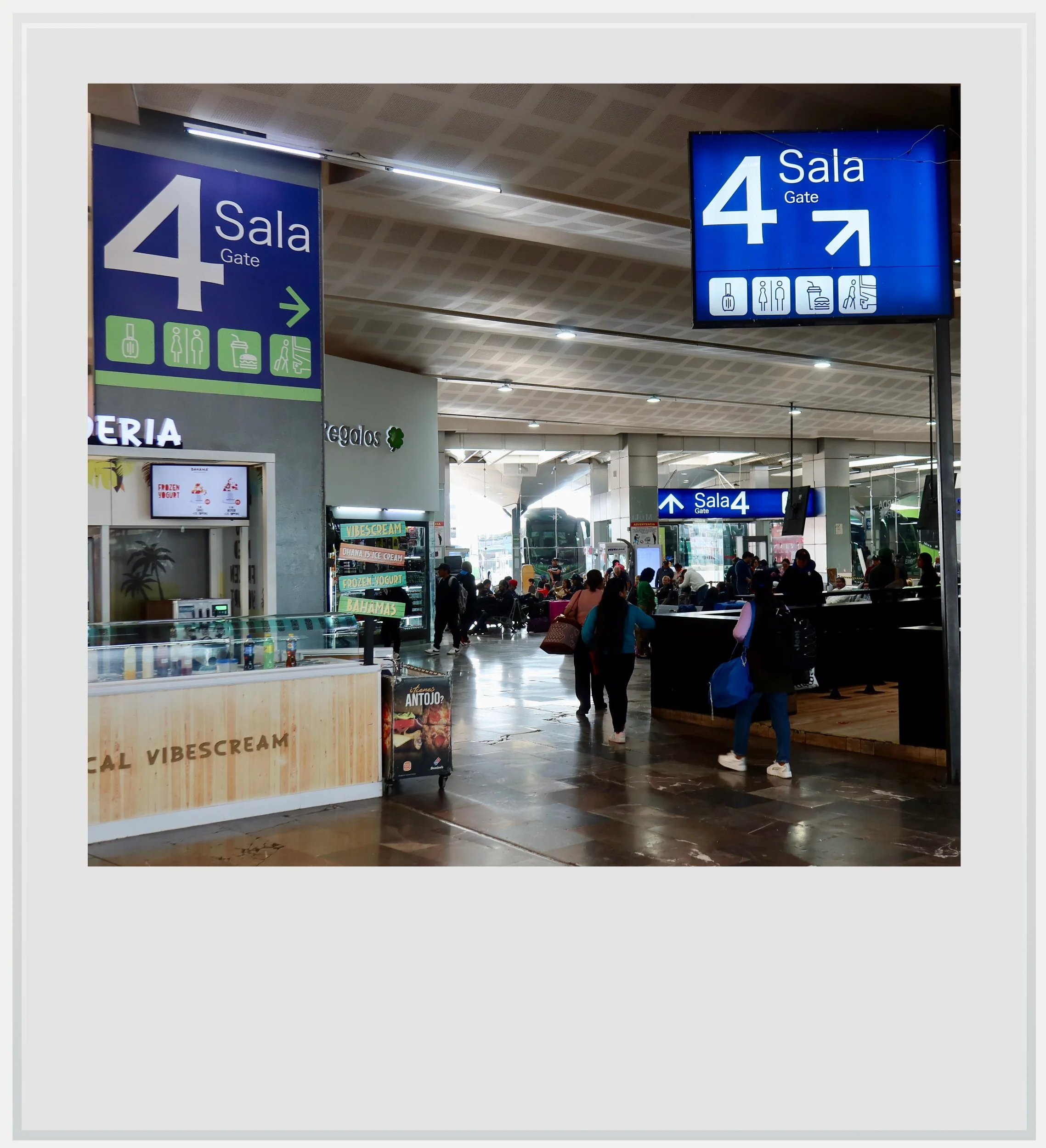
Towards boarding gate 4, where my Futura service would depart, in the Northern Bus Station in CDMX.
Only when I got to the bus station did I realize I had made a mistake. The departure hall of the northern terminal in Mexico City is lined with modern ticketing counters for all the main bus lines, and they frequently advertise their prices and destinations on bright LCD screens. As I was passing the ETN booth, I realized they too were offering buses to Poza Rica.
ETN is one of my favorite bus lines in the country. It’s a luxury service with very plush, wide seats laid out three per row, so it’s an extremely comfortable ride. I wished I had checked their website a week before.

My Futura service pulled into boarding bay 82 about 10 minutes before departure. Futura asks you to be on the platform at least 15 minutes in advance, but that wasn’t really necessary.
The attendant quickly opened the cargo door for passengers to check their luggage. I was given a receipt for my backpack, which I always find reassuring. I have always noticed that attendants at arrival stations check that your number matches the one on the luggage you’re retrieving. This is especially important when the service makes intermediate stops — you don’t want anyone to go away with your bag.
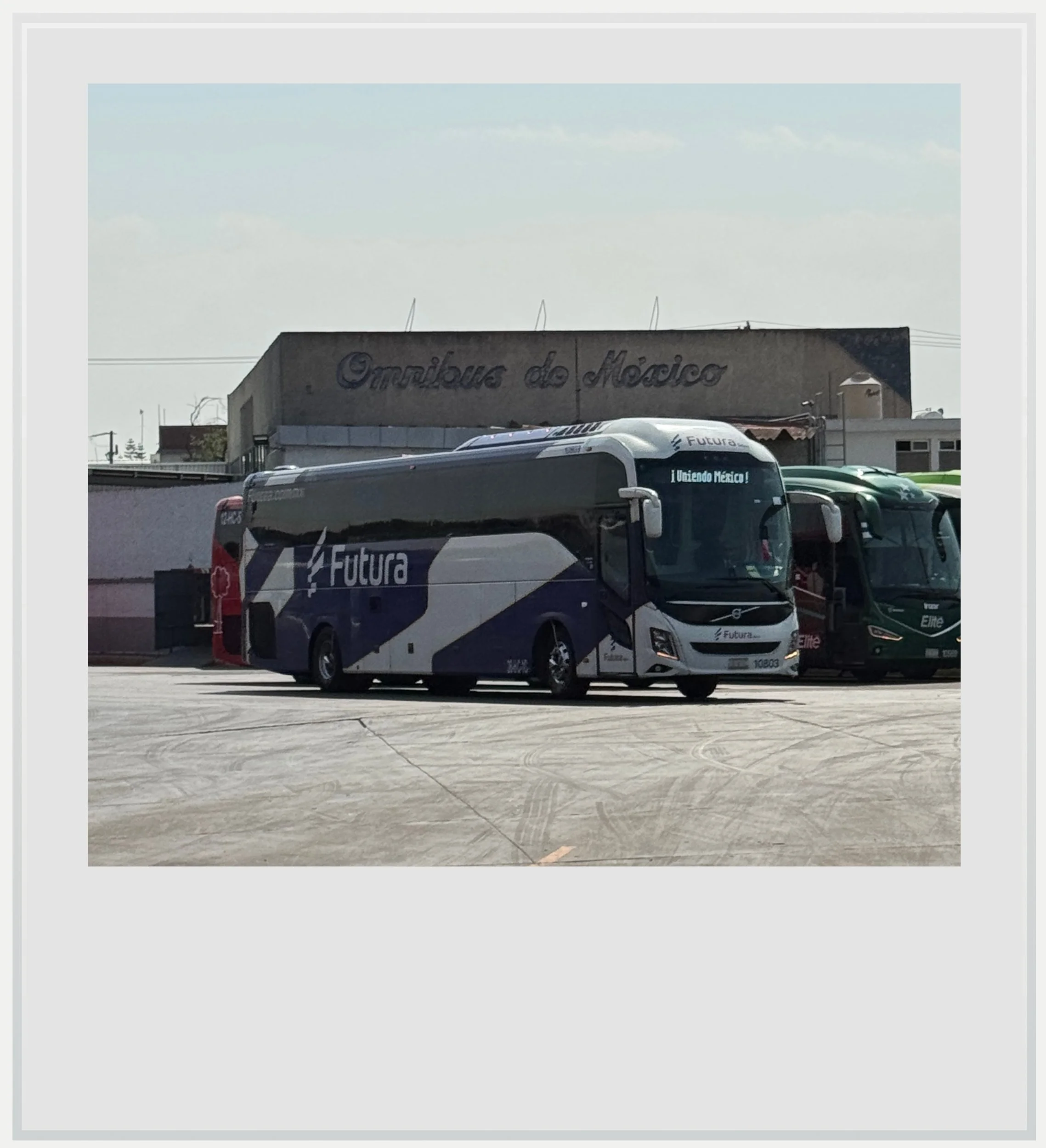
The Futura bus about to take me to Poza Rica, Veracruz.
The bus was a Volvo Euro5 made in Mexico, clad in the classic Futura Select purple and white livery, with big Futura branding on the sides and smaller Futura Select logos on the front and by the boarding door.
Inside, the amenities reminded me of another bus line I had taken last year, a Diamante-class Senda service between San Luis Potosí and Matehuala. The Futura Volvo was equipped with black seats with leather accents, featuring an adjustable leg rest, a standard feature on executive buses.
I was seated in the first row, seat 3, on the aisle, which meant I wasn’t going to have a front-row seat to the scenery. I was looking forward to it, especially because I assumed the part of the trip crossing the Sierra Madre would be especially beautiful, but I hadn’t felt like staying trapped between the window and another passenger for 3h30, and I preferred the front row since no one could recline into my space.
That front row can be a mixed blessing: your personal space isn’t going to shrink the second the passenger in front of you reclines, but the space for your feet is smaller. In a regular seat, it is possible to extend your legs all the way down so they reach below the seat in front of you. In the front row, this isn’t possible, as the driver’s private cabin is just ahead, and a dividing wall restricts your foot space. It never felt cramped, but unlike the passengers behind me, I couldn’t fully extend my legs.
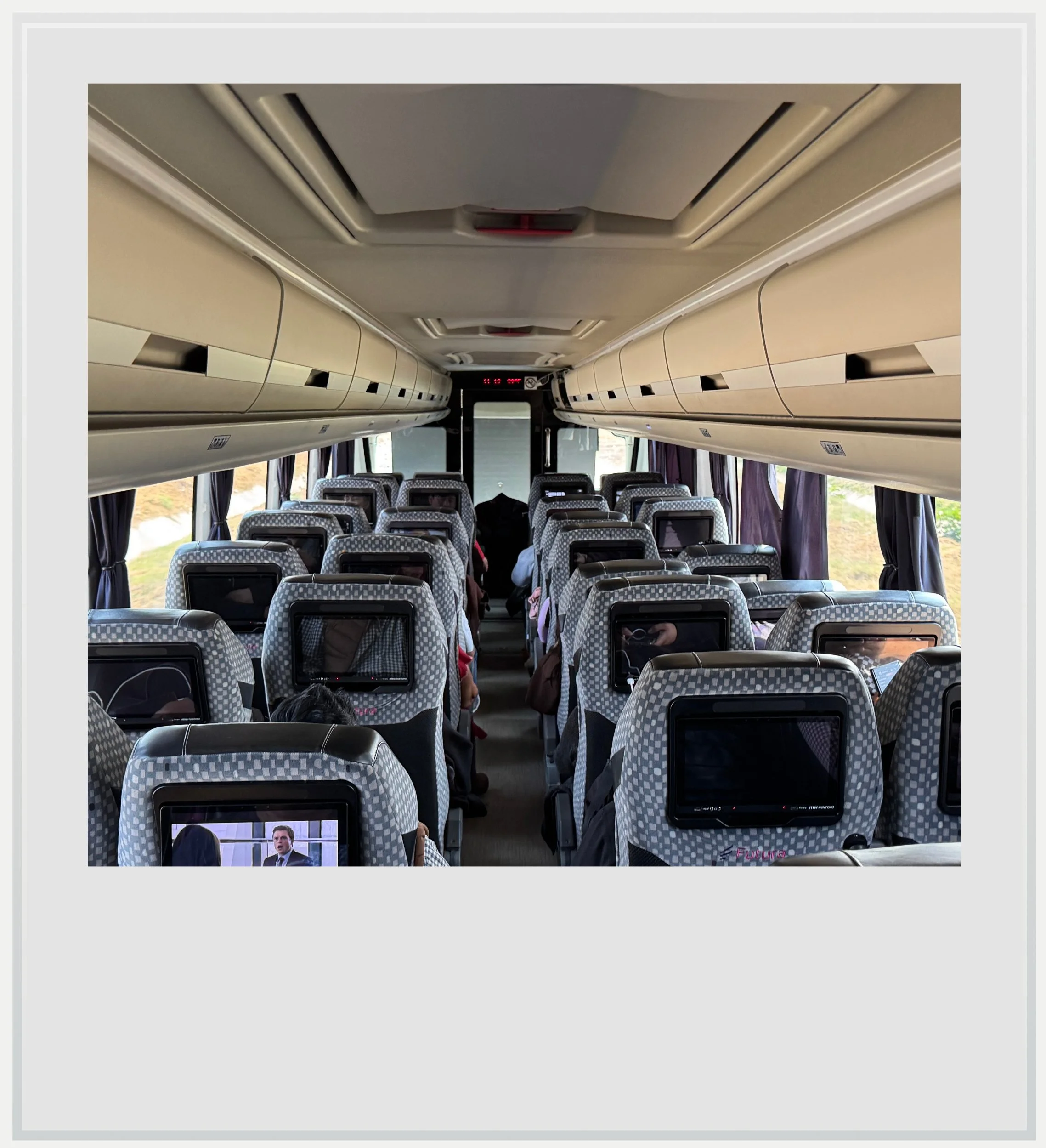
Inside the Futura Primera Select bus taking me to Poza Rica.
So there I was, at 10:32 am, when the driver closed the door between his cab and the passenger cabin and promptly pulled out, on the way to Poza Rica.
I knew I wasn’t going to see much of the landscape from the side windows, as most people draw the blinds shut on long trips, and this was the case today. I hoped to see some of it through the cab door, which was transparent, but as the bus started moving, the driver pulled down a thick sunshade over part of the windshield, and what little view I had disappeared.
I romanticized the thought of a lone Futura bus braving the elements.
The seat was fairly comfortable, save for an adjustable armrest on the aisle side that kept sliding down and was fairly useless.
Each seat featured a large-enough personal entertainment screen showing movies that most people (but not everyone) were watching with their own headphones, or the ones provided complimentary by Futura (though one of my row neighbors couldn’t make the Bluetooth connection work).
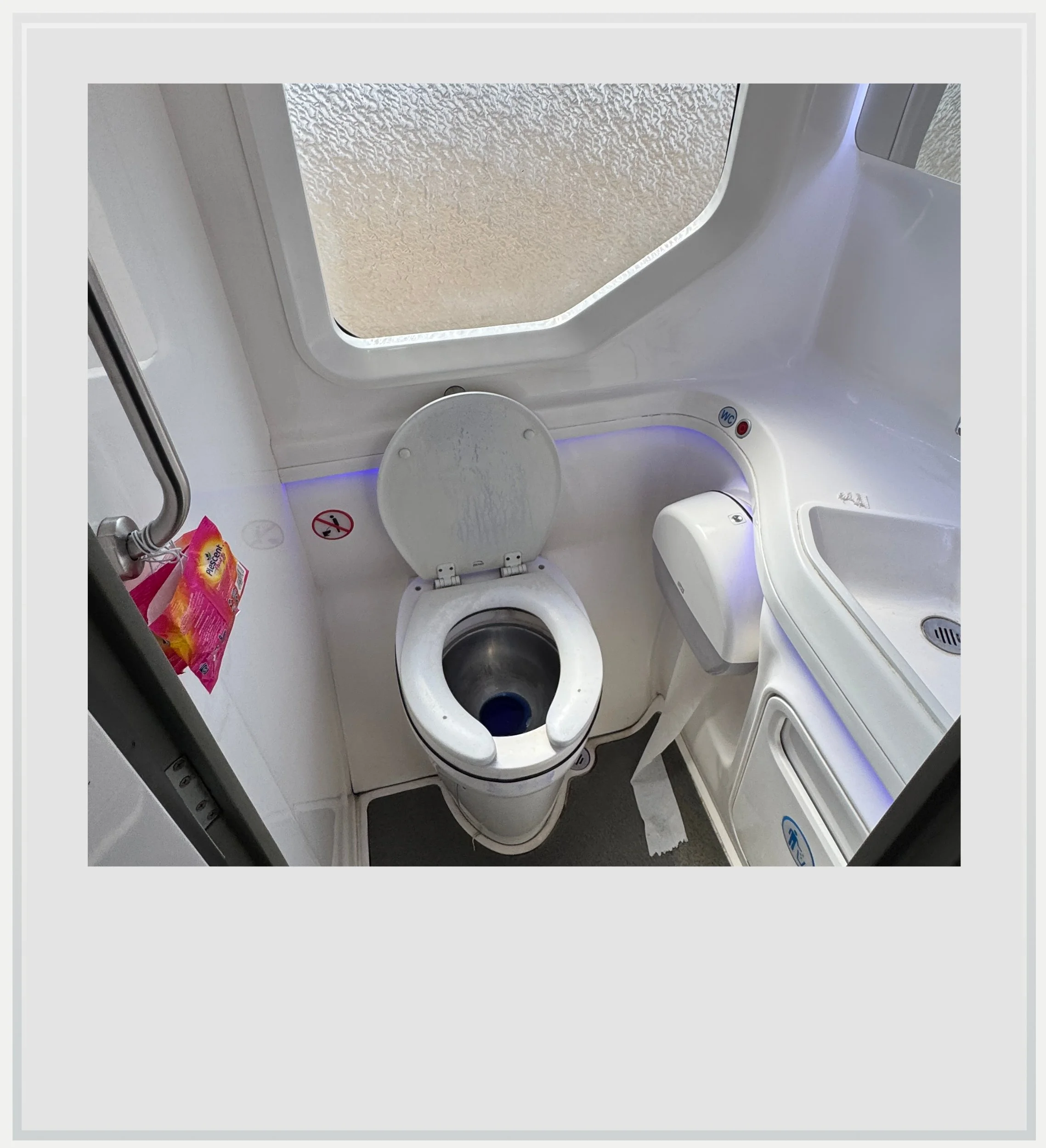
One of the two bathrooms in my Futura Primera Select bus.
I couldn’t help but think about my trip, had I booked with ETN. Most of their buses have two levels, with most of the passenger cabin on the higher level. That means people in the front row on the second level have a panoramic view of the landscape as the bus goes through the Mexican countryside. That would have been nice.
The bus timetable called for a 3h30 trip to Poza Rica, but Google Maps disagreed, showing a 5h travel time. I started worrying a bit, trusting Google more than Futura. A five-hour trip in an executive bus really isn’t the same as a 3h30 one. Time would tell.
For now, the bus was flying down the nearly empty highway out of Mexico City. Traffic would certainly pick up later in the day, but at this moment, there was barely anyone ahead of us. I took advantage of the smooth ride to check out the bathrooms. They were located at the back of the bus, behind a glass door that provided an effective visual and sound barrier from the two small bathrooms behind it.
I was surprised by the cleanliness: I had half expected a mess. Operating everything was easy, the water wasn’t a cold trickle but a generous stream of warm water, and soap and hand towels were provided.
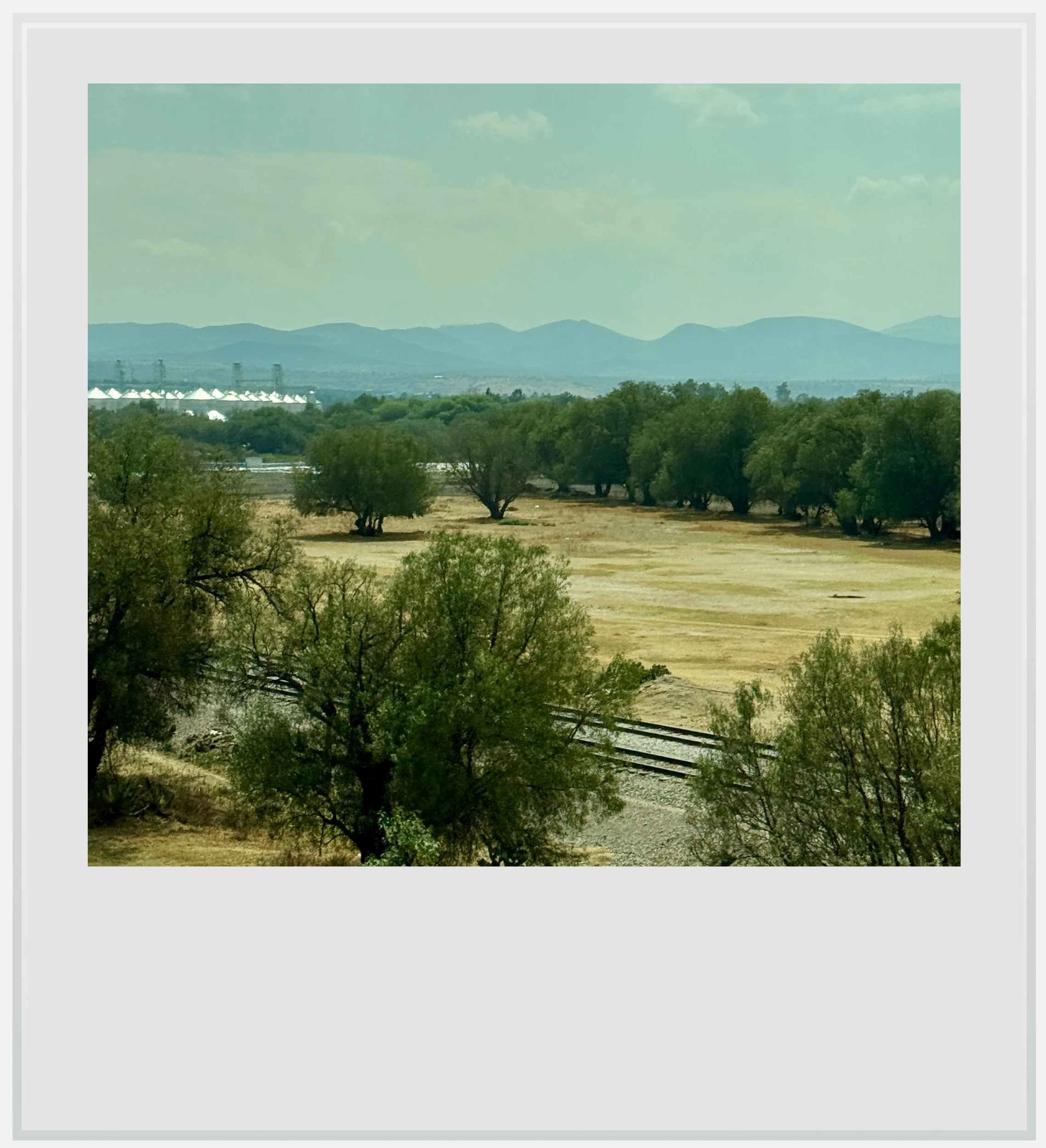
Highland scenery on the way to Poza Rica.
I noticed almost all seats were taken and people had settled comfortably into theirs, sleeping, reading, or, in one case, working on a laptop.
The aisle felt a little tight, to the point that I had to walk slowly, crab-like, to avoid hitting people’s limbs as I made my way to the back of the bus. I don’t know if Volvo Euro 5 bodies are narrower than average or if Futura opted for slightly wider seats at the expense of the aisle, but it did feel like I was barely squeezing through.
The cold front crossing the Mexican highlands meant it was chilly in the bus, and although I had a sweater on, I felt cold for the whole trip. It’s fairly standard for buses across Mexico to have the AC at full blast even when the outside temperature doesn’t justify it. I could have used an additional layer, and envied my neighbors across the aisle, who had thought to bring a blanket with them, now fully laid out across their seats.
For the first two hours of the ride, the landscape was not entirely unfamiliar to me: high plateaus surrounded by distant mountains, never dauntingly big but always present. It reminded me of riding toward Aguascalientes or Morelia. There was a sense of openness and flatness, although we were at a pretty high altitude.
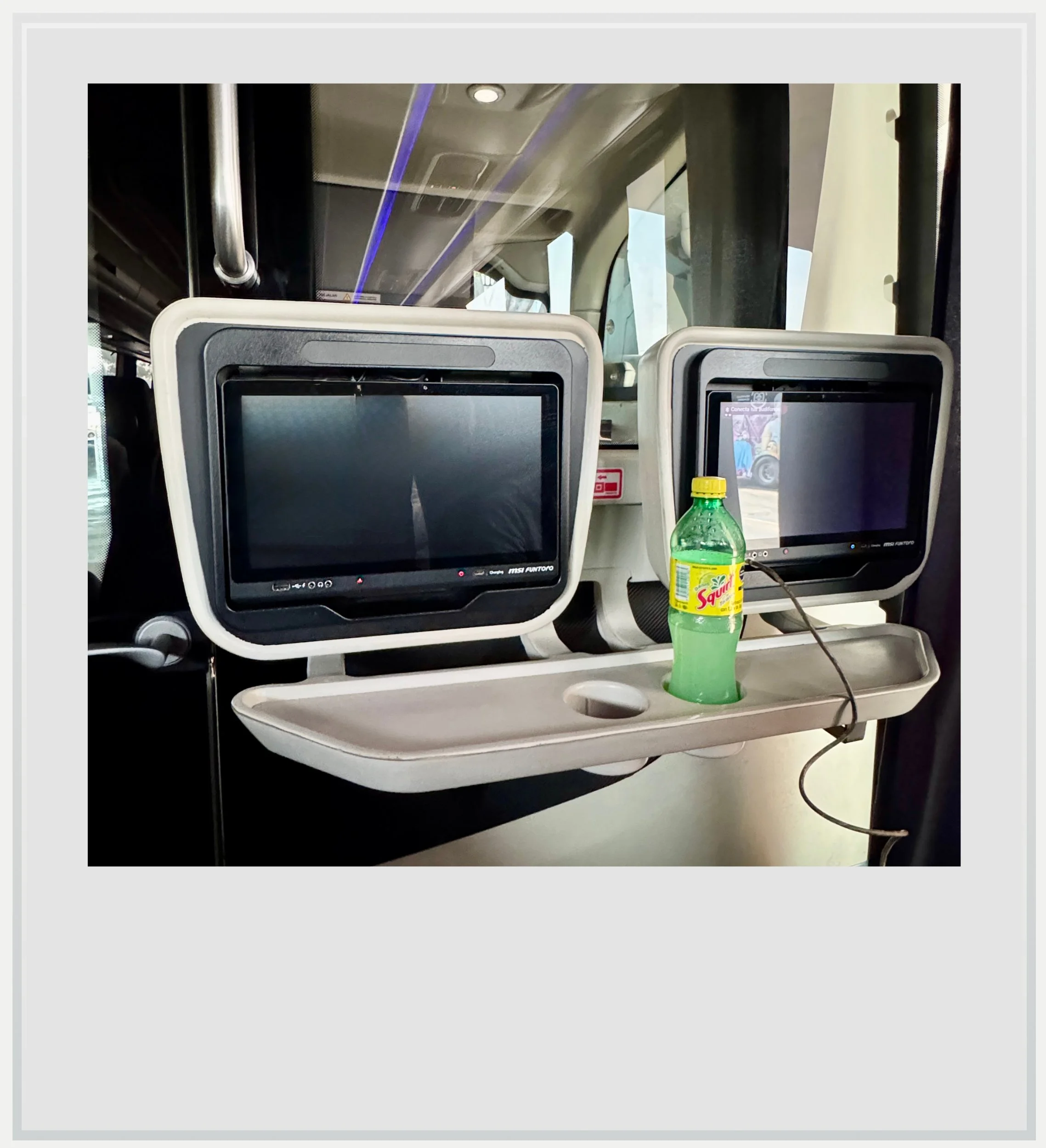
Individual screens on my Futura Primera Select service (not my soda).
Then, around Tlamimilolpa, a few minutes after a food seller got on the bus with a basket full of snacks, to the delight of many passengers, we encountered thick fog and the scenery disappeared into a grey haze that made me feel like we were alone in the world. Mountains, fields, houses: everything disappeared. It also started raining.
The highway was no longer wide and straight, and had become a one-carriageway, two-lane road. We had entered what I hoped would be the most atmospheric part of the trip: the crossing of the Sierra Madre mountains.
I didn’t really mind the adverse weather. I had learned the day before my trip that “torrential rains” were expected for the next few days in the region, and there was a part of me that romanticized the thought of a lone Futura bus braving the elements and getting us to our destination across foggy mountains and winding roads.
I was just glad not to be the one driving.
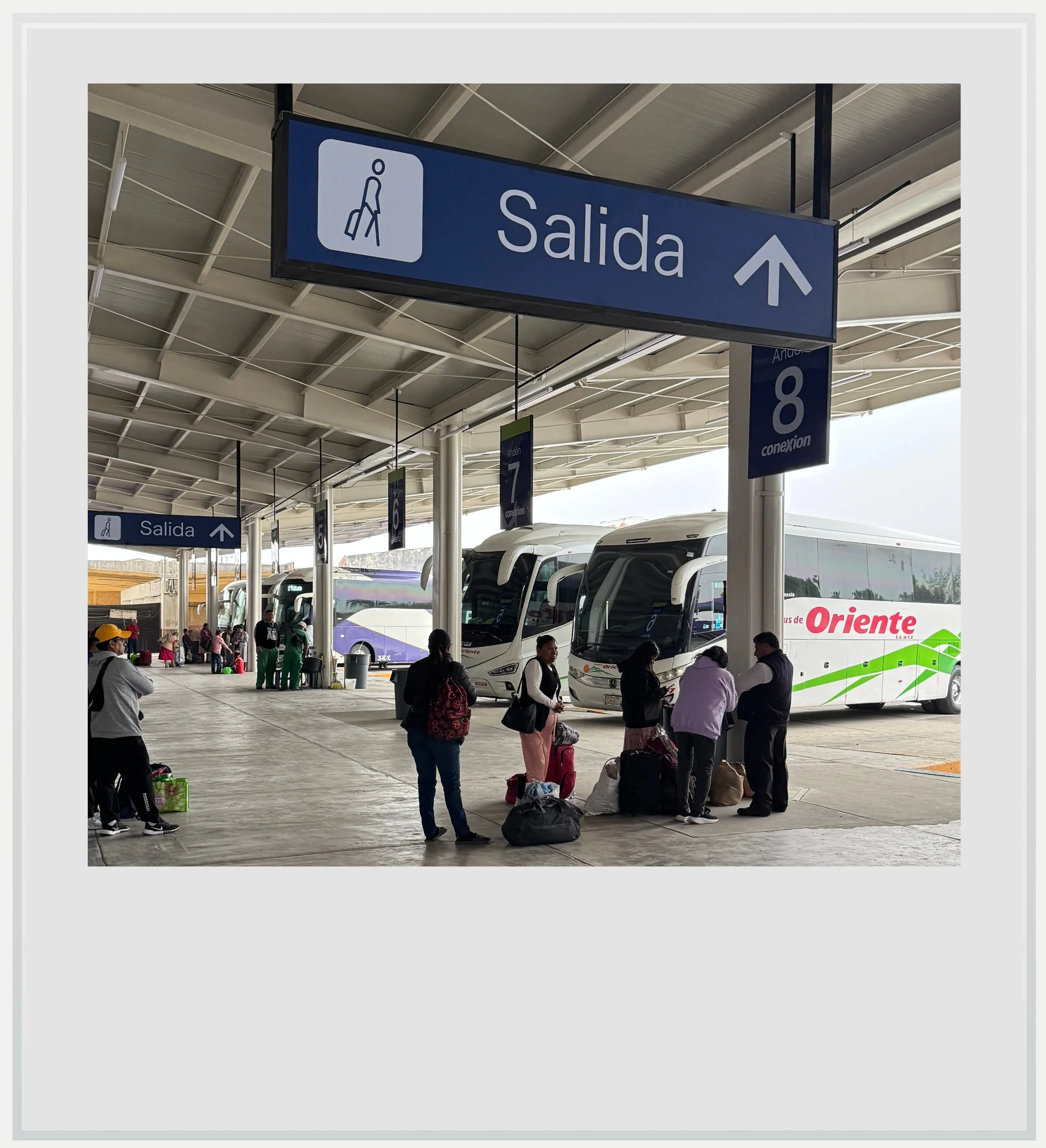
The Poza Rica bus station used by Futura.
I sensed we must have gone through the highest part of the mountain range when the bus speed started increasing, going down a road that became less curvy. Around us, a very different landscape appeared: deeper forest valleys with alternating tunnels and tall viaducts, scenery made intimidating by the patches of fog we still encountered from time to time, and the relentless rain.
We had clearly left the high plateaus of central Mexico and were now deep in the tropical jungle, passing through at high speed on a modern highway.
The ADO station looked like it had come straight from the 1960s.
I wished I could come back here on a clear day, to really get a sense of the majesty of the mountain range, which, right now, felt like a good alternative location for a remake of Gorillas in the Mist.
We continued flying down Highway 132D, the direct toll road, while Google Maps had suggested we get off it at some point — this may have explained the travel time difference. But as we got closer to Poza Rica, it became clear that our actual trip time would be closer to the advertised 3h30 than I had feared earlier, despite the bus having to pass through a pretty bad stretch of weather.
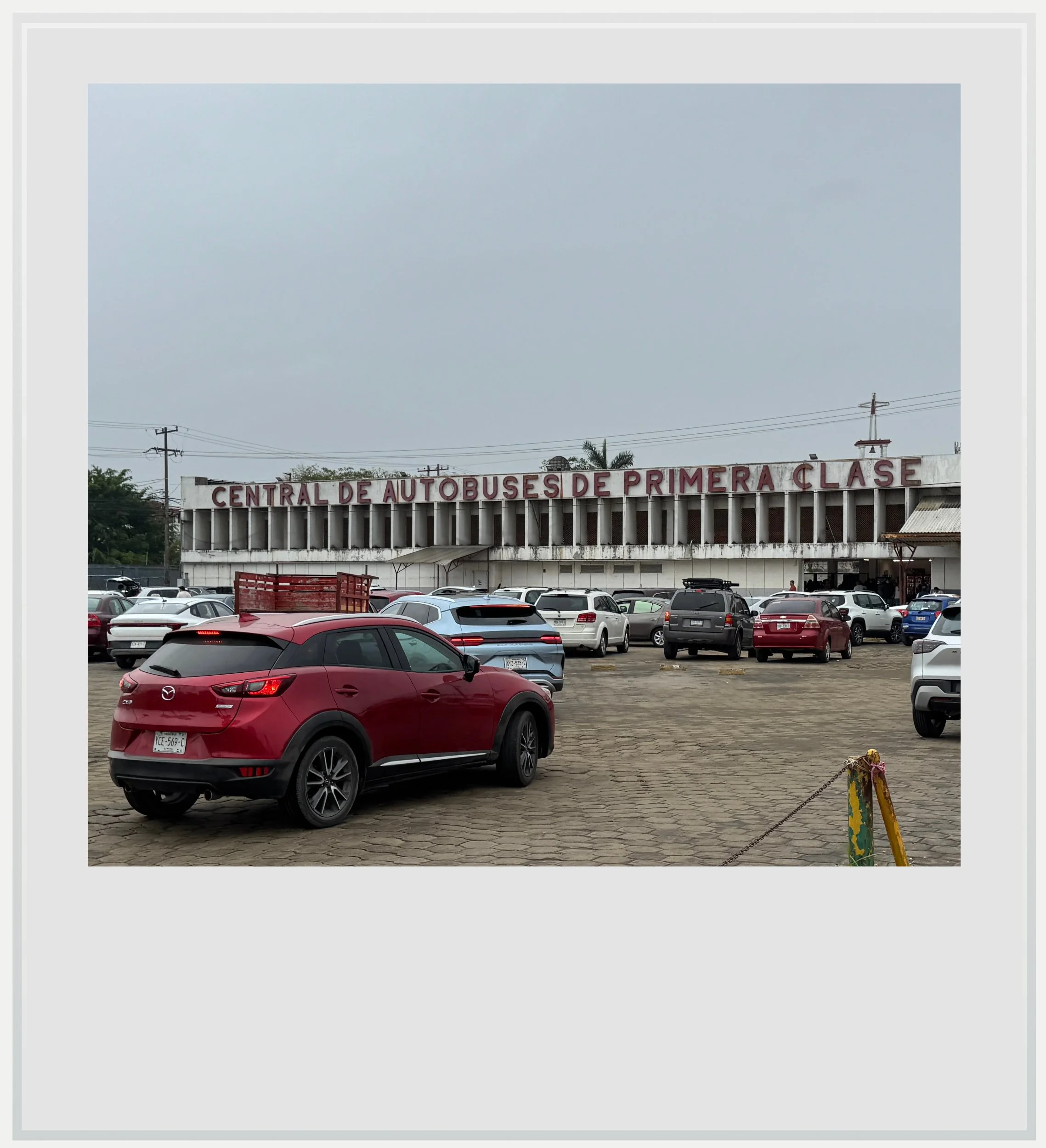
The ADO station in Poza Rica.
Once I got to Poza Rica, after almost four hours of travel, it dawned on me that I had even more choices than I thought for getting to Papantla. This time, I just brushed it off as one of the pleasures of bus travel in Mexico. Some of the smaller bus companies aren’t online, and the only way you find out they exist is by showing up at the station. In this case, there were two bus stations in Poza Rica. The one I arrived at handled buses from the Estrella Blanca group (which includes Futura) and IAMSA (ETN), and the other one was an ADO station. They were right next to each other, and it took me about two minutes to get from one to the other.
Going to the ADO station wasn’t my initial plan, however. I first tried to take an EJE second-class bus from the Estrella Blanca station. It felt more convenient: the bus was due to leave a few minutes later, thirty minutes before the next ADO bus, and I was already right there.
I booked a ticket for MXN 21 and walked to the platform I had been told the bus would be leaving from, only to find out there was indeed a bus going to Papantla parked there, but no one to drive it. The bus itself looked very basic, fairly old and definitely not comfortable, so I thought it might be worth waiting a few extra minutes to get a first-class experience with ADO.
So I left the station, walked a couple of minutes through a surprisingly cold Poza Rica (then under a severe weather alert, as a cold front was crossing the state of Veracruz), and got to the ADO station.
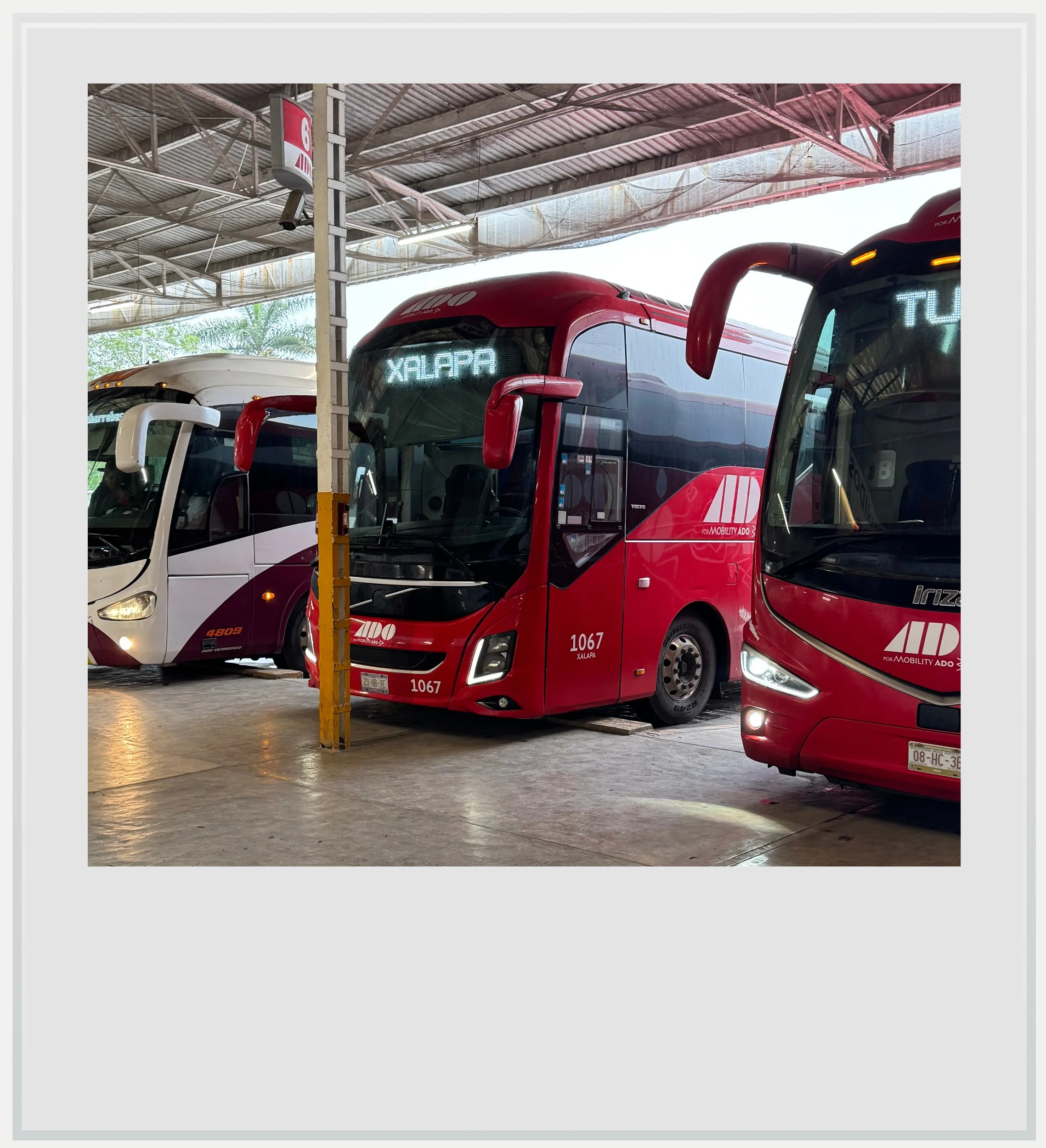
My ADO bus to Xalapa at the ADO station in Poza Rica, Veracruz.
I was in for a shock because, while the Estrella Blanca station was being renovated and looked like it would end up being a fairly modern, if basic, building, this one looked like it had come straight from the 1960s and hadn’t been touched ever since.
It reminded me of photos of Mozambique by Guy Tillim, a South African photographer who loves to find beauty in the decaying buildings of southern Africa. The concrete, late modernist structure must have once looked beautiful, with striking vertical concrete fins forming a colonnade across the second level of the building. It felt both monumental and stripped down, but clearly unloved by the ADO gods.
Inside, the station was extremely basic and, since there was a long line to get a ticket, I purchased mine on the ADO app in just a few clicks, picked a seat by the window next to an empty one, and prayed no one would sit next to me (the bus was about two-thirds full twenty minutes before departure, so there was a good chance my wish would be granted).
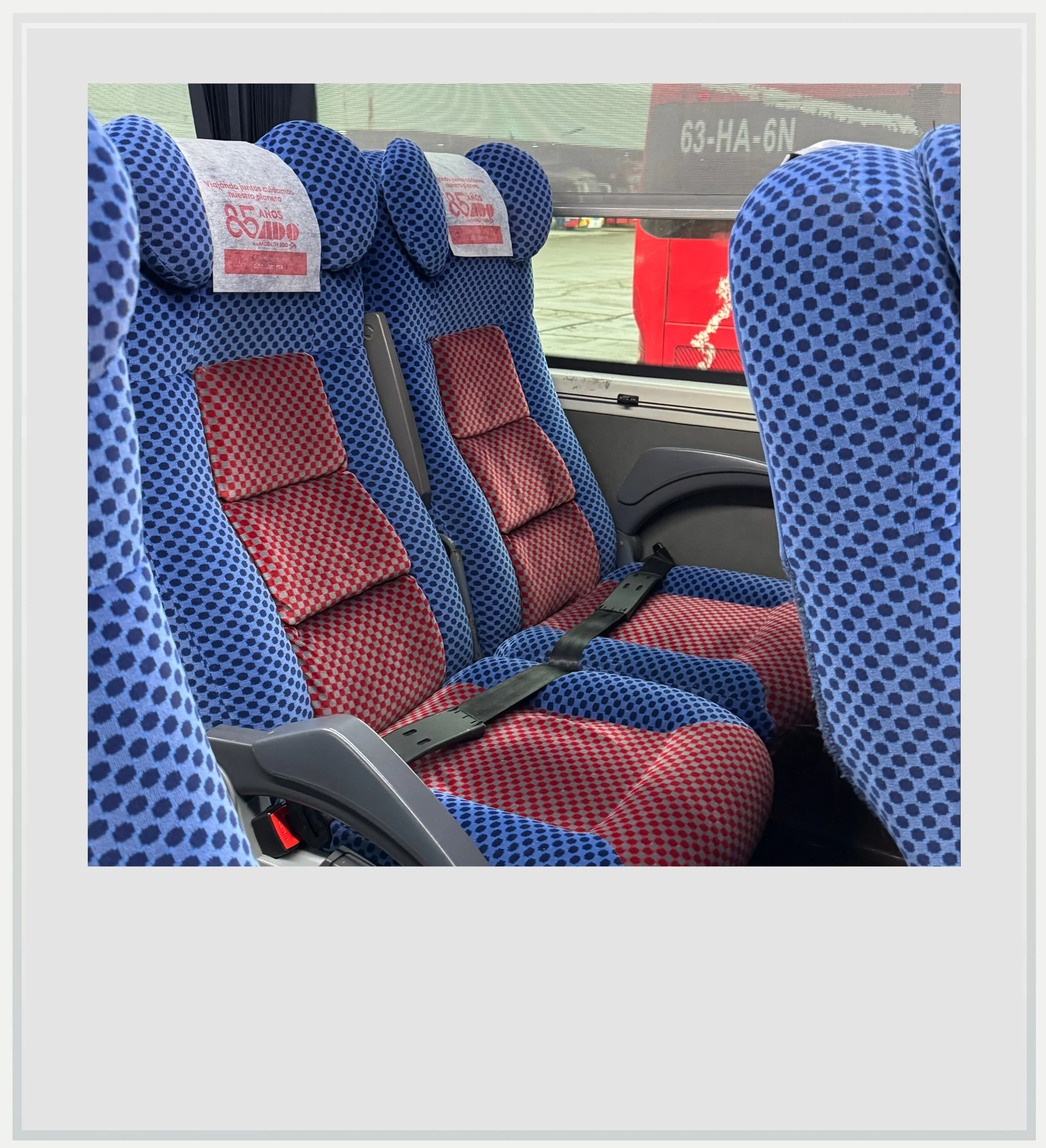
Empty seats on my ADO first-class service between Poza Rica and Papantla.
I’m not sure where the bus was originating from, but it was going all the way to Xalapa. It arrived 15 minutes before departure time, and I was able to drop my luggage with an attendant and get settled before we departed, under grey, overcast skies, for the last leg of my journey. It was a standard first-class bus, perhaps not one of the newest ones, as some of the seats showed a little wear and tear.
We left a few minutes late. The seat pitch, although perfectly acceptable for the forty-minute trip to Papantla, was noticeably less generous than on the Futura service, and there was only one bathroom for the whole bus, again in pretty good condition — I saw a cleaning lady get on the bus and freshen it up as I was waiting to check in my luggage.
My biggest beef, however, and honestly the biggest difference from an executive service, was the lack of a personal entertainment screen. It meant a movie was shown on overhead TVs, the sound blasting through the bus and making sure no activity other than watching it was possible. I couldn’t even think about reading or sleeping while Alien vs. Predator was being broadcast at a volume level similar to about three IMAX theaters.
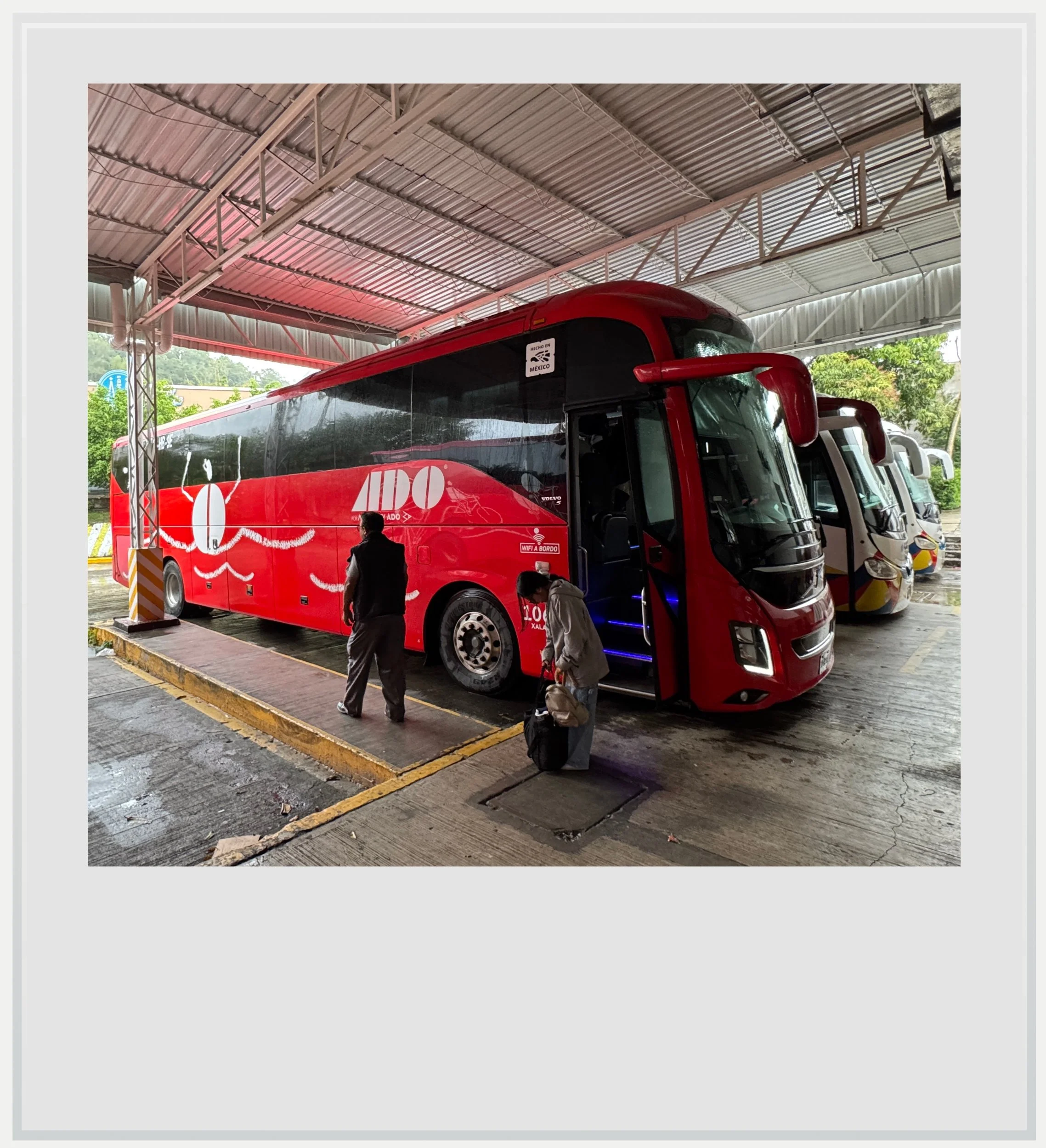
Getting off the ADO bus in Papantla.
The drive to Papantla crossed through very different terrain, alternating between dilapidated Pemex plants and dense jungle. It felt more intimate, less grand, until we gained altitude and could get a sense of the lush hills around us.
We arrived in the smallest ADO station I had ever been to (even the one in Puerto Escondido felt grander), under pouring rain. I quickly retrieved my bag, got my rain jacket out, and got ready to head toward my hotel.
The trip hadn’t felt that long, and I was glad I had had an opportunity to stretch my legs in Poza Rica. I vowed to do more research next time around.
Practical information
(updated as of March 2026)
In a nutshell
Bus companies for the trip: Futura, in a Primera Select service (Futura’s executive level buses), between Mexico City and Poza Rica, and ADO, in a first-class bus, between Poza Rica and Papantla.
With more than twenty services a day, Futura has the largest number of departures between the two cities. Adding sister-brand Conexión’s second-class buses, the group offers almost forty services a day.
My ticket to Poza Rica cost MXN 353, bought ahead of time. The walk up fare for same-day departure was MXN 560. The trip lasted four hours.
The Poza Rica to Papantla leg of the trip was done on a first-class red ADO bus, lasted about forty minutes at a cost of MXN 95.
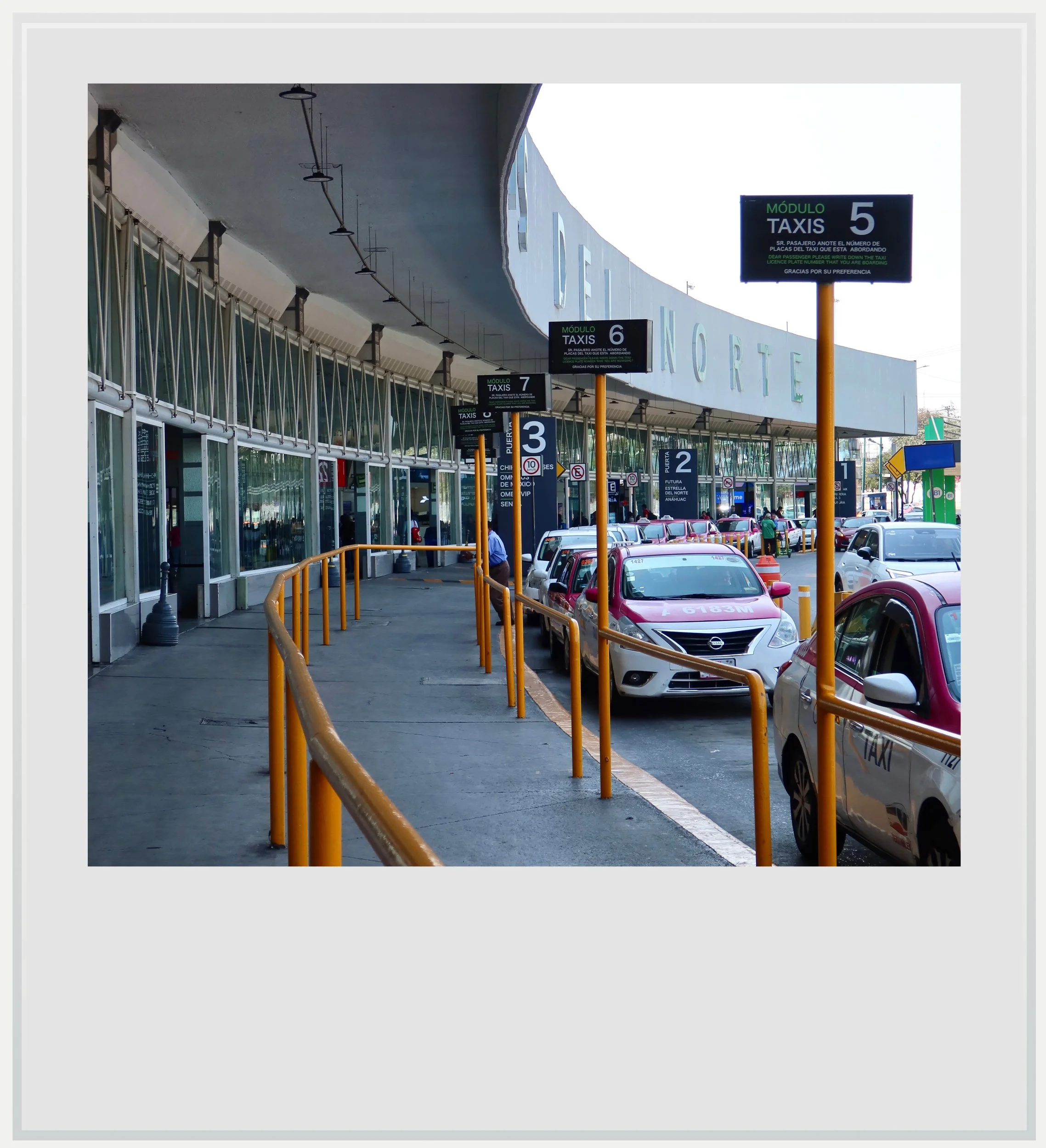
Outside the Northern Bus Station in Mexico City.
Bus companies offering service between Mexico City and Papantla
There are two main ways to get to Papantla from Mexico City. On a direct bus, or with a connection in Poza Rica.
Direct service to Papantla: ADO
ADO is the only company offering direct services to Papantla, usually with a stop in Poza Rica, but no bus change. It’s a convenient option as you don’t have to get off the bus, don’t have to transfer your luggage from one bus to the other, or be stressed about missing your connection because of delays on the road.
A ticket costs MXN 652 at the counter for a walk-up fare to the next available bus, but advance tickets can be had for much less: some services were available for MXN 337, or almost 50% off, for trips booked a week or two in advance. Note that these advance tickets are non refundable, and only changeable at the ticket counter.
There are 5 to 7 departures a day, three of them overnight, and the trip is 4 to 5h long, depending on traffic.
The red ADO bus is a first-class service, which is the standard service offered on most bus lines in Mexico. Bus always have a bathroom, AC, assigned seating and are in good to excellent condition. First-class services are perfect for trips up to 3 or 4 hours, with decent legroom. For more information on the various types of bus classes in Mexico, click here.
Most ADO buses to Papantla leave Mexico City from the Northern Bus station, but one of the night services actually departs from the TAPO station, the eastern terminal, where ADO has an overwhelming presence.
Services via Poza Rica
Poza Rica, a charmless commercial city 14 miles (22 km) north of Papantla, can be a great gateway to the pueblo magico, with many more services from the capital. It is possible to take one of the many services to Poza Rica, and change to either an ADO service there - understanding there are more than the ones coming from Mexico City, or a second class service.
It’s important to note there are two main bus stations in Poza Rica, one mostly dedicated to the Estrella Blanca and IAMSA group of brands (Futura, ETN, etc.), while the other one is reserved for ADO and its partners. They are located next to each other, so getting off a Futura bus to connect to an ADO service is easy. The trek between the two buildings is only a couple of minutes.
Futura and partners
Futura is the service leader on the CDMX to Poza Rica liaison, with up to forty services a day from the Northern Terminal, including its second class offering, Conexión. Futura-branded buses offer an executive service more than twenty times a day, in about four hours. An executive service is a first-class service with better amenities, including more comfortable seats with a noticeably wider seat pitch and an adjustable footrest, a personal entertainment screen per seat, as well as two bathrooms at the back of the bus, instead of just one. Walk-up fare is around MXN 560 with discounts available for advance purchases.
The interest of going through Poza Rica is to enjoy a more comfortable ride and more travel options, given the frequency.
There is a connecting service to Papantla in the bus station used by Futura. The service is operated by EJE on local, second class buses (no assigned seating, plastic seats, limited legroom, no AC). These services stop frequently but the short distance of this last leg makes it tolerable. Buses leave approximately every thirty minutes during daytime, and a one-way ticket costs MXN 21.
ETN
The absolute best-in-class service between Mexico City and Poza Rica is offered by ETN, a luxury bus service, with extremely comfortable, wide seats arranged in a 1+2 layout, ample seat pitch and two-level buses.
ETN links the two cities twice a day from the Northern Terminal in a little over four hours, and the walk-up fare is MXN 650, with cheaper prices available for advance purchases.
ETN buses arrive in the same station as Futura, meaning the same connecting service is available, although a better option is to walk to the ADO station a couple of minutes away to ride a first-class ADO bus to Papantla.

Seats inside an ETN bus, a luxury service.
ADO
The leader in bus transportation in Mexico’s southern states isn’t the #1 option to Poza Rica, but still offers up to 17 services a day, most from the Northern Bus station, with a few departing from their fortress hub, the eastern bus station, also called TAPO.
ADO bus are a first-class service, a perfectly reasonable choice for a 4h-trip, even if an executive or luxury service would be more comfortable. My biggest issue with ADO’s buses is how loud the overhead entertainment is during the trip. It’s hard to tune it out if you’re not interested in the family-friendly movies broadcast on the TVs across the bus.
ADO’s walk up fare to Poza Rica is MXN 522, but ADO is well-known for its aggressive pricing on advance purchase tickets, with discounts up to 50%. The only caveat is that these tickets aren’t refundable, and only changeable at a physical ticket counter.
Once in Poza Rica, the easiest way is to connect to another first-class ADO service to Papantla. There are up to 22 services per day between the two cities, more or less spaced by one hour throughout the day. The walk up fare is MXN 95, and this is one case where it makes sense to purchase at the last minute, once you are in the Poza Rica ADO station, given the relatively unpredictability of traffic on the way there from CDMX.
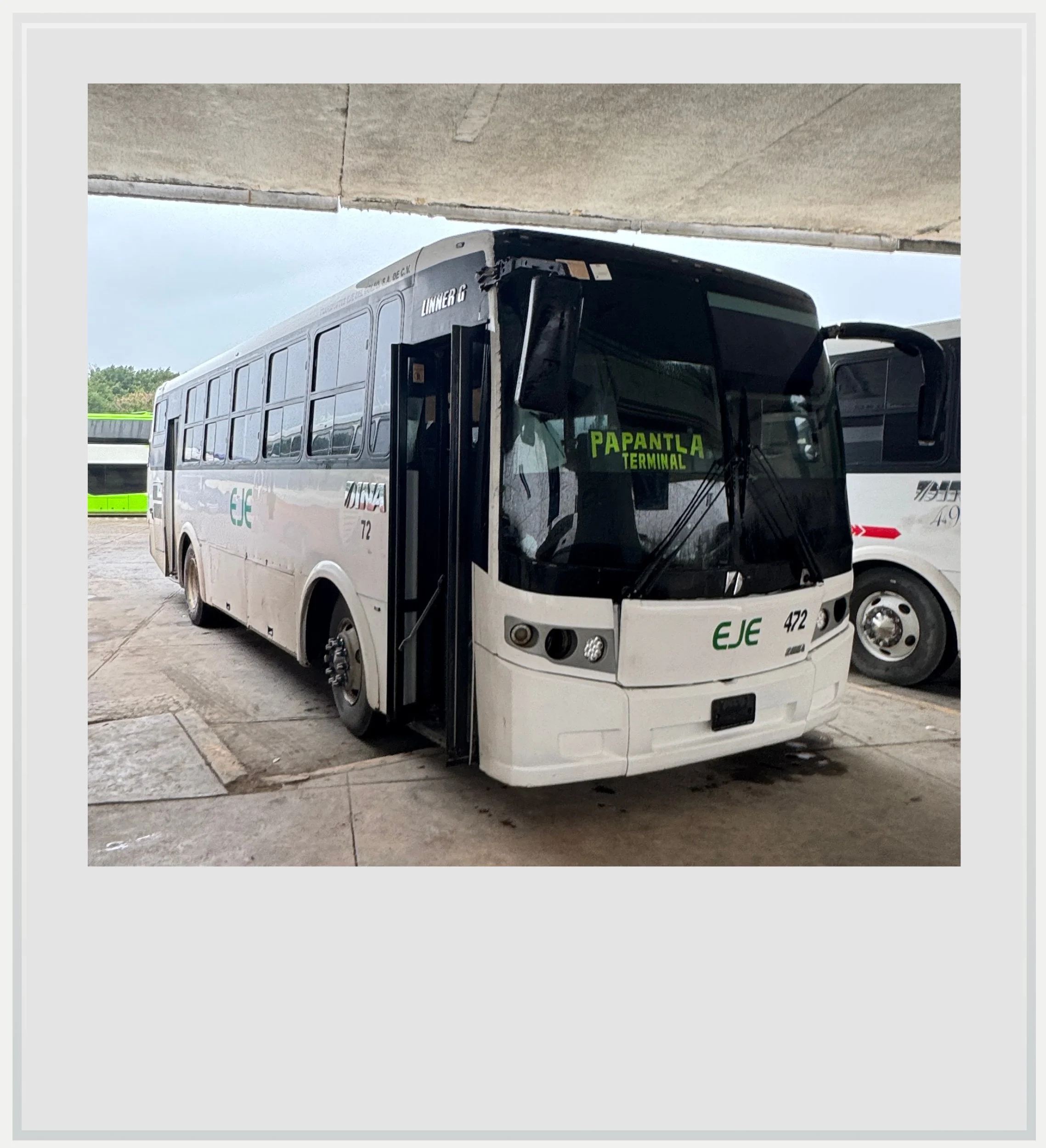
An EJE second-class bus linking Poza Rica and Papantla.
First class, Executive class or Luxury service?
Counterintuitively, bus classes aren’t as they seem in Mexico.
First class (primera clase):
The standard class for most medium to long distance travel in the country, this is the default level of service (second-class buses do exist but I wouldn’t recommend them unless you have no other choice, as most of them don’t have AC or toilets on board). You get good (but not great) legroom, a seat that reclines, and entertainment beamed to several overhead screens throughout the bus. Seats are assigned and buses feature AC and toilets.
Executive class (clase ejecutiva):
A notable step up from first class, executive buses offer the same features with much more legroom, a seat with a moveable leg rest, and individual entertainment screen at every seat. It’s a much better proposition for trips longer than a few hours, and usually comes at at premium of 15 to 20% above first class.
Luxury class (clase de lujo):
This is the best experience you can get on a bus. Seats are no longer 4-a-row but only 3, so each seat is wider, legroom is even better than on executive buses and recline is super deep. Cost is usually 10 to 20% higher than executive services, and for trips longer than 4 hours, I would recommend you consider them - especially if you’re traveling solo, as you can pick a seat on the left side of the bus, with no immediate neighbor (so your seat is both an aisle and a window seat).
I wrote a full article with pictures on the differences between these services to help visualize the differences between classes, and you can check it out here.
Which bus station to pick in Mexico City to get to Poza Rica or Papantla?
Most services to both cities depart from the Northern bus station, a 20 to 30 mn Uber ride form most of central CDMX. The station is also served by the subway (station “Autobuses del Norte” on line 5).
Some ADO services leave from the TAPO station. South of the airport, this may be an even better option for travelers based in Roma or Condesa, as it is a straight shot from these neighborhoods to the TAPO on line 1 of the subway.
Which bus station to arrive to in Poza Rica and Papantla?
There are two main bus stations in Poza Rica, one handling Estrella Blanca and IAMSA brands, and the other one dedicated to ADO and its partners. The two stations are literally next to each other, and a mere two minutes apart by foot.
In Papantla, the two bus stations are located off the main street, Francisco Madero. ADO and VIA buses stop at the eponymous station here, while EJE buses call at this station, a little closer to the town center.
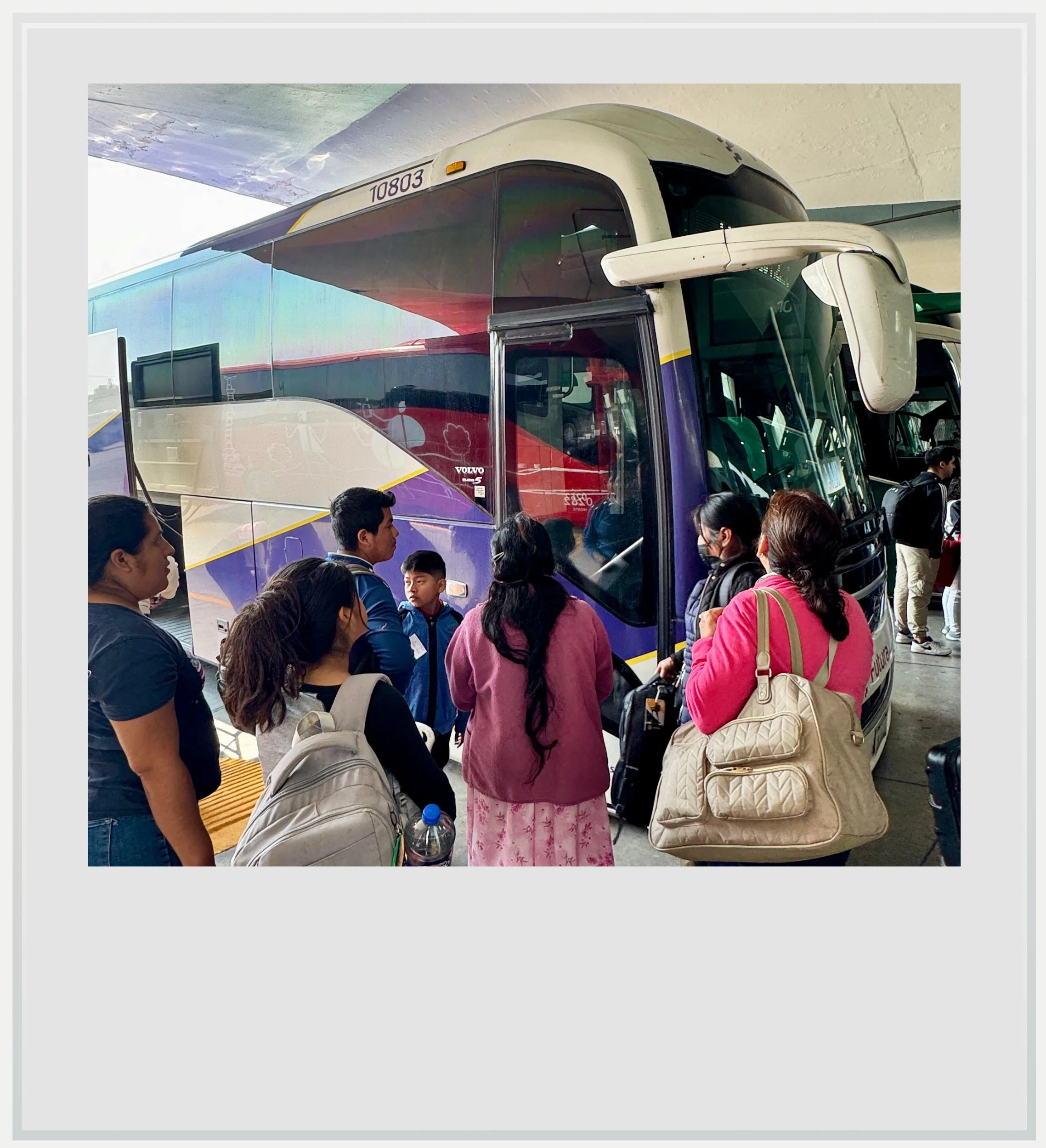
Boarding my Futura service in CDMX.
What is the cost of a bus trip between Mexico City and Papantla
The cost window starts at MXN 287 on the lower end, for a combination of an advance purchase Conexión second-class service to Poza Rica and a connecting second-class service by EJE to Papantla. I don’t recommend this option for its lack of comfort, but this is the very cheapest fare to get to Papantla.
At the other end of the scale, an ETN trip to Poza Rica, followed by a connection to Papantla on ADO, both bought at the last minute, would set a traveler off by MXN 745.
The most convenient option, a direct ADO bus from Mexico City to Papantla, costs MXN 522, less if bought in advance.
Bus safety
Buses in Mexico are generally very safe, and bus travel is definitely safer than renting a car, especially when crossing remote areas of the country: bus drivers know the route very well, would be made aware of any issue on the road by other drivers ahead of them, and nothing beats being able to sleep in a plush seat while someone does the driving for you.
Additionally, first-class-and-above bus services between Mexico City and Poza Rica or Papantla offer a secure check-in service for luggage: you bring your own luggage to the bus and an attendant takes it from you to put it in the hold, gives you a ticket with a number that matches the number on your bag, so no one can claim your bag but you.
On a direct service, there is no opportunity for luggage shenanigans as there are no stops and the hold compartment isn’t opened until the bus gets to its final destination, making sure your luggage will not be accessed. On direct services with stops, it’s good to know the luggage is secure and the attendant won’t give up your suitcase unless they see the matching ticket.
All photos are mine and are copyrighted. Hover over the photo (on a desktop) or click on it (on a phone) to see the caption.