Trip report: Cuetzalan to Mexico City on a Second-Class Bus.
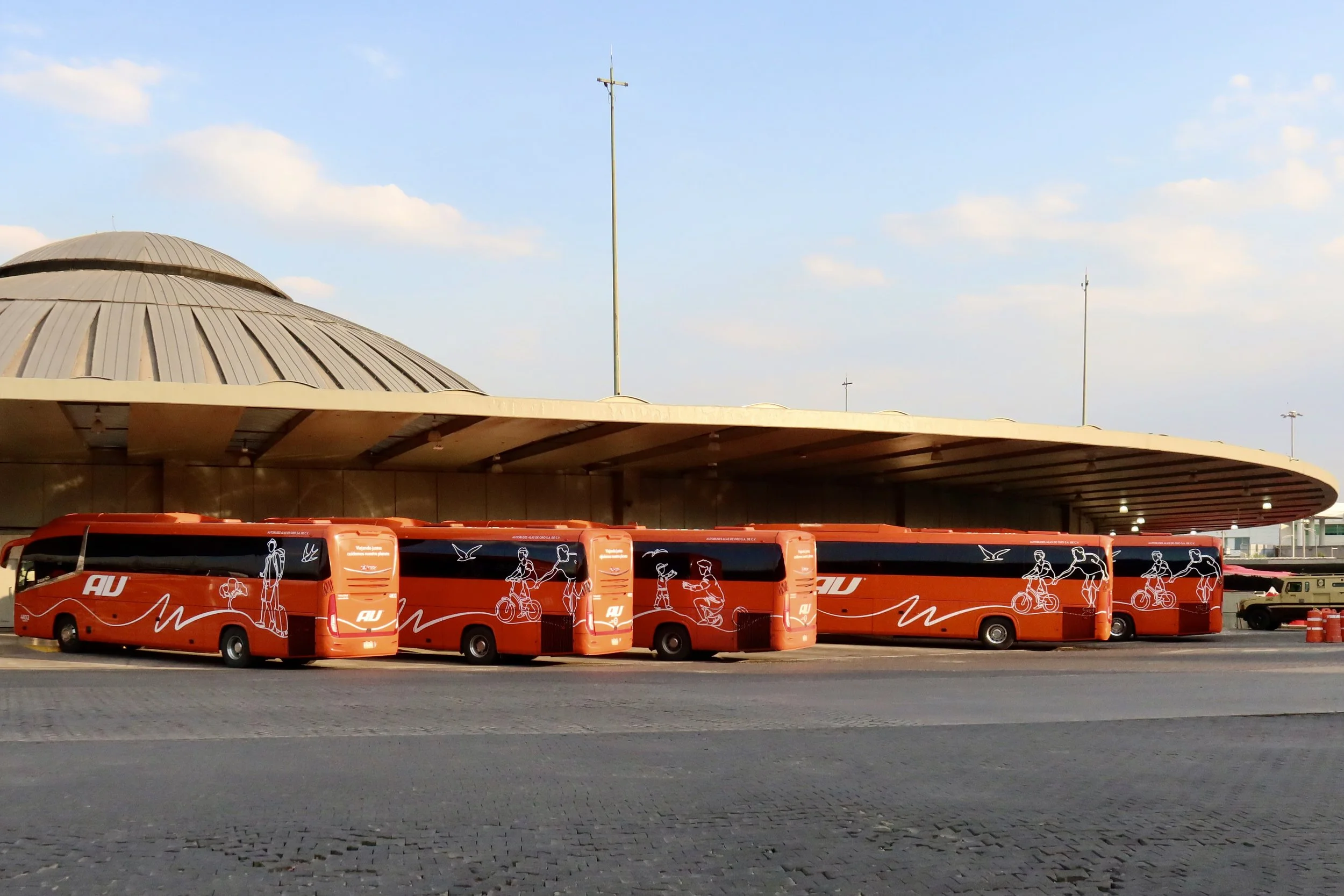
Six hours of first-class landscape in the Sierra Madre.
Looking for concrete details and tips? Go straight to the Practical Information section.
It was a little hard to leave Cuetzalan that morning, especially with the weather finally so beautiful. The sun was out and the main square was tightly packed with puestos: Saturday is market day, when people from across the region come down to sell their wares. Weekend visitors had arrived. The town, quiet for days, suddenly felt alive.
I walked up to the ADO bus station in a few minutes. My bus, an Autobuses Unidos Irizar i6s, was parked with the door open, but boarding hadn’t started. There were only about ten people waiting in the small hall, with enough luggage to suggest they were coming with me to Mexico City, not the next village over.
At 11:10 AM, an announcement was made on the loudspeakers that the bus was ready for boarding, and we all lined up to check our luggage in the hold, then climb on. As I stepped inside, my first thought: no bathroom. For a six-hour journey, that wasn’t a minor omission. The seating map had shown one when I booked, so it felt like a small breach of contract.
The driver assured me I could use restrooms at the stations we’d stop at—a question he had clearly heard before. Some AU buses do have bathrooms, especially on longer routes in Puebla. These are labeled “Servicio Preferencial Sierra” (Sierra Premium Service). I had assumed this would be one of them.
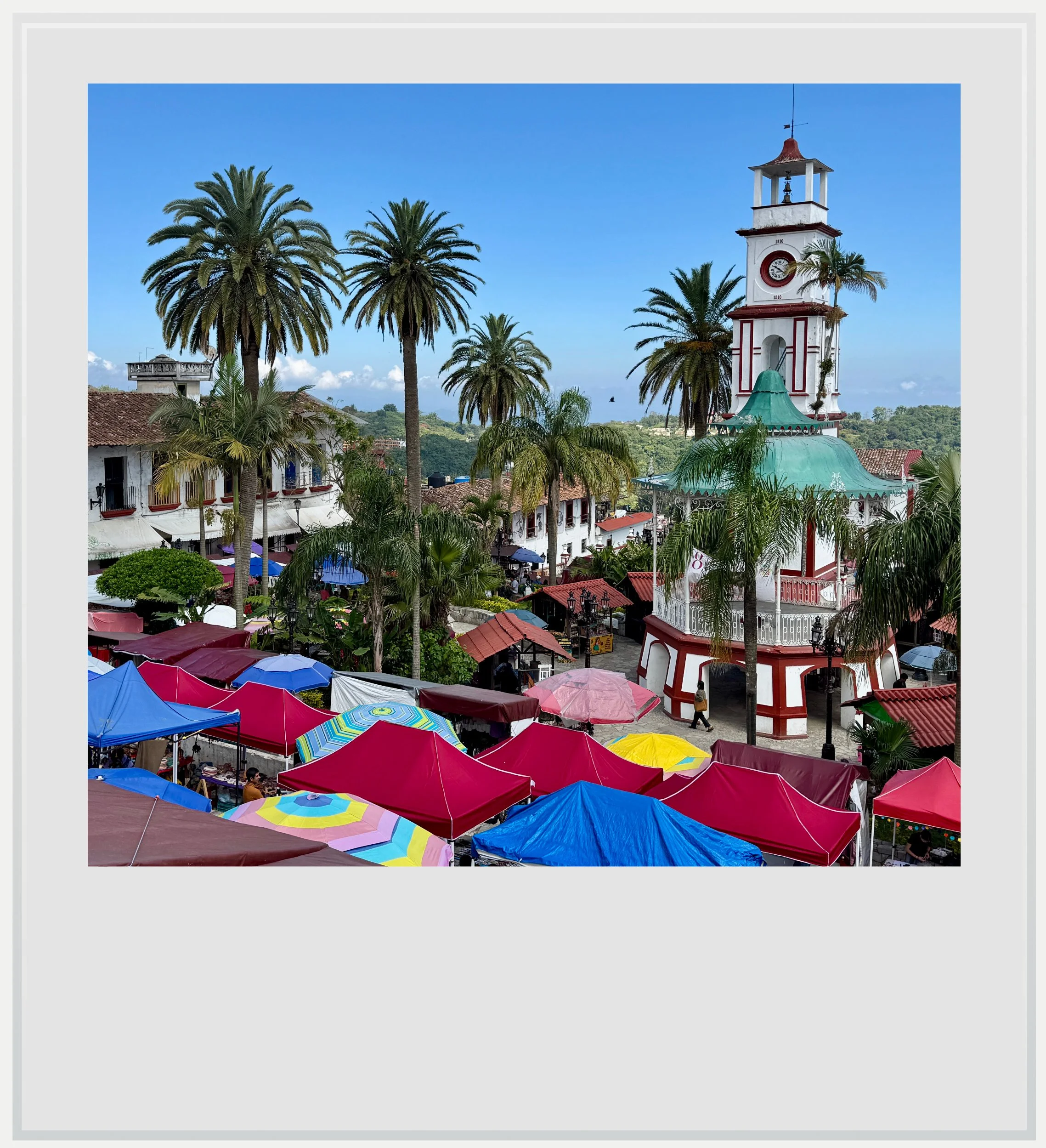
The Saturday market on Cuetzalan’s main square.
This was my first long trip on a second-class bus, something I had mostly avoided in Mexico. In this case, AU was the only company directly linking Mexico City and Cuetzalan, so I didn’t really have a choice.
As I sat down, I thought this wouldn’t be as bad as I feared. The seats were unexpectedly comfortable, identical to the ones I’d had on the short AU leg from Zaragoza to Cuetzalan days earlier, and the ergonomics held up. The legroom was very generous—arguably more than on ADO first-class buses. Six hours suddenly felt manageable.
The landscape felt cinematic, like the setting of a Bond movie.
What was missing, beyond the bathroom, and that made a big difference with first-class service, was the entertainment. On first-class buses, overhead screens play dubbed American films throughout the trip. Here, there was nothing of the sort. I didn’t mind: I was content to look at the landscape - especially because the window seat was empty.
There were about 15 people on the bus when we left Cuetzalan, but I knew we’d pick up more passengers on the way. We departed on time, and after a tight turn in one of Cuetzalan’s famously tight streets, we were on our way towards Mexico City.
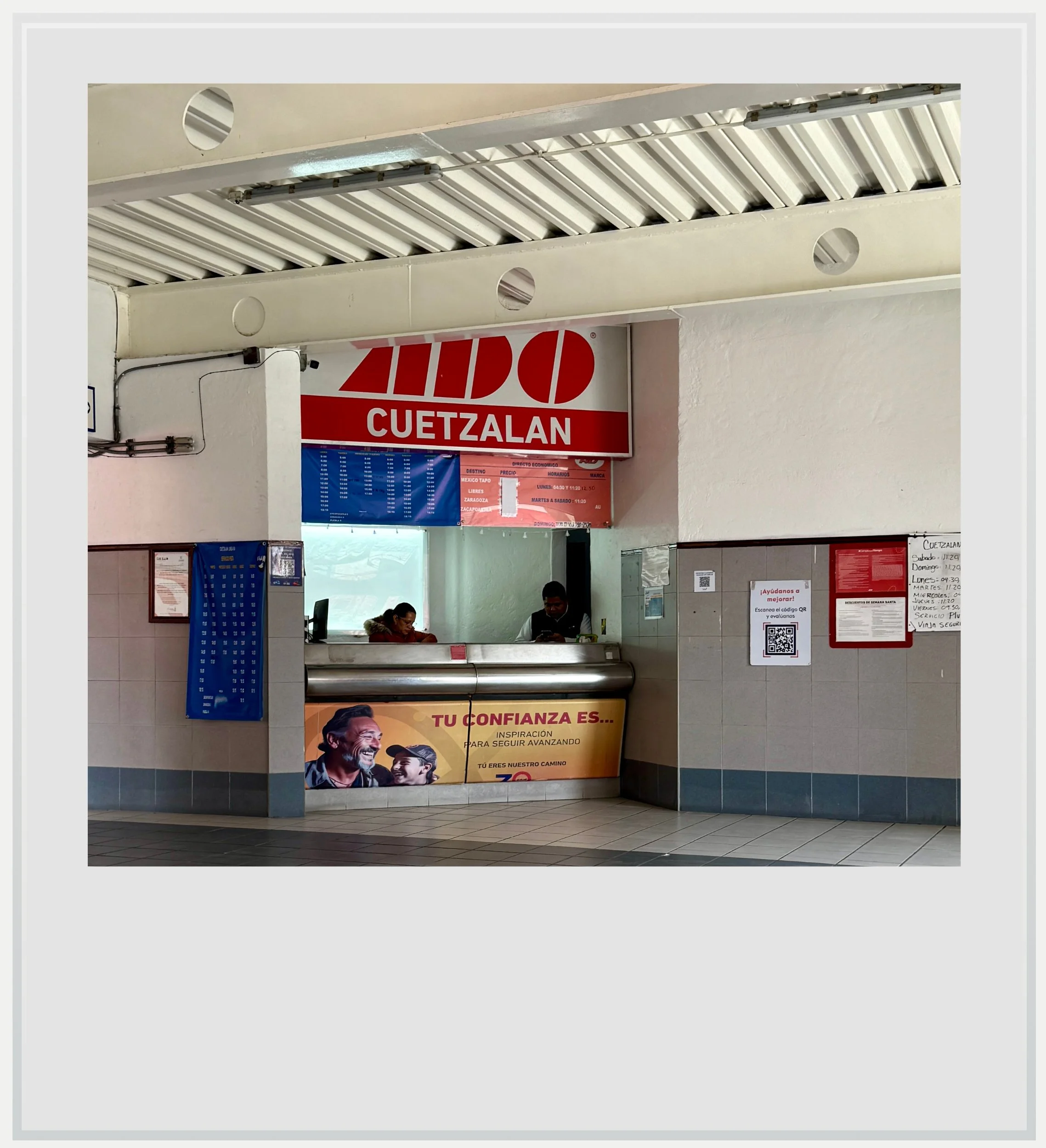
The ADO ticket counter in the Cuetzalan bus station.
I had half assumed the bus would be full, but in fairness, who leaves Cuetzalan on a Saturday morning? On top of this, when I booked, the schedule only offered that one bus at 11:20 AM, but in the days before my departure, AU added an additional service departing at 9:30 AM, which probably split the clientele.
The beginning of the route went through very sinuous curves. The bus had to frequently stop to let the opposite traffic pass by, as it needed more than its side of the road to execute many of the turns. At least the road was in mostly good condition.

We were traveling through the Sierra in the morning, so the sky was clear, and the mountains devoid of any fog. The landscape was offering itself to us without filters and it felt absolutely stunning, curve after curve, when different parts of the forested mountains would come into view.
The scenery was notable for being intimate and grand at the same time. Small valleys and hills appeared suddenly after a twist in the road: we’d witness a cow grazing here, a bunch of donkeys there, and signs of everyday life in the Sierra. Then a few turns later, a panoramic view unfolded in front of us, with still waves of forested mountains as far as the eye could see.
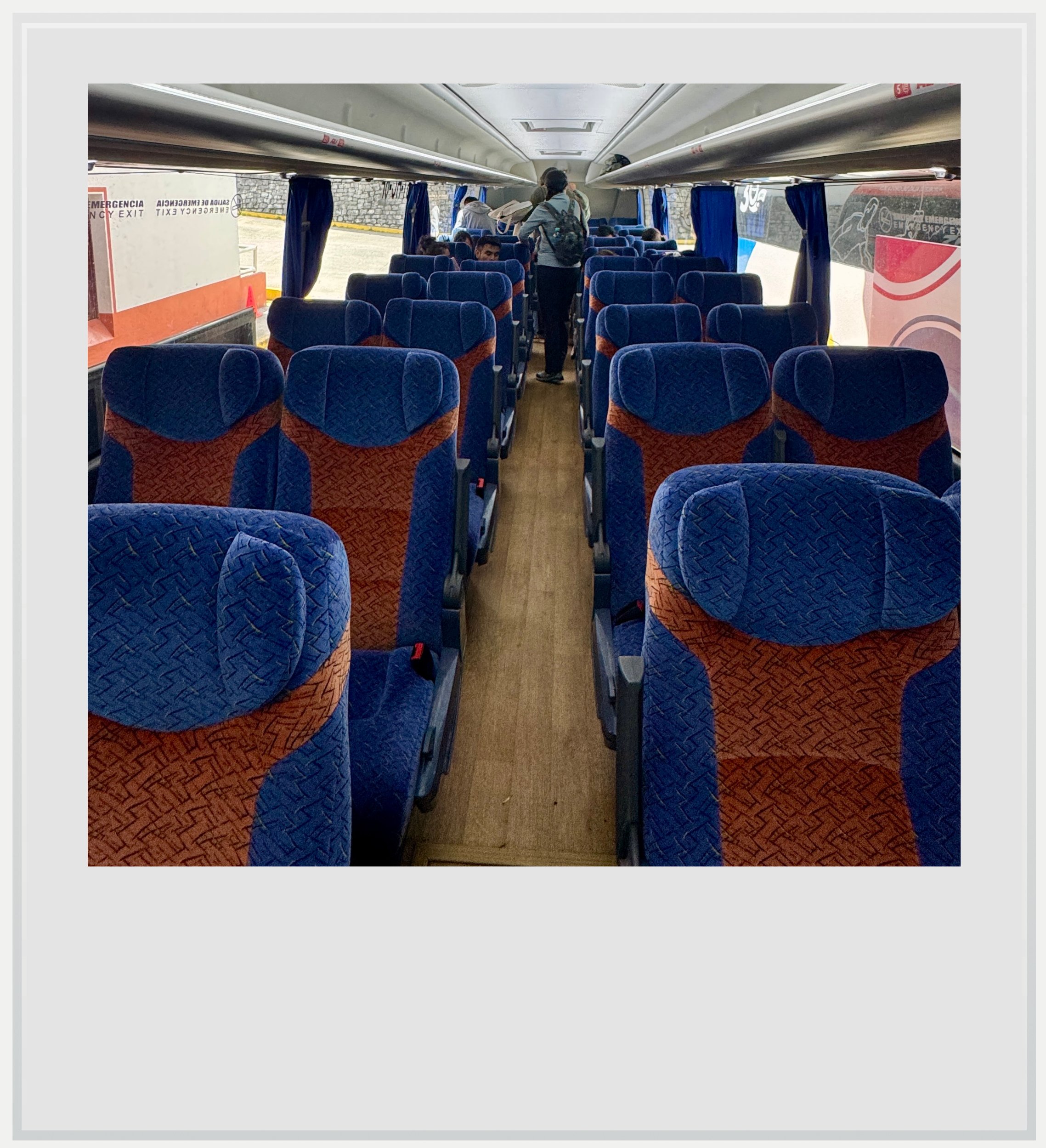
Inside my AU service from Cuetzalan to Mexico City.
It was a good reminder of how Cuetzalan had made me feel, both isolated and dominating the surrounding area. At that moment, I realized that what felt special about it did not end with the village. It belonged to the wider Sierra around it, and I left wanting to see more.
The most beautiful part of the way was the section between Cuahitapehual and Apulco, following a mountain ridge with a deep valley below us, and a lower plateau on the other side, leading to Zacapoaxtla. It felt cinematic, like the setting of a Bond movie - without the chase.
What felt special about Cuetzalan did not end with the village.
After Zaragoza, I was happy to notice our bus took the highway (“pista”) to get to our next destination, Libres. The landscape changed, with lower hills and more open space, even cultivated fields. We had left the highest parts of the Sierra behind us. It began to feel like the highlands again.
Once we left Libres, we were indeed deep in highlands country, and through the open landscape we could see the Malinche volcano, a sign we were getting closer to Puebla. The light was different too, the sun even more present, with fewer clouds to tame its rays, and hitting drier vegetation. Our surroundings took on a warm yellow hue.
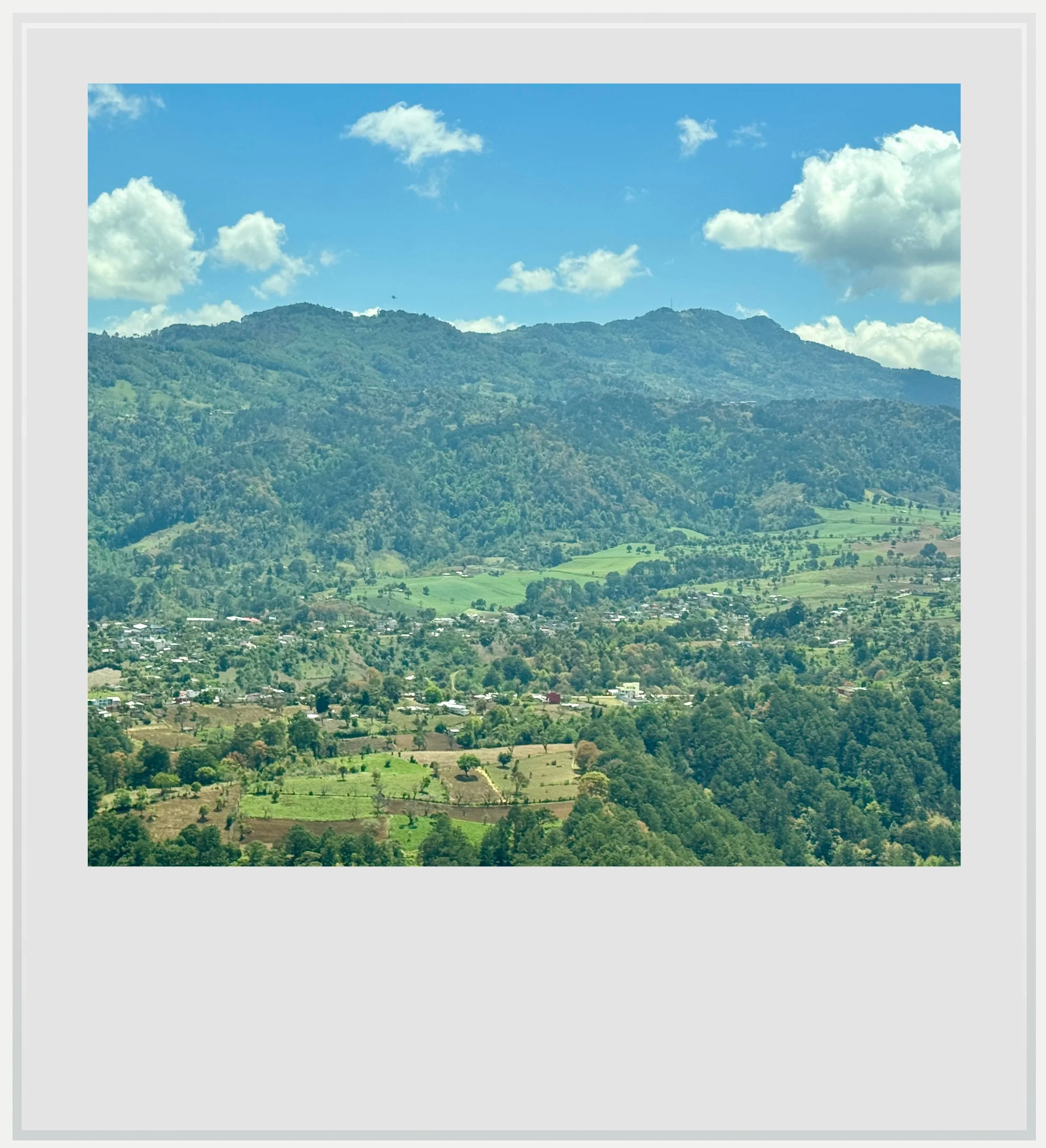
Landscape between Equimita and Apulco.
At that point, the highway was a two-lane road, but, as is custom in Mexico, the bus was using the road as a runway, accelerating as if it was about to take off to overtake slower vehicles, taking over half of the opposite lane and assuming cars coming in the other direction would yield. It worked, although it seemed tight a few times.
Traffic began to build up, and we started seeing more buses going south: it helped me notice how striking the new AU bus livery was: bright orange, with thin white outlines (people, birds) sketched across the body. Part of a broader color system across the ADO group, it stood out immediately on the road.
Our ride took us through Texcoco, a somewhat unusual routing due to construction works on the main Puebla-CDMX highway. Little by little, houses drew closer together, buildings grew higher, the towns denser. We drove through the State of Mexico limit, passed by the Benito Juárez airport, and got to the TAPO station at 5:50 PM, 30 minutes later than scheduled - probably because of roadwork after Huamantla that got us to a 15-minute standstill, and a bathroom break a little while later.
The 6h30 ride was far more comfortable than I expected. If second-class was the only option, it would no longer be something I’ll avoid.
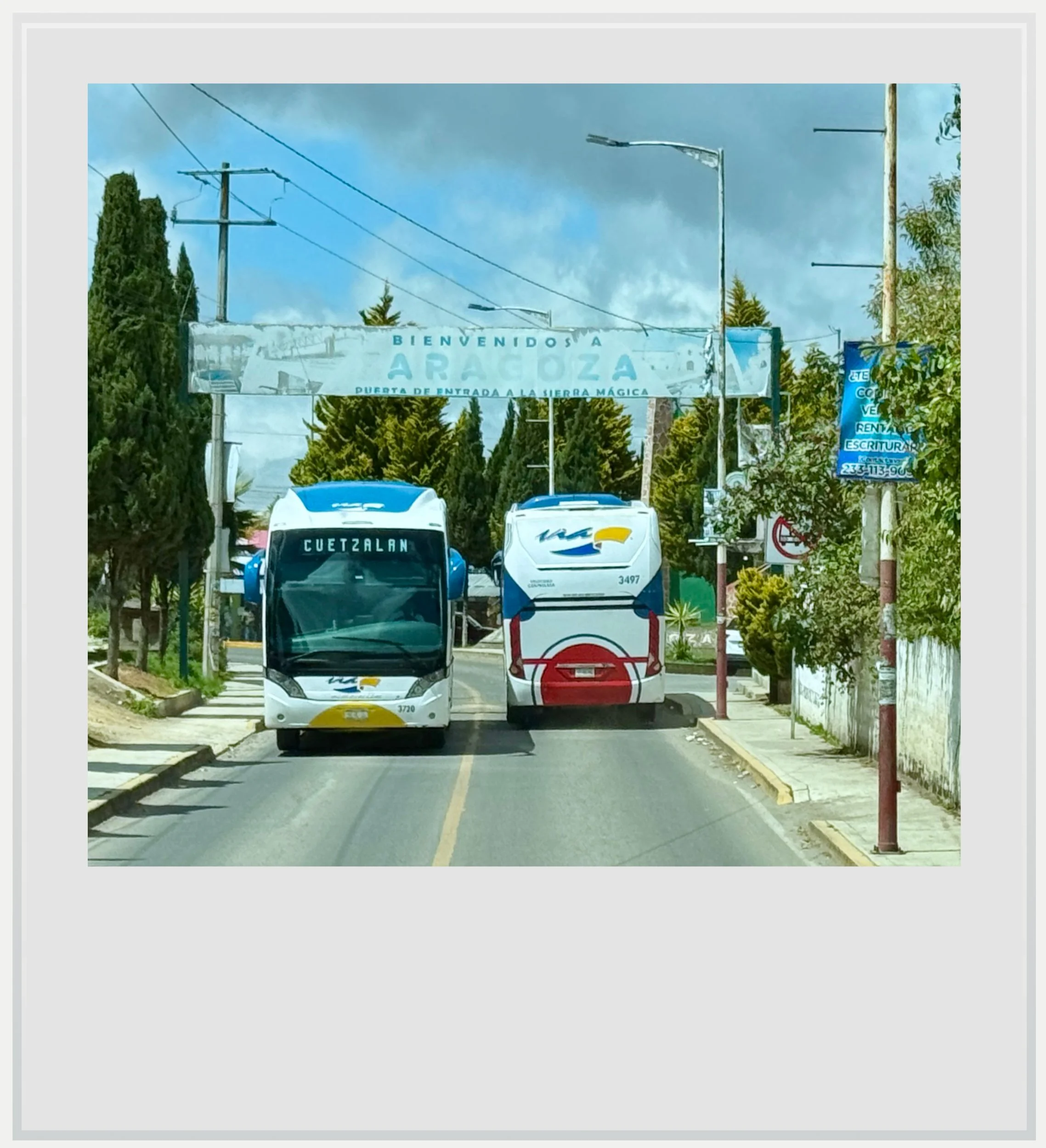
VIA buses in Zaragoza, Puebla.
Practical information
(updated as of March 2026)
In a nutshell
Bus company for the trip: Autobuses Unidos (AU), ADO group’s second-class brand.
AU operates between 1 and 4 direct services between Cuetzalan and Mexico City every day, in about 6 hours depending on traffic, with several stops along the way.
The walk-up fare for the next departure is MXN 500.
About AU services to and from Cuetzalan
AU, Autobuses Unidos, is the brand of the ADO group dedicated to second-class intercity services throughout the southern part of Mexico and Mexico City. If you’re not clear on service classes and what they mean for bus travel in Mexico, check out this article.
Second-class buses are somewhat more basic than the standard first-class buses (operated by ADO under their eponymous brand, in red-clad buses) but they still offer enough for a comfortable ride: assigned seating, AC, seats with enough padding that recline and provide good-enough legroom. They do not offer any type of entertainment (unless the driver chooses to blast Mexican hits on the radio), and lack a bathroom, however. On a six-hour trip, these can matter. Make sure to bring a book, or headphones to keep yourself entertained.
Everything about the bathroom situation on second-class buses
Second-class buses do not usually offer restrooms on board, a potential deal breaker for many passengers. As I learned on this trip, it may not be such a big issue. It is actually possible to use the paid public restrooms in each station the bus calls at, they usually cost between MXN 7 and 10 and are clean, if basic. Ensure you have coins to pay the fee at the automatic turnstiles. You don’t need exact change but the machines do not accept notes. Tell the driver you’ll be back, he might leave without you (this all but happened on the way to Cuetzalan).
We were also provided with a legit 10-minute bathroom break about two-thirds of the way.
In other words, no one was expected to not need a bathroom break for six hours straight, and it made me feel better that the possibility of a pit stop was there.
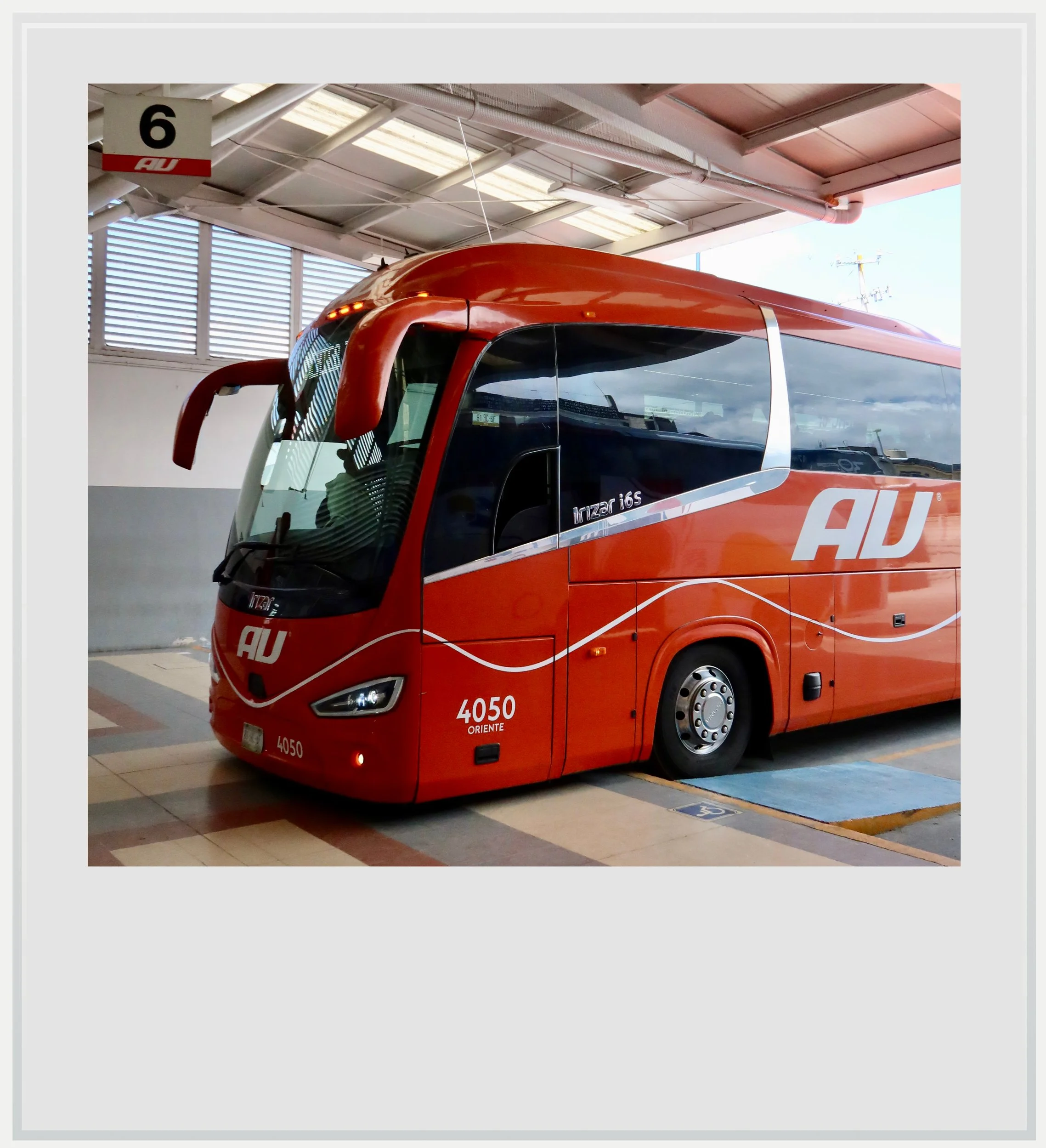
Our AU bus in the Zaragoza station.
Stops on the Cuetzalan to Mexico City TAPO route
Stop #1: Zacapoaxtla at 12:30 PM. We stopped for a few minutes in a plaza where all the colectivos for nearby towns were departing. It was a hub of activity with lots going on. We stayed there for a few minutes, until all the food-selling vendors had left the bus.
Stop #2: Zaragoza at 1:25 PM, for five minutes. The station was fairly busy with three VIA buses occupying the central bays when we got there, but they all had left by the time we pushed back.
Stop #3: Libres, at 2:15 PM for a few minutes. The station was small, with only 3 bays and just a few people coming up.
Stop #4: bathroom stop at Cafeteria Ely on the Apizaco, Tlaxcala ring road, around 3:45 PM. We stayed a little less than 10 minutes. The facility was basic but clean. Bathrooms were MXN 5 to use. Lots of snack options were available. It felt like a big, roadside OXXO. It was a nice way to stretch my legs.
How much does it cost to travel between Mexico City and Cuetzalan on a bus
At the time of writing, the published walk-up fare for the route was MXN 500 one way (that’s the fare you’d pay if you got up to the counter and asked for a seat on the next bus). However, it is possible to book ahead of time and pay less. I booked my ticket a week in advance and paid MXN 374. Note that these fares come with restrictions: they are usually changeable a few times but very likely non-refundable so make sure your trip is confirmed before you commit.
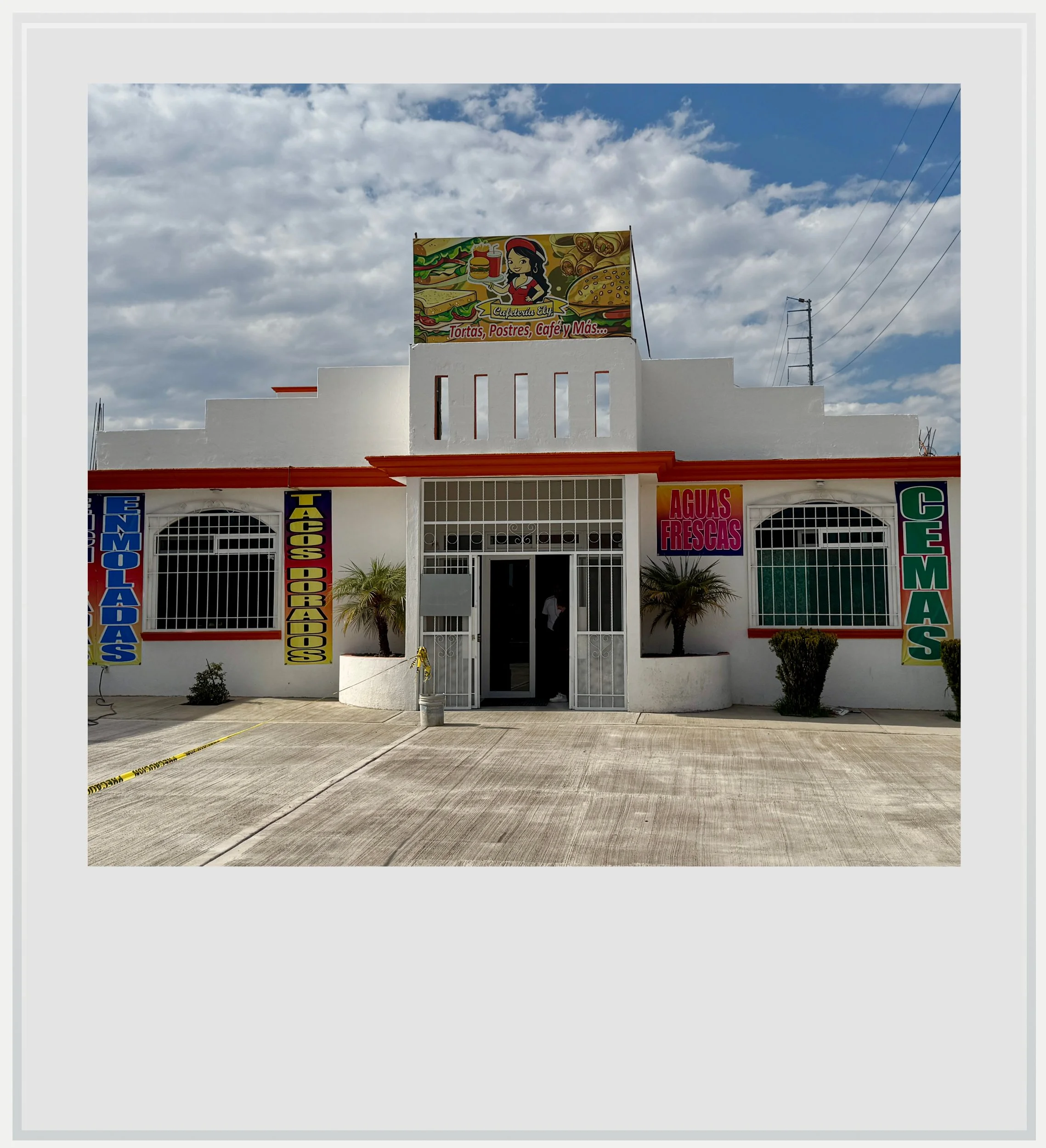
Restrooms near Apizaco (our last stop).
How to buy an AU ticket from Cuetzalan to Mexico City
The most convenient way is to go on the ADO website. AU is the second-class service level for the ADO group, and AU services will come up on a search between two cities if they exist, alongside other ones like ADO or ADO Gran Lujo, for instance.
ADO also offers an app (Android, Apple), which is well done and customer-friendly, perfect to buy a ticket on a mobile device.
Both the website and the app accept major international credit cards, and in case this doesn’t work out, they have Paypal as an option, which never failed me.
It is also possible to buy a ticket at any ADO counter within an ADO bus station.
Where is Cuetzalan’s ADO station
The ADO station in Cuetzalan is located just outside the historic core, a few minutes’ walk from most central hotels, here. It also handles VIA buses to and from the city of Puebla.
Which bus station in Mexico City serves as a departure and arrival point for Cuetzalan services
AU buses to and from Cuetzalan call the TAPO station home. TAPO, standing for Terminal de Autobuses del Poniente, or Eastern Bus Station, is a big ADO hub with services towards the states of Puebla, Veracruz and beyond all the way to the Yucatan peninsula. It is about fifteen minutes from Mexico’s main airport by Uber, and 20 to 30 minutes via subway line 1 from the central area of Mexico City (the station’s subway line is called San Lazaro).
Bus safety
Buses in Mexico are generally very safe, and bus travel is definitely safer than renting a car, especially when crossing remote areas of the country: bus drivers know the route very well, they are made aware of any issue on the road by other drivers ahead of them, and nothing beats being able to sleep in a plush seat while someone does the driving for you.
All photos are mine and are copyrighted.
Hover over the photo (on a desktop) or click on it (on a phone) to see the caption.