Cuetzalan, Mexico.
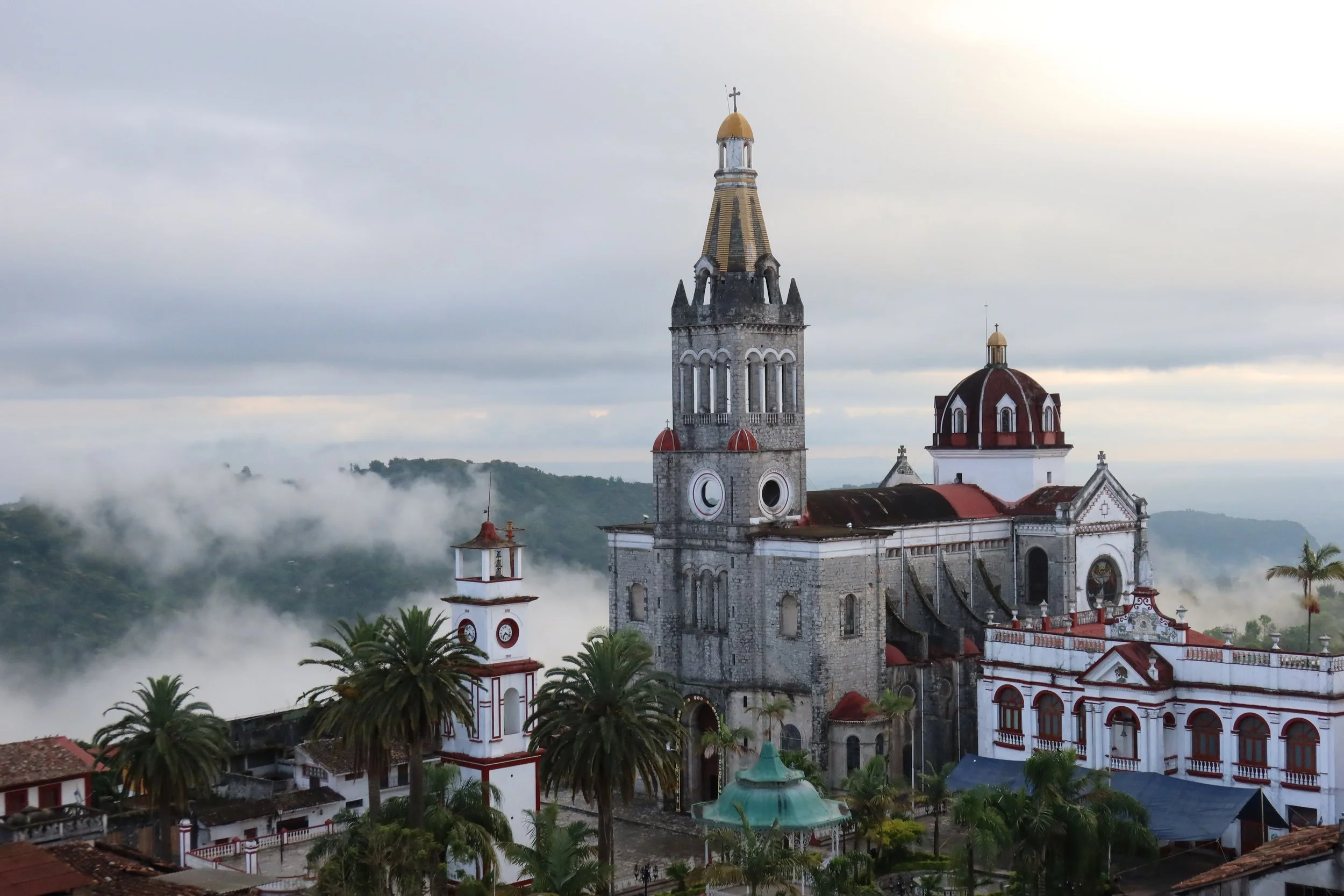
Where the Fog Shifts, a Town Both Remote and Fully Alive.
Looking for concrete details and tips? Go straight to the Practical Information section.
It was my second morning in Cuetzalan, and I had been up for a while - I wanted to witness the sunrise from a high vantage point. In the distance, I could hear roosters crowing and the first street dogs barking a hello or two.
I should have focused my attention on the steaming-hot drink in front of me, but I was mesmerized by the scene unfolding slowly across the landscape.
Being in Cuetzalan, deep in the mountainous part of the State of Puebla, was like slipping into a Planet Earth episode. The scenery seemed almost unreal: a colonial village clinging to a steep slope of the Sierra Madre Oriental, bathed in soft morning light and surrounded by off-white clouds.
As the sun gradually peeked through the cloud cover, the haze receded, and a line of gentle valleys appeared in the distance, still ripples in a sea of green, highlighting our isolation. It was one of the feelings I carried with me for the whole time I was there: this sense of remoteness and isolation, that time had somehow slowed down, and that nothing would come to shatter this fleeting mirage.
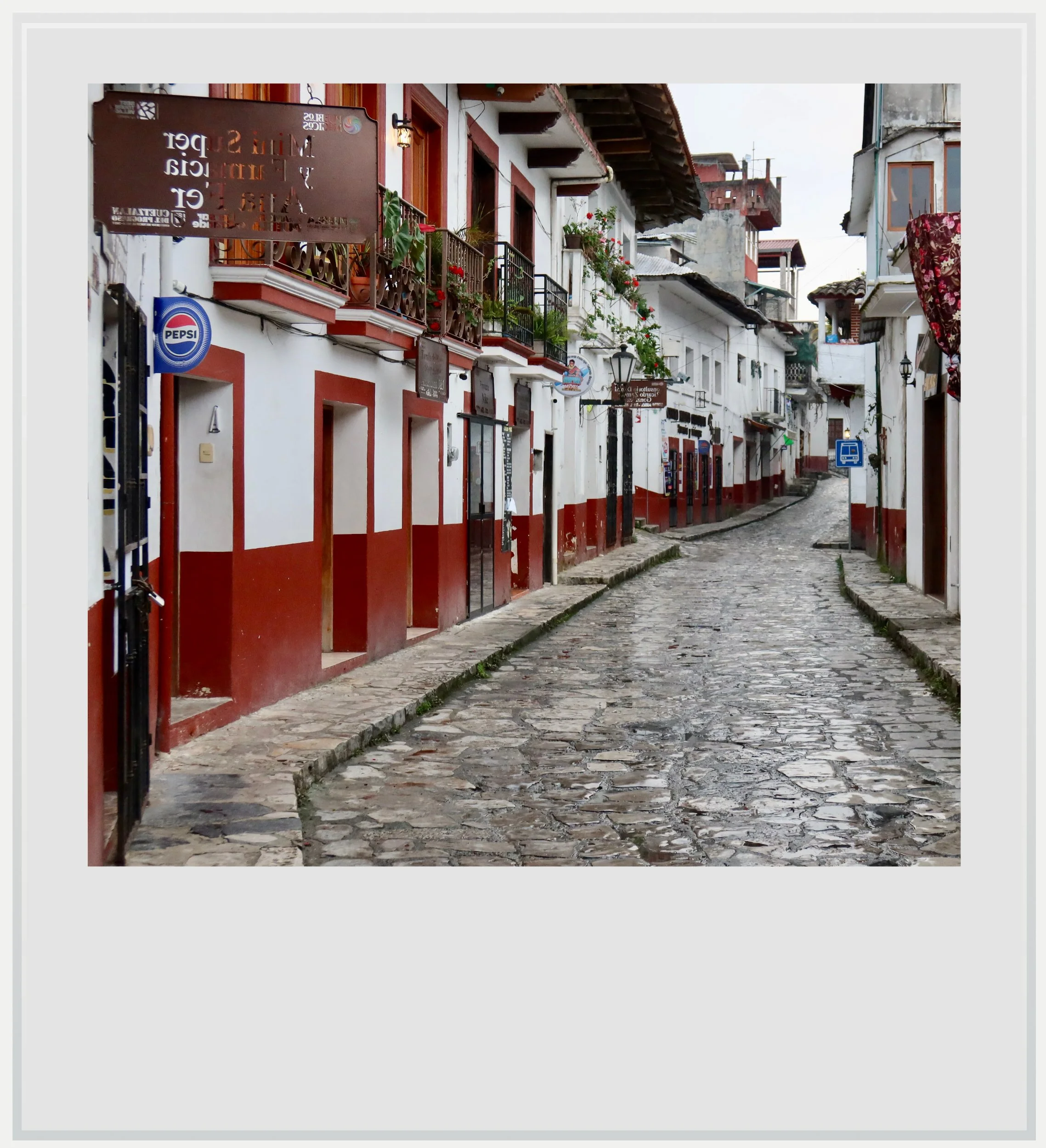
A colorful street on a foggy morning in Cuetzalan.
As I finally turned my attention to my drink, I thought of how long I had wanted to visit this magical town, one of the first to be added to this government program, created to bring the spotlight to Mexico’s culture and history in places that didn’t see much tourism.
As I really wanted to see it for myself, I found a roundabout way to get to the village, as I was going to be in the State of Veracruz a few days before, so I could swing by on my way back to Mexico City.
This wasn’t the smartest idea, for the part of the Sierra Madre Oriental between Papantla and Cuetzalan is one of the hardest to cross, and the three-hour road trip promised by Google Maps turned into a three-bus, ten-hour trek.
At the end of the day, I had decided to see Cuetzalan, and no mountain road, however sinuous, would prevent me from doing so.
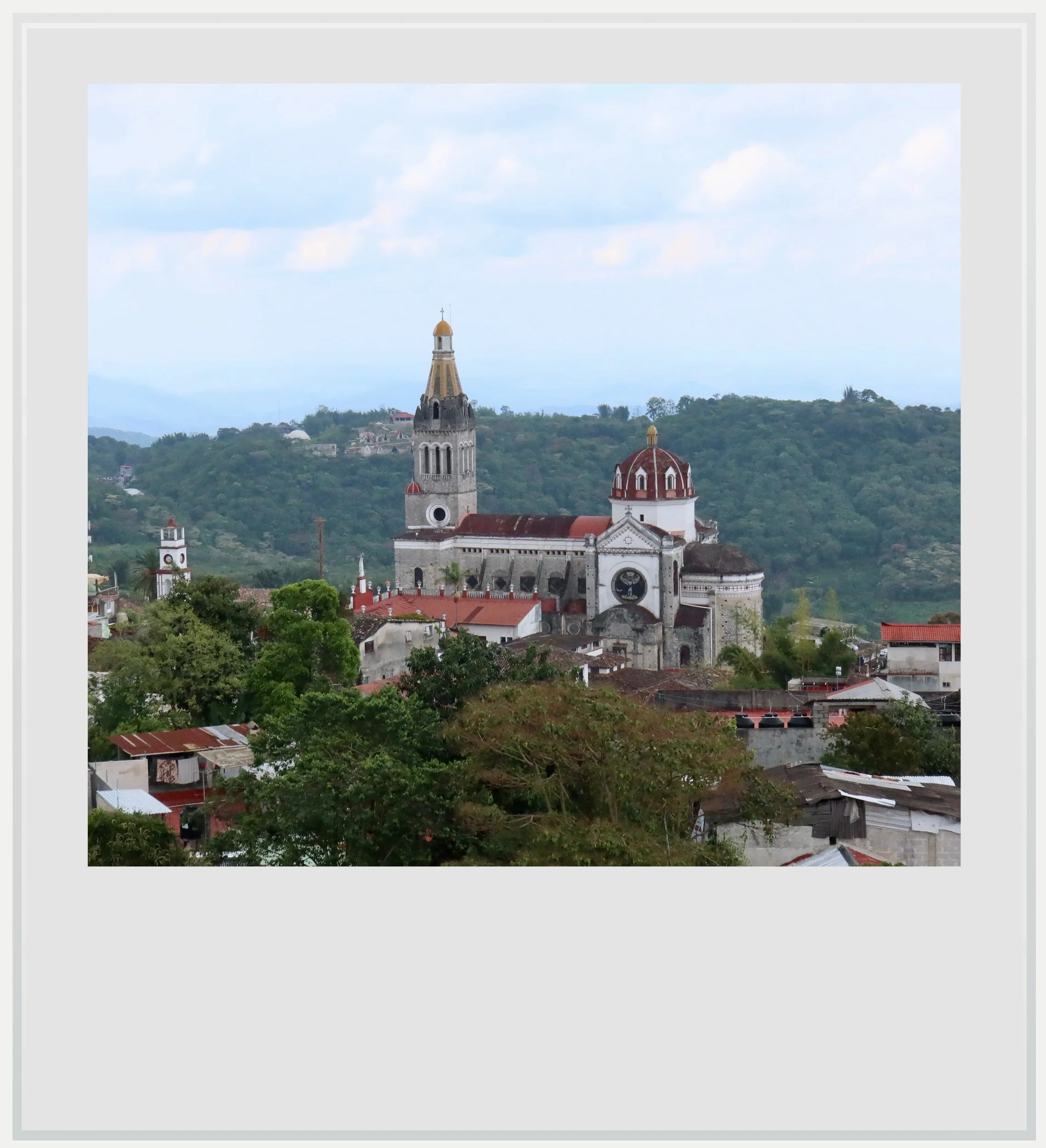
The San Francisco church, seen from Zapacoaxtla road.
My first experience of the village had been short: I had arrived in the late afternoon in town, and although the sky was clear for a few minutes, a dense fog trapped the streets in a cloak that forced me back to my hotel room very quickly. In a way, I was expecting this - Cuetzalan is famous for the foggy mornings that are part of its charm, but I never thought this fog would make it completely disappear from the outside world.
Walking in its deserted streets, with no tourists on a cold Wednesday night, it felt as if the world didn’t exist anymore, and, like in the Truman Show, its limits were the outskirts of town.
What had felt fixed began to shift.
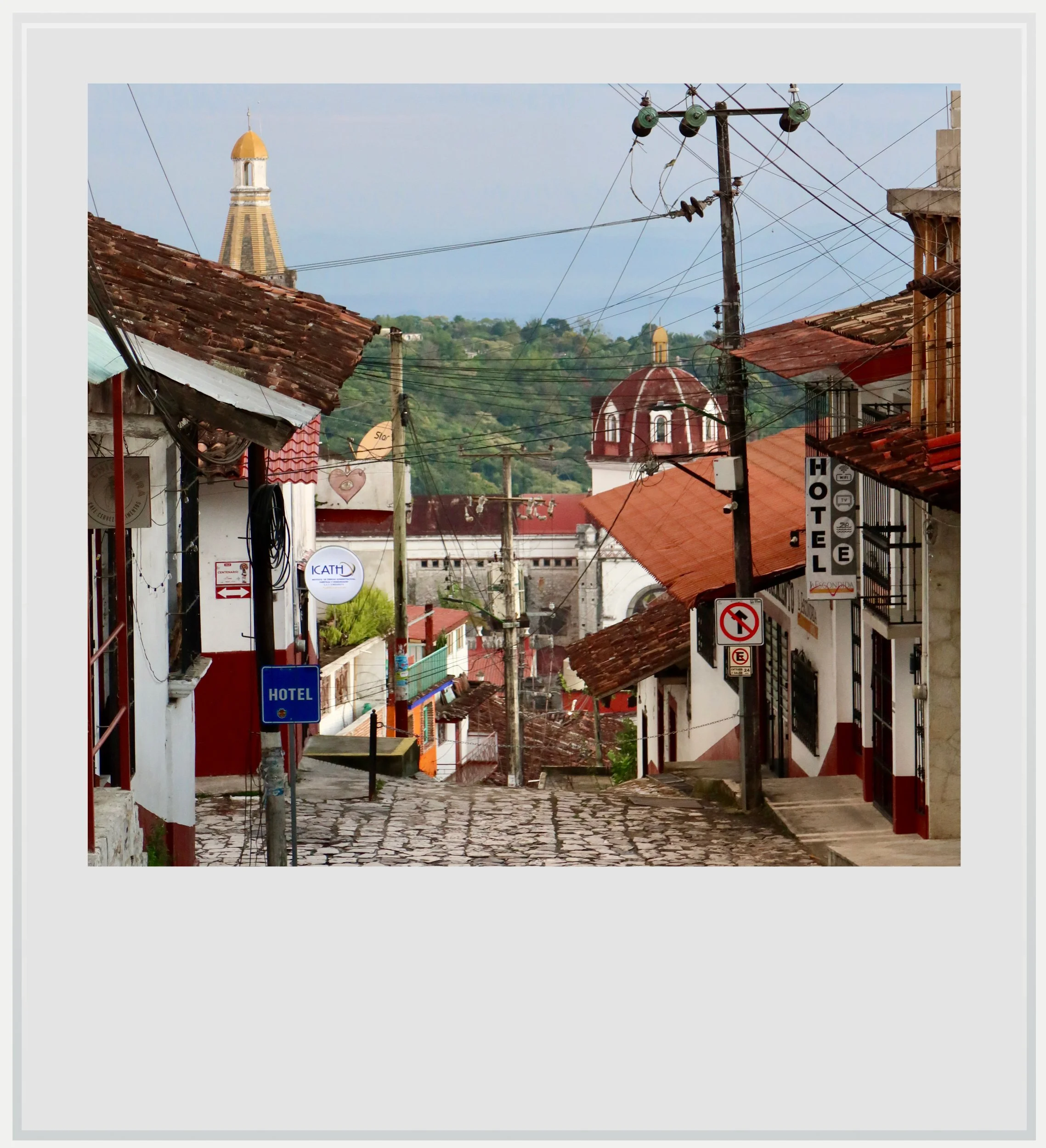
Over the course of my four days there, I began to understand the appeal of this small place in the middle of the Sierra, and why it was such a magnet for Mexican tourists looking for a weekend escape. Cuetzalan reminded me a bit of Taxco, in Guerrero, another mountain town with narrow cobblestone streets, red and white buildings, and a colonial church as its most prominent anchor.
Cuetzalan exuded the same unassuming charm, this feeling of not being aware of its own beauty or at least of pretending not to care. It was obvious the town had been spruced up for tourism, from the nicely painted buildings to the meticulously crafted stone sidewalks. And yet it still felt unpolished, a place where tourists were welcome, not a place where they ruled.
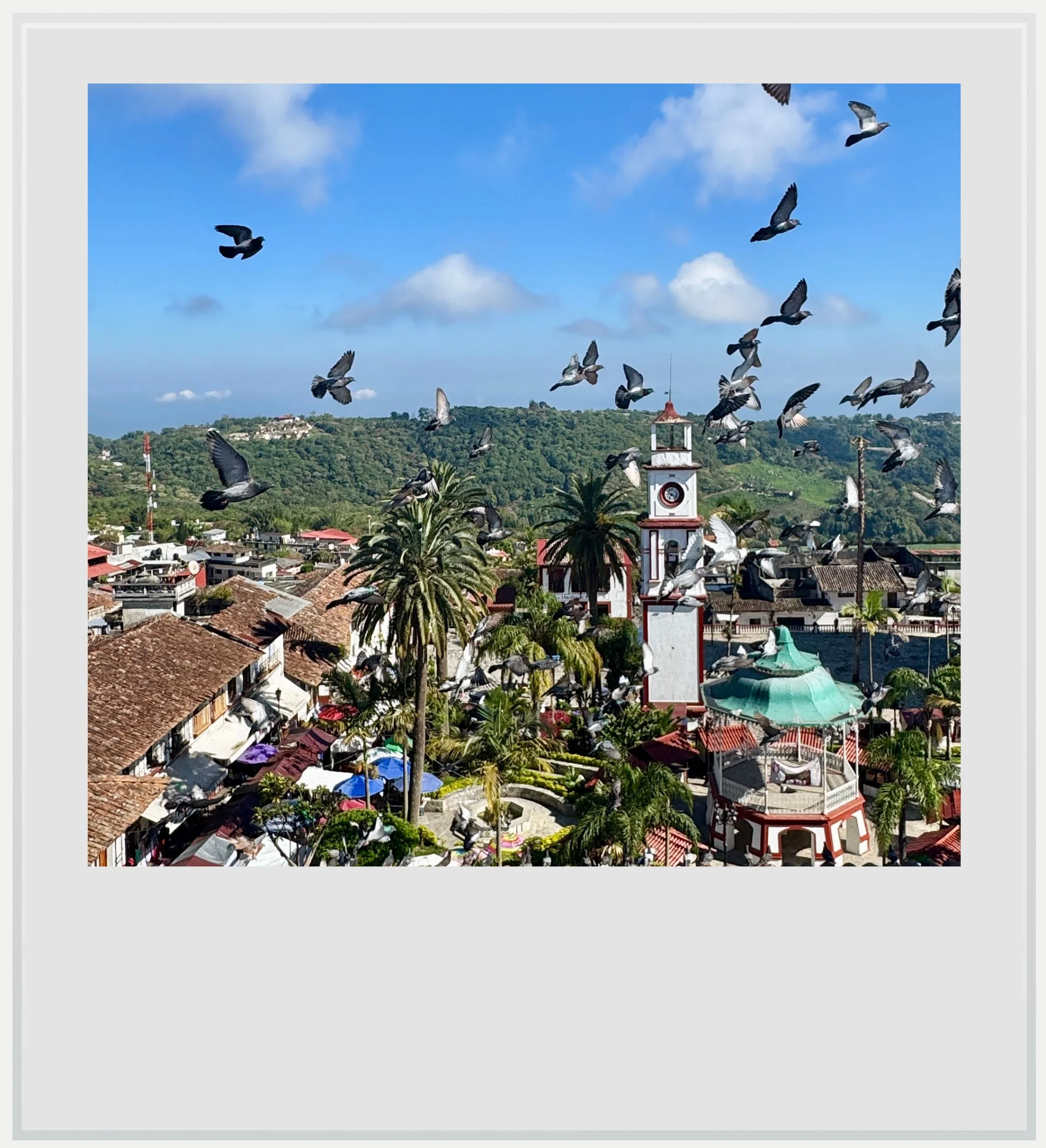
A flock of pigeons flying above the main square.
Everywhere I looked, I saw an authentic mountain village grounded in its routines: an older lady selling farm vegetables spread on a fraying cloth at the side of the street, a family serving tacos al pastor from a space that felt more like a kitchen than a restaurant.
I wasn’t about to disrupt that balance. In fact, more than anything, street dogs seemed to be the real owners of the streets of Cuetzalan. I saw them roam any time of the day or the night, looking for food or just a pet, standing in the middle of the street and barely letting cars squeeze by, or pretending to chase me, all bark and no bite, if I was getting too close to their domain.
I got so used to seeing dogs freely wander around town, that it struck me as odd to see a dog on a leash one morning.
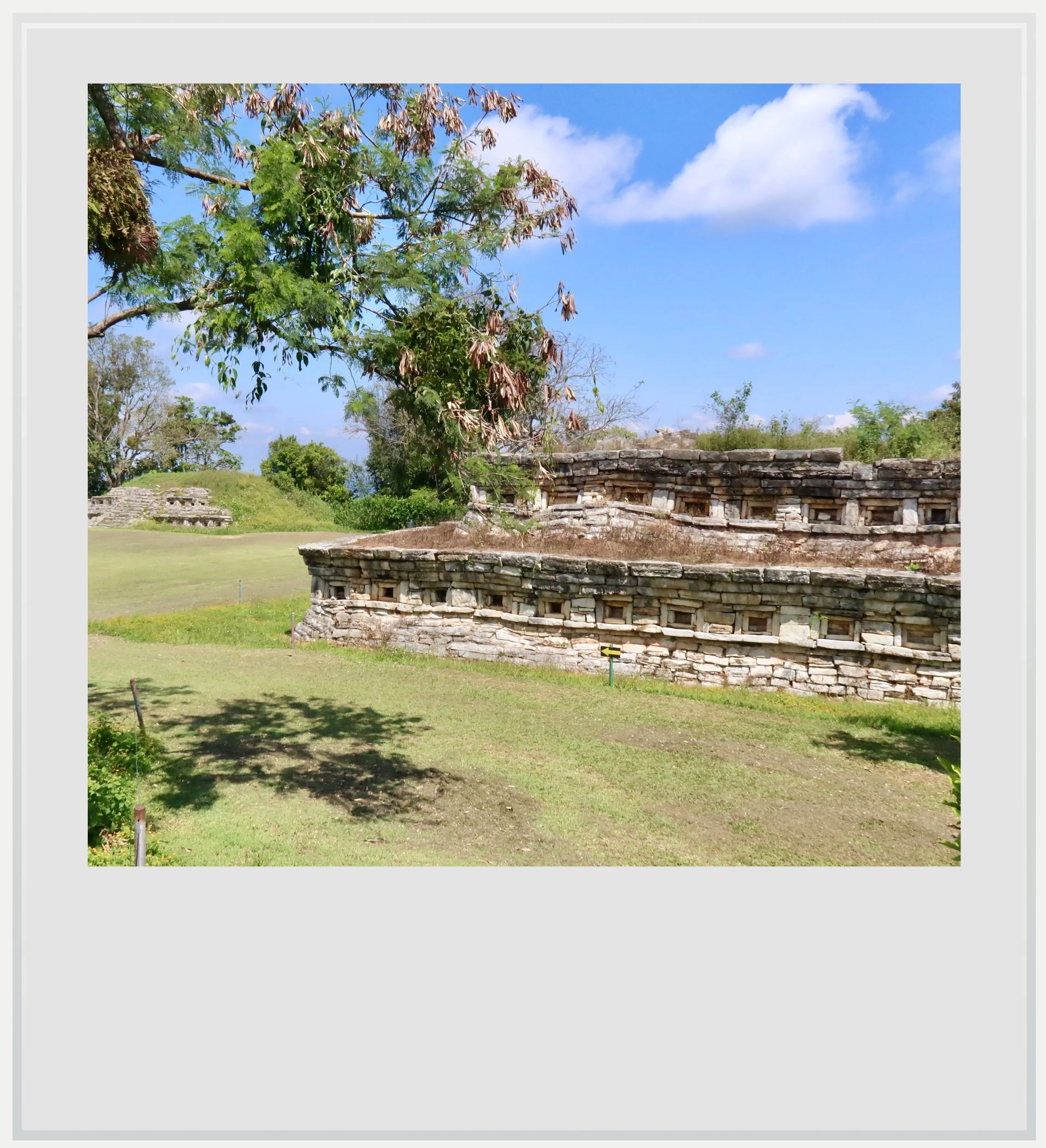
A building in the ancient Totonac settlement of Yohualichan.
It would be unfair to reduce Cuetzalan’s nonchalant beauty to its landscape or its architectural grace, though. A lot of its appeal also resides in what can be found in its surroundings, which helped me understand the town’s culture and heritage a lot better.
Cuetzalan was founded in 1547 by Franciscan friars, but the region had been inhabited for centuries before that. In fact, its name comes from Nahuatl, and is believed to mean “place of quetzal birds”. First a setting for the Olmec people, a civilization for which very little is known, the area became settled by the Totonac people in the first centuries of the Common Era (from 100 AD).
The best concrete testament of the Totonac presence in the Sierra Norte takes the shape of the archeological zone of Yohualichan. Located about thirty minutes north of town, buildings of this ancient settlement feature niches, the same iconic design elements that would become a key part of the major Totonac city of El Tajin, further to the north, marking a clear cultural link between the two.
I visited the Yohualichan ruins after El Tajin, and although their impact isn’t on the same level, it was a very obvious cue that the regions had been connected centuries before the Spanish conquest. The site was a welcome venture into old Totonac culture, in the quiet hamlet of the same name.
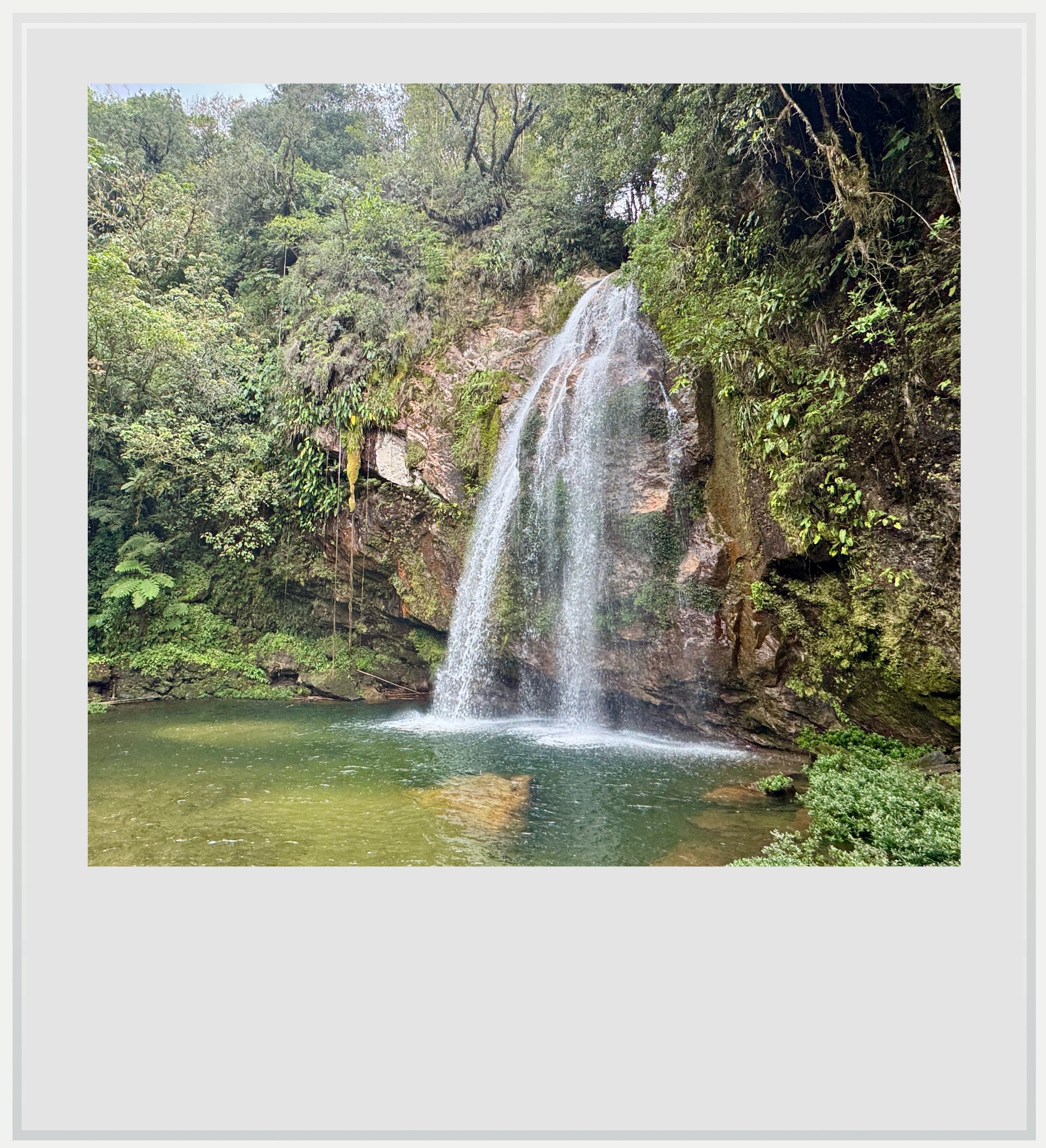
Las Brisas waterfalls, near Cuetzalan.
If Totonac is still spoken in the Sierra Norte, it has had to share its influence with Nahuatl, once the Aztecs, whose language it was, subjugated the Totonacs in the late 15th century. The Spanish conquest, a few decades later, added yet another cultural layer to the region’s makeup.
Cuetzalan is also known for its lush and humid landscape, and the mountainous terrain is the perfect set up for glorious waterfalls and a large system of underground caves. Being quite scared of enclosed spaces, I opted to visit a few of the nearby cascades.
Everywhere I looked, I saw an authentic mountain village grounded in its routines.
Arguably the most well-known of all, Cascada las Brisas, fifteen minutes out of town, is reached by following a well-signaled stone path, with many steps that rewarded me with a stunning fall, surrounded by trees with fleshy, water-laden leaves, as if humidity saturation was at its maximum. The water flowed into a bluish pool before spilling in a small torrent down the valley.
I loved the setting and thought I saw a balcony, on the rocks to the right of the fall’s lip - so curious me asked a nearby guide, who confirmed there was another viewpoint up there, normally accessible by another trail, as it led not only to the top view of Cascada las Brisas, but also to another waterfall, called El Salto, whose pool became the river flowing into Las Brisas. I immediately knew I wanted to check it out, and upon digging a little deeper, learned there was a way to trek up there from the path I had just walked on.
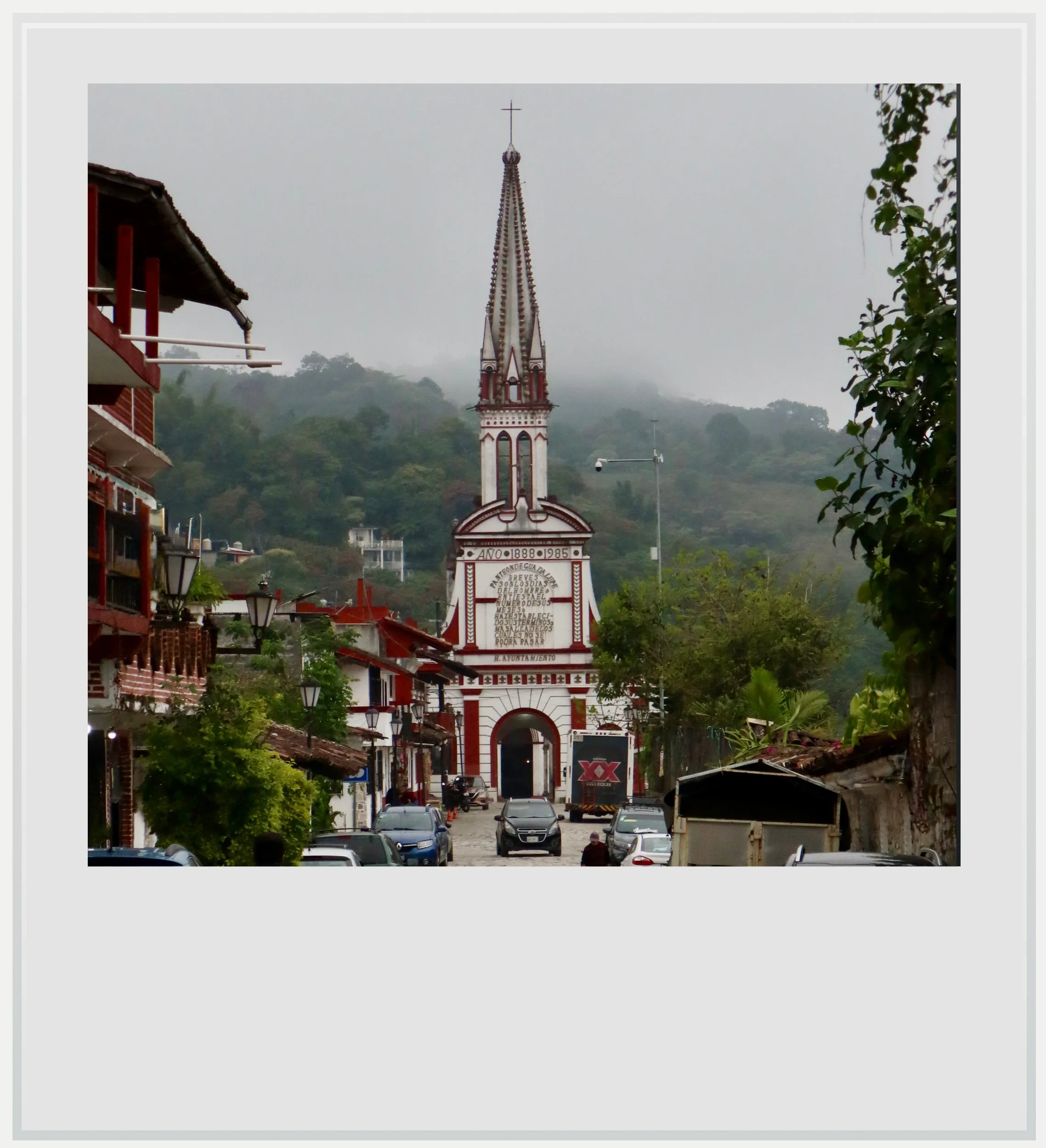
Iglesia de los Jarritos in Cuetzalan.
Following somewhat vague directions, I turned on a grass path midway through my walk back, and started climbing on a narrow trail I was afraid would disappear at every turn. After a few twists and a clearing, I got to a platform with a few wooden buildings, and I knew I had made it.
While there had been a few people with me at Las Brisas, I was absolutely alone up there. I quickly paid the entrance fee and walked to discover a fall even grander, more beautiful than the first. I was alone, with the sense of having stumbled onto something I wasn’t meant to share.
On the way back, I walked on the official access trail, an irregular stone path that led to a completely different entrance. Before I could even get my bearings, a colectivo had arrived - but it was going in the wrong direction, and I had to wait for it to come back and pick me up a few minutes later.
As colectivos went, this was the most basic of them all, a pickup truck with hard benches on its bed. I was grateful it existed, as I didn’t feel like walking all the way back into town.
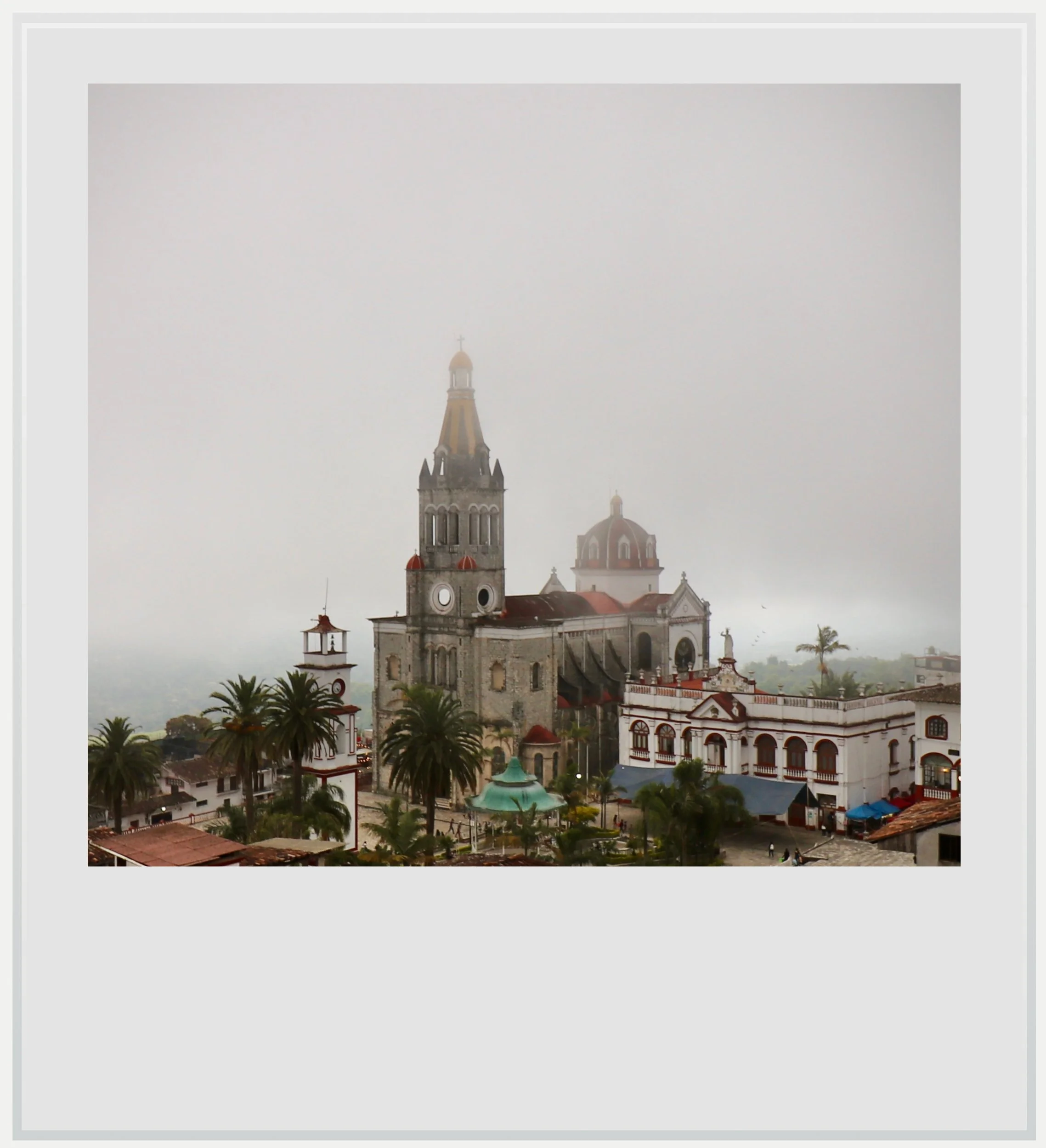
Afternoon fog rolling in.
Getting out around Cuetzalan helped me understand a bit better the wider context in which it lived, and the wonderful landscapes around town made me want to get to know the Sierra Norte de Puebla, as it is called, more intimately. More travels to come!
My last day in Cuetzalan was a Saturday, and although Sunday is technically the biggest day for the town’s central market, the tianguis had already taken over the square. I loved seeing the town under a different light: while my previous days had moved with a welcome languid pace, the weekend seemed to bring a flurry of activity to the centro historico.
First, more travelers had arrived. I had started noticing it the night before - more noise on the street, tourists feeling a little more present, maybe just more people in the restaurants, or in front of the Cuetzalan letters. It wasn’t overwhelming, but I could sense something had shifted.
Then in the morning, under a beautiful sun, the chaotic and colorful setup of the tianguis’ stands made it concrete: something was happening. This was no longer a sleepy little mountain village surrounded by fog, but a vibrant regional center getting ready to do business.
Part of me was content to have seen Cuetzalan at its quietest, yet part of me was glad to see it come alive. What had felt fixed began to shift, like the fog rolling in and out of the mountains, always in flux.
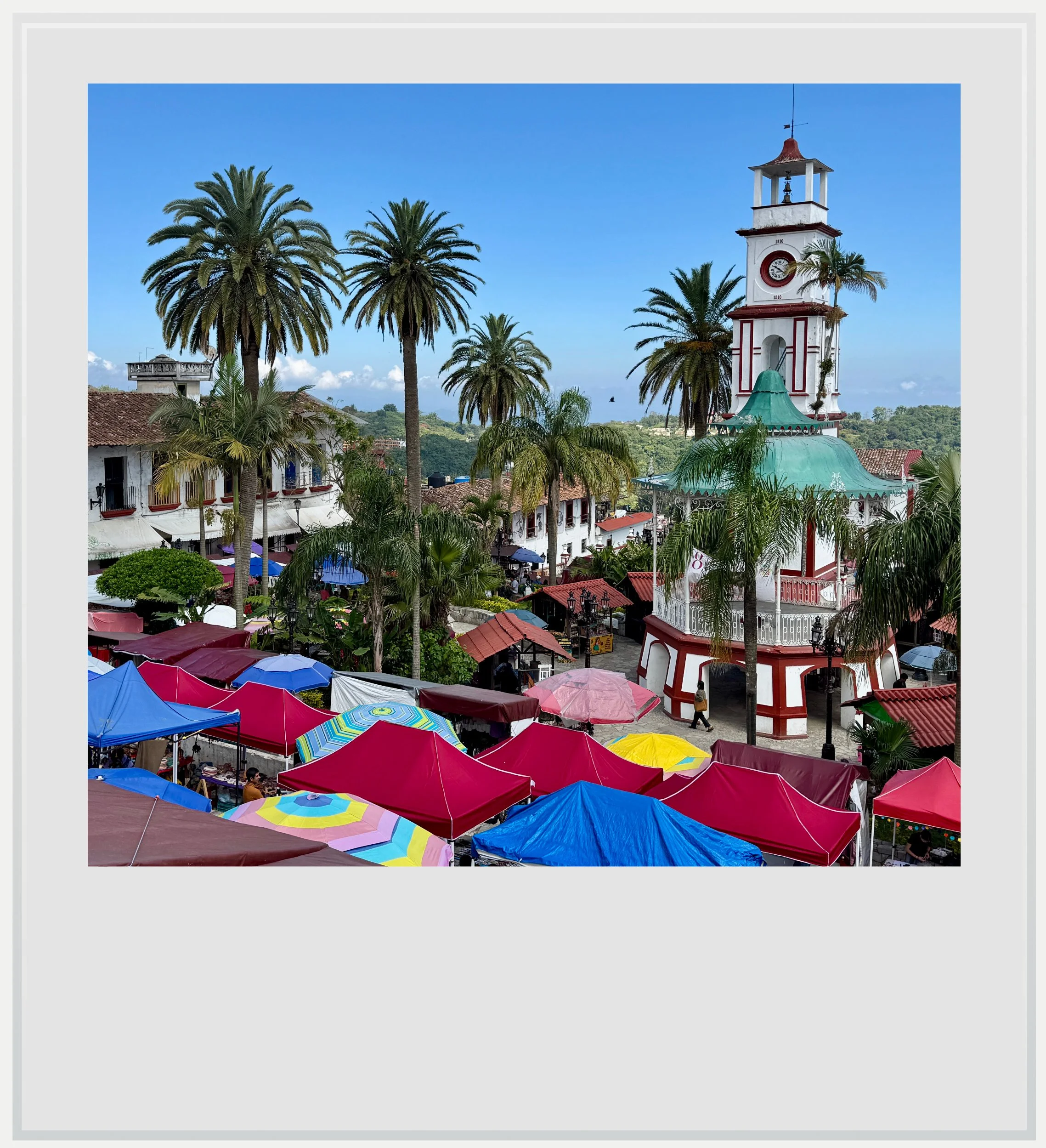
The tianguis on Cuetzalan’s main square.
Practical information
(Everything you could possibly want to know about Cuetzalan - updated March 2026)
In a nutshell
Cuetzalan is a mountain town in the Sierra Norte de Puebla, known for its fog, steep streets, and indigenous roots. It shifts between quiet isolation and the energy of a regional hub depending on the day and the weather.
How to get to Cuetzalan
How to get to Cuetzalan from the US: the easiest way to get to Cuetzalan from the US is to first reach Mexico City. To get there, fly into one of Mexico City’s international airports, MEX (the main one, close to the center of the city) or NLU, also called AIFA (as in Aeropuerto Internacional Felipe Angeles) further north. MEX is easier as it is closer to the bus station from which buses depart.
How to get to Cuetzalan from Mexico City: taking an intercity bus is the easiest way to reach the small Sierra town from the capital. Only ADO offers direct service, one to three times a day depending on the day of the week, for MXN 500 at the time of writing, but less if booked in advance. The service is operated by Autobuses Unidos (AU), the ADO group’s second-class service (everything you need to know about bus travel in Mexico, including service classes is here). Buses depart from the TAPO station, located by the San Lazaro subway station on line 1. Published travel time is 5 hours, but can be more, depending on traffic. The AU services can be booked on the ADO website.
It is also possible to take a bus to Puebla’s CAPU bus station from Mexico City’s TAPO station and change to a VIA bus there. It takes a little longer, accounting for the slightly longer way and connection time, but buses are plentiful, especially between Mexico City and Puebla, so if you have a specific time in mind, it may be an option to consider.
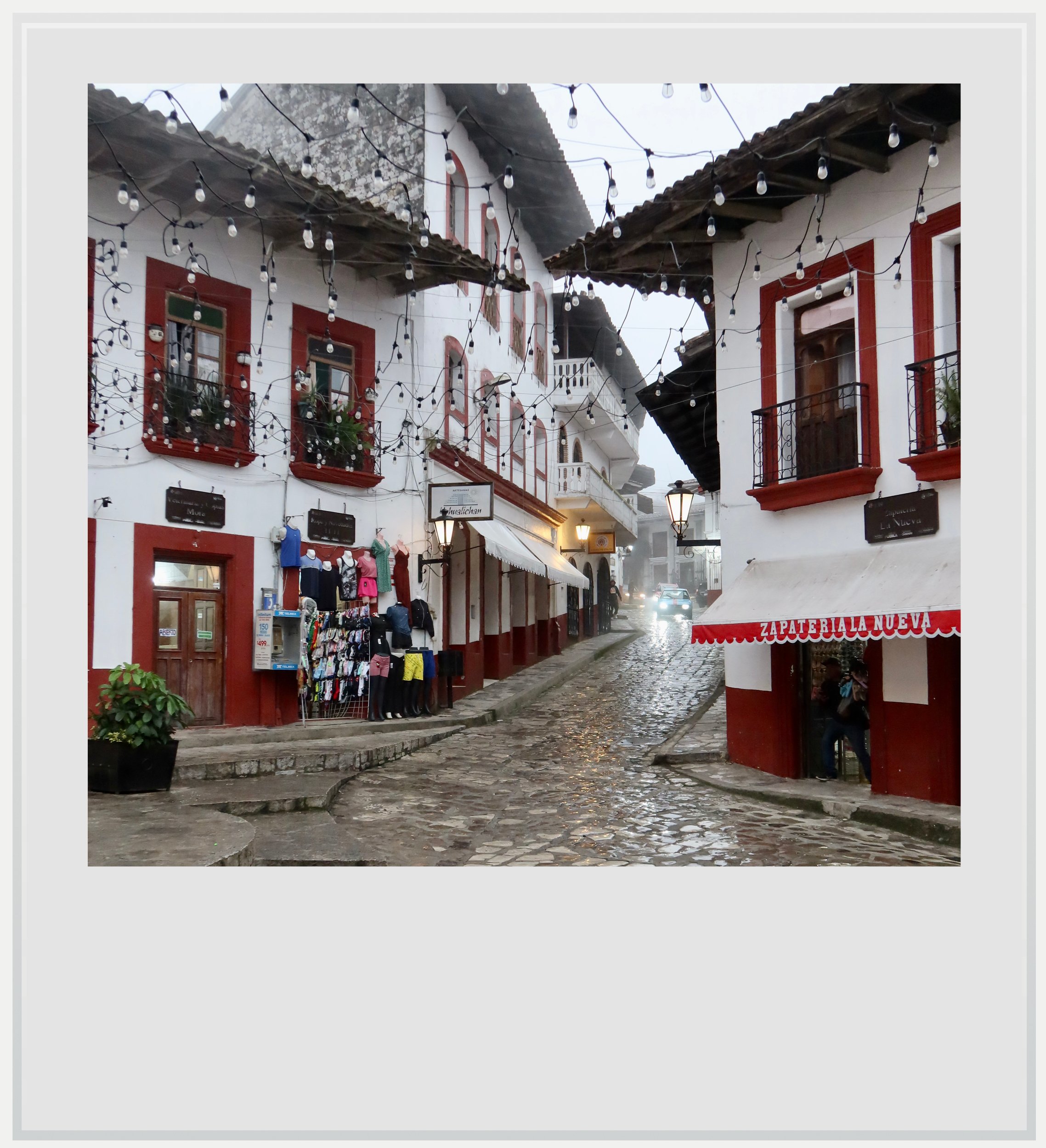
Calle Hidalgo from the fuente La Plazuela.
When to go to Cuetzalan
Cuetzalan doesn’t sit at a very high altitude but the humidity makes the climate a little chilly at night during every month of the year. The best time to go is the dry season, from November to April, with bright days and fewer showers. The rainy season, from May to October, can be great to fully experience the fog rolling in, but the additional humidity may not be worth the trade-off.
The town is quietest during the week and comes to life on weekends with a regional market and more tourists.
How long to stay in Cuetzalan
Most people will enjoy Cuetzalan on a three-day weekend, and it’s absolutely feasible. I would recommend four days in town, with two during the week and the other two as Saturday and Sunday, to really appreciate how the town’s atmosphere shifts, and have time to check out the surrounding areas, from waterfalls to the old Totonac settlement of Yohualichan.
Food & lodging in Cuetzalan
Hotels
Cuetzalan offers a lot of accommodation options. In town, there are many modest hotels with a few rooms each, but a couple of nicer boutique places stand out.
I stayed at La Peña, a couple of minutes from the heart of the village. The rooms were nicely designed and appointed, and set along a covered patio with hammocks and plush chairs… which would have been perfect had the hotel not been in the middle of a construction project, apparently to double its size. The construction noise was incessant and inconvenient. It is best to avoid the hotel until the work is completed. Also note that WiFi was great but only certain areas. I had to get out of my room to get good signal. Room price was about USD100 per night.
A good alternative in town could be Hotel Posada Cuetzalan, half a block below, set in a gorgeous, well-restored colonial house.
Another option would be to go outside of town to enjoy the views over Cuetzalan and its valley, from Villa de los Vientos, a cabanas-and-glamping compound about ten minutes out of town on the way to Yohualichan. Great views but less town access, of course.
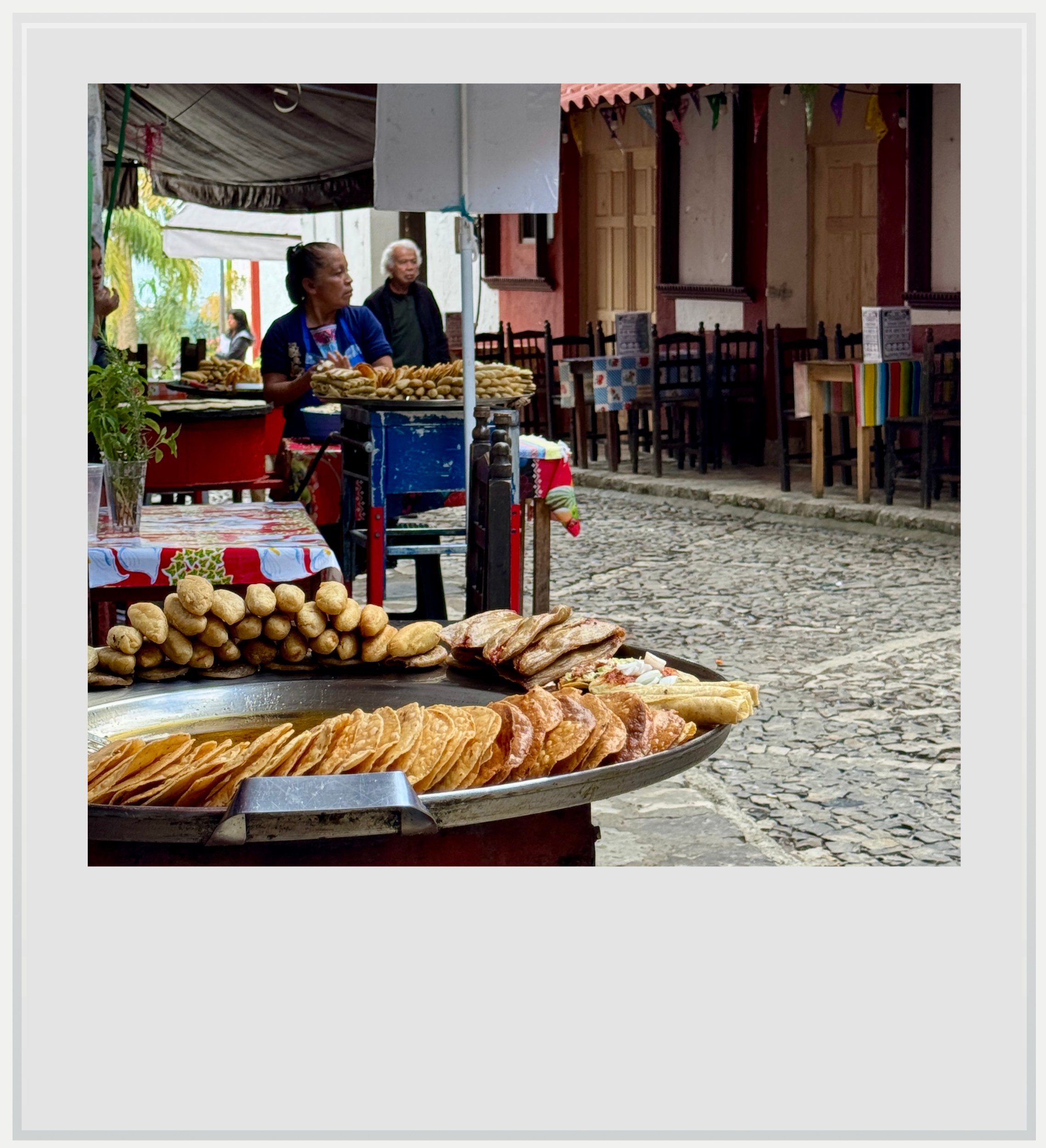
Tlayoyos and other delicacies on callejon Morelos.
Restaurants
My best advice is to follow your instincts and grab a seat at whatever little place you find in the historic core, to enjoy regional specialties like tlayoyos or molotitos. Check out callejon Morelos, a tight alleyway off the main square, full of small restaurants, some with barely a table or two, offering them.
The best views of Cuetzalan can be had on two high-floor terraces, that I recommend you try for breakfast or early dinner, around sunrise and sunset, when the light and sometimes the fog help make the town appear magical.
La Buena Vida: closer to the San Francisco church, this restaurant is a little hard to find, at the top of a hotel but away from the hotel entrance. Go all the way up to the outdoor terrace to enjoy a stunning view over the church and the valleys beyond it. Breakfast is delicious (about MXN 250)
Restaurante Terraza Mis Raices: at the top of the Posada La Plazuela, this restaurant offers a bigger terrace with a wider view over the zocalo and its main buildings. Food is really good, both for breakfast and dinner, and service excellent. If there was just one terrace to visit, it would be this one (breakfast around MXN 250, dinner around MXN 400).
I had excellent tacos al pastor at Taqueria Chepe’s del Centro, a small, rustic place with just a few seats. They only do tacos al pastor, but they do them well. A plate with three tacos cost me MXN 50.
A good place for comida corrida, these small family-owned restaurants offering simple fare with a rotating menus of a few choices every day, is Comedor Luna Azul, in one of the cutest streets not too far off the main square. Lunch was MXN 120.
Cuetzalan probably has more bakeries per inhabitant than even the Frenchest of French towns, so don’t hesitate to partake. Pastries start at MXN 5 and are delicious, and some bakeries stay open late, sometimes up to 9:30 PM.
Safety in Cuetzalan
The State of Puebla is considered a relatively safe state by the US Department of State, which lists the State under a Level 2 travel advisory meaning “Exercise increased caution” when you travel (this level 2 also applies to most developed European countries, which are not known for their crime levels).
The city of Cuetzalan and its surroundings are considered safe. It is recommended, however, to avoid driving (or being driven) at night, when risk increases: the area is fairly isolated, with spotty cell service outside of cities, so any issues happening on the road at night could possibly spiral.
Keep in mind these travel tips
Cuetzalan sits in a mild and humid region of the Sierra Norte and although the weather feels perfect during the day, it can get chilly at night or in the evenings, so bring layers, as well as a raincoat. It will be useful when the fog comes in and the humidity feels like it’s trying to seep into every bone of your body.
The UV index may be low in the morning and evening, but during the day, it gets pretty high. Wear SPF.
Insects are present in the countryside, and it's a good idea to use repellent before hiking to a waterfall. Dense, humid forests are perfect for mosquitos and other biting creatures.
Bring cash. While many shops accept foreign credit cards, bus companies, taxi drivers, and many smaller boutiques do not. Some restaurants were cash-only as well. There are a couple of banks in town with international ATMs. I used Banco Azteca’s teller machines without an issue.
Cell service can be spotty outside of cities, and although Telcel signal was strong overall, other providers may not have the same extended coverage. In fact, both AT&T and Movistar do not cover Cuetzalan, but Altan does, albeit less well than Telcel. Away from main cities and roads, Telcel is always the safest bet. If you’re roaming, check that you can roam on Telcel, or investigate a Mexican eSIM that uses this network. Telcel coverage is independently mapped here. Change the network in the dropdown menu at the top to see other companies.
Every photo caption appears if you hover over it (on a computer) or click on it (on a smartphone).
All photos are mine and copyrighted.