Along the Hamakua Coast on Hawaii’s Big Island
A Coast of Cliffs, Gulches, and Effortless Beauty.
Looking for concrete details and tips? Go straight to the Practical Information section.
The soft crashing sound of the waves on a cobble beach was mixing with the faraway song of a seemingly happy bird, hidden in lush, tropical vegetation clinging to the steep valley walls. It felt like we had unexpectedly found a hidden Hawaiian secret.
There is nothing I love more than stumbling upon places I would have never seen had serendipity not decided to push me in one direction rather than the other. I love finding beauty where other travelers see mile markers between two destinations on their bucket list. On that morning, on the eastern coast of Hawaii’s Big Island, it felt like we had unexpectedly turned onto the road not traveled.
We were on our way to the Akaka Falls, a lovely, surprisingly tall waterfall nestled in the lush jungle above the coast, when a sign on Hawaii’s Route 19 pointing right to a smaller road grabbed our attention. “Scenic Route. 4 miles long,” it said. Could this little detour be any more scenic than Hawaii’s belt road, full of deep gulches and panoramic views over the Pacific Ocean? We turned right to find out.
I hadn’t heard of the Hamakua Coast while planning this 10-day trip on Hawaii’s Big Island. We were on the way to the falls without realizing that the area along the coastline between Hilo and the Waipio Valley Lookout was such a treasure trove of hidden wonders. At the end of that fateful day, we changed the itinerary a bit and booked two nights in Honokaa, at the northern edge of the coast, to be able to discover it more.
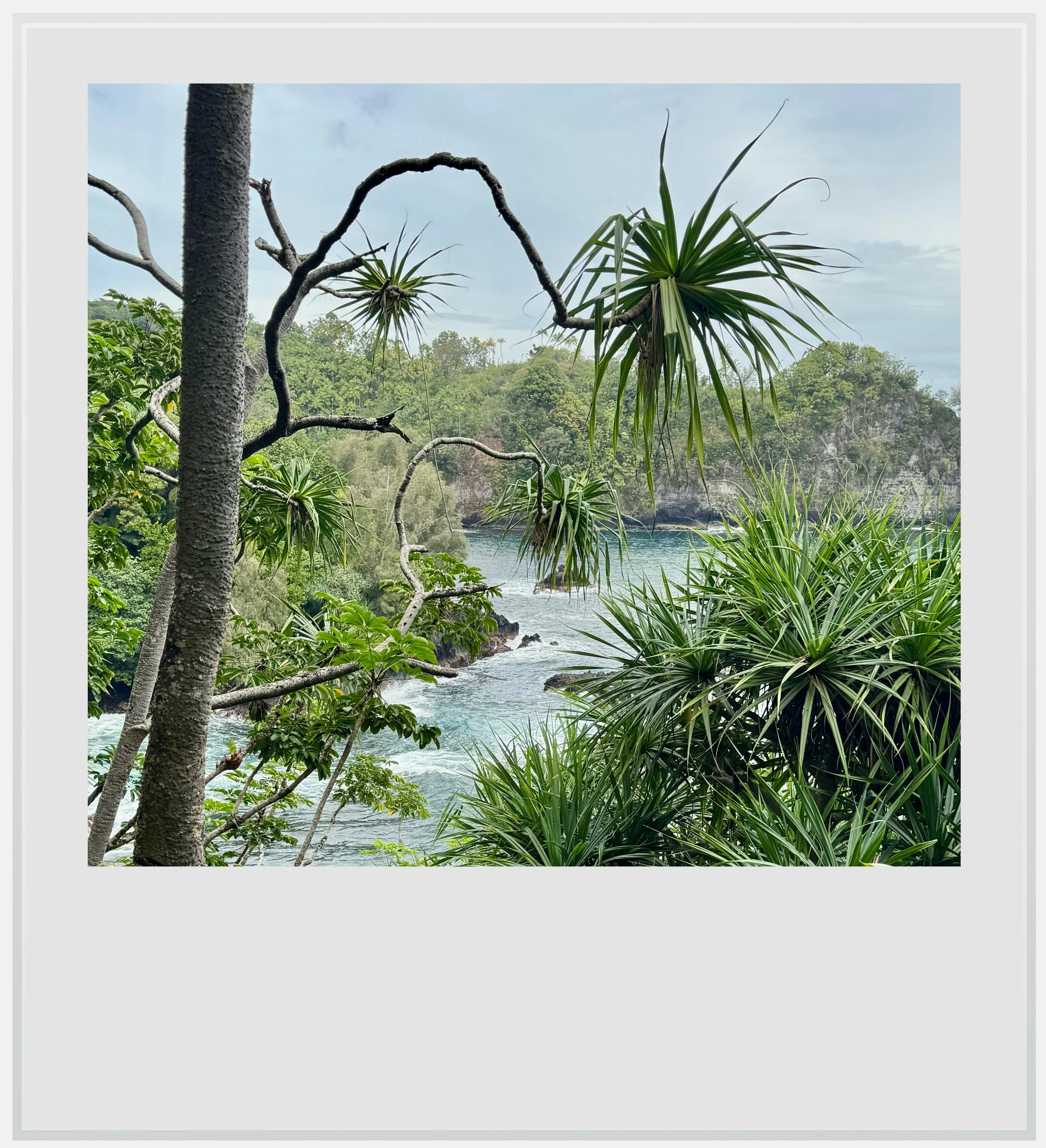
A view over Onomea bay from the top of the epomymous trail.
As soon as we veered off to the right and took the short scenic route, the scenery changed. We had been driving on a beautiful straight road overlooking the ocean, and suddenly we were moving slowly on the Old Mamalahoa Highway, between tall century-old trees and exuberant man-sized ferns forming a quiet, dense forest. Before we saw the bay, we saw a sign. On the right side of the road stood a panel proudly announcing the start of the Onomea Bay Trail. Between the bushes, we could see a small cove surrounded by dark, volcanic cliffs. We parked the car a little further and stepped down to explore. As we began descending towards the water, we finally got to see Onomea Bay in all its glory.
Formed hundreds of thousands of years ago by the waters of the Onomea stream, the bay used to house a sugar mill, when sugar cane was a major Hawaiian export. When the industry collapsed, the bay lost most of its inhabitants and vegetation quickly reclaimed its territory. Today, it is famous for housing the Hawaii Tropical Botanical Garden, which was also on our list for the day — we just had no idea its surroundings would look so incredibly beautiful.
The Donkey Trail, as it is often called, enabled us to go down to the water and go back through the forest via another path. It took us about thirty minutes, including a few to check whales some of our fellow hikers had seen afar (it turned out to be a pod of dolphins, a fun sight nonetheless), and as we got back to our car, we noticed we had parked mere yards from the garden’s entrance.
With that, we decided to change up the day’s agenda and continue with the botanical garden. We had opted to visit this one mostly, I confess, because it was on the way to the Akaka Falls, but we had no idea how much of an effect it would have on us. The vision of one man, Dan Lutkenhouse, who discovered Onomea Bay in 1977 when it had been recolonized by nature, the garden is an extremely well-curated exploration of tropical flora from around the world, with a heavy focus on Hawaiian plants and flowers.
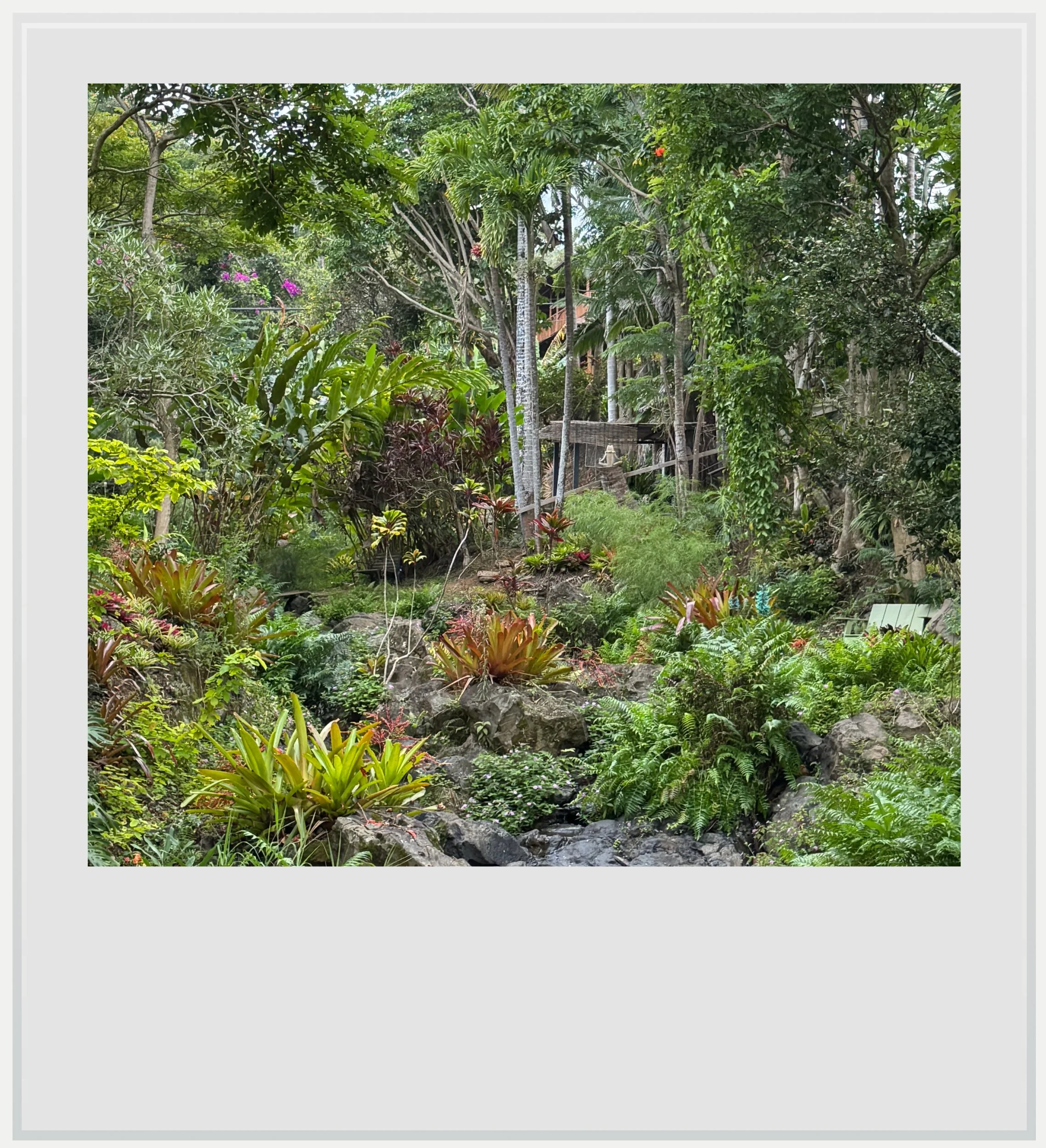
A lush garden in Kukuihaele.
I loved that it was set within a gulch leading to the bay, with meandering paths leading, little by little, to the ocean. There weren’t many visitors on the Friday we visited, and it was easy to seek solitude and take in the flora all by ourselves.
Because the morning had almost gotten away from us, given our schedule change, we decided to stop for lunch nearby. Towards the end of the scenic detour, in the village of Pepeekeo, we found Piilani Kitchen, a cute little place selling sandwiches in a lovely rural setting, adjacent to a well-curated country store. We enjoyed our rolls on the shaded patio, right by Pepeekeo Park, with a view of the ocean in the background.
Short trees seemed to be floating over the fields like fluffy clouds.
Once full, we joined back Hawaii Route 19 for a few miles before turning left onto Honomu Road. Fifteen minutes later, we had reached the car park by the entrance of the Akaka Falls State Park. After paying our dues to the jovial ranger, we started walking on the narrow path. There are two falls to see on the way, but the Akaka Falls are definitely the main attraction, and to ensure the best experience, I suggest going right at the bottom of the stairs after the entrance — we walked the other way, but the way the Akaka Falls unveiled by starting on the right felt, in hindsight, much more impressive.
Throughout the walk, we were immersed in the Big Island’s rain forest — this area of the island being one of the wettest in the world. Suddenly, after a turn in the path, the falls appeared in all their greatness. What made them impressive was not only their sheer height (about 442 feet, or 135 meters, according to the park’s official website), but the landscape surrounding them. Where I expected sheer, raw cliffs was a deep amphitheater-like gorge that looked a bit like a giant Mexican open-air cenote, covered in layers of green ferns and mosses, reminding us how humid the area was. That verdant frame made the falls even more precious.
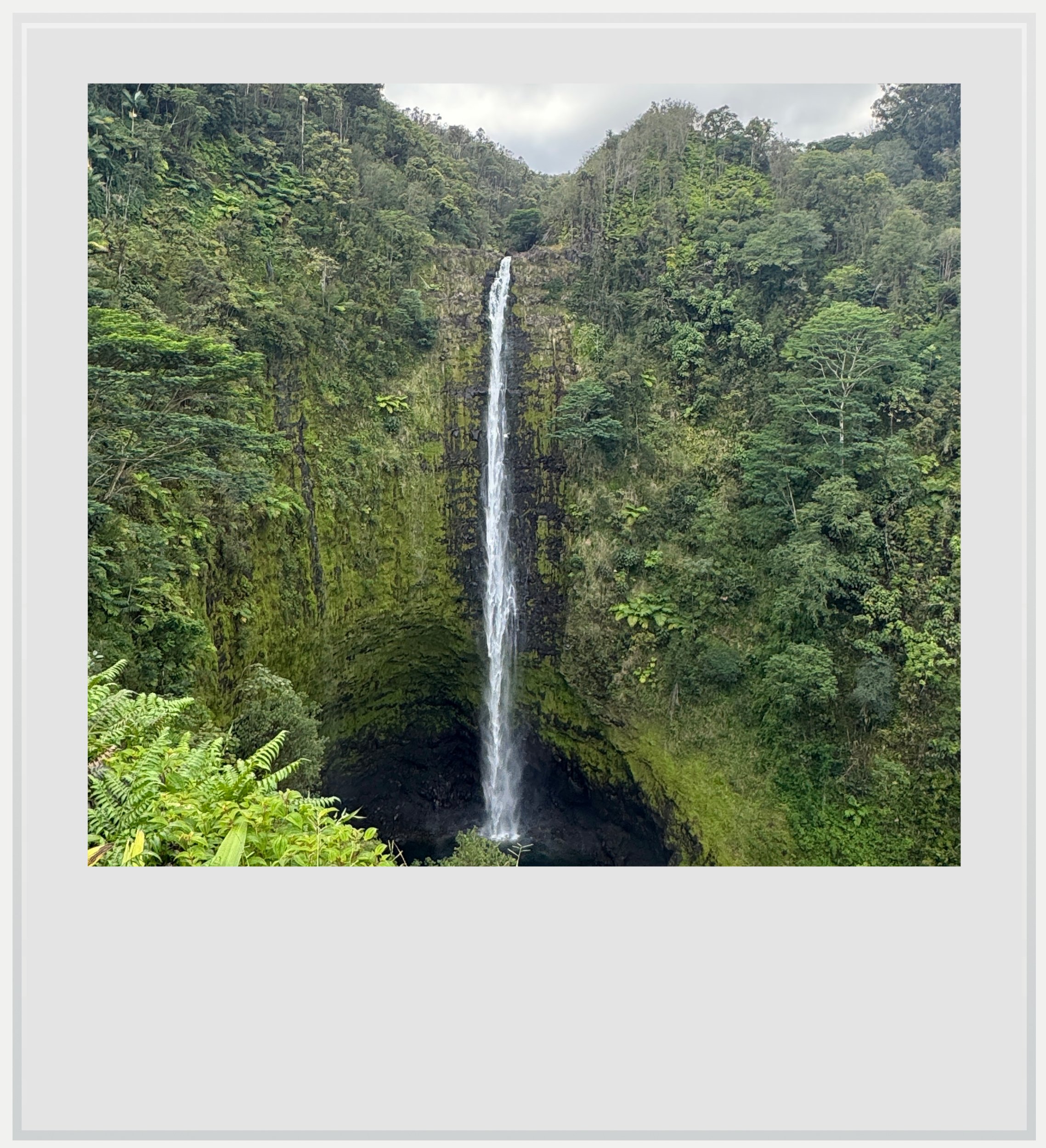
The Akaka Falls in all their glory.
It was a stunning reminder of the multi-faceted beauty of the Big Island. The day before, we were hiking on dry lava rocks, sparsely dotted with skimpy lehua trees seemingly surviving by sheer miracle, and today, we were walking among one of the lushest, greenest forests I had ever seen.
It’s fair to say we were hooked by the magic of the Hamakua Coast, and as we were driving back to Hilo, I plotted a way to change our itinerary so we could explore it further.
After spending a few days in the Puna district, it was time to head back north toward the coast: I had managed to find a cute place near Honokaa, at the northern end of the Hamakua Coast. It would be the perfect gateway to discover the coast’s upper reaches. It took us about ninety minutes to get to Kukuihaele, and as soon as we dropped our luggage, we went in search of a place to have lunch. There was only one option in the little hamlet, and lucky for us, the place was worth it.
Located right by the main road leading to the famous Waipio Valley Lookout, Good Eats was a simple food truck with a bunch of plastic tables and a skittish little dog. We were immediately charmed by the owners, who prepared Hawaiian fare with locally sourced ingredients. The food was simple yet delicious. A big win.
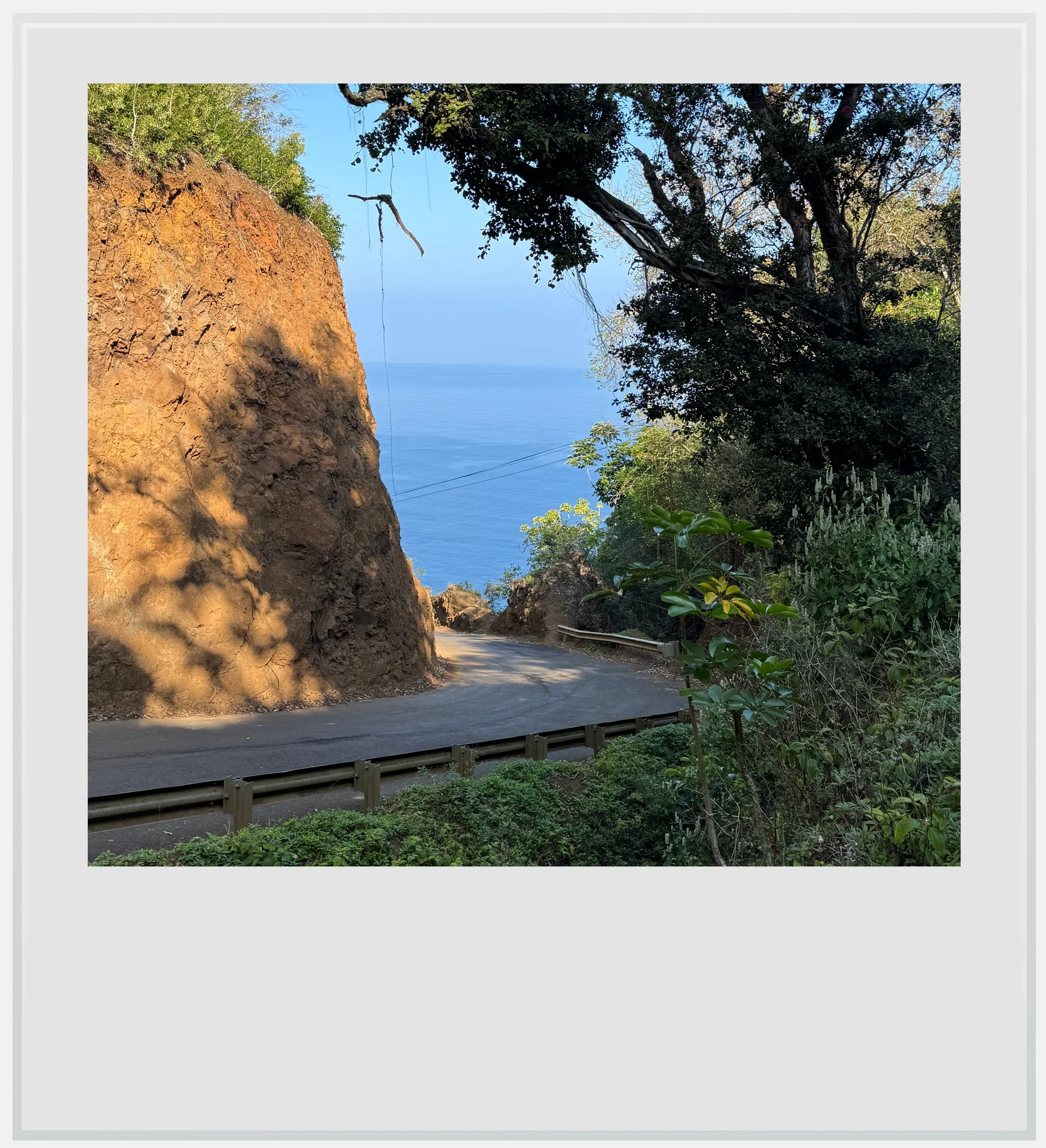
The steep road leading down to Waipio Valley.
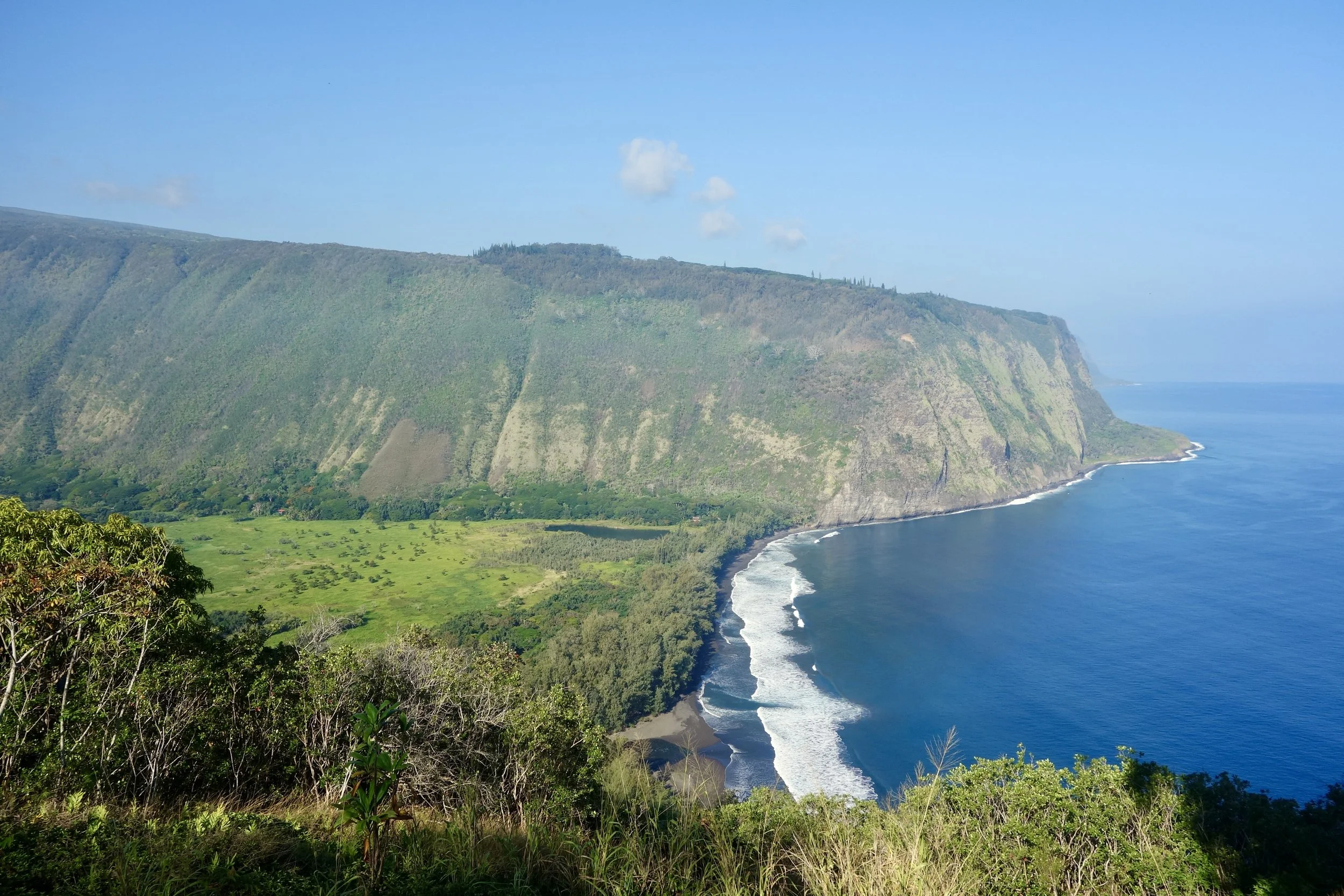
We were so close to the official end of the Hamakua Coast, the Waipio Valley Lookout, that we decided to check it out. I had seen pictures of it while researching where to sleep, but nothing prepared me for the sight that unfolded in front of us.
Between two steep valley walls separated by about a mile (1,800 m) lay a flat expanse of fertile land, in a green shade so vibrant it felt unreal. Short trees, little dots of darker green, seemed to punctuate the valley floor, floating over the fields like fluffy clouds in the sky. The valley was growing slightly wider as it came close to the ocean, where a few rows of trees seemed to be there to prevent the valley fields from spilling into the calm waters.
There was something a bit magical about this forest welcoming us in silence.
Beyond the small forest, a beautiful, deep-gray sand beach curved along the tree line, with gentle waves licking it. The sun was high enough that the whole valley was bathed in light and, for a moment, I couldn’t believe what I was seeing. Could nature be so generous as to have gifted the Big Island with such an incredible landscape?
The residence of Hawaiian royalty up until King Umi in the 15th century, the valley is considered one of the most sacred places on the island. King Kamehameha I, one of the most consequential rulers of Hawaii’s history, used the valley as a refuge as a child, as protection against opposing factions willing to end his life. Part of me knew that a land of such beauty would have to have been a special place for generations of Hawaiian people, and it felt comforting, in a way, to know that it was.
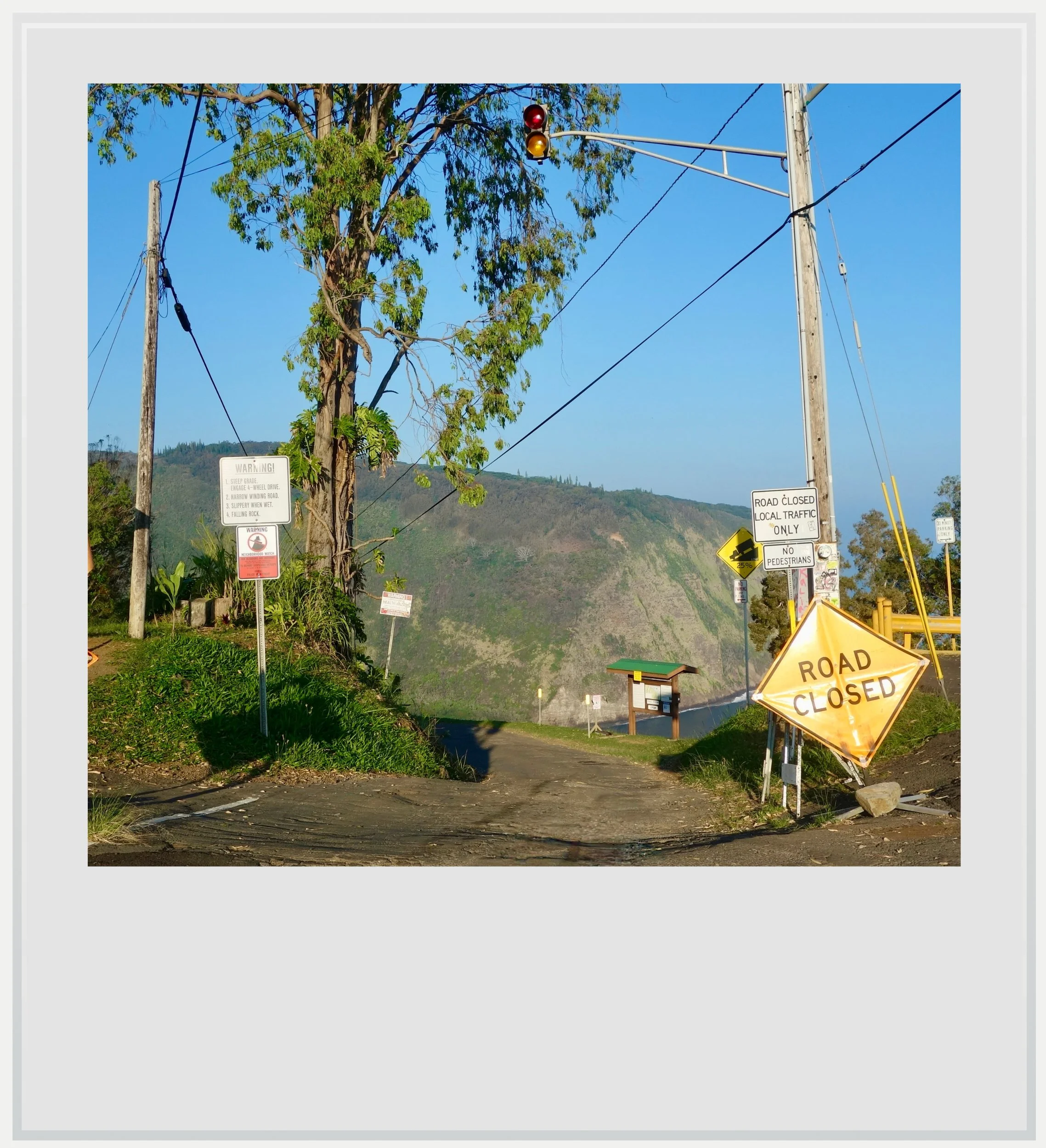
The entrance of the Waipio Valley road.
Today, valley access is closed to everyone except local residents, for the road leading down, a steep, narrow path with grades of up to 40%, has been deemed too dangerous for casual traffic, owing to rockfall and mudslide risks. There are signs everywhere near the lookout (which is still accessible and, frankly, one of the highlights of the Hamakua Coast), and a ranger is on duty at most times to ensure the rule is followed.
It is possible, however, to check out the valley floor as part of a tour. I absolutely recommend it. The tour starts from nearby Kukuihaele.
It was getting a little late, but we wanted to check out the Kalopa State Forest, a preserved rain forest area just past Honokaa, and so off we went in our rental truck. The Kalopa Recreation Area was created in the 1960s when local people decided to protect this part of the Big Island’s forest, fearing the ever-expanding cane sugar fields would eventually take it over. Getting to the park was an adventure in itself: it sits above Honokaa, at the end of a maze of small roads slowly going up the gentle slope.
Several trails were available, but given how late in the day it already was, we opted for the shortest one available, the Kalopa Nature Trail, a short, 0.7-mile hike through the forest with ample signage spelling out the various species along the trail. There was something a bit magical about this forest of extremely tall trees welcoming us in silence. At 4 p.m., the parking lot was completely empty — I understand it never really gets busy anyway — and the forest was eerily silent, its color given a special sheen by the slowly declining sun.
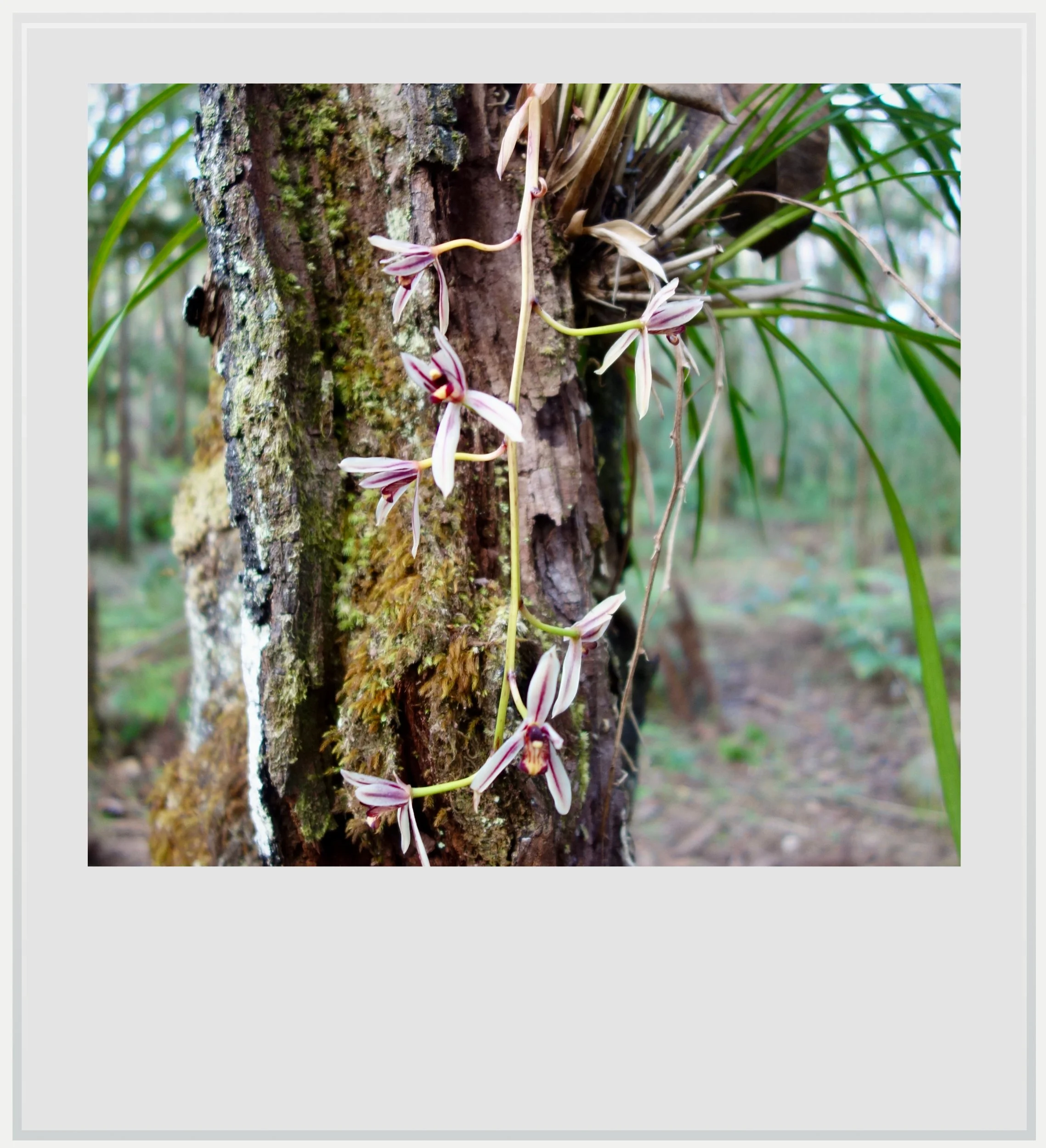
A wild Hawaiian orchid in the Kalopa State Forest.
The hike took us about thirty minutes, walking at a slow pace to really immerse ourselves in this world of ancient trees, exuberant ferns, and glistening moss. We heard rustles in the leaves a few times but never saw anything bigger than a bird — although wild pig sightings are common. Deep in the forest, I felt like time had come to a standstill — that’s not to say the Kalopa woods offered a vibrant contrast with the rest of our exploration that day; in all fairness, the whole Hamakua Coast experience had been chill and stress-free. Yet here we were, walking slowly on the narrow foot trail, stopping every now and then to admire a wild orchid, snap a picture of an especially beautiful patch of moss covering a trunk, or glance up at some of the majestic trees.
Our last stop of the day involved the small, picturesque town of Honokaa. The gateway to the Waipio Valley, it has the charm of a town that grabs you without trying too hard. Its history is fascinating, and closely tied to the sugarcane industry that ruled the island’s economy from the mid-19th century for about a hundred years. Honokaa developed along the trade. Buildings were erected, people moved to the area in waves — first Chinese, then Japanese workers, Portuguese, and Puerto Rican laborers. The sugar plantations are long gone, but the buildings have remained and have been lovingly preserved, creating a Western-like character that’s hard not to like. I wished we had more time to linger in the shops lining up Waipio Road, the town’s main street. There was a quiet presence to the town, which was hard to pinpoint. It felt harmonious, serene, like a place you’d want to settle down in for a few days.
The following morning, before driving north, we managed to find our way down the Waipio Valley. It was a great way to cap our stay in the Hamakua district, where we felt we touched a much more authentic Hawaii than we expected. We were careful not to disturb it too much. No one needed to post signs about not leaving anything behind and taking only photos. The gentle, undisturbed beauty of the coast was a great reminder that the most moving experiences are the ones where you feel pulled in naturally, without a prompt, where you notice beauty is there not to make you feel anything, but it just is. You just have to let yourself be taken by it.
It was an incredible feeling.
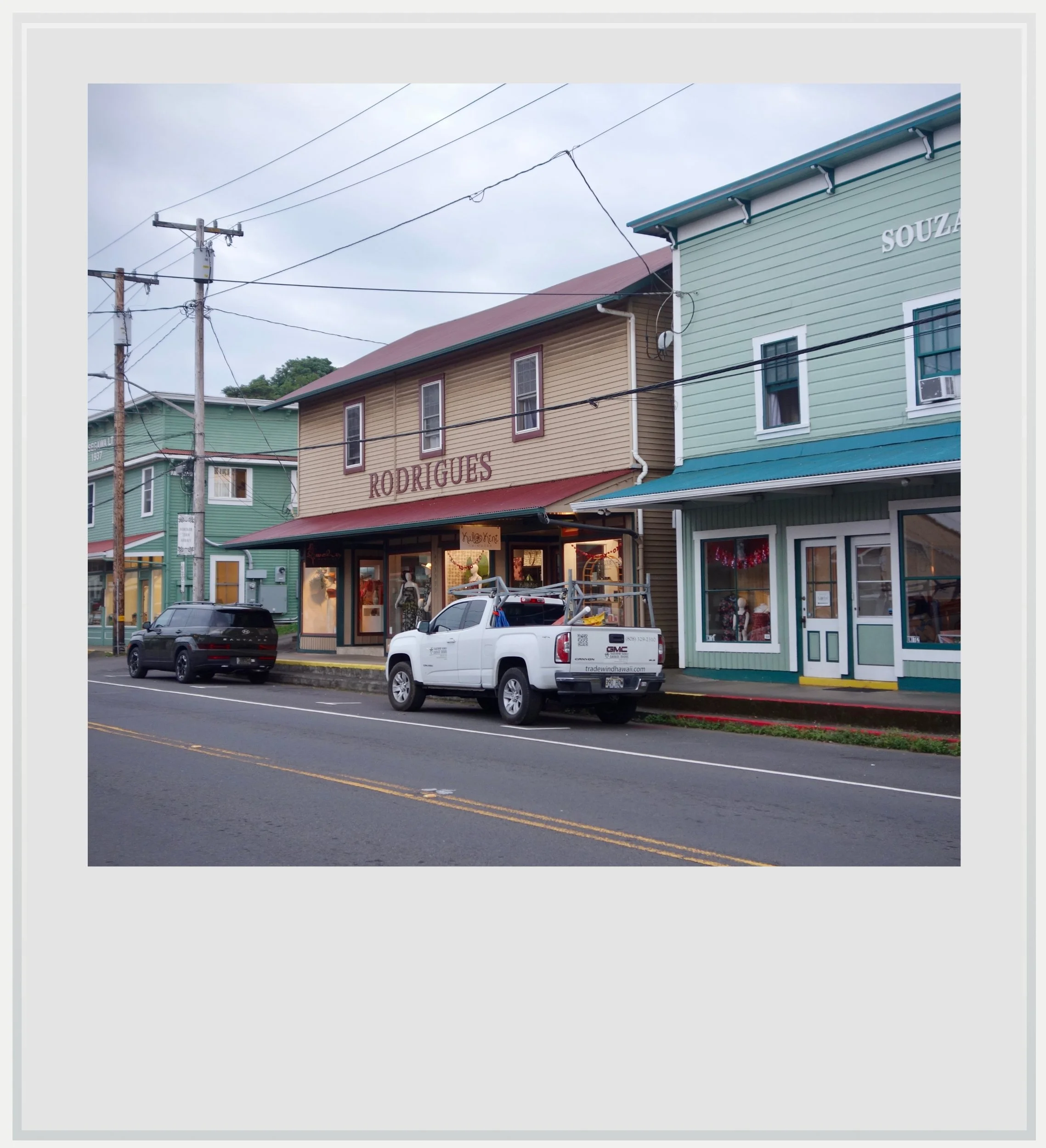
Historical buildings in Honokaa.
Practical information
(Everything you could possibly want to know about the Big Island’s Hamakua Coast - updated February 2026)
Getting to the Big Island’s Hamakua Coast from the United States
The Hamakua Coast encompasses an area of Hawaii’s Big Island that covers several portions of the island’s official subdivisions - namely the coastlines of the South Hilo, North Hilo and Hamakua districts. Two towns anchor it at each end: Hilo, the Big Island’s main town to the south and Honokaa, close to the northern end of the district.
While the town of Hilo doesn’t actually sit on the Hamakua Coast, which starts just north of it, it’s a convenient gateway for the whole region, and a perfect place to find accommodation. Travelers looking for more peace and quiet could look into the Honokaa for picturesque Airbnb options.
Though it isn’t as well served as the island of Oahu, home of such tourist magnets as Honolulu and Waikiki, the island of Hawaii counts with two main airports, Kona to the west (KOA) and Hilo to the east (ITO). Most flights from the US mainland arrive in Kona, which is closer to the main tourist areas of the island. Depending on where you are based, Kona or Hilo airports could make more sense as an access point.
If your stay on the Big Island includes Hilo, the Hamakua Coast or the Hawaii Volcanoes National Park, Hilo is a better bet to fly into and as a base. If you’re planning some R&R in a resort on the northern coast of the island with a day trip to the National Park or to Honokaa, Kona makes more sense.
Specifically as it relates to the Hamakua coast, if you’re based in Hilo, then flying into Hilo makes more sense, although there are currently no direct flights from the Continental U.S. and getting there requires a connection in Honolulu (HNL). This will change August of 2026 when Southwest debuts a 3-weekly flight from Hilo to Las Vegas. If you’re based in Honokaa, travel time to and from Kona or Hilo airports are the same, so choose the most convenient, which is most likely to be Kona: on a random day, I counted more than twenty flights departing to the continental U.S., mostly towards the West coast, but with a few going as far as Chicago and Dallas.
Given the sheer size of the island and the overall lack of public transit, renting a car makes the most sense on the Big Island, and whether you arrive in Kona or Hilo, you will find plenty of options.
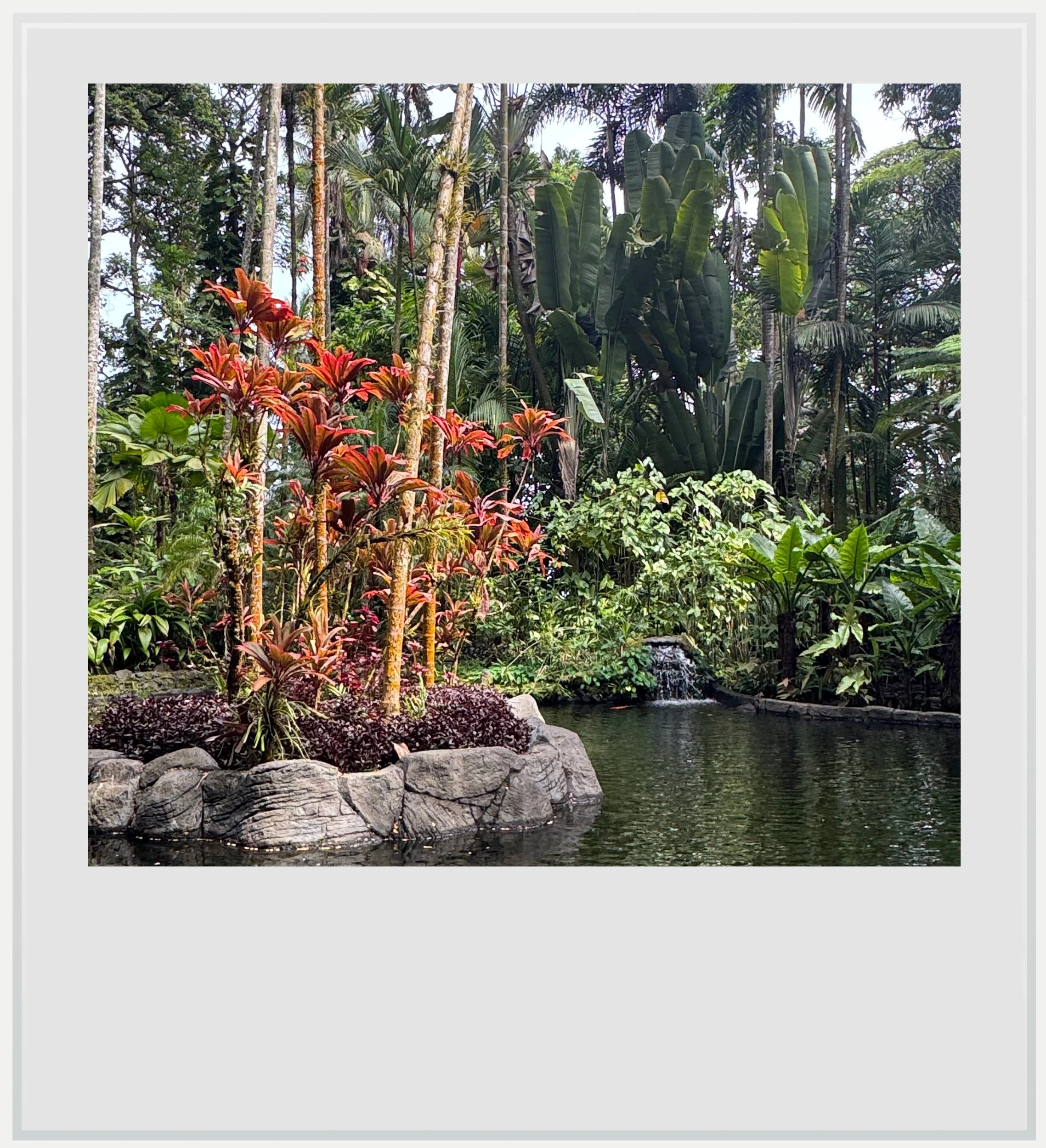
A pond in the Hawaii Tropical Botanical Garden.
When to go to the Hamakua Coast
I am a big believer in shoulder season travel - the period just before or after the peak of the tourist season, when most people haven't arrived or have already left, but the weather is still pleasant, and the prices a little lower.
Shoulder season in the Big Island includes the months of April, May, September and October. Although relative given the size of the island, the busiest months in terms of arrival are June, July and December. For comparison, September, the month with the least amount of visitors, is about thirty per-cent less crowded than July, the busiest.
The Hamakua Coast isn’t a very touristy part of the island and although it felt a bit more crowded than the Puna district to the south, there was never a moment when my mind went to “this is Venice during Carnaval”. Coming in any month of the year will not change your experience dramatically.
Note that the best month to see whales are between January and March, but this is also the rainiest period in the Hilo area. We visited the Big Island in late January and never experienced more than a few minutes of light rain on any given day, so don’t let that deter you from coming in the Northern winter.
What to see on the Hamakua Coast
From north to south
Pepeeoko scenic drive (including Onomea Bay and the Hawaii’s Tropical Botanical Gardens): this is a lovely 4-mile route off the main highway, meandering through a beautiful forest, and leading to Onomea Bay, where a short hike will bring you to the ocean, and the beautiful Hawaii Tropical Botanical Garden.
Onomea Bay: a small, verdant bay in an gorgeous natural setting, this is a place you can experience on foot by going down via the Onomea Bay trail, and going back up on the Donkey trail, which will lead you very close to the Hawaii Tropical Botanical Garden (below). Park your car on the side of the road where you can, or park directly in the garden’s lot, and walk down to the lookout for lovely views.
Hawaii’s Tropical Botanical Gardens: hidden near Onomea Bay, the garden is a wonderful way to experience tropical flora from all around the world, in a well-curated space where it is easy to wander at one’s own rhytm. Entry costs $35. The garden is open daily form 10am to 6pm, with the last entry at 5pm.
Akaka Falls: a few minutes away from the coast via Honomu road then Akaka Falls road, the falls are worth a visit for their sheer height and the lush environment they exist in. The loop going to the falls takes about 30 minutes to hike. Make a right at the bottom of the stairs to have the best view of the falls as you walk to them. The park is open every day from 8.30am to 5pm. Entrance fee is $5 per person and $10 per car at time of writing (payment by credit card only).
Kalopa State Forest: what remains of a much bigger rain forest, destroyed by sugar cane fields decades ago is a wonderful place to get lost into (don’t worry, all trails are pretty well signposted), among huge trees, immense ferns and delicate wild orchids. The easiest introduction to the forest is the Nature Trail, a 20 to 30-minute loop through the forest but more trails are available. The park is open every day form 7am to 8pm and access is free (you can make a donation as you grab a brochure by the Nature Trail trailhead).
the village of Honokaa: a testament of the Hamakua Coast history with its main street lined with antique buildings, their names a window into the various waves of immigration that shaped the area in the sugar plantation years. It’s a nice spot for a stroll or to sit down for lunch or dinner.
the Waipio Valley Lookout: the last stop on the road and one of its highlights, the lookout offers a panoramic view over one of the most beautiful valleys of the whole archipelago, its dramatic cliffs surrounding a fertile valley, lined by a gorgeous black sand beach. Access is forbidden to non-residents unless you take part in this tour, but the lookout is absolutely accessible and free.
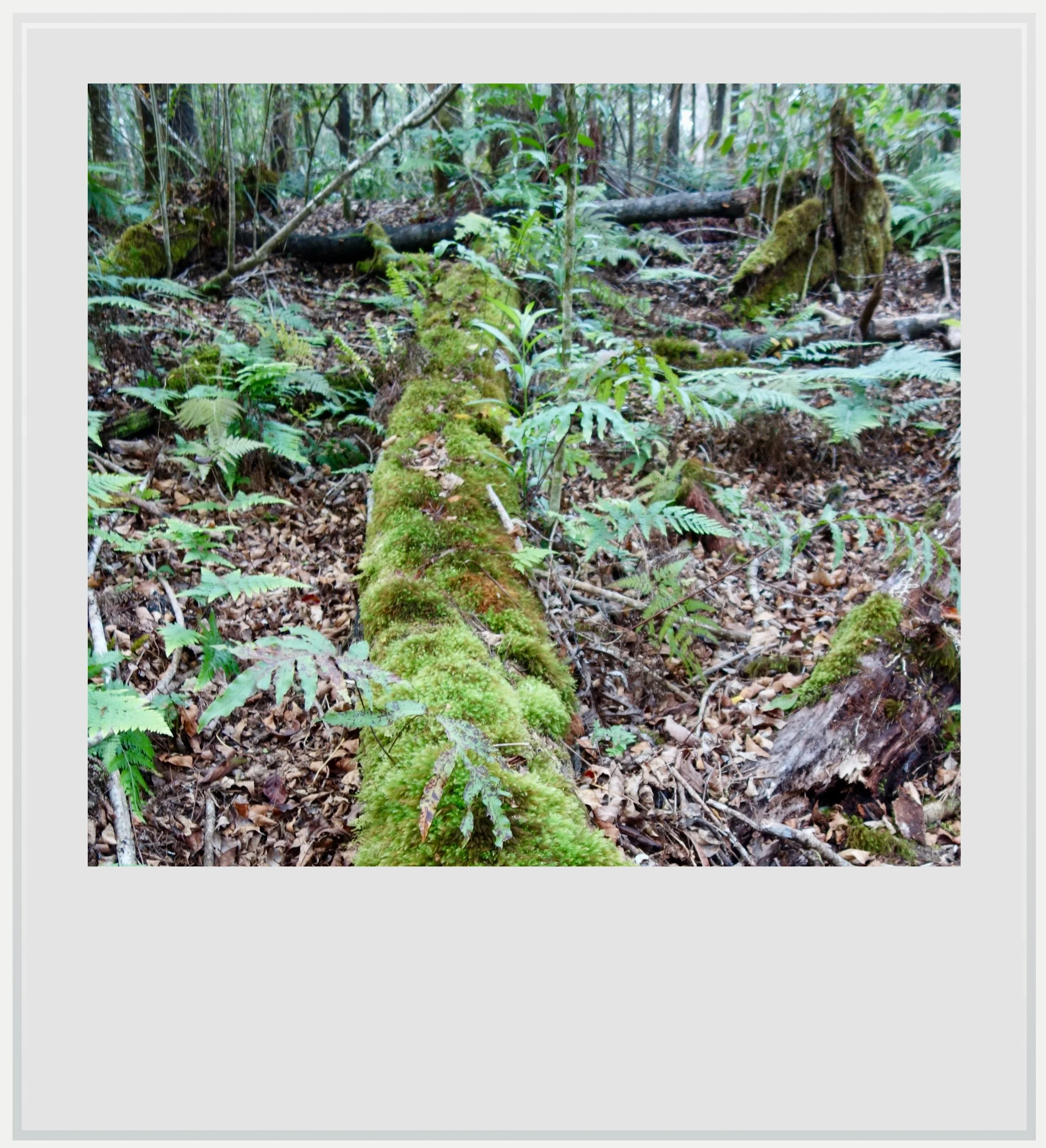
Moss and ferns in the Kalopa State Forest.
How long should I plan to visit the Big island’s Hamakua Coast
Plan for a minimum of two days, with three days being ideal. Any more days and you can start exploring beyond the district.
A trip to the Hamakua Coast only makes sense as part of a bigger trip to the Hawaiian islands. The Big Island is a great place to spend more days, with lots of nature to explore, especially in the Puna district and its adjacent Hawaii Volcanoes National Park.
What if I only have a day to discover the Hamakua Coast
It is possible to see the Hamakua Coast in a day. It’s a wonderful road trip, mostly along Hawaii’s route 19. You can start the day in Hilo and drive up, stopping at some key points of interest (Onomea Bay, the Hawaii Tropical Botanical Garden, take a detour towards the wonderful Akaka Falls, see the Umauma Falls, stop en route at many a scenic viewpoints, check out the Kalopa State Park to get lost in a typical Hawaiian rainforest, discover the lovely village of Honokaa, and end up at the Waipio Valley lookout to end on high note).
We chose to spend a little more time in the area to appreciate it slow-travel style, but if you only have a day, it is still a fantastic place to discover.
Safety on Hawaii’s Big Island
Isolated, sparsely populated and not super touristy, the Big Island is a fairly safe destination to visit. Violent crime is close to non-existent, especially against tourists. Just watch for petty theft and car break-ins, which can happen, especially on beach parking lots or at trailheads. Do not leave any valuable in the rental car, or anything in sight.
The main hazard on the island is probably nature. Swimming in the ocean can be treacherous with strong rip currents, and hiking on lava fields an exercise in balance. Beyond that, you can enjoy the Aloha spirit without a worry.
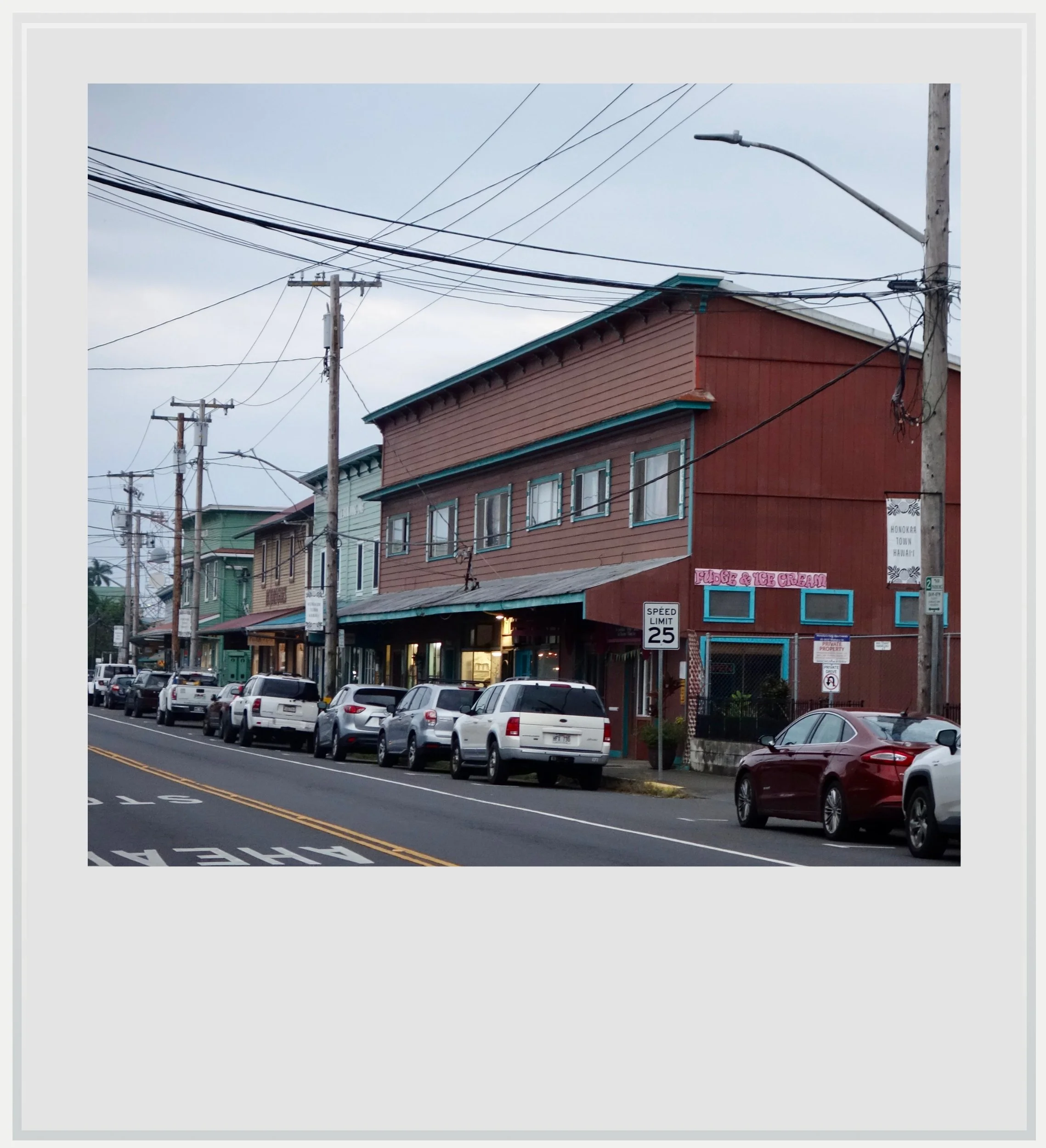
The main street in Honokaa, on Hawaii’s Big Island.
Food & lodging in the Hamakua Coast
Accommodation
Accommodations are available throughout the region, but two places stand out.
Hilo, the island’s main town, counts with many hotels and restaurants. It has a small town feel (this isn’t Honolulu by any means) so staying there doesn’t mean surrendering to big-city energy.
We opted to stay in the northern part of the region, near Honokaa - actually less than mile from the official end of the Hamakua Coast, the Waipio valley Lookout, in a little hamlet called Kukuihaele. The area is quiet and lovely, with very little going on and lots of gorgeous landscapes, so it was a fantastic place to disconnect and enjoy the natural beauty around us.
We picked this Airbnb, and loved the vibe, so it is totally recommended (the owners offer several individual apartments along a hidden gulch with a waterfall, complete with benches and chairs to chill, and they live on property, which makes then available anytime you need them).
Restaurants
Given the remoteness of the area and our focus on hiking, we mostly cooked our own food for breakfast and dinner, and made our own sandwiches for some of the lunches, having gone grocery shopping in Hilo (where you’ll find Safeway, Target and Walmart among other stores).
There is a little gem of a food truck in Kukuihaele, called Good Eats, that serves locally sourced food. We tried the Hawaiian plate and had fried plantains for dessert. It was filling, delicious, and relative affordable (in Hawaii terms). They are open 11am to 4pm (although GoogleMaps says 5pm) and only accept cash.
Piilani Kitchen, in Pepeekeo, can be a great pit stop after Onomea Bay and before the Akaka Falls. Cuisine is local, simple (think hearty sandwiches and fruit juices) and can be enjoyed on a shaded patio with views of the ocean.
Keep in mind these travel tips
With the rain and humidity, it can get a bit chilly at night in the Hamakua Coast, so don’t forget to bring layers. This is also true for places like the Kalopa State Forest, sitting a bit higher than sea level, where an additional layer, during the day, may prove useful.
The area’s climate is perfect for all sorts of bugs and small creatures. Be ready for harmless encounters and have bug spray available. Note there are no snakes on the island.
SPF will be your best friend. The UV index may be low in the morning and evening, but during the day, it gets pretty high.
Do not forget to hydrate. Always have a bottle of water with you, especially on long hikes where cell service may be spotty.
Cell service is pretty good on the island overall, no matter your provider. It isn’t always the case in more remote areas. Honokaa will have 5G service, but some areas along the coast do not, so plan accordingly.
Every photo’s legend will appear if you hover over it (on a computer) or click on it (on a smartphone).
All photos are mine and copyrighted.